Finding earbuds that function properly under a helmet requires more than just picking a popular model. Standard buds push against helmet padding, get knocked loose during donning, or amplify wind noise into a distracting roar. The right pair must combine a low profile, a secure fit that survives helmet movement, and enough noise handling to cut through road and wind.
I’m Amir — the founder and writer behind Four Wheel Ask. My recommendations come from cross-referencing technical specifications, analyzing build materials and driver configurations, and aggregating real-world owner experiences across riding and commuting forums to identify what actually holds up under a helmet.
Helmets create a unique acoustic chamber that most consumer earbuds are simply not designed for. After evaluating dozens of models across build quality, fitment, and real-world owner reports, I’ve identified the definitive best in ear buds for wearing helmets that actually deliver.
How To Choose The Best In Ear Buds For Wearing Helmets
Selecting earbuds for helmet use involves trade-offs that most general-purpose guides ignore. Helmet interiors are tight, sweaty, and noisy. The wrong choice means constant readjustment, muffled audio, or ears that ache after thirty minutes. Here are the four factors that separate usable helmet earbuds from frustrating ones.
Low Profile And Shell Clearance
The most overlooked spec is the physical depth of the earbud housing. Standard buds with protruding stems or thick bodies press against the helmet’s EPS liner, creating painful pressure points and shifting the bud out of your ear canal every time you turn your head. Look for buds with a flush or semi-flush design where the outer face sits level with or slightly recessed from the tragus. Semi-in-ear and clip-on designs naturally excel here because they avoid deep ear canal insertion altogether.
Noise Isolation Versus Active Noise Cancellation
ANC works well in offices and airplanes but struggles under a helmet. The constant low-frequency wind roar and road rumble that hits the microphone can confuse ANC algorithms, sometimes making wind noise worse. Passive noise isolation from foam or silicone ear tips provides consistent, predictable attenuation across all frequencies and has no electronics to fail. A high Noise Reduction Rating (NRR) of 25 dB or more is a stronger indicator of real-world helmet performance than an ANC depth number.
Battery Life And Charging Realities
Riding sessions often stretch longer than a typical commute. Six hours of playback may cover a daily round trip, but weekend group rides or touring days demand ten hours or more. Also consider charging speed — a quick fifteen-minute top-up should deliver at least two hours of use. For wired options, battery anxiety disappears entirely, but cable management becomes the trade-off.
Weather Resistance And Build Durability
Helmets trap heat and moisture. Sweat, rain, and road spray all find their way into the ear area. An IPX5 rating handles sweat and light rain, while IPX7 or IPX8 offers protection against submersion if you get caught in a downpour. Kevlar-reinforced cables on wired models add longevity for riders who treat gear hard.
Quick Comparison
On smaller screens, swipe sideways to see the full table.
| Model | Category | Best For | Key Spec | Amazon |
|---|---|---|---|---|
| Elgin Discord Gen 3 | Wireless | Best Overall Helmet Audio | 31dB NRR, 14H battery, 8mm driver | Amazon |
| Cardo Packtalk Helmet Kit | Helmet System | Premium Helmet Communication | 30H battery, JBL audio, BT 5.2 | Amazon |
| Fodsports FX-S | Motorcycle | 2-Way Intercom Riding | IP67, 1000m range, CVC noise cancel | Amazon |
| King Lucky Clip-On Gen 3 | Open Ear | Helmet Awareness While Listening | 50H total, 13mm driver, BT 5.4 | Amazon |
| TOZO NC9 | ANC | Budget ANC Under Helmet | 45dB ANC depth, 60H playtime, IPX8 | Amazon |
| eleror Z1 Extra-Small | Ultra Compact | Tiny Ears And Tight Helmets | 2.3g each, semi-in-ear, IPX5 | Amazon |
| Elgin Rumble Wired | Wired | Budget Hearing Protection | 27dB NRR, IP67, Kevlar cable | Amazon |
In-Depth Reviews
1. Elgin Discord Gen 3
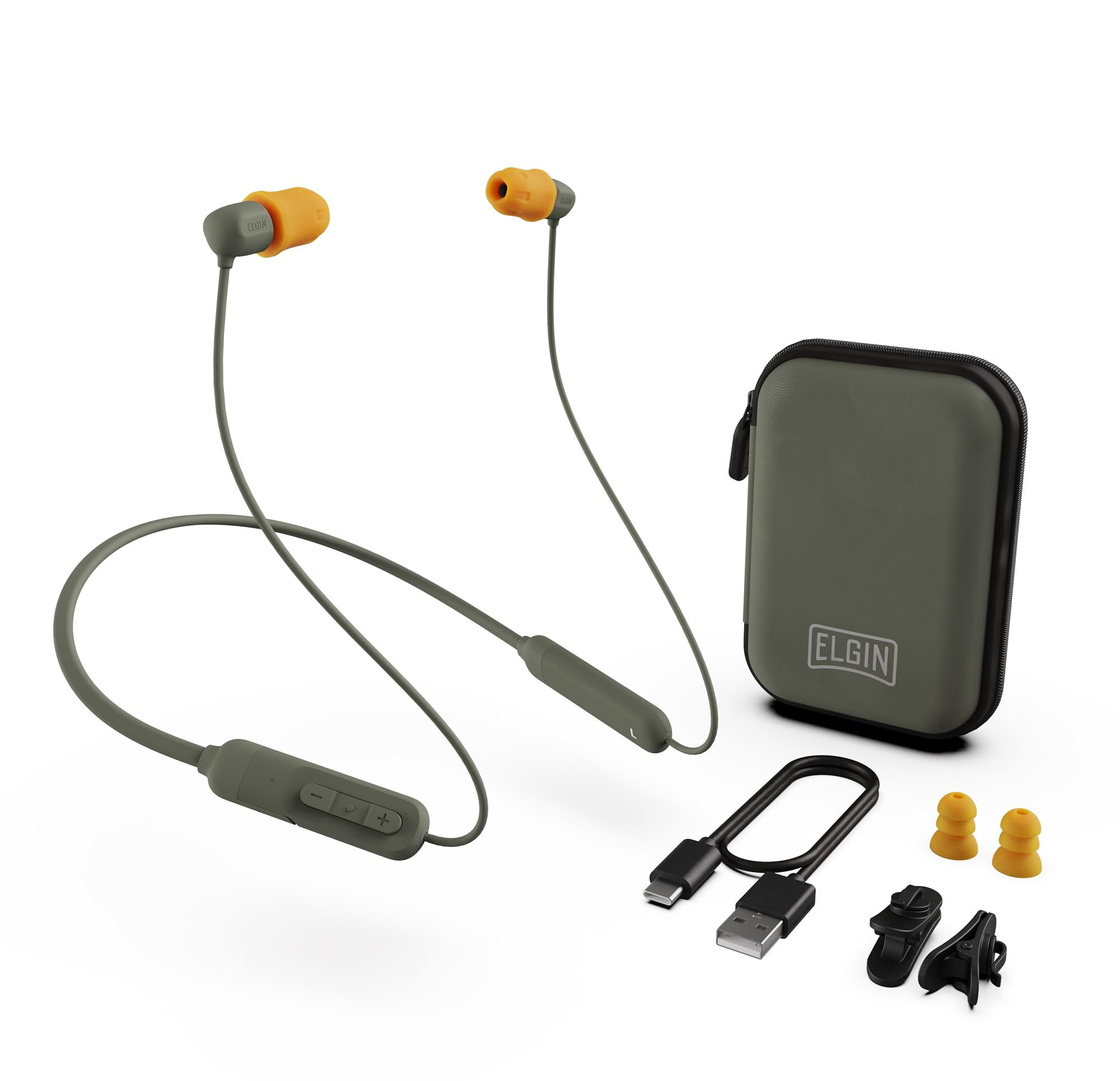
The Elgin Discord Gen 3 hits the sweet spot where hearing protection, audio delivery, and helmet compatibility converge. With an ANSI-certified 31 dB Noise Reduction Rating, these earbuds provide a level of passive isolation that ANC-equipped consumer buds simply cannot match — and they do it without the wind-noise amplification that plagues active cancellation under a helmet. The 8 mm PET dynamic driver and precision-molded acoustic chamber deliver balanced stereo sound across a 20–20,000 Hz range, minimizing distortion in the noisy interior of a helmet at speed.
Build quality is clearly aimed at industrial and outdoor use. The IP67 rating means these buds shrug off sweat, rain, and dust without hesitation. The magnetic earbud clasp keeps them secured around your neck when not in use, which is a small but meaningful detail when you stop for fuel or a break. Owner feedback consistently highlights the battery life as exceeding the advertised 14 hours, with several reports noting four full shifts of heavy use before needing a charge. The replaceable memory foam ear tips conform to the ear canal for a reliable acoustic seal that stays put under a helmet.
The trade-off for this level of protection is that the Discord Gen 3 is not marketed as a high-fidelity music listening device. Audiophiles comparing them to flagship Sony or Sennheiser buds will notice compressed dynamics and a less spacious soundstage. However, for the specific task of hearing music, podcasts, and GPS directions clearly while blocking engine and wind noise inside a helmet, these buds outperform options costing three times as much. They are the most complete solution for riders who treat hearing preservation as a non-negotiable.
What works
- Industry-leading 31 dB passive noise reduction that ANC cannot match under a helmet
- IP67 waterproofing handles all weather conditions without concern
- Memory foam tips create a durable acoustic seal that survives helmet movement
- Battery life consistently exceeds the rated 14 hours in real-world use
What doesn’t
- Audio fidelity is utilitarian rather than premium, with compressed dynamics
- Carrying case durability has received mixed feedback in owner reports
- Foam tips may require periodic replacement to maintain the acoustic seal
2. Cardo Packtalk Helmet Kit

The Cardo Packtalk Helmet Kit represents the purpose-built approach to helmet audio — it is not an earbud that happens to fit under a helmet, but a communication and audio system engineered specifically for that environment. The kit includes interchangeable boom and wired microphones to accommodate full-face, modular, and open-face helmets, along with JBL-tuned speakers that mount inside the helmet’s ear pockets. With a 30-hour battery life and Bluetooth 5.2 connectivity, this system is built for multi-day touring without recharging stops.
What sets the Packtalk apart from universal earbuds is the integration of voice control and the ability to pair with other Cardo units for rider-to-rider communication. The speakers deliver significantly more volume headroom than any in-ear bud can produce, which matters when wind noise at highway speeds overwhelms standard audio. The Dynamic Mesh Communication technology (on compatible Packtalk models) allows group rides to stay connected without the range limitations of traditional Bluetooth pairing. Owner reports emphasize the natural sound quality of the JBL drivers even at high speeds.
The downside is that installation requires mounting speakers and a control unit inside the helmet, which adds weight and complexity. Not all helmets have adequate ear pockets for the speaker modules, and some riders find the control unit bulky. Additionally, this is a dedicated helmet system — you cannot use it as a set of earbuds for the gym or commuting off the bike. For riders who want the absolute best audio fidelity and communication features while riding, the Packtalk is the benchmark, but it comes at a premium that casual listeners may not justify.
What works
- JBL-tuned speakers provide loud, clear audio that cuts through wind noise at highway speeds
- 30-hour battery life supports multi-day touring without charging
- Interchangeable microphones fit any helmet style — full-face, modular, or open-face
- Voice control keeps hands on the bars and eyes on the road
What doesn’t
- Requires permanent installation inside the helmet, adding weight and bulk
- Speaker pockets may not fit all helmet models properly
- Price point is significantly higher than wireless earbuds that serve multiple use cases
3. Fodsports FX-S Motorcycle Bluetooth Headset

The Fodsports FX-S is a motorcycle-specific Bluetooth headset that bridges the gap between universal earbuds and premium helmet communication systems. Equipped with a Qualcomm Bluetooth 5.4 chip and 40 mm Hi-Fi speakers, it delivers clear audio and reliable connectivity at a fraction of the cost of established brands like Cardo or Sena. The two-way intercom function supports rider-to-rider communication up to 1000 meters, making it a legitimate option for group rides without the four-figure price tag of high-end mesh systems.
The IP67 waterproof rating means the FX-S handles rain and road spray without issue, and the Type-C fast charging supports use while charging — a practical advantage for long touring days. The oversized, glove-friendly buttons make it possible to adjust volume, answer calls, or trigger the voice assistant without removing gloves or fumbling with touch controls. The kit includes both a button microphone for full-face helmets and a boom microphone for open-face helmets, ensuring compatibility regardless of helmet type. Owner feedback highlights the stable Bluetooth connection and the surprising audio quality for a sub-fifty-dollar unit.
Where the FX-S falls short is in its speaker size. The 40 mm drivers are thick enough that some helmets — especially sport-oriented models with tight ear pockets — may not accommodate them without causing pressure. The intercom is limited to two riders, so larger groups will need to upgrade to Fodsports’ multi-rider models. Battery life is rated at 20 hours, but real-world use with the intercom active cuts that significantly. As a dedicated helmet speaker system, it does not double as portable earbuds for off-bike use.
What works
- Purpose-built for motorcycle helmets with high-output 40 mm speakers
- IP67 waterproof rating withstands rain, spray, and dust without failure
- Glove-friendly physical buttons eliminate the frustration of touch controls while riding
- Two-way intercom with 1000-meter range works reliably for paired riding
What doesn’t
- Speaker thickness creates pressure points in helmets with shallow ear pockets
- Intercom limited to two riders only
- Cannot be used as standalone earbuds away from the helmet
4. King Lucky Clip-On Gen 3

The King Lucky Clip-On Gen 3 takes a fundamentally different approach to helmet-compatible audio. Rather than inserting into the ear canal, these earbuds clip onto the outer ear using an extended, slim ear hook, leaving the ear canal open. This design eliminates the pressure and discomfort that deep-insertion buds cause under a tight helmet, and it allows ambient sound — including traffic, sirens, and fellow riders — to reach your ears naturally. The open-ear approach is inherently safer for riders who want music without losing situational awareness.
At just 5.2 grams per bud, the Gen 3 model is light enough to forget you are wearing it, and the skin-friendly silicone material prevents irritation during hours of continuous wear. Bluetooth 5.4 provides a stable connection with low latency, and the upgraded 13 mm dynamic drivers deliver deeper bass and clearer vocals than typical open-ear buds. The 50-hour total playtime (7 hours per charge plus the case) eliminates range anxiety for all but the longest touring days. The design explicitly accommodates glasses wearers and small ears, which broadens its compatibility significantly.
The trade-off of the open-ear design is that audio quality cannot match in-ear buds in bass response or noise isolation. At highway speeds, wind noise will compete with music, and you will need to raise the volume to hear clearly. The clip-on fit works well with most helmets but may loosen under aggressive head movement or when removing a snug full-face helmet. Additionally, the touch controls can be triggered accidentally when donning or doffing the helmet. For riders who prioritize safety awareness and comfort over audio fidelity, this is a uniquely capable option.
What works
- Open-ear design preserves ambient awareness for safer street riding
- Ultra-light 5.2 g build causes zero ear fatigue even during all-day wear
- Extended ear hooks accommodate glasses wearers and small ear shapes
- 50-hour total battery life with charging case covers multi-day trips
What doesn’t
- Open-ear audio lacks bass impact and struggles against high-speed wind noise
- Touch controls can activate accidentally when handling the helmet
- Clip-on fit may shift during aggressive helmet removal
5. TOZO NC9 Hybrid ANC Earbuds

The TOZO NC9 offers an aggressive value proposition with hybrid active noise cancellation rated at 45 dB maximum depth, six-microphone ENC for calls, and IPX8 waterproofing — all at a price that undercuts most competitors by a wide margin. The 10 mm dynamic drivers paired with OrigX Acoustic 2.0 technology deliver deep bass and clear highs that satisfy everyday listening. The 60-hour total playtime (40 hours with ANC active) means you can ride for a full work week between charging sessions.
Comfort is a strong point thanks to the ergonomic housing design and six included ear tip sizes, which improve the chances of finding a reliable seal. The TOZO app adds 32 EQ presets and a customizable EQ curve, letting you dial in the sound signature for helmet acoustics specifically. The LED display on the charging case shows remaining battery percentage, removing guesswork before a ride. Owner feedback praises the fit, battery life, and surprising ANC performance given the price point, with many noting these replaced far more expensive buds for daily use.
The critical limitation for helmet use is that the ANC system is sensitive to wind. Several owner reports specifically mention that wind noise under a motorcycle helmet degrades the ANC performance noticeably, sometimes making the audio experience worse than with ANC off. The IPX8 rating is excellent for weather protection, but the buds are larger than ultra-compact alternatives and may press against tight helmet interiors. For riders in quiet environments or those who can keep the helmet vent closed, the NC9 delivers immense value — but wind-prone riders should test before committing.
What works
- Aggressive 45 dB ANC depth provides excellent isolation in calm conditions
- IPX8 waterproof rating exceeds any reasonable riding requirement for weather protection
- 60-hour total playtime with LED battery display eliminates charging anxiety
- 32 EQ presets in the app allow fine-tuning audio for helmet acoustics
What doesn’t
- ANC performance degrades noticeably with wind noise under a helmet at speed
- Housing size may create pressure points in helmets with tight ear clearance
- Touch controls can be finicky with gloved hands
6. eleror Z1 Extra-Small Wireless Earbuds

The eleror Z1 is engineered from the ground up for the exact scenario that most earbuds fail at: fitting under tight headgear. At 2.3 grams per bud with a semi-in-ear, no-stem design, these are among the smallest wireless earbuds available. The ultra-low profile means they sit almost flush with the ear, creating zero interference with helmet padding or EPS liner. Riders who struggle with standard buds being pushed out of position when pulling on a helmet will find the Z1’s form factor transformative.
The semi-open design prioritizes comfort and ambient awareness over deep insertion and isolation. The 8 mm dynamic drivers deliver a natural, balanced soundstage with clear vocals and detailed mids rather than overpowering bass — a tuning choice that suits spoken navigation instructions and podcasts as well as music. The IPX5 sweat resistance handles riding in warm weather without concern. Bluetooth 5.2 provides a stable connection, and the touch controls allow easy music and call management without reaching for the phone. Owner feedback consistently highlights the near-invisible fit and all-day comfort.
These earbuds are not for riders who need noise isolation. The semi-open design lets in substantial ambient sound, which at highway speeds means wind noise will compete with audio. Battery life is limited to 6 hours per charge with 15 hours total from the case, which may not cover a full day of touring. The lack of ANC or significant passive isolation means these work best for around-town riding, commuting, or any scenario where staying aware of traffic is more important than audio immersion. For the specific niche of helmet comfort, the Z1 is unmatched.
What works
- Extremely low 2.3 g weight and flush profile create zero helmet interference
- Semi-open design keeps riders aware of traffic and surroundings
- Natural, balanced sound tuning avoids fatigue during long listening sessions
- IPX5 rating handles sweat and light rain without issue
What doesn’t
- Minimal noise isolation allows significant wind and road noise to compete with audio
- Battery life is limited to 6 hours per charge, insufficient for full-day touring
- Semi-open design lacks bass impact compared to in-ear alternatives
7. Elgin Rumble Wired Earplug Headphones
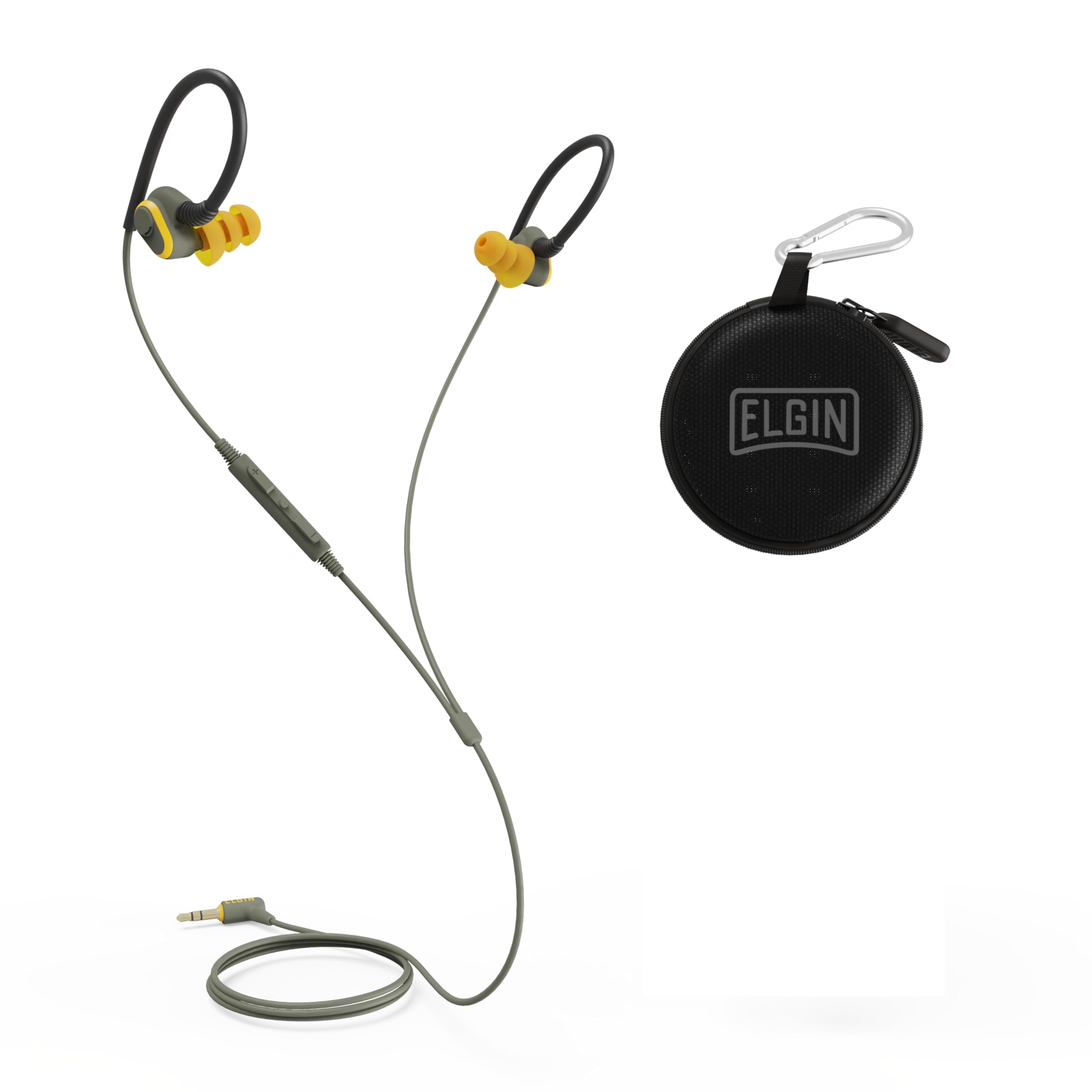
The Elgin Rumble takes the opposite approach of the wireless giants: wired connectivity, passive hearing protection, and industrial build quality. With an ANSI-certified 27 dB Noise Reduction Rating, these earbuds provide serious noise attenuation that protects hearing in loud environments without relying on batteries or Bluetooth chips. The dual 6 mm custom-tuned drivers deliver clear audio whether you are listening to music, following GPS prompts, or taking calls via the in-line controller. The 3.5 mm angled jack works with smartphones, tablets, and laptops, ensuring broad device compatibility.
The Kevlar-reinforced 48-inch cable is the standout durability feature. Standard earbud cables fray and fail within months of regular use, but the Rumble’s aramid fiber reinforcement resists the wear and tear of daily commuting, workshop use, and riding. The IP67 water and dust resistance means rain, sweat, and road grime will not compromise function. The replaceable USP Class V silicone ear tips maintain hygiene and fit over time. For riders who want hearing protection as the primary function with audio as a secondary benefit, the Rumble delivers a focused, no-fuss solution.
The wired nature is the defining trade-off. The cable must be routed through or under the helmet liner and connected to a device in your pocket or mounted on the handlebar, which adds setup time and potential snag hazards. The in-line controller is functional but not designed for gloved operation, and the 27 dB isolation is effective enough that you may struggle to hear emergency vehicles if you ride with both earbuds in. For riders who prioritize simplicity, zero battery anxiety, and certified hearing protection at a minimal cost, the Elgin Rumble is a smart, durable choice.
What works
- ANSI-certified 27 dB NRR provides genuine, measurable hearing protection
- Kevlar-reinforced cable resists fraying and wear far longer than standard earbud cables
- IP67 rating handles rain, sweat, and dust without performance loss
- Wired design eliminates battery anxiety and Bluetooth pairing issues
What doesn’t
- Wired cable requires careful routing through helmet and creates snag potential
- In-line controller buttons are difficult to operate with riding gloves
- 27 dB isolation may block emergency vehicle sirens when used at volume
Hardware & Specs Guide
Driver Size And Sound Quality
Driver diameter directly affects the volume and frequency response an earbud can produce. Standard in-ear buds use 6–10 mm dynamic drivers that balance bass depth against power efficiency. Helmet-specific systems like the Fodsports FX-S use larger 40 mm drivers because they sit outside the ear canal and need more displacement to overcome ambient noise. For in-ear buds under a helmet, a 8–10 mm driver with a sensitivity rating above 100 dB generally provides sufficient headroom to hear music at highway speeds without maxing out volume.
Noise Reduction Rating (NRR)
NRR is an ANSI-standard measurement of passive noise attenuation expressed in decibels. A rating of 25 dB means the earbud reduces ambient noise by approximately 25 dB under ideal test conditions. For motorcycle riding, an NRR of 25–31 dB is the sweet spot — enough to reduce wind roar to a tolerable level while still allowing awareness of horns and sirens. Elgin’s Discord Gen 3 and Rumble models both carry ANSI-certified NRR values, which means their attenuation has been verified through standardized testing rather than self-reported.
Bluetooth Version And Codec Support
Bluetooth 5.2 and 5.3 provide the low-latency, stable connectivity needed for riding where your phone or GPS unit may be stored in a jacket pocket or tank bag. AAC and aptX codecs preserve audio quality over the wireless link, but for helmet use where wind noise is the primary barrier to clarity, SBC at a high bitrate is often sufficient. The Fodsports FX-S uses Qualcomm Bluetooth 5.4 for enhanced range and interference rejection, which is a practical advantage in urban areas with dense wireless congestion.
Water And Dust Resistance (IP Ratings)
The IP (Ingress Protection) rating consists of two digits: the first for solid particle protection and the second for liquid ingress. In the IPX8 rating of the TOZO NC9, the X indicates no rating for dust, while 8 indicates continuous submersion beyond one meter. IPX5 covers sweat and light rain. IP67 — found on the Elgin Rumble and Discord Gen 3 — offers complete dust protection and immersion up to one meter for 30 minutes. For helmet use where rain, sweat, and road spray are routine, IPX5 is the minimum recommended baseline.
FAQ
Can I wear any wireless earbuds under a motorcycle helmet?
Is active noise cancellation safe to use while riding?
How do I keep earbuds from falling out when putting on a helmet?
Which connection type works best for helmet use — wired or wireless?
Final Thoughts: The Verdict
For most buyers, the best in ear buds for wearing helmets winner is the Elgin Discord Gen 3 because it combines ANSI-certified 31 dB noise reduction with durable IP67 construction and reliable Bluetooth audio at a reasonable price point. If you want premium helmet-integrated communication with high-fidelity JBL speakers and voice control, grab the Cardo Packtalk Helmet Kit. And for budget-conscious riders who need certified hearing protection and a cable that will not fray, nothing beats the Elgin Rumble Wired.

Certification: BSc in Mechanical Engineering
Education: Mechanical engineer
Lives In: 539 W Commerce St, Dallas, TX 75208, USA
Md Amir is an auto mechanic student and writer with over half a decade of experience in the automotive field. He has worked with top automotive brands such as Lexus, Quantum, and also owns two automotive blogs autocarneed.com and taxiwiz.com.