Transmission heat is the single greatest threat to a 4Runner’s drivetrain longevity, especially once you add towing weight, mountain grades, or extended off-road crawling. The factory cooling solution works for daily commuting, but the moment you push the vehicle harder, fluid temperatures climb fast and oxidation accelerates. A well-chosen auxiliary cooler or upgraded radiator-integrated unit is the difference between a transmission that lasts 200,000 miles and one that fails before 100,000.
I’m Amir — the founder and writer behind Four Wheel Ask. My work focuses on cross-referencing technical specifications, analyzing real owner feedback across forums and review platforms, and studying how aftermarket components perform under sustained thermal load so you don’t have to guess what actually works.
This guide covers standalone coolers, radiator-integrated units, and fan-assisted setups for the 4Runner platform across multiple generations. After analyzing owner feedback and test data, I confirm that selecting the best 4runner transmission cooler depends on your specific towing load and climate demands.
How To Choose The Best 4Runner Transmission Cooler
Selecting the right transmission cooler for your 4Runner requires matching the unit’s thermal capacity to your driving conditions. A cooler that works for light highway duty will struggle during sustained towing or off-road crawling. Understanding the core differences in design, mounting, and flow characteristics helps you avoid buying something that either undercools or complicates your installation without benefit.
Standalone vs. Radiator-Integrated Coolers
Radiator-integrated coolers combine engine cooling and transmission cooling into one assembly, which saves space and keeps the installation clean. These are ideal for owners who want a direct OEM-style replacement and do not plan to exceed the vehicle’s stock towing capacity significantly. Standalone coolers mount separately in front of the radiator or condenser and offer higher thermal capacity because they can be sized independently of the engine cooling system. For heavy towing or frequent mountain driving, a standalone unit provides a meaningful temperature drop over an integrated setup.
Cooling Capacity and GVWR Ratings
Gross Vehicle Weight Rating (GVWR) is the most direct indicator of a cooler’s thermal capacity. A cooler rated for 26,000 pounds GVWR suits moderate towing, while 40,000-pound ratings handle heavy trailers and sustained high loads. Do not assume bigger always means better for your specific 4Runner — an oversized cooler can delay fluid warm-up in cold climates, creating wear during the first miles of operation. Match the rating to your actual tow weight and ambient temperature range.
Plate-and-Fin vs. Tube-and-Fin Design
Plate-and-fin (stacked plate) coolers use multiple flat plates with internal turbulators to agitate the fluid and maximize heat transfer into the fins. This design delivers superior cooling per square inch of face area compared to traditional tube-and-fin coolers. Tube-and-fin units are lighter and less expensive but require a larger frontal area to achieve the same heat rejection. For a 4Runner where space in front of the condenser is limited, a stacked-plate cooler typically provides the best thermal performance for the available mounting area.
Thermal Bypass Valves and Cold-Weather Operation
A thermal bypass valve allows transmission fluid to bypass the cooler when it is cold, speeding warm-up and reducing internal drag. In cold climates or winter daily driving, this feature is critical for transmission longevity because sustained operation below the ideal fluid temperature causes condensation buildup and inadequate lubrication. Coolers without a bypass can over-cool in winter, so if you drive year-round in freezing conditions, prioritize a unit with an integrated bypass or add an external thermostatic valve.
Quick Comparison
On smaller screens, swipe sideways to see the full table.
| Model | Category | Best For | Key Spec | Amazon |
|---|---|---|---|---|
| Mishimoto MMTC-SP-13N | Standalone Cooler | Towing & Heavy Duty | 13-Row Stacked Plate | Amazon |
| TRQ RDA80232 | Radiator Assembly | Direct OEM Replacement | Fits 2010-2020 4Runner | Amazon |
| JEGS 555-60388 | Cooler with Fan | Max Cooling Output | 26,000 GVW with Fan | Amazon |
| Derale 15850 | Cooler with Fan | Compact Installation | Plate & Fin with Fan | Amazon |
| Tru-Cool 4739 | Standalone Cooler | Heavy Towing & Bypass | 40,000 GVW with Bypass | Amazon |
| Derale 13504 | Standalone Cooler | Universal Fit | Plate & Fin 11×12 in | Amazon |
| A-Premium APRAD348 | Radiator Assembly | Budget Replacement | OEM Fit 2003-2009 | Amazon |
| Readair RRadiator | Radiator Assembly | Budget Replacement | OEM Fit 2003-2009 | Amazon |
| PHILTOP CU2580 | Radiator Assembly | Entry-Level Option | OEM Fit 2003-2009 | Amazon |
In‑Depth Reviews
1. Mishimoto MMTC-SP-13N

The Mishimoto 13-row stacked-plate cooler represents the sweet spot between thermal capacity, build quality, and ease of installation. The core measures 22.85 by 7.10 inches with a 1.25-inch thickness, which fits neatly in front of the condenser on most 4Runner generations without requiring major bracket fabrication. The corrosion-resistant aluminum core with powder-coat finish resists stone chips and road salt better than bare aluminum units.
Mishimoto includes a complete installation kit with SAE J1532 hose, stainless-steel clamps, O-ring sealed adapters, and universal mounting brackets. The 40,000 GVWR rating matches the capacity of much larger coolers while keeping the package compact enough for daily-driver clearance. Owners report consistent fluid temperature drops of 20 to 30 degrees Fahrenheit under towing loads compared to factory integrated cooler setups.
What separates this unit from cheaper alternatives is the lifetime warranty and the quality of the included hardware. The hose sleeve prevents abrasion against sheet metal, and the barb fittings seal cleanly without leaks. For the 4Runner owner who wants one cooler that handles everything from daily commuting to weekend towing, this is the benchmark.
What works
- Excellent heat rejection from 13-row stacked-plate core
- Lifetime warranty backs the investment
- Full mounting kit with quality hose and clamps
What doesn’t
- No integrated thermal bypass for cold climates
- Universal brackets may require minor drilling on some 4Runner years
2. TRQ RDA80232
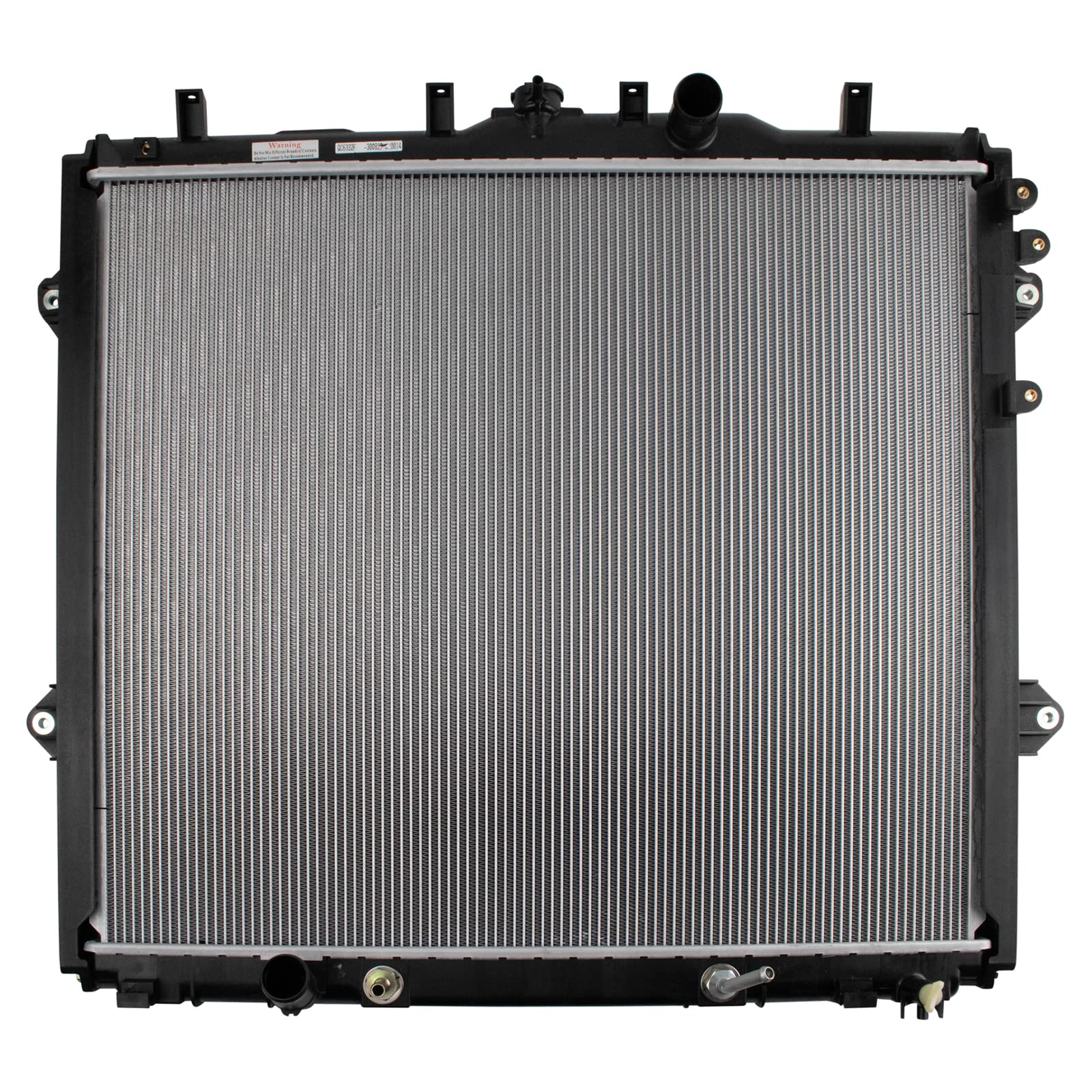
TRQ has built a reputation over 25 years for producing direct-fit replacement parts that match OEM specifications without the dealership price. This radiator assembly with integrated transmission oil cooler covers the 2010-2020 4Runner with the V6 4.0L, making it the go-to choice for owners of the fifth-generation platform who want a simple swap without modifying cooling lines or brackets.
The assembly includes a one-row aluminum core with PA66 GF30 plastic tanks and a brass transmission cooler section. The integrated design keeps the installation clean and retains the factory cooling fan shroud clearance. TRQ provides a large catalog of DIY installation videos, which is a real advantage for owners who prefer to do the work themselves and want visual guidance before starting.
Reference numbers cross to OEM part numbers 1640031710 through 1640031713 and 16410AZ030, confirming the fitment is thoroughly validated. The pre-assembled component eliminates the need to transfer sensors or fittings from the old radiator. For owners keeping their 4Runner near stock towing capacity and wanting a hassle-free replacement with proven brand support, this is the premium choice.
What works
- Direct OEM fitment with no modifications required
- Extensive DIY video library for installation support
- Proven brand with 25 years of replacement parts experience
What doesn’t
- Does not cover 2003-2009 4Runner models
- Integrated cooler capacity is limited vs. standalone units
3. JEGS 555-60388
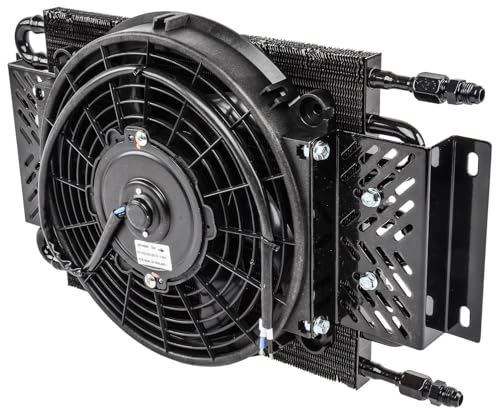
The JEGS 555-60388 combines a 26,000 GVWR plate-type cooler with an 11-inch electric fan rated at 500 CFM, creating a forced-air cooling system that excels in low-speed situations where natural airflow is limited. This matters for 4Runner owners who spend significant time off-road at crawling speeds or idling in hot climates where transmission temperatures climb rapidly without forward motion.
The cooler measures 11.25 by 18.5 inches with a 3.75-inch depth that includes the fan housing, so mounting requires careful planning for clearance. The fan draws 5.6 amps at full speed and can be configured for push or pull operation depending on available space. The black powder-coated finish protects against corrosion and blends into the engine bay visually.
Installation requires running power for the electric fan and selecting a trigger source — either a thermostatic switch or a manual toggle. Owners who want maximum cooling during heavy towing or extended rock crawling will appreciate the forced-air capability, though the added complexity of wiring and fan control is worth factoring into the build. This is a purpose-driven unit for those who routinely push their transmission to the thermal limit.
What works
- Electric fan provides cooling at idle and low speeds
- 500 CFM airflow moves significant heat
- Black powder coat resists corrosion and wear
What doesn’t
- Requires wiring and fan control setup
- Limited to 26,000 GVW compared to premium units
4. Derale 15850 Atomic-Cool

The Derale 15850 Atomic-Cool cooler pairs a high-efficiency OEM-style plate-and-fin core with an integrated electric fan in a compact package measuring 12.75 by 9.375 by 4.313 inches. The reduced footprint allows mounting in tight spaces where full-width coolers will not fit, making it a strong option for 4Runner builds with aftermarket bumpers, winches, or intercoolers already occupying the frontal area.
This unit uses 5/8-18 female O-ring inlet and outlet ports with included -8AN male adapters, providing a secure, leak-resistant connection for high-flow applications. The black powder-coated aluminum construction stands up to debris and moisture without corroding. Derale includes the electric fan pre-mounted, so the assembly arrives ready to install as a single unit.
Owners who have limited space in front of the condenser but still want the benefits of a fan-assisted cooler will find this design solves a specific packaging problem. The trade-off is that the smaller core surface area means lower total heat rejection compared to larger coolers, so this suits moderate towing rather than maximum load scenarios. It is a thoughtful solution for the space-constrained builder.
What works
- Compact size fits tight installation spaces
- Integrated fan with O-ring sealed ports
- Includes -8AN adapters for high-flow systems
What doesn’t
- Smaller core limits total heat rejection capacity
- Premium pricing for the compact form factor
5. Tru-Cool Max LPD4739

The Tru-Cool Max LPD4739 delivers a 40,000 GVWR rating with a low-pressure-drop stacked-plate design that maintains full transmission line flow even under heavy load. The LPD (Low Pressure Drop) technology means the fluid circulates freely without restriction, which preserves converter lockup feel and shift quality while still providing substantial heat rejection. This is a critical detail for owners who tow heavy trailers and cannot afford any loss of line pressure.
The integrated thermal bypass valve is a standout feature for cold-weather drivers. When the fluid is cold, the bypass routes it around the cooler so the transmission reaches operating temperature faster. Once the fluid warms up, the valve directs flow through the cooler automatically. This prevents the common problem of overcooling that plagues large standalone coolers in winter climates.
With dimensions of 26 by 10 by 3 inches, this cooler requires adequate frontal space but rewards the installer with class-leading capacity. The furnace-brazed aluminum construction is robust enough for commercial-grade use, and the low weight of the assembly simplifies mounting. For the owner who prioritizes thermal capacity and cold-weather protection, this is a well-engineered value.
What works
- 40,000 GVW rating for serious towing
- Built-in thermal bypass protects in cold weather
- Low pressure drop design maintains line pressure
What doesn’t
- Large footprint requires ample mounting space
- No electric fan for idle cooling
6. Derale 13504 Series 8000

The Derale 13504 is a universal plate-and-fin cooler that delivers reliable performance at a price point that makes it accessible for budget-conscious 4Runner owners. The core dimensions of 11 by 12 inches with a 7/8-inch depth fit a wide range of mounting locations, and the furnace-brazed aluminum construction provides consistent cooling without the weight of larger units.
Derale uses embossed turbulators inside each tube to agitate the transmission fluid and break up the boundary layer along the tube walls. This mechanical disruption of the fluid film improves heat transfer significantly compared to smooth-tube designs of equivalent size. The extruded plastic cooling fin guards protect the fins from debris damage without restricting airflow.
Installation is straightforward with the included mounting hardware, and the compact size allows placement in front of the radiator or condenser on most 4Runner generations. This cooler works well for owners who do light towing or want added thermal margin for daily driving. It is a solid entry point into auxiliary cooling without overcomplicating the build.
What works
- Compact universal design fits many mounting locations
- Turbulator inserts improve heat transfer efficiency
- Protective fin guards resist damage from debris
What doesn’t
- No thermal bypass for cold-weather operation
- Moderate GVW rating compared to larger coolers
7. A-Premium APRAD348

The A-Premium APRAD348 is a complete radiator assembly with an integrated transmission oil cooler designed specifically for the 2003-2009 4Runner V6 4.0L and the 2007-2014 FJ Cruiser. This direct-fit approach replaces the entire factory cooling stack, including the engine radiator and the internal transmission cooler, in one package. For owners with high-mileage original radiators, this addresses both engine and transmission cooling simultaneously.
The core construction uses a high-grade plastic tank paired with an aluminum core, keeping weight lower than all-metal alternatives while delivering adequate thermal performance for daily driving and moderate towing. The brass transmission cooler section is integrated into the radiator tank, maintaining the factory flow path without needing additional hoses or adapters. A-Premium backs the assembly with a one-year unlimited-mileage warranty.
Fitment references cross to OEM numbers 2580, CU2580, 8012580, 1640031352, 1640031353, and 1640031461, confirming coverage across multiple model years. The core dimensions of 25-9/16 by 23-9/16 inches with 1-inch thickness match the factory radiator envelope precisely. This is a sensible choice for owners who want a straightforward OEM-style refresh at a competitive cost.
What works
- Complete radiator and cooler assembly in one package
- Direct OEM fitment for 2003-2009 4Runner
- One-year warranty provides basic coverage
What doesn’t
- Integrated cooler capacity is lower than standalone units
- Plastic tank construction less durable than all-aluminum
8. Readair RRadiator
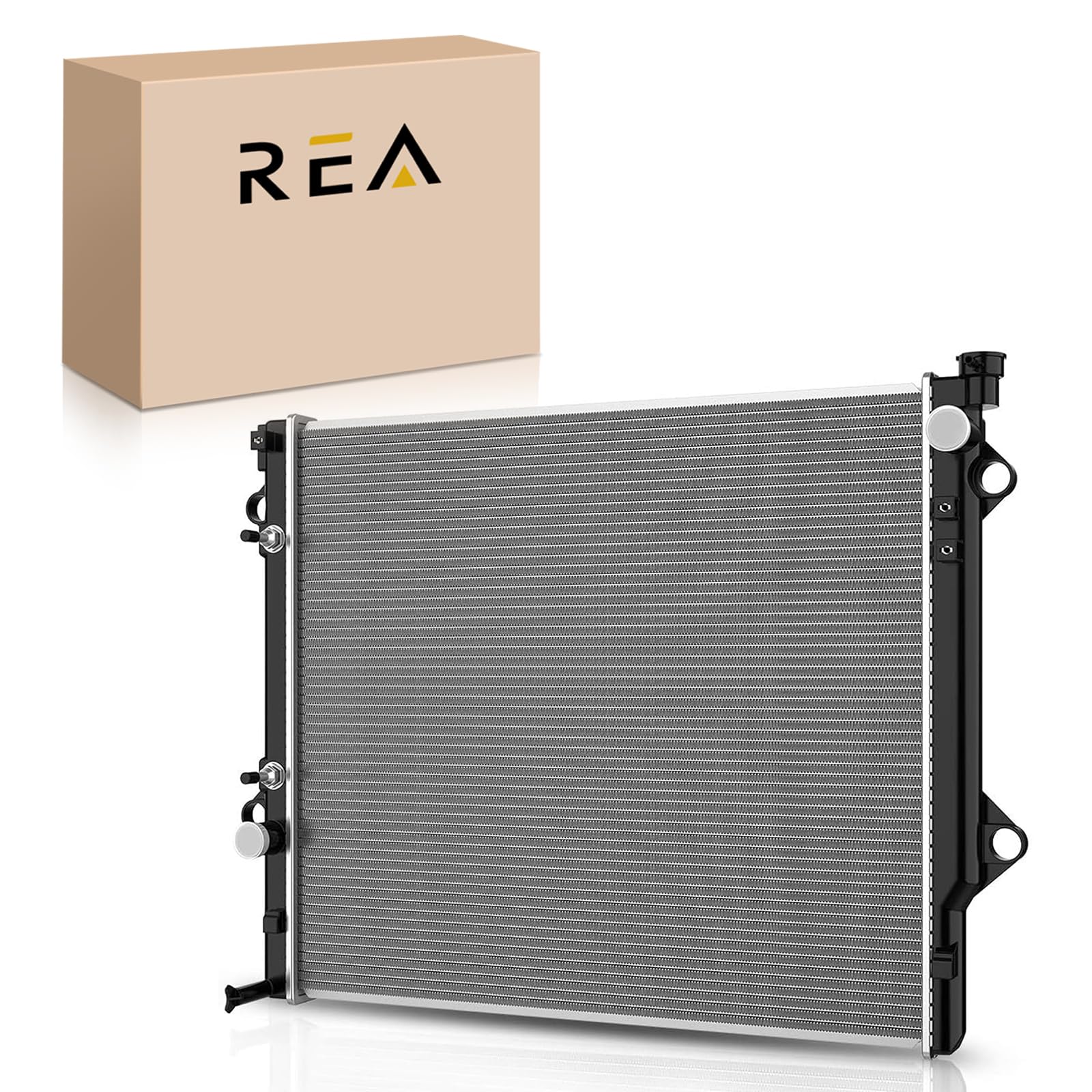
The Readair radiator assembly with integrated transmission oil cooler targets the same 2003-2009 4Runner V6 4.0L and 2007-2014 FJ Cruiser market as the A-Premium unit, but brings TIG-welded aluminum core construction and PA66 GF30 reinforced plastic tanks. The use of TIG welding on the core joints adds durability at the points where vibration fatigue typically causes failures in lower-cost radiators.
The brass transmission oil cooler section passes a factory leak test before shipping, and the treated coating applied to the assembly resists corrosion from road salt and coolant interaction. Core dimensions measure 25-3/5 inches tall by 23-1/10 inches wide with a 1-inch thickness, matching the factory radiator envelope for a direct swap. Inlet and outlet diameters are 1-3/10 inches, consistent with factory hose sizes.
Readair provides a two-year unlimited-mileage warranty, which is double the coverage period of many competitors in this price class. For owners who want the convenience of an integrated cooler with better build quality than absolute budget units, the Readair offers a meaningful step up in construction without moving to premium pricing. The warranty alone suggests confidence in the TIG-welded core design.
What works
- TIG-welded core adds durability at critical joints
- Two-year unlimited-mileage warranty
- Factory leak-tested before shipping
What doesn’t
- Integrated cooler limited to moderate thermal loads
- Plastic tanks still present failure risk over time
9. PHILTOP CU2580

The PHILTOP CU2580 is a complete radiator assembly with an integrated transmission oil cooler designed for the 2003-2009 4Runner 4.0L and 2007-2014 FJ Cruiser. It uses a high-density aluminum core with multi-layer cooling fins to maximize heat dissipation within the factory radiator footprint. For owners replacing a failed or leaking original radiator, this provides a functional drop-in solution at the most accessible price point in this guide.
The package includes fixed foam padding in four corners that secures the radiator in the frame and prevents movement that could stress the hose connections or cooler lines. Reference numbers cross to OEM parts including 1640031350, 1640031351, 1640031460, and 16410AZ013. The unit carries IATF16952 certification, which confirms that the manufacturing process meets automotive quality management standards.
This is an entry-level solution suited for owners who need a functional radiator and integrated cooler at a minimal investment. The aluminum core provides better thermal performance than the original copper-brass radiators found in older vehicles, though the integrated cooler capacity is modest compared to adding a standalone auxiliary cooler. For a strictly stock 4Runner used for daily driving, this covers the requirement without overspending.
What works
- Affordable direct-fit replacement for stock 4Runner
- High-density aluminum core with multi-layer fins
- IATF16952 certified manufacturing quality
What doesn’t
- Integrated cooler limited for towing capacity
- Basic feature set compared to premium radiators
Hardware & Specs Guide
Stacked-Plate vs. Tube-and-Fin Design
Stacked-plate coolers use multiple flat plates with internal turbulators to create a high-turbulence fluid path that maximizes heat transfer into the cooling fins. This design typically delivers 20 to 30 percent more heat rejection per square inch of face area compared to traditional tube-and-fin coolers. Tube-and-fin designs are lighter and less expensive to manufacture but require a larger frontal area to achieve the same cooling capacity. For the 4Runner, where space in front of the condenser and radiator is at a premium, stacked-plate units offer the best thermal performance for the available mounting real estate.
GVWR Ratings and Thermal Bypass
Gross Vehicle Weight Rating (GVWR) indicates the maximum vehicle weight the cooler is designed to handle under sustained operation. A cooler rated for 26,000 pounds GVWR suits light towing and moderate duty, while 40,000-pound ratings handle heavy trailers and commercial use. Thermal bypass valves allow cold fluid to bypass the cooler during warm-up, preventing overcooling in winter climates. Units without a bypass can cause the transmission to run below the ideal operating temperature, leading to condensation accumulation and accelerated wear. If you drive in freezing conditions, prioritize a cooler with an integrated thermal bypass or add an external thermostatic valve to the circuit.
FAQ
Do I need a transmission cooler if I do not tow with my 4Runner?
Can I install a standalone cooler and keep the factory radiator cooler?
How do I know which GVWR rating I need for my 4Runner?
What is the difference between plate-and-fin and tube-and-fin coolers?
Is a fan-assisted cooler worth the extra cost and wiring complexity?
Final Thoughts: The Verdict
For most buyers, the best 4runner transmission cooler winner is the Mishimoto MMTC-SP-13N because it combines a high-efficiency 13-row stacked-plate core with a lifetime warranty and a complete installation kit that works across multiple 4Runner generations. If you want direct OEM-style replacement without modifying hoses or brackets, grab the TRQ RDA80232 for fifth-generation 4Runners. And for heavy towing in cold climates where a thermal bypass is essential, nothing beats the Tru-Cool Max LPD4739 with its 40,000 GVWR rating and integrated bypass valve.

Certification: BSc in Mechanical Engineering
Education: Mechanical engineer
Lives In: 539 W Commerce St, Dallas, TX 75208, USA
Md Amir is an auto mechanic student and writer with over half a decade of experience in the automotive field. He has worked with top automotive brands such as Lexus, Quantum, and also owns two automotive blogs autocarneed.com and taxiwiz.com.