A deep scratch in your car’s paint is more than an eyesore—it’s an open door to rust and rapid clear coat degradation. Choosing the right filler and compound system determines whether that scratch disappears or becomes a permanent reminder of a hasty decision.
I’m Amir — the founder and writer behind Four Wheel Ask. Over the years, I’ve analyzed hundreds of product formulations, studied owner feedback across forums, and compared the abrasive technologies used in professional body shops to separate marketing hype from genuine paint correction capability.
This guide breaks down five distinct approaches to scratch removal, from machine polishing compounds to hand-applied correction kits, so you can match the product to the severity of your paint damage. After comparing hundreds of real owner reports and technical spec sheets, the data consistently points to a few standout formulas that deliver true correction rather than temporary concealment for anyone searching for the best car scratch filler.
How To Choose The Best Car Scratch Filler
Picking the wrong abrasive can turn a minor scratch into a bigger problem. Here is what to evaluate before making a purchase.
Scratch Depth Assessment
The fingernail test is the most reliable way to gauge severity. If your fingernail catches in the scratch, it likely extends past the clear coat into the base paint, requiring a filler primer step before compounding. Surface-level swirls and light marring, however, are purely clear coat defects and respond well to the right polish or compound.
Abrasive Technology and Grit
Aluminum oxide abrasives offer consistent cut for moderate defects, while diminishing micro-alumina abrasives break down into finer particles as you polish, transitioning from cutting to finishing in a single pass. The grit number (e.g., 1200 or 1500) indicates the size of the abrasive particle, directly impacting how aggressive the cut will be.
Format and Application
Machine polishing compounds deliver the most consistent results for widespread defects but require a dual-action or rotary polisher. Hand-applied correction systems are accessible to beginners and effective for isolated, light scratches, though they require more physical effort to achieve a swirl-free finish. Preparation tools like guide coats help ensure the surface is perfectly flat before any filler or paint is applied.
Quick Comparison
On smaller screens, swipe sideways to see the full table.
| Model | Category | Best For | Key Spec | Amazon |
|---|---|---|---|---|
| Griot’s Garage BOSS Correcting Cream | Compound | Moderate defects and swirls | 16 oz, extended buff cycle | Amazon |
| Chemical Guys V32 Extreme Compound | Compound | Ceramic clear coats | 16 oz, 1500 grit cut | Amazon |
| Dura-Gold Black Dry Guide Coat | Detailing Tool | Identifying surface defects | 7 oz dry powder kit | Amazon |
| Menzerna Super Finish Plus 3800 | Polish | High-gloss mirror finish | 8 oz, diminishing abrasives | Amazon |
| Adam’s Polishes Hand Correction System | Kit | Hand application, swirl removal | 2 step kit, micro-alumina | Amazon |
In‑Depth Reviews
1. Griot’s Garage BOSS Correcting Cream

The Griot’s Garage BOSS Correcting Cream sits at the top of this list because it strikes an exceptional balance between cutting power and user-friendly behavior. Formulated with aluminum oxide abrasives, it handles moderate defects like light scratches and swirl marks effectively without the rapid drying and dusting that plagues many heavy-cut compounds.
Owner feedback consistently highlights the extended work time, which allows the abrasives to break down fully rather than caking onto the pad. This characteristic makes it a reliable choice for both beginners using a DA polisher and seasoned detailers tackling full paint corrections on darker colored vehicles.
The formula wipes off cleanly without leaving a residue, minimizing the risk of marring the freshly polished surface. For anyone seeking a single-step product that delivers a high clarity finish while efficiently removing age-related paint defects, this cream represents a well-engineered solution.
What works
- Excellent work time with minimal dusting
- Clean wipe-off without residue
- Effective on moderate swirls and scratches
What doesn’t
- Requires a machine polisher for best results
- Less effective on deep gouges through clear coat
2. Chemical Guys V32 Optical Grade Extreme Compound

Chemical Guys V32 is engineered specifically for the harder ceramic-infused clear coats found on many modern vehicles. Its 1500 grit cutting power provides the abrasiveness needed to level sanding scratches and remove moderate oxidation without relying on silicone fillers that wash away after the first rain.
Real-world reviews from owners of black and dark-colored cars praise the V32 for its long work time and ability to restore a deep, rich color. It works exceptionally well with a dual-action polisher and a microfiber cutting pad, where it quickly erases buffer trails and surface stains.
While it delivers impressive cut, the V32 is a pure compound that requires a subsequent finishing polish to restore maximum gloss. It performs best as part of a two-step system for users aiming for a showroom-quality finish on hard, scratch-resistant paint systems.
What works
- Strong cutting power for modern ceramic coats
- No silicone fillers that wash away
- Long work time without drying out
What doesn’t
- Needs a finishing polish step for maximum gloss
- Best results require a machine polisher
3. Dura-Gold Premium Black Dry Guide Coat Kit

The Dura-Gold Black Dry Guide Coat Kit approaches scratch repair from the preparation side, serving as an indispensable diagnostic tool for anyone serious about achieving a flawless paint finish. Before applying filler or primer, this powder instantly reveals low spots, pinholes, and sanding scratches that would otherwise ruin a paint job.
Unlike aerosol guide coats that require masking and create overspray, this dry powder system is clean, fast, and requires no drying time. Users apply the black powder with the included sponge pad, and the sanding process automatically removes the powder only from the high spots, exposing defects clearly.
This guide coat excels in body shop environments and for meticulous DIYers who understand that a perfect topcoat is impossible over an imperfect foundation. It saves significant labor by preventing over-sanding and minimizing rework, making it a premier choice for structural scratch repair preparation.
What works
- Clean application with no overspray or fumes
- Instantly reveals low spots and pinholes
- More economical per use than aerosol sprays
What doesn’t
- A preparation tool, not a scratch filler itself
- Requires a sanding block for proper use
4. Menzerna Super Finish Plus 3800
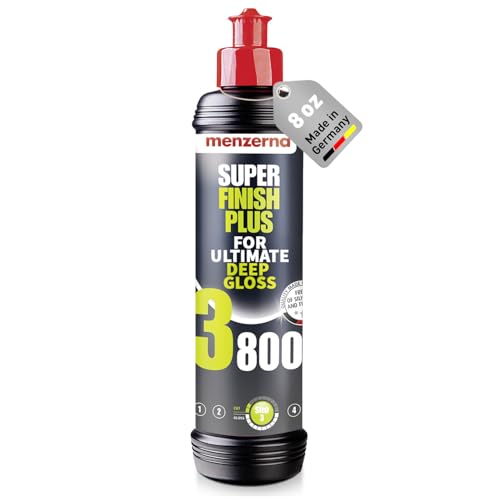
Menzerna Super Finish Plus 3800 is a testament to the brand’s history in abrasive technology, specifically engineered to remove holograms and light micro-scratches while delivering a deep, wet-looking mirror finish. Its diminishing abrasive formula starts with a fine cut that breaks down into an ultra-fine polish as you work it.
Detailers frequently turn to this product as the final step in a multi-stage correction, particularly on dark paint where holograms are most visible. The reviews highlight its ability to transform a dull, swirled clear coat into a crystal-clear surface that looks better than the factory showroom sheen.
It is important to note that the 3800 is a finishing polish, not a heavy cutter. It relies on the user having addressed deeper scratches with a more aggressive compound beforehand. When used correctly, it provides that last bit of clarity that separates a good detail from a great one.
What works
- Exceptional gloss and clarity on dark paint
- Effectively removes holograms from machine polishing
- Long working time with diminishing abrasives
What doesn’t
- No cutting power for deep scratches
- Requires a prior compounding step for correction
5. Adam’s Polishes Car Scratch and Swirl Remover Hand Correction System
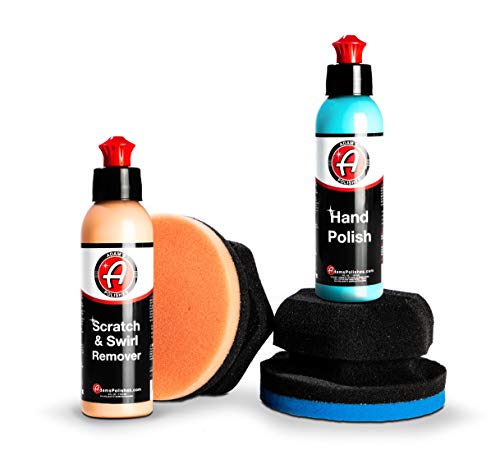
Adam’s Polishes Hand Correction System provides a complete, machine-free solution for removing light scratches, paint transfer, and oxidation. The two-step kit includes a diminishing micro-alumina abrasive compound that breaks down safely, followed by a pure hand polish to restore the paint’s clarity and depth.
This kit is particularly well-suited for owners who want to correct isolated defects without investing in a dual-action polisher. Reviews on metallic grey and black paints show that the included orange foam applicator pad provides enough bite to remove noticeable scuffs and swirl marks, while the hand polish brings back the original gloss.
While hand application inherently limits the correction power compared to a machine, this system sets realistic expectations. It excels on light to moderate clear coat defects and paint transfer. For deeper scratches that catch a fingernail, it serves as an excellent preparatory step before applying touch-up paint.
What works
- Complete hand-correction kit with no machine needed
- Removes light clear coat scratches and paint transfer
- Step 2 polish restores deep gloss
What doesn’t
- Labor intensive for correcting an entire vehicle
- Deep gouges through clear coat may still require touch-up paint
Hardware & Specs Guide
Diminishing vs. Non-Diminishing Abrasives
Diminishing abrasives (like those in Menzerna 3800) break down into smaller particles under pressure, allowing a single product to transition from moderate cut to fine polish during a single work cycle. Non-diminishing abrasives (like aluminum oxide in Griot’s Garage) maintain their size for a consistent cut throughout the work time, often requiring a separate finishing polish to refine the surface to maximum gloss.
Understanding Grit Numbers in Compounds
Grit numbers (e.g., 1200, 1500, 3000) indicate the nominal size of the abrasive particle. A lower grit number means a larger, more aggressive particle that cuts faster but leaves deeper scratches. A 1500 grit compound removes sanding marks efficiently, while a 3000 grit polish refines the surface to a high gloss. Matching the grit to the defect depth is critical to achieving a flat, clear finish without removing more clear coat than necessary.
FAQ
Can I use these products on matte paint?
What is the difference between a compound and a polish?
How do I know if a scratch is too deep for a filler compound?
Final Thoughts: The Verdict
For most buyers, the best car scratch filler winner is the Griot’s Garage BOSS Correcting Cream because it offers the most reliable balance of cutting power, work time, and finish quality for moderate defects. If you want a dedicated hand-correction kit with no machine required, grab the Adam’s Polishes Hand System. And for preparing a panel before paint to ensure hidden defects don’t ruin your work, nothing beats the Dura-Gold Guide Coat.

Certification: BSc in Mechanical Engineering
Education: Mechanical engineer
Lives In: 539 W Commerce St, Dallas, TX 75208, USA
Md Amir is an auto mechanic student and writer with over half a decade of experience in the automotive field. He has worked with top automotive brands such as Lexus, Quantum, and also owns two automotive blogs autocarneed.com and taxiwiz.com.