The jump from a standard 120V outlet to a dedicated Level 2 charger transforms the EV ownership experience, cutting overnight charging from days to just a few hours. But with amperage ratings, connector standards, and smart features varying wildly across models, the wrong choice can mean unnecessary electrical work or a charger that doesn’t fit your vehicle long-term.
I’m Amir — the founder and writer behind Four Wheel Ask. My analysis of charging equipment comes from comparing technical specifications, owner satisfaction data, and long-term reliability reports across dozens of models to find what truly holds up in daily use.
Through careful examination of technical specs and owner satisfaction levels, we identified the best level 2 ev charger for delivering reliable daily charging performance.
How To Choose The Best Level 2 EV Charger
Selecting the right Level 2 charger involves understanding your vehicle’s onboard charger capacity, your home’s electrical infrastructure, and the connector standard your EV uses. A mismatch in any of these areas can lead to slower charging or costly electrical upgrades. Here is what matters most when making your decision.
Amperage and Electrical Panel Capacity
The charging speed of a Level 2 station is determined by its amperage rating and your vehicle’s onboard charger. A 48-amp unit delivers up to 11.5 kW, adding roughly 44 miles of range per hour for compatible EVs. However, this requires a dedicated 60-amp circuit breaker and sufficiently heavy gauge wiring. A 32-amp or 40-amp unit may be a better fit if your panel has limited spare capacity or you want to avoid an expensive service upgrade.
Hardwired vs Plug-In Installation
Hardwired connections eliminate the risk of a loose NEMA 14-50 receptacle overheating during sustained high-current draws, making them the safer and more code-compliant choice for 48-amp continuous operation. Plug-in models offer easier DIY installation and the ability to take the charger with you if you move, but they add a potential failure point at the outlet. Most residential chargers support both methods, though the highest amperage configurations often require hardwiring.
Connector Compatibility: NACS vs J1772
The connector landscape is shifting rapidly. Tesla vehicles use the NACS (North American Charging Standard) port, while most other EVs use the J1772 standard. If you own a Tesla, a native NACS charger offers a cleaner installation without an adapter. For multi-EV households or future-proofing, a universal charger that includes both connectors or a J1772 unit with a NACS adapter provides maximum flexibility.
Quick Comparison
On smaller screens, swipe sideways to see the full table.
| Model | Category | Best For | Key Spec | Amazon |
|---|---|---|---|---|
| Tesla Universal Wall Connector | Universal | Multi-EV Households | 48A, NACS+J1772, 24ft Cable | Amazon |
| Grizzl-E 48A Ultimate | Rugged | Harsh Weather Installations | 48A, J1772, Aluminum Enclosure | Amazon |
| EMPORIA Level 2 EV Charger | Smart | Energy Monitoring & Solar | 48A, J1772, WiFi, 25ft Cable | Amazon |
| Autel MaxiCharger AC Home | Premium | App-Driven Adjustable Charging | 50A, J1772, WiFi/Bluetooth, 25ft | Amazon |
| Battery Tender eCharge 48 | No-App | Simple Operation & RFID Security | 48A, J1772, RFID, LCD Display | Amazon |
| WOLFBOX Level 2 EV Charger | Value | Budget-Conscious Home Setup | 40A, J1772, WiFi, LCD Screen | Amazon |
| Generac Level 2 Plus | Integrated | Whole-Home Energy Ecosystems | 48A, J1772, WiFi/Bluetooth, 25ft | Amazon |
| EVIQO NACS Charger | NACS | Tesla Owners | 40A, NACS, WiFi, IP66, 25ft | Amazon |
| ChargePoint HomeFlex | Network | Network Access & App Ecosystem | 50A, NACS, WiFi, 23ft Cable | Amazon |
| Enphase HCS-40 | Industrial | Ultimate Durability & Simplicity | 32A, J1772, NEMA 4, 25ft | Amazon |
| Lectron Level 1/2 NACS | Portable | Travel & Dual-Level Flexibility | 40A, NACS, Dual Plugs, 20ft | Amazon |
In-Depth Reviews
1. Tesla Universal Wall Connector

The Tesla Universal Wall Connector stands out as the most versatile single-unit solution on the market, integrating both NACS and J1772 connectors into one seamless housing. This eliminates the need for a separate adapter or a secondary charger for households with multiple EVs from different brands. The built-in adapter mechanism locks securely in place, preventing accidental removal during charging sessions.
Owner reports highlight flawless compatibility with both Tesla and non-Tesla vehicles, including Rivian and Ford Escape plug-in models. The unit delivers up to 48 amps on a 60-amp circuit, and the PowerShare feature remains exclusive to the Cybertruck ecosystem for now. The 24-foot cable provides solid reach across most garages and driveways without excessive slack.
Installation feedback consistently praises the clear commissioning process and the unit’s ability to self-detect wiring errors. The wall connector requires a dedicated circuit and professional installation for full 48-amp output, but the variable amperage settings allow it to work with smaller breakers if needed.
What works
- Native dual-connector support covers all North American EVs
- Clean, low-profile design with reliable locking adapter mechanism
- Variable amperage down to 12A for flexible electrical compatibility
What doesn’t
- Premium price point above standard wall connectors
- PowerShare function limited to Cybertruck vehicles only
2. Grizzl-E 48A Ultimate
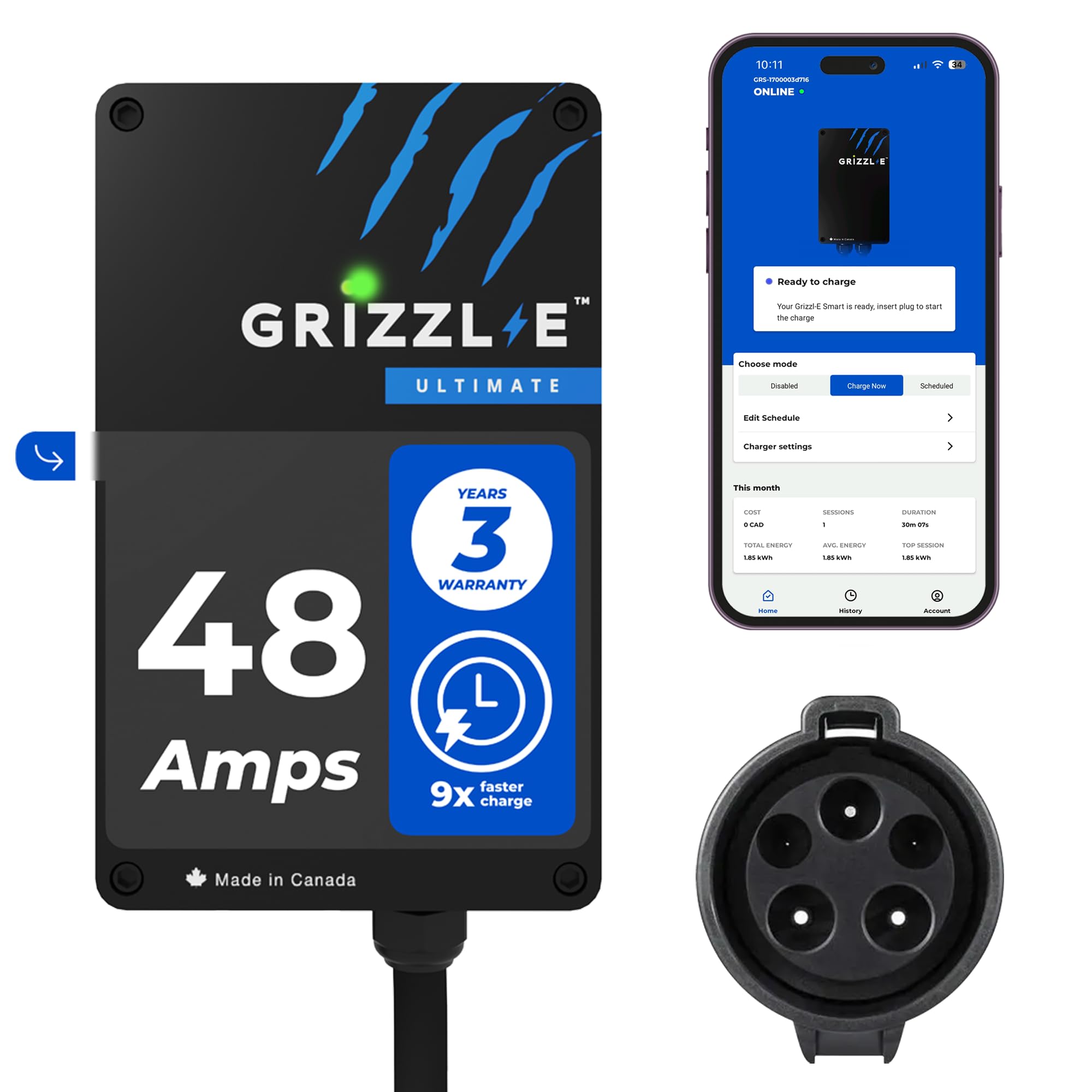
The Grizzl-E 48A Ultimate is built around a heavy-duty cast aluminum enclosure rated NEMA Type 4, making it one of the most weather-resistant options available for outdoor mounting in extreme climates. Owners in Canadian winters report dependable operation at temperatures below -20°C, with the external antenna providing stable WiFi connectivity even through metal garages. The unit is UL and Energy Star certified.
Reviewers consistently praise the simple, no-nonsense operation — the charger works without requiring a smartphone app or online account, though the Grizzl-E Connect app offers scheduling and energy monitoring for those who want it. The 25-foot J1772 cable is thicker and more durable than many competitors, though some owners note the cable holder feels less premium than the charger itself.
Owners using the unit with Jeep Grand Cherokee 4xe and Kia EV9 report consistent 11.5 kW charging speeds on a 60-amp circuit. The dip-switch amperage adjustment allows fine-tuning for vehicles with lower onboard charger limits, and the internal GFCI avoids nuisance tripping when installed on a non-GFCI breaker.
What works
- Rugged metal enclosure withstands extreme weather and UV exposure
- Full functionality without mandatory app or cloud connection
- OCPP compatibility for advanced energy management systems
What doesn’t
- Plastic cable holder and connector latch feel less durable than the main unit
- Load sharing across multiple units requires additional configuration
3. EMPORIA Level 2 EV Charger 48 Amp
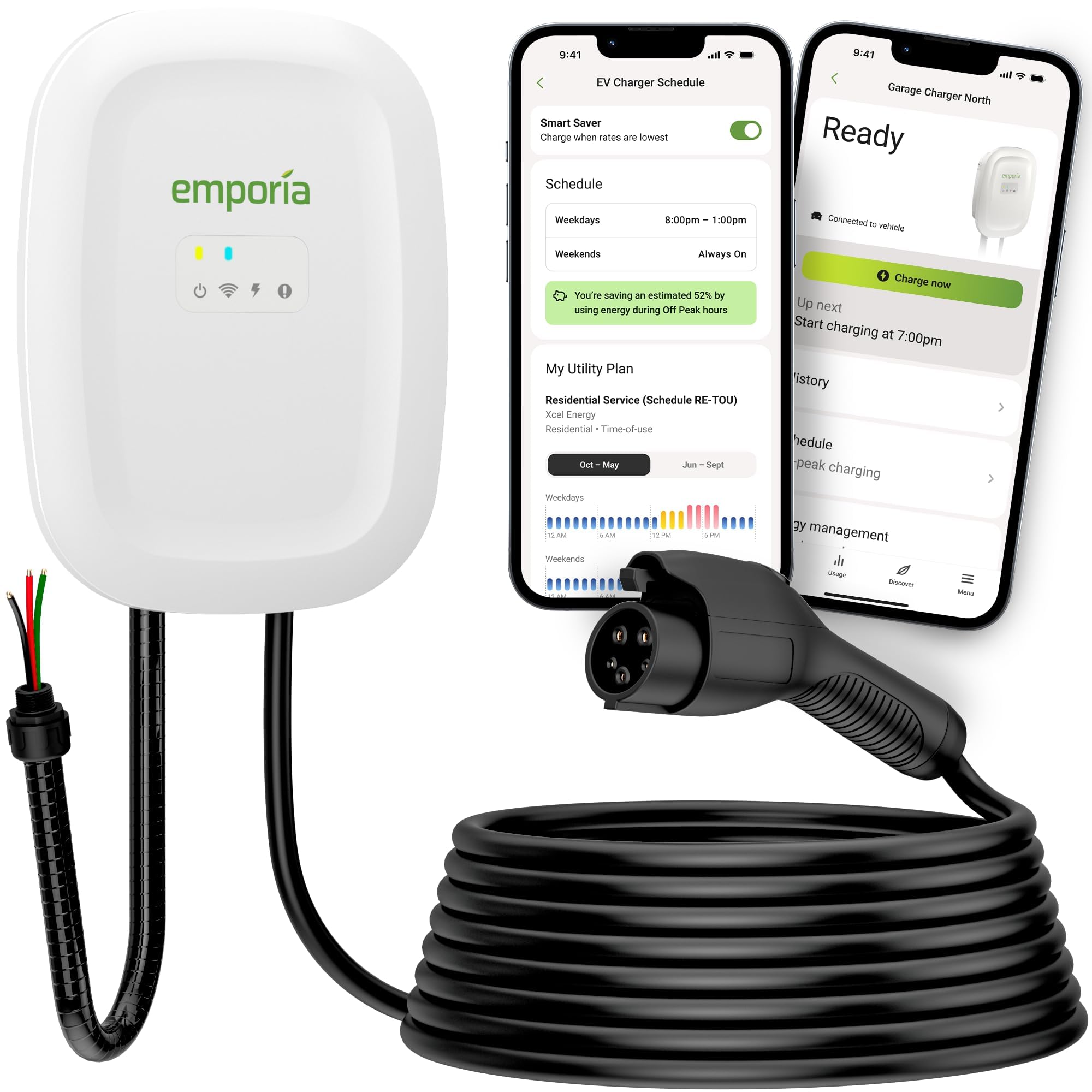
The EMPORIA Level 2 EV Charger integrates deeply with the Emporia Vue energy monitor ecosystem, enabling advanced features like solar-only charging and whole-home load management that can save thousands on demand-based utility tariffs. The hardwired configuration supports up to 48 amps with a pre-installed whip, delivering up to 11.5 kW to compatible EVs. Professional installation is strongly recommended for the full 48-amp output.
Owner feedback highlights the app’s robust time-of-use scheduling and per-session cost tracking as standout features. The unit automatically resumes charging after power outages and allows current throttling down to 12 amps for use on smaller circuits. Multiple owners report reducing their charge time from 18 hours on Level 1 to under 3 hours on this unit.
For solar homeowners, the ability to charge exclusively from surplus solar production without exporting to the grid is a significant value-add. The charger is UL listed and meets all relevant safety standards for continuous outdoor or indoor use.
What works
- Seamless integration with Emporia Vue for solar and load management
- Reliable time-of-use scheduling with automatic recovery after outages
- Full 48-amp hardwired output at a competitive price point
What doesn’t
- Requires professional installation for 48-amp hardwired setup
- Full ecosystem benefits depend on having Emporia Vue monitor installed
4. Autel MaxiCharger AC Home 50 Amp
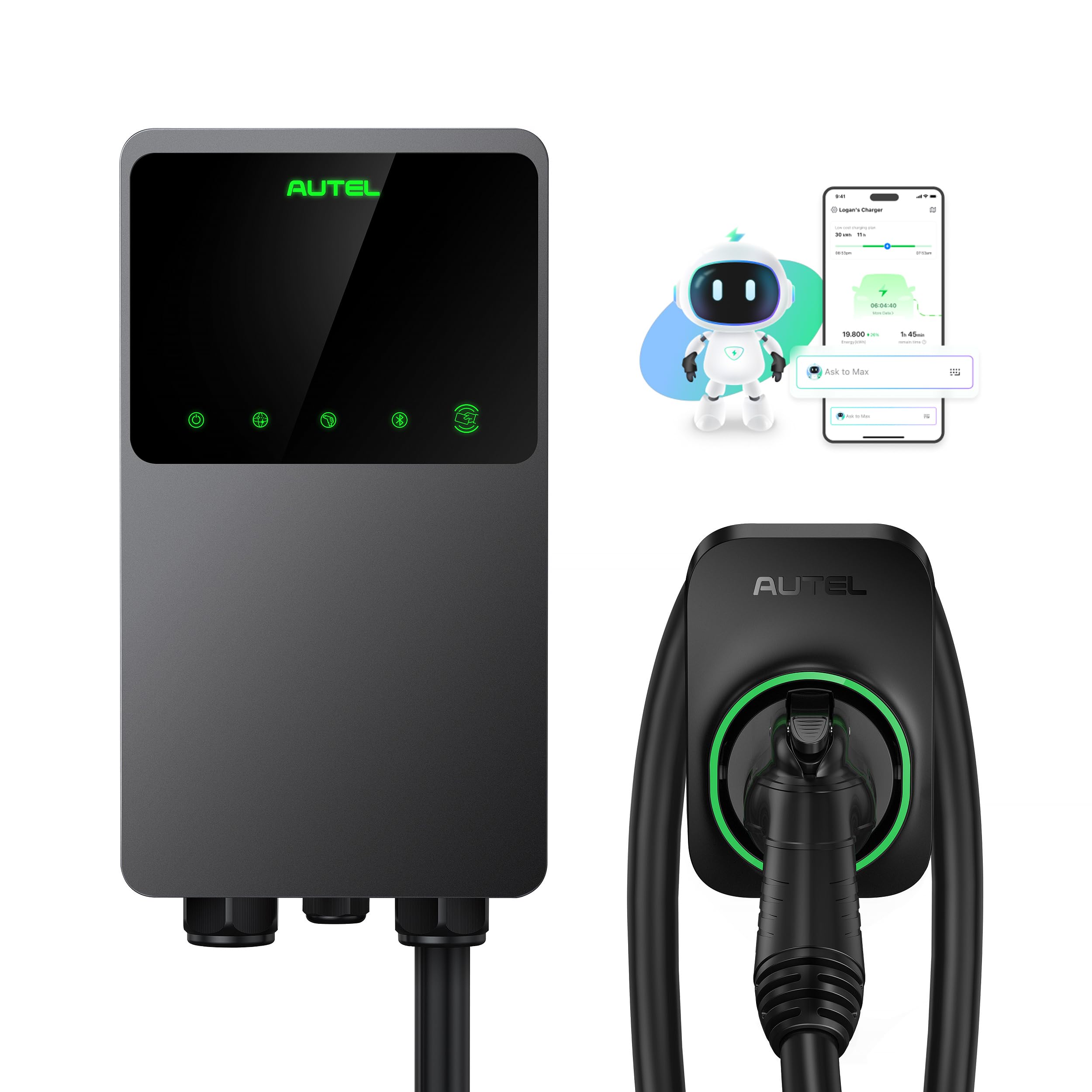
The Autel MaxiCharger AC Home offers a rare 50-amp maximum output rating, slightly above the typical 48-amp ceiling found on most residential chargers. This extra headroom allows the unit to deliver its full 12 kW potential to vehicles with 11 kW or higher onboard chargers. The dark gray enclosure carries NEMA Type 4 weather resistance and is CSA certified, making it eligible for federal and utility rebates.
Owner reviews emphasize the excellent build quality of the cable and connector, with the cable remaining flexible even in sub-freezing temperatures. The Autel Charge app provides comprehensive control including adjustable amperage from 6 to 50 amps, cost tracking based on local electricity rates, and scheduled charging windows. The physical amperage selector switch inside the unit provides a hardwired safety backup to the app-based adjustment.
Chevy Bolt owners specifically report that the Autel’s adjustable amperage solved circuit breaker tripping issues that occur with the Bolt’s inability to reduce Level 2 charge current on its own. The 3-year warranty and US-based customer support provide additional peace of mind for long-term ownership.
What works
- 50-amp output exceeds typical residential charger maximums
- Cold-weather cable flexibility maintained well below freezing
- Physical amperage selector switch provides failsafe adjustment
What doesn’t
- App lacks a comprehensive vehicle model database for presets
- Heavier than many competitors due to robust internal components
5. Battery Tender eCharge 48 AMP
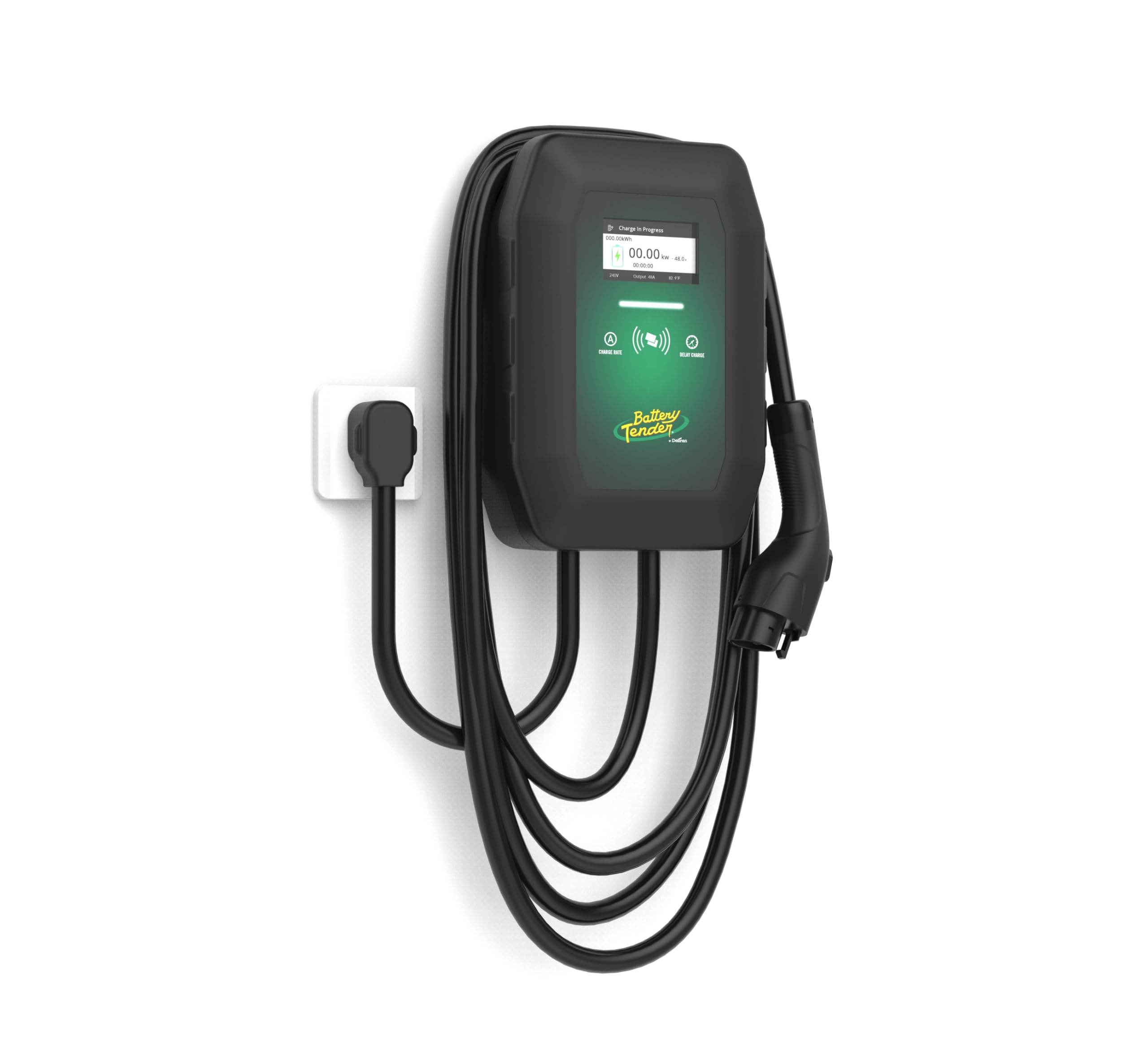
Battery Tender brings its reputation for reliable battery maintenance products into the Level 2 EV charger space with the eCharge 48, a unit designed specifically for users who want robust hardware without depending on smartphone apps or WiFi connectivity. The large LCD display shows charging status, energy delivered, and error messages clearly, while the included RFID cards provide secure access control for multi-user or commercial installations.
Owners who replaced failed smart chargers with the eCharge 48 report relief at the straightforward operation — plug in and charge without troubleshooting network connections. The unit supports both plug-in (NEMA 14-50) and hardwired configurations up to 48 amps, and the physical amperage selector allows adjustment without any software. The 25-foot cable is flexible and well-constructed.
Several reviewers noted the elegant display readability and the unit’s compact footprint on the wall. The 3-year manufacturer warranty and Battery Tender’s established customer support network provide solid backing. The lack of smart features is intentional and welcomed by owners who prioritize reliability over remote control.
What works
- Fully functional without any smartphone app or WiFi connection
- Informative LCD display with real-time charge data
- RFID card security prevents unauthorized usage
What doesn’t
- Higher price compared to similarly specced smart chargers
- Mounting template requires careful alignment during installation
6. WOLFBOX Level 2 EV Charger 40 Amp

The WOLFBOX Level 2 EV Charger delivers a compelling feature set at a mid-range price point, including a 4.3-inch LCD display, WiFi connectivity, and RFID card control. The CSA certification and NEMA Type 4 weatherproof housing ensure safe outdoor operation, and the 40-amp output provides up to 38 miles of range per hour for most EVs. The unit is compatible with all J1772 vehicles and works with Tesla using an adapter.
Owner feedback consistently highlights the informative display that shows charging rate, time, voltage, and energy delivered in real time. The app supports Google account login, Alexa and Google Assistant voice control, and device sharing for multiple household users. PHEV owners report cutting charge times from 12 hours on Level 1 to approximately 3.5 hours.
Some early adopters noted that the WiFi setup required a few attempts to establish a stable connection, though once connected the link proved reliable. The time-of-use scheduling works well when the vehicle is plugged in before the scheduled window, but unplugging and reconnecting resets the schedule, requiring attention for consistent off-peak charging.
What works
- Large LCD display shows comprehensive charge data at a glance
- RFID card control prevents unauthorized use without breaker access
- CSA certified with NEMA Type 4 weather resistance
What doesn’t
- Time-of-use schedule resets if the connector is unplugged mid-cycle
- Initial WiFi pairing can be finicky during first-time setup
7. Generac Level 2 Plus 48 AMP
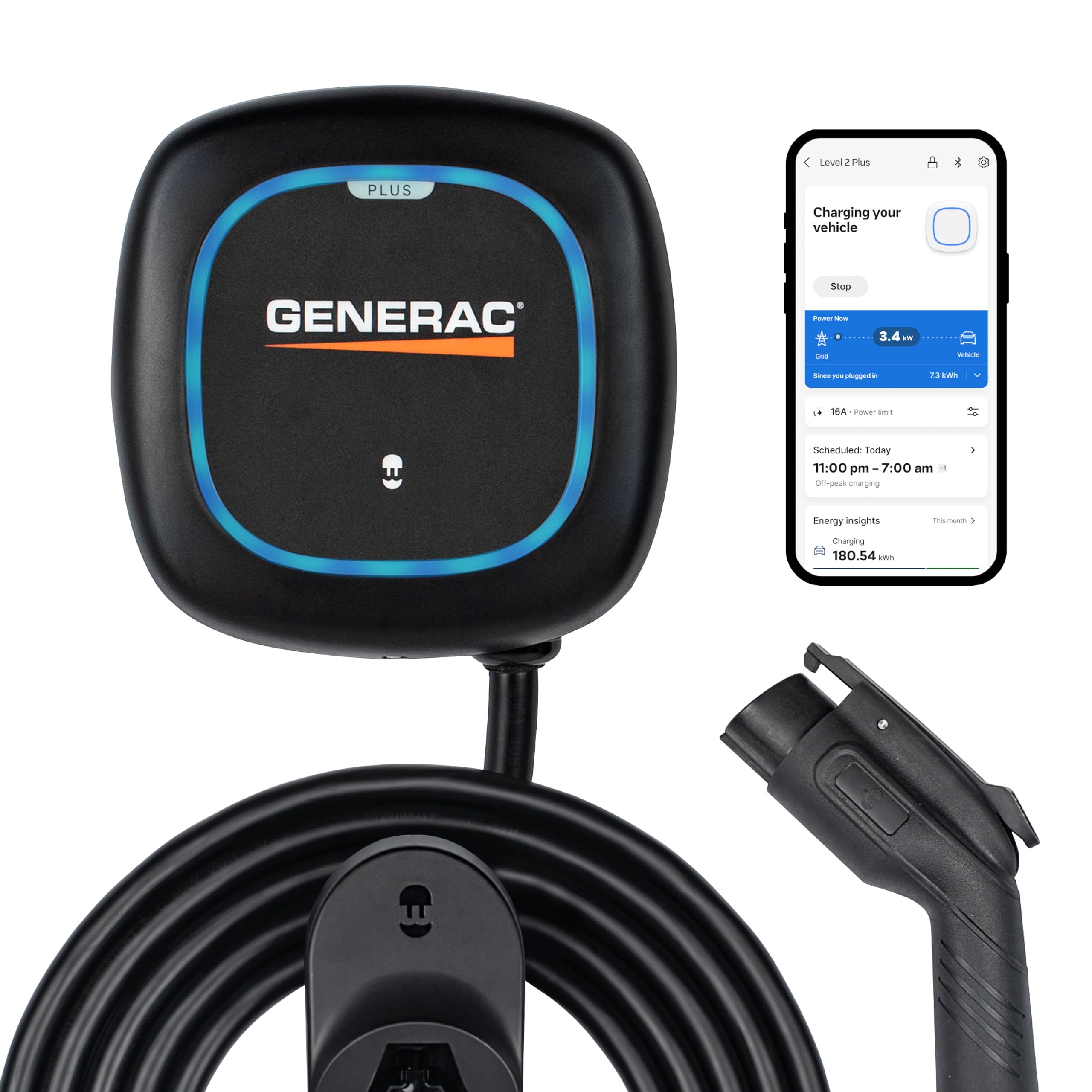
Generac brings its 65 years of home energy expertise to the EV charging market with the Level 2 Plus, a 48-amp unit that features Power Boost Technology for dynamic load management. This allows the charger to maximize charging speed without exceeding your home’s electrical service capacity, automatically adjusting current draw when other appliances cycle on. The compact NEMA 4 enclosure is designed for indoor or outdoor wall mounting.
Owners report fast installation on existing 240-volt circuits and praise the app for its straightforward timer and amperage control functionality. Multiple reviewers noted noticeably faster charging compared to previous units from other brands, with one owner reporting improved charge times for both a Taycan and a Mustang Mach-E. The 25-foot cable provides ample reach for various parking configurations.
Some users experienced frustration during initial Bluetooth pairing, with one report of a 45-minute setup process. Another owner noted that the unit tripped a 50-amp breaker at full 48-amp output after 15-20 minutes, resolving the issue by dialing down to 40 amps via the app. Generac’s 24/7 customer service and nationwide installer network provide strong support infrastructure.
What works
- Power Boost technology prevents breaker trips during peak home usage
- Compact NEMA 4 enclosure fits tight wall spaces
- Generac’s nationwide service network for installation and support
What doesn’t
- Bluetooth pairing process can be frustrating and time-consuming
- Some units trip 50-amp breakers at sustained 48-amp output
8. EVIQO NACS Charger for Tesla 40 Amp
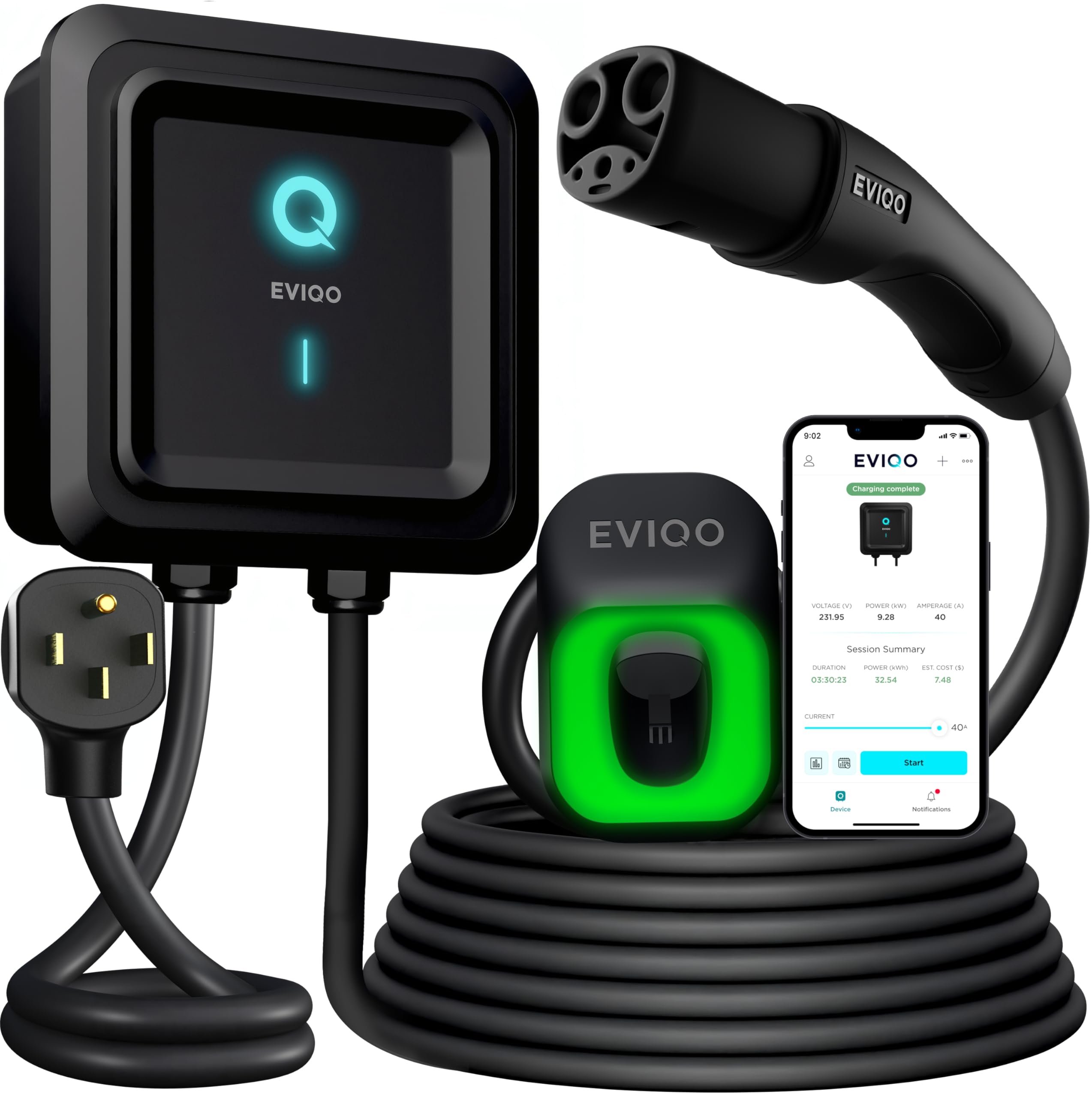
The EVIQO NACS Charger is purpose-built for Tesla owners who want a native connector without the premium branding cost. The unit carries IP66 and NEMA 4 weatherproofing, surpassing the typical NEMA 3R rating for outdoor chargers and providing robust protection against rain, snow, and dust. The 40-amp output delivers approximately 38 miles of range per hour, sufficient for overnight full charges on all Tesla models.
Owner reports consistently praise the build quality of the cable and connector, noting the thick, durable cable and the NACS button that opens the Tesla charge port directly. The fluorescent holster is a practical design detail, making the connector easy to locate and store in low-light garages. The app supports current adjustment from 6 to 40 amps, scheduled charging, and cost tracking.
Multiple owners appreciated the side-mounted reset button that clears faults without opening the unit or cycling the breaker. The 3-year warranty and US-based customer support provide solid backup. One reviewer successfully received a utility rebate covering the full purchase cost, highlighting the incentive eligibility of this unit.
What works
- IP66 weather rating exceeds most residential charger specifications
- Fluorescent holster improves visibility and ease of use in dark garages
- Side reset button allows quick fault clearing without power cycling
What doesn’t
- Limited to NACS vehicles without a separately purchased adapter
- Heavier unit at nearly 20 pounds due to robust enclosure
9. ChargePoint HomeFlex Level 2 NACS

The ChargePoint HomeFlex is backed by one of the largest public charging networks in North America, offering integration with over 274,000 charging stations across the continent. This NACS version is optimized for Tesla vehicles and provides up to 50 amps on a suitable circuit, delivering up to 45 miles of range per hour. The unit is UL certified and includes a cold-resistant cable for year-round outdoor use.
Owner satisfaction is notably polarized. Many users appreciate the ChargePoint app ecosystem, which provides station location, charging reminders, and integration with smart home platforms. When working correctly, the charger delivers reliable daily performance with consistent connectivity and useful charging data.
However, a significant number of owners report persistent WiFi connectivity issues, with some units disconnecting repeatedly after one to two days across multiple replacement units. Several reviewers experienced complete charging failures after two months of use, and customer support response times exceeding 30 minutes on hold were commonly reported. These reliability concerns at a premium price point are important considerations for prospective buyers.
What works
- Access to ChargePoint’s extensive public charging network through the app
- Fast charging speeds up to 45 miles of range per hour
- UL certified with cold-resistant cable for year-round outdoor use
What doesn’t
- Frequent WiFi connectivity dropouts reported across multiple units
- Customer service response times often exceed 30 minutes on hold
10. Enphase HCS-40 32 Amp (Formerly ClipperCreek)

The Enphase HCS-40, formerly known as the ClipperCreek HCS-40, has earned a reputation over many years for being one of the most reliable and straightforward EV chargers ever built. The fully sealed NEMA 4 enclosure protects against direct hose-down and extreme weather, making it a common choice for commercial and industrial applications. At 32 amps and 9.6 kW, it is slightly slower than newer 48-amp units but places zero demands on smart features or connectivity.
Owner feedback consistently emphasizes the industrial-grade build quality and the excellent cable management system with integrated cord wrap and holster. The unit contains no WiFi, Bluetooth, or app functionality — it simply delivers rated power whenever a vehicle is plugged in. Owners who have used the unit for years report zero maintenance issues and flawless operation in rain, snow, and direct sunlight.
Some reviewers experienced a quality control issue with internal contactors sticking, causing the connector to remain energized after unplugging. Enphase replaced the affected units, but the hardwired installation required an electrician visit for the swap. The lack of any smart features means no time-of-use scheduling or remote monitoring capabilities.
What works
- Exceptional build quality with commercial-grade NEMA 4 enclosure
- Zero dependence on apps, WiFi, or smartphone connectivity
- Excellent integrated cable management with cord wrap and holster
What doesn’t
- Limited to 32 amps with no option for higher-powered charging
- No smart features for time-of-use scheduling or remote monitoring
11. Lectron Level 1/2 NACS Portable Charger
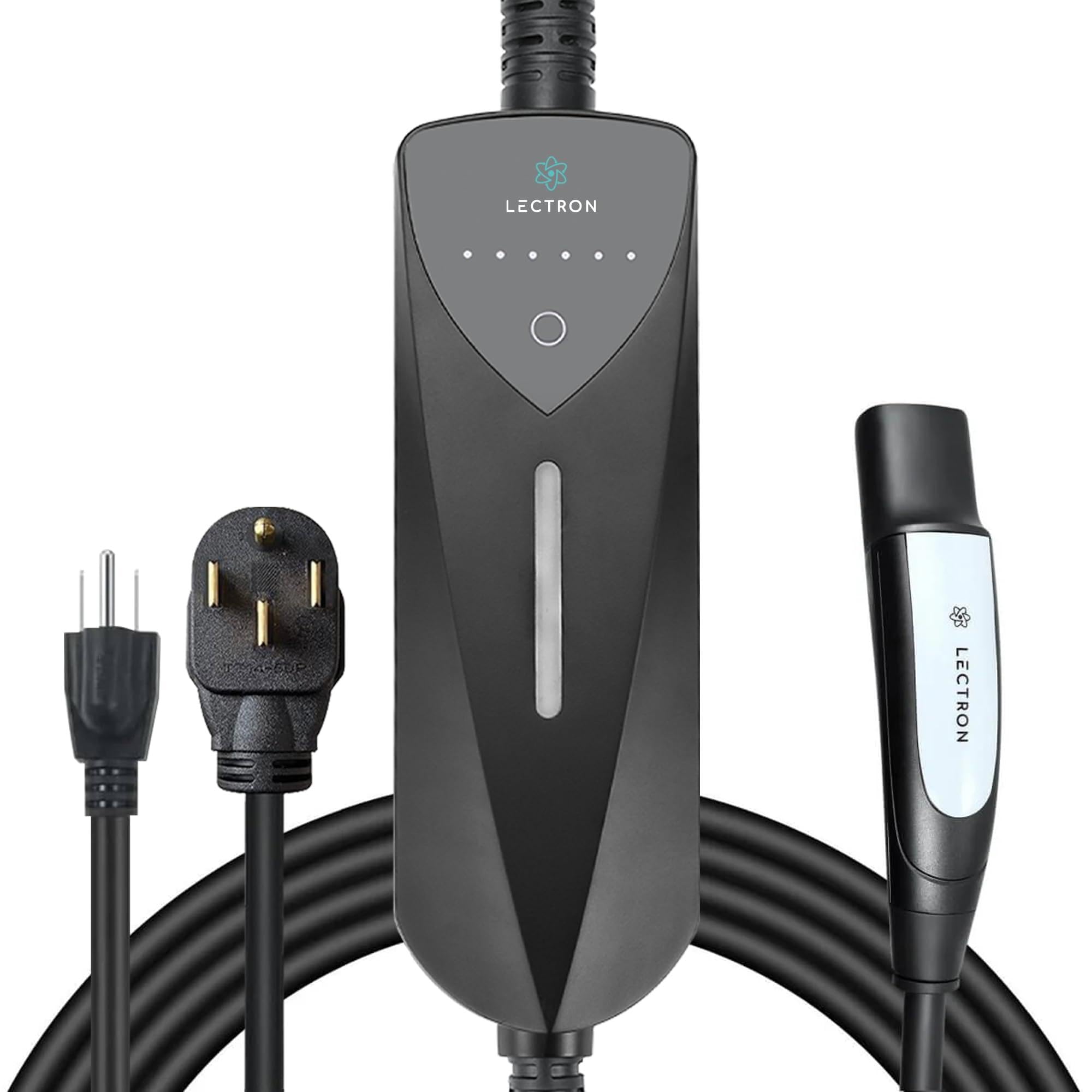
The Lectron Level 1/2 Portable Charger is designed for maximum flexibility, including both NEMA 5-15 (standard household) and NEMA 14-50 (RV/range) plugs for dual-voltage operation from 120V to 240V. This makes it a practical travel companion for Tesla and NACS-compatible vehicles, allowing charging from a variety of outlets found at Airbnb rentals, RV parks, and friends’ homes. The 20-foot cable provides reasonable reach in most parking situations.
Owner reports highlight the convenience of having both plug types in one package, with the unit automatically detecting the connected voltage and adjusting the charge current accordingly. The adjustable amperage range from 8 to 40 amps allows users to match the charging speed to the available circuit capacity, potentially avoiding the need for a panel upgrade at home. The included wall mount bracket supports permanent installation when not traveling.
Some owners noted that the unit does not support step-down charging from a TT-30 RV outlet, as the charger expects 240V on the NEMA 14-50 plug and will fault on 120V via adapter. The LED status indicators provide clear feedback on charging state and fault conditions, though the lack of smartphone connectivity means no remote monitoring or scheduling capabilities.
What works
- Includes both NEMA 5-15 and 14-50 plugs for Level 1 and 2 charging
- Adjustable amperage allows use on circuits with limited capacity
- Portable design with wall mount bracket for flexible installation
What doesn’t
- No support for TT-30 to 14-50 adapters on 120V circuits
- Lacks any smartphone connectivity or smart scheduling features
Hardware & Specs Guide
Charging Speed and Amperage
The charging speed of a Level 2 station is a function of its amperage rating and your vehicle’s onboard charger capacity. A 48-amp unit on a 60-amp circuit delivers up to 11.5 kW, adding roughly 44 miles of range per hour for a typical EV. Lower-amp units like 32-amp chargers provide 7.7 kW and add about 30 miles per hour. Your vehicle only draws what its internal charger can accept, so a 48-amp station will not charge a 32-amp vehicle any faster than a 32-amp unit would.
Connector Types: NACS vs J1772
NACS (North American Charging Standard) is the native connector for Tesla and is becoming the unified standard adopted by automakers including Ford, GM, Rivian, Volvo, and others beginning in 2025. J1772 is the current standard for all non-Tesla EVs sold in North America. A native NACS charger works with Tesla vehicles natively and requires an adapter for J1772 vehicles. The reverse applies for J1772 chargers. Universal chargers with integrated dual connectors eliminate the need for adapters entirely.
Installation Methods and Electrical Requirements
Hardwired installations connect the charger directly to a dedicated circuit breaker using permanent wiring, eliminating the outlet as a potential failure point. This method is required for continuous 48-amp operation and typically uses a 60-amp breaker with 6 AWG copper wire. Plug-in installations offer easier installation and portability, using a NEMA 14-50 outlet rated for 50 amps. Most residential chargers support a maximum of 40 amps in plug-in configuration to comply with NEC continuous load limits.
Smart Features and Connectivity
Smart chargers offer WiFi or Bluetooth connectivity for remote monitoring, scheduled charging, and energy tracking. Time-of-use scheduling allows charging during off-peak hours when electricity rates are lowest. Load management features can automatically reduce charging current when other high-draw appliances are active, preventing breaker trips. Some units offer integration with home energy monitors for solar-only charging. Non-smart chargers offer simplicity and reliability but lack these optimization capabilities.
FAQ
What size breaker do I need for a Level 2 EV charger?
Is it better to hardwire or use a plug-in EV charger?
Can I install a Level 2 EV charger outdoors?
What is the difference between NACS and J1772 connectors?
Final Thoughts: The Verdict
For most buyers, the best level 2 ev charger winner is the Tesla Universal Wall Connector because it delivers seamless dual-connector compatibility, robust build quality, and reliable performance for both current and future EVs. If you want rugged weather resistance with optional smart features, grab the Grizzl-E 48A Ultimate. And for budget-conscious buyers who still want a feature-rich smart charger, nothing beats the value of the WOLFBOX Level 2 EV Charger.

Certification: BSc in Mechanical Engineering
Education: Mechanical engineer
Lives In: 539 W Commerce St, Dallas, TX 75208, USA
Md Amir is an auto mechanic student and writer with over half a decade of experience in the automotive field. He has worked with top automotive brands such as Lexus, Quantum, and also owns two automotive blogs autocarneed.com and taxiwiz.com.