A fuel leak can turn a routine repair into a recurring headache. Not all gasket makers handle fuel exposure equally—some soften, dissolve, or lose adhesion over time. Selecting the right chemical compound matters more than brand loyalty when the goal is a permanent, leak-free seal.
I’m Amir — the founder and writer behind Four Wheel Ask. My analysis focuses on chemical formulations, temperature and fluid resistance data, and long-term owner feedback across dozens of compounds to identify what truly holds up under fuel exposure.
From non-hardening dressings to anaerobic flange sealants and high-temperature RTV compounds, the right choice depends on your specific application and operating conditions. Through careful analysis of chemical formulations and real-world durability data, I present the definitive best fuel resistant gasket maker for every repair scenario.
How To Choose The Best Fuel Resistant Gasket Maker
Fuel-resistant gasket makers fall into three main chemical families: RTV silicone, anaerobic compounds, and non-hardening dressings. Each behaves differently when exposed to gasoline, diesel, ethanol blends, and high underhood temperatures. Understanding the chemistry behind each type is the first step toward a permanent repair.
RTV Silicone Compounds
Room-temperature-vulcanizing silicones cure by reacting with moisture in the air. They remain flexible after curing, which helps them absorb vibration and thermal expansion. The best fuel-resistant formulations use a low-odor, non-corrosive cure system and maintain adhesion after prolonged contact with gasoline and oil. Look for compounds specifically rated for fuel and fluid exposure, not just general-purpose silicone.
Anaerobic Flange Sealants
Anaerobic gasket makers cure only in the absence of air—meaning they harden between tight-fitting metal flanges. They excel on rigid, machined surfaces like transmission cases, differential covers, and oil pump housings. Because they remain liquid on exposed surfaces, they do not clog oil passages or sensors. Their fuel resistance comes from a methacrylate backbone that withstands hydrocarbons and high torque loads without creeping.
Non-Hardening Dressings
Non-hardening sealants never fully cure. They stay pliable indefinitely, making them ideal for metal-to-metal joints that require periodic disassembly or for coating paper gaskets to improve their seal. These dressings resist fuel and oil by forming a tacky, chemically inert barrier. They also allow unlimited assembly time, which is valuable for complex multi-part installations.
Quick Comparison
On smaller screens, swipe sideways to see the full table.
| Model | Category | Best For | Key Spec | Amazon |
|---|---|---|---|---|
| LOCTITE 518 | Anaerobic | Flanged metal surfaces | Sensor-safe, low odor | Amazon |
| Permatex The Right Stuff | RTV Silicone | Fast turnaround repairs | 1-min cure, 500°F peak | Amazon |
| Toyota Genuine FIPG | RTV Silicone | OEM-spec Asian engines | -76°F to 482°F range | Amazon |
| Elring Curil T | Non-Hardening | European engine reseals | Easy cleanup, flexible | Amazon |
| Honda Genuine Hondabond HT | RTV Silicone | Honda/Acura factory repairs | 600°F peak resistance | Amazon |
| Hylomar Blue | Non-Hardening | Paper gasket dressing | Unlimited assembly time | Amazon |
| Kraken Bond Red RTV | RTV Silicone | High-heat oil pan seals | 600°F, 2-pack value | Amazon |
| Realth RTV 6-Pack | RTV Silicone | Multi-job bulk use | 6 tubes, -60°F to 536°F | Amazon |
| LOCTITE 5699 | RTV Silicone | OEM-approved general use | High torque, low odor | Amazon |
| Permatex Permashield | Urethane | Fuel system thread sealing | Gasoline-resistant, tacky | Amazon |
| Rutland 500°F RTV | RTV Silicone | High-heat non-engine seals | 500°F intermittent, black | Amazon |
In‑Depth Reviews
1. LOCTITE 518 Anaerobic Gasket Maker
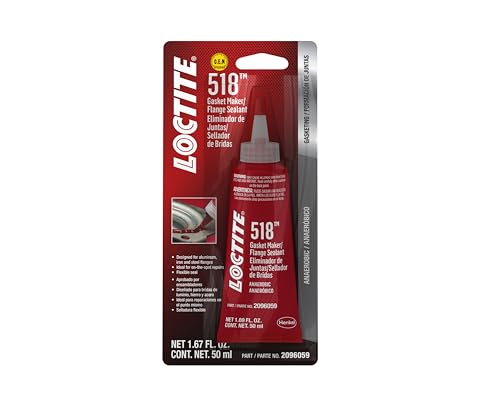
LOCTITE 518 uses anaerobic chemistry that cures only between tight-fitting metal flanges, remaining liquid on exposed surfaces to avoid clogging oil passages or sensors. This makes it a top choice for rigid, machined joints such as transmission case covers, differential housings, and oil pump flanges where conventional gaskets are unavailable or impractical.
The red methacrylate formulation resists hydrocarbons, gear oil, and transmission fluid without becoming brittle over time. Owner feedback highlights its ability to sit partially assembled for extended periods—one user reported leaving a part clamped for a week with no premature curing, something RTV cannot match. It also works without primer at temperatures as low as 40°F, broadening its usability in cooler shop environments.
Where LOCTITE 518 truly separates itself is its balance of fuel resistance, torque tolerance, and repairability. Flanges sealed with this compound can be disassembled with hand tools, unlike some hard-curing alternatives. For anyone sealing precision metal surfaces exposed to fuel or oil, this anaerobic formula delivers professional-grade results without the mess of traditional RTV.
What works
- Cures only in the absence of air, ideal for tight flanges
- Remains liquid on exposed surfaces, no sensor clogging
- Excellent hydrocarbon and gear oil resistance
What doesn’t
- Not designed for flexible or paper gasket applications
- Requires clean, close-tolerance metal mating surfaces
2. Permatex The Right Stuff 1 Minute Grey

Permatex The Right Stuff is engineered for speed—its one-minute cure allows assembled components to be put back into service almost immediately. The grey RTV formula is blowout-resistant and designed to handle the higher torque loads found in import engines with closely spaced bolt patterns, making it a frequent choice for professional technicians who need reliable, fast-turnaround repairs.
The compound withstands continuous exposure to 450°F and intermittent spikes up to 500°F while resisting ATF, engine oil, and coolant. Owner reports consistently praise its leak-proof sealing on transfer cases, oil pans, valve covers, and even cracked engine block water jackets on marine applications. The applicator tube design also draws positive feedback for maintaining a clean bead even after partial use and storage.
The trade-off for such rapid curing is a shorter working window compared to traditional RTV. Once applied, components need to be assembled quickly. However, for anyone prioritizing minimal downtime, this grey gasket maker delivers factory-grade sealing performance with a speed that few competitors match.
What works
- Cures in one minute for immediate service return
- Blowout-resistant under high torque loads
- Withstands 450°F continuous, 500°F intermittent
What doesn’t
- Short working time requires quick assembly
- Dispenser nozzle can be finicky on some tubes
3. Toyota Genuine FIPG 00295-00103

Toyota Genuine FIPG (Formed-in-Place Gasket) is the factory-specified sealant for Toyota and Lexus engines, but its performance characteristics earn it a place on any precision engine build. The black RTV compound cures to an elastic rubber body that resists vibration, impact, and thermal cycling across a wide operating range of -76°F to 482°F, ensuring reliable sealing in both arctic starts and sustained highway operation.
Its chemical resistance covers engine oil, coolant, and fuel-system fluids, with a five-minute tack-free time that provides a comfortable working window. Owner feedback shows consistent success on oil pans, water pumps, valve covers, and thermostat housings on both Asian and European engines—multiple BMW technicians report using it for differential back cover resealing with zero leaks. The included nozzle and key make application straightforward.
The primary consideration is cost per tube, which sits above many universal RTV products. However, for owners of Toyota, Lexus, or any precision engine where factory-spec sealing is preferred, this FIPG compound delivers documented, repeatable results that aftermarket alternatives often fail to match.
What works
- Factory-spec for Toyota/Lexus engines
- Exceptional -76°F to 482°F temperature range
- Highly resistant to oil, coolant, and fuel
What doesn’t
- Higher cost per tube than universal RTV options
- Tube contents can harden over months of storage
4. Elring Curil T Liquid Gasket

Elring Curil T is a green, non-hardening sealing compound specifically formulated for metal-to-metal joints where periodic disassembly is expected. It remains permanently flexible, absorbing thermal expansion and vibration without cracking or losing adhesion. This makes it a staple in European automotive circles, particularly among Porsche and BMW enthusiasts who need a reliable seal on engine gaskets without bonding components permanently together.
The rubber-based compound resists gasoline, oil, coolant, and other automotive fluids while maintaining its tacky consistency over years of service. Owner feedback emphasizes how easy cleanup is compared to traditional hardening sealants—excess material wipes away cleanly without scraping or solvents. It also works effectively as a gasket dressing on problem leaks where paper gaskets alone are insufficient.
One important distinction is that Curil T is not a gasket replacement; it is designed for use on precision-machined surfaces or as a dressing over existing gaskets. For those applications, its non-hardening nature and simple cleanup make it one of the most user-friendly fuel-resistant options available.
What works
- Non-hardening, allows easy future disassembly
- Excellent fuel and oil resistance
- Superior ease of cleanup compared to RTV
What doesn’t
- Not designed to replace a missing gasket
- Requires machined, close-tolerance surfaces
5. Honda Genuine Hondabond HT

Hondabond HT is Honda’s factory-formulated high-temperature RTV silicone gasket maker, engineered to meet OEM standards for cylinder heads, timing covers, oil pans, and water pumps. It withstands continuous heat up to 600°F—a threshold that exceeds most standard RTV compounds, making it suitable for hot-running engines and high-output builds where thermal degradation is a concern.
The silicone texture applies smoothly and cures quickly, maintaining adhesion and flexibility when exposed to oil, coolant, and fuel vapors. Owner feedback from Honda and Acura owners consistently rates it as the only sealant to use on these engines, with multiple reports of failed aftermarket alternatives being replaced by Hondabond for a permanent fix. Builders of other Japanese engines also report excellent results on valve covers and oil pans.
The main drawback is that once opened, the tube contents begin to cure from the tip inward. Users recommend using the entire tube in one session or storing it with the tip sealed. For anyone working on Honda or Acura engines—or any application requiring extreme heat tolerance—this OEM compound sets the benchmark for reliability.
What works
- Factory-spec for Honda and Acura engines
- Withstands up to 600°F peak temperature
- Excellent oil, coolant, and fuel resistance
What doesn’t
- Tube cures quickly after opening
- Premium price compared to universal RTV
6. Hylomar Blue Gasket Marker

Hylomar Blue is a non-hardening, non-drying gasket dressing with origins in aerospace engineering. Designed for use on gas and diesel engines as well as automotive transmissions, it remains permanently pliable, never setting in the tube or on the flange. This eliminates the waste and frustration of semi-cured sealants and allows components to be disassembled years later with hand tools and minimal cleanup.
The blue compound resists gasoline, oil, coolant, and transmission fluid, making it suitable for nearly every fluid-carrying joint on an engine. Owner feedback from air-cooled Volkswagen builders, British car enthusiasts, and general mechanics highlights its ability to seal paper gaskets without causing them to stick or tear upon removal. It also works well on O-ring joints for throttle bodies and intakes that are disassembled frequently.
The main limitation is that Hylomar Blue is a dressing, not a gap-filler—it relies on the gasket or mating surface for structural sealing. It also tacks up quickly, so components must be assembled promptly after application. For anyone who values future serviceability, this is the most user-friendly non-hardening option available.
What works
- Never hardens, tube lasts indefinitely
- Allows easy disassembly without scraping
- Resistant to gasoline, oil, and coolant
What doesn’t
- Not designed to replace missing gaskets
- Tacks up quickly, needs prompt assembly
7. Kraken Bond Red RTV 2-Pack
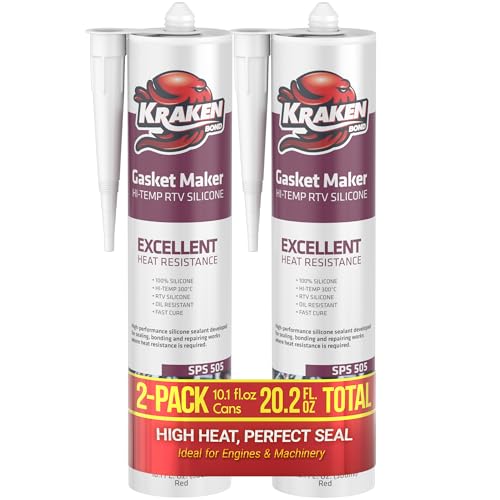
Kraken Bond Red RTV is a high-temperature silicone gasket maker formulated to withstand continuous heat exposure up to 600°F. The red pigmentation is characteristic of high-heat RTV compounds and indicates a chemistry designed to resist thermal breakdown in demanding underhood environments such as exhaust manifolds, turbocharger flanges, and high-performance oil pans.
The oil-resistant formula maintains flexibility and adhesion when in contact with gasoline, diesel, and synthetic engine oils. Owner feedback notes fast drying times—the vinegar curing odor dissipates within hours—and strong initial tack that holds components in place during assembly. The 2-pack configuration provides a practical backup tube for multi-job projects or for users who work on multiple vehicles.
Some users report that the compound sets quickly, requiring efficient application and assembly. The tube design works well with brush or finger smoothing, and uncured product cleans up with mineral spirits. For anyone needing a high-temperature RTV that can handle fuel exposure and comes with a spare tube, Kraken Bond delivers strong performance at a competitive value.
What works
- Withstands 600°F continuous heat
- Oil and fuel resistant formula
- 2-pack provides excellent backup value
What doesn’t
- Sets quickly, limited working time
- Strong vinegar odor during curing
8. Realth RTV Black Silicone 6-Pack

Realth RTV Black Silicone Gasket Maker offers a multi-pack solution for users who need to seal multiple joints across several vehicles or projects. The six-tube configuration brings the per-tube cost down significantly, making it a practical choice for shops, fleet maintenance, or anyone performing extensive engine or equipment resealing. The silicone compound adheres to a wide range of substrates including aluminum, steel, brass, glass, and plastic.
The formulation is designed to remain flexible after curing, resisting shrinkage, dripping, and cracking across a temperature range of -60°F to 536°F. It handles exposure to oil, fuel, and other automotive fluids without degradation. Owner feedback highlights its usefulness for oil pans, valve covers, water pumps, and even non-automotive applications like oven doors and pipe joints.
While the multi-pack format is cost-effective, individual tube performance may vary slightly from premium single-tube brands. The 24-hour full cure time requires patience before pressure-testing joints. For budget-conscious builders or those with multiple sealing tasks ahead, this 6-pack offers reliable performance with the convenience of having spares on hand.
What works
- Six tubes for multi-job value
- Broad material compatibility
- Wide -60°F to 536°F temperature range
What doesn’t
- 24-hour full cure time
- Some tube-to-tube consistency variation
9. LOCTITE 5699 RTV Grey Silicone
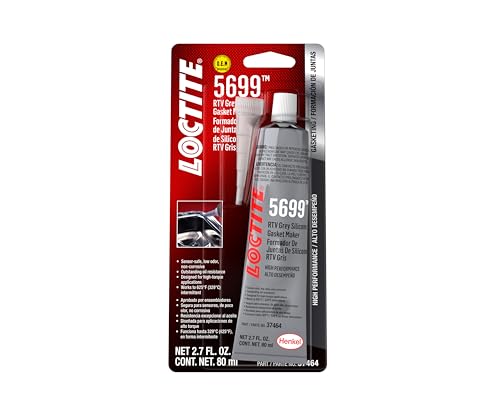
LOCTITE 5699 is an OEM-approved grey RTV silicone gasket maker trusted by professional engine builders for high-torque applications. It remains flexible after curing to withstand high vibration, and its low-odor, non-corrosive formula makes it suitable for use on oxygen-sensor-equipped engines. The compound resists oil, transmission fluid, coolant, and a broad range of shop fluids, ensuring long-term sealing integrity in demanding environments.
Applications span valve covers, oil pans, intake manifold end seals, timing covers, water pumps, and thermostat housings. Owner feedback confirms reliable sealing on automotive, ATV, and snow blower gearboxes, with multiple users reporting zero leaks over extended service intervals. The grey color blends well with most engine components, providing a clean, factory-like appearance.
One minor concern reported by some users is packaging—occasional tubes arrive with the seal already disturbed, though the inner seal remains intact. The 80 ml tube provides sufficient material for several gasket jobs. For anyone seeking an OEM-validated RTV at a accessible price point, LOCTITE 5699 delivers proven performance across a wide range of engine sealing tasks.
What works
- OEM-approved and trusted by professionals
- Excellent oil and fluid resistance
- Low-odor, non-corrosive formula
What doesn’t
- Packaging seal may arrive disturbed on some units
- Not rated for extreme high-heat applications
10. Permatex Permashield Fuel Resistant

Permatex Permashield is a urethane-based gasket dressing and sealant formulated specifically for fuel system applications. Unlike standard RTV, which can degrade or dissolve in direct gasoline contact, Permashield maintains its tacky, flexible consistency even when submerged in fuel. This makes it the go-to choice for sealing fuel pump flanges, carburetor bases, fuel rail fittings, and sending unit gaskets where hydrocarbon exposure is constant.
The orange compound remains permanently pliable, allowing for repeated disassembly and reassembly on metal-to-metal joints without needing reapplication. Owner feedback from vintage car restorers and modern drivetrain builders reports leak-free performance lasting multiple years on fuel system components. It also works effectively as a thread sealant for fuel-system fittings, providing a reliable barrier against both gasoline and diesel.
One unique characteristic is that it never fully hardens—this is intentional, as it allows the seal to absorb vibration and temperature changes without cracking. Users accustomed to hard-curing RTV may find the soft final consistency unusual, but this property is precisely what makes it effective in fuel environments. For any fuel-system sealing task, Permashield is the specialized solution.
What works
- Specifically formulated for gasoline resistance
- Permanently flexible, ideal for fuel system joints
- Allows repeated disassembly without reapplication
What doesn’t
- Never fully hardens, which may be unfamiliar to some users
- Not intended for high-torque flange sealing
11. Rutland 500°F RTV High Heat Silicone
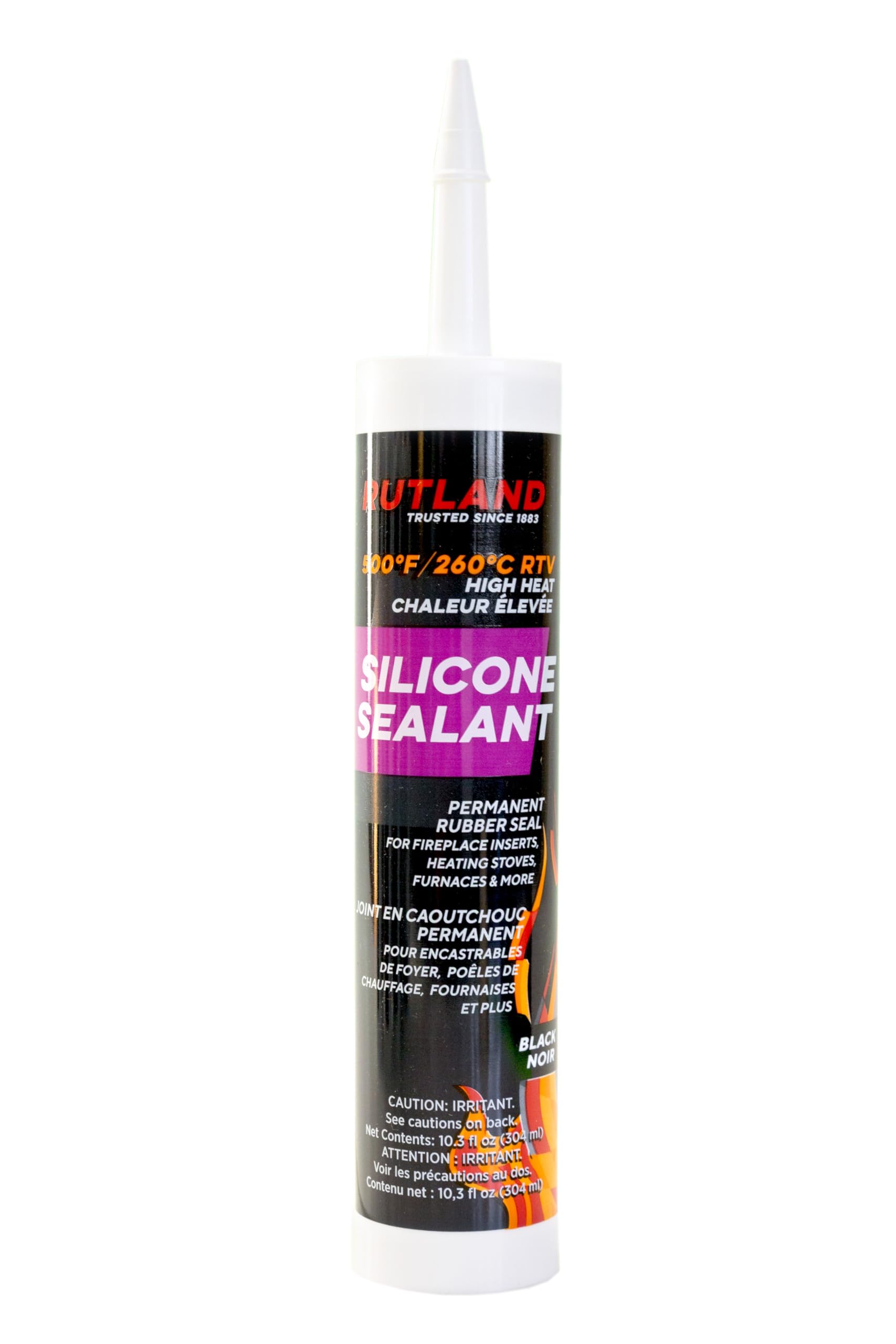
Rutland 500°F RTV High Heat Silicone is an acetoxy-cure sealant designed for applications that exceed the thermal limits of standard automotive RTV. Rated for continuous exposure at 450°F and intermittent spikes to 500°F, it adheres to glass, metal, plastic, fiberglass, wood, brick, and masonry surfaces. The black pigmentation and thick consistency make it suitable for both aesthetic and functional seals on fireplace inserts, solar panel repairs, and heat shielding.
Owner feedback confirms its effectiveness for sealing fireplace hoods, ceramic tile installations around stoves, and even automotive transmission gaskets and electric box seals. Users report it withstands midwest freeze-thaw cycles without cracking and maintains adhesion on vertical surfaces. The US-made formulation meets ASTM C92-86 standards for high-temperature silicone sealants.
The acetoxy cure produces a strong vinegar odor during application, requiring adequate ventilation. Additionally, this silicone is not specifically formulated for immersion in gasoline—its primary strength is dry heat resistance rather than fuel submersion. For high-heat sealing tasks where occasional fuel vapor exposure is a secondary concern, Rutland provides a capable, specialized solution at a reasonable price.
What works
- Withstands 500°F intermittent heat
- Adheres to multiple surface types
- US-made, meets ASTM standards
What doesn’t
- Strong vinegar odor during curing
- Not optimized for direct fuel immersion
Hardware & Specs Guide
RTV Silicone Chemistry
RTV (room-temperature-vulcanizing) silicones cure by reacting with ambient moisture. They form a flexible, rubber-like seal that handles vibration and thermal expansion well. Fuel-resistant RTV compounds use specialized polymer backbones that resist swelling and degradation when exposed to gasoline, diesel, and ethanol blends. Key specs to compare include continuous temperature rating, fluid resistance claims, and cure time.
Anaerobic Sealant Chemistry
Anaerobic gasket makers remain liquid until confined between metal surfaces that exclude oxygen. They cure to a hard, gap-filling solid that resists high torque loads and hydrocarbon fluids. These compounds are ideal for rigid flanges on transmissions, differentials, and oil pumps. Their key advantage is that they do not cure on exposed surfaces, preventing clogged oil passages or sensor contamination.
Non-Hardening Compounds
Non-hardening dressings like Hylomar Blue and Elring Curil T remain permanently pliable. They never fully cure, allowing components to be disassembled years later without scraping or solvent cleanup. These are best used as gasket dressings rather than standalone sealants, providing a flexible barrier that resists fuel, oil, and coolant while absorbing vibration indefinitely.
Temperature and Fluid Ratings
Most fuel-resistant gasket makers list a continuous operating temperature and a peak intermittent rating. Continuous ratings typically range from 450°F to 500°F for standard RTV, with premium compounds reaching 600°F. Fluid resistance claims should specify which fluids—gasoline, diesel, ethanol blends, oil, coolant, ATF—the compound has been tested against. Always match these ratings to your specific application environment.
FAQ
Can I use regular RTV silicone on fuel system components?
What is the difference between RTV and anaerobic gasket maker?
How do I remove cured fuel-resistant gasket maker?
Can I use fuel-resistant gasket maker as a thread sealant?
How long should I wait before exposing the seal to fuel?
Final Thoughts: The Verdict
For most buyers, the best fuel resistant gasket maker winner is the LOCTITE 518 Anaerobic Gasket Maker because it combines exceptional hydrocarbon resistance with the unique convenience of curing only between mating flanges, making it ideal for precision metal surfaces without risking clogged passages. If you need an RTV that cures in under a minute for fast turnaround repairs, grab the Permatex The Right Stuff. And for fuel-system-specific sealing where direct gasoline contact is constant, nothing beats the specialized formulation of Permatex Permashield.

Certification: BSc in Mechanical Engineering
Education: Mechanical engineer
Lives In: 539 W Commerce St, Dallas, TX 75208, USA
Md Amir is an auto mechanic student and writer with over half a decade of experience in the automotive field. He has worked with top automotive brands such as Lexus, Quantum, and also owns two automotive blogs autocarneed.com and taxiwiz.com.