Multi-camera dash cams have moved from a niche accessory to essential safety gear for any driver who parks on the street, shares the road with distracted commuters, or simply wants undeniable evidence after an incident. The difference between a single front-facing lens and a true 360-degree system is the difference between knowing what happened and guessing.
I’m Amir — the founder and writer behind Four Wheel Ask. My research focuses on comparing image sensor specifications, processor capabilities, and real-world recording reliability across dozens of aftermarket camera systems, then cross-referencing those specs with thousands of verified owner reports to separate marketing claims from actual performance.
Whether you drive a compact sedan, a full-size pickup, or a fleet of rideshare vehicles, the right multi-channel system eliminates blind spots and captures every angle. After weeks of analyzing sensor specs, night-vision capabilities, and owner feedback, these are the systems that consistently deliver in our best aftermarket 360 camera for car guide.
How To Choose The Best Aftermarket 360 Camera For Car
A true 360-degree dash cam system is a significant investment in your vehicle’s security and your peace of mind. Unlike a standard single-channel camera that only records what happens in front of you, multi-channel systems cover your sides, rear, and cabin. Choosing the wrong one can mean missed license plates, dead batteries, or footage that’s too grainy to use as evidence. Focus on four critical areas before you buy.
Sensor Quality & Night Vision
The image sensor is the heart of any dash cam. Standard CMOS sensors struggle in low light, producing grainy footage where license plates become unreadable. Sony STARVIS and the newer STARVIS 2 sensors offer significantly better low-light sensitivity and dynamic range. Look for systems that pair STARVIS sensors with HDR or WDR processing and infrared LEDs on side and cabin cameras — this combination ensures you can read plates and identify faces even in complete darkness.
Channel Configuration & Lens Coverage
Not all 360-degree systems are created equal. Some use a single ultra-wide lens with digital de-warping, while others use four or five physical cameras. True multi-channel systems with independently adjustable lenses provide genuine coverage: front, rear, left, and right. Pay attention to the field of view per lens — 150 to 170 degrees is ideal — and whether the side cameras can be rotated to cover both the doors and the cabin interior. Rideshare drivers should prioritize systems with dedicated interior or cabin cameras.
Parking Mode & Power Management
Continuous 24/7 parking surveillance requires a hardwire kit connected to your vehicle’s fuse box. Time-lapse parking mode records at one frame per second to conserve storage, while buffered collision detection captures the seconds before and after an impact. Some systems offer sentry-style motion detection that activates only when a person approaches within a few meters. Always confirm whether the hardwire kit is included or sold separately, and check if it has low-voltage cutoff to prevent draining your car battery.
Wi-Fi, GPS & Storage Limits
Built-in Wi-Fi lets you transfer clips to your phone without removing the memory card — 5GHz or Wi-Fi 6 is significantly faster than 2.4GHz. GPS logs your speed, route, and location, which is critical for insurance claims. Storage capacity matters: four channels recording simultaneously fill cards fast. Systems that support 256GB or 512GB microSD cards give you days of loop recording before overwriting older clips. Avoid cameras that max out at 64GB, especially if you drive long hours daily.
Quick Comparison
On smaller screens, swipe sideways to see the full table.
| Model | Category | Best For | Key Spec | Amazon |
|---|---|---|---|---|
| REDTIGER VP40 | 4-Channel | Best Overall | STARVIS 2, 2.5K+2.5K+1080P*2 | Amazon |
| Vantrue N5S | 4-Channel | Premium Pick | STARVIS 2, Up to 1TB | Amazon |
| Neideso N300Pro | 4-Channel | Premium Pick | STARVIS 2, 4K Front, Touch | Amazon |
| BOTSLAB G980H | 4-Channel | Design Pick | 560° Coverage, 3K Front | Amazon |
| IIWEY N5 PRO | 4-Channel | Performance | WiFi 6, 4K Front, 128GB | Amazon |
| PAPAGO! | 4-Channel | Performance | 5.8GHz WiFi, 30MB/s, 4K | Amazon |
| IIWEY N9 | 5-Channel | Performance | 5 Cameras, 12 IR LEDs | Amazon |
| HUPEJOS V8PLUS | 4-Channel | Value | 4K Front, CPL Filter, 64GB | Amazon |
| Neideso N700Pro | 4-Channel | Value | AI DMS, 5G WiFi, 4K | Amazon |
| Driveye D7 | 4-Channel | Value | 4K, 128GB Included | Amazon |
| VROAVIE V5-4CH | Mirror Dash Cam | Budget Pick | 12″ Display, 1080P*4 | Amazon |
In‑Depth Reviews
1. REDTIGER VP40
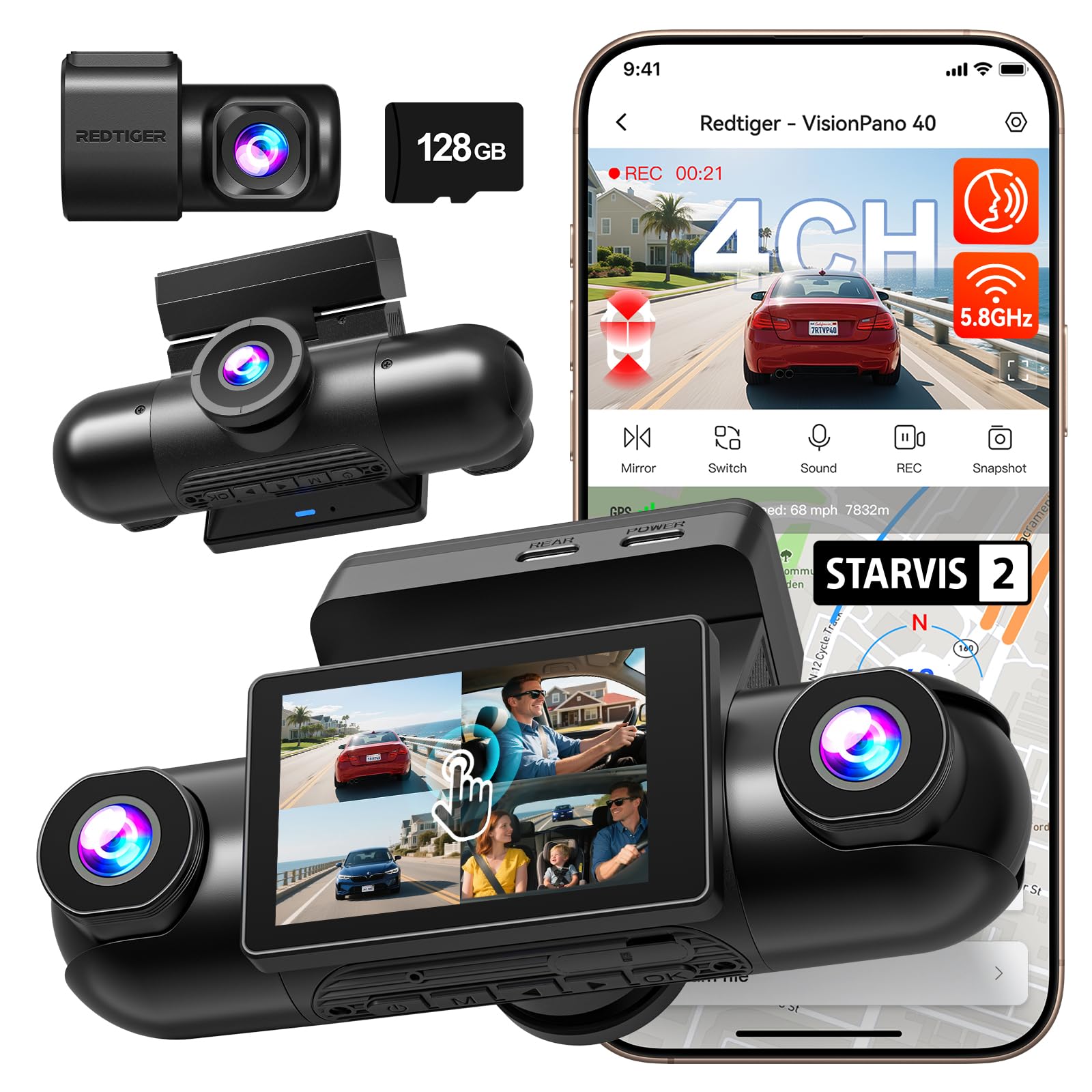
The REDTIGER VP40 is the most balanced 4-channel system on the market, combining dual STARVIS 2 IMX675 sensors with a practical feature set at a price that undercuts premium rivals by a wide margin. The front and rear cameras capture 2.5K (2560×1440) resolution, while the two side cameras deliver 1080P — a configuration that prioritizes critical front and rear detail without overloading the memory card. Each lens is independently rotatable, allowing you to aim side cameras at doors or cabin seats depending on your needs.
Night performance is where this system separates itself from the mid-range competition. The STARVIS 2 sensors provide 2.5 times greater dynamic range than standard sensors, and the dual HDR processing keeps license plates readable even in tunnels, oncoming headlight glare, or rainy conditions. The infrared side cameras switch to black-and-white mode in total darkness, capturing door-level detail that typical wide-angle systems miss. The 5.8GHz Wi-Fi delivers roughly four times faster file transfers than 2.4GHz-only cameras, and the touchscreen interface is responsive enough that you won’t need the app for basic adjustments.
Owner feedback consistently highlights the straightforward installation, the included 128GB card, and the reliable loop recording with G-sensor event locking. A few users noted that the adhesive mount stickers can weaken in extreme heat, recommending direct mounting on the windshield rather than the included electrostatic film. The hardwire kit for parking mode is sold separately, which is standard at this price tier.
What works
- STARVIS 2 sensors deliver class-leading low-light clarity
- Dual 2.5K front and rear capture fine plate detail at speed
- 5.8GHz Wi-Fi enables rapid clip downloads to your phone
- Rotatable side lenses adapt to different vehicle layouts
What doesn’t
- Adhesive mount stickers may fail in high heat without direct mounting
- Parking mode requires separate hardwire kit purchase
- Side cameras protrude slightly, potentially blocking some driver-side visibility
2. Vantrue N5S
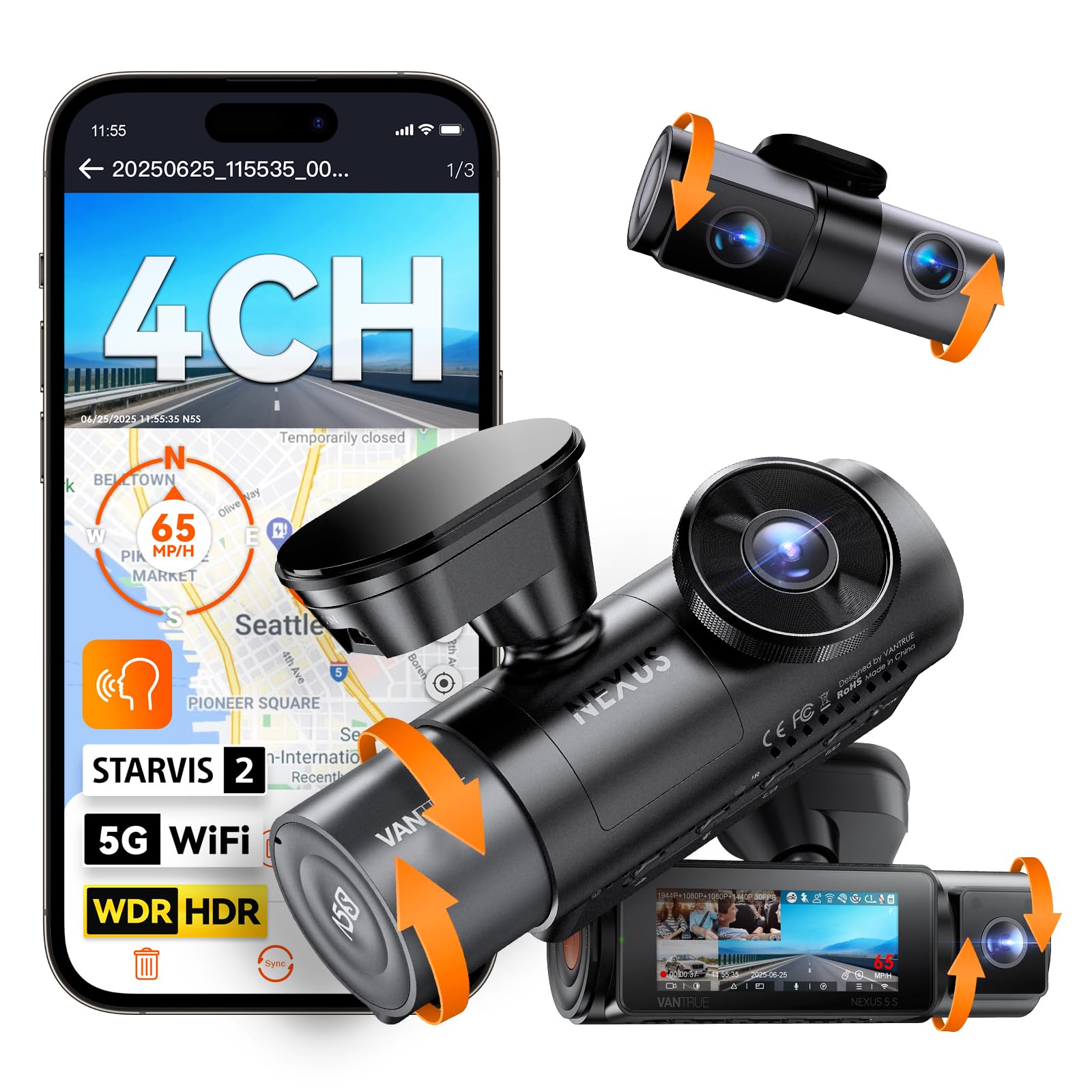
Vantrue’s N5S is the most technically complete 360-degree system available, with all four cameras using Sony STARVIS 2 sensors — a spec that no other multi-channel system at this level matches. The front camera records at 2.7K, the rear cabin camera at 1440P, and the two side cameras at 1080P. This configuration delivers exceptional clarity across all channels, with HDR processing on every lens to handle high-contrast scenes like tunnel exits or direct headlights.
The standout feature is the 24/7 buffered parking mode, which continuously records the ten seconds before motion or impact detection, ensuring a complete event timeline rather than starting after the collision. The dual-system GPS tracks both location and driving data simultaneously, generating detailed mileage reports through the Vantrue app. Storage support up to 1TB microSD means you can record continuously for roughly 40 hours on all four channels before loop recording overwrites older clips — a major advantage for long-haul drivers or fleet vehicles.
Owners consistently praise the image quality and the easy 25-to-30-minute installation process. The adhesive GPS mount is secure, though some users in hot climates reported the rear camera adhesive failing after several months. The hardwire kit is sold separately, but the buffered parking mode makes it worth the investment. The app interface has room for improvement, but the overall reliability and sensor quality justify the premium positioning.
What works
- All four cameras use STARVIS 2 sensors for unmatched night clarity
- Buffered parking mode captures 10 seconds before impact
- Up to 1TB storage support for days of continuous recording
- Dual GPS logs location and driving data simultaneously
What doesn’t
- Premium price positions it above most mid-range alternatives
- Rear camera adhesive may weaken in sustained high heat
- App interface is functional but not the most polished available
3. Neideso N300Pro
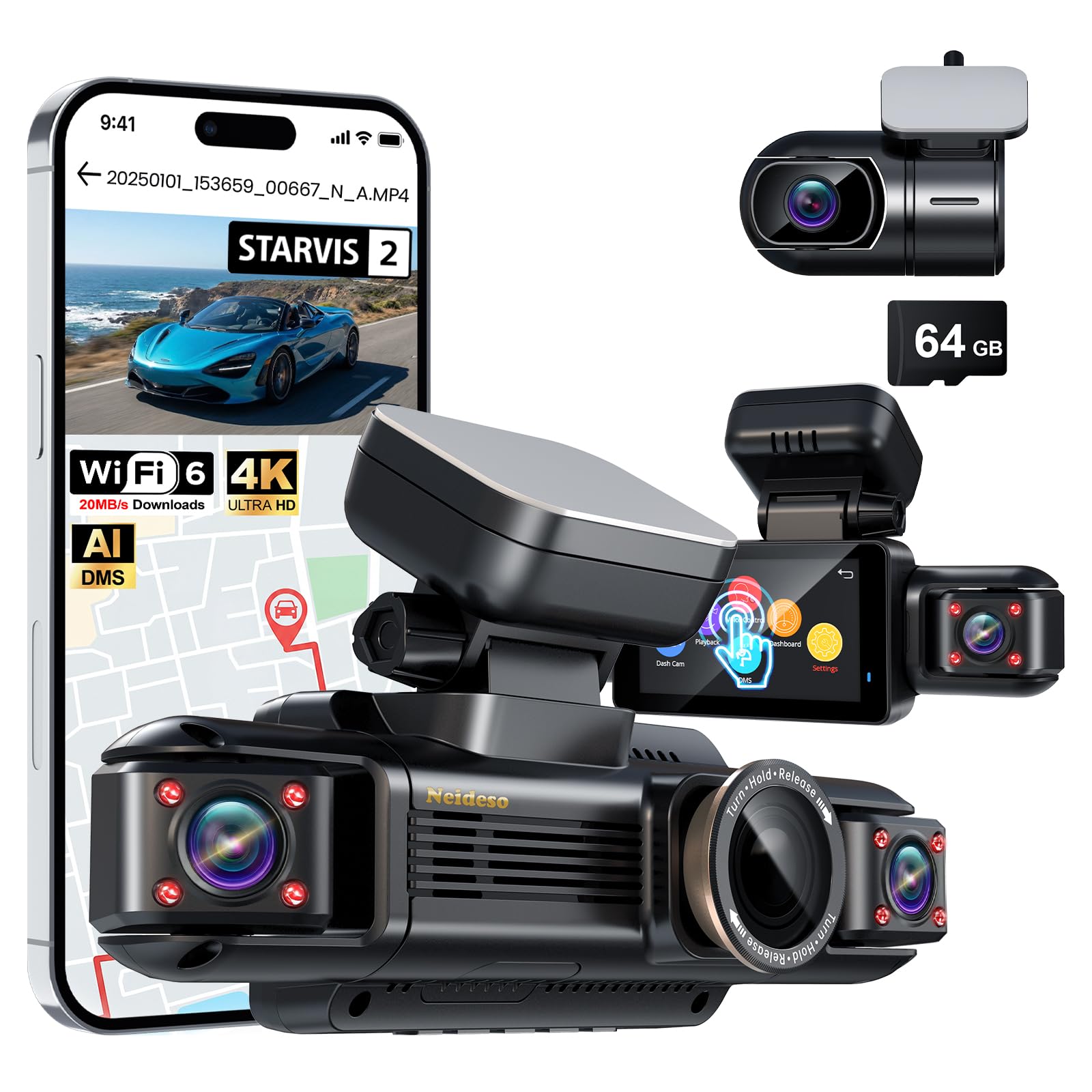
The Neideso N300Pro brings a 4K front camera with STARVIS 2 sensor technology and a responsive 3-inch IPS touchscreen to the premium segment, offering a modern control interface that eliminates the need for tiny physical buttons. The front camera captures true 3840×2160 resolution, while the left, right, and rear cameras record at 1080P — a resolution split that ensures maximum detail where it matters most while keeping storage requirements manageable. The included CPL filter screws onto the front lens to reduce windshield glare and dashboard reflections.
The built-in AI Driver Monitoring System (DMS) tracks signs of fatigue, distraction, and phone use, triggering audible alerts to keep the driver focused. This feature is particularly valuable for rideshare and fleet operators who need to monitor driver behavior. The Wi-Fi 6 connectivity with 5.8GHz support enables transfers up to 20MB/s, making it one of the fastest systems for pulling clips to a phone. The 360-degree motion detection in parking mode monitors objects within 3 to 4 meters of the vehicle, with adjustable sensitivity to avoid false triggers from passing cars.
Owner feedback highlights the 20-to-30-minute installation time, the strong 3M adhesive that requires a heat gun for removal, and the clear daytime and nighttime video quality. The touchscreen interface is intuitive, and the voice control works reliably once you learn the command phrasing. The included 64GB card is adequate for getting started, but the 512GB maximum support means serious users will want to upgrade immediately.
What works
- True 4K front camera with STARVIS 2 sensor captures exceptional detail
- 3-inch touchscreen simplifies menu navigation and playback review
- AI driver monitoring adds fatigue and distraction alerts for fleet use
- Wi-Fi 6 delivers fast 20MB/s transfers to smartphone app
What doesn’t
- Included 64GB card fills quickly and should be upgraded for extended recording
- Voice recognition requires practice to trigger reliably
- Parking mode hardwire kit is an additional purchase
4. BOTSLAB G980H
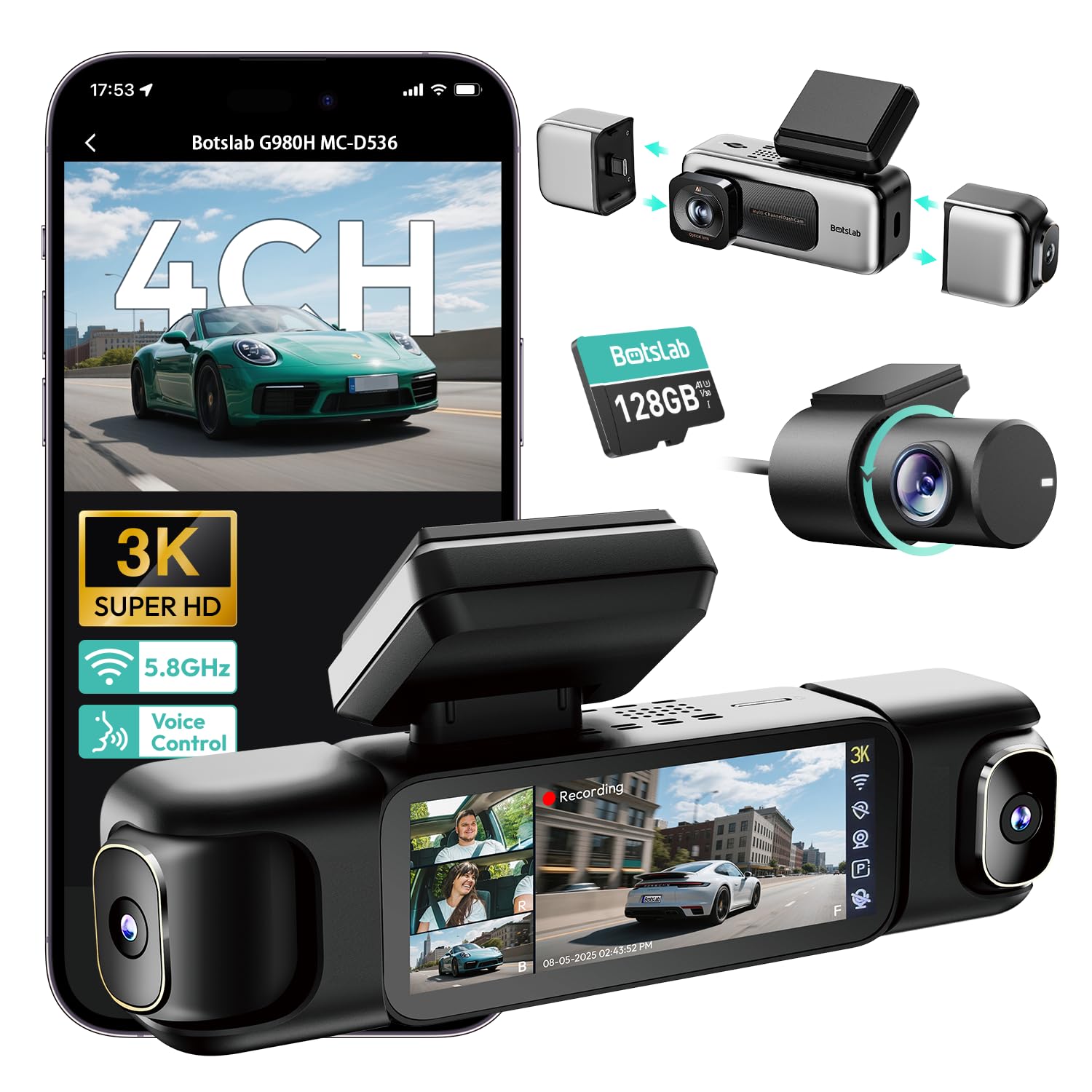
BOTSLAB’s G980H takes a unique approach to coverage with its 560-degree field of view — a 170-degree front lens, dual 120-degree side cameras, and a 150-degree rear camera — giving you more peripheral awareness than any other system in this lineup. The side cameras feature detachable magnetic mounts, allowing you to run them as a 4-channel system for full coverage or remove them to operate as a 3-channel or 2-channel setup depending on your needs. The front camera records at 3K, while the other three channels deliver 1080P.
The 3.18-inch IPS touchscreen supports true four-way split-screen playback, letting you review all camera angles simultaneously without switching views — a significant advantage during accident investigations. The 8-second pre-recording buffer captures footage before the G-sensor detects an impact, ensuring no context is lost. The super capacitor design provides reliable operation in temperatures ranging from -4°F to 158°F, making it a strong choice for extreme climate drivers. The 5.8GHz Wi-Fi delivers roughly 300% faster transfers than standard 2.4GHz systems.
Early owner reports emphasize the sharp 3K front video, the easy installation, and the useful parking mode with sentry-style motion detection. Some users noted that the adhesive mount struggled on heavily angled windshields, and the lack of a CPL filter means glare can be an issue in direct sun. The included 128GB card is a nice bonus, and the support for up to 512GB gives room for expansion. The magnetic side camera mounts are a genuinely thoughtful design touch that adds flexibility.
What works
- Detachable magnetic side cameras allow flexible channel configuration
- Four-way split-screen playback shows all angles simultaneously
- 8-second pre-recording buffer captures events before impact
- Super capacitor handles extreme temperature ranges reliably
What doesn’t
- No included CPL filter means windshield glare can reduce clarity
- Adhesive mount may not hold well on steeply angled windshields
- Large main unit footprint requires careful placement planning
5. IIWEY N5 PRO
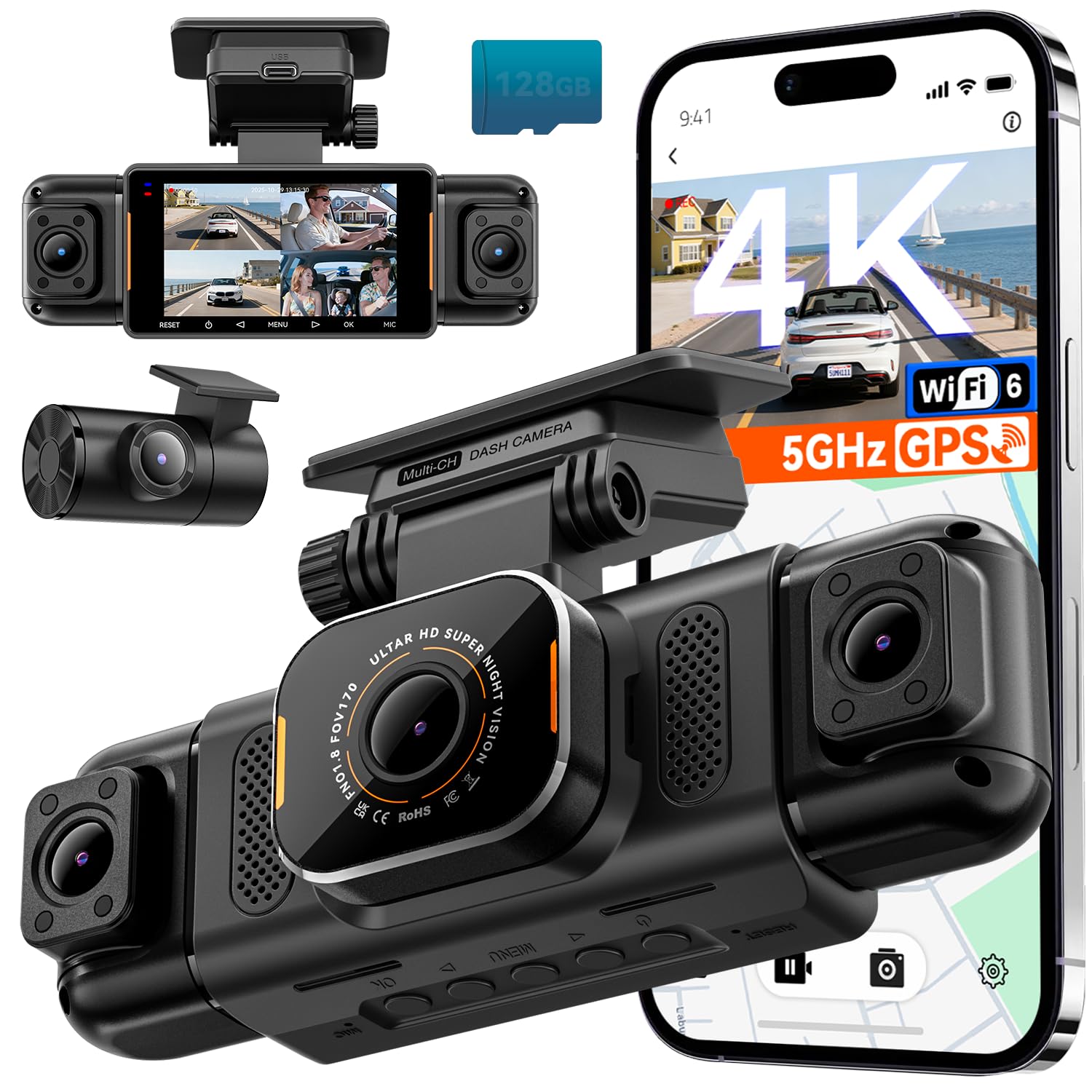
The IIWEY N5 PRO brings next-generation Wi-Fi 6 connectivity to the multi-channel dash cam segment, offering download speeds up to 10MB/s with both 5GHz and 2.4GHz bands. The front camera captures 4K (2160P) footage, while the rear and side cameras record at 1080P — with a 2K-plus-1080P option available for users who prefer extended recording times. The 170-degree ultra-wide front and rear lenses paired with 150-degree side lenses create a true panoramic view that eliminates traditional blind spots.
Night vision is handled by FNO1.8 aperture lenses and four IR lamps on each side camera, automatically switching to black-and-white mode in low-light conditions. The built-in GPS logs speed, altitude, and route data, viewable through the IIWEY app or GxPlayer software on a computer. The super capacitor construction ensures reliable operation in temperatures from -4°F to 167°F, which is important for vehicles parked outdoors in extreme weather. The 128GB SD card included in the box is a genuinely useful inclusion at this price point.
Owner feedback consistently praises the crisp 4K front video quality, the reliable Wi-Fi 6 connection, and the straightforward app interface. The parking mode with time-lapse and collision detection options works well, though the hardwire kit is sold separately. Some users noted that the mount screws should not be removed because the GPS module is embedded inside — a detail that is easy to miss during installation. Overall, the N5 PRO delivers premium-tier connectivity and video quality at a mid-range price.
What works
- WiFi 6 enables fast, stable transfers at up to 10MB/s
- 4K front camera captures sharp detail at highway speeds
- Includes 128GB card for immediate out-of-box recording
- Super capacitor handles extreme temperatures without battery swelling
What doesn’t
- GPS module is built into the mount, preventing easy repositioning
- Parking mode hardwire kit is not included in the package
- Side cameras lack the low-light sensitivity of front and rear lenses
6. PAPAGO! 4-Channel
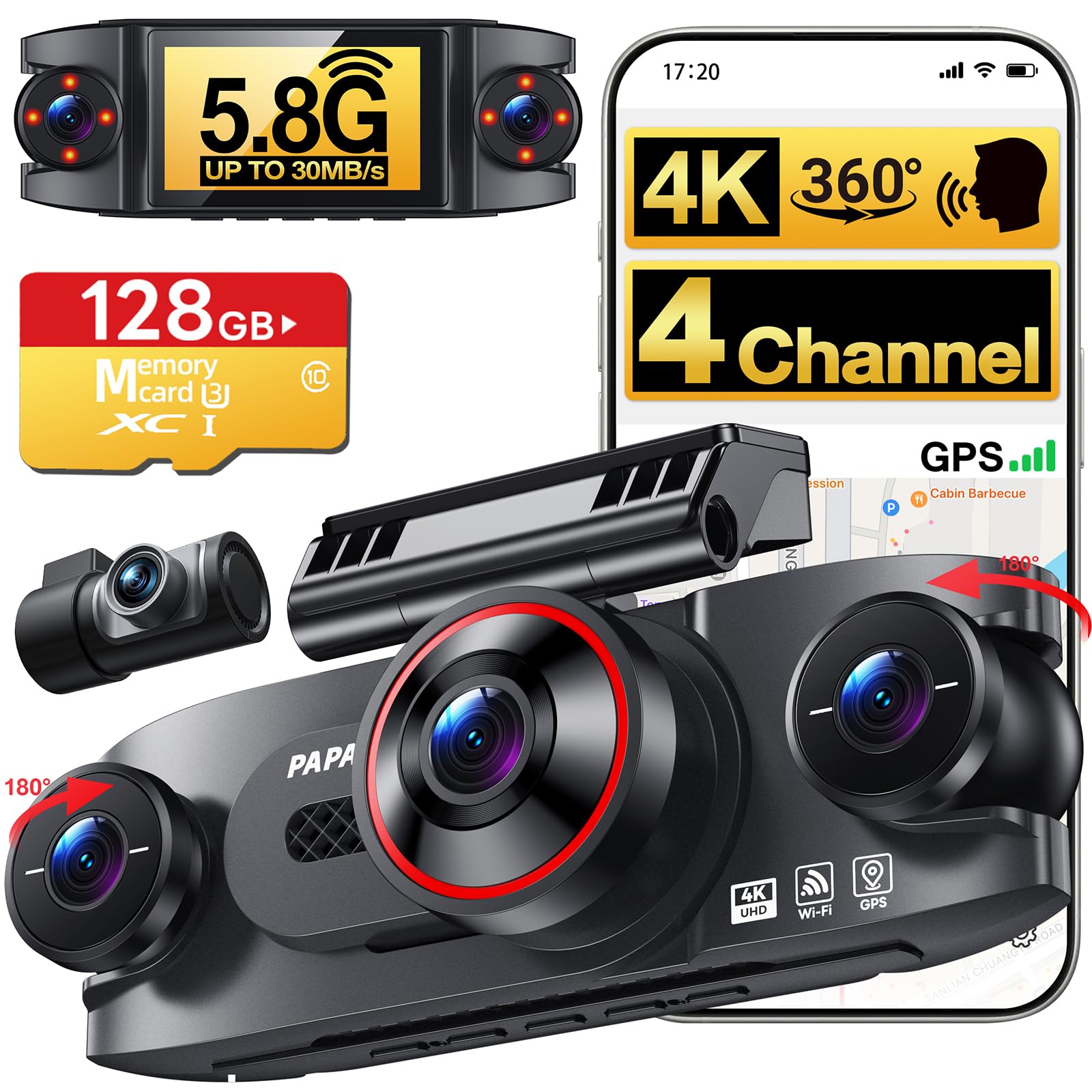
PAPAGO! brings a 4-channel system that prioritizes transfer speed above everything else, with dual-band 5.8GHz and 2.4GHz Wi-Fi delivering download rates up to 30MB/s — the fastest file transfer capability in this comparison. The front camera records at true 4K 3840x2160P resolution, while the sides and rear capture 1080P Full HD. The 170-degree field of view on the front lens and the F1.6 aperture ensure strong light intake for balanced exposure in varied conditions.
The infrared side cameras are equipped with eight invisible LEDs that activate in total darkness, capturing usable black-and-white footage even in pitch-black parking lots. The G-sensor detects collisions and locks footage to a protected event folder, while the manual one-button lock lets you save important clips without navigating menus. The PAPAGO app is clean and responsive, supporting live view, clip download, and firmware updates over Wi-Fi. The 128GB card included in the box is a welcome inclusion, but the system supports up to 256GB for extended recording.
Owners consistently report easy installation in under an hour, excellent 360-degree coverage with no blind spots, and reliable night vision that captures usable interior and exterior detail. A few users noted that the left camera defaulted to black-and-white in certain lighting conditions, which the manufacturer explained as normal night vision activation. The parking mode requires a separate hardwire kit, and the side cameras are more sensitive to light transitions than the main front lens. The build quality and transfer speed make this a strong contender for owners who frequently need to share clips.
What works
- Industry-leading 30MB/s Wi-Fi transfer speeds for quick clip sharing
- True 4K front camera with F1.6 aperture for balanced day/night exposure
- Invisible IR LEDs on side cameras capture discreet cabin footage
- Clean, responsive app interface with live view and firmware update support
What doesn’t
- Side cameras occasionally switch to night vision in mixed daylight conditions
- Parking mode hardwire kit is an additional purchase
- Maximum storage support of 256GB limits extended recording duration
7. IIWEY N9
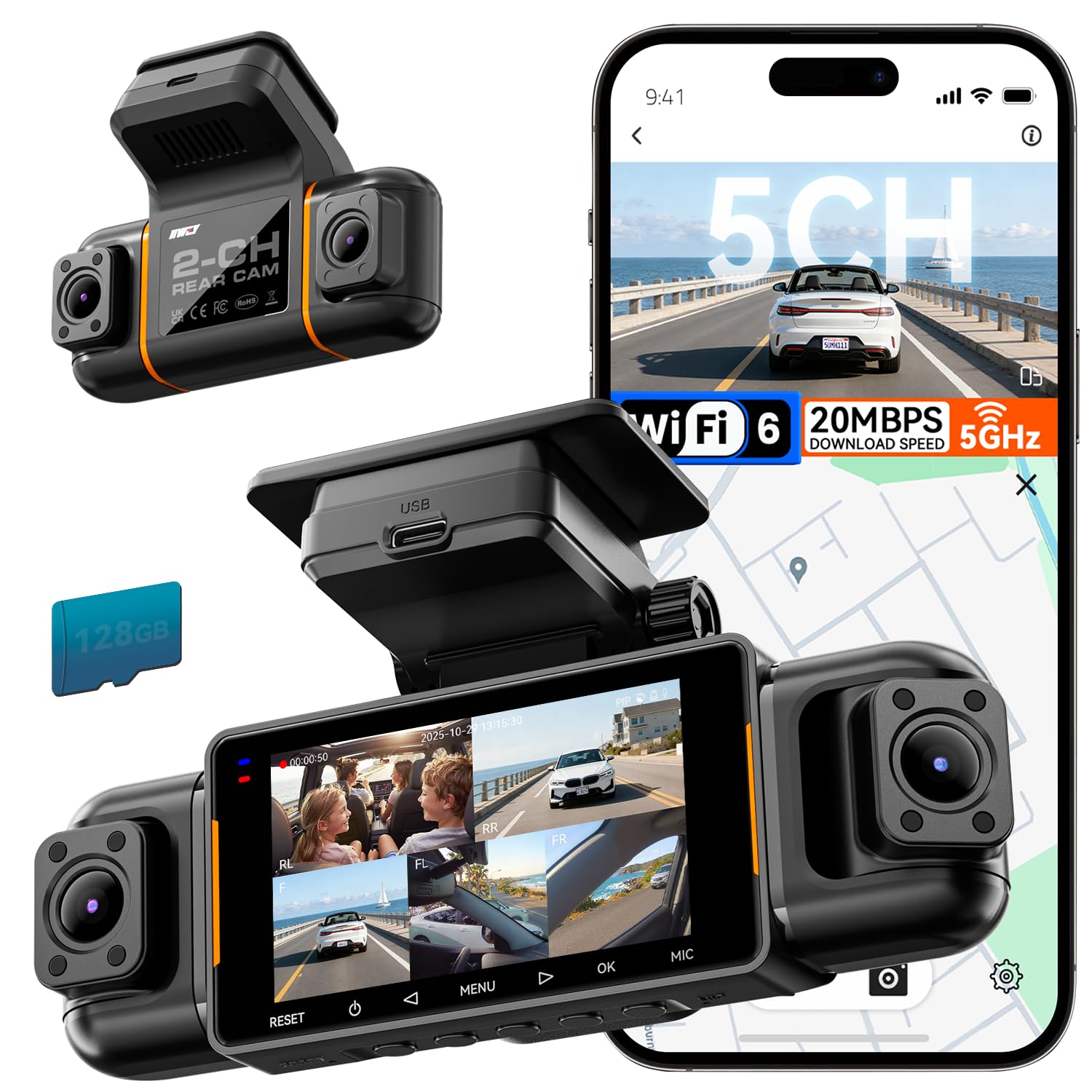
The IIWEY N9 is the only 5-channel system in this lineup, adding a dedicated cabin camera to the standard front, rear, left, and right configuration. All five cameras record at 1080P Full HD, with 12 infrared LEDs lighting the entire interior for total low-light coverage. This configuration is ideal for rideshare drivers who need to document passenger behavior, parents monitoring backseat activity, or truck drivers who want cargo visibility without blind spots.
The 360-degree sentry parking mode uses the dedicated side cameras to catch door dings and side-swipes — events that standard front-and-rear systems miss entirely. The time-lapse parking mode records at 1, 3, or 5 frames per second to conserve storage while maintaining continuous surveillance. The 5.8GHz Wi-Fi 6 technology delivers downloads up to 10MB/s, and the built-in GPS logs speed, coordinates, and route data for insurance documentation. The included 128GB industrial-grade microSD card is pre-installed and ready to record.
Owner feedback highlights the comprehensive coverage, the infrared night vision capability, and the reasonable price for a 5-channel system. Some users noted that the video compression is heavier than expected, with bitrates averaging around 7629kbps on the front camera and lower on the side channels. The audio quality is adequate but not exceptional, and the hardwire kit for parking mode is a separate purchase. Installation takes roughly one hour, and the cable management is straightforward with the included trim tool and clips.
What works
- Five dedicated cameras provide true blind-spot-free coverage
- 12 IR LEDs capture clear cabin footage in total darkness
- Sentry parking mode detects side-swipe and door-ding events
- 128GB industrial card included and pre-installed for immediate use
What doesn’t
- Heavy video compression reduces fine detail in side camera footage
- Parking mode hardwire kit not included in the package
- Audio recording quality is adequate but not crisp
8. HUPEJOS V8PLUS
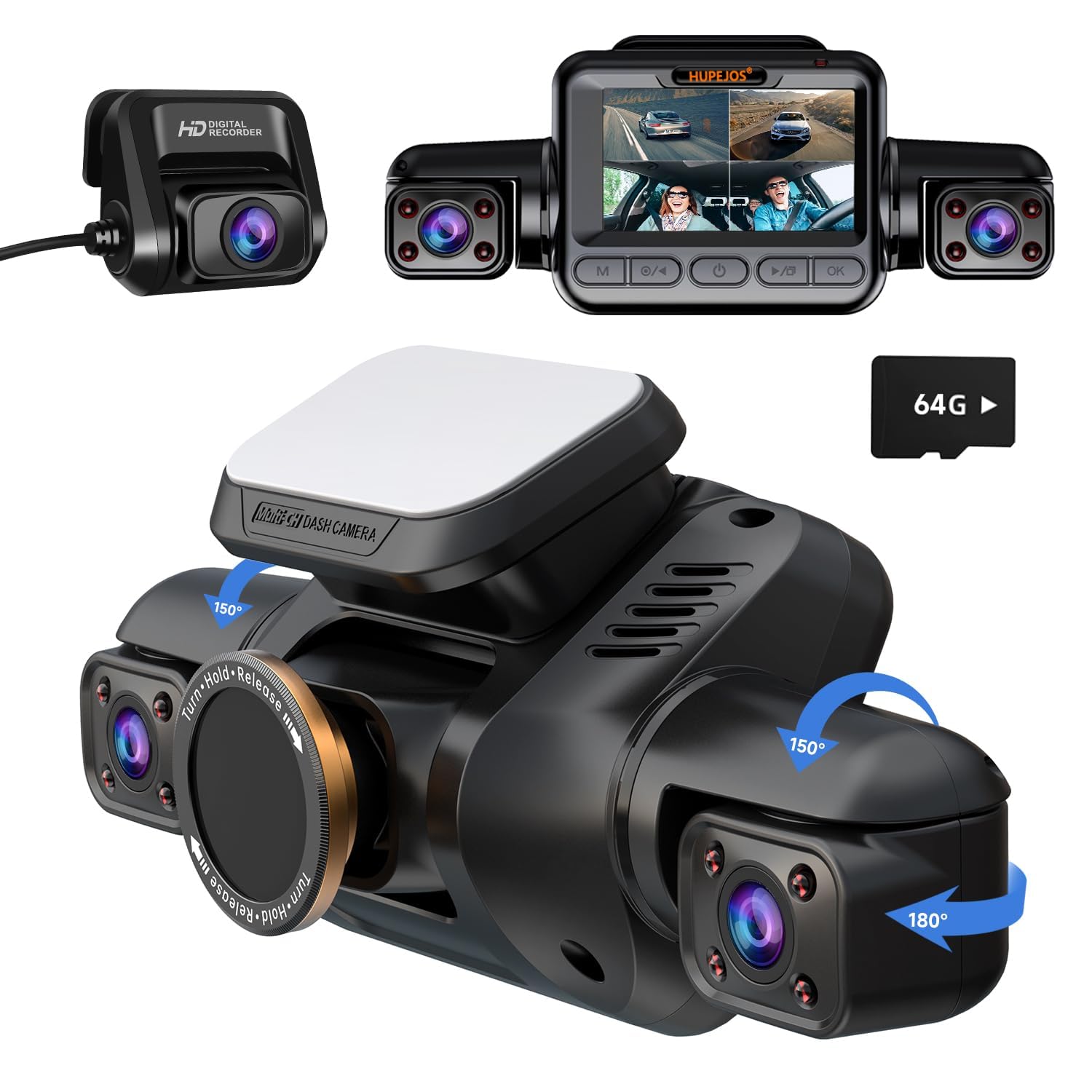
The HUPEJOS V8PLUS delivers genuine 4-channel 360-degree recording at a price point that undercuts most competitors by a significant margin. The front camera captures 4K UHD resolution, while the rear, left, and right cameras record at 1080P. Each of the four 150-degree ultra-wide lenses is adjustable, covering the front, interior, left, right, and rear simultaneously. Two recording modes let you prioritize front clarity with 4K plus dual 1080P, or balanced multi-angle coverage with 3K front plus triple 1080P.
The included CPL filter is a meaningful addition at this price, reducing windshield reflections and polarized glare to improve daytime and night-time clarity. The built-in 5GHz Wi-Fi connects to your phone for live view and clip downloads, and the GPS module logs location, speed, and route data viewable through the GXPlayer software. The voice control system supports basic commands in English, and the 24-hour parking mode with time-delay recording provides continuous low-power surveillance — though the hardwire kit is sold separately.
Owner reviews consistently describe the setup as straightforward, the app interface as responsive, and the video quality as clear during both day and night driving. The included 64GB SD card is adequate for getting started, and the 256GB maximum support gives room for expansion. Some users noted that the night vision is decent but not class-leading, and the voice commands require specific phrasing. For budget-conscious buyers who want true 4-channel coverage without sacrificing 4K front resolution, the V8PLUS is a compelling entry point.
What works
- True 4K front camera with CPL filter for glare reduction at a value price
- Four independent adjustable lenses provide full 360-degree coverage
- Built-in 5GHz Wi-Fi and GPS for convenient app control and tracking
- Voice control keeps hands on the wheel during operation
What doesn’t
- Night vision quality is solid but does not match STARVIS-equipped systems
- Voice command recognition requires precise phrasing to trigger reliably
- Parking mode hardwire kit is an additional purchase
9. Neideso N700Pro
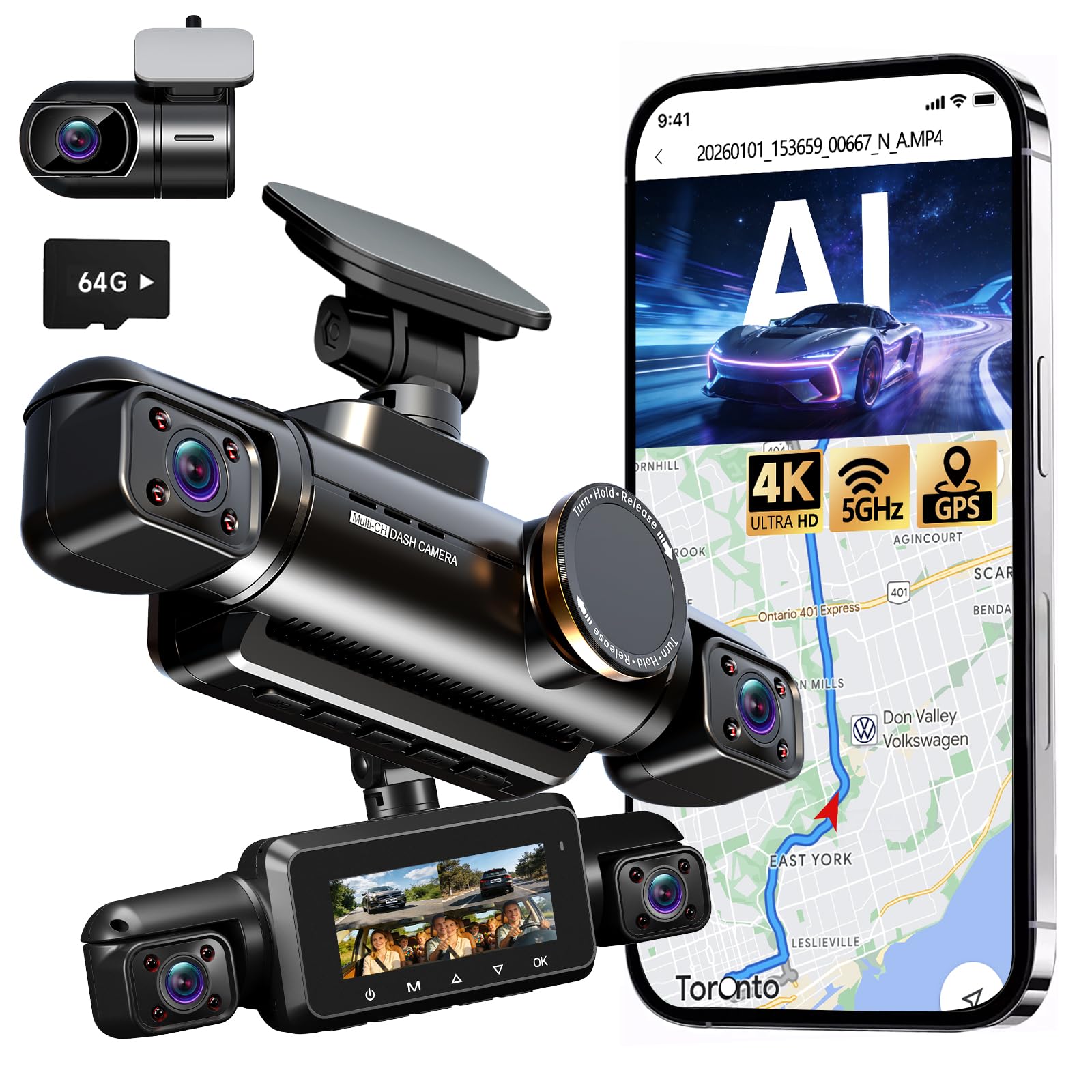
The Neideso N700Pro is the most affordable system in this comparison that includes an AI Driver Fatigue Monitoring System (DMS), making it a strong value pick for rideshare operators and fleet managers who need driver behavior tracking without paying premium prices. The DMS continuously analyzes eye movement, head position, and phone usage patterns, delivering real-time alerts when it detects drowsiness or distraction. The 4-channel recording covers front, rear, left, and right with 4K plus 1080P resolution options.
The 5GHz Wi-Fi provides fast app connectivity, and the built-in GPS logs location and speed data. The 8 IR lamps and six glass lenses work with the included CPL filter to reduce glare, improving night-time license plate capture. The parking mode uses low-power time-lapse recording, monitoring objects within 3 to 4 meters of the vehicle and automatically recording for one minute when motion is detected. The voice control system supports hands-free operation for basic functions like photo capture and audio toggle.
Owner feedback highlights the excellent picture clarity, the easy installation process, and the responsive customer support. Some users noted that the system does not support direct video upload to Mac OS via the SD card — transfers to iPhone via the app work well but can be slow for multiple clips. The included 64GB card is sufficient for daily commutes but may fill quickly for professional drivers who are on the road for extended hours. The hardwire kit for parking mode is sold separately.
What works
- AI driver monitoring system adds fatigue and distraction alerts at a value price
- 5GHz Wi-Fi enables reasonably fast app-based clip downloads
- CPL filter and 8 IR lamps improve low-light video quality
- Comprehensive 4-channel coverage with adjustable 150-degree lenses
What doesn’t
- No direct SD card video access on Mac OS limits desktop workflow
- Included 64GB card fills quickly for extended driving sessions
- Parking mode requires separate hardwire kit purchase
10. Driveye D7
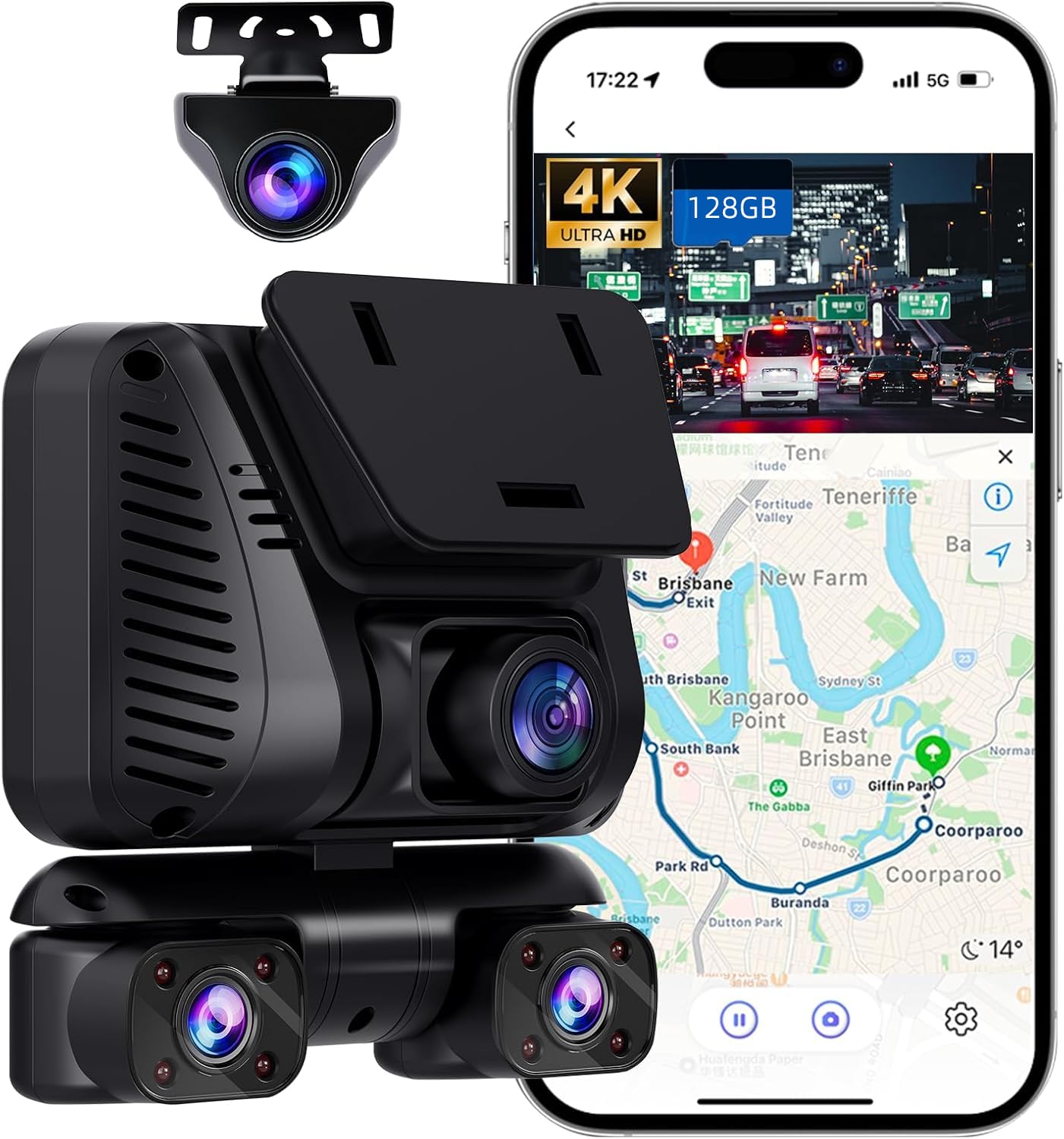
The Driveye D7 offers an unusual resolution configuration that prioritizes rear detail: the front camera records at 4K while the rear camera captures 2K, with the side cameras handling 1080P. This makes it one of the few systems in the value tier that dedicates extra resolution to rear coverage, which is a meaningful advantage for drivers who are frequently rear-ended in stop-and-go traffic or parallel parking scenarios. The four 150-degree ultra-wide lenses provide comprehensive 360-degree coverage.
The F1.8 aperture front lens with WDR technology and six-layer optics maintains balanced exposure across lighting conditions, with the side cameras each using four infrared lights for low-light cabin and door-side recording. The enhanced heat dissipation design is a notable feature, with the manufacturer claiming reliable operation in temperatures ranging from -22°F to 158°F — a wider range than most competitors. The voice control supports 13 English commands, and the included 128GB card is a generous inclusion at this price.
Owner reviews frequently mention the responsive customer support, with one user receiving a replacement 12V plug and OBD adapter free of charge when the original failed. The video quality is accurate to the specifications, though license plate readability requires the subject to be directly behind the vehicle and not moving at high speed. The unit is physically large, which can make mounting challenging in smaller vehicles or behind rearview mirrors. The parking mode hardwire kit is sold separately, and some users experienced Bluetooth conflicts with their phone music when using the app.
What works
- 2K rear camera provides above-average rear-end detail for the price
- Exceptional heat dissipation system for extreme-temperature reliability
- 128GB card included for extensive out-of-box recording capacity
- Responsive customer support with replacement parts when needed
What doesn’t
- Main unit is physically large and challenging to mount in compact vehicles
- License plate readability drops significantly at highway speeds
- Bluetooth interference with phone music during app use reported
11. VROAVIE V5-4CH
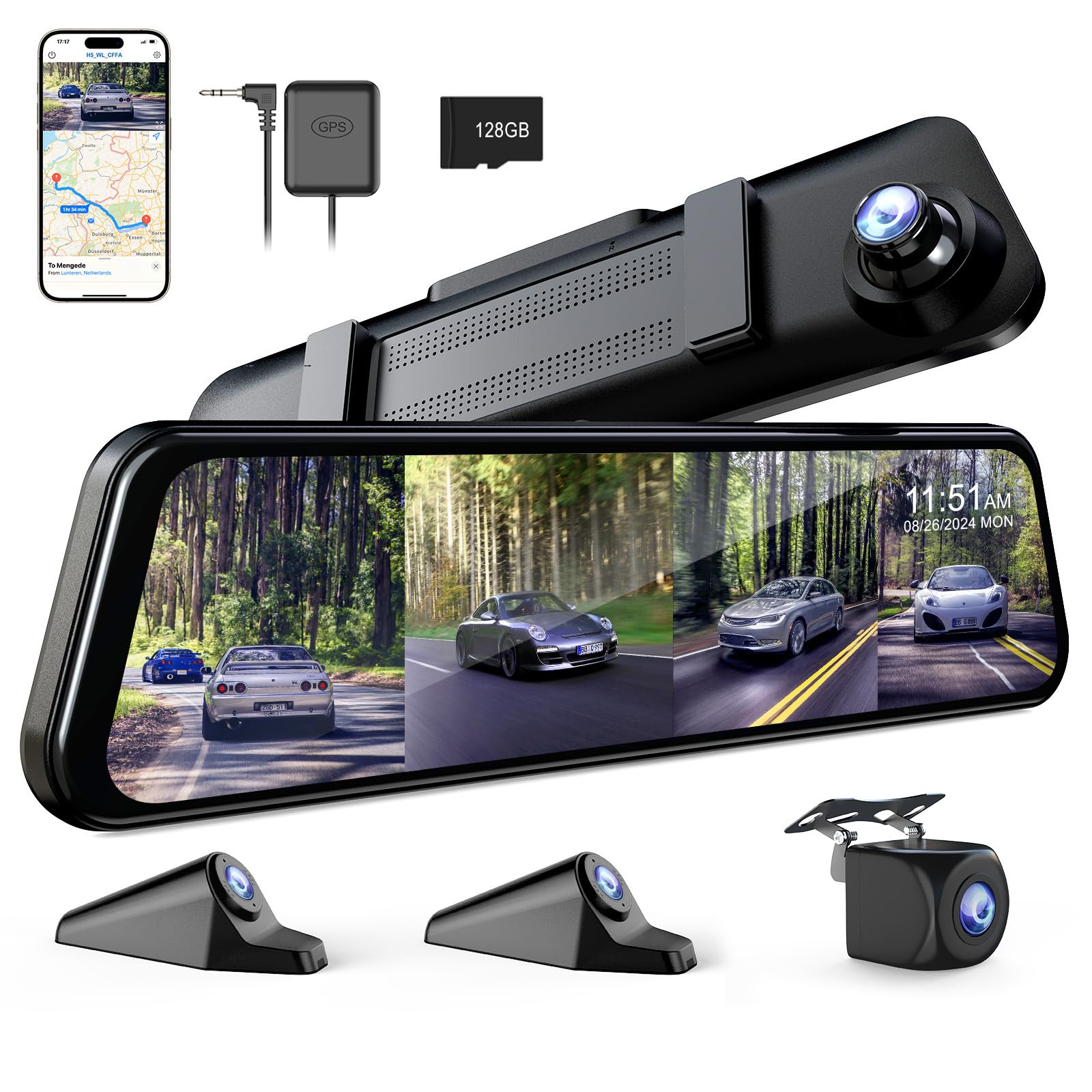
The VROAVIE V5-4CH takes a fundamentally different approach by integrating all four cameras into a 12-inch rearview mirror display, making it the most discreet option for drivers who want 360-degree coverage without a separate screen mounted on the windshield. The mirror unit straps over your existing rearview mirror using rubber bands, requiring no permanent mounting or adhesive on the glass. The front, rear, left, and right cameras all record at 1080P Full HD, with 150-degree wide-angle lenses covering the full perimeter of the vehicle.
The front camera uses an F1.8 aperture for improved low-light performance, and the 12-inch LCD screen provides a bright, clear view of all four camera feeds simultaneously. The built-in dual-band Wi-Fi connects to the GFG Drive app for live viewing and clip downloads on your phone. The external GPS module logs location, speed, and route data, while the parking mode offers time-lapse and collision detection options. The side cameras attach magnetically and can be positioned anywhere within reach of the included cables, giving you flexibility for different vehicle shapes.
Owner feedback highlights the easy installation, the two-year warranty, and the added safety features for older vehicles that lack built-in blind-spot monitoring. Some users noted that the rear camera image can wash out when headlights hit the lens directly at night, and the 1080P resolution across all channels is lower than the 4K front cameras found on dedicated non-mirror systems. The hardwire kit for parking mode is sold separately. For owners who want a clean, integrated look and are willing to trade top-tier resolution for a factory-like appearance, the V5-4CH is a smart choice.
What works
- 12-inch mirror display provides a clean, factory-integrated appearance
- No-drill installation with rubber straps works on any existing mirror
- Four 1080P cameras cover all blind spots simultaneously
- Magnetic side camera mounts allow flexible positioning
What doesn’t
- 1080P resolution across all channels is lower than 4K front alternatives
- Rear camera image can wash out from direct headlight glare at night
- Parking mode requires a separate hardwire kit to function
Hardware & Specs Guide
Sensor Technology: STARVIS vs. Standard CMOS
The image sensor determines low-light performance and dynamic range. Sony STARVIS sensors use back-illuminated pixel technology that captures significantly more light than standard front-illuminated CMOS sensors, making license plates readable in dim parking lots and nighttime driving conditions. STARVIS 2 doubles the low-light sensitivity of the original STARVIS and adds improved HDR processing for high-contrast scenes. Systems without STARVIS sensors can still produce usable footage under streetlights, but detail drops sharply in unlit areas. If you regularly drive or park in low-light environments, prioritize a system with STARVIS 2 sensors on at least the front and rear cameras.
Channel Configuration: Lenses and Blind Spots
A true 360-degree dash cam uses four or five physical cameras with independently adjustable lenses. Four-channel systems typically cover front, rear, left, and right, while five-channel systems add a dedicated cabin camera. The key specification to check is the field of view per lens: 150 to 170 degrees is ideal for minimizing blind spots. Side cameras are the most frequently overlooked channel in budget systems — ensure they are physically separate lenses rather than software-simulated wide-angle crops from the front camera. Independently rotatable side cameras allow you to aim at door panels for parking protection or into the cabin for rideshare documentation.
Parking Mode Types and Power Requirements
Parking mode is not a single feature but a category with three distinct implementations. Time-lapse mode records continuously at one frame per second, providing complete surveillance with minimal storage usage. Buffered motion detection continuously records a short loop, saving the footage only when motion or impact is detected, including the seconds before the trigger. Collision detection mode saves a clip only when the G-sensor registers an impact, preserving battery life most aggressively. All three modes require a hardwire kit connected to your vehicle’s fuse box, which is almost always sold separately. Always check if the hardwire kit includes low-voltage cutoff protection to prevent draining your starter battery below safe levels.
Storage, Wi-Fi, and GPS Specifications
Recording four or five channels simultaneously consumes storage quickly. A 128GB card provides roughly 8 to 12 hours of continuous recording before loop overwriting begins, depending on resolution and compression. Look for systems that support at least 256GB, with 512GB or 1TB preferable for long-haul drivers. Wi-Fi generation directly affects usability: 2.4GHz is adequate for basic previews but painfully slow for downloading full clips, while 5GHz or Wi-Fi 6 delivers speeds that make phone transfers practical. GPS logging is a binary feature — it either records coordinates and speed or it does not — but the software side matters: systems that overlay GPS data on the video playback make insurance claims significantly easier to document.
FAQ
How many cameras do I need for true 360-degree coverage?
Do I need a hardwire kit for parking mode?
What is STARVIS 2 and why does it matter?
Can I view my dash cam footage remotely over the internet?
How much storage do I need for a 4-channel system?
Final Thoughts: The Verdict
For most buyers, the aftermarket 360 camera for car winner is the REDTIGER VP40 because it balances dual STARVIS 2 sensors, practical 2.5K front and rear resolution, and a strong feature set at a price that undercuts premium rivals. If you want uncompromised sensor quality across all channels, grab the Vantrue N5S with its four STARVIS 2 cameras and 1TB storage support. And for budget-conscious buyers who still want true 4-channel coverage, the HUPEJOS V8PLUS delivers genuine 4K front recording with an included CPL filter at an entry-level price.

Certification: BSc in Mechanical Engineering
Education: Mechanical engineer
Lives In: 539 W Commerce St, Dallas, TX 75208, USA
Md Amir is an auto mechanic student and writer with over half a decade of experience in the automotive field. He has worked with top automotive brands such as Lexus, Quantum, and also owns two automotive blogs autocarneed.com and taxiwiz.com.