Selecting the right coating for an engine block, brake caliper, or exhaust component requires more than matching a color swatch. Motor paint must endure thermal cycles, chemical exposure, and vibration without delaminating or discoloring — and the formulation chemistry separating a lasting finish from a peeling failure is anything but trivial.
I’m Amir — the founder and writer behind Four Wheel Ask. My research focuses on breaking down product specifications, analyzing formulation chemistry, and comparing long-term durability data from owner feedback across multiple automotive platforms.
Whether you are restoring a classic engine, customizing brake hardware, or refinishing a marine outboard, the formulation dictates the result. Understanding how heat tolerance, chemical resistance, and surface preparation affect performance helps you choose the perfect best motor paint for your project.
How To Choose The Best Motor Paint
Motor paint is not ordinary spray paint. The thermal stress, fluid exposure, and mechanical vibration found under the hood or on a brake assembly demand a coating engineered for those conditions. Understanding the key selection criteria separates a professional-grade result from a short-lived disappointment.
Temperature Tolerance and Thermal Cycling
The single most important specification for motor paint is its continuous heat rating. Engine blocks typically operate between 200°F and 300°F, while exhaust manifolds and turbo housings can exceed 1000°F. Brake calipers generate substantial heat during repeated stops. Always match the paint’s temperature ceiling to the hottest surface it will encounter. Thermal cycling — repeated heating and cooling — stresses the coating bond, so formulations with ceramic or silicone resins handle these transitions better than standard enamels.
Formulation Chemistry: Enamel vs. Epoxy vs. Ceramic
Enamel paints offer good chemical resistance and a hard finish, making them suitable for engine blocks and valve covers. Epoxy primers provide superior adhesion and corrosion protection, ideal as a base layer on bare metal. Ceramic-based coatings handle extreme heat and resist fading, but often require specific curing procedures. Some premium products use a hybrid urethane-ceramic blend that balances durability with ease of application. Understanding these chemistry differences helps you avoid choosing a decorative paint for a functional job.
Surface Preparation and Primer Compatibility
No motor paint performs well on a poorly prepared surface. Degreasing, sanding, and etching are non-negotiable steps for aluminum, cast iron, and steel components. Some paints require a dedicated primer — VHT and Dupli-Color both offer primer systems designed to bond with their topcoats. Self-etching primers provide excellent adhesion on bare metal, while high-build primers fill minor surface imperfections. Skipping prep work is the fastest route to delamination and corrosion creeping under the finish.
Color Matching and Finish Type
Restoration projects demand exact OEM color matches — brands like Mercury and Rust-Oleum offer factory-matched shades for specific engines and equipment. For custom builds, the choice between gloss, satin, matte, and metallic finishes affects both appearance and heat reflection. Gloss finishes are easier to clean and resist oil absorption, while matte finishes hide surface imperfections better. Always verify that the finish type is rated for the operating temperature of the component you are painting.
Quick Comparison
On smaller screens, swipe sideways to see the full table.
| Model | Category | Best For | Key Spec | Amazon |
|---|---|---|---|---|
| KBS Coatings 60302 | Engine Paint | Engine blocks & brake calipers | 450°F resistance, oil/gas resistant | Amazon |
| VHT SP148 | Engine Enamel | Engine accessories & blocks | 550°F resistance, ceramic-urethane blend | Amazon |
| MTN PRO Brake Caliper | Caliper Paint | Brake caliper customization | 110°C resistance, fast-drying gloss | Amazon |
| Dupli-Color Caliper | Caliper Paint | Brake calipers & drums | 500°F resistance, ceramic resin | Amazon |
| Rust-Oleum Farm & Implement | Tractor Paint | Farm equipment & implements | OEM color match, chip-resistant | Amazon |
| Stove Bright 6304 | High Heat | High-temp metal surfaces | Flat black finish, silicone-based | Amazon |
| Mercury 8028781 | OEM Engine Paint | Mercury outboards & MerCruiser | Factory Phantom Black match | Amazon |
| SprayMax 2K Epoxy Primer | Epoxy Primer | Auto restoration & metal prep | 2K technology, corrosion-resistant | Amazon |
| MTN PRO Heat-Resistant | High Heat | Exhaust & high-temp parts | 700°C rating, metallic finish | Amazon |
| Seymour 16-1202 | High Heat | Grills, stoves & engine parts | 1200°F resistance, porcelain bond | Amazon |
| CRC 05048 Zinc-It | Cold Galvanize | Rust protection on metal | Fast-drying, 95% zinc content | Amazon |
In‑Depth Reviews
1. KBS Coatings 60302 Gloss Black Motor Coater Engine Paint
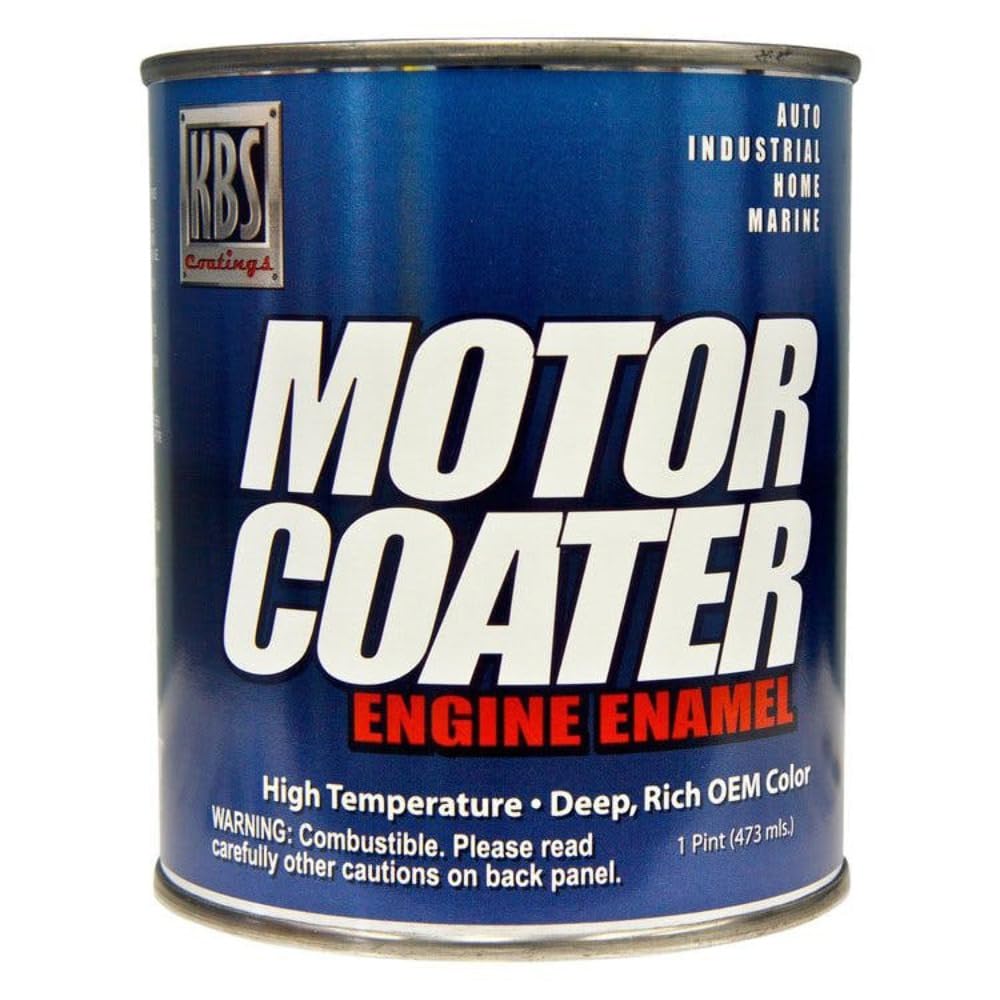
The KBS Coatings Motor Coater stands out for its brushable, self-leveling formula that delivers a professional-looking finish without requiring spray equipment. Rated to withstand temperatures up to 450°F, it is formulated with chip-resistant, crack-resistant, and fade-resistant properties that hold up under prolonged thermal stress. The gloss black appearance gives engine components a clean, factory-grade look while the oil and transmission fluid resistance protects against common under-hood leaks.
Analysis of owner feedback reveals consistent praise for the paint’s adhesion on cast iron and aluminum surfaces after proper degreasing and surface preparation. The self-leveling characteristic minimizes brush marks, making it accessible for DIY engine builders who prefer brushing over aerosol application. Some users note that the paint requires adequate curing time — typically several days at room temperature — before reaching full hardness and chemical resistance.
For engine blocks, valve covers, and even brake calipers, this formulation provides a durable barrier against heat and fluids. The pint can covers approximately 16 square feet, making it suitable for a full engine rebuild refinishing project. KBS Coatings positions this product as a serious alternative to aerosol engine enamels, and the research supports that claim for longevity and adhesion strength.
What works
- Excellent chemical resistance against oil, gas, and transmission fluid
- Self-leveling formula eliminates brush marks for a smooth finish
- Durable chip and crack resistance under thermal cycling
What doesn’t
- Requires multiple days of curing before reaching maximum durability
- Pint format offers less immediate convenience than aerosol sprays
2. VHT SP148 550° Engine Enamel Primer Light Gray

VHT has built a strong reputation in the high-heat coating space, and the SP148 Engine Enamel Primer reinforces that standing. This primer features a urethane and ceramic resin blend engineered to resist corrosion, rust, salt spray, and the chemical additives found in modern gasoline blends and degreasers. Rated for continuous use at 550°F, it is designed as a foundation layer that bonds aggressively to metal surfaces.
The 11-ounce aerosol can uses VHT’s standard nozzle system, and the paint dries to the touch in one hour with full through-drying achieved overnight. Owner reports indicate that this primer performs best when applied over clean, bare metal or lightly sanded existing finishes. It is compatible with VHT’s line of engine enamel topcoats, creating a layered system that maximizes durability on components like engine blocks, starters, brackets, and water pumps.
Specification analysis shows that the ceramic component contributes to heat dissipation and thermal stability, while the urethane component provides flexibility that resists cracking under vibration. The matte light gray color works well as a neutral base for subsequent topcoat colors. For anyone building a long-term engine refinishing system, this primer represents a critical first layer.
What works
- Ceramic-urethane hybrid formulation for heat and chemical resistance
- Dries quickly to the touch in one hour
- Compatible with full VHT engine enamel topcoat system
What doesn’t
- Requires thorough overnight curing before handling
- Light gray color may need multiple primer coats for full coverage
3. MTN PRO Brake Caliper Spray Paint Red 400ml
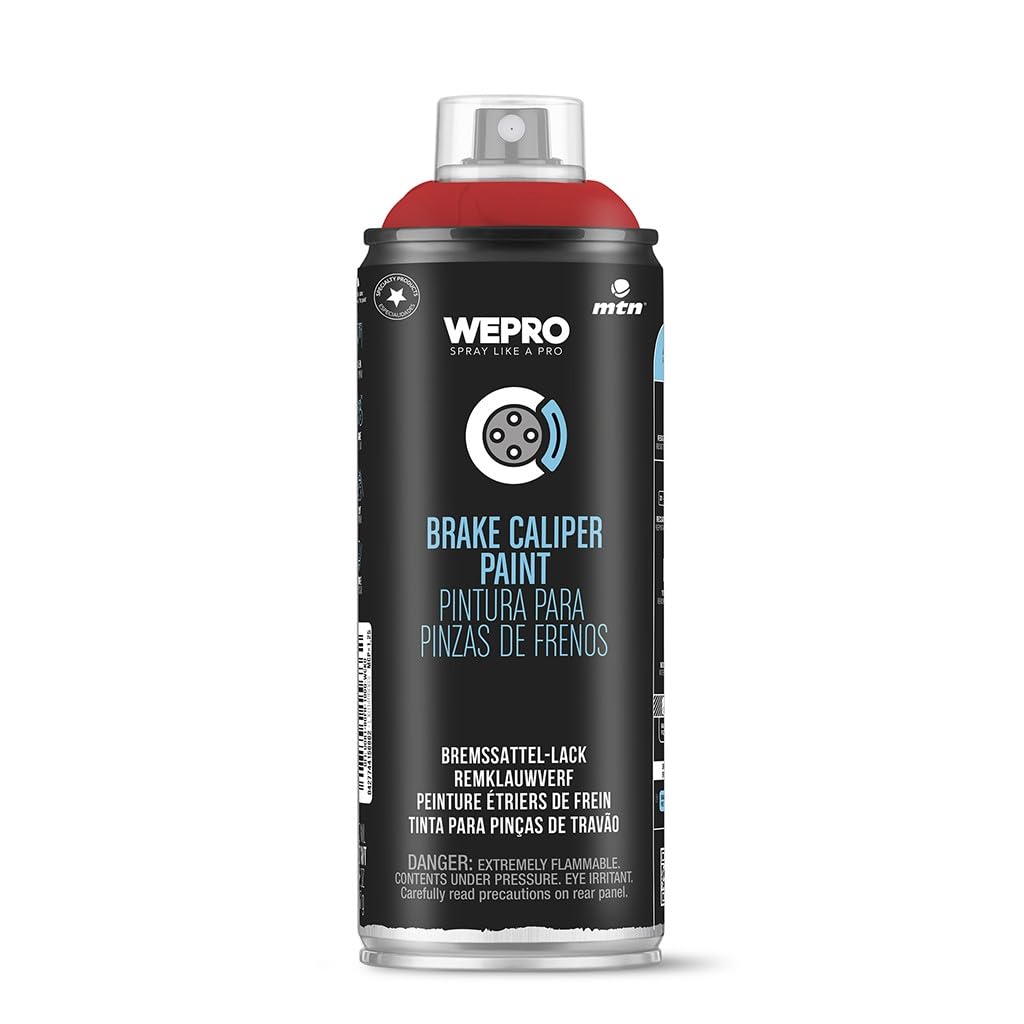
Montana Colors engineered this MTN PRO formula specifically for brake calipers, addressing the unique thermal demands of braking systems. Rated to withstand temperatures up to 110°C, it delivers a vibrant red gloss finish that resists weathering, scratching, and fading once fully cured. The 400ml aerosol can provides generous coverage for multiple calipers or extensive detailing projects on sports cars and daily drivers alike.
The spray pattern from the user-friendly nozzle allows precise application at the recommended 8- to 12-inch distance, reducing overspray on adjacent components. Owner accounts highlight the fast-drying nature of the formula, which minimizes downtime between coats and allows reassembly within a reasonable timeframe. The gloss red finish maintains its color intensity over time, a common concern with lower-grade caliper paints that yellow or dull under brake dust exposure.
This paint is suited for DIY enthusiasts and professional mechanics who want a dedicated caliper solution rather than a general-purpose high-heat paint. The formulation resists brake dust adhesion, making routine cleaning easier. For anyone prioritizing aesthetic customization of brake hardware with a product designed specifically for that application, this MTN PRO release checks the key boxes.
What works
- Specifically formulated for brake caliper heat and conditions
- Fast-drying with minimal downtime between coats
- Resists fading and yellowing over extended use
What doesn’t
- Temperature rating of 110°C may be marginal for extreme track use
- Limited color range compared to universal engine paints
4. Dupli-Color Caliper Aerosol Paint Blue 11 oz

Dupli-Color has been a trusted name in automotive refinishing since 1938, and their Brake Caliper Paint continues that legacy with a ceramic-resin formulation rated for 500°F. This gloss blue aerosol delivers a high-visibility finish that resists chipping, brake dust accumulation, and automotive chemicals. The EZ Touch Conical nozzle provides excellent control for applying even coats on calipers, rotors, and drums.
The paint dries to the touch in 30 minutes and can be handled within one hour, making it one of the faster options in this category for brake component refinishing. Owner reports indicate strong adhesion when applied over properly cleaned and lightly scuffed caliper surfaces. The blue color option offers a distinctive look for those who want to add visual contrast to their brake system without going to red or yellow.
Dupli-Color’s ceramic resin technology contributes to heat dissipation and extends the life of the finish under repeated braking cycles. The paint is also suitable for trucks and SUVs where caliper temperatures can run higher due to vehicle weight. For a balance of application speed, durability, and color selection, this product represents a strong mid-range contender.
What works
- Fast drying time — touch dry in 30 minutes
- Ceramic resin formulation for heat and chip resistance
- Resists brake dust adhesion for easier cleaning
What doesn’t
- Best results require removing calipers from the vehicle
- Some users report color variation between batches
5. Rust-Oleum 280159 Farm & Implement Enamel Kubota Orange

Rust-Oleum’s Farm & Implement Enamel series is formulated for heavy-duty equipment exposed to outdoor conditions, making it a practical choice for tractors, trailers, and implements. This Kubota Orange gloss enamel matches original equipment manufacturer colors precisely, addressing a key need for restoration work. The quart-sized can offers substantial coverage — up to 130 square feet — at a cost-effective price point for large projects.
The rust-preventative formula provides excellent adhesion to metal and wood surfaces, with a drying time of 2 to 4 hours to the touch. Owner feedback from farm equipment restorations emphasizes the paint’s resistance to chipping and weather damage, even when equipment is used in abrasive field conditions. The gloss finish maintains its appearance under UV exposure better than standard enamels.
While this product is marketed toward agricultural equipment, its chemical and weather resistance makes it suitable for engine blocks and components on trucks and heavy machinery that operate in harsh environments. The quart format allows for brush, roller, or spray application, offering flexibility depending on the size and complexity of the project.
What works
- Accurate OEM Kubota Orange color match for restoration work
- Excellent weather and chip resistance for outdoor equipment
- Large quart size covers up to 130 square feet
What doesn’t
- Not rated for high-heat engine applications above 250°F
- Drying time of 2-4 hours is slower than aerosol alternatives
6. Stove Bright 6304 High Temperature Flat Black Stove Paint

Stove Bright 6304 is a professional-grade silicone-based high-heat paint designed for wood stoves, but its temperature tolerance and durable flat black finish translate effectively to automotive exhaust components and engine parts. The silicone resin formulation handles extreme thermal cycling without cracking or peeling, maintaining color integrity even after repeated heating and cooling cycles. The 12-ounce aerosol can delivers consistent spray coverage.
Owner accounts from automotive enthusiasts reveal that this paint performs well on exhaust manifolds, headers, and heat shields where surface temperatures regularly exceed what standard engine enamels can handle. The flat black finish provides a non-reflective appearance that suits under-hood and underbody components. Proper surface preparation with Stove Bright Paint Prep is recommended for maximum adhesion.
The fast-drying silicone formula sets quickly, reducing dust contamination during application. While marketed primarily for appliance and stove use, the formulation’s thermal properties make it a practical choice for automotive projects that demand extreme heat resistance beyond 1000°F. For budget-conscious builders who need serious heat tolerance, this is a worthwhile crossover product.
What works
- Silicone formulation handles extreme thermal cycling without cracking
- Excellent heat tolerance beyond 1000°F for exhaust components
- Fast-drying formula reduces contamination during application
What doesn’t
- Best results require dedicated Stove Bright primer for adhesion
- Flat black finish limited to a single color option
7. Mercury 8028781 Phantom Black Enamel Spray Paint
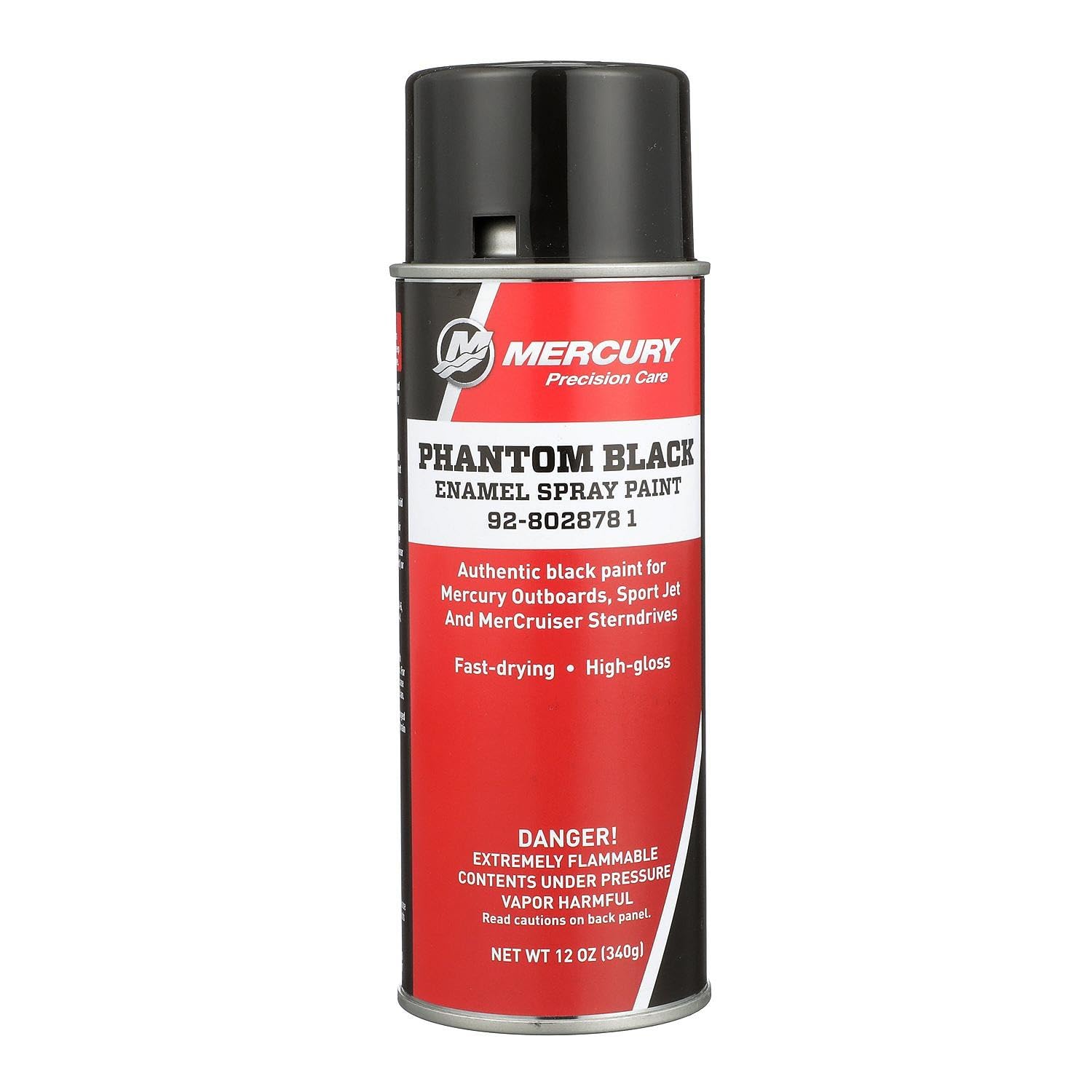
Mercury Marine produces this Phantom Black enamel spray paint as a factory-match coating for all Mercury outboards and MCM/MIE engines and sterndrives. The 12-ounce aerosol can is formulated to meet Mercury’s original equipment manufacturer specifications, ensuring color accuracy and compatibility with marine-grade aluminum and painted surfaces. The satin finish provides a factory-correct appearance for restoration projects.
Owner reports from boat enthusiasts indicate that the paint holds up well in saltwater environments, resisting corrosion and UV fading better than general-purpose automotive paints. The formula is designed to adhere to aluminum outboard engine blocks and MerCruiser sterndrive units, where exposure to water, fuel, and temperature swings is constant. The washable special feature suggests the cured finish can withstand regular cleaning without degrading.
For anyone restoring or maintaining Mercury or MerCruiser marine powerplants, this paint eliminates the guesswork of color matching. The satin finish closely replicates the original appearance from the factory. While the application scope is narrower than universal engine paints, the precision of the OEM match makes it irreplaceable for marine restoration work.
What works
- Exact OEM Phantom Black match for Mercury and MerCruiser engines
- Formulated for marine environments with UV and corrosion resistance
- Washable finish withstands regular cleaning without degradation
What doesn’t
- Color match limited to Phantom Black — not a universal option
- Designed specifically for Mercury components, not general engine use
8. SprayMax 2K Epoxy Primer Black 13.5 oz
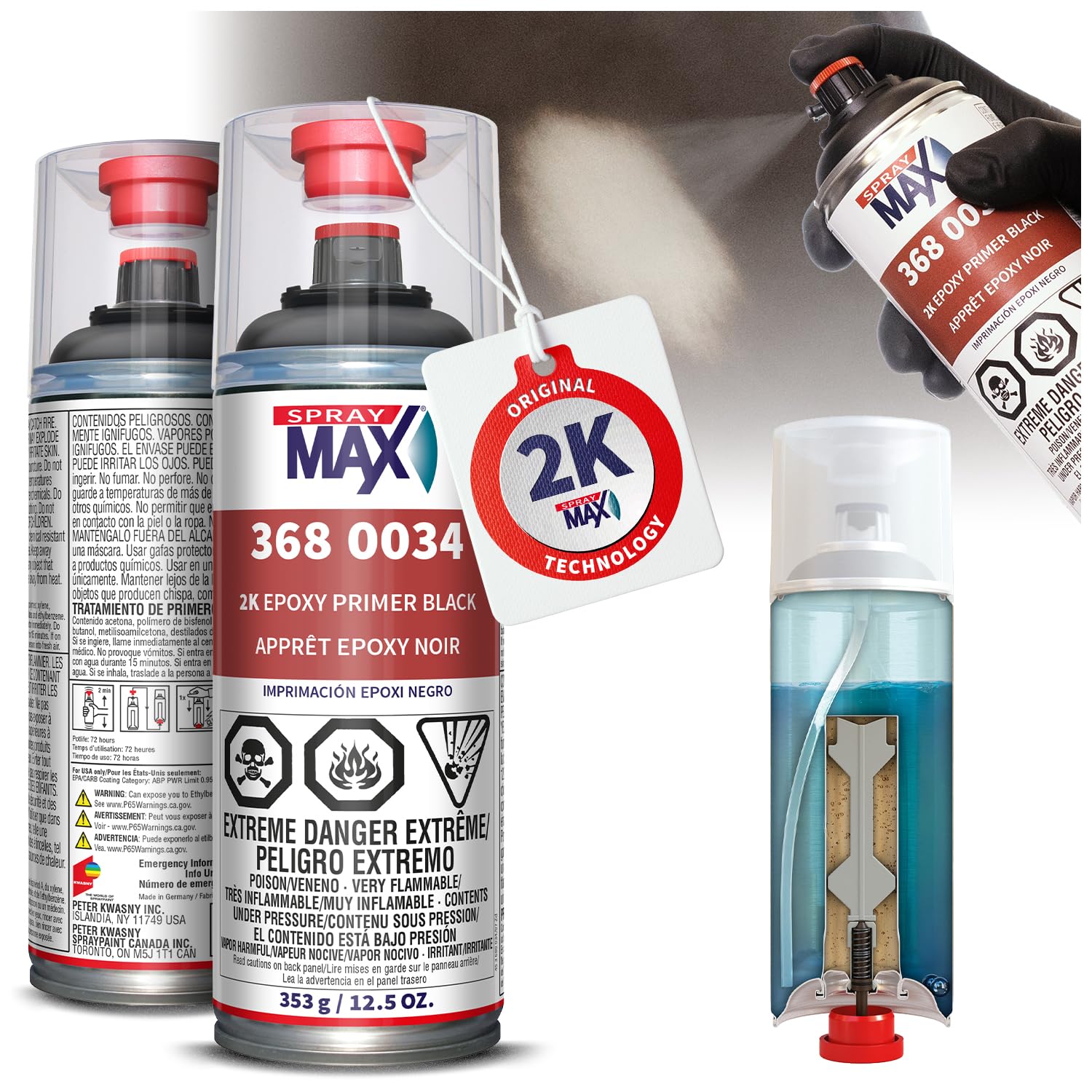
SprayMax delivers a true two-component epoxy primer in an aerosol can, bridging the gap between consumer spray paints and professional spray gun systems. The 2K technology means the hardener is stored separately in the can and activated at the time of use, producing a cross-linked coating that provides superior adhesion, corrosion resistance, and chemical durability. The black color serves as an excellent base for topcoats.
This epoxy primer is designed for metal surfaces including steel, aluminum, and galvanized metal, making it ideal for automotive restoration, motorcycle frames, and industrial refinishing. The variable nozzle allows precise control over spray pattern and output. Owner feedback consistently mentions the professional-grade bonding strength and the smooth surface it creates for subsequent paint layers. Dust dry in just 15 minutes and sandable within hours, it enables efficient workflow.
The corrosion-resistant properties are particularly valuable for bare metal components exposed to moisture and road salt. Unlike single-component primers, this 2K system forms a chemically resistant barrier that prevents rust creep at scratches and edge lines. For anyone serious about creating a durable foundation for motor paint, this primer represents the highest level of protection available in an aerosol format.
What works
- True 2K epoxy chemistry for professional-grade adhesion and durability
- Fast dust-dry time of 15 minutes for efficient workflow
- Excellent corrosion protection on steel, aluminum, and galvanized metal
What doesn’t
- Once activated, the can must be used within the pot life window
- Higher cost per ounce compared to single-component primers
9. MTN PRO Heat-Resistant Paint Black 400ml
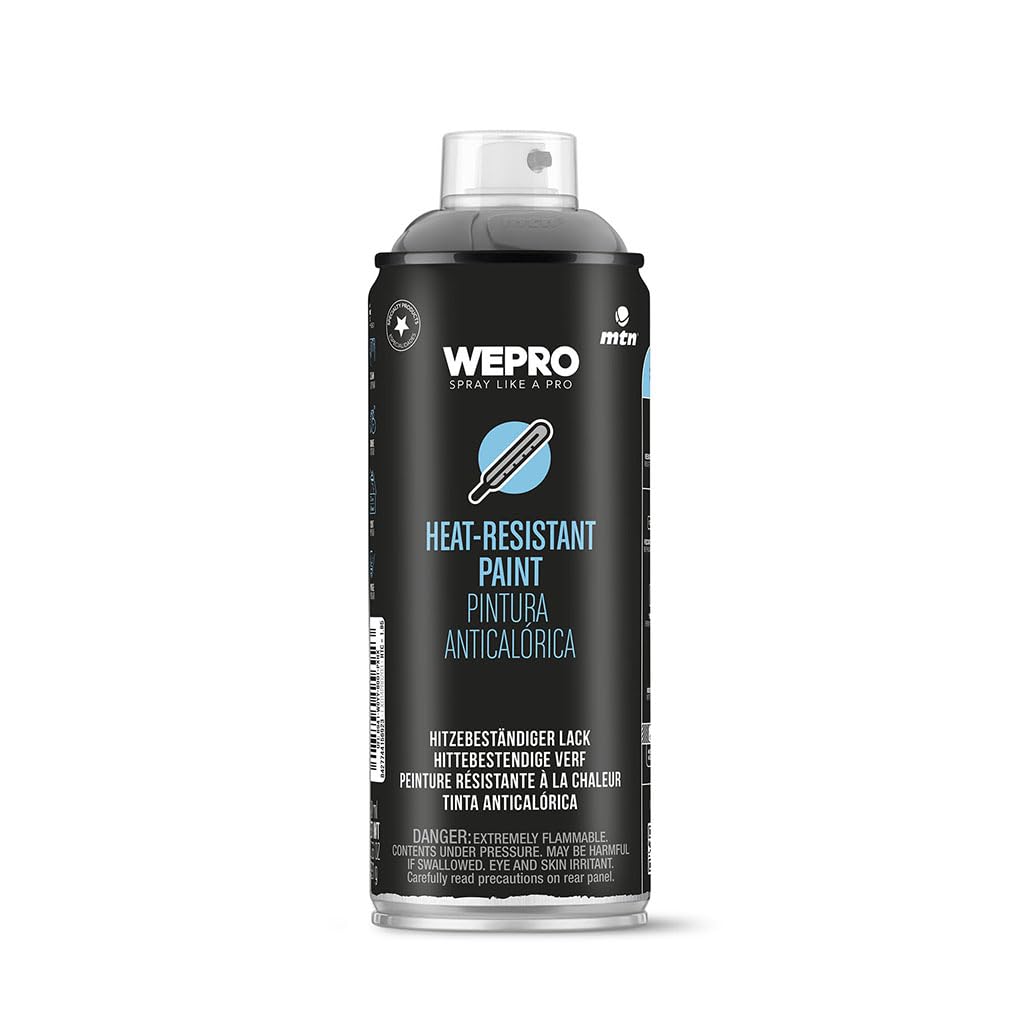
Montana Colors MTN PRO Heat-Resistant Paint holds an impressive continuous temperature rating of 700°C, placing it among the most thermally capable aerosol paints available for automotive use. The formulation uses a polybutylene titanate resin base combined with thermostable, lead-free pigments that maintain color stability under extreme heat. The metallic black finish provides a subtle sheen that distinguishes it from flat black alternatives.
The 400ml aerosol can delivers excellent coverage on exhaust systems, headers, manifolds, and other high-temperature components. Owner reports from custom motorcycle and car builders indicate that the paint withstands the extreme heat generated by open exhaust and turbocharger housings without discoloration or peeling. The metallic finish adds a visual depth that flat paints cannot achieve while still maintaining heat tolerance.
Surface preparation is critical with this paint — thorough degreasing and light abrasion are necessary for the resin to bond effectively. Once properly applied and cured, the coating forms a hard, durable shell that resists both thermal and mechanical stress. For applications where surface temperatures regularly exceed the limits of standard engine enamels, this MTN PRO product offers a significant safety margin.
What works
- Extreme 700°C temperature rating for exhaust and turbo components
- Metallic black finish provides visual depth beyond flat paints
- Thermostable, lead-free pigments resist discoloration at high heat
What doesn’t
- Requires meticulous surface preparation for proper adhesion
- Metallic finish may not suit all restoration applications
10. Seymour 16-1202 Hot Spot High Temperature Paint White

The Seymour 16-1202 Hot Spot paint offers an exceptional 1200°F continuous temperature rating in a budget-friendly package. The white matte finish is formulated to form a porcelain-like bond when exposed to high heat, creating a hard, ceramic-type coating that resists blistering, peeling, discoloration, and loss of adhesion. This makes it suitable for grills, wood stoves, engine components, and exhaust parts.
The 12-ounce aerosol can contains a VOC-compliant formula that is free of lead, cadmium, mercury, chromates, and chlorinated solvents. Owner feedback from automotive and appliance applications highlights the paint’s ability to maintain its white color without yellowing even after repeated high-temperature exposure. The matte finish minimizes glare on under-hood components while providing a clean, uniform appearance.
Temperature tolerance of this magnitude typically commands a premium price, making the Seymour Hot Spot a strong value proposition for anyone needing extreme heat resistance without the cost of specialized ceramic coatings. The white color is particularly useful for engine compartments where heat reflection is desired, or for applications where a bright, clean aesthetic is required alongside thermal performance.
What works
- Exceptional 1200°F continuous temperature rating at a sensible price
- Porcelain-like bond forms during heat exposure for durable finish
- VOC-compliant with no heavy metals or chlorinated solvents
What doesn’t
- White matte finish shows dirt and grime more readily than dark colors
- Porcelain bonding process requires heat cycling to fully develop
11. CRC 05048 Zinc-It Instant Cold Galvanize Gray

CRC Zinc-It provides instant cold galvanizing protection with a fast-drying formula that actively fights rust and corrosion on metal surfaces. The gray, shiny finish contains a high concentration of zinc particles that provide sacrificial corrosion protection similar to hot-dip galvanizing. The 13-ounce aerosol can is designed for use on threads, fasteners, welds, fencing, railings, electrical poles, and automotive undercarriage components.
Owner reports from industrial and automotive users emphasize the product’s effectiveness on exposed edges and welds where the protective coating has been compromised. The fast-drying characteristic allows components to be handled and returned to service quickly. CRC positions this as a maintenance and repair solution for motor vehicles, marine equipment, and industrial machinery where rust prevention is the primary concern rather than aesthetic appearance.
While Zinc-It is not a high-heat engine paint — its value lies in corrosion protection rather than thermal performance — it serves a critical role in protecting brackets, fasteners, and structural components that are exposed to moisture and road salt. The galvanic protection mechanism means that even if the coating is scratched, the zinc continues to protect the underlying steel through cathodic action, a feature that standard paints cannot replicate.
What works
- Sacrificial zinc protection prevents rust even at scratches and edges
- Fast-drying formula allows quick return to service
- Versatile application on threads, welds, fasteners, and brackets
What doesn’t
- Not rated for high-heat engine or exhaust applications
- Gray galvanized finish is utilitarian rather than decorative
Hardware & Specs Guide
Temperature Ratings Explained
Continuous heat rating is the maximum temperature a paint can withstand for extended periods without degrading. Intermittent ratings allow for brief spikes above the continuous limit. Engine block paints typically rate between 400°F and 550°F. Exhaust and manifold paints can reach 1200°F or more. Always match the continuous rating to the component’s operating temperature — exceeding the rating leads to discoloration, cracking, or complete coating failure.
Paint Formulation Types
Enamel paints provide a hard, glossy finish with good chemical resistance, ideal for engine blocks and valve covers. Epoxy coatings deliver superior adhesion and corrosion protection, best used as primers under topcoats. Ceramic and silicone-based formulations handle extreme heat and thermal cycling, suitable for exhaust systems and brake components. Hybrid urethane-ceramic blends combine flexibility with heat resistance for demanding applications.
Surface Preparation Methods
Degreasing removes oil and grease that prevent adhesion. Sanding with 180- to 320-grit paper creates a mechanical profile for the paint to grip. Etching primers are recommended for aluminum and smooth metal surfaces. Self-etching primers combine etching and priming in one step. High-build primers fill minor imperfections but require longer curing. Skipping any of these steps is the leading cause of paint failure on motor components.
Curing and Drying Times
Touch-dry time indicates when the surface is dry to light contact. Through-dry time — often overnight — is when the coating reaches full hardness. Heat-cured paints require baking at specific temperatures to achieve maximum durability. Air-cured enamels reach service hardness after 24 to 72 hours. Two-component epoxies and urethanes cure through chemical cross-linking and achieve full properties within days, depending on ambient temperature and humidity.
FAQ
Can I use regular spray paint on an engine block?
How do I prepare a brake caliper for painting?
What is the difference between engine enamel and high-heat paint?
Do I need to use a primer before applying motor paint?
How long should I wait before exposing painted components to heat?
Final Thoughts: The Verdict
For most buyers, the best motor paint winner is the KBS Coatings 60302 Motor Coater because it combines extreme chemical resistance, a self-leveling finish, and durability across engine blocks, valve covers, and brake calipers without requiring spray equipment. If you need a high-temperature tolerant aerosol system with a ceramic-urethane blend for engine bay components, grab the VHT SP148 Engine Enamel Primer. And for peak heat resistance on exhaust systems where surface temperatures reach extreme levels, nothing beats the MTN PRO Heat-Resistant Paint with its 700°C thermal ceiling.

Certification: BSc in Mechanical Engineering
Education: Mechanical engineer
Lives In: 539 W Commerce St, Dallas, TX 75208, USA
Md Amir is an auto mechanic student and writer with over half a decade of experience in the automotive field. He has worked with top automotive brands such as Lexus, Quantum, and also owns two automotive blogs autocarneed.com and taxiwiz.com.