A chirping serpentine belt or a slipping alternator pulley can turn a quiet drive into an audible headache. Belt dressing sprays promise a quick fix, but the difference between a temporary bandage and a genuine restoration comes down to formulation, viscosity, and how the chemistry interacts with the rubber compound of your specific drive belt.
I’m Amir — the founder and writer behind Four Wheel Ask. I’ve spent years studying automotive chemical formulations, cross-referencing owner-reported long-term results across thousands of vehicles, and analyzing how different belt dressings, rubber conditioners, and protectants hold up under real heat cycles, humidity, and belt tension loads.
This guide distills that research into actionable recommendations. After analyzing dozens of belt sprays and owner reports, I’ve found the best car belt dressing spray that eliminates noise without damaging belt fibers.
How To Choose The Best Car Belt Dressing Spray
Selecting the right belt dressing goes beyond grabbing the first can on the shelf. The formulation must match your belt material, the operating temperature range, and whether you need a temporary fix or a longer-term conditioning treatment.
Formulation Type and Belt Compatibility
Belt dressings generally fall into two camps: resin-based tackifiers that add friction to stop slipping, and conditioner-based formulas that penetrate the rubber to restore pliability. Resin-heavy sprays work well on glazed V-belts but can attract dust and buildup over time. Conditioner-style dressings are better for serpentine and multi-rib belts where flex retention matters more than sheer grip. Verify the spray is labeled for your specific belt type — some products are designed for flat belts, others for V or ribbed profiles.
Heat Resistance and Longevity
Under-hood temperatures can exceed 200°F, especially near the exhaust manifold side of the engine. A dressing that evaporates or breaks down after one heat cycle offers no real value. Look for sprays that specify high-temperature stability or include synthetic elastomers that bond to the belt surface. Owner reports consistently show that products with a tacky, non-drying film resist wash-off and last multiple weeks between applications.
Application Method and Residue Profile
Aerosol sprays offer even coverage and are ideal for reaching belts in tight engine bays, but some leave a sticky film that attracts dirt. Water-based or silicone-emulsion dressings dry to a cleaner finish and are safer for surrounding components like O2 sensors and alternator clutches. Consider whether you need a spray that can be applied while the engine is running or one that requires the belt to be static — some products specify running application for even distribution across the entire belt surface.
Quick Comparison
On smaller screens, swipe sideways to see the full table.
| Model | Category | Best For | Key Spec | Amazon |
|---|---|---|---|---|
| CRC Food Grade Belt Dressing | Belt Dressing | High-heat industrial & automotive belts | NSF H1, 10 oz, tacky non-drying film | Amazon |
| WEICON Belt Dressing Spray | Belt Dressing | Heavy-load drive belts & conveyor systems | 400 ml, synthetic elastomer, German quality | Amazon |
| JEGS Gasgacinch | Sealer / Dressing | Gasket sealing & belt dressing combo | 8 oz, built-in dobber, made in USA | Amazon |
| LANE’S Engine Dressing | Engine Protectant | Show-ready engine bay & rubber hoses | 16 oz, dust resistant, biodegradable | Amazon |
| Griot’s Garage Engine Bay Dressing | Engine Dressing | Factory-fresh engine compartment finish | 12.5 oz, spray-on, satin to gloss | Amazon |
| Detail King Non-Silicone Engine Dressing | Engine Dressing | Body-shop safe, no silicone contamination | 32 oz, non-toxic, no petroleum distillates | Amazon |
| Permatex 80073 Belt Dressing | Belt Dressing | General automotive & lawn equipment belts | 12 oz, penetrates cord fibers, stops squeaks | Amazon |
| Nanoskin BLUE DRESS | Protectant | Interior & exterior trim plus tires | 16 oz, water-based, dry-to-touch finish | Amazon |
| Chemical Guys VRP | Protectant | Vinyl, rubber & plastic restoration | 16 oz, non-greasy, satin finish | Amazon |
| 303 Aerospace Protectant | Protectant | UV protection for rubber, vinyl & plastic | 10 oz, matte finish, non-greasy | Amazon |
| Wheely Great Tire Dressing | Tire Conditioner | Rubber conditioning, UV protection | 16 oz, lithium formula, deep black finish | Amazon |
In‑Depth Reviews
1. CRC Food Grade Belt Dressing

The CRC Food Grade Belt Dressing is a synthetic lubricant with Perma-Lock technology that creates a tacky, non-drying, water-resistant film on belt surfaces. It is NSF H1 registered for incidental food contact, making it one of the few belt dressings safe for use in food processing environments as well as automotive applications. The colorless formula prevents staining on finished goods transported by conveyor systems.
Owner feedback highlights its effectiveness on zero-turn mower belts, AC compressor belts on excavators, and even treadmill decks where traction restoration is needed. Multiple users report that a single application stops belt slippage immediately and that the dressing lasts through several weeks of regular use. The spray improves traction and reduces belt tension, which relieves stress on motor shafts and pulleys.
The product is ideally suited for flat, round, and V-belts. It meets FDA Regulation 21 CFR 178.3570 for incidental food contact, so it can be used in environments where hygiene compliance matters. The 10-ounce can provides multiple applications, and the non-evaporating film means the dressing stays active on the belt surface rather than drying out after a single heat cycle.
What works
- NSF H1 food-grade registration for incidental contact
- Tacky film resists water wash-off and heat breakdown
- Reduces belt slippage and motor stress immediately
- Colorless, non-staining on belts and pulleys
What doesn’t
- Tacky residue can attract airborne debris over time
- Not designed for interior trim or dashboard use
2. WEICON Belt Dressing Spray

The WEICON Belt Dressing Spray is a transparent belt coating formulated with synthetic elastomers engineered for drive belts subjected to heavy loads. It is designed to extend belt service life by preventing slip and squeaking while increasing the efficiency of tensile force transfer. The spray also acts as an adhesion promoter and includes anti-static properties to prevent static charging on rubber and PVC belts.
Customer reports indicate strong performance on V-belts, link V-belts, flat belts, timing belts, and conveyor belts. Users in industrial settings note that it provides excellent grip on saws and outfeed tables, while automotive owners report immediate noise reduction on serpentine and accessory belts. The 400-milliliter can (13.5 fluid ounces) offers generous coverage for multiple applications.
Made in Germany, the spray meets physical, safety, toxicological, and ecological regulations. It is suitable for belts made of leather, rubber, or PVC. The formula includes anti-aging protection to shield belts from environmental degradation. Storage stability is rated at 24 months when kept away from direct sunlight and temperatures above 50°C.
What works
- Anti-static formula prevents dust attraction
- Works across multiple belt materials: rubber, leather, PVC
- Increases tensile force efficiency for heavy loads
- German manufacturing with strict quality compliance
What doesn’t
- Strong solvent odor during application
- May require reapplication more frequently on high-mileage serpentine belts
3. JEGS Gasgacinch
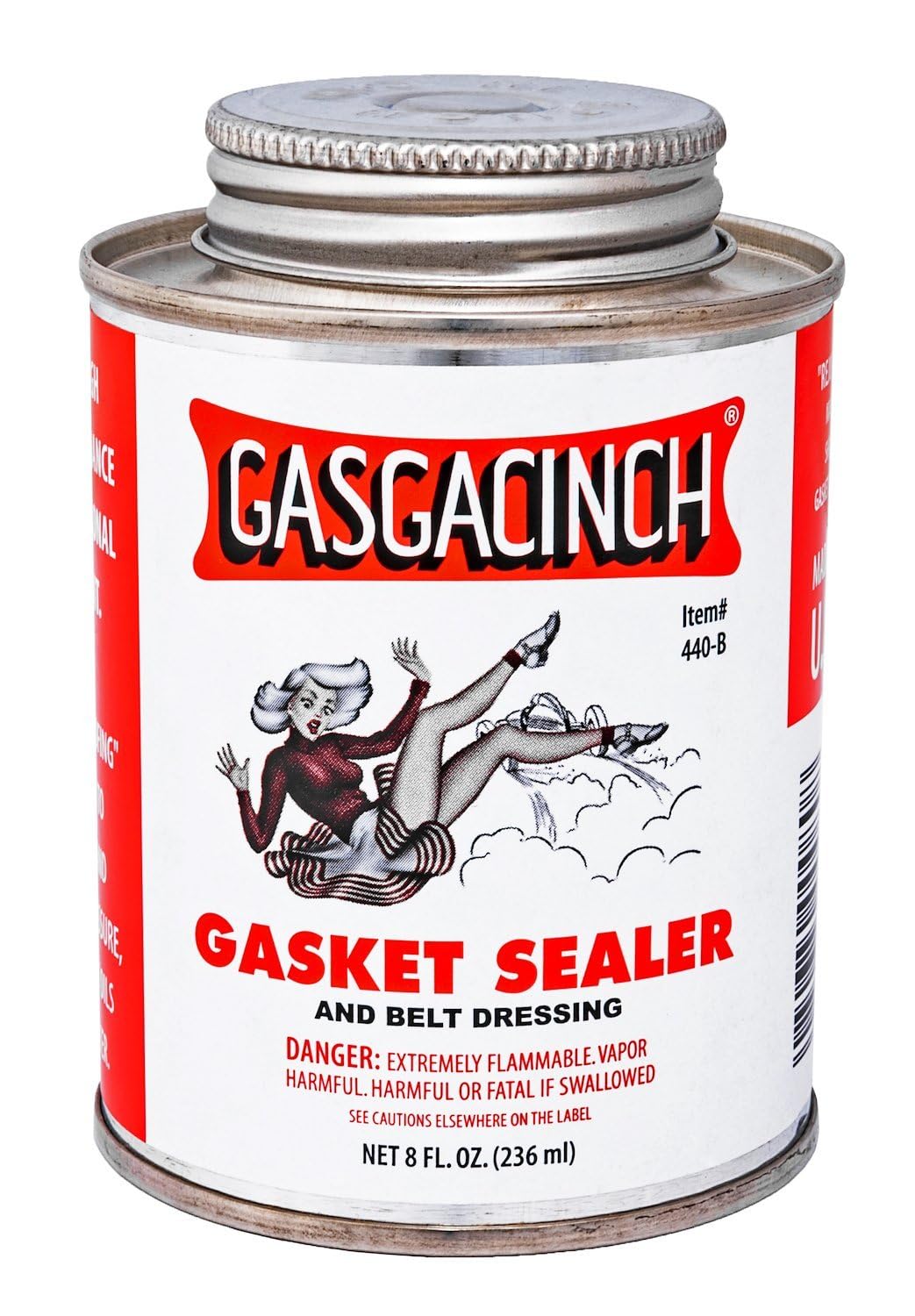
JEGS Gasgacinch is an 8-ounce liquid dressing and sealer with a built-in dobber in the cap that allows precise application on gaskets and belts alike. Known primarily as a gasket sealer for intake manifolds, water pumps, oil pans, and small engine rebuilds, it also functions as an excellent belt dressing that bonds to rubber and metal surfaces. The medium-viscosity formula cures to a water-resistant seal over 24 hours.
Engine builders and enthusiasts consistently praise this product for its adhesive strength on classic air-cooled VW engines, where it seals magnesium and aluminum case halves without weeping. Owners report that a small dab is sufficient for permanent adhesion, and the dobber-style cap eliminates waste. The versatile formulation works on paper gaskets, metal gaskets, and as a belt traction aid.
The product is made in the USA using high-quality resin and silicone materials. It is explicitly not intended for cylinder head or exhaust gaskets due to extreme heat exposure in those locations. For belt dressing purposes, the liquid can be applied sparingly to the ribbed surface of a serpentine belt or the inner face of a V-belt to restore grip and silence chirps.
What works
- Precise dobber applicator reduces mess and waste
- Dual-purpose as gasket sealer and belt dressing
- Exceptional hold on metal and rubber surfaces
- Trusted brand among engine rebuilders
What doesn’t
- Not formulated specifically as a spray belt dressing
- Full cure takes 24 hours
4. LANE’S Engine Dressing
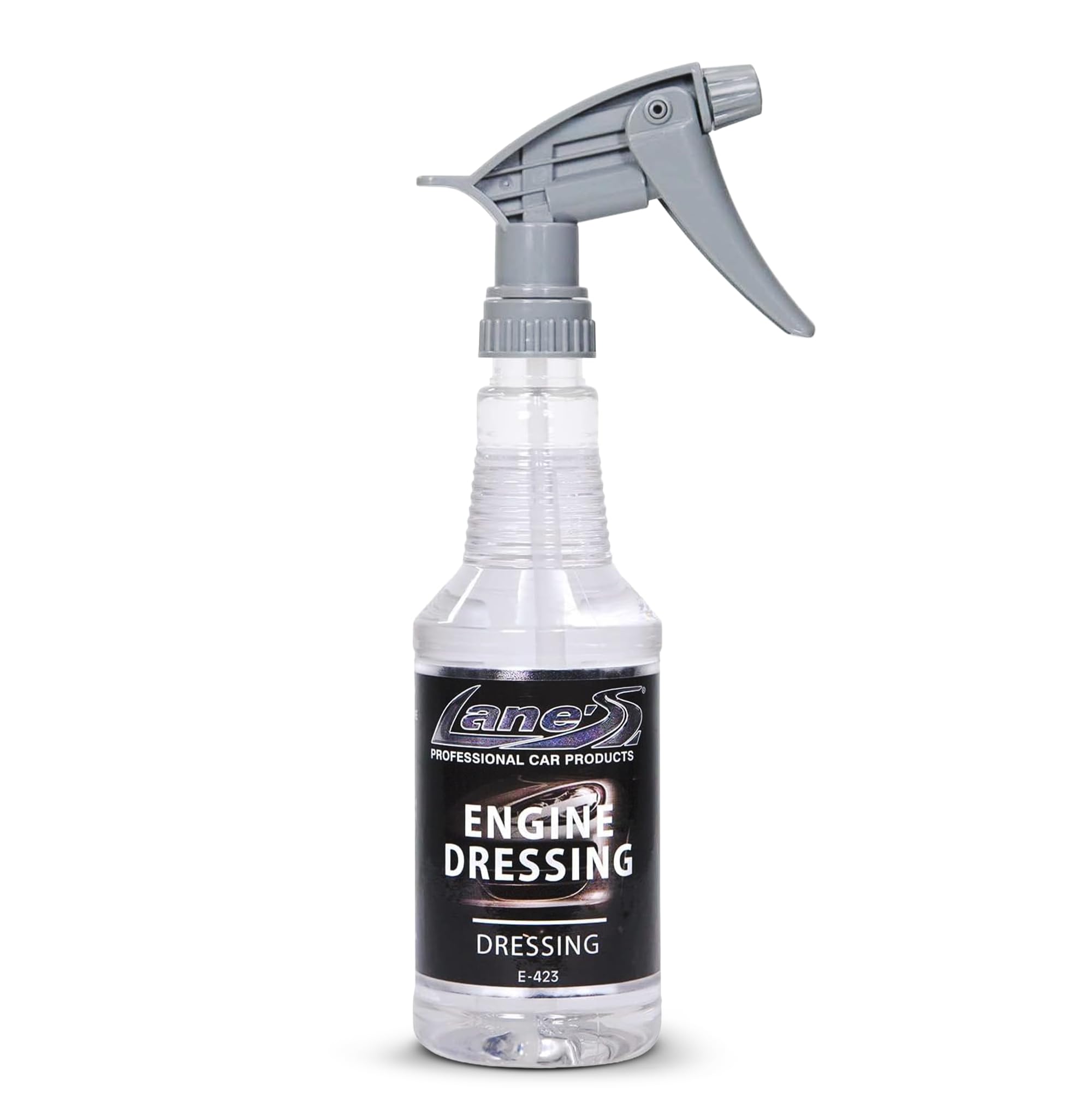
LANE’S Engine Dressing is a premium engine bay cleaner and protectant that restores faded plastic, rubber, and metal components under the hood. The formula penetrates and conditions rubber hoses and plastic engine covers to prevent drying, fading, and cracking caused by high temperatures and environmental wear. Unlike many engine dressings, it creates an invisible barrier that repels dust and dirt buildup.
Detailing enthusiasts report that the spray-on, wipe-off application delivers a deep, reflective finish that lasts. Owners note that it works exceptionally well on engine bay plastics, rubber hoses, and wire loom covers without leaving a greasy residue. Several users mention that the dust-repelling coating makes subsequent cleaning sessions faster and easier.
The 16-ounce bottle features a precision spray nozzle for even coverage. The formula is biodegradable and safe for all under-hood and trim surfaces. It is designed as a non-silicone alternative for those who want a durable gloss finish without the risks of silicone contamination around O2 sensors and paintwork.
What works
- Dust-resistant coating reduces grime buildup
- Biodegradable, non-silicone formula
- Restores faded rubber hoses and plastic trim
- Easy spray-and-wipe application
What doesn’t
- Designed for engine bay aesthetics, not heavy belt slippage
- Requires clean surface for proper bonding
5. Griot’s Garage Engine Bay Dressing
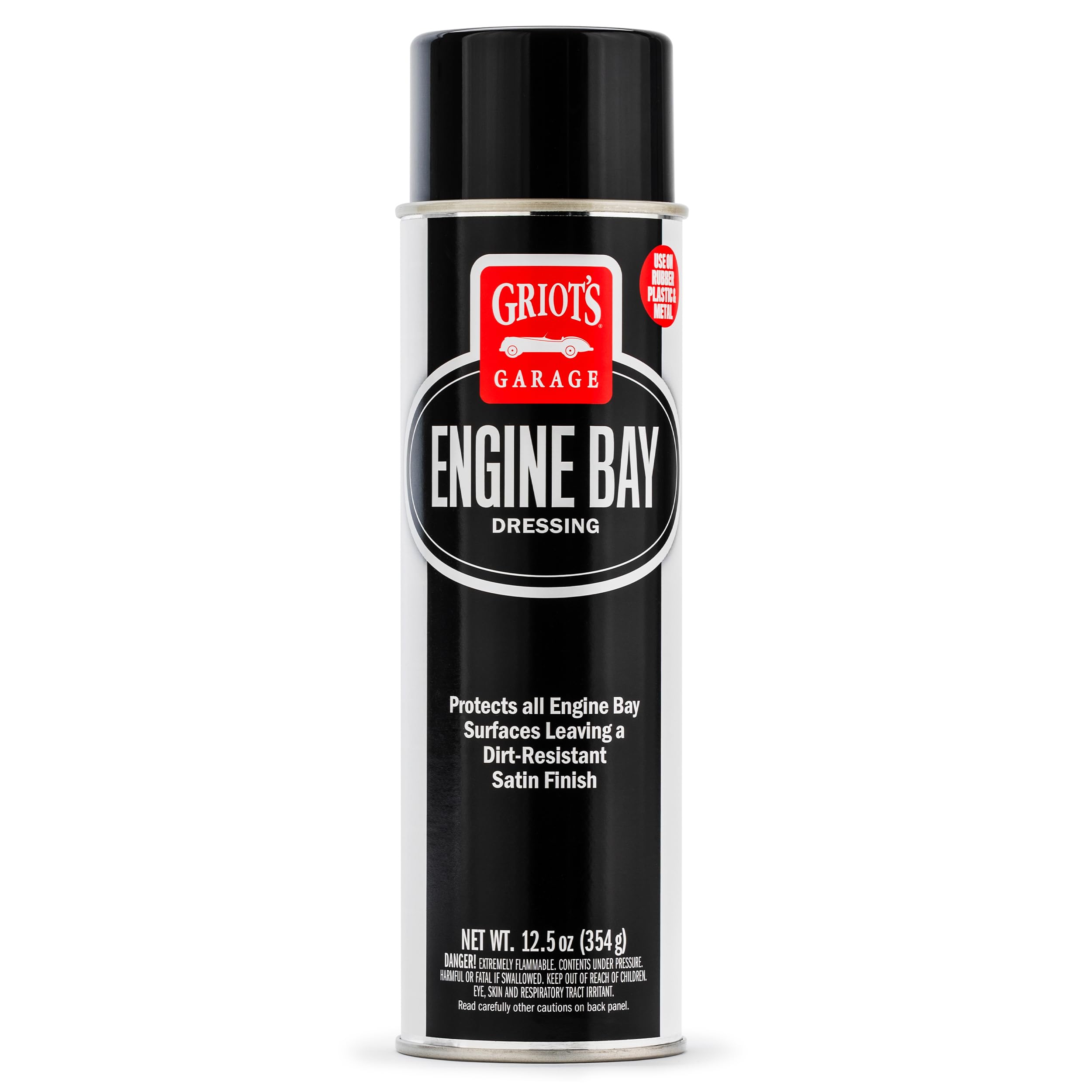
Griot’s Garage Engine Bay Dressing is a spray-on surface enhancer and protectant designed to restore a factory-fresh look to engine compartments. The formula is safe for all materials under the hood, including plastic, rubber, metal, and wiring. It helps prevent cracking, fading, and discoloration over time and creates a smooth, dry-to-the-touch finish that resists dust and grime accumulation.
Owners consistently highlight the product’s ability to restore luster to dull engine bay plastics without attracting dirt. Multiple reviews mention that a light dusting is all that is needed to achieve a clean, satin finish. The spray can be layered for a glossier appearance, giving users control over the final sheen level. It is particularly popular among show car owners and weekend detailers.
The 12.5-ounce can provides enough coverage for a full engine bay. Application requires cleaning all surfaces first, then spraying a light, even coat. The dressing dries quickly and leaves no residue. Griot’s Garage backs the product with a lifetime warranty against defects, reflecting confidence in the formulation.
What works
- Dry-to-touch finish repels dust and debris
- Adjustable sheen from satin to gloss
- Safe on all engine bay materials
- Lifetime warranty from Griot’s Garage
What doesn’t
- Premium pricing for the bottle size
- Not a heavy-duty belt slip treatment
6. Detail King Non-Silicone Engine Dressing
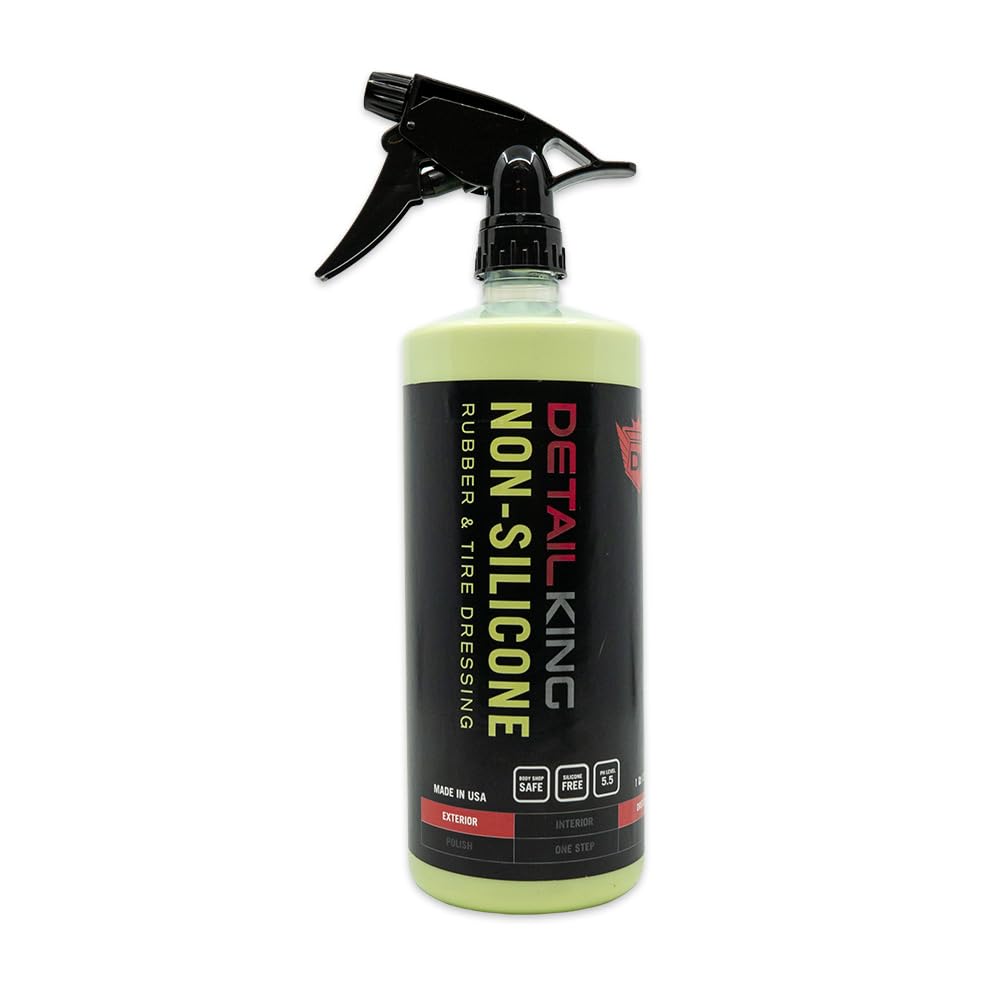
Detail King Non-Silicone Engine Dressing is a silicone-free formula specifically designed for use in body shops where silicone contamination can cause paint defects and fire hazards. It contains no petroleum distillates or toxins, making it safe for O2 sensors, electrical components, and painted surfaces. The spray refreshes plastic and vinyl engine compartments while restoring shine to weathered components.
Professional detailers and shop owners report that this dressing provides a natural, clean flat finish without streaks, spots, or sling after drying. Users apply it to tires, plastic trim, and engine compartments with consistent results. The non-greasy formulation ensures running boards and step surfaces remain safe to walk on, unlike silicone-based alternatives that leave a slippery film.
The 32-ounce bottle offers substantial value for high-volume users. It can be sprayed directly onto surfaces or applied with a microfiber towel for more controlled coverage. The bay-scented formula leaves a pleasant, professional finish. Detail King positions this as a multi-surface protector suitable for both interior and exterior use.
What works
- Zero silicone eliminates paint defect risks in body shops
- Safe on electrical sensors and O2 components
- Non-greasy, no slippery residue
- Large 32-ounce bottle for extended use
What doesn’t
- Not a specialized belt traction treatment
- May require multiple coats for high-gloss results
7. Permatex 80073 Belt Dressing

Permatex 80073 Belt Dressing and Conditioner has held the #1 spot in Amazon’s Fan Belt Dressings category for years, and the customer feedback makes it clear why. The aerosol formula penetrates the cord fibers of V-belts to restore pliability and flexibility that is lost through heat cycling and age. It prevents belt slippage caused by heat, cold, dampness, dust, and glazing while conditioning to eliminate squeaking.
Owner reviews highlight its effectiveness on lawn mower belts, boat lift belts, and automotive serpentine belts. Multiple users report that a single application stopped squeaking immediately and continued performing for weeks. The product is trusted for use on fan belts, water pumps, power steering systems, and even household equipment like sewing machines and washing machines.
The 12-ounce aerosol can provides broad, even coverage. It is designed for use on painted surfaces, making it suitable for exposed belt systems where overspray might contact surrounding components. Permatex has been a staple in automotive chemical maintenance for decades, and this dressing reflects that legacy of targeted, reliable performance.
What works
- Penetrates belt fibers to restore internal flexibility
- Stops squeaking immediately upon application
- Works across automotive, marine, and home equipment
- Top-ranked in its category with strong owner consensus
What doesn’t
- Effectiveness is temporary and wears off over time
- Not intended for modern serpentine belt coatings
8. Nanoskin BLUE DRESS
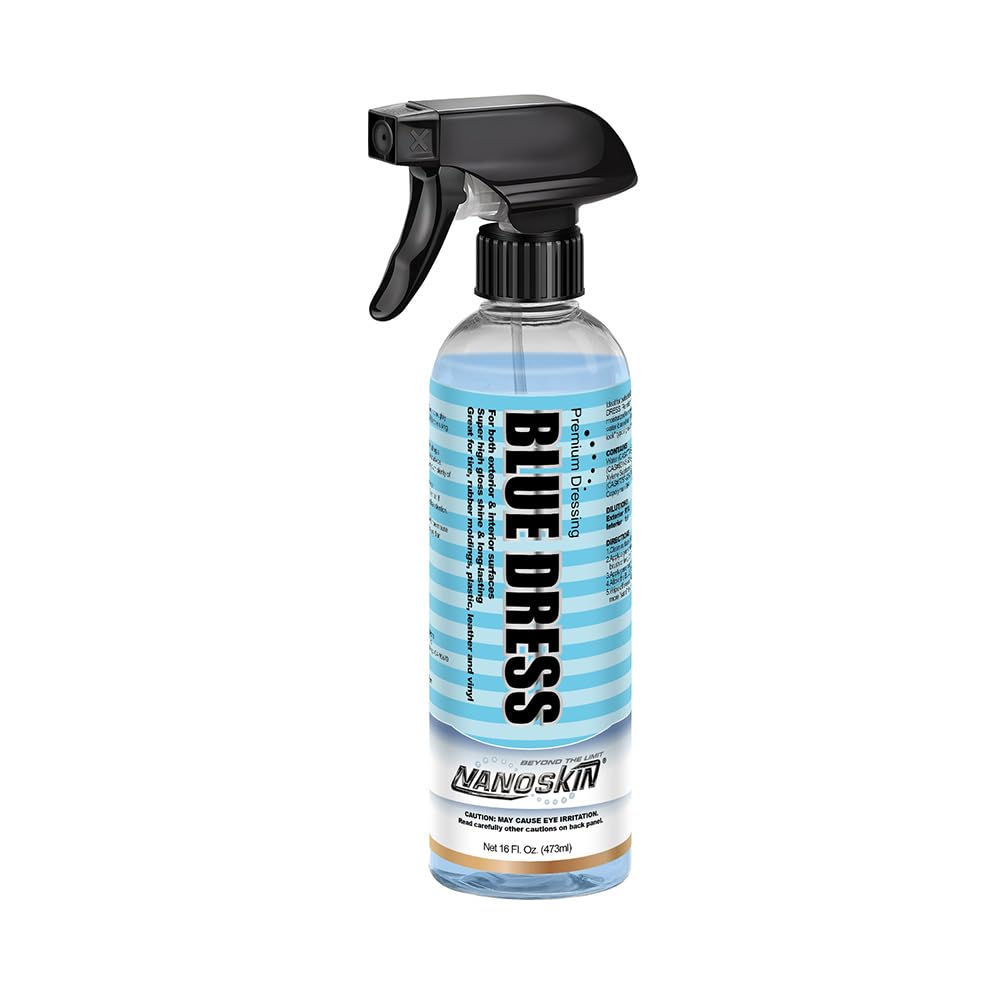
Nanoskin BLUE DRESS is a water-based silicone emulsion foam dressing that delivers a rich, full shine on tires, vinyl, rubber, and plastic surfaces. It is designed to be versatile enough for both interior and exterior use, with a 1:1 to 2:1 dilution ratio for interior applications. The formula helps protect against fading and wear caused by UV exposure, and it restores faded trim and plastics to a clean OEM-style appearance.
Detailing enthusiasts report that the product applies easily and clings well to vertical surfaces without running. When used as a tire dressing, owners note that letting the product set into the rubber yields the best results. The sprayable formula works with microfiber towels, sponges, or tire dressing applicators, and the dry-to-the-touch finish leaves no greasy residue that attracts dirt.
The 16-ounce bottle offers excellent coverage, especially when diluted for interior use. It works on dashboards, door panels, center consoles, weatherstripping, and engine bay plastics. Nanoskin positions this as a professional-grade dressing suitable for DIY detailers and shop use alike.
What works
- Water-based formula safe for interior and exterior use
- Dilutable for customized sheen levels
- Clings to vertical surfaces without dripping
- Dry-to-touch finish resists dust attraction
What doesn’t
- Not a dedicated belt dressing for traction issues
- Some professional users report thin consistency
9. Chemical Guys VRP

Chemical Guys VRP (Vinyl, Rubber, Plastic) Dressing is a professional-grade protectant that restores a rich, deep appearance to tires, trim, bumpers, dashboards, and more without leaving a greasy feel. The non-greasy, dry-to-the-touch formula leaves a clean satin finish that does not attract dust or dirt. It also provides UV protection to shield surfaces from fading, cracking, and discoloration caused by sun exposure.
Customers consistently praise the VRP for its versatility and ease of use. Owners of vehicles with black fenders, plastic trim, and tires report that it brings color back to faded surfaces and makes everything look brighter. The product works on interior surfaces like door panels and dashboards as well as exterior trim, weatherstripping, and engine bay plastics. Many users mention a pleasant scent during application.
The 16-ounce bottle applies easily with an applicator or microfiber towel. It can be wiped off for a matte finish or left to dry for deeper shine. Chemical Guys recommends it for both automotive and household uses, including vinyl patio furniture, boat trim, and RV seals. The formula is unscented and designed for broad surface compatibility.
What works
- Non-greasy, dry-to-touch finish repels dust
- UV protection prevents fading and cracking
- Versatile for interior, exterior, and marine use
- Strong brand reputation in detailing community
What doesn’t
- Not a high-traction belt dressing for mechanical use
- Finish longevity may diminish after rain or washes
10. 303 Aerospace Protectant

303 Aerospace Protectant is a UV-protective spray that prevents fading, cracking, and discoloration on vinyl, plastic, rubber, fiberglass, and stainless steel. Originally developed for the aerospace industry, the formula offers a non-greasy, matte finish that repels dust, dirt, and staining. It rejuvenates surfaces to a like-new appearance without the glossy, coated look of many automotive dressings.
Owner feedback consistently mentions its effectiveness in harsh environments, including Arizona desert heat and coastal salt air. Users report that it prevents dashboard reflections on windshields, keeps rubber seals from drying out, and restores faded tonneau covers and bicycle tires with a single application. The dust-repelling quality is a frequently cited benefit — one user demonstrated a half-table test where the treated side remained dust-free for over a week.
The 10-ounce spray bottle is best applied to clean, dry surfaces and wiped completely dry for optimal results. The manufacturer recommends reapplying every three to five weeks for maximum outdoor protection. The product has a shelf life of two years after opening or five years from the production date, and it is made by Gold Eagle Co., a trusted name in automotive chemicals.
What works
- Aerospace-grade UV protection prevents sun damage
- Dust, dirt, and stain repelling formulation
- Matte finish reduces windshield glare
- Wide surface compatibility including gel coat and fiberglass
What doesn’t
- Not designed for belt traction or slip reduction
- Smaller 10-ounce bottle may require frequent repurchase
11. Wheely Great Tire Dressing

Wheely Great Tire Dressing from Lithium Auto Elixirs is a lithium-based rubber conditioner that focuses on deep rubber care rather than cosmetic shine. The formula penetrates tire sidewalls to maintain softness and flexibility while providing UV protection that prevents drying and cracking. It leaves a deep black, natural appearance with a slight luster — no greasy coatings or glossy residue.
Customers in hot, dry climates report that it successfully restored bicycle tires that were developing micro-cracks due to sun exposure and heat. Automotive owners note that it prevents sidewall cracking on premium tires like Michelins when applied every 60 to 90 days. The product applies evenly, cures instantly, and does not sling or attract dirt — a common complaint with traditional tire shines.
The 16-ounce bottle is backed by Lithium’s satisfaction promise. While positioned as a tire dressing, the rubber-conditioning properties make it a viable option for maintaining any rubber surface that needs flexible protection, including belts and hoses. It is not designed for high-gloss applications, which is a deliberate choice for those who prefer factory-original appearance.
What works
- Deep rubber conditioning without greasy film
- UV protection prevents sidewall cracking
- No sling or dirt attraction after curing
- Natural low-sheen finish for OEM appearance
What doesn’t
- Tire-specific formulation, not a dedicated belt dressing
- Higher price point for the bottle size
Hardware & Specs Guide
Aerosol vs. Liquid Applicator
The delivery method directly affects how evenly the dressing coats the belt surface. Aerosol sprays like the Permatex 80073 and CRC Food Grade Belt Dressing offer wide, consistent coverage that reaches into tight pulley areas without requiring direct contact. Liquid-based products such as JEGS Gasgacinch use a dobber or brush-on applicator that gives precise placement but demands more time for even distribution. For multi-rib serpentine belts where the friction surface is recessed, aerosol delivery generally achieves better penetration between ribs without overspray waste.
Chemical Formulation Profiles
Belt dressings use three primary chemical bases: synthetic elastomers, resin tackifiers, and silicone emulsions. Synthetic elastomers (found in WEICON and CRC) create a flexible, bonded layer that moves with the belt without flaking off at high RPM. Resin-based formulas (Permatex, JEGS) add surface friction to stop slipping but can become brittle as they age, especially under repeated heat cycles. Silicone-emulsion dressings (Nanoskin, Chemical Guys VRP) offer excellent UV and weather protection for rubber but lack the tack strength needed to resolve significant belt slip problems. Matching the chemistry to the symptom — slip versus dry rot versus noise — determines whether the dressing provides a durable fix or a temporary mask.
FAQ
Can belt dressing spray damage my serpentine belt?
How often should I apply belt dressing?
Is belt dressing the same as rubber protectant?
Can I use belt dressing on alternator or AC belts?
Will belt dressing fix a worn or glazed belt permanently?
Final Thoughts: The Verdict
For most buyers, the best car belt dressing spray winner is the CRC Food Grade Belt Dressing because it combines industrial-grade tack with food-safe certification, making it versatile enough for automotive, shop, and home equipment use. If you want a precision-applied sealer that also handles gasket work, grab the JEGS Gasgacinch. And for a quick, affordable fix that has earned the #1 spot in its category for years, nothing beats the Permatex 80073 Belt Dressing.

Certification: BSc in Mechanical Engineering
Education: Mechanical engineer
Lives In: 539 W Commerce St, Dallas, TX 75208, USA
Md Amir is an auto mechanic student and writer with over half a decade of experience in the automotive field. He has worked with top automotive brands such as Lexus, Quantum, and also owns two automotive blogs autocarneed.com and taxiwiz.com.