A differential operates under extreme stress — high torque, intense heat, and constant shear forces that break down inferior lubricants fast. The wrong gear oil accelerates wear, creates noise, and leads to costly rebuilds that could have been avoided with a smarter choice from the start.
I’m Amir — the founder and writer behind Four Wheel Ask. My work focuses on deep market analysis, studying technical specifications, decoding additive chemistry, and synthesizing long-term owner feedback to identify which lubricants genuinely protect drivetrain components.
Knowing the difference between base stocks, friction modifiers, and viscosity ratings separates a smooth-running rear end from a noisy, failing one. Understanding viscosity ratings, additive chemistry, and OEM specifications is essential when choosing the right best gear oil for differential for your specific vehicle.
How To Choose The Best Gear Oil For Differential
Selecting the right differential oil isn’t about picking the most expensive bottle on the shelf. It’s about matching viscosity, additive chemistry, and performance rating to your vehicle’s specific requirements and the conditions you drive in. Here are the key factors that separate smart choices from costly mistakes.
Viscosity Ratings and What They Mean
Viscosity is the single most important spec on the bottle. A 75W-90 oil flows well in cold temperatures while providing adequate film strength at operating temperature. Heavier grades like 75W-140 offer more shock load protection for towing, racing, or severe duty but can cause drag and reduced fuel economy in daily driving. Always start with your owner’s manual recommendation — engineers calculated the ideal viscosity for your specific differential design.
GL-4 vs GL-5: The Additive Chemistry Difference
API GL-5 gear oils contain higher levels of extreme pressure additives, primarily sulfur-phosphorus compounds, that protect hypoid gears under high-load conditions. GL-4 oils have lower additive concentrations and are safer for brass synchronizers in manual transmissions. Most modern differentials require GL-5, but using GL-5 in a transmission that calls for GL-4 can corrode yellow metal components over time. Check your application before pouring.
Synthetic vs Conventional Base Stocks
Full synthetic gear oils use engineered base stocks that resist thermal breakdown, maintain viscosity across a wider temperature range, and offer longer drain intervals than conventional mineral oils. Synthetic blends provide a middle ground — better performance than dino oil at a lower cost than full synthetic. For severe service like towing, track days, or off-road use, full synthetic is the safer investment.
Limited-Slip Differential Compatibility
Limited-slip differentials require friction modifiers to prevent clutch chatter and ensure proper lockup under acceleration. Some gear oils come pre-loaded with these additives, while others require a separate friction modifier additive. Using a non-LSD oil in a limited-slip unit causes noisy operation and uneven wear. If your vehicle has an LSD, verify the oil is explicitly labeled for limited-slip applications or plan to add the modifier separately.
Quick Comparison
On smaller screens, swipe sideways to see the full table.
| Model | Category | Best For | Key Spec | Amazon |
|---|---|---|---|---|
| Motul Gear 300 | Full Synthetic | High Performance Driving | 75W90, API GL-4/GL-5 | Amazon |
| ACDelco GM Original | OEM Spec | GM Manual Transmissions | 75W-90, Dexron LS | Amazon |
| Liqui Moly Hypoid LS | Full Synthetic | Limited Slip Differentials | 75W-140, GL-5 LS | Amazon |
| Red Line 57905 | Full Synthetic | LSD & High Load | 75W90, GL-5, 1 Gallon | Amazon |
| Red Line Heavy Shockproof | Racing Formula | Race Differentials | SAE 75W-140, GL-5 | Amazon |
| Royal Purple MAX GEAR | Full Synthetic | Severe Duty Towing | 75W140, GL-5 | Amazon |
| Honda Genuine HGO-1 | OEM Spec | Honda / Acura AWD | 75W-85, GL-5 | Amazon |
| Ford Genuine XY-75W140 | OEM Spec | Ford Axles & Severe Duty | 75W-140, Synthetic | Amazon |
| Mobil1 1043611 | Full Synthetic | Multi-Vehicle Bulk Savings | 75W-90, 6 Pack | Amazon |
| Lucas Oil 10121 | Synthetic Blend | Daily Driver Protection | 75W-140, GL-5 | Amazon |
| STAR BRITE Star Tron | Marine Grade | Outboard Lower Units | 80W-90, GL-5 | Amazon |
In‑Depth Reviews
1. Motul Gear 300 75W90
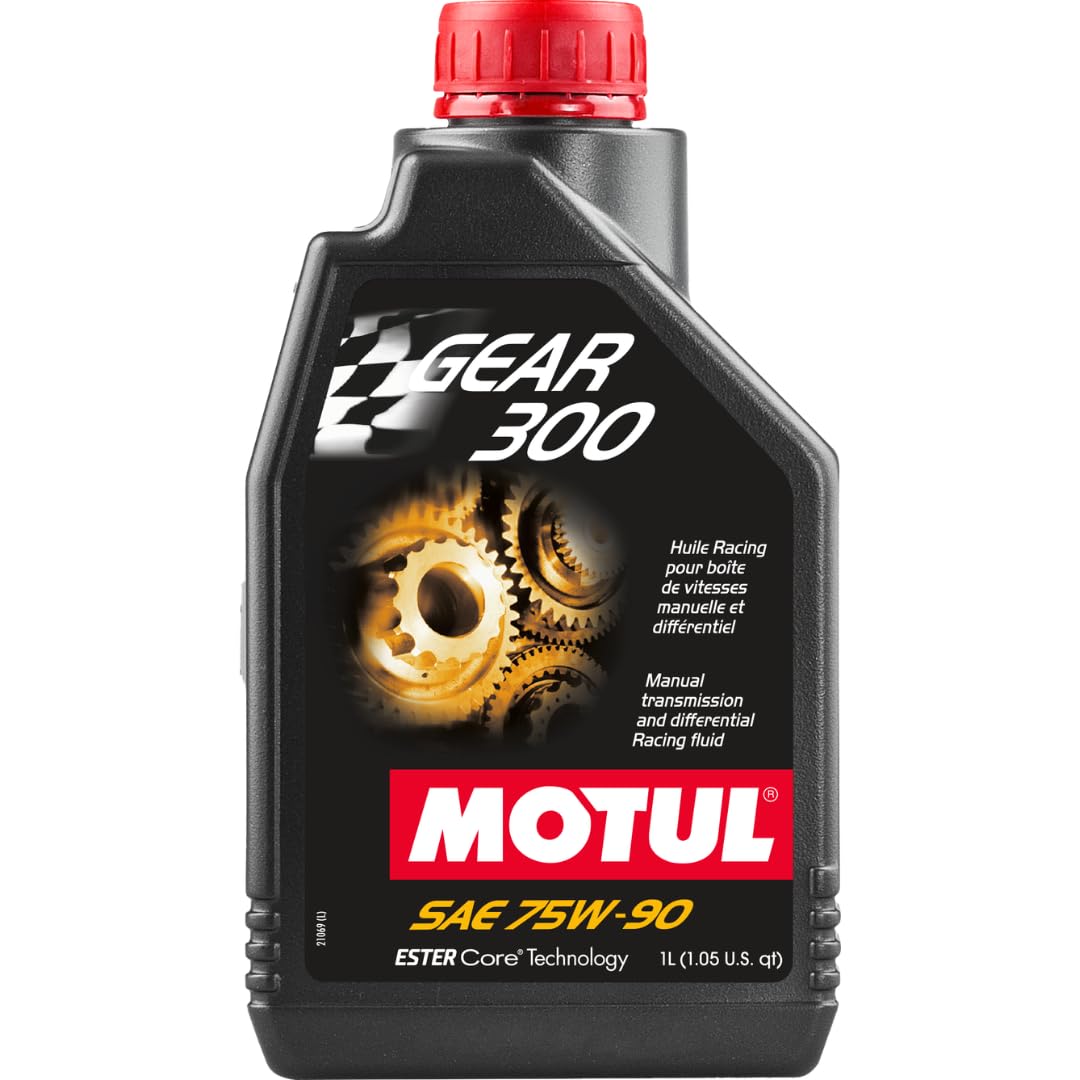
Motul Gear 300 is engineered specifically for racing and high-performance applications where differential temperatures spike and shock loads are the norm. The 100 percent synthetic ester formulation delivers an unshearable oil film that maintains viscosity even after extended KRL shear testing, meaning the protection doesn’t thin out when you push the car hard. It meets both API GL-4 and GL-5 standards, giving you flexibility across different gearbox and differential configurations.
The extreme pressure additive package provides robust anti-wear protection for hypoid gears and high-torque environments, while the low-temperature fluidity ensures smooth gear engagement during cold starts. Owners running track days, autocross, or spirited back-road driving report noticeably quieter differential operation and reduced gear whine after switching to this oil. It is specifically formulated for non-LSD applications, so limited-slip differential owners will need to verify compatibility or add a friction modifier.
For a premium synthetic at a mid-range price point, Motul Gear 300 delivers race-bred technology that translates directly to improved durability and smoother operation in high-stress drivetrains. The ester base stock also resists foaming and corrosion better than conventional synthetics, making it a strong choice for weekend warriors who demand consistent performance without compromising on protection.
What works
- Exceptional shear stability under extreme heat and load
- Excellent cold-flow properties for faster warm-up protection
- Quiets gear noise in high-mileage differentials
What doesn’t
- Not formulated for limited-slip differentials without additive
- Premium price compared to conventional blends
- Limited availability in some retail chains
2. ACDelco GM Original 10-4034
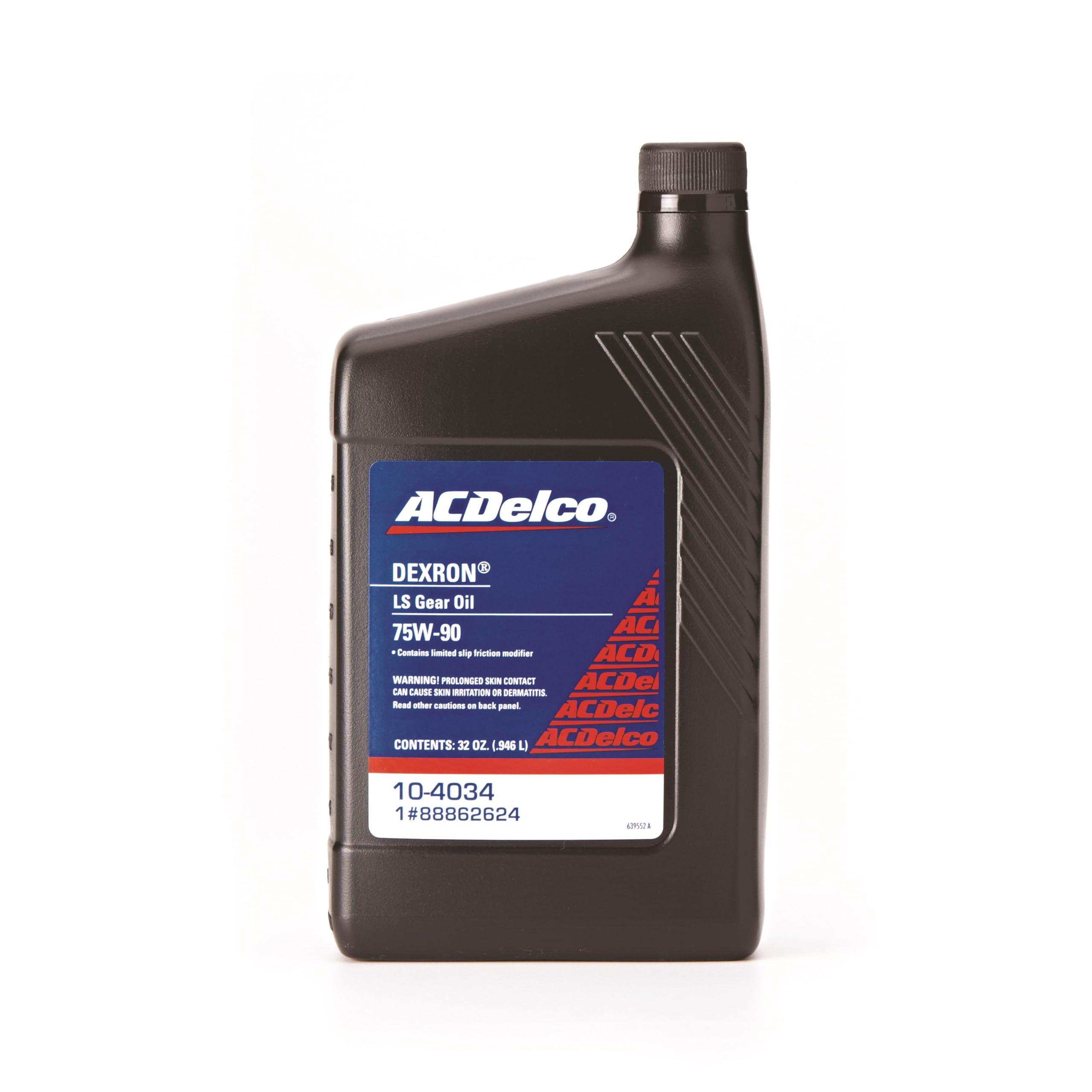
ACDelco GM Original Equipment 10-4034 is the factory-fill spec for millions of General Motors vehicles, engineered specifically for manual transmissions and transfer cases from the 2007 model year onward. The Dexron LS formulation means it already contains a limited-slip friction modifier, so there is no need to purchase a separate top-treat additive for GM applications that require it. This eliminates guesswork and ensures proper clutch-pack operation from the first ounce poured.
The 75W-90 viscosity meets GL-5 standards and is designed to handle the thermal demands of modern drivetrains while protecting synchronizers and gear teeth from wear. Owners using this fluid in GM trucks and SUVs report smooth shifting and no differential chatter even after severe towing sessions. Because it is an OEM formulation, it meets the exact engineering tolerances that GM engineers specified for their driveline components.
For anyone who owns a compatible GM vehicle, this is the safest choice because it eliminates the risk of using an aftermarket oil that lacks the precise friction modifier balance. It also works well in non-GM applications that require a 75W-90 GL-5 limited-slip oil, though verifying compatibility with your specific differential is always recommended before filling.
What works
- Pre-mixed with limited-slip friction modifier
- Exact OEM specification for GM vehicles
- Eliminates additive compatibility guesswork
What doesn’t
- Primarily designed for GM applications
- Limited availability outside OEM parts channels
- Higher cost than universal aftermarket options
3. Liqui Moly Hypoid LS 75W-140

Liqui Moly Hypoid LS 75W-140 is a fully synthetic gear oil engineered for high-stress, high-load applications, particularly in vehicles equipped with limited-slip differentials. The LS designation means it includes the necessary friction modifiers to prevent clutch chatter and ensure smooth lockup under acceleration, making it a direct drop-in solution for LSD-equipped cars, trucks, and SUVs. The 75W-140 viscosity provides a thicker film for severe service conditions like towing, off-road use, and motorsport.
German engineering is evident in the additive package, which provides exceptional thermal stability and anti-wear protection even when differential temperatures climb well beyond normal operating range. The oil also resists foaming and emulsification, which helps maintain consistent hydraulic pressure in the limited-slip mechanism. Owners running this fluid in high-horsepower builds and heavy-duty trucks report consistent clutch engagement and minimal gear whine even after extended abuse.
For drivers who demand maximum protection in a limited-slip differential and operate under severe conditions, Liqui Moly Hypoid LS delivers a premium synthetic formulation that prioritizes film strength and additive stability over cost savings. It is a top-tier choice for those who tow, race, or regularly push their vehicle’s drivetrain to its limits.
What works
- Pre-formulated for limited-slip differentials
- Excellent high-temperature stability
- Strong anti-foaming and anti-corrosion properties
What doesn’t
- Premium price point reflects German engineering
- 75W-140 may reduce fuel economy in daily driving
- Not ideal for cold-climate daily drivers
4. Red Line 57905 75W90 GL-5

Red Line 57905 is one of the most popular synthetic gear oils on the market, covering thousands of applications across passenger cars, light trucks, and racing vehicles. This 75W90 GL-5 formulation contains additional friction modifiers specifically for clutch-type limited-slip differentials, meaning most LSD-equipped vehicles will not require a separate additive. The polyol ester base stock provides superior lubrication under extreme pressure and high-temperature conditions compared to conventional synthetics.
This oil meets API GL-5, GL-6, MT-1, MIL-L-2105E, SAE J2360, and Chrysler MS-9763 specifications, making it one of the most versatile single-bottle solutions available. It is designed for hypoid differentials and can replace an 80W90 or SAE 90 gear oil in most applications. Owners report significantly reduced differential noise and smoother operation in both street and track use, particularly in vehicles with high mileages where internal clearances have opened up.
The 1-gallon size offers substantial savings for owners who need to service multiple vehicles or perform frequent fluid changes. Because it is not designed for manual transmissions or transaxles due to its extreme slipperiness affecting synchronizer mesh, it should be reserved strictly for differential and transfer case applications where its properties are fully utilized.
What works
- Excellent limited-slip compatibility out of the bottle
- Versatile spec coverage across multiple OEM standards
- 1-gallon format provides strong per-quart value
What doesn’t
- Not recommended for manual transmissions
- Extreme slipperiness can cause synchro issues
- Overkill for low-stress daily commuters
5. Red Line 58204 Heavy Shockproof

Red Line Heavy Shockproof is a fully-synthetic gear oil built from polyol ester base stocks and engineered for the most extreme differential applications — sprint cars, midgets, dirt late models, quick-change differentials, Detroit Lockers, and even NHRA Top Fuel and Funny Car rear ends. The unique formulation provides extreme slipperiness that reduces friction and heat in high-load environments where conventional oils would shear and fail rapidly.
This oil exceeds API GL-5 specifications and is designed to improve differential efficiency for better mileage, longer drain intervals, and less wear in racing applications. It is specifically not recommended for most synchromesh transmissions because the extreme slipperiness prevents synchronizer rings from gripping, causing shifting issues. However, in a differential application where that slipperiness translates directly to reduced friction and lower operating temperatures, it excels.
Owners of high-horsepower builds, locked spools, and competition rear ends report significantly lower oil temperatures and reduced gear wear after switching to Heavy Shockproof. The thicker 75W-140 viscosity provides a robust cushion against impact loads from hard launches and aggressive cornering, making it a top choice for racers who cannot afford a differential failure mid-season.
What works
- Unmatched shock load protection for racing
- Reduces operating temperatures in high-stress diffs
- Extended drain intervals in competition use
What doesn’t
- Not suitable for street-driven manual transmissions
- Over-specified for daily driver applications
- Higher cost per quart than standard synthetics
6. Royal Purple MAX GEAR 75W140

Royal Purple MAX GEAR 75W140 is a full synthetic gear oil designed for severe duty applications including towing, hauling, and high-performance driving. The proprietary Synerlec additive technology creates a microscopically thin protective layer on gear surfaces that reduces friction and wear even under extreme pressure. This oil meets API GL-5 specifications and is suitable for hypoid differentials, transfer cases, and manual transmissions that require a 75W140 lubricant.
The 75W140 viscosity provides a thicker lubricating film than standard 75W90 oils, making it a strong choice for vehicles that operate under heavy loads or in hot climates. Owners using MAX GEAR in trucks and SUVs for towing report lower differential temperatures and reduced gear noise after switching from conventional gear oils. The synthetic base stock also resists thermal breakdown and viscosity loss from shear, extending the effective service life of the fluid.
For drivers who regularly work their trucks hard — whether towing trailers, hauling heavy loads, or navigating rough terrain — Royal Purple MAX GEAR delivers a proven synthetic formula that prioritizes film strength and wear protection. Following the manufacturer’s recommended change intervals in your owner’s manual ensures you get the full benefit of the advanced additive chemistry.
What works
- Excellent film strength for heavy towing
- Synerlec additives reduce friction noticeably
- Good thermal stability for hot climates
What doesn’t
- 75W140 may reduce fuel economy slightly
- Not ideal for cold-weather daily driving
- Premium price vs. conventional gear oils
7. Honda Genuine HGO-1 75W-85

Honda Genuine HGO-1 Hypoid Gear Oil is the factory-specified lubricant for Honda and Acura AWD models, including the Passport, Pilot, and Ridgeline from 2021 onward. This 75W-85 GL-5 formulation is a mineral and synthetic blend engineered specifically for the transfer case and differential requirements of Honda’s i-VTM4 all-wheel-drive system. Using the exact OEM fluid ensures the torque-vectoring clutches and hypoid gears receive the correct friction characteristics and additive balance.
The 75W-85 viscosity is slightly thinner than the more common 75W-90, which Honda engineers determined provides the optimal balance between cold-flow protection and high-temperature film strength for their driveline designs. Owners who switch to this fluid after using a heavier aftermarket oil often report improved cold-weather shift quality and reduced driveline bind during low-speed maneuvers. This is not an aftermarket part — it is the genuine factory fill that comes in Honda service departments.
For any Honda or Acura AWD owner, using this fluid is the recommended choice because it eliminates the risk of incorrect additive packages that could affect the torque-vectoring differential performance. While it costs more per quart than universal alternatives, the peace of mind and guaranteed compatibility make it a worthwhile investment for keeping the drivetrain operating as engineered.
What works
- Exact OEM specification for Honda/Acura AWD
- Correct additive balance for torque-vectoring diffs
- Good cold-weather flow characteristics
What doesn’t
- Only suitable for Honda/Acura applications
- Higher cost than universal aftermarket oils
- Limited availability outside Honda dealers
8. Ford Genuine XY-75W140-QL

Ford Genuine XY-75W140-QL is the factory-recommended synthetic rear axle lubricant for Ford trucks and SUVs that require severe service protection. This SAE 75W-140 formulation is designed for vehicles that tow heavy trailers, carry maximum payloads, or operate in extreme temperatures where standard 75W-90 oils would not provide adequate film strength. Ford engineered this fluid to handle the thermal and mechanical demands of their Super Duty and light truck rear axles.
The 75W-140 viscosity provides a thicker cushion between gear teeth under high torque loads, reducing wear and extending axle life in vehicles that work for a living. Owners using this fluid in Ford F-150, F-250, and Expedition models report consistent performance even after years of heavy towing and off-road use. Because it is a genuine Ford part, it meets the exact engineering tolerances specified for Ford differentials and eliminates compatibility concerns.
For Ford truck owners who operate under severe service conditions — towing at or near capacity, frequent off-road use, or extreme climate operation — this genuine OEM fluid is the safest and most effective choice. It removes the guesswork of selecting an aftermarket alternative and ensures your axle is protected exactly as Ford’s engineers intended during the design and validation process.
What works
- Exact Ford factory specification for severe duty
- Thicker film for heavy towing and hauling
- Proven long-term durability in Ford axles
What doesn’t
- Primarily designed for Ford applications
- 75W-140 may reduce fuel economy
- Not ideal for light-duty passenger cars
9. Mobil1 1043611 75W-90 6 Pack

Mobil1 Synthetic Gear Lube LS 75W-90 is a supreme performance, fully synthetic, multipurpose automotive gear lubricant that meets or exceeds the highest performance requirements of many modern passenger vehicles, including limited-slip applications. This 6-pack format offers substantial per-quart savings for owners who need to service multiple differentials or perform initial fills on new builds. The LS formulation includes the necessary friction modifiers, so no separate additive is required for most clutch-type limited-slip differentials.
The advanced synthetic formulation helps protect against thermal and oxidative degradation, wear and corrosion, and viscosity loss associated with premature shearing. Mobil1 is one of the most recognized and trusted brands in synthetic lubrication, and this gear oil is designed to promote outstanding power transfer performance even in some of the most severe driving conditions. Owners report smooth differential operation and confident limited-slip engagement across a wide range of vehicle applications.
For drivers who want the assurance of a premium synthetic from a trusted brand while maximizing value through bulk purchasing, the Mobil1 6-pack delivers proven performance and broad application coverage. It is a versatile choice for households with multiple vehicles or for enthusiasts who perform regular driveline maintenance and want a reliable, consistent fluid on hand.
What works
- Pre-formulated for limited-slip differentials
- 6-pack format offers strong per-quart value
- Trusted Mobil1 synthetic base oil quality
What doesn’t
- Upfront cost higher than single quart purchase
- May be excessive for single-vehicle owners
- Less specialized than race-specific formulations
10. Lucas Oil 10121 75W-140

Lucas Oil 10121 SAE 75W-140 is a synthetic blend gear oil that provides a balance of performance and affordability for drivers who want the protection of a heavier-weight oil without paying full synthetic prices. The formula is designed to stand up to high temperatures while maintaining lubricity, ensuring that gear teeth and bearings remain protected even under sustained highway driving or mild towing conditions. Lucas is a well-known brand in the automotive lubricant space, trusted by both daily drivers and enthusiasts.
The 75W-140 viscosity offers a thicker cushion than standard 75W-90 oils, making it suitable for vehicles that experience higher than normal operating temperatures or loads. Owners report reduced gear noise and smoother differential operation after switching to Lucas, particularly in higher-mileage vehicles where internal clearances have increased. The synthetic blend formulation provides better thermal stability than conventional mineral oils while keeping the cost per quart accessible for routine maintenance.
For budget-conscious drivers who want the added protection of a 75W-140 oil without stepping up to a full synthetic price tag, Lucas Oil 10121 delivers reliable performance for daily driving and occasional light towing. It is a practical choice for older vehicles, farm trucks, and commuters where severe duty protection is not required but extra film strength is still valued.
What works
- Strong value for a 75W-140 synthetic blend
- Reduces gear noise in higher-mileage diffs
- Good high-temperature stability for the price
What doesn’t
- Not a full synthetic formulation
- 75W-140 may be too thick for some applications
- Fewer additive enhancements than premium synthetics
11. STAR BRITE Star Tron 80W-90
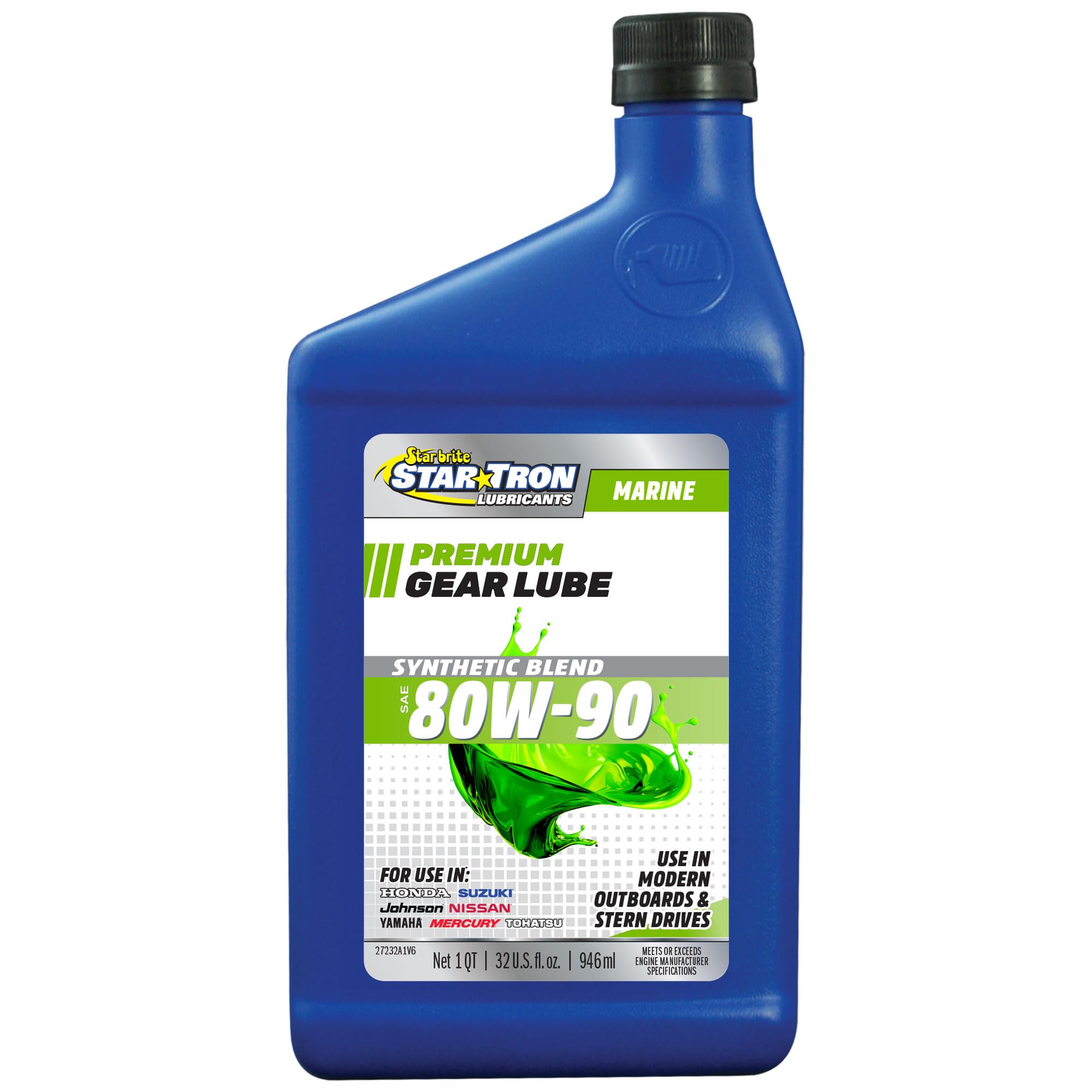
STAR BRITE Star Tron 80W-90 is a marine-grade synthetic blend gear oil designed specifically for outboard motors and stern drives that require an 80W-90 lubricant. The formulation meets API GL-5, API MT-1, SAE J2360, and Mack GO-J specifications, making it one of the most thoroughly certified gear oils in the marine category. The extreme pressure additives ensure thermal stability and anti-wear protection even under the high-temperature conditions common in marine applications where cooling is less efficient than in automotive differentials.
The high-viscosity synthetic blend provides exceptional long-term protection against rust and corrosion, which is critical for components that operate in or near saltwater environments. STAR BRITE includes a detailed guide for flushing and filling, and the brand offers a complete line of lower unit pumps, lube tubes, and adaptors for hassle-free oil changes. Owners of larger outboards — engines over 100 hp — report consistent protection and smooth shifting after using this fluid.
For boat owners who need a dependable, corrosion-resistant gear oil for their outboard lower unit, STAR BRITE Star Tron delivers a proven marine-grade formulation that meets multiple industry standards. It is also a viable option for automotive applications that specify an 80W-90 GL-5 oil, though its true strength lies in the marine environment where rust protection and water resistance are paramount.
What works
- Excellent rust and corrosion protection for marine use
- Meets multiple API and military specifications
- Strong extreme pressure additive package
What doesn’t
- Primarily designed for marine lower units
- 80W-90 viscosity limits cold-weather performance
- Not ideal for automotive limited-slip diffs
Hardware & Specs Guide
Viscosity Grade (SAE)
The SAE viscosity grade, such as 75W-90 or 75W-140, indicates the oil’s flow characteristics at both low and high temperatures. The “W” rating (winter) describes cold-temperature flow — a 75W oil pumps well at sub-zero temperatures. The second number (90 or 140) describes the oil’s thickness at operating temperature. Heavier grades like 140 provide more film strength for high-load applications but increase parasitic drag. Always follow the OEM recommendation as a starting point, then adjust based on your specific use case.
API Service Classification (GL-4 vs GL-5)
API GL-5 gear oils contain approximately double the extreme pressure additives of GL-4 oils, providing superior protection for hypoid gears under high-speed, high-load conditions. GL-4 oils are safer for older transmissions and components containing yellow metals like brass synchronizers. Using GL-5 where GL-4 is specified can corrode these metals over time. Modern differentials almost universally require GL-5, but always verify your application before purchasing.
Base Stock Type
The base stock determines the oil’s thermal stability, shear resistance, and service interval. Conventional mineral oils are the most affordable but break down faster under heat and load. Synthetic blends offer improved performance at a moderate cost. Full synthetic oils — particularly those using polyol ester or PAO base stocks — provide the best protection against thermal degradation, viscosity loss, and extended drain intervals. For severe service, full synthetic is the recommended choice.
Friction Modifiers for Limited Slip
Limited-slip differentials require friction modifiers to control clutch engagement and prevent chatter during cornering. Some gear oils come pre-blended with these additives (labeled as “LS” or “Limited Slip”), while others require a separate friction modifier additive. Using a non-LSD oil in a limited-slip diff causes uneven clutch engagement and noise. If your vehicle has a limited-slip differential, verify that your chosen oil either contains the correct modifier or that you plan to add it separately.
FAQ
Can I use 75W-140 instead of 75W-90 in my differential?
How often should I change my differential gear oil?
What happens if I use the wrong gear oil in my differential?
Do I need to add a friction modifier to my limited-slip differential?
Is synthetic gear oil worth the extra cost over conventional?
Final Thoughts: The Verdict
For most buyers, the best gear oil for differential is the Motul Gear 300 75W90 because it combines race-bred ester synthetic technology with broad GL-4/GL-5 compatibility at a price that undercuts premium boutique brands while outperforming conventional alternatives. If you need pre-blended limited-slip compatibility for a GM vehicle, grab the ACDelco GM Original 10-4034. And for severe duty towing or high-horsepower applications that demand maximum film strength, nothing beats the Liqui Moly Hypoid LS 75W-140.

Certification: BSc in Mechanical Engineering
Education: Mechanical engineer
Lives In: 539 W Commerce St, Dallas, TX 75208, USA
Md Amir is an auto mechanic student and writer with over half a decade of experience in the automotive field. He has worked with top automotive brands such as Lexus, Quantum, and also owns two automotive blogs autocarneed.com and taxiwiz.com.