Transition motorcycle glasses promise the convenience of a lens that adapts to shifting light conditions — but separating the pairs that actually deliver clear optics, reliable tinting, and real wind protection from those that fall short requires a careful look at build quality and customer feedback. Finding a pair that works across dawn, dusk, and full sun is the real challenge.
I’m Amir — the founder and writer behind Four Wheel Ask. I’ve spent years analyzing product specifications, studying owner-reported performance data, and comparing build quality metrics across hundreds of eyewear models to find the options that genuinely perform on the road.
Whether you ride a cruiser, sport bike, or adventure tourer, the right set of eyewear makes the difference between a clear ride and a squinting, watery-eyed ordeal. This breakdown focuses on the best transition motorcycle glasses available now, ranked by real-world effectiveness and owner satisfaction.
How To Choose The Best Transition Motorcycle Glasses
Transition motorcycle glasses combine the utility of clear lenses with the sun-blocking capability of dark tints, but not all photochromic technology performs equally across different riding environments. Understanding the key variables helps you select a pair that enhances safety and comfort rather than compromising it.
Photochromic Lens Speed and Darkness Range
The core of any transition glass is its ability to darken when exposed to UV light and return to a clear state when UV diminishes. Look for lenses that transition within 15 to 30 seconds for darkening and under two minutes for clearing. Darkness range matters too — some lenses shift from a very light tint to a moderate grey, while others offer a wider range from near-clear to a deep smoke that rivals dedicated sunglasses. Riders who encounter varied light conditions, such as tree-lined roads or tunnels, benefit most from fast, wide-range transitions.
Wind Protection and Frame Seal Design
Motorcycle riding at speed exposes eyes to wind, dust, and debris. Look for frames with integrated foam liners or padded brow seals that block airflow without completely sealing the lens, which can cause fogging. Ventilation holes or channels in the frame help maintain airflow while still cutting down on the wind blast that leads to tearing and blurred vision. A snug, wraparound fit is essential for keeping the elements out at highway speeds.
Lens Material and Optical Quality
Polycarbonate lenses are the standard for impact resistance and optical clarity in this category. They are lightweight, shatter-resistant, and typically include UV400 protection that blocks 99 to 100 percent of UVA and UVB radiation. Scratch resistance varies significantly between models, with higher-end options featuring hard coatings that extend usable life. Avoid lenses that introduce noticeable distortion at the edges, as this can cause eye strain during long rides.
Fit Compatibility With Helmets
Temple arms that are too thick or have protruding hinges can cause discomfort when worn under a full-face or modular helmet. Look for low-profile temple designs and flexible arm materials that slide easily into helmet pockets. Adjustable nose pads help fine-tune the fit and prevent slippage when the helmet is removed or adjusted. Some models also offer alternative nose pad sizes to accommodate different nose bridge shapes.
Quick Comparison
On smaller screens, swipe sideways to see the full table.
| Model | Category | Best For | Key Spec | Amazon |
|---|---|---|---|---|
| 100% SPEEDCRAFT | Premium Performance | High-speed riding with maximum clarity | Polycarbonate photochromic, 5.5-base shield, ventilated | Amazon |
| Bertoni 112 Goggles | Premium Goggle | All-weather goggle protection with quick transition | Photochromic lens, adjustable strap, ventilated frame | Amazon |
| TriEye Cycling Glasses | Specialty | Integrated rear-view mirror for situational awareness | Photochromic lens, UV400, built-in mirror arm | Amazon |
| Bobster Renegade | Mid-Range | Comfortable fit under helmet with photochromic lens | Photochromic lens, foam seal, lightweight frame | Amazon |
| Global Vision Hercules 7 | Safety | ANSI Z87.1 rated safety with auto-darkening | Photochromic clear to smoke, ANSI Z87.1+, foam liner | Amazon |
| Epoch Hybrid Photochromic | Mid-Range | Riders wanting dark tint with padded wind seal | Clear to smoke photochromic, foam padded frame | Amazon |
| Global Vision Kickback 24 | Mid-Range | Color-changing lens for varied light on longer rides | Photochromic color-changing lens, lightweight frame | Amazon |
| WYND Blocker Airdam | Mid-Range | Wind-blocking performance with removable liner | Removable wind liner, UV400, rubberized frame | Amazon |
| KAPVOE K9022 | Entry-Level | Budget-friendly transition for cycling and light riding | Photochromic lens, wide wraparound, includes Rx frame | Amazon |
| ROCKBROS MTB Glasses | Value | Dual lens system for cycling and occasional motor use | Interchangeable polarized + photochromic lenses, TR90 frame | Amazon |
| SCVCN Photochromic S86 | Budget | Multi-sport use with lightweight TR90 frame | Photochromic clear to grey, TR90 frame, adjustable nose pads | Amazon |
In‑Depth Reviews
1. 100% SPEEDCRAFT Sport Performance Cycling Sunglasses

The 100% SPEEDCRAFT delivers optical clarity that stands apart in this segment, using Ultra HD polycarbonate lenses that cut through haze and provide an unnervingly sharp field of view. The 5.5-base cylindrical shield extends the peripheral range significantly, reducing blind spots that matter at speed. Lower air scoops promote continuous airflow across the lens interior, which minimizes fogging during climbs or sudden stops. Owners consistently report the wide panoramic vision helps track movement at the edges of sight, a feature particularly useful for riders navigating traffic or group formations.
Build quality matches the premium positioning, with a lightweight plastic frame that stays secure without creating pressure points under a full-face helmet. The interchangeable scratch-resistant lens system allows swapping to a clear lens when needed, though the photochromic version covers a wide enough range for most daylight-to-dusk riding scenarios. The gloss black finish resists scuffs and the frame holds up well to regular use. Riders who have worn these for extended periods note the absence of fogging even during high-effort riding in humid conditions.
The lens transitions smoothly between indoor clarity and outdoor darkness, though it does not reach the deep tint level of dedicated dark sunglasses. This makes the SPEEDCRAFT ideal for riders who encounter mixed light conditions rather than relentless full-sun exposure. The absence of a foam wind seal means it relies on the wraparound geometry for wind protection, which works well at moderate speeds but may allow some airflow at highway velocity. For riders seeking premium optics and versatile photochromic performance in a streamlined package, this model is the benchmark.
What works
- Exceptional optical clarity with wide peripheral field
- Excellent ventilation design prevents fogging
- Lightweight and secure under helmet fit
- Interchangeable lens system adds versatility
What doesn’t
- Does not include foam wind seal for high-speed protection
- Photochromic tint not as deep as dedicated sunglasses
2. Bertoni Motorcycle Goggles Riding Padded Glasses Photochromic

The Bertoni 112 Goggle approaches transition eyewear from a dedicated motorcycle perspective, prioritizing wind protection and all-weather functionality. The photochromic lens darkens and clears rapidly, with owners noting it adapts quickly when moving between shaded tunnels and open highway. The ventilated frame is designed to reduce moisture buildup while still blocking the main force of the wind, making this a strong choice for riders who demand goggle-level coverage in a goggle format. Italian design influences are evident in the fit and finish, with a strap system that stays secure even at higher speeds.
Initial owner feedback highlights exceptional anti-fog performance in hot, humid conditions, with one rider reporting clear optics in 90-degree heat and near-saturation humidity. The lens darkens sufficiently for full sunshine and clears reliably for night use, though the darkness level falls short of the deepest aftermarket tints. The adjustable strap accommodates helmet wear without creating pressure points, and the padded foam frame conforms well to most face shapes. The goggles include a hard case that protects the lens during storage and transport.
Some owners with slimmer or narrower face shapes report that the goggle geometry allows too much airflow at the edges, causing wind blast and eye watering. The photochromic activation was also noted as weak by a slim-face user who returned the product. The temple buckle area can cause skin irritation on longer rides due to the rigid adjuster design, a detail that could benefit from padding or a softer material. For riders with a fuller face profile who prioritize fog-free performance and fast lens transitions, the Bertoni delivers premium-level functionality.
What works
- Exceptional anti-fog performance in high humidity
- Fast photochromic transition between light conditions
- Secure adjustable strap works well over helmets
- Includes protective hard case
What doesn’t
- Poor fit for narrower or slimmer face shapes
- Temple buckle can cause irritation during long rides
- Ventilation design may allow wind blast for some users
3. TriEye Cycling Glasses with Rear-view Mirror
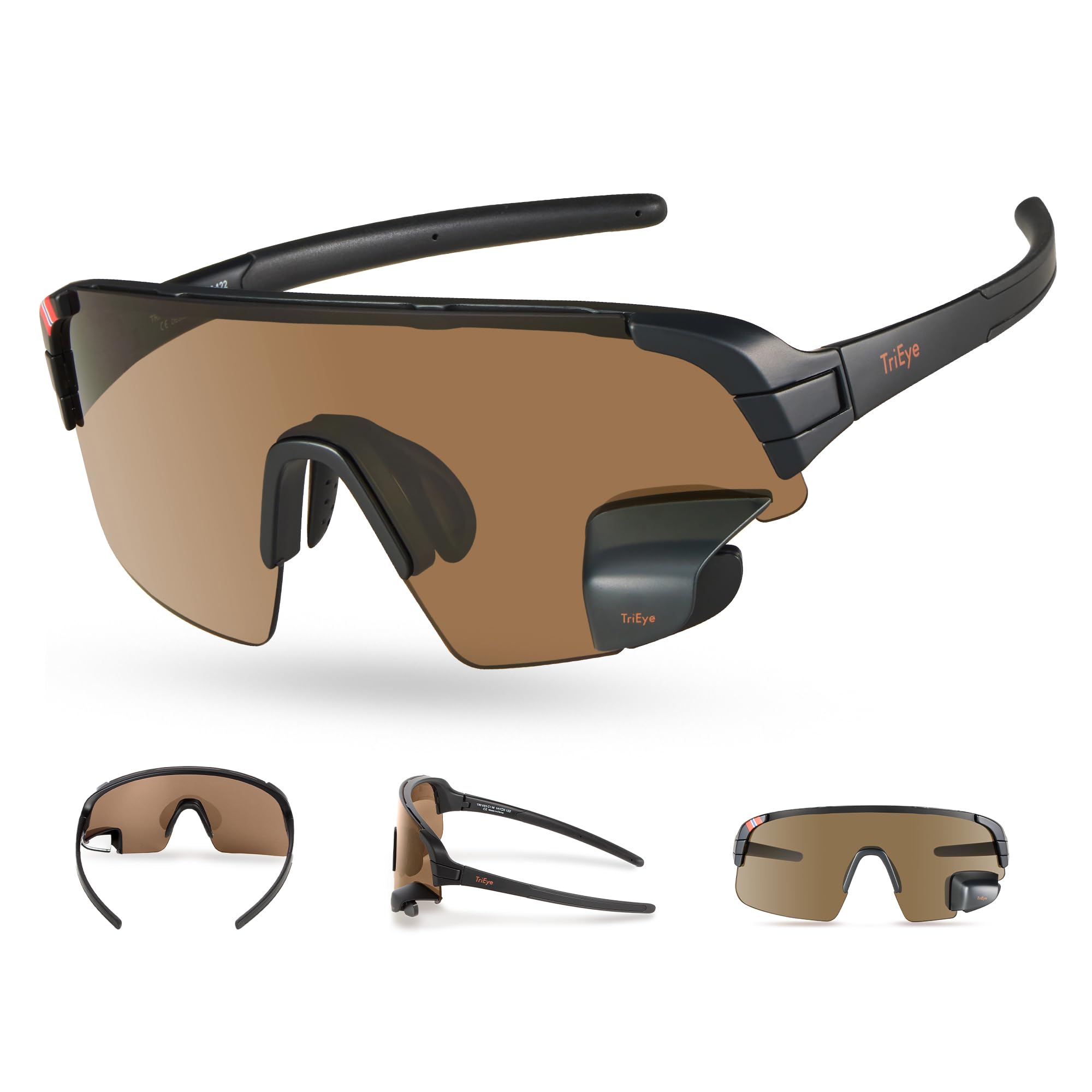
The TriEye glasses solve a distinct problem for riders who rely on rear-view awareness without the bulk of a helmet-mounted mirror. A small mirror is integrated into the temple arm, providing a clear view of approaching traffic without requiring head turns. Owners who have tested the glasses over hundreds of miles report a major improvement over traditional wire-attached mirrors, which often vibrate and require constant adjustment. The mirror is small but effective, particularly for solo riders or those at the back of group rides where a clear rear view matters most.
The photochromic lenses perform reliably in overcast and moderate sun conditions, auto-darkening to a level suitable for variable cloud cover. Owners note the lenses do not reach the deep tint of dedicated sunglasses, which may be a limitation in consistently bright environments like desert highways. The frame is slightly heavier than premium cycling glasses like Oakley or Smith, though the difference is negligible once worn. The included adjustment process takes about 15 minutes to dial in the mirror position, after which it stays put without vibration.
Build quality is solid without approaching ultra-premium levels, and the glasses include UV400 protection. The mirror works best for solo riding or small groups; in larger packs, the limited field of view makes it hard to see past other riders. For cyclists and motorcyclists with limited neck mobility, such as senior riders, the integrated mirror eliminates the need to crane the neck backward. The trade-off in lens darkness versus the convenience of a built-in mirror is reasonable for riders who prioritize situational awareness above deep tint.
What works
- Integrated rear-view mirror eliminates separate attachments
- Stable mirror position after initial adjustment
- Good photochromic performance in moderate light
- Excellent for senior riders with limited neck motion
What doesn’t
- Lenses do not get very dark in full sun
- Slightly heavier than premium alternatives
- Mirror field of view limited in large group rides
4. Bobster Renegade Sport Sunglasses with Photochromic Lens

The Bobster Renegade has been a staple in the motorcycle eyewear market for over a decade, and the photochromic version brings modern lens technology to a proven frame design. The lens transitions between clear and a moderate smoke tint that works well for dawn-to-dusk riding, though it does not achieve the deep darkness of high-end sunglasses. Owners appreciate the comfortable fit under full-face helmets, with flexible temple arms that slide into helmet pockets without digging in. The included foam seal blocks a significant amount of wind, reducing tearing at moderate speeds.
Long-term owner feedback highlights the durability of the frame and the reliability of the photochromic mechanism, with many riders reporting years of consistent performance. The lens does fog under certain conditions, particularly when stationary in rain, but clearing occurs quickly once the bike is moving. The hard plastic nose piece does not match the adjustability of rubberized designs found on more expensive glasses, and some owners note it can be less comfortable on longer rides. Peripheral vision is slightly reduced compared to frameless designs, a trade-off for the added protection of the full frame.
The snap-on temple arms can loosen over time, and the pointed arm ends may create discomfort when putting on or removing a helmet. Some owners with smaller face profiles report that the foam seal does not create a perfect wind barrier, allowing some airflow at the edges. The tint level may be insufficient for riders with high light sensitivity who need maximum darkness in full sun. For riders seeking a comfortable, proven frame design with functional photochromic performance at a reasonable price point, the Bobster Renegade remains a solid reference point.
What works
- Comfortable fit under most full-face helmets
- Durable frame with years of proven use
- Foam seal blocks wind effectively at moderate speeds
- Reliable photochromic transition mechanism
What doesn’t
- Snap-on arms may loosen over extended use
- Tint not dark enough for high light sensitivity
- Pointed arm ends can interfere with helmet removal
5. Global Vision Hercules 7 Safety Sunglasses Photochromic
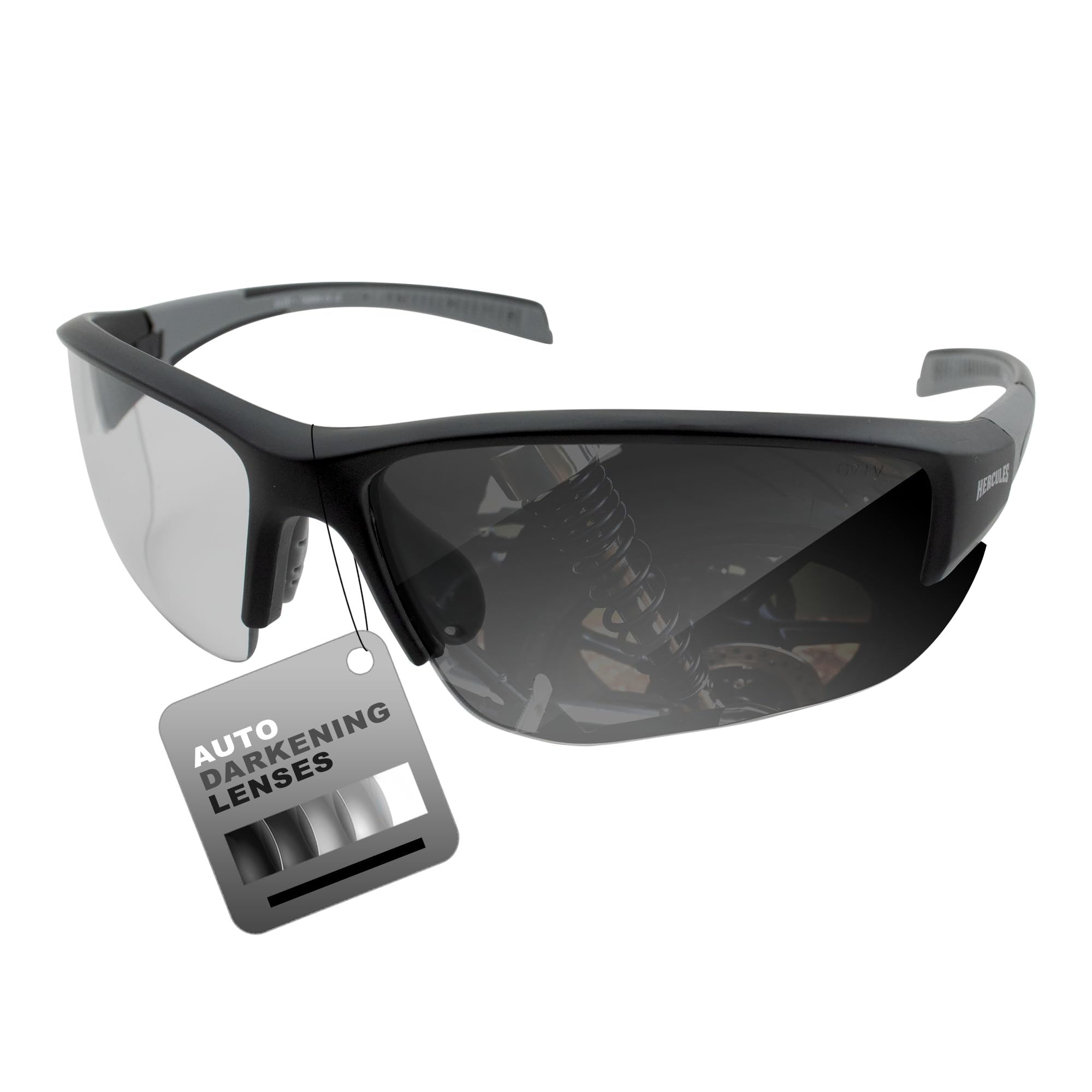
The Global Vision Hercules 7 brings ANSI Z87.1+ impact rating into the photochromic category, making it a strong candidate for riders who prioritize safety certification alongside light adaptability. The clear-to-smoke transition works reliably, darkening within roughly 30 seconds of UV exposure and clearing within about a minute when moving indoors. Owners consistently note that while the tint does not reach the darkness of dedicated sunglasses, it eliminates squinting in direct sun and provides sufficient protection for most riding conditions. The lightweight frame is designed for all-day wear without pressure points.
Build quality exceeds expectations at its price tier, with a solid frame that withstands daily use in demanding environments. Owners who have worn the Hercules 7 for 50-hour work weeks report that it reduces migraine frequency compared to standard safety glasses, thanks to the consistent light transmission and stable fit. The lens optics are clear and distortion-free across the central field of view, though some edge distortion is noticeable at extreme angles. The foam brow liner adds comfort and helps block debris, though it does not create a full wind seal.
The photochromic transition speed is slightly slower than premium alternatives, and the clear state retains a very light tint that may be noticeable in dim interior lighting. The safety-glass aesthetic may not appeal to riders seeking a sporty look, but the functionality is hard to argue with for those who ride in debris-prone environments or who want impact-rated protection. For riders who value ANSI certification and reliable photochromic performance in a lightweight package that handles long days on the road or at the job site, the Hercules 7 delivers dependable utility.
What works
- ANSI Z87.1+ impact safety certification
- Lightweight all-day comfort
- Reliable photochromic transition in varied light
- Durable frame holds up to demanding use
What doesn’t
- Transition speed slower than premium models
- Clear state retains faint tint indoors
- Not designed for sporty or aggressive styling preferences
6. Epoch Hybrid Photochromic Padded Motorcycle Sunglasses
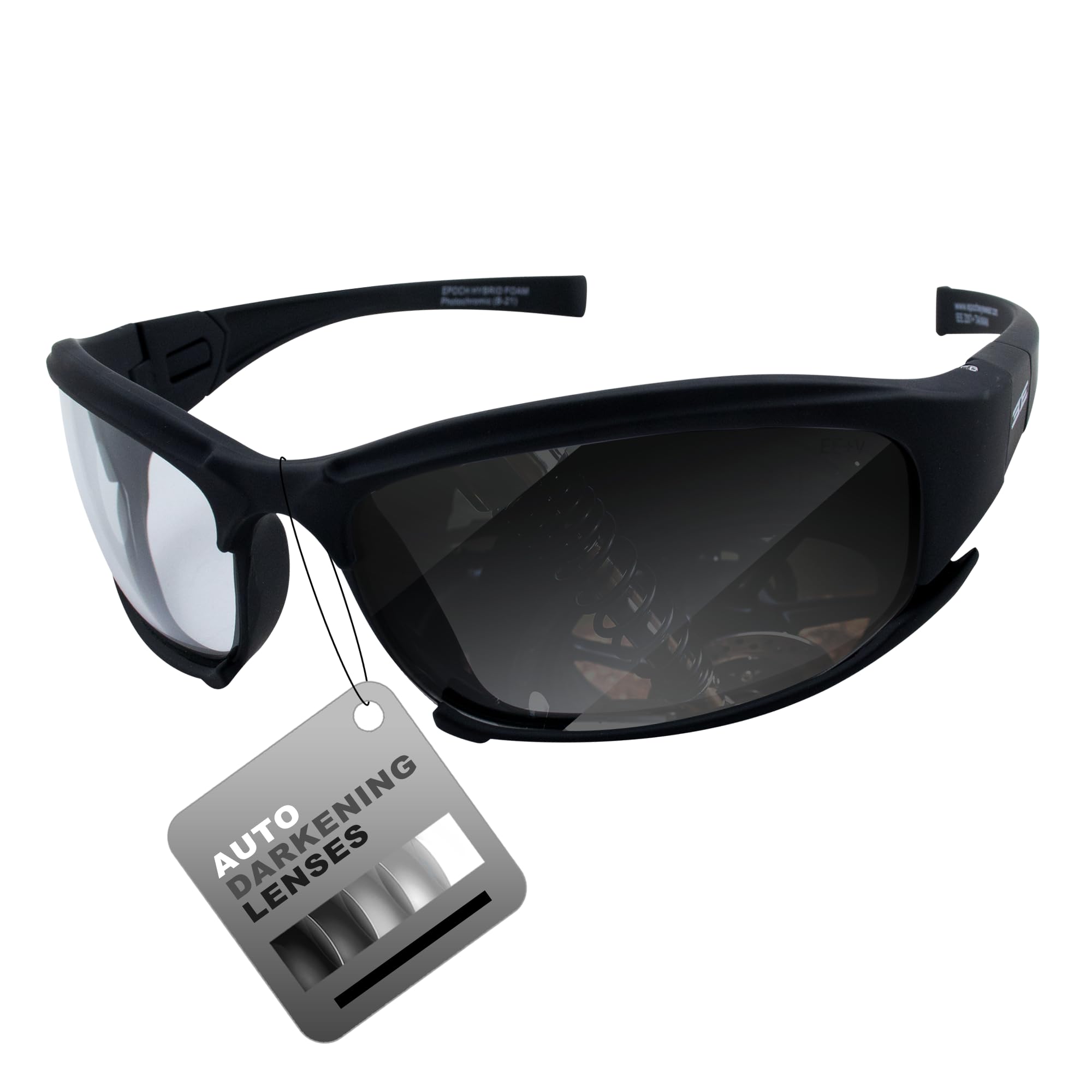
The Epoch Hybrid Photochromic sunglasses are engineered specifically for motorcycle use, with a focus on achieving a notably dark tint in sunny conditions. Owner feedback indicates the lenses reach a deep smoke shade after an initial conditioning period, providing glare reduction that rivals fixed-tint sunglasses. The padded frame integrates a foam liner that blocks wind effectively at highway speeds, reducing the tearing and dryness that plagues riders with sensitive eyes. The black frame finish is subdued and works well with most helmet and gear combinations.
The photochromic mechanism responds quickly to UV exposure, with several owners noting it darkens in just a few seconds when moving from shade into sunlight. The clearing process is gradual rather than instant, which is typical for this lens technology, but the transition is smooth enough to avoid disorientation. The foam liner does allow a small amount of air to pass through at the edges, which some riders find insufficient for total windblock but adequate for preventing fog buildup. The lens material is polycarbonate with UV400 protection.
Scratch resistance is a notable weak point, with several owners reporting that the lenses mark easily if not stored in the included case. The foam padding can wear down over extended use, though replacement is straightforward. The fit is universal and works across a range of face sizes, but riders with very narrow faces may find the seal less effective. For riders who want a deep photochromic tint that approaches dedicated sunglasses performance, combined with a foam wind seal that keeps eyes comfortable at speed, the Epoch Hybrid delivers strong value.
What works
- Deep smoke tint rivals dedicated sunglasses
- Foam pad blocks wind effectively at highway speeds
- Fast darkening response to sunlight
- Comfortable for extended riding sessions
What doesn’t
- Lens scratches easily without proper storage
- Foam liner may wear down over time
- Not ideal for very narrow face shapes
7. Global Vision Kickback 24 Sunglasses with Photochromic Lenses
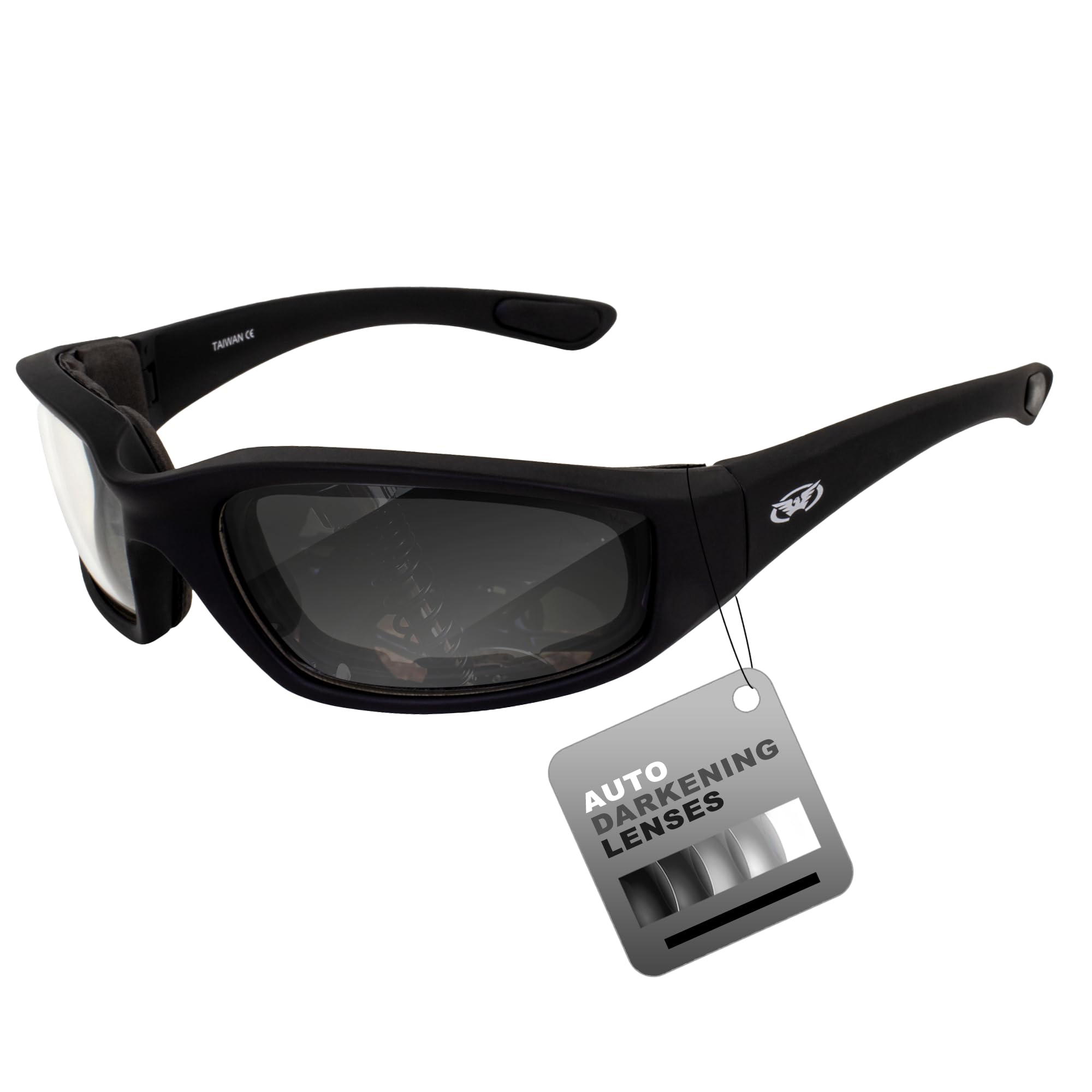
The Global Vision Kickback 24 offers a classic Aviator-style silhouette combined with photochromic lens technology, appealing to riders who want transition functionality without a sporty or aggressive frame design. The lenses shift from a nearly clear state indoors to a medium-dark grey outdoors, providing enough tint reduction to eliminate squinting in most daylight conditions. Owners report that the transition works reliably, with the lens darkening within about 30 seconds and clearing gradually when moving out of direct UV exposure. The lightweight frame sits comfortably under most helmets without creating pressure points.
Rider feedback highlights the value proposition, with many noting the glasses perform well for the price point. The photochromic effect does not reach the deep darkness of dedicated sunglasses, which is consistent with the technology at this tier. The lens is not polarized, which some riders miss when dealing with glare from wet roads or car windshields. The frame construction feels adequate but not premium, with some owners noting visible adhesive in the hinge areas that detracts from the overall aesthetic.
The glasses work well in moderate climates but the photochromic activation can be weak in extreme heat, with owners in desert areas reporting insufficient darkening. The open-frame design provides less wind protection than foam-sealed alternatives, making these better suited for riders who wear a helmet with a visor or primarily ride at lower speeds. For riders who prioritize classic styling and basic photochromic function at an accessible price point, the Kickback 24 delivers a straightforward solution that covers the essentials without extra features.
What works
- Classic aviator style appeals to cruiser riders
- Reliable photochromic transition in moderate conditions
- Lightweight and comfortable under helmet
- Good value for basic transition functionality
What doesn’t
- Not polarized; glare reduction is limited
- Weak photochromic activation in extreme heat
- Frame shows visible adhesive in some areas
8. WYND Blocker Airdam Sunglasses
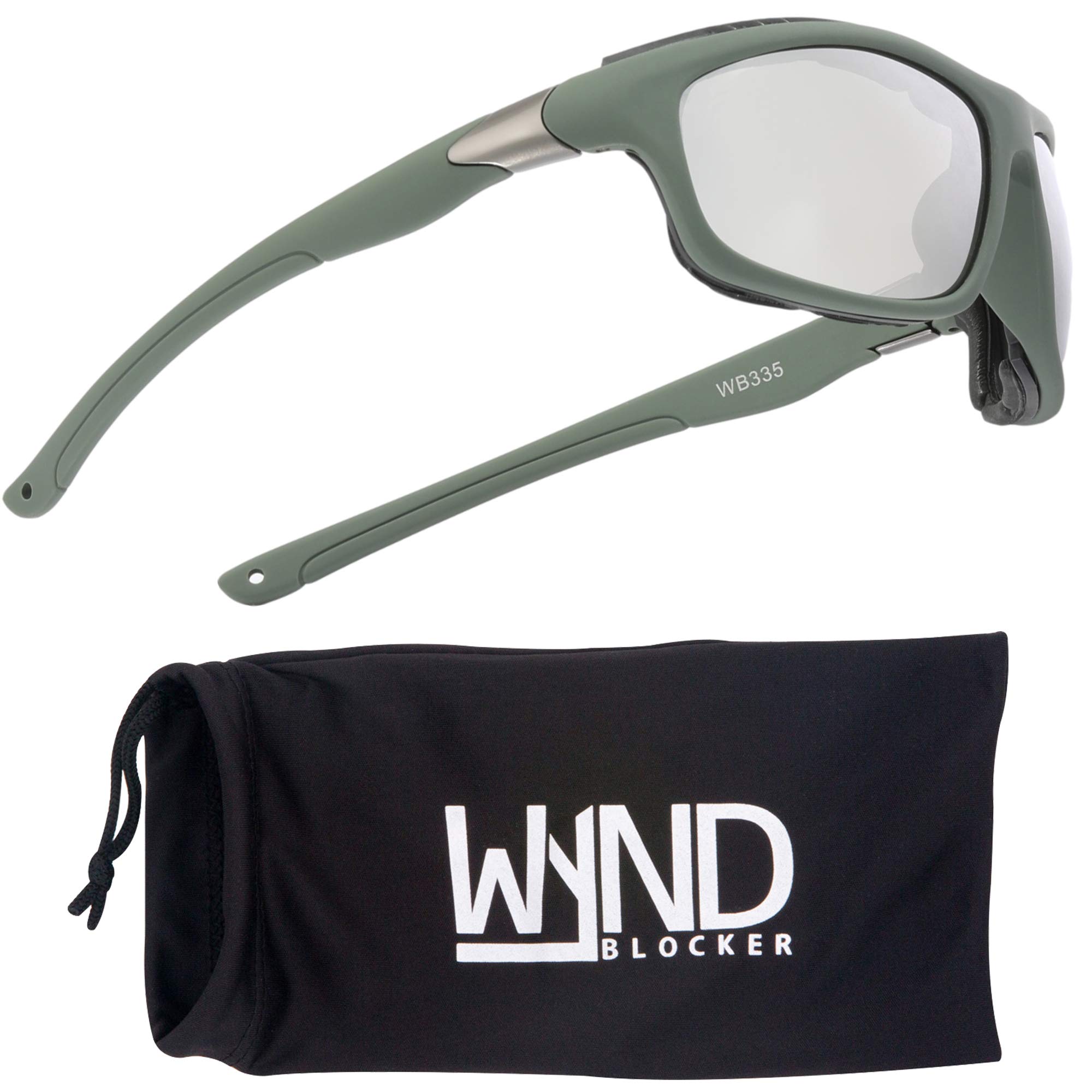
The WYND Blocker Airdam takes a different approach to motorcycle eyewear by focusing primarily on wind protection rather than photochromic technology. The included removable foam liner creates a seal that blocks wind, pollen, and debris effectively, making these glasses a strong choice for riders who experience dry eyes or allergy symptoms while riding. The silver mirror coating reduces glare significantly, and the UV400 protection ensures full coverage against harmful rays. The rubberized matte black frame provides a secure grip even when wearing gloves, and the metal accents add a touch of style.
Owner feedback consistently praises the wind-blocking capability, with many riders reporting that these glasses eliminated the tearing and dryness they experienced with other models. The glasses stay firmly in place at highway speeds, and the foam liner channels airflow in a way that minimizes fogging. The yellow lens option is noted for improving contrast and clarity during twilight riding, though the standard silver mirror is the most popular choice for general use. The included microfiber bag serves as both a cleaning cloth and a storage pouch.
The foam liner can wear out over time, with some owners reporting the need for replacement after about 18 months of regular use. The manufacturer offers free replacement liners under the lifetime guarantee, which mitigates this concern significantly. The frame is visible in the peripheral field compared to frameless designs, which some riders find distracting. The lack of photochromic functionality means riders need to switch lenses for different light conditions or choose a specific tint for their primary riding time. For riders who prioritize wind protection above all else and want a durable, well-supported product, the WYND Blocker Airdam is a focused solution.
What works
- Excellent wind and debris protection with foam liner
- Stays secure at highway speeds
- Lifetime guarantee with free liner replacements
- Good glare reduction with mirror coating
What doesn’t
- No photochromic lens option available
- Foam liner needs periodic replacement
- Frame visible in peripheral vision
9. KAPVOE Photochromic Cycling Glasses K9022
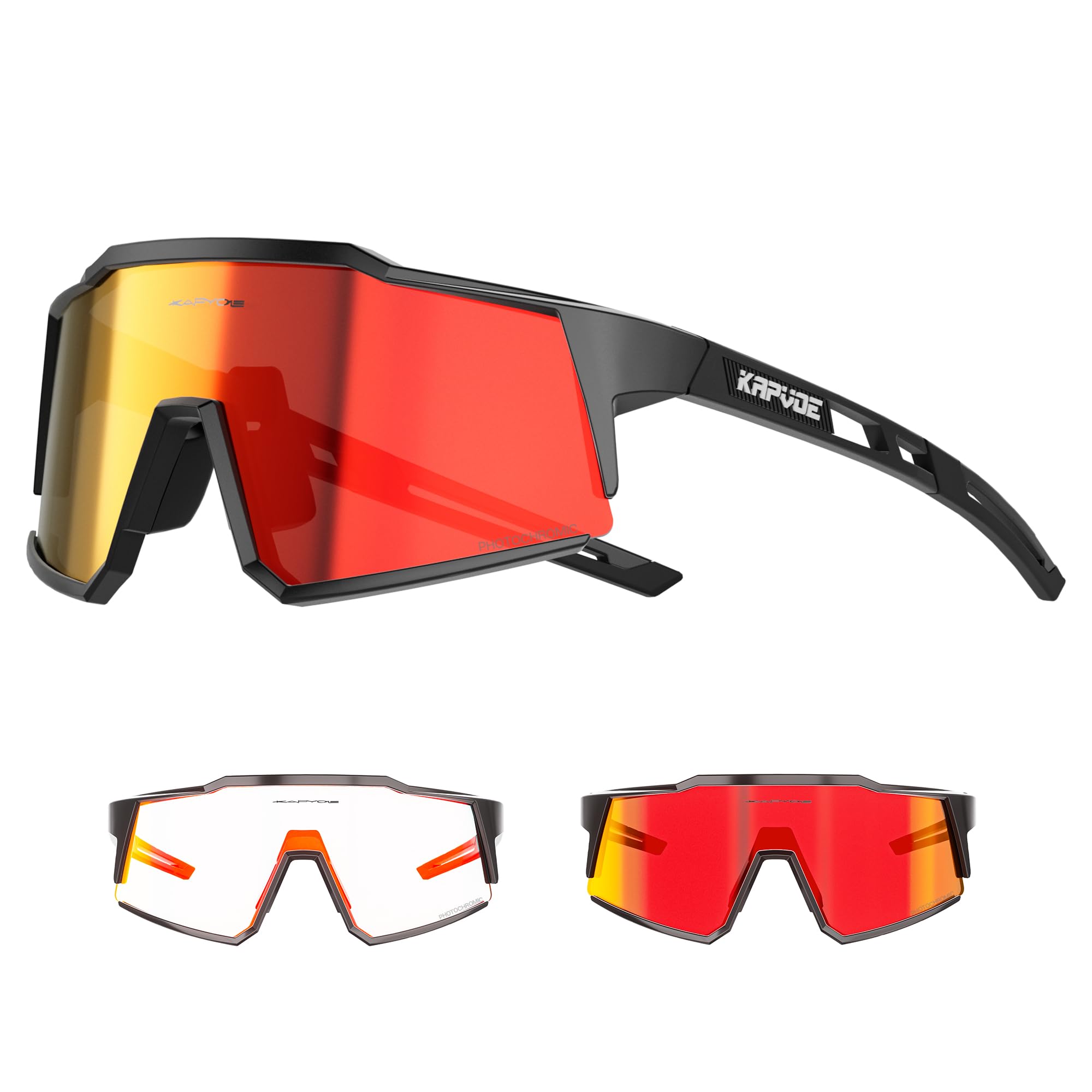
The KAPVOE K9022 delivers photochromic functionality at a entry-level price point, making it accessible for riders who want to test transition lens technology without a significant investment. The lens shifts between clear and a medium tint that works well for mixed-light riding, though some owners report the photochromic effect is subtle and the lens may appear clear during overcast conditions. The wide wraparound frame provides good coverage against wind and debris, and the included Rx insert frame allows riders with prescription needs to use these as custom eyewear.
Owner feedback is generally positive, with many noting that the glasses offer good value for the price. The lens repels bugs and prevents eye drying effectively, and the photochromic mechanism works adequately for riders who ride in varied terrain. Two included nose pad sizes allow for fit adjustment, and the hard case and lanyard add convenience for storage and transport. Riders with smaller face shapes report that the K9022 model (137mm lens distance) fits well, while the cheaper K9001 variant (150mm) is too large for narrow faces.
The photochromic transition is not as fast or as dark as premium alternatives, and some owners note that the lens does not become clear enough for comfortable night riding, retaining a very faint tint. Fogging can occur at the top center of the lens during sustained low-intensity riding, though this is not universal and may depend on face shape and ventilation. The build quality is adequate for casual use but may not withstand the demands of daily high-speed riding. For budget-conscious riders or those looking for a secondary pair for daytime use, the KAPVOE K9022 provides a functional entry point into photochromic eyewear.
What works
- Very accessible price for photochromic technology
- Includes Rx frame for prescription inserts
- Wide wraparound coverage blocks debris
- Multiple nose pad sizes for fit customization
What doesn’t
- Photochromic transition is subtle and relatively slow
- Faint residual tint remains at night
- Some fogging reported at top center of lens
10. ROCKBROS Mountain Bike Glasses with Polarized + Photochromic Lenses

The ROCKBROS MTB Glasses offer a dual-lens system that includes both a polarized lens and a photochromic lens in the same package, giving riders the flexibility to choose based on conditions. The photochromic lens transitions between a light grey and a medium-dark shade, with a light transmittance range of 21 to 83 percent. The polarized lens provides 15 percent light transmittance and effectively eliminates reflected glare from roads, water, and vehicle surfaces when maximum sun protection is needed. The removable lower frame section allows for a different aesthetic and improved airflow in hot conditions.
Owner feedback highlights the good value of the dual-lens system, with many riders appreciating the ability to switch between polarized and photochromic depending on the day’s conditions. The TR90 frame is lightweight and flexible, providing a comfortable fit that stays in place during rides. The vented lens design helps reduce fogging, and the adjustable nose pad accommodates a variety of face shapes. The included myopia frame allows prescription inserts for riders who need vision correction.
Some owners report that the frame creates excessive pressure on the temples, leading to headaches during extended wear. The nose piece can be difficult to adjust and may not fit all bridge shapes comfortably. The photochromic lens is ideal for shaded trails but may not darken sufficiently for full-sun highway riding without switching to the polarized option. For riders who want the flexibility of both lens types in one purchase and prefer a sporty cycling-style frame, the ROCKBROS delivers good versatility at a reasonable cost.
What works
- Includes both polarized and photochromic lenses for versatility
- Lightweight TR90 frame with adjustable nose pad
- Vented lens design reduces fogging
- Removable lower frame for airflow customization
What doesn’t
- Frame pressure can cause headaches in some users
- Nose piece difficult to adjust for optimal fit
- Photochromic lens may not darken enough for full sun
11. SCVCN Photochromic Sport Sunglasses S86
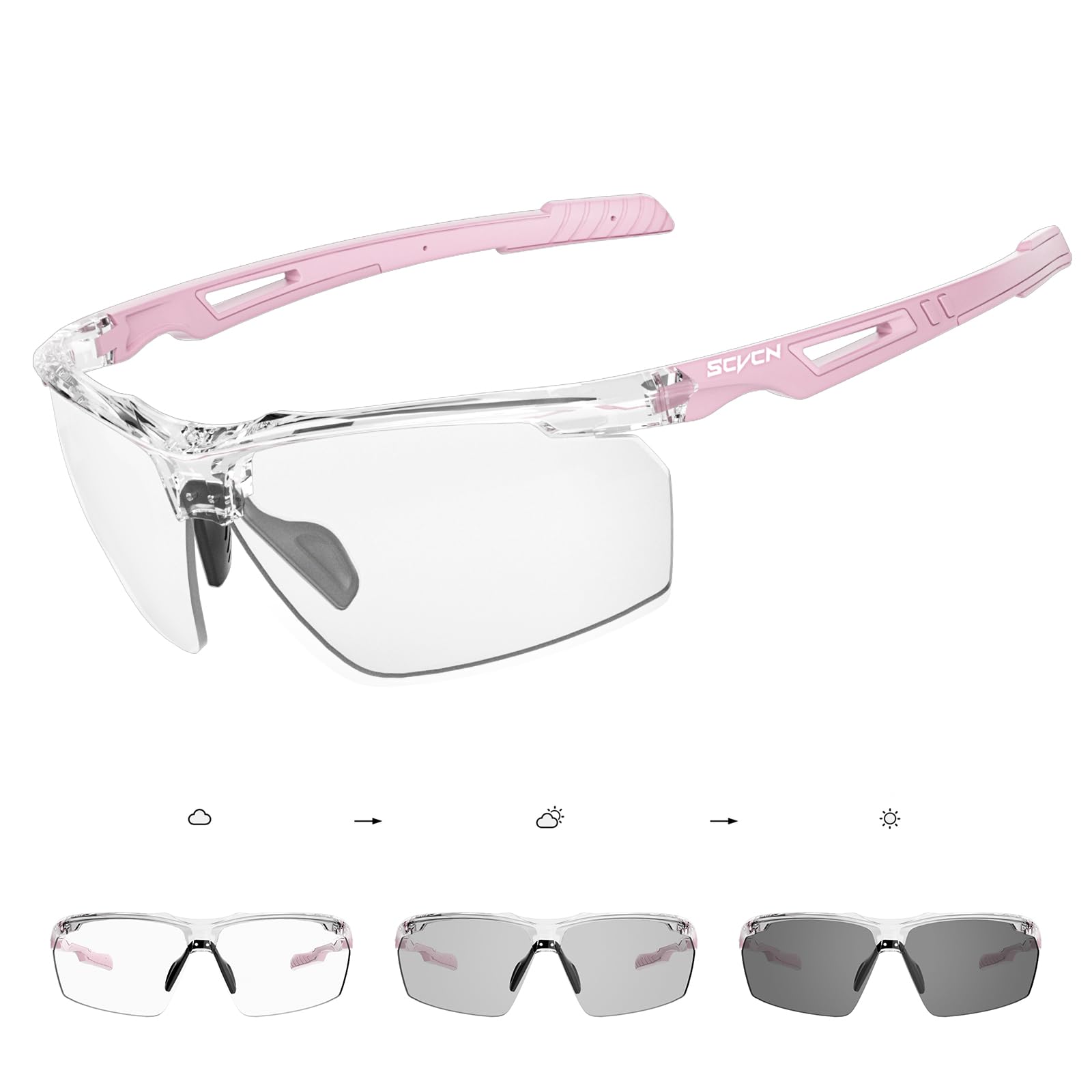
The SCVCN S86 brings photochromic lens technology to an extremely accessible price tier, making it one of the most affordable options for riders seeking transition functionality. The lens shifts from clear to grey in sunlight, providing UV400 protection that blocks 99 to 100 percent of UVA and UVB radiation. The TR90 frame reduces overall weight significantly compared to traditional plastic frames, and the polycarbonate lenses offer impact resistance and scratch resistance that exceed expectations at this price level. The adjustable rubber nose pads increase the contact area and provide a secure grip even in wet conditions.
Owner reviews are consistently positive, with many praising the comfortable fit and reliable performance across multiple sports including cycling, running, and fishing. The photochromic transition works well for most users, with the lens darkening sufficiently for outdoor use and clearing adequately for indoor or low-light conditions. The frame stays secure during activity without slipping, and the lens clarity is distortion-free across the central viewing area. Riders with thin faces report that the glasses fit well and the color options appeal to a wide range of preferences.
The photochromic effect does not reach the deep darkness of premium or dedicated sunglasses, which is an expected trade-off at this price tier. The frame is designed as a universal sport model rather than a dedicated motorcycle glass, so wind protection at highway speeds is limited compared to padded or foam-sealed alternatives. The lenses retain a very light tint in their clearest state, which may be noticeable in dim environments. For riders who want an entry-level transition lens for daytime riding and occasional use across multiple sports, the SCVCN S86 offers remarkable value for the price.
What works
- Extremely accessible price for photochromic technology
- Lightweight TR90 frame with comfortable fit
- Adjustable nose pads accommodate different nose shapes
- Good optical clarity for the price tier
What doesn’t
- Does not get dark enough for full-sun glare reduction
- No wind seal or foam liner for highway riding
- Faint residual tint remains in clear state
Hardware & Specs Guide
Photochromic Lens Technology
Photochromic lenses contain silver halide or organic photochromic molecules that undergo a chemical reaction when exposed to UV light, causing the lens to darken. The speed and range of this reaction depend on the quality of the photochromic compound, the lens material, and ambient temperature. Higher-end lenses use proprietary formulations that darken within 15 to 30 seconds and clear within 60 to 120 seconds. Temperature affects performance — photochromic lenses darken faster and deeper in cooler temperatures, while extreme heat can slow the reaction and reduce maximum darkness. Look for lenses with a light transmittance range that drops to at least 20 percent or lower for adequate sun protection.
Lens Materials and Optical Clarity
Polycarbonate is the dominant lens material for motorcycle and sports eyewear due to its impact resistance, lightweight properties, and ability to incorporate photochromic compounds. Polycarbonate blocks 99 to 100 percent of UV radiation naturally and can be coated for additional scratch resistance. Glass lenses offer superior optical clarity and scratch resistance but are heavier and more prone to shattering on impact. Trivex is a premium alternative that combines the optical clarity of glass with the impact resistance of polycarbonate, though it is less common in budget-friendly options. Look for lens coatings that reduce glare, repel water, and resist scratching.
Frame Materials and Fit
TR90 is a thermoplastic material widely used in sports eyewear frames because of its flexibility, lightweight properties, and resistance to impact and temperature extremes. Nylon frames offer similar benefits with additional chemical resistance. Standard plastic frames are heavier and less durable but can be more affordable. Frame fit is critical for motorcycle use — look for adjustable nose pads, flexible temple arms that work under helmets, and a wraparound shape that follows the contour of the face. The distance between the lenses should match your pupillary distance for optimal optical performance, and the frame should not contact the brow or cheekbones when wearing a helmet.
Impact and Safety Standards
ANSI Z87.1 is the American National Standards Institute standard for occupational and educational eye protection. The Z87.1+ designation indicates high-velocity impact resistance, meaning the lens and frame can withstand a steel ball traveling at 150 feet per second. EN 166 is the European equivalent standard. For motorcycle use, impact-rated eyewear provides protection against debris, insects, and small stones that can be kicked up by other vehicles. Safety-rated frames also have higher resistance to breakage under stress, reducing the risk of frame fragments in the event of an accident. Some photochromic lenses are available with these certifications, combining light adaptability with verified impact protection.
FAQ
How do transition motorcycle glasses differ from regular photochromic sunglasses?
Will transition lenses get dark enough for bright sunny days on a motorcycle?
How fast do photochromic lenses transition from dark to clear?
Can transition motorcycle glasses be used with prescription inserts?
Do I still need eye protection if I wear a full-face helmet?
Final Thoughts: The Verdict
For most buyers, the best transition motorcycle glasses winner is the 100% SPEEDCRAFT because it delivers the highest optical clarity, wide peripheral coverage, and reliable photochromic performance in a package that fits comfortably under a helmet. If you want maximum wind protection with a deep dark tint, grab the Epoch Hybrid Photochromic. And for the unique benefit of an integrated rear-view mirror that eliminates the need for helmet-mounted or handlebar mirrors, nothing beats the TriEye Cycling Glasses.

Certification: BSc in Mechanical Engineering
Education: Mechanical engineer
Lives In: 539 W Commerce St, Dallas, TX 75208, USA
Md Amir is an auto mechanic student and writer with over half a decade of experience in the automotive field. He has worked with top automotive brands such as Lexus, Quantum, and also owns two automotive blogs autocarneed.com and taxiwiz.com.