Choosing a film for the front windshield means balancing heat rejection, optical clarity, and legal compliance—a combination that most budget rolls simply cannot deliver. The stakes are higher here than for side windows: a poor-quality or incorrectly selected tint can reduce nighttime visibility, interfere with GPS signals, or fail to block the infrared radiation that turns your cabin into a greenhouse.
I’m Amir — the founder and writer behind Four Wheel Ask. I spend my time digging into manufacturer spec sheets, analyzing owner-reported performance data, and comparing the real-world durability claims of automotive films across every price tier.
Through extensive research and thousands of owner reviews, this guide identifies best options for what truly counts as the best tint for front windshield.
How To Choose The Best Tint For Front Windshield
Selecting the right film for your front windshield requires more than picking a shade you like. The front glass is your primary view of the road, so factors like visible light transmission, material construction, and infrared rejection directly affect safety and comfort. Below are the key specifications to evaluate before making a purchase.
Understanding VLT for Front Windshields
Visible Light Transmission (VLT) measures the percentage of light that passes through the film. For front windshields, most jurisdictions only permit a non-reflective strip along the top or a very light film—typically 70% VLT or higher. A 70% VLT film blocks minimal visible light while still rejecting a significant portion of UV and IR radiation. Going darker may improve privacy but can create visibility hazards at night and increase the risk of citations.
Ceramic vs. Dyed vs. Nano-Ceramic Construction
The material layer determines how well a film performs over time. Dyed PET films use a color layer that absorbs heat but can fade and turn purple after a few seasons. Ceramic films embed nanoparticles that selectively block infrared wavelengths without interfering with radio or GPS signals. Nano-ceramic variants improve on this with tighter particle dispersion, offering higher IR rejection rates—often exceeding 85%—while maintaining optical clarity. For a front windshield application, ceramic or nano-ceramic construction is the recommended baseline.
Heat Rejection and UV Block Specifications
Infrared Rejection (IRR) and Ultraviolet Rejection (UVR) are the two numbers that matter most for cabin comfort. Top-tier films block 99% of UV rays and reject at least 85% of infrared heat. Some budget films claim similar UV numbers but deliver only 50–60% IR rejection, which means the sun still heats the interior noticeably. Cross-reference the advertised IRR percentage with owner measurements reported in forums—real-world performance often differs from packaging claims.
Installation Complexity and Film Workability
Front windshield glass is large and curved, requiring a film that can be heat-shrunk without wrinkling or lifting. Films with thicker adhesive layers and multi-layer PET construction are more forgiving during installation but require more heat and patience. Precut kits eliminate the need for trimming and reduce the risk of contamination, making them a practical choice for first-time installers. Regardless of the film, a heat gun, slip solution, and a cleanroom-level workspace are essential for a bubble-free result.
Quick Comparison
On smaller screens, swipe sideways to see the full table.
| Model | Category | Best For | Key Spec | Amazon |
|---|---|---|---|---|
| MotoShield Pro Nano Ceramic | Precut Ceramic | Front Windshield Precision Fit | Up to 99% IRR, 99% UV, Lifetime Warranty | Amazon |
| BDF NSN70 Clear Film | Transparent Ceramic | Maximum Heat Rejection Without Darkness | 36″x7ft, 99% UV, Near-Clear Shade | Amazon |
| IAQWE 35% VLT Ceramic | Large Roll Ceramic | Full Vehicle Coverage in One Roll | 24″x100ft, 99% UV, 5-Layer Construction | Amazon |
| Gila Heat Shield Elite 20% VLT | DIY Ceramic | Entry-Level Ceramic at a Fair Price | 24″x6.5ft, 51% Heat Rejected, Scratch-Resistant | Amazon |
| United Universal Dyed 35% VLT | Bulk Dyed PET | Large-Area Privacy on a Budget | 40″x100ft, 99% UV, Deep Black Finish | Amazon |
| KORKIE 70% VLT Nano Ceramic | High Clarity Nano | Almost Invisible Heat Protection | 24″x15ft, 85% IR, 99% UV, No Signal Interference | Amazon |
| PAMAGOO 70% VLT Ceramic | Beginner-Friendly Ceramic | First-Time DIY Installers | 24″x15ft, 73% IR, 85% UV, Scratch-Resistant | Amazon |
In‑Depth Reviews
1. MotoShield Pro Nano Ceramic Precut Tint

The MotoShield Pro is the only product on this list that ships as a precut film tailored specifically to your vehicle’s front windshield dimensions. That alone removes the single biggest failure point in a DIY install—trimming errors and edge misalignment. The nano-ceramic formulation delivers up to 99% infrared heat rejection and 99% UV blockage, which is the top-tier performance bracket regardless of price. Owner reports consistently note that cabin temperature drops noticeably within minutes of parking in direct sun after installation.
The film carries a lifetime warranty against delamination, bubbling, and color change, a reflection of the manufacturer’s confidence in the PET substrate and adhesive system. Assembly is done in the USA, and the customer support team has a documented track record of replacing units damaged during shipping without hassle. Multiple owners mention that the ceramic layer does not interfere with GPS, cell signals, or radar detectors—a common complaint with metallic-based films.
Installation is not beginner-friendly: the ceramic layer is thicker than dyed films, requiring a heat gun and careful shrinking technique. Some users report that the precut shape did not account for rear-window brake light housings on certain sedan models, necessitating minor trimming. However, for front windshield application specifically, the precision cut and lifetime support make this the most reliable plug-and-play option available.
What works
- Precut to exact vehicle dimensions eliminates trimming guesswork
- 99% IR and UV rejection approaches the maximum physically possible
- Lifetime warranty with responsive manufacturer support
What doesn’t
- Thick ceramic film demands professional-level heat shrinking skill
- Precut shape may require adjustment for some rear window obstructions
2. BDF NSN70 Clear Window Film

The BDF NSN70 is a near-transparent film designed specifically for applications where maintaining full visibility is critical—front windshields, skylights, and residential windows. Despite its clear appearance, it delivers exceptional infrared heat rejection that owners frequently describe as transformative for south-facing glass. The 36-inch width is wider than the standard 24-inch automotive roll, which means you can cover a full windshield seam-free on many vehicles without needing to piece two strips together.
Owner feedback from RV users is particularly telling: several report that single-pane windows treated with this film dropped from unbearably hot to comfortably cool even with the AC running. The adhesive is aggressive and requires thorough wetting during installation to prevent premature bonding. The film is sensitive to creasing—a single sharp fold during handling can create a permanent visible line, so a steady hand and ample workspace are prerequisites.
The 7-foot length limits coverage to one windshield or a few side windows per roll, so buyers covering multiple vehicles should order accordingly. BDF includes basic installation tools and an instruction guide, though experienced tinters note that the film responds well to heat shrinking for curved automotive glass. For drivers who want heat protection without altering the appearance of their windshield, this is the highest-performing clear option currently on the market.
What works
- Exceptional IR rejection in a nearly invisible film
- 36-inch width reduces need for seam joins on wide windshields
- Proven performance on RV and residential single-pane glass
What doesn’t
- Very unforgiving of creases or folds during handling
- 7-foot length limits single-roll coverage area
3. IAQWE 35% VLT Ceramic Roll (24x100ft)
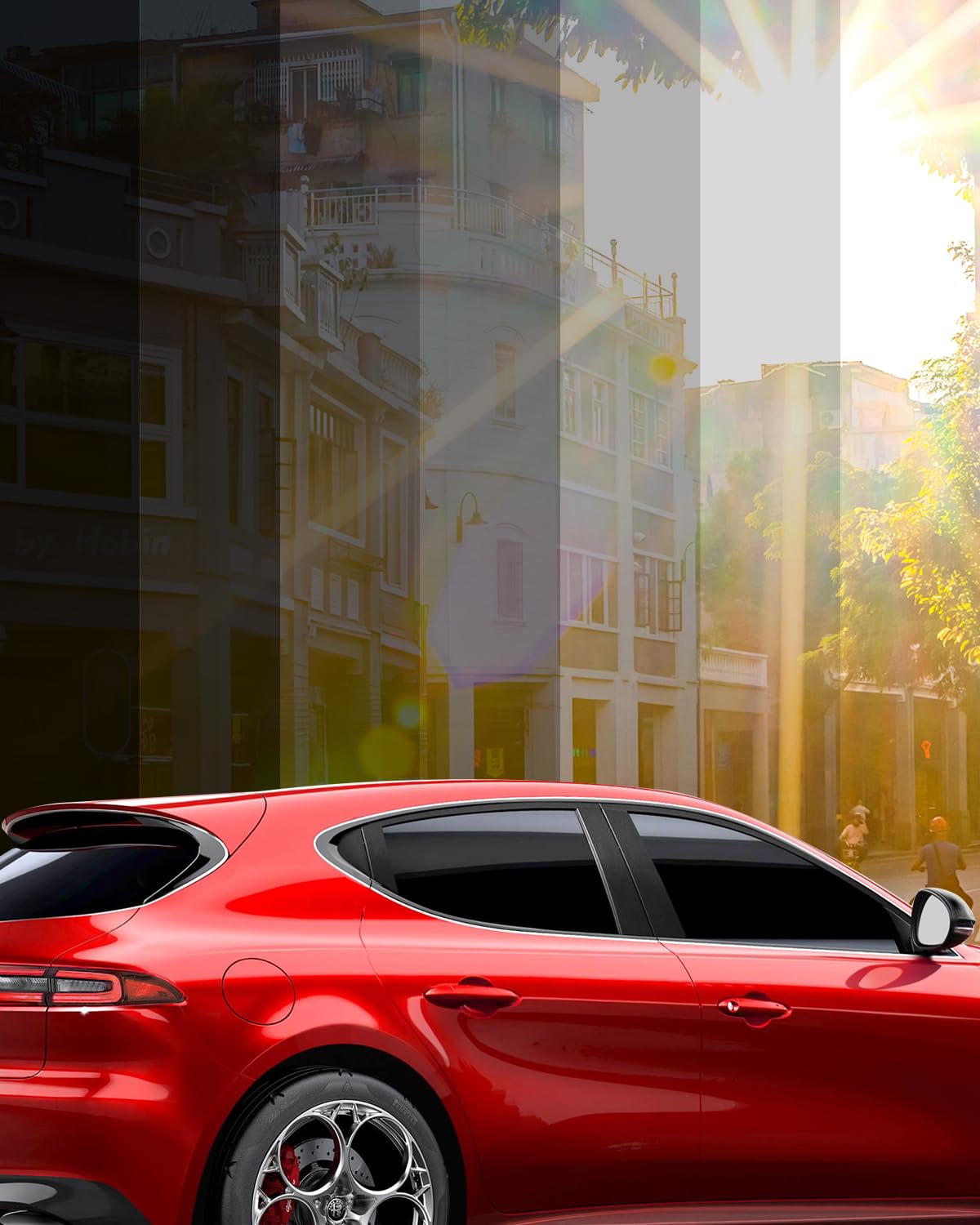
The IAQWE 35% VLT roll offers 100 feet of ceramic film in a single package, making it the most economical option for owners who plan to tint multiple vehicles or large architectural glass alongside their car. The 5-layer PET construction includes a scratch-resistant top coat and a bubble-free adhesive that experienced tinters compare favorably with premium name-brand rolls costing significantly more. The 35% VLT strikes a balance between privacy and nighttime visibility that aligns with legal limits in many jurisdictions for rear windows, though front windshield use would require a lighter shade.
Owner reviews from users with 20+ years of tinting experience note that the adhesive is slightly less aggressive than high-end commercial films, which means edge lifting can occur if the glass is not scrupulously clean or if the film is not burnished thoroughly during installation. The heat-shrink capability works well for moderate curves, but the film’s thickness makes tight-radius rear windows a challenge. On flat or gently curved front windshields, however, installation is straightforward with proper technique.
The 24-inch width is standard for automotive side windows but may require a second piece or careful positioning for a full front windshield on larger trucks and SUVs. IAQWE provides 24/7 customer support, and the film carries a satisfaction guarantee that several owners have successfully used for replacement after installation errors. For buyers who need bulk ceramic film without paying premium-per-foot pricing, this roll delivers the best overall value.
What works
- Extremely low per-square-foot cost for ceramic construction
- Scratch-resistant top coat maintains gloss over time
- Bubble-free adhesive simplifies flat-glass installation
What doesn’t
- Adhesive strength is lower than premium commercial films
- 24-inch width may not cover wide windshields in one piece
4. Gila Heat Shield Elite 20% VLT Ceramic

Gila is one of the most recognized names in the DIY automotive tint space, and the Heat Shield Elite line represents their move into ceramic-infused film at a price point that undercuts most competitors. The 20% VLT variant blocks 80% of visible light, making it suitable for rear and side windows while remaining too dark for legal front windshield use in most areas—though the same film is available in higher VLT options. The deep-dye technology extends through the full thickness of the PET layer, preventing the purple discoloration that plagues budget dyed films after prolonged sun exposure.
Owner reviews highlight the film’s clarity and the immediate heat reduction inside the cabin after installation. Multiple users report a noticeable temperature drop within minutes of parking in direct sunlight, and the 51% heat rejection figure—while lower than premium nano-ceramic films—is respectable given the price. The scratch-resistant coating holds up well against repeated window operation and cleaning, and the included application guide is clear enough for a first-time installer to follow without prior experience.
The 2-foot by 6.5-foot size limits coverage to two side windows or a single small windshield strip, so buyers should measure carefully before purchasing. Some users received rolls with cosmetic defects such as creases or dents from packaging, and quality control appears inconsistent. The film’s heat-shrink performance on curved glass is mediocre—several owners reported that it wrinkled and lifted when they attempted to mold it around compound curves. For flat front windshield applications, however, it offers a reliable entry into ceramic protection.
What works
- Affordable ceramic film from a trusted aftermarket brand
- Deep-dye construction prevents purple fading over time
- Clear installation instructions suitable for beginners
What doesn’t
- Not designed for tight-radius curved glass applications
- Occasional quality control issues with roll condition
5. United Universal Dyed 35% VLT 40x100ft Roll
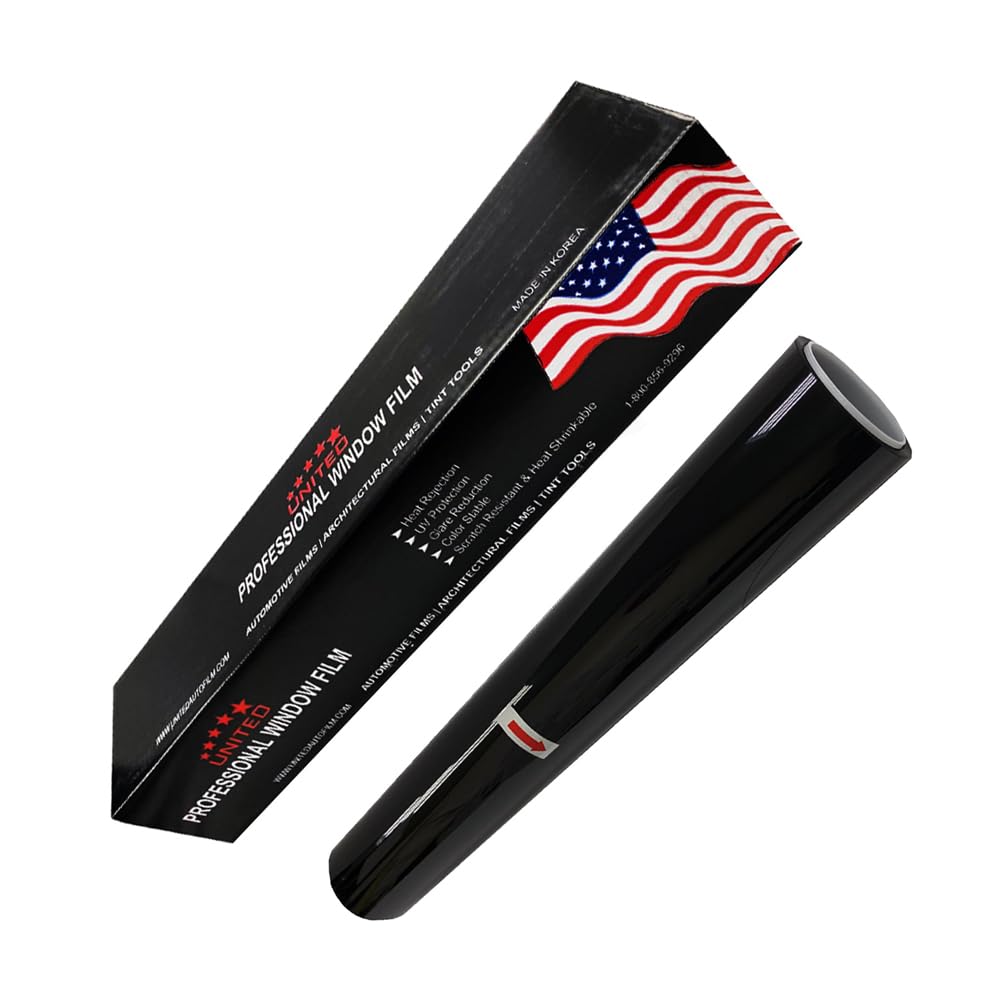
The United Universal 35% VLT roll is a dyed PET film that prioritizes coverage area and cost efficiency over advanced ceramic heat rejection. At 40 inches wide and 100 feet long, it is the largest single roll on this list and can cover multiple vehicles, home windows, or a complete fleet in one purchase. The 1-mil glue-dyed construction achieves a deep black finish that provides strong privacy and a uniform appearance, and the film shrinks predictably when heated, making it workable for curved glass surfaces.
Owner feedback from Arizona residents highlights the film’s effectiveness at reducing solar heat transfer through residential windows, with several users noting that interior temperatures became noticeably easier to control after application. The 99% UV blockage claim is consistent with dyed PET films at this thickness, though the IR rejection is inherently lower than ceramic alternatives. Die-hard DIY tinters appreciate the roll’s forgiveness during installation—it is less prone to creasing than ceramic films and adheres well even on slightly imperfect glass surfaces.
The dyed construction means this film will eventually show color degradation faster than a ceramic counterpart, particularly in high-UV climates. Some users report that the adhesive can leave residue if removed after extended exposure, and the 35% VLT is typically too dark for legal front windshield use in most jurisdictions. For buyers who need to cover large areas of non-windshield glass at the lowest possible cost, this roll provides excellent dollar-per-square-foot value.
What works
- Massive 40x100ft coverage area at a low per-foot cost
- Easy heat shrinking with predictable adhesion on curves
- Deep, uniform black finish enhances privacy
What doesn’t
- Dyed PET will fade and discolor faster than ceramic films
- Adhesive may leave residue on glass during removal
6. KORKIE 70% VLT Nano Ceramic Film

The KORKIE 70% VLT film is designed specifically for drivers who want maximum heat and UV protection without changing the appearance of their glass. At 70% visible light transmission, it is nearly clear and meets front windshield legal requirements in virtually all jurisdictions while still blocking 99% of UV rays and 85% of infrared radiation. The nano-ceramic construction contains no metal components, so it will not interfere with GPS navigation, satellite radio, or cellular signals—a critical consideration for modern vehicles with integrated antennas.
Owner reviews frequently comment on the clarity of the film once installed. Several users with 2016–2020 Toyota Tacomas and similar trucks reported that the tint blended seamlessly with factory glass and provided a measurable reduction in interior surface temperature during summer months. The 24-inch by 15-foot roll provides enough material for a full windshield plus two side windows on most passenger cars. The peel-and-stick installation process is straightforward for flat or gently curved glass, though the film’s thickness requires careful squeegeeing to eliminate all slip solution.
Some owners have raised concerns about consistency between rolls. One detailed review measured the 35% variant and found it performed close to spec, while others reported haze or slight blur when viewed from certain angles. The manufacturer has been responsive to warranty claims, but the mixed quality control means that buyers should inspect the roll immediately upon delivery. For front windshield applications where optical clarity is the top priority, this film delivers strong performance in a compliant VLT range.
What works
- Near-clear appearance complies with front windshield laws
- 85% IR rejection approaches premium film performance
- Metal-free construction preserves GPS and cell signal strength
What doesn’t
- Inconsistent clarity reported across different production batches
- Thicker film requires careful technique to avoid haze
7. PAMAGOO 70% VLT Ceramic Roll (24x15ft)

The PAMAGOO 70% VLT ceramic roll is marketed directly at first-time DIY installers, and its formulation reflects that focus. The film features a nano-ceramic coating that blocks 85% of UV rays and 73% of infrared radiation, and the scratch-resistant top layer provides meaningful protection against tool marks and fingernail pressure during the sliding and positioning phase of installation. The peel-and-stick adhesive is designed to allow multiple repositioning attempts before permanent bonding, which reduces waste for inexperienced users.
Owner reviews from beginners highlight the clarity of the manufacturer’s video instructions and the responsiveness of customer support when questions arise during installation. Several users applied the film to home windows and garage glass with excellent results, noting that the one-way privacy effect works well during daylight hours. The 24-inch by 15-foot roll provides enough material for a full windshield on most compact to midsize vehicles, and the film’s flexibility allows it to conform to moderate compound curves without lifting.
The 73% IR rejection is lower than top-tier nano-ceramic films (which typically exceed 85%), so drivers in extreme desert climates may notice less cabin cooling than premium alternatives deliver. Some users report that corners and edges require extra burnishing to achieve full adhesion, particularly on glass with heavy aftermarket defroster lines. For DIY-oriented owners who want a ceramic film that is forgiving to install and compliant with front windshield VLT regulations, this is a solid entry-level choice.
What works
- Installation-friendly adhesive allows repositioning during application
- Scratch-resistant coating protects against handling marks
- Detailed video guide and responsive customer support
What doesn’t
- IR rejection (73%) is below premium ceramic film standards
- Edges may lift without thorough burnishing on textured glass
Hardware & Specs Guide
Visible Light Transmission
VLT determines how much light passes through the film. A 70% VLT film is nearly clear and meets front windshield legal standards in most states, while 35% VLT provides increased privacy and is typically restricted to rear and side windows. Choosing a VLT below legal limits for your jurisdiction can result in fines, failed inspections, and mandatory removal.
Infrared Rejection
IRR measures the film’s ability to block the infrared portion of sunlight, which is responsible for the majority of heat buildup inside the cabin. Premium nano-ceramic films achieve 85–99% IRR, while entry-level ceramic films typically range from 50–73%. Dyed PET films often do not publish IRR figures because their heat-blocking performance is significantly lower.
Ultraviolet Protection
Nearly all modern window films block at least 99% of UV rays, which prevents dashboard fading, leather cracking, and skin damage during long drives. This spec is largely a baseline expectation rather than a differentiator—any film that does not achieve 99% UV blockage should be avoided regardless of price.
Film Construction Layers
Multi-layer PET films with scratch-resistant coatings and bubble-free adhesives provide the best long-term durability. Dyed films use a single PET layer with a color additive that degrades over time, while ceramic and nano-ceramic films embed nanoparticles in the adhesive layer for permanent IR and UV rejection without color shift.
FAQ
What VLT is legal for front windshields?
Can you install tint on a front windshield yourself?
Does ceramic tint interfere with GPS or phone signals?
How long does automotive window tint last?
Will front windshield tint reduce heat significantly?
Final Thoughts: The Verdict
For most buyers, the best tint for front windshield winner is the MotoShield Pro Nano Ceramic Precut because it eliminates the most common DIY failure point—trimming—and delivers maximum IR and UV rejection in a precut form factor backed by a lifetime warranty. If you want a nearly invisible film that still rejects significant heat, grab the BDF NSN70 Clear Film. And for bulk coverage of multiple vehicles or home windows at the lowest cost, nothing beats the United Universal Dyed Roll.

Certification: BSc in Mechanical Engineering
Education: Mechanical engineer
Lives In: 539 W Commerce St, Dallas, TX 75208, USA
Md Amir is an auto mechanic student and writer with over half a decade of experience in the automotive field. He has worked with top automotive brands such as Lexus, Quantum, and also owns two automotive blogs autocarneed.com and taxiwiz.com.