A spray sealant promises garage‑grade gloss without the elbow grease, but the shelf is crowded with SiO2 blends, polymer hybrids, and touchless formulas that each demand a different technique. Choosing wrong means wasting time on a finish that fades in weeks or streaks under sun. The right pick locks in months of beading with a single pass.
I’m Amir — the founder and writer behind Four Wheel Ask. I spend my time breaking down chemical formulations, comparing application methods, and cross‑referencing real owner feedback to separate marketing claims from genuine performance.
After weeks of analyzing formulations and owner feedback, I have identified the best spray sealant for cars across every budget and application style.
How To Choose The Best Spray Sealant For Cars
Not all spray sealants behave the same on paint. Some rely on silica nanoparticles to form a glass‑like layer, while others use cross‑linked polymers that bond at a molecular level. The right choice depends on your paint condition, your willingness to prep, and how long you want the protection to last. Below are the three factors that matter most.
SiO2 vs. Polymer Chemistry
SiO2 (silicon dioxide) sealants deposit a ceramic layer that creates extreme water beading and a hard, glossy finish. They typically last two to six months and work best on clean, bare paint or as a topper on existing ceramic coatings. Polymer‑based sealants use synthetic resins that bond more flexibly and can be layered without risk of high‑spotting. They tend to be more forgiving during application but may not match the sheer hardness of a pure silica formula.
Application Method: Wipe‑Off vs. Rinse‑Off
Traditional spray sealants require a two‑step process: spray onto the surface, then wipe off with a microfiber towel before the product flashes. Rinse‑off formulas — like the touchless silica sealants — are sprayed onto a wet car and then rinsed with water, relying on a chemical reaction with water to bond. Wipe‑off products give you more control over even coverage, while rinse‑off options drastically cut labor time but demand careful rinsing technique to avoid streaking.
Durability and Maintenance Windows
Most spray sealants advertise durability between one and six months, but real‑world longevity depends on climate, wash frequency, and whether the sealant is used as a standalone product or a booster. Budget‑friendly options often need reapplication every four to six weeks, while premium SiO2 blends can hold up through a full season. If you want maximum longevity, look for products explicitly rated for daily‑driver use rather than show‑car detailing.
Quick Comparison
On smaller screens, swipe sideways to see the full table.
| Model | Category | Best For | Key Spec | Amazon |
|---|---|---|---|---|
| CARPRO Reload 2.0 | SiO2 Ceramic Spray | Premium standalone sealant or coating topper | Up to 3 months durability, spray‑on/wipe‑off | Amazon |
| Optimum Opti-Seal | Polymer Paint Sealant | Streak‑free shine on paint, trim, and upholstery | Cross‑linked polymers, spray‑on/wipe‑off | Amazon |
| XPEL Ceramic Boost | SiO2 Detailer Spray | Reinforcing paint protection film and ceramic coatings | Hydrophobic SiO2 formula, spray‑on/wipe‑off | Amazon |
| CARPRO HydrO2 Lite | Touchless Silica Sealant | Fast spray‑on/rinse‑off protection for the whole exterior | Ready‑to‑use, spray‑on/rinse‑off, UV protection | Amazon |
| SONAX Ceramic Spray Coating | Si‑Carbon Ceramic Spray | Entry‑level ceramic protection with up to 6 months life | Si‑Carbon technology, spray‑on/wipe‑off | Amazon |
In‑Depth Reviews
1. CARPRO Reload 2.0 Spray Sealant
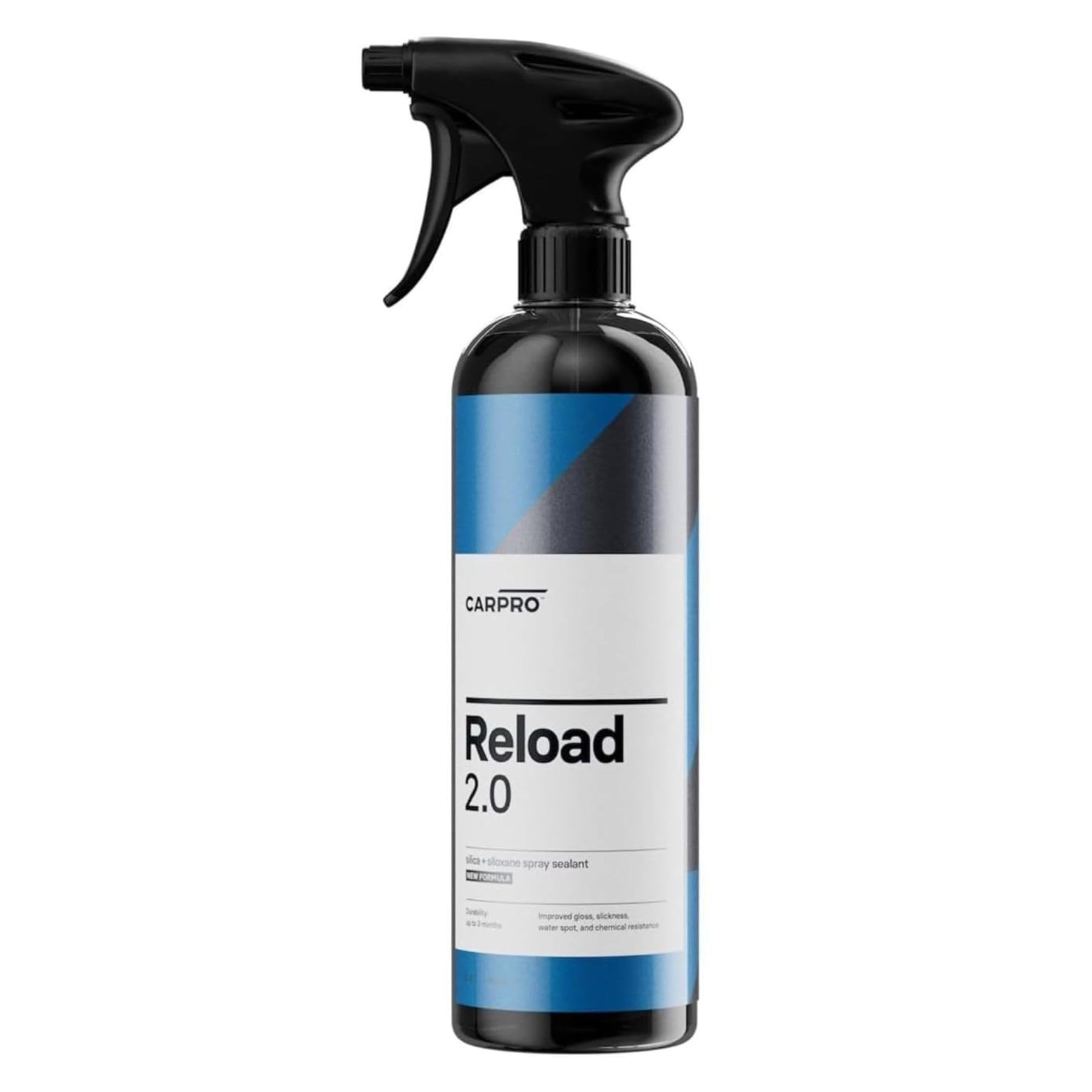
CARPRO Reload 2.0 builds on the reputation of the original by packing modified SiO2 nanoparticles with siloxane polymers to deliver a slick, super‑hydrophobic surface that actively repels water and grime. The formulation is water‑based and designed to bond to clean paint without the oily residue that can attract dust. Owner reports consistently praise the gloss depth and the way the sealant makes subsequent washes noticeably faster, with dirt sliding off under a hose stream.
What sets Reload 2.0 apart is its versatility: it works as a standalone sealant for daily drivers — delivering roughly three months of protection — or as a sacrificial topper on existing ceramic coatings like CQUARTZ. The spray‑on, wipe‑off application is straightforward, though the paint must be completely free of old wax, oils, or solvents to avoid bonding issues. Users who apply it on a properly prepped surface describe a glassy finish that rivals dedicated coatings at a fraction of the labor.
The product also handles rubber and plastic trim without staining, a common weak point among aggressive silica sprays. Some owners note that the bottle lacks a dilution guide for those who prefer to use it as a drying aid, but the ready‑to‑use strength is well calibrated for direct application. For a balance of gloss, durability, and compatibility with other coatings, Reload 2.0 earns the top spot.
What works
- Exceptional gloss and water beading straight from application
- Safe on trim and rubber without causing white residue
- Functions as both standalone sealant and coating topper
What doesn’t
- Requires a fully clean, wax‑free surface to bond correctly
- No dilution markings for users who want a lighter spray
2. Optimum Opti-Seal Polymer Paint Sealant Spray

Optimum Opti-Seal takes a different chemical approach than the silica‑heavy competition, relying on a blend of cross‑linked synthetic polymers to create a protective barrier that locks out dirt, moisture, oil, and UV rays. The polymer structure is inherently more flexible than a rigid SiO2 layer, which means it tolerates temperature swings and minor paint flex without micro‑cracking. Owner feedback across detailing forums highlights its streak‑free, cloud‑free finish even when applied in less‑than‑ideal humidity conditions.
The application is refreshingly simple: spray directly onto the included foam applicator pad, spread evenly over the paint, and walk away — no buffing, no waiting for haze. This makes Opti-Seal a strong candidate for owners who want a protective layer without the anxiety of flashing or high‑spotting that can plague ceramic sprays. The formula is also safe on trim, wheels, and even interior upholstery, broadening its utility beyond just paint protection.
Durability lands in the four‑to‑six week range on a daily driver, which is shorter than the best SiO2 options, but the ease of reapplication offsets the frequency for many users. Some owners report that stacking multiple layers builds a noticeably deeper gloss, though the manufacturer recommends a single thin coat. If you value application simplicity and a forgiving window over raw longevity, Opti-Seal delivers a polished result every time.
What works
- Zero buffing required — truly spray and walk away
- Works on paint, trim, wheels, and interior surfaces
- Streak‑free finish even in high humidity
What doesn’t
- Durability is shorter than SiO2‑based competitors
- 8 oz bottle covers fewer applications than larger spray sealants
3. XPEL Ceramic Boost Spray Coating
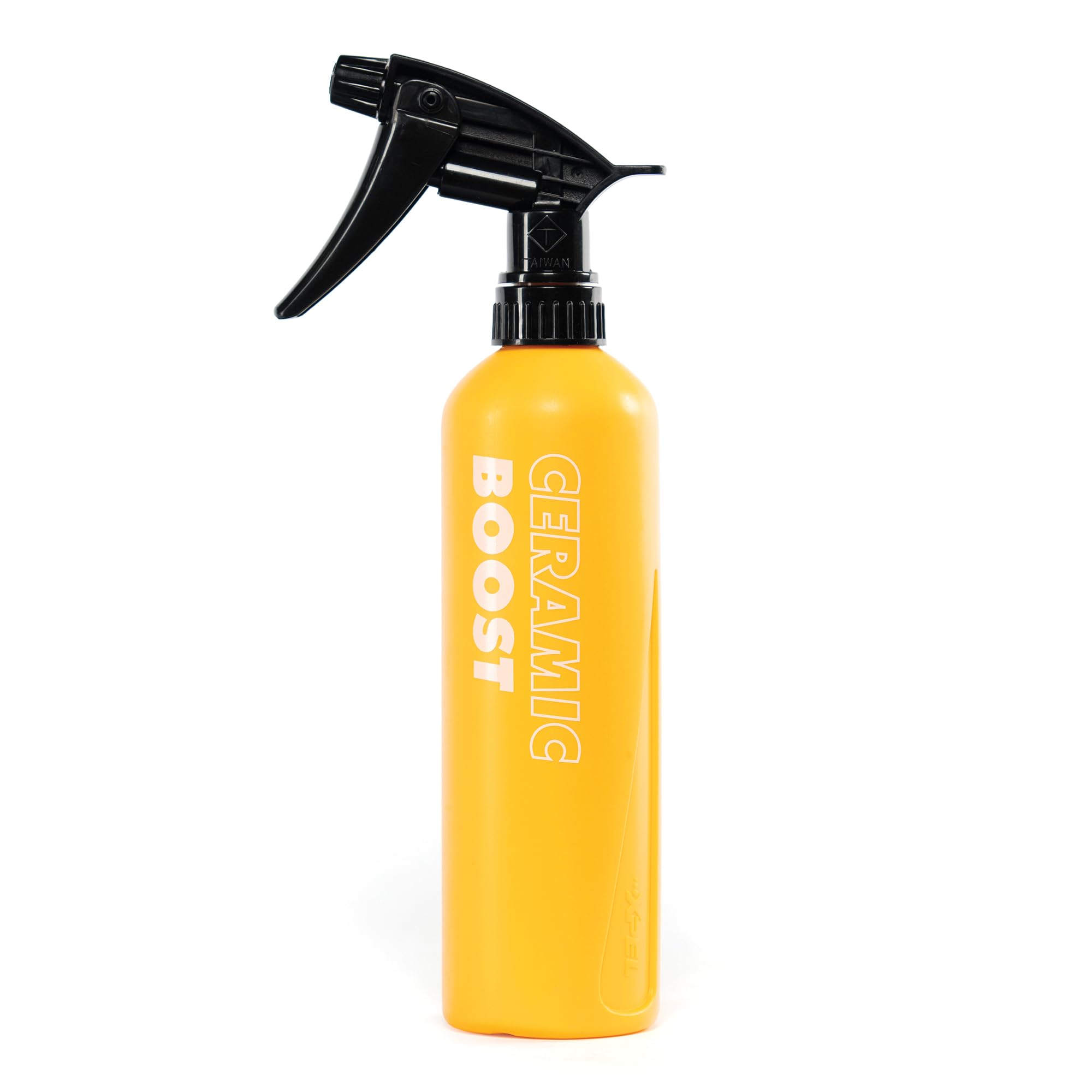
XPEL Ceramic Boost positions itself as a maintenance spray designed to reinforce existing paint protection film and ceramic coatings, but it works capably as a standalone SiO2 detailer as well. The silicon dioxide formula deposits a micro‑thin layer that beads water aggressively and resists dust, lint, and light debris. Enthusiasts who already run XPEL Fusion Plus or other XPEL films find this spray integrates seamlessly to extend the life of the underlying protection.
Application follows the standard spray‑on, wipe‑off routine, and the product is notably forgiving on drying time — users report it doesn’t flash as quickly as some concentrated ceramic sprays, giving beginners more room to work panel by panel. The hydrophobic effect is immediate, with water sheeting off at low angles during the first wash. Owners of daily drivers mention that the coating holds up for roughly four to six weeks before a noticeable drop in beading, which aligns with the booster‑style positioning.
Where XPEL Ceramic Boost truly shines is compatibility: it is formulated specifically to bond with XPEL’s film and coating ecosystem, but it also performs well on bare paint, clear coat, and even RV gel coat finishes. Some users note that the bottle lacks a measuring guide for dilution, so applying it full‑strength as packaged is the safest route. For anyone invested in XPEL protection or seeking a reliable SiO2 detailer at a reasonable per‑application cost, this spray represents solid value.
What works
- Excellent compatibility with paint protection film and ceramic coatings
- Forgiving flash time suits beginner applicators
- Immediate hydrophobic beading from first wipe
What doesn’t
- Durability is on the shorter side compared to dedicated sealants
- No dilution markings for custom strength adjustments
4. CARPRO HydrO2 Lite Touchless Silica Sealant

CARPRO HydrO2 Lite reimagines paint sealant application by eliminating the wipe‑off step entirely. The ready‑to‑use silica formula is sprayed onto a clean, wet vehicle, then rinsed off with water — the chemical reaction with moisture converts the surface from hydrophilic to hydrophobic in seconds. This touchless approach is a game‑changer for owners who dread buffing or who want to protect areas that are difficult to reach with a towel, such as wheel wells, undercarriages, door jambs, and between body seals.
The 1‑liter bottle with an included sprayer covers multiple full‑size vehicles, and the application speed is dramatically faster than any wipe‑off sealant. Enthusiasts report that a complete SUV can be sealed in under fifteen minutes, including the rinse step. The hydrophobic layer is visually striking — water forms tight, tall beads that roll off at the slightest incline. Durability is shorter than a traditional wipe‑off ceramic spray, typically landing around three to five weeks on a daily driver exposed to sun and rain.
Because the product activates on contact with water, the technique demands attention: spraying too heavily or failing to rinse thoroughly can leave silica residue in crevices. Users also note that the bottle’s production date is printed in day/month/year format, which is worth checking to ensure you receive a fresh batch. For speed and access to hard‑to‑reach surfaces, HydrO2 Lite has no direct competitor in the spray‑on/rinse‑off category.
What works
- No wiping or buffing required — rinse and done
- Reaches tight spots like wheel wells and door jambs
- Dramatically reduces application time versus traditional sealants
What doesn’t
- Shorter durability window than wipe‑off SiO2 sprays
- Improper rinsing can leave silica spots in seams
5. SONAX Ceramic Spray Coating 257400
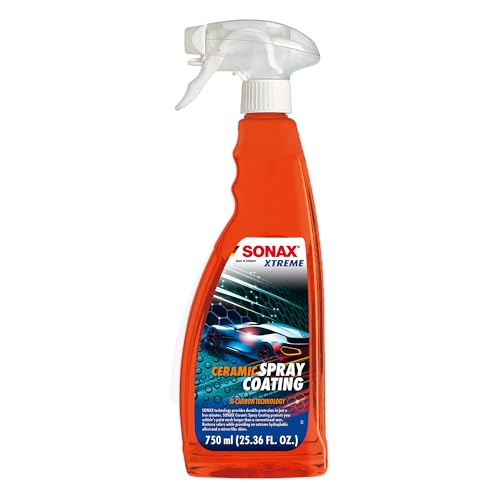
SONAX brings a unique Si‑Carbon chemistry to the budget segment, combining a durable carbon‑based bonding layer with a silicone top coat that mimics the look and feel of a freshly waxed surface. The 750‑ml bottle is generous for the price point, giving multiple full‑car applications without running dry. Owner reports consistently note the slick, mirror‑like finish straight after application, with water beading that rivals products costing significantly more.
The manufacturer claims up to six months of protection, and real‑world feedback from moderate climates supports that window for garage‑kept vehicles. The spray‑on, wipe‑off process is standard, but the formula is notably streak‑free when applied in thin layers — a forgiving trait for first‑time ceramic users. SONAX also markets this coating as a rejuvenator for existing ceramic coatings, meaning it can extend the life of a more expensive base layer without requiring a full strip and reapplication.
Where the SONAX spray shows its budget positioning is in extreme conditions: owners in hot, sunny regions report that durability drops to around three months, and the hydrophobic effect fades sooner than premium competitors. The bottle also lacks a sprayer, so you will need to supply your own or transfer the liquid into a separate spray bottle. For entry‑level ceramic protection at a very accessible cost, this is a solid starting point that delivers impressive gloss per dollar.
What works
- Generous 750‑ml bottle offers strong per‑application value
- Si‑Carbon technology provides a slick, wax‑like feel
- Can be used as a refresher for existing ceramic coatings
What doesn’t
- No sprayer included — requires a separate bottle
- Durability shortens noticeably in hot or direct‑sun climates
Hardware & Specs Guide
SiO2 Ceramic Technology
Silicon dioxide sprays deposit a thin, glass‑like layer that cross‑links as it cures. These formulas produce the sharpest water beading and the hardest surface resistance to light abrasion. Durability ranges from two to six months depending on concentration and prep quality. SiO2 sealants demand a completely clean, wax‑free surface — any residual oils or old wax will prevent the ceramic from bonding, leading to patchy performance and premature failure.
Polymer Paint Sealants
Polymer‑based sealants use synthetic resins that form a flexible, protective barrier without the rigidity of SiO2. They are more forgiving during application, tolerate a wider range of temperatures, and can be layered without risk of high‑spotting. The trade‑off is generally shorter longevity — four to six weeks on a daily driver — but the ease of reapplication and compatibility with multiple surfaces (paint, trim, wheels, interior) makes them a versatile option for owners who prefer simplicity.
Hydrophobic Performance
Hydrophobicity refers to how effectively a sealant repels water, measured by the contact angle of water droplets. Spray sealants with high SiO2 content generate contact angles above 110 degrees, producing tight, tall beads that roll off at low vehicle speeds. Lower‑concentration sprays or polymer blends produce flatter beads that sheet off more slowly. Beading is a visual indicator of protection but does not always correlate directly with durability against UV or chemical fallout.
Application Method Comparison
Spray‑on, wipe‑off sealants give the user full control over coverage and film thickness, but they require a clean microfiber towel and careful panel‑by‑panel work to avoid streaks. Spray‑on, rinse‑off sealants trade that control for speed — the product bonds chemically upon water contact and requires no physical wiping. Rinse‑off options are faster but demand a thorough final rinse to prevent silica deposits in crevices, and they typically offer shorter protection windows than wipe‑off alternatives.
FAQ
Can I apply a spray sealant over existing wax or ceramic coating?
How often should I reapply a spray sealant on a daily driver?
Can I use a spray sealant on matte paint or satin finishes?
Final Thoughts: The Verdict
For most buyers, the best spray sealant for cars winner is the CARPRO Reload 2.0 because it delivers the highest combination of gloss, water‑repellency, and three‑month durability in a spray‑on, wipe‑off format that works as both a standalone sealant and a coating topper. If you want a forgiving, no‑buff polymer formula that protects multiple surfaces, grab the Optimum Opti-Seal. And for the fastest possible application — spray on, rinse off, and walk away — nothing beats the CARPRO HydrO2 Lite.

Certification: BSc in Mechanical Engineering
Education: Mechanical engineer
Lives In: 539 W Commerce St, Dallas, TX 75208, USA
Md Amir is an auto mechanic student and writer with over half a decade of experience in the automotive field. He has worked with top automotive brands such as Lexus, Quantum, and also owns two automotive blogs autocarneed.com and taxiwiz.com.