Tree sap is one of the most aggressive contaminants your paint will ever face. Within hours of baking under the sun, it begins etching into clear coat, leaving permanent stains that no basic car wash can touch. The wrong remover can dull the finish or leave behind micro-marring that requires compounding to correct.
I’m Amir — the founder and writer behind Four Wheel Ask. My research involves cross-referencing chemical formulations, owner-reported outcomes across thousands of reviews, and long-term surface protection data to find what actually works without risking your paint.
This guide breaks down the formulas that dissolve sap without collateral damage. After analyzing owner reports and chemical specs, we found the most effective formulas for protecting your finish with the best sap remover for cars.
How To Choose The Best Sap Remover For Cars
Not all sap removers share the same chemistry, and using the wrong one can turn a minor cleaning job into a respray. Understanding how different formulations interact with cured paint and aged sap is the only way to avoid damage while still dissolving the contaminant completely. Focus on three factors before buying.
Solvent Strength vs. Paint Safety
Strong solvents like xylene and toluene dissolve sap rapidly, but they can also soften or dull clear coat if left on too long. Weaker solvents such as d-limonene (citrus extract) take longer to break down hardened sap but pose far less risk to the underlying finish. Look for products that balance dwell time against solvent aggression — a remover that needs thirty seconds of contact is far safer than one that works in five seconds but strips wax and etches clear coat.
Surface Compatibility Beyond Paint
Sap often drips onto rubber trim, plastic cladding, window seals, and glass in addition to painted panels. A single-formulation product must be safe across all those surfaces without causing discoloration, swelling, or fogging. Check the label for specific surface recommendations. Products safe on clear coat may still damage uncoated plastic or cause rubber to become brittle over repeated use.
Application Method and Residue Behavior
Aerosol sprays provide controlled application and prevent over-saturation, but they can create overspray that lands on unintended areas. Liquid bottles with sprayers give more coverage but require careful management of runoff. The best products leave a residue that wipes clean without requiring a secondary solvent pass — anything that leaves a slick film will attract new contaminants and may interfere with wax or sealant adhesion.
Quick Comparison
On smaller screens, swipe sideways to see the full table.
| Model | Category | Best For | Key Spec | Amazon |
|---|---|---|---|---|
| CARPRO TarX | Premium Remover | Tough sap & tar on clear coat | 34 oz w/ sprayer | Amazon |
| Adam’s Tar 9oz | Solvent Remover | Badge removal & road tar | 9 oz aerosol | Amazon |
| Gyeon Tar Remover | Premium Remover | Coating-safe decontamination | 16.9 oz aerosol | Amazon |
| Nanoskin Sap Remover | Sap Remover | Dried, sun-hardened tree sap | 32 oz liquid | Amazon |
| McKee’s 37 Road Kill | Concentrate | Heavy bug and tar buildup | 22 oz concentrate | Amazon |
| CARPRO Eraser | Panel Prep | Pre-ceramic coating prep | 17 oz w/ sprayer | Amazon |
| 3M Adhesive Remover | Adhesive Remover | Sticker & tape residue | 12 oz aerosol | Amazon |
| Adam’s Bug Remover | Bug & Tar | Gentle daily bug removal | 16 oz liquid | Amazon |
| Rust-Oleum Wax & Tar | Wax & Tar | Paint prep before waxing | 32 oz liquid | Amazon |
| Custom Shop KW901 Qt | Prep Cleaner | Pre-paint surface prep | 32 oz liquid | Amazon |
| Custom Shop KW901 Gal | Prep Cleaner | High-volume shop prep | 128 oz liquid | Amazon |
In‑Depth Reviews
1. CARPRO TarX Tar & Adhesive Remover

CARPRO TarX derives its strength from solvents extracted from orange peels, avoiding the harsh chlorinated chemistry found in many industrial-grade removers. The formulation targets the polar bonds in sap and tar, breaking them down on contact while remaining safe on cured clear coat, ceramic coatings, and plastic trim. Owners report that even aged adhesive residue from clear bra removal dissolves into a liquid state within minutes, requiring no scraping.
The included sprayer delivers a fine mist that allows controlled coverage without waste, and the 34-ounce bottle provides enough volume for multiple full-vehicle decontamination sessions. The natural citrus scent is preferable to the harsh chemical odor of solvent-based alternatives, though the spray nozzle can leak if the bottle is stored on its side. Users note that heavy tar accumulations may require a second application rather than aggressive scrubbing.
Dwell time is critical — the formula works best when allowed to sit for one to two minutes before wiping with a microfiber. It also functions as an effective degreaser for wheels and engine bay plastics, adding versatility beyond simple sap removal. This is the choice for detailers who want a single product that handles multiple contaminant types without compromising surface safety.
What works
- Dissolves adhesive residue without scraping or paint damage
- Natural orange peel extract avoids harsh chlorinated solvents
- Safe on ceramic coatings and clear coat finishes
What doesn’t
- Spray nozzle leaks if stored horizontally
- Heavy tar requires multiple applications
- Rotten egg smell noted by some users
2. Adam’s Polishes Tar & Adhesive Remover 9oz

Adam’s Tar uses a solvent-based blend fortified with natural citrus oils and alcohols to tackle the most stubborn road tar, adhesive residue, and baked-on tree sap. The aerosol format provides precise application — critical when working around trim and emblems where overspray could cause issues. Owners have successfully removed years-old sap deposits from windshields and paint after brief dwell times, with one user reporting a multi-hour adhesive removal job reduced to forty minutes.
The formula is safe on all clear coats, painted surfaces, and chrome, making it suitable for both paint correction prep and badge deletion projects. It also handles rubber streaks from track driving and sticky residue from wheel weights. The 9-ounce can is compact and easy to store, though heavy users will find it runs out quickly when tackling large areas or multiple vehicles in a single session.
Application requires spraying onto a microfiber cloth rather than directly onto the surface to control the solvent spread, followed by a soap-and-water wash to remove any residual oil. Some users report that very large tar blobs need manual assistance to fully break apart, but overall owner feedback heavily favors the speed and effectiveness of the formula over weaker citrus-only alternatives.
What works
- Rapidly dissolves aged tree sap and adhesive residue
- Aerosol can allows controlled, pinpoint application
- Safe on clear coat, chrome, and painted trim
What doesn’t
- Small 9-ounce can limited for large jobs
- Heavy tar blobs need manual assistance or second pass
- Solvent odor requires good ventilation
3. Gyeon Tar Remover

Gyeon’s tar remover is engineered specifically to be safe on ceramic coatings and waxes, a critical distinction for owners who have invested in paint protection. The pH-neutral formula dissolves sap, pine resin, adhesive, and road tar without stripping the underlying protection layer, making it suitable for maintenance washes between coating applications. Owners report that heavy tar from fresh asphalt melts away instantly on contact with no paint damage.
The 16.9-ounce aerosol can delivers a wide spray pattern that covers panels efficiently, though the can size is smaller than some competitors at a similar price point. Users recommend applying to cool surfaces out of direct sunlight to prevent premature drying, which can leave streaky residue. The unscented formula is less offensive than solvent-heavy alternatives but still carries a chemical profile that demands ventilation.
One isolated report of paint damage on side skirts after a thirty-second dwell highlights the importance of following the rinse-after-use instructions. Most owner experiences are overwhelmingly positive, with the product outperforming home remedies like WD-40 and household degreasers. For coated vehicles, this is the safest option that still delivers professional-grade dissolving power.
What works
- Safe on ceramic coatings and wax-based protection
- PH-neutral formula prevents chemical etching
- Dissolves fresh tar instantly on contact
What doesn’t
- Smaller can size at a premium price point
- Needs thorough rinse to avoid residue on trim
- Broken sprayer reported on some units
4. Nanoskin Tree Sap Remover 32 oz

Nanoskin’s dedicated sap remover uses an alcohol-based, non-abrasive formula that specifically targets the chemical structure of tree sap rather than relying on broad-spectrum solvent action. The 32-ounce bottle provides substantial volume for the price, and the biodegradable, non-toxic composition makes it one of the safer options for home users who prefer to avoid heavy chemical exposure. Owners report that sun-hardened sap deposits that resisted other removers softened and wiped away within seconds.
The product is safe on paint, clear coat, glass, plastic, and trim, reducing the risk of damage when sap has spread across multiple surface types. It also handles bug residue, tar, and pollen, though its primary strength is aged sap removal. Users recommend allowing a brief dwell time on cured deposits and washing the area afterward to prevent any film from drying on the surface.
One owner reported that the product was ineffective on their particular sap type, suggesting that formulation efficacy may vary depending on tree species and sap age. The majority of feedback, however, indicates strong performance on common sap deposits from maple, oak, and pine trees. The affordability and large bottle size make this a practical choice for owners who deal with seasonal sap drops rather than chronic contamination.
What works
- Targeted alcohol formula breaks down hardened sap quickly
- Biodegradable and non-toxic chemistry
- Large 32-ounce bottle offers strong value
What doesn’t
- Effectiveness varies by tree sap species and age
- Requires immediate washing to avoid dried film
- Not designed for heavy tar or adhesive removal
5. McKee’s 37 Road Kill Remover 22 oz

McKee’s 37 Road Kill is a concentrated formula designed to be diluted 1:1 with water, giving users control over cleaning strength based on the severity of the contamination. This makes it one of the more flexible options on the list — users can mix a stronger solution for baked-on tree sap or a milder blend for routine bug removal during weekly washes. Owner feedback highlights its ability to dissolve years-old bug residue that had become bonded to the clear coat.
The spray-on, dwell, and wipe-off process requires minimal physical effort, and the product works on paint, glass, chrome, plastic trim, and clear coats without discoloration. The pleasant scent is a notable improvement over the solvent-heavy odor of many competing products. Some users note that the price has risen significantly since launch, which impacts the overall value proposition despite the concentrated format offering more washes per bottle.
Application on cool surfaces yields the best results, and a plastic scraper or detailing brush may be needed for heavily encrusted areas. One owner reported respiratory irritation from the mist, recommending a respirator for those with sensitivity. The product earned its “As Seen on Speedvision” reputation through reliable performance on heavy buildups that standard car soaps cannot touch.
What works
- Concentrated formula allows strength adjustment per job
- Dissolves years-old baked-on bug and sap residue
- Pleasant scent compared to solvent-heavy alternatives
What doesn’t
- Price increase has reduced overall value
- Mist can irritate lungs without ventilation
- Heavy encrustations need physical agitation
6. CARPRO Eraser Polish & Oil Remover 17 oz

CARPRO Eraser is formulated primarily as a panel wipe for ceramic coating preparation, but its ability to dissolve polishing oils, filler residue, and light sap contamination makes it a dual-purpose tool in any detailer’s arsenal. The anti-static components prevent dust from re-settling on the surface after wiping, a feature that saves time during multi-stage paint correction. Owners using it as a final wipe before coating application report flawless bonding and zero contamination issues.
The formula contains no silicone, making it safe for body shop environments where silicone contamination can cause paint defects. It also works as a streak-free glass cleaner and a degreaser for tires and trim. The included spray nozzle produces a fine mist that conserves product, though users note that the 17-ounce bottle can be consumed quickly when doing a full vehicle prep, making the cost per use relatively high for frequent detailers.
Feedback from owners of ceramic-coated vehicles confirms that Eraser neutralizes pH and oils left behind by polishes, ensuring coatings adhere properly. One Tesla Model 3 owner reported a single bottle lasting a full year with regular use, indicating that the product’s efficiency depends on the size of the surface area being treated. For sap removal specifically, Eraser is best suited for fresh, light deposits rather than thick, dried blobs.
What works
- Anti-static formula prevents dust attraction after wiping
- Silicone-free chemistry safe for paint shops
- Versatile as glass cleaner, degreaser, and panel prep
What doesn’t
- Expensive per ounce for heavy use
- Best for fresh sap, not aged deposits
- Small bottle consumed quickly on full vehicles
7. 3M Adhesive Remover 12 oz
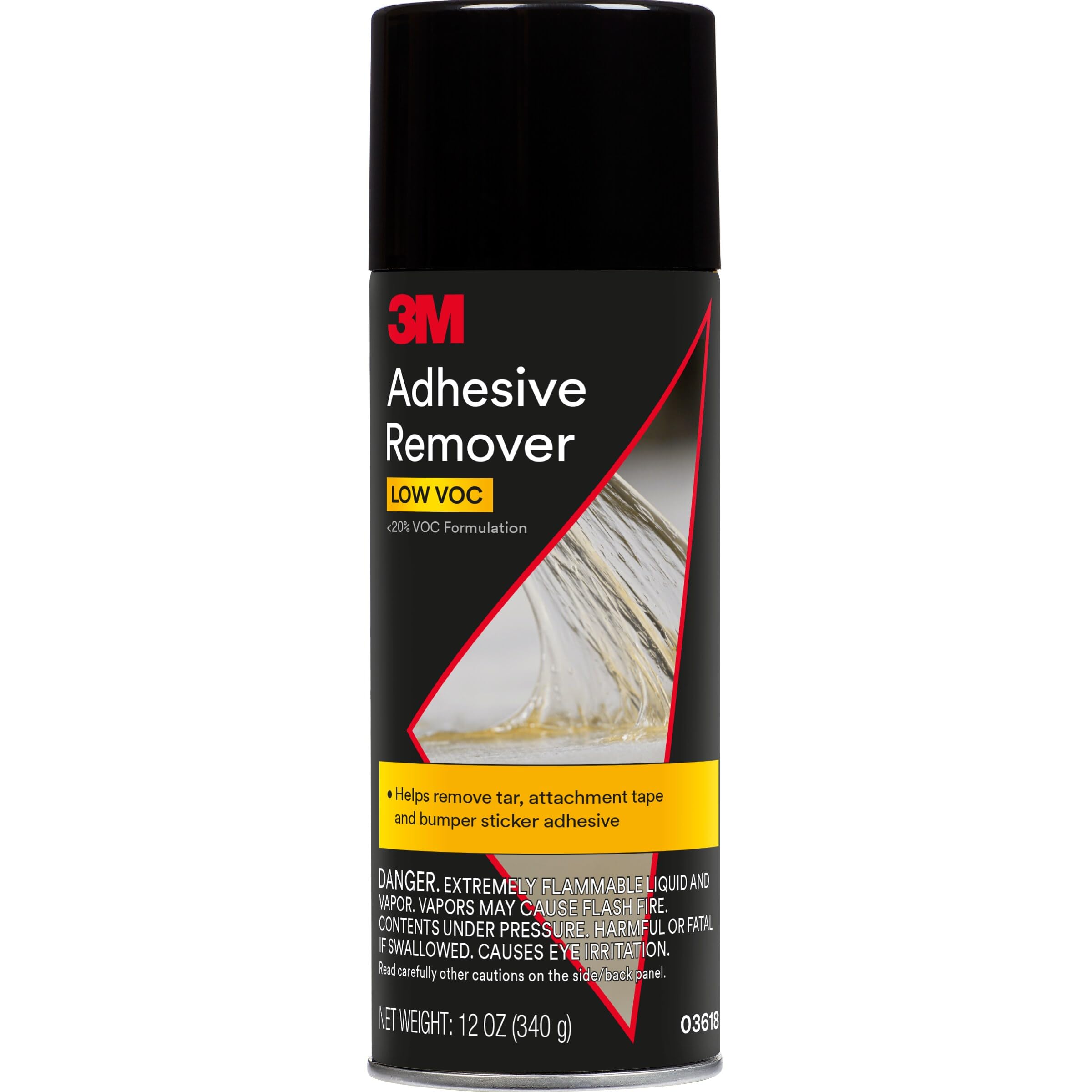
3M’s adhesive remover uses a blend of non-abrasive solvents that dissolve adhesive residue, tar, wax, and sap without harming cured automotive paint. The low-VOC formulation reduces the harsh chemical exposure associated with traditional adhesive removers, making it safer for use in enclosed garage spaces. Owners report that old tape residue that had been baked on for years wiped away after a three-minute soak with light scraping.
The 12-ounce aerosol can is compact and easy to maneuver around badges, emblems, and trim pieces where precise application is critical. Users have successfully removed sticker residue from motorcycle bodywork, tire weight adhesive from rims, and fogged headlight film without damaging the underlying surface. The product dries quickly with no leftover film, eliminating the need for a secondary wipe-down step.
One owner noted that the fumes, while lower in VOC than older formulas, are still caustic and require adequate ventilation. The can size is best suited for spot treatments rather than full-panel decontamination. For owners dealing primarily with adhesive residue from decals, warning stickers, or trim tape, this is a focused solution that outperforms general-purpose removers on those specific contaminants.
What works
- Low-VOC formula safer for enclosed work spaces
- Removes baked-on tape and decal residue effectively
- No residue left behind after wiping
What doesn’t
- Small can size limits use to spot treatments
- Fumes still require good ventilation despite low-VOC
- Not formulated for large-area sap coverage
8. Adam’s Car Bug Remover 16 oz

Adam’s Bug Remover is a water-based, high-sudsing formula that uses butyl-heavy chemistry to break down insect residue and sap without the harsh solvent profile of traditional tar removers. The grape scent is a welcome departure from the chemical smells of competing products, making the application process more tolerable during long detailing sessions. Owners report that spraying the product on dry bug splatter and allowing it to dwell for five minutes dissolves the majority of residue before the wash process.
The formula is safe on painted surfaces, plastic bumpers, glass, chrome, and clear coat finishes, and it can be used either as a pre-wash treatment or on a dry vehicle for targeted spot cleaning. Users note that it removes roughly ninety percent of bug residue in a single application, with stubborn remnants requiring a second pass or light rubbing. The 16-ounce bottle is moderately sized for occasional use, and the product is made in the USA.
Feedback consistently mentions that the product does not completely eliminate the bottom layer of dried bug film without physical agitation, and owners recommend using a microfiber wash mitt or fine-grade clay bar for the final cleanup. For owners who need a gentler option for weekly maintenance rather than heavy sap removal, this product strikes a balance between effectiveness and paint safety.
What works
- Water-based formula is gentle on clear coat finishes
- Pleasant grape scent improves the detailing experience
- Versatile for pre-wash or dry-vehicle spot treatment
What doesn’t
- Stubborn bug layers need manual rubbing to fully remove
- Not effective on thick, aged tree sap deposits
- Smaller bottle size for the price point
9. Rust-Oleum Automotive Wax & Tar Remover 32 oz

Rust-Oleum’s Wax and Tar Remover is a solvent-based cleaner designed to strip wax, grease, and tar from painted surfaces before refinishing or painting. It handles light sap contamination as part of its broader cleaning profile, making it a budget-friendly entry point for owners who need a multi-purpose pre-paint prep solution rather than a dedicated sap remover. Users at small custom shops report using it routinely before paint work on vintage store displays and vehicle panels.
The 32-ounce quart provides substantial volume at a low entry cost, and the fast-drying formula leaves no residue when used with a clean microfiber. It works on metal, plastic, and fiberglass surfaces, though owners note that environmental formula changes have reduced its effectiveness on bug residue compared to older versions. The product dries quickly even in cool weather, requiring users to work in small sections to avoid uneven application.
Feedback indicates strong performance on wax removal and lighter tar spots, with some users separately confirming its utility as a paint prep solvent for body work. It is not optimized for heavy sap deposits or baked-on tree resin, and the solvent odor requires good ventilation. For the price-conscious owner who needs a general-purpose cleaner that includes sap removal among its capabilities, this is a practical stopgap.
What works
- Very affordable per-ounce cost for a quart bottle
- Fast-drying formula leaves no sticky residue
- Multi-purpose use for paint prep and tar removal
What doesn’t
- Formula changes reduced bug removal effectiveness
- Not optimized for heavy, aged sap deposits
- Strong solvent odor needs ventilation
10. Custom Shop KW901 Grease & Wax Remover Quart

Custom Shop’s KW901 is a fast-acting grease and wax remover used primarily as a surface prep cleaner before automotive painting. It dissolves grease, wax, tar, adhesive residue, tree sap, and silicones, leaving the surface chemically clean for maximum paint adhesion. Owners working on restoration projects confirm that it outperforms acetone at lifting and liquifying oils without smearing them across the panel.
The quart can is sufficient for several prep sessions and works on painted surfaces, metal, plastic, epoxy, and fiberglass. Users recommend using a separate wet cloth for application and a dry cloth for removal to avoid re-depositing contaminants. The product has been manufactured by Custom Shop since 1974 and is made in the USA, which appeals to body shop professionals who value consistent formulation across production batches.
Owner reports highlight its effectiveness at checking surface cleanliness before topcoat application, with the clear liquid revealing any remaining contamination during the wipe process. The formula comes in a standard quart can that requires proper lid sealing to prevent evaporation. For owners who need a dedicated prep solvent that also handles sap as part of its broader cleaning spectrum, this is a shop-grade solution at a reasonable per-use cost.
What works
- Outperforms acetone at lifting oils without smearing
- Made in USA with consistent formulation since 1974
- Reveals residual contamination during wipe process
What doesn’t
- Requires two-cloth technique for best results
- Standard can needs careful sealing to prevent evaporation
- Designed as prep solvent, not a dedicated sap remover
11. Custom Shop KW901 Grease & Wax Remover Gallon

The gallon version of Custom Shop’s KW901 delivers the same grease, wax, tar, sap, and silicone removal chemistry as the quart but in a 128-ounce container designed for high-volume body shop use. The larger format eliminates the need for frequent reordering and provides a lower cost per ounce for professionals who prep multiple vehicles per week. Users report the same fast-acting performance that dissolves surface contaminants before painting.
The formula works on painted surfaces, metal, plastic, epoxy, and fiberglass, and it dries quickly with no residue when applied and removed with clean lint-free cloths. Body shop owners appreciate that the product reveals panel cleanliness clearly, ensuring that no contamination is sealed under fresh paint. The gallon can includes a pour spout for easy transfer to smaller spray bottles or applicator containers.
Some owners note that the gallon size is unwieldy for home users who only need occasional spot cleaning, and the solvent requires proper storage away from heat sources. The formula is identical to the quart version, so users switching from the smaller size can expect the same performance. For restoration shops and frequent painters, this is the most economical way to maintain a consistent supply of pre-paint prep solvent that also tackles sap and tar.
What works
- Lowest cost per ounce for high-volume users
- Same proven formula as the quart in bulk format
- Effective on sap, tar, wax, and silicone before painting
What doesn’t
- Gallon size is bulky for home use and storage
- Pour spout can drip if not handled carefully
- Solvent requires ventilation during application
Hardware & Specs Guide
Solvent-Based Formulations
Solvent-based removers rely on petroleum distillates or aromatic hydrocarbons to break down the polymer structure of dried sap. These formulations work quickly — often within thirty seconds to two minutes — but require careful attention to dwell time to avoid softening or dulling the clear coat. The trade-off is speed for risk; while they handle aged, sun-baked sap effectively, they can strip wax, sealant, and ceramic coating if left on too long. Always test on an inconspicuous panel first and follow with a soap-and-water wash to neutralize residual solvent activity.
Citrus Extract Cleaners
Citrus-based formulas use d-limonene, a solvent derived from orange peels, to dissolve sap and tar through a different chemical mechanism. These removers are generally safer on clear coat and protective coatings, but they require longer dwell times — often three to five minutes — to penetrate thick sap deposits. The natural origin makes them preferable for users who want to avoid chlorinated solvents or strong petroleum fumes. Their main limitation is reduced effectiveness on sap that has fully crystallized or on synthetic adhesives used in automotive trim tape.
FAQ
Can sap remover damage my car’s paint?
How long should I let sap remover sit on the paint?
Can I use sap remover on windows and plastic trim?
Final Thoughts: The Verdict
For most buyers, the best sap remover for cars winner is the CARPRO TarX because it combines professional-grade dissolving power with orange peel extract chemistry that is safe on clear coat and ceramic coatings. If you want a dedicated aerosol for adhesive and tar spots, grab the Adam’s Tar 9oz. And for high-volume body shop prep or restoration work, nothing beats the Custom Shop KW901 Gallon for cost efficiency and consistent formulation.

Certification: BSc in Mechanical Engineering
Education: Mechanical engineer
Lives In: 539 W Commerce St, Dallas, TX 75208, USA
Md Amir is an auto mechanic student and writer with over half a decade of experience in the automotive field. He has worked with top automotive brands such as Lexus, Quantum, and also owns two automotive blogs autocarneed.com and taxiwiz.com.