Removing rust, paint, and corrosion from automotive surfaces is one of the most labor-intensive jobs in any restoration. A blaster that clogs, leaks media, or demands more air than your compressor can deliver turns a weekend project into a month of frustration. The difference between a tool that fights you and one that flows smoothly comes down to nozzle material, valve design, and whether the unit matches your compressor’s CFM output.
I’m Amir — the founder and writer behind Four Wheel Ask. I’ve spent years dissecting product specifications, cross-referencing real owner feedback, and tracking failure patterns across hundreds of sandblaster models to separate genuine performance from marketing claims.
Blasting cabinets, pressure pots, and wet kits each serve different workflows, and the wrong choice buries you in dust clouds or media refills. After reviewing extensive owner data and technical specs, selecting the right sandblaster for cars comes down to matching media capacity with your air compressor output.
How To Choose The Best Sandblaster For Cars
Three core decisions determine whether your sandblaster delivers consistent results or constant headaches: the feed system, the nozzle quality, and whether you need dust containment. Each choice cascades into compressor requirements, media costs, and how much time you spend cleaning up instead of working.
Feed System: Siphon vs. Pressure Pot vs. Cabinet
Siphon-feed blasters work with smaller compressors but move media slowly. Pressure pots push abrasive at higher velocity, making them faster on heavy rust but demanding more air volume. Cabinets contain the mess and recycle media, which saves money over time but limits part size to what fits inside. Wet blasters suppress dust but require a pressure washer rather than an air compressor, changing the entire equipment setup.
Nozzle Material and Wear Life
Tungsten carbide nozzles outlast ceramic by a wide margin — often ten times longer under continuous use. Ceramic is cheaper and adequate for occasional DIY work, but a single stuck valve or wet media batch can crack it. Brass nozzles wear fastest and should only be considered for very light, intermittent blasting. The nozzle bore size also directly affects CFM consumption; a larger bore needs more air to maintain velocity.
Cabinet Construction and Sealing
If you choose a cabinet, the sealing quality determines whether your workshop stays clean. Look for powder-coated steel panels, pre-installed gaskets, and a viewing window with protective film. The best cabinets include a dust port for connecting a shop vacuum or dust collector. Thin plastic windows scratch quickly and reduce visibility, so glass or thick acrylic with sacrificial lens protectors is worth the premium.
Quick Comparison
On smaller screens, swipe sideways to see the full table.
| Model | Category | Best For | Key Spec | Amazon |
|---|---|---|---|---|
| Eastwood B60 Cabinet | Cabinet | Professional restoration | 36″W x 24″D x 23″H work area | Amazon |
| Eastwood 100lb Pressure Blaster | Pressure Pot | Heavy rust removal | 100 lb media capacity | Amazon |
| VEVOR 28 Gallon Vacuum Blaster | Vacuum | Low-dust outdoor blasting | 1200W turbine vacuum, 28 gal tank | Amazon |
| VEVOR 60 Gallon Cabinet | Cabinet | Large part blasting | 60 gal capacity, 203 lbs media | Amazon |
| Parts-Diyer 40 Gallon Cabinet | Cabinet | Mid-size shop work | 40 gal tank, 60-125 PSI | Amazon |
| VEVOR 5 Gallon Pressure Blaster | Pressure Pot | Portable outdoor blasting | 5 gal tank, 60-110 PSI | Amazon |
| AutoForever 25 Gallon Cabinet | Cabinet | Budget bench-top use | 25 gal tank, 4 nozzles included | Amazon |
| RIDGE WASHER Wet Blast Kit | Wet Kit | Dust-free stripping | 5000 PSI, 8.0 GPM, tungsten nozzle | Amazon |
| Valley Industries SBK-400 | Wet Kit | Entry-level wet blasting | 4000 PSI, 10 GPM, 18 ft hose | Amazon |
In‑Depth Reviews
1. Eastwood B60 Sand Blasting Cabinet

The Eastwood B60 delivers the largest internal work area in this lineup at 36 inches wide, 24 inches deep, and 23 inches tall, making it the only cabinet here that comfortably fits alloy wheels up to 20 inches and full brake assemblies. The redesigned V-hopper eliminates media dunning, so abrasive flows consistently toward the pickup rather than pooling in dead spots. Assembly requires two people and roughly two hours, but once bolted together, the cabinet holds pressure with no dust leakage — a direct result of the powder-coated steel construction and pre-installed sealing strips.
Owner reports consistently highlight the clarity of the viewing area and the bright LED lighting, which maintains visibility even during extended blasting sessions. The cabinet includes extra glass protectors and four gun tips, so you can switch between glass beads for light cleaning and aluminum oxide for aggressive rust removal without stopping to change tooling. The wood-back panel design absorbs vibration better than all-steel competitors, reducing noise transmission through the cabinet walls.
Where the B60 stands apart from cheaper cabinets is in its attention to sealing details. Users note that the door hinge placement and latch design create a tight seal that keeps fine dust contained — a common failure point on budget cabinets. The 60-grit or finer media recommendation aligns with what most restoration shops already stock, and the included 1-year warranty with lifetime tech support adds peace of mind for a tool at this price tier.
What works
- Massive work area fits large automotive parts
- V-hopper design prevents media pooling
- Excellent dust seal keeps shop clean
- Bright LED lighting with high visibility
What doesn’t
- Assembly requires two people and several hours
- Internal light could be brighter for heavy-duty use
- Arrived with minor cosmetic dents in some reports
2. Eastwood 100lb Pressure Abrasive Blaster
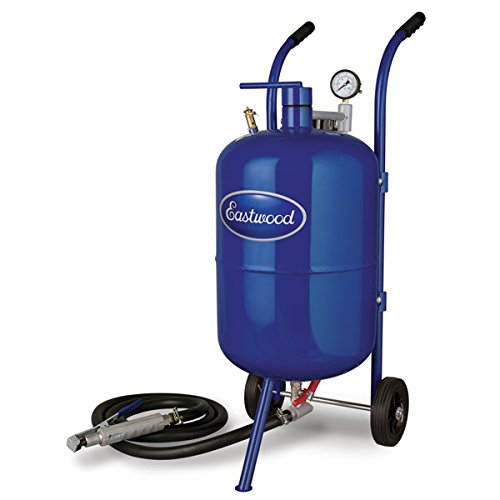
The Eastwood 100lb pressure pot is built for speed — the high-flow, extra-large valves deliver more air volume and more abrasive velocity than siphon-feed units, cutting blasting time on heavy rust down to roughly 30 minutes per part. The 100-pound media capacity means fewer refill stops when attacking large components like frame rails, truck beds, or engine blocks. Assembly is straightforward with wheel and handle installation, and the included instructions cover the blaster’s limitations and safety procedures thoroughly.
Owner feedback reveals that the dead-man trigger spring is noticeably stiff, requiring deliberate hand pressure to keep the gun open. Several users have opted to wire the trigger open and control flow via the main valve instead — a workaround that speeds fatigue but defeats the safety interlock. The second-smallest nozzle at 80 PSI produces a 3-to-4-inch cone at 12-inch distance, which reviewers describe as the sweet spot for balancing media consumption with stripping speed.
The real consideration here is compressor demand — owners report that a 1.7-horsepower, 33-gallon compressor can maintain 60 PSI for roughly 10 minutes per 75 pounds of media, meaning larger compressors are necessary for continuous operation. The unit works best with 30-to-60 mesh coal slag, which costs around per 50-pound bag and can be recycled up to eight times. Replacement dead-man nozzles are available through Harbor Freight for those who prefer keeping the safety mechanism intact.
What works
- Fast stripping speed on heavy rust and paint
- Large 100 lb capacity reduces refill stops
- Easy wheel and handle assembly
- Works with low-cost coal slag media
What doesn’t
- Dead-man trigger spring very stiff
- Demands powerful compressor for continuous use
- Some units arrived with minor thread damage
- Price higher on Amazon than direct from Eastwood
3. VEVOR 28 Gallon Vacuum Sand Blaster

The VEVOR 28 Gallon Vacuum Blaster combines a pressure pot with a built-in 1200W turbine vacuum that captures spent media and dust at the blast point, recycling roughly 90 percent of the abrasive. This closed-loop design dramatically reduces the dust cloud that makes traditional open blasting miserable, allowing garage work with a respirator instead of a full hazmat suit. The 28-gallon tank holds 20 to 35 pounds of recommended media, and the high-density mesh filter in the lid separates reusable abrasive from fine dust.
Owner reports confirm the system works effectively on flat surfaces like hoods, doors, and sheet metal, where the vacuum nozzle maintains good contact. On irregular surfaces like engine blocks or suspension components, the vacuum seal breaks more frequently, reducing recovery efficiency. The metric air fittings have been a point of frustration for users who need replacements locally — standard imperial fittings won’t thread into the gun without adapters.
The unit requires a separate 5.5-kilowatt air compressor to supply blasting air, and the turbine vacuum runs on a standard 120V circuit. After each hour of continuous use, the filter needs brushing off to maintain suction performance. The four casters and ergonomic handle make rolling the unit around the shop practical, but the overall weight of 61 pounds means it’s not a carry-to-the-job-site tool. Best suited for DIY restorers with a dedicated garage space who want to minimize airborne dust.
What works
- Vacuum capture drastically reduces dust
- 90 percent media recovery saves abrasive costs
- Easy to move on casters
- Good for flat automotive surfaces
What doesn’t
- Metric fittings hard to source locally
- Less effective on curved or irregular surfaces
- Filter requires frequent cleaning mid-job
- Vacuum seal breaks on non-flat parts
4. VEVOR 60 Gallon Sandblasting Cabinet

The VEVOR 60-gallon cabinet offers a massive media capacity of 203 pounds, dwarfing most competitors in this price bracket. The cold-rolled steel panels with powder-coated finish resist rust and corrosion, and the large acrylic viewing window provides excellent visibility. Four ceramic nozzles in different bore sizes allow media selection from fine glass beads to coarse silicon carbide without changing the gun assembly. The stand elevates the cabinet to a comfortable working height, which reduces back strain during long blasting sessions.
Owner feedback consistently praises the included LED lighting and the pre-installed sealing strips that minimize dust leakage during operation. However, several reviews note that the assembly instructions are outdated and lack clarity, with some panel holes misaligned enough to require re-drilling. The side door gasket arrived torn on some units, though the included sealant material remedied most minor leaks. A shop vacuum connected to the dust port significantly improves visibility and dust control.
With two people, assembly takes roughly two hours once you work out the panel alignment. Owners who invested in simple modifications — upgrading the pickup tube and adding a better seal around the door — report results approaching industrial-grade cabinets at a fraction of the cost. The 5 CFM air consumption at 40-120 PSI is manageable for most mid-size compressors, making this a strong option for home garages tackling large parts like differential housings and engine blocks.
What works
- 203 lb media capacity for long run times
- Bright LED lighting and large viewing window
- Powder-coated steel resists corrosion
- Low CFM requirement works with mid-size compressors
What doesn’t
- Outdated instructions with poor clarity
- Some panel holes misaligned out of the box
- Minor dust leakage without added sealant
- Shipping damage reported on some units
5. Parts-Diyer 40 Gallon Sandblasting Cabinet

The Parts-Diyer 40-gallon cabinet strikes a balance between capacity and footprint, with a 23.6 x 20.9 x 18.1-inch work space that fits brake calipers, intake manifolds, and suspension components while sitting comfortably on a standard workbench. The 60-125 PSI operating range and 6-25 CFM air consumption mean it pairs with most home-shop compressors, though the higher CFM demands require a larger tank for continuous blasting. Four interchangeable nozzles (4, 5, 6, and 7 mm) cover fine cleaning through aggressive stripping.
Owner reviews highlight sturdy steel construction with a powder-coated finish that resists rust, but the viewing window uses thin plexiglass that scratches faster than thicker acrylic or glass alternatives. The built-in ventilation and LED lighting maintain reasonable visibility during operation. Assembly is straightforward but time-consuming, and the included sealant is essential for preventing dust leakage at the panel seams — owners who skipped this step had to disassemble and redo the seals later.
Replacing the factory rubber hand-hole inserts with hardware store screws and blue Loctite is a common upgrade that prevents the inserts from loosening during use. A dust cyclone and shop vacuum connected to the back port dramatically improve visibility and reduce cleanup time. The unit works well with glass beads, silicon carbide, and crushed walnut shells, making it versatile for paint removal, rust stripping, and polishing without cross-contamination between media types.
What works
- Solid steel cabinet with rust-resistant coating
- Four nozzle sizes cover varied media types
- Compact bench-top design saves floor space
- Works with multiple abrasive media
What doesn’t
- Thin plastic window scratches easily
- Assembly directions are vague
- Sealant application required to prevent leaks
- Hand-hole inserts loosen without modification
6. VEVOR 5 Gallon Pressure Sand Blaster

The VEVOR 5-gallon pressure pot is a portable blasting solution for outdoor work where dragging a cabinet is impractical. The die-cast aluminum alloy gun replaces the traditional brass ball valve design, reducing weight while improving durability and control. The included oil-water separator with pressure gauge removes moisture from the compressed air, which prevents media clumping inside the tank — a common failure point on cheaper pressure pots. Four ceramic nozzle sizes (3/32, 7/64, 1/8, and 9/64 inch) allow tuning the blast pattern to the job.
Owner reports confirm that the unit requires 15+ CFM from the air compressor for consistent performance, and the learning curve for adjusting pressure, nozzle size, and media volume to match the compressor output is non-trivial. Fine, bone-dry grit is essential — any moisture in the media causes immediate clogging, especially with the smaller nozzle bores. The two 6-inch rubber wheels make moving the 25-pound unit around the yard manageable, and the 8-foot suction hose reaches into engine bays and under carriages.
The assembly instructions lack detailed illustrations, relying on text descriptions that some owners found confusing. The metric fittings on the gun nipple are undersized according to several reports, requiring careful threading to prevent detachment under pressure. The pressure gauge displays unfamiliar units, and a funnel was missing from some kits despite being listed in the parts diagram. Best suited for DIYers who already own a high-output compressor and want a mobile option for blasting frames, trailers, and outdoor structures.
What works
- Portable with wheels and compact footprint
- Oil-water separator prevents media clumping
- Durable ceramic nozzles included
- Die-cast aluminum gun is lighter than brass
What doesn’t
- Requires 15+ CFM compressor for decent performance
- Poor assembly instructions with no pictures
- Metric fittings incompatible with local hardware
- Learning curve to dial in pressure and media
7. AutoForever 25 Gallon Bench Top Air Sandblasting Cabinet
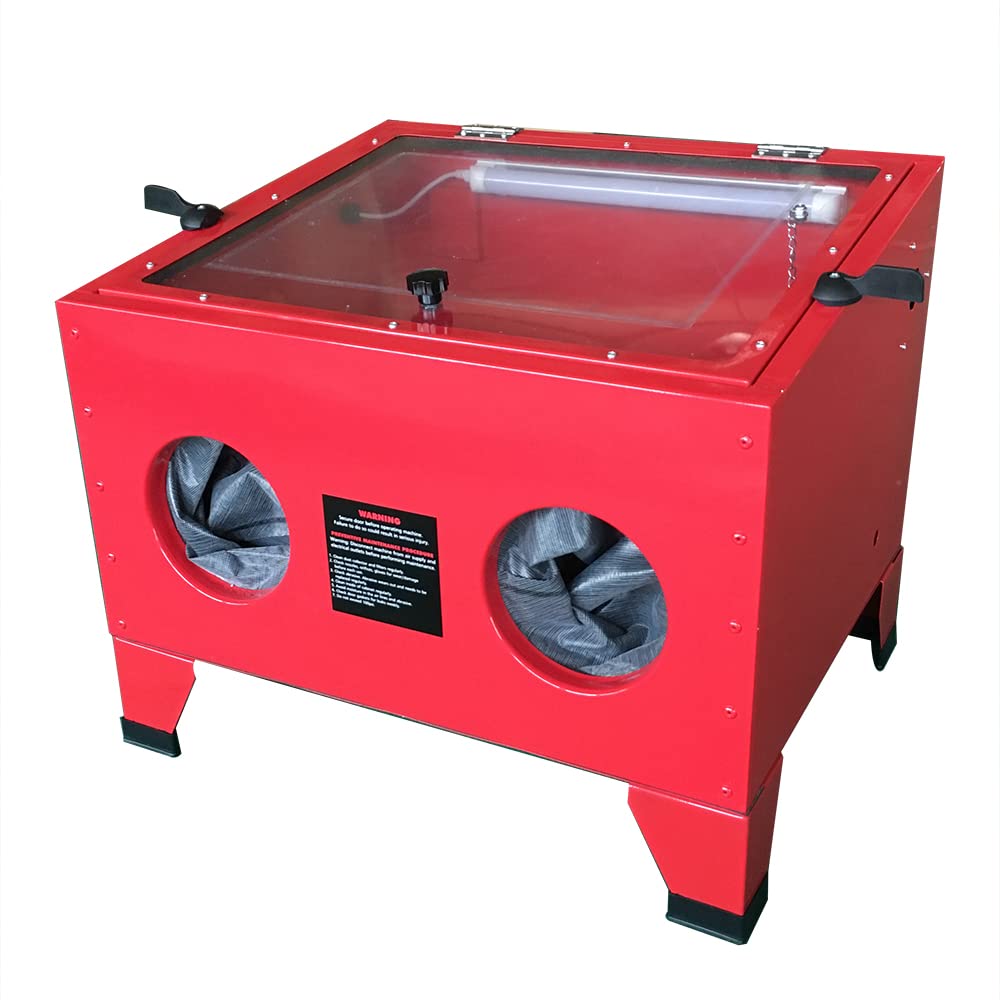
The AutoForever 25-gallon bench-top cabinet is a compact entry point for small-scale automotive blasting work, with a 15.75 x 11.6-inch viewing window that offers adequate visibility for parts like carburetors, brackets, and small castings. The powder-coated steel cabinet resists rust and corrosion, and the pre-installed seals and air filters reduce dust leakage reasonably well for a budget-oriented unit. Four interchangeable nozzles (4, 5, 6, and 7 mm) and an integrated fluorescent light come included, along with a dust collector port for shop vacuum connection.
Owner feedback indicates that the cabinet performs well on rusty mild steel, high carbon steel, and forge scale once you dial in the media selection and spray angle. The 33-pound media capacity supports glass beads, silicon carbide, and walnut shells, giving flexibility for different surface finishes. Assembly takes moderate time and patience — the instruction manual is vague and essentially useless according to several owners, who relied on product photos from Amazon listings to figure out part placement.
The viewing window has a removable protective film that must be peeled off before use — multiple owners missed this and initially thought the glass was permanently foggy. The cabinet’s benchtop design keeps floor space clear but limits part size to what fits through the side access ports. The exhaust system works well enough to keep most dust inside, though fine media particles can escape through unsealed gaps. Overall, a functional option for DIYers who need an inexpensive cabinet for small restoration tasks.
What works
- Compact bench-top design saves floor space
- Includes four nozzles and fluorescent light
- Good performance on mild and high carbon steel
- Pre-installed seals reduce dust leakage
What doesn’t
- Useless instruction manual
- Assembly is frustrating without clear guidance
- Limited to small parts only
- Some dust escape through unsealed gaps
8. RIDGE WASHER Pressure Washer Sandblasting Kit
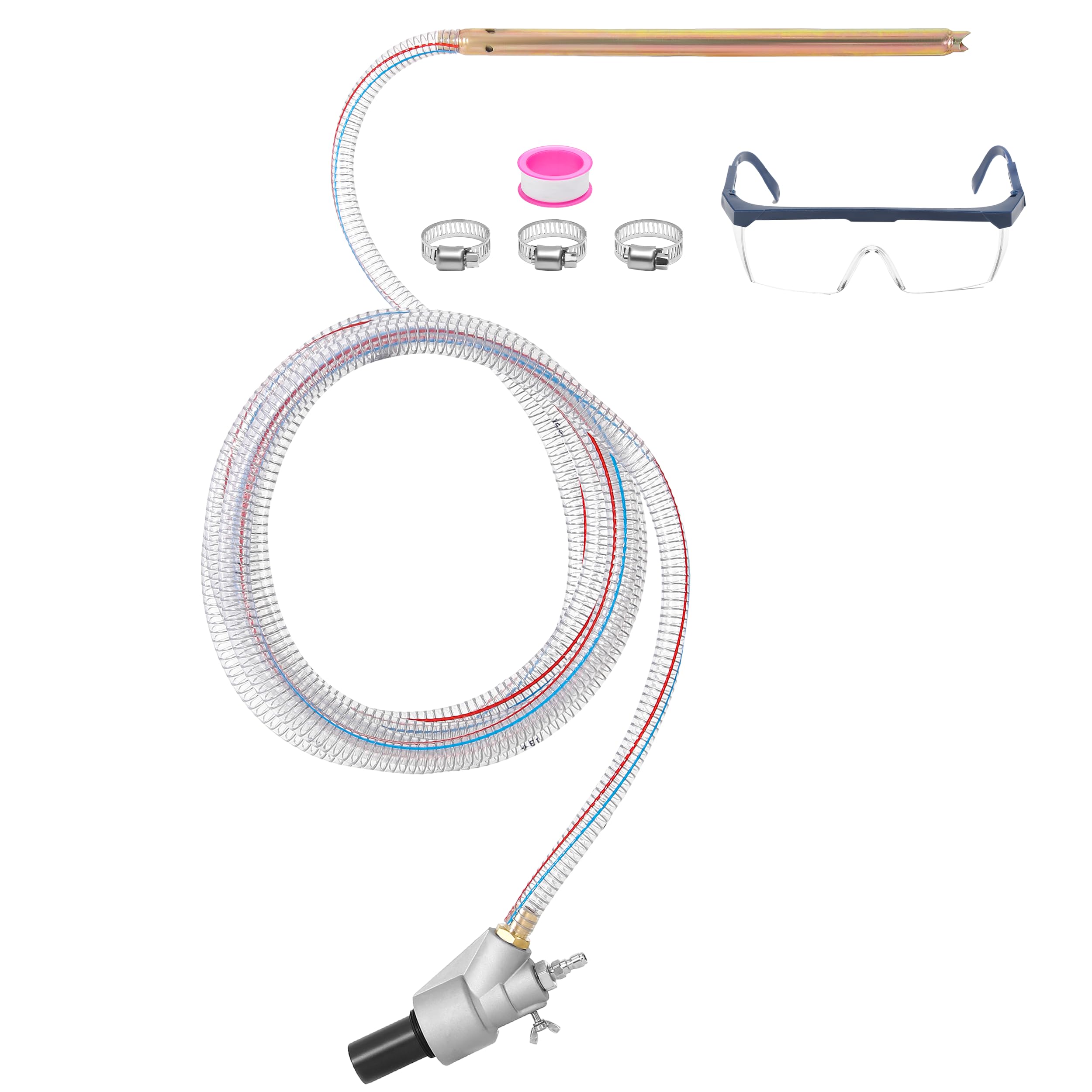
The RIDGE WASHER kit converts a gas pressure washer into a wet sandblasting system, eliminating airborne dust by mixing media with water at the nozzle. The tungsten steel nozzle offers ten to twenty times the service life of ceramic alternatives, resisting wear from continuous abrasive flow. Operating parameters span 1500 to 5000 PSI and 3 to 8 GPM, making it compatible with most medium-to-large gas pressure washers. The 18-foot suction hose with 3/4-inch diameter maximizes media dryness, reducing clogging from moisture backflow.
This kit is explicitly designed for gas pressure washers only — electric units lack the flow rate to maintain consistent media suction. Owners using 4000 PSI units report effective rust and grime removal from truck frames and heavy equipment, though the process is slower than pressure-pot blasting. The siphon pickup tube positioning is critical: keeping it above the blast head prevents water from backfeeding into the media supply, which turns the abrasive into a wet clump that refuses to flow.
The 1/4-inch quick-connect couplers handle the pressure without leaks when tightened properly, though some fittings require extra Teflon tape to seal rough threading. Quick disconnects make swapping between the sandblaster and standard pressure washer wand fast, but the couplers themselves are wear items that eventually need replacement. The kit excels at jobs where dust containment is a priority — stripping paint from house siding, cleaning masonry, or removing graffiti without coating the neighborhood in abrasive dust.
What works
- Dust-free wet blasting operation
- Tungsten steel nozzle lasts significantly longer than ceramic
- Works with most gas pressure washers
- Quick-connect couplers for fast tool changes
What doesn’t
- Not compatible with electric pressure washers
- Slower stripping speed compared to air blasting
- Siphon tube positioning is finicky
- Couplers wear out over time
9. Valley Industries SBK-400 Wet Sandblast Kit

The Valley Industries SBK-400 is a wet sandblast kit that connects to a pressure washer wand via a 1/4-inch male plug inlet, making it the most accessible entry point for dust-free surface stripping. The included tungsten carbide nozzle provides durability far beyond brass alternatives, and the 18-foot suction hose gives reasonable reach around vehicles and structures. The kit is rated for up to 4000 PSI at 10 GPM, which means it requires a capable gas pressure washer to perform optimally.
The siphon-feed design draws media from a bucket or bag, which keeps the setup simple but introduces variability based on pickup tube positioning. Owners report that keeping the siphon hose above the pressure washer wand prevents water backflow that wets the media and stops suction. At the full 4000 PSI rating, the kit removes paint and rust aggressively, but flow control is coarse — some users describe the abrasive delivery as throwing globs followed by nothing, requiring constant adjustment of the suction position.
Several owners successfully used this kit with 3000 PSI pressure washers, noting that it works better with a standard canister setup than the siphon tube for consistent media flow. The brass fittings resist corrosion but need careful threading to avoid leaks. The unit goes through media quickly, so having a large supply of dry sand on hand is essential for continuous work. Best budget option for DIYers who already own a gas pressure washer and want to experiment with wet blasting before investing in a dedicated pressure pot or cabinet system.
What works
- Low-cost entry to wet sandblasting
- Tungsten carbide nozzle outlasts basic alternatives
- Connects to existing pressure washer wand
- Eliminates dust compared to dry blasting
What doesn’t
- Inconsistent media flow with siphon tube
- Requires 4000 PSI pressure washer for best results
- Consumes media quickly
- Heavy wand assembly during extended use
Hardware & Specs Guide
CFM and Compressor Matching
The single most common mistake in sandblaster selection is ignoring the CFM (cubic feet per minute) demand at the operating pressure you intend to use. A pressure pot blasting at 80 PSI with a 1/8-inch nozzle typically consumes 15 to 25 CFM — far more than a typical homeowner-grade 20-gallon compressor can sustain. Measure your compressor’s CFM output at 90 PSI before buying; if it falls short, a siphon-feed or wet blaster may be the only practical option.
Nozzle Materials and Wear Patterns
Tungsten carbide is the gold standard for longevity, resisting abrasive wear ten to twenty times longer than ceramic. Ceramic nozzles are adequate for intermittent DIY use but can crack from thermal shock if the media gets wet. Brass nozzles wear fastest and are only suitable for light soda blasting or very occasional use. Nozzle bore size directly controls blast velocity and CFM consumption — larger bores move more media but require more air to maintain speed.
Wet vs. Dry Blasting Trade-offs
Wet blasting adds water at the nozzle to suppress dust, making it the only viable option for open-air work near neighbors or in residential areas. The water also cools the media and the work surface, preventing heat distortion on thin sheet metal. The down side is slower stripping speed, higher media consumption, and the need for a gas pressure washer rather than an air compressor. Dry blasting is faster but generates a dust cloud that requires a cabinet or full PPE.
Cabinet Sealing and Visibility
A blast cabinet is only as good as its seals. Pre-installed gaskets at the door and panel joints prevent fine media particles from escaping into the workshop air. Acrylic viewing windows with sacrificial lens protectors extend the cabinet’s usable life — once the protector is scratched, you replace the protector instead of the entire window. LED lighting placed at the top of the cabinet casts even light across the work area, reducing shadows that hide missed spots.
FAQ
Will a standard home air compressor run a sandblaster?
Can I use play sand in my sandblaster?
What is the difference between siphon-feed and pressure-pot blasters?
Is wet sandblasting bad for car sheet metal?
Final Thoughts: The Verdict
For most buyers, the sandblaster for cars winner is the Eastwood B60 Sand Blasting Cabinet because it combines a spacious work area, robust dust sealing, and professional-grade build quality that makes automotive restoration projects faster and cleaner. If you need mobile outdoor stripping without dust clouds, grab the RIDGE WASHER Wet Blast Kit for its tungsten nozzle and gas-pressure-washer compatibility. And for heavy rust removal on large parts, nothing beats the stripping speed of the Eastwood 100lb Pressure Blaster — just make sure your compressor can feed it.

Certification: BSc in Mechanical Engineering
Education: Mechanical engineer
Lives In: 539 W Commerce St, Dallas, TX 75208, USA
Md Amir is an auto mechanic student and writer with over half a decade of experience in the automotive field. He has worked with top automotive brands such as Lexus, Quantum, and also owns two automotive blogs autocarneed.com and taxiwiz.com.