Reliable cellular connectivity is no longer a luxury for RV owners—it is a necessity for navigation, remote work, and emergency communication. A high-quality signal booster transforms a dead zone into a usable workspace and turns a fringe-coverage campsite into a place where streaming, video calls, and hotspot sharing actually function.
I’m Amir — the founder and writer behind Four Wheel Ask. My research focuses on analyzing signal gain specifications, carrier band compatibility, antenna designs, and real-world owner feedback to separate gear that delivers from gear that merely promises.
After reviewing nine different boosters ranging from budget-friendly entry-level units to premium high-gain systems, I have identified the models that consistently perform in the varied environments RVers encounter. Finding the right best rv cell booster comes down to understanding antenna types, MIMO support, and gain ratings that match your specific travel style.
How To Choose The Best RV Cell Booster
Selecting the right booster requires matching your RV usage patterns to the amplifier’s technical capabilities. Key factors include gain level, antenna configuration, carrier support, and ease of installation.
Understanding Gain and Coverage Area
Gain, measured in decibels (dB), indicates how much the booster amplifies the incoming signal. A 50dB gain unit is standard for most RV applications, while 65dB models offer extra reach in very weak signal zones. Higher gain generally translates to better performance in deep fringe areas, but the antenna type and placement matter equally.
Omnidirectional vs. Directional Antennas
Omnidirectional antennas work well when you are on the move, as they pull signals from all directions without requiring precise aiming. Directional antennas, on the other hand, focus on a single cell tower and can pull in signals from further away. For stationary campers, a directional antenna often yields superior results. For travelers who also stop for extended periods, a system that accommodates both types offers maximum flexibility.
Carrier and Band Compatibility
Every major U.S. carrier—Verizon, AT&T, T-Mobile, and US Cellular—operates on specific frequency bands. A booster must support the bands your carrier uses, particularly the 700 MHz (bands 12/13/17), 850 MHz (band 5), 1700/2100 MHz (band 4), and 1900 MHz (bands 2/25). 5G-capable models add support for newer bands like n71 and n66, future-proofing your investment.
Multi-User and Multi-Device Support
If multiple family members or colleagues need simultaneous access for streaming, video calls, or hotspot usage, choose a booster designed for multi-user environments. These models typically include higher powered amplifiers and internal antennas capable of covering larger interior spaces like a full RV living area.
Quick Comparison
On smaller screens, swipe sideways to see the full table.
| Model | Category | Best For | Key Spec | Amazon |
|---|---|---|---|---|
| HiBoost Travel 3.0 RV Max | Premium | Full-size RV stationary use | +50 dB, 26ft cable, folding mount | Amazon |
| weBoost Destination RV | Premium | Campsite stationary connectivity | Directional antenna, 25ft pole | Amazon |
| SureCall Fusion2Go OTR | Mid-Range | Large vehicles and fleet use | Patented 2XP, omni antenna | Amazon |
| Solid Signal Rover Duo RV | Mid-Range | Car and RV switching | 2-in-1 application, 50dB | Amazon |
| weBoost Drive Reach Overland | Premium | Off-road vehicles | Rugged antenna, 50dB | Amazon |
| HiBoost Overland Booster | Mid-Range | Off-road adventurers | Folding mount, 50dB | Amazon |
| Atcall Truck Cell Booster | Mid-Range | Trucks with LCD monitor | Smart LCD, 50dB | Amazon |
| GAGBK 6 Band Booster | Value | Budget-friendly entry | 65dB high gain | Amazon |
| PRACOA Vehicle Booster | Value | Cost-conscious buyers | 65dB high gain | Amazon |
In‑Depth Reviews
1. HiBoost Travel 3.0 RV Max
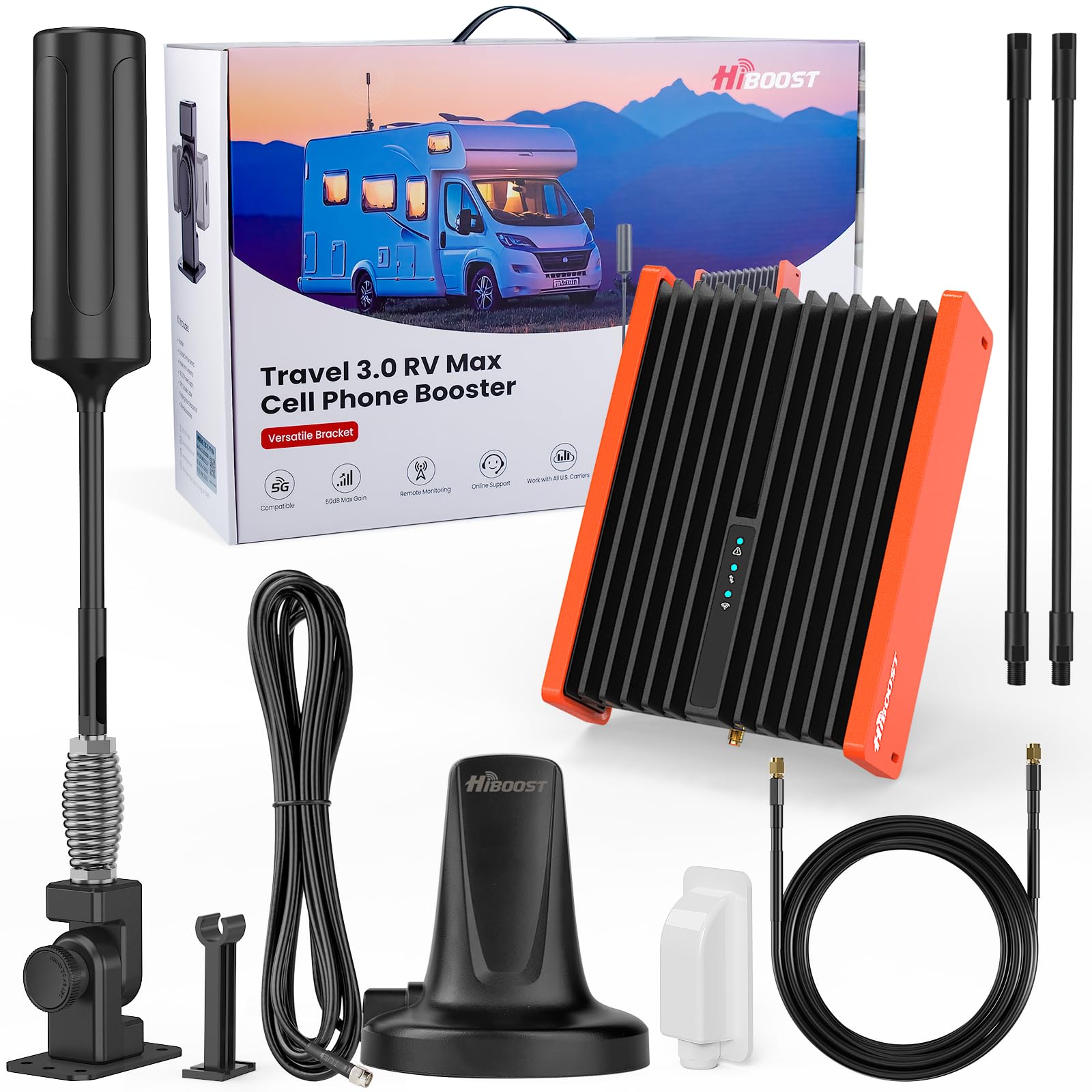
The HiBoost Travel 3.0 RV Max is purpose-built for full-size RVs, trailers, and vans where coverage of the entire interior is critical. Its +50 dB gain amplifier, combined with a 26-foot low-loss cable and a high-performance omnidirectional outdoor antenna, delivers reliable signal improvement across multiple rooms. The kit includes both AC and DC power supplies, making it equally suited for campground hookups and off-grid boondocking.
A standout feature is the heavy-duty 180-degree folding bracket, which mounts securely to roof racks, ladders, or T-slot rails and folds flat when traveling. The outdoor antenna includes a vibration-dampening spring base and is rated for high heat and UV exposure, ensuring long-term durability in harsh sun. The indoor magnetic antenna covers a wide area, supporting multiple users simultaneously for streaming and hotspot use.
Owner reports consistently highlight the ease of installation and the noticeable improvement in fringe areas where cell signals were previously unusable. The 3-year warranty and U.S.-based lifetime support add confidence for a long-term investment. For RVers who need reliable connectivity for work, family, or emergency communications, this model offers the best balance of performance and thoughtful design.
What works
- Excellent coverage across large RV interiors
- Rugged folding bracket with easy setup
- Dual AC/DC power supply included
What doesn’t
- Cable routing requires planning for permanent install
- Higher price tier than basic vehicle boosters
2. weBoost Destination RV

The weBoost Destination RV is engineered for stationary use at campsites and remote destinations. It ships with a directional outdoor antenna that focuses on a single cell tower, delivering stronger gain than omnidirectional alternatives when you are parked. The kit includes a 25-foot collapsible pole to elevate the antenna above obstructions, significantly improving line-of-sight to distant towers.
Setup and takedown are designed to be quick—around ten minutes according to owner feedback—making it practical for RVers who move between sites regularly. The system supports all U.S. carriers and is 5G compatible, working with multiple devices simultaneously. The included indoor panel antenna provides broad coverage inside the RV, and the weBoost app offers helpful installation guidance.
This model is built around the premise of optimal stationary performance rather than in-motion boosting. For full-time or weekend campers who stay put for days at a time, the directional approach yields noticeably better results in weak signal zones. The 2-year warranty and U.S.-based support reflect weBoost’s reputation for reliability. It is the right choice for those prioritizing campsite connectivity over mobile use.
What works
- Directional antenna reaches distant towers
- 25-foot pole for ideal antenna height
- Fast setup and takedown process
What doesn’t
- Not optimized for use while driving
- Bulkier kit requires storage space
3. SureCall Fusion2Go OTR

The SureCall Fusion2Go OTR is a heavy-duty solution designed for large vehicles, including RVs, work vans, and fleet trucks. Its patented 2XP technology doubles the uplink power, helping your device communicate more effectively with distant cell towers—a critical advantage in fringe coverage zones. The system delivers reliable 5G and 4G LTE support across all North American carriers.
The included outdoor omnidirectional antenna is weather-tested and features a built-in ground plane, allowing installation on metal, fiberglass, wood, or plastic surfaces. The antenna comes with a 10-foot integrated cable and includes mounting hardware with thread-lock glue to withstand road vibrations. The indoor patch antenna covers a large area, supporting multiple users and devices simultaneously.
Assembled and tested in the USA, the Fusion2Go OTR comes with a 3-year warranty and lifetime tech support. Owner feedback emphasizes its consistent performance in challenging environments, from mountain passes to desert highways. For RVers who drive long distances and need reliable connectivity both on the move and at stops, this model offers robust build quality and powerful signal amplification.
What works
- 2XP technology boosts uplink power
- Weather-proof rugged antenna design
- Built-in ground plane for any surface
What doesn’t
- Cable length may be short for some installs
- Antenna height options require separate purchase
4. Solid Signal Rover Duo RV

The Solid Signal Rover Duo RV is uniquely designed for users who need seamless transition between a car and an RV. The kit includes antennas and mounting hardware for both vehicle types, allowing you to move the booster between your daily driver and your motorhome without buying separate systems. This flexibility makes it an excellent choice for part-time RVers or those with multiple vehicles.
Based on a powerful 50dB gain amplifier, the Rover Duo supports all U.S. carriers and is 5G ready. It handles multiple users and devices simultaneously, improving voice quality, data speeds, and hotspot capabilities. The system includes both an indoor desktop antenna for the RV and a smaller vehicle antenna for cars and SUVs.
Designed and assembled in the USA, the Rover Duo is backed by U.S.-based customer support and a 2-year warranty. Owner reports highlight the convenience of the dual-application design and the noticeable coverage improvement in fringe areas. For RVers who drive a separate vehicle for day trips or errands, this 2-in-1 approach eliminates the need for a second booster.
What works
- Includes antennas for car and RV
- Easy to switch between vehicles
- Assembled in the USA
What doesn’t
- Lower gain than some dedicated RV models
- Cable management for two kits can be complex
5. weBoost Drive Reach Overland
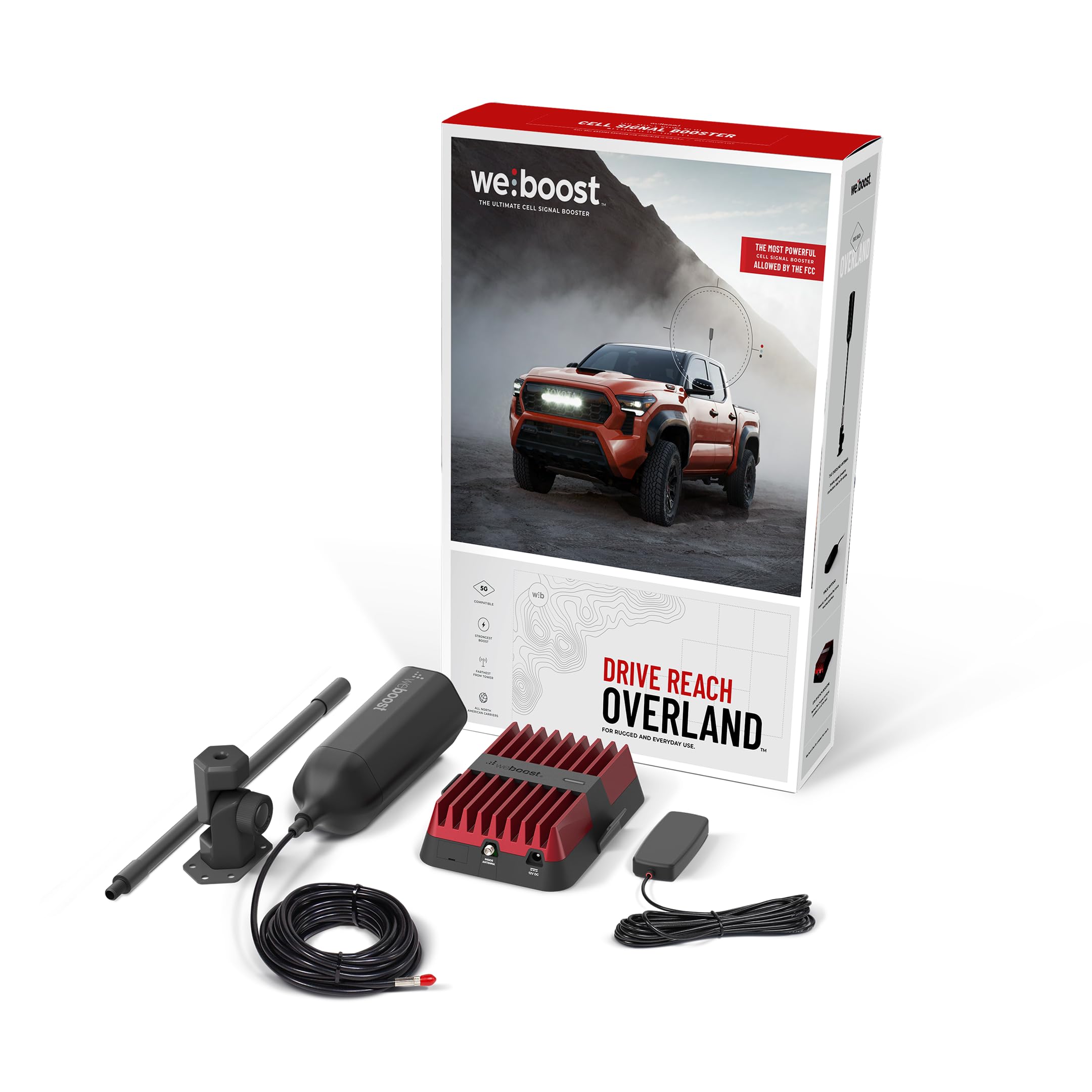
The weBoost Drive Reach Overland is specifically tailored for off-road vehicles and overlanding setups. It combines a powerful 50dB gain booster with a tough, weather-resistant outdoor antenna and a versatile mounting bracket designed to withstand the vibrations and impacts of rough terrain. The system supports all U.S. carriers and the latest 5G technology.
Installation is a one-time process, and the included mounting bracket allows for flexible placement on roof racks, bumpers, or other attachment points. The system is designed to provide full coverage within the interior space of a typical overland or off-road vehicle, supporting multiple users for navigation, communication, and entertainment. The weBoost app offers step-by-step guidance for setup and troubleshooting.
Owner feedback emphasizes the build quality and the noticeable difference in signal strength during backcountry travel. The 2-year warranty and U.S.-based customer support provide solid backing. For overlanders who need dependable connectivity far from paved roads, the Drive Reach Overland offers a purpose-built solution that balances power with rugged durability.
What works
- Durable construction for off-road use
- Versatile mounting bracket options
- Clear improvement in fringe coverage
What doesn’t
- Primarily designed for smaller overland vehicles
- May require additional cable for large RVs
6. HiBoost Overland ExplorerX

The HiBoost Travel3.0 ExplorerX is designed specifically for overland and off-road vehicles where space and durability are at a premium. The unit features a 180-degree folding antenna mount that allows for quick setup and compact storage—ideal for vehicles with limited roof space. The booster itself is built with industrial-grade materials and protected by a rubber cover to resist dust and shock.
With 50dB max gain and support for key U.S. carrier bands (12/17, 13, 5, 4, 25/2), the ExplorerX provides reliable 5G and 4G LTE signal improvement. The kit includes a 15-foot outdoor antenna cable and a 9.84-foot indoor antenna cable, offering flexibility for placement. An LED indicator helps with initial setup and ongoing monitoring of signal strength.
FCC approved (ID: OWWC230505S), the system is backed by a 3-year manufacturer warranty and U.S. support team. Owner reports note the sturdy feel of the mounting hardware and the significant improvement in data speeds when operating in fringe areas. For overlanders who need a compact, rugged booster that does not compromise on performance, the ExplorerX is a strong contender.
What works
- Compact folding mount saves space
- Industrial-grade build resists harsh conditions
- Good gain for its size class
What doesn’t
- Indoor antenna cable is relatively short
- App integration may require smartphone
7. Atcall Truck Cell Booster
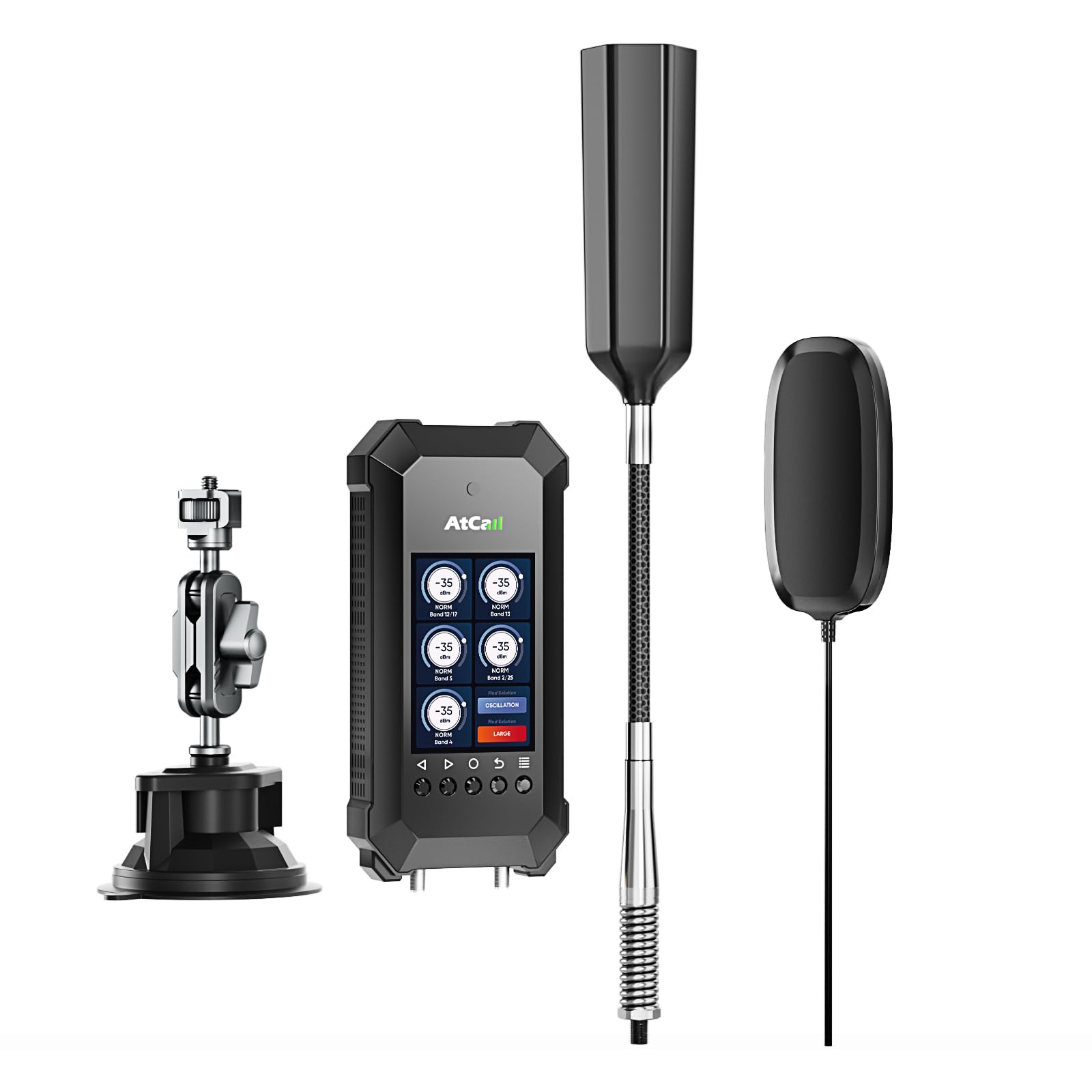
The Atcall Truck Cell Booster stands out with its integrated smart LCD monitor that displays real-time signal strength and system status. This feature simplifies installation and troubleshooting, allowing you to see exactly how well the booster is performing without relying on a smartphone app. The booster itself delivers 50dB max gain and supports bands 12/17, 13, 5, 2/25, and 4 for broad carrier compatibility.
The system is designed for truck cabs but works well in RV cockpits and driver areas. It includes two mounting brackets for the booster unit, allowing installation on the center console or other flat surfaces. The upgraded omnidirectional outdoor antenna is rugged and waterproof, designed to withstand the elements during long road trips.
FCC approved and requiring no subscription, the Atcall booster supports multiple users and devices. Owner feedback highlights the helpfulness of the LCD display for confirming optimal antenna placement and the noticeable difference in call quality and data speeds. For RVers and truck owners who prefer visual confirmation of system performance, this model offers a unique and practical interface.
What works
- Real-time LCD signal monitor
- Easy installation with center console brackets
- No subscription or app required
What doesn’t
- Lower gain than premium overland models
- Primarily optimized for cab-sized spaces
8. GAGBK 6 Band Booster
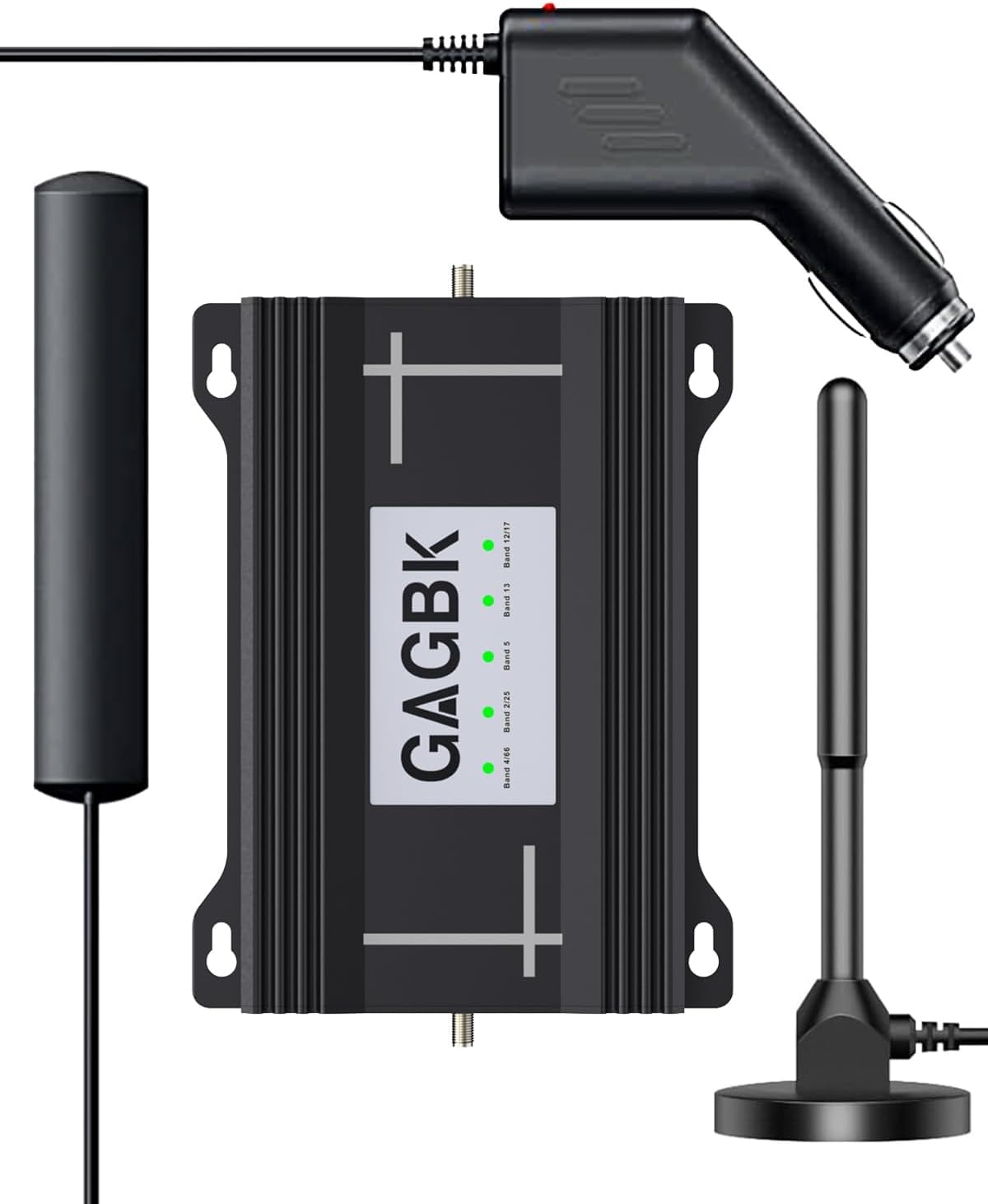
The GAGBK 6 Band Booster delivers impressive 65dB high gain at a budget-friendly price point, making it an attractive option for RVers who need solid performance without a premium investment. It supports all major U.S. carriers—Verizon, AT&T, T-Mobile, Straight Talk, Cricket, and US Cellular—on bands 2/4/5/12/13/17/25/66, and is compatible with 5G technology.
Designed for versatile use in cars, trucks, SUVs, and RVs, the kit includes an outdoor magnetic antenna, indoor patch antenna, and necessary cabling. The system supports multiple users and devices simultaneously, and features automatic gain control to self-adjust to changing signal conditions. The plug-and-play installation requires no technical experience.
FCC approved, the GAGBK booster is backed by a 30-day money-back guarantee, a 90-day replacement policy, and a 3-year manufacturer warranty. Owner feedback indicates that it performs noticeably better than not having a booster at all, particularly in moderate fringe areas. For cost-conscious RVers seeking a reliable entry-level solution, this model offers strong value.
What works
- 65dB high gain for the price
- Supports 6 critical frequency bands
- Easy plug-and-play setup
What doesn’t
- Build quality feels less robust than premium models
- Long-term durability reports are limited
9. PRACOA Vehicle Booster
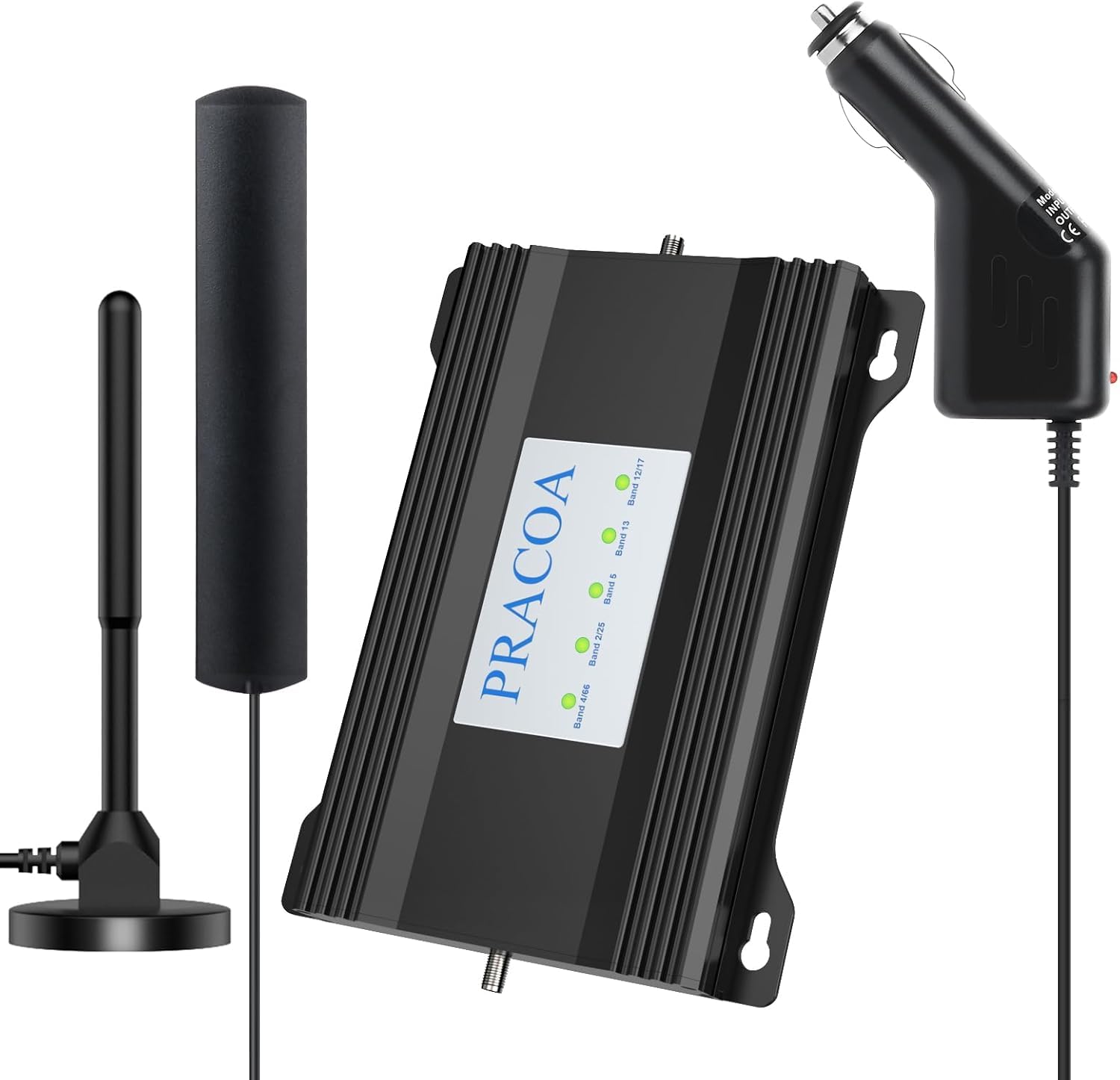
The PRACOA Vehicle Booster offers similar 65dB high-gain specifications to the GAGBK model, providing a budget-friendly entry point for RVers who need basic signal improvement. It supports all major U.S. carriers and a wide range of frequency bands, including 5G technology, ensuring compatibility with current and near-future networks.
The kit is designed for use in RVs, cars, trucks, SUVs, vans, and boats, and includes an outdoor magnetic antenna and indoor patch antenna with the necessary cabling. It supports multiple users and devices, and features automatic gain control to adapt to changing signal conditions. The plug-and-play installation is straightforward for anyone comfortable with basic wiring.
FCC approved, the PRACOA booster comes with a 30-day money-back guarantee, 90-day replacement policy, and a 3-year manufacturer warranty. Owner feedback generally notes that it provides a useful boost in moderate coverage areas, though performance in extremely weak signal zones may not match that of premium directional-antenna systems. For RVers on a tight budget who need a basic connectivity solution, this model is a practical starting point.
What works
- 65dB gain at an accessible price
- 5G ready with broad carrier support
- Simple plug-and-play installation
What doesn’t
- Not as effective in deep fringe areas
- Cable length limits placement options
Hardware & Specs Guide
Gain and Signal Strength
Decibel (dB) gain is the primary measurement of a booster’s power. A 50dB gain unit is standard for most RV applications and provides solid improvement in moderate to weak signal areas. A 65dB gain unit offers more headroom for deep fringe zones but may require more careful antenna placement to avoid oscillation. Higher gain does not always equal better performance—antenna quality and placement are equally critical.
Antenna Types: Omni vs. Directional
Omnidirectional antennas receive signals from all directions, making them ideal for use while driving. Directional antennas focus on a single cell tower, providing stronger gain at the cost of needing manual aiming. Some premium RV boosters include both options or use a hybrid design. For stationary campers, a directional antenna paired with a telescoping pole produces the best results in remote areas.
Carrier Band Support
U.S. carriers operate on specific frequency bands. The most critical bands for coverage are 700 MHz (bands 12/13/17), 850 MHz (band 5), 1700/2100 MHz (band 4), and 1900 MHz (bands 2/25). 5G bands such as n71 (600 MHz) and n66 (1700/2100 MHz) are becoming important for future-proofing. A booster must support the bands your carrier uses in your travel areas to be effective.
Cable Quality and Length
The cable connecting the outdoor antenna to the booster introduces signal loss, typically measured in dB per foot. Lower-loss cables like RG-6 or RG-11 are preferable for longer runs (20+ feet). Many premium kits include LMR-type cables that minimize loss. Shorter cable runs preserve more gain, so plan your installation to minimize cable length between the antenna and booster.
FAQ
Does a cell booster work without any signal at all?
How much does installation typically involve?
Will a booster work with all carriers at the same time?
Is FCC approval important for a cell booster?
Final Thoughts: The Verdict
For most RV owners seeking reliable cellular connectivity, the overall winner is the best rv cell booster pick — the HiBoost Travel 3.0 RV Max — because it combines powerful +50 dB gain with a versatile folding mount, long cable, and dual power supplies, making it the most complete solution for full-time and part-time travelers alike. If you prioritize stationary campsite performance with directional reach, grab the weBoost Destination RV. And for budget-conscious buyers who need a basic connectivity boost for casual road trips, the GAGBK 6 Band Booster offers surprising value without breaking the bank.

Certification: BSc in Mechanical Engineering
Education: Mechanical engineer
Lives In: 539 W Commerce St, Dallas, TX 75208, USA
Md Amir is an auto mechanic student and writer with over half a decade of experience in the automotive field. He has worked with top automotive brands such as Lexus, Quantum, and also owns two automotive blogs autocarneed.com and taxiwiz.com.