Rust never sleeps, and for anyone who owns a car, motorcycle, boat, or piece of machinery sitting through wet seasons or coastal salt air, the fight against corrosion is constant. A spray can might look simple, but the chemistry inside determines whether your frame stays solid or turns to dust in a few winters.
I’m Amir — the founder and writer behind Four Wheel Ask. I’ve spent years analyzing product specifications, build quality data, and owner feedback across the automotive aftermarket to identify what truly works for long-term vehicle preservation.
Thin oils rinse off in the first rain, while waxy films crack under vibration. Finding the right protection means choosing a formula that displaces moisture and bonds to metal, so the best rust prevention spray gives a lasting seal.
How To Choose The Best Rust Prevention Spray
Not every can of spray offers the same level of protection. The base chemistry, application method, and intended environment all determine whether a formula will last months or years. Understanding these factors keeps you from wasting money on something that washes off in the first downpour.
Wax-Based vs Oil-Based Formulations
Wax-based sprays dry to a semi-solid film that stays flexible and self-heals when scratched. They are ideal for underbody panels, chassis rails, and cavity injections because the coating remains active even after minor impacts. Oil-based formulas, by contrast, creep into tight seams and threads but can drip off vertical surfaces in high heat or get washed away by pressure spraying. Choose wax for permanent barrier protection and oil for internal cavity flooding or penetrating needs.
Dielectric Protection for Electronics
If you plan to spray battery terminals, sensors, or engine control modules, the formula must be dielectric — meaning it blocks electrical current while preventing moisture ingress. A rating above 39,000 volts ensures safe use on live circuits. Products without dielectric certification can cause short circuits or sensor malfunctions, so check this spec before spraying anything electrical.
Application Method and Coverage
Aerosol cans offer convenience for quick touch-ups, but some formulas come with precision straws for reaching inside box sections. Dripless gels stay put on vertical surfaces, while low-viscosity penetrants flow deep into threaded fasteners. Consider the shape of the area you need to protect: tight cavities need a thin liquid, while open panels benefit from a thicker, self-leveling coating.
Environmental Resistance and Longevity
Manufacturers rate their sprays for indoor vs outdoor exposure. A premium formula may last up to five years indoors and two years in outdoor, salt-spray environments. Cheaper oils may need reapplication every season. Look for claims about resistance to pressure washing, salt fog, and UV degradation, and match the product’s durability to how aggressively the vehicle or equipment is used.
Quick Comparison
On smaller screens, swipe sideways to see the full table.
| Model | Category | Best For | Key Spec | Amazon |
|---|---|---|---|---|
| CorrosionX Heavy Duty | Spray | Long-term outdoor & marine protection | Self-healing, 12 oz | Amazon |
| CRC 06026 4-Pack | Spray | Electrical components & fasteners | Flexible wax film, 10 oz x4 | Amazon |
| CorrosionX Rust Inhibitor | Spray | Marine & electronic corrosion prevention | Dielectric >39 kV, 6 oz | Amazon |
| JENOLITE Waxoil | Spray | Underbody & cavity rust treatment | Thick waxy fluid, 16 oz | Amazon |
| PB Blaster 6-Pack | Spray | Frozen bolt & rusted part loosening | Deep penetrating catalyst, 11 oz x6 | Amazon |
In‑Depth Reviews
1. CorrosionX Heavy Duty Anti Rust Spray

The CorrosionX Heavy Duty formula is built for environments that destroy lesser sprays. It uses polar bonding technology to latch onto metal at a molecular level, creating a self-healing barrier that closes up when scratched or punctured. Owner reports confirm this film remains intact through pressure washing, saltwater exposure, and temperature swings from freezing to engine-bay heat. The 12-ounce can delivers a driless gel that stays put on vertical surfaces, so you are not wasting product on runoff.
This spray is rated for up to five years of indoor protection and two years outdoors, which puts it in a different class than seasonal oils. The formula resists electrolysis and galvanic corrosion, making it suitable for engine bays, boat trailers, and agricultural equipment exposed to constant moisture. Its flexibility means it moves with the metal instead of cracking like cheaper wax coatings.
For anyone needing one product that covers everything from frame rails to electrical connections, the Heavy Duty version justifies its premium placement with real longevity. The trade-off is a thicker consistency that can feel heavy for light-duty household tools, but for vehicles and equipment that live outside, this is the benchmark.
What works
- Self-healing film closes scratches without reapplication
- Polar bonding resists washout from rain and pressure sprayers
- Rated for years of outdoor protection in saltwater conditions
What doesn’t
- Thicker gel requires deliberate application for cavity flooding
- Premium price per can compared to light-duty oils
2. CRC 06026 Heavy Duty Corrosion Inhibitor 4-Pack

CRC’s 06026 formula is a flexible, waxy corrosion inhibitor designed for electrical connections, engine components, fasteners, and steering linkages. The wax dries to a translucent film that does not harden into a brittle shell, so it absorbs vibration and thermal expansion without delaminating. Each can in the four-pack holds 10 weight ounces, and buying in bulk brings the per-unit cost down significantly for fleet or shop use.
The product is widely used in equipment storage and salt spray protection applications, and owner accounts note it stays active on parts stored for multiple seasons. It is effective on shafts, spindles, and throttle linkages where metal-on-metal movement can accelerate wear. The 20W viscosity rating gives it a medium body that sprays cleanly without excessive dripping.
Where the CRC shines is versatility across industrial and automotive settings. The four-pack format means you can keep one can in the shop, one in the truck, and still have spares for seasonal maintenance. Just be aware that the waxy finish collects dust if applied in high-traffic areas, and it is less effective as a penetrant for freeing rusted fasteners than dedicated oils.
What works
- Flexible wax film resists cracking under vibration and temperature shifts
- Four-pack format provides excellent value for multi-vehicle owners
- SAE 20W viscosity offers controlled spray without heavy runoff
What doesn’t
- Waxy coating attracts airborne dust and grime over time
- Not formulated as a penetrating oil for seized hardware
3. CorrosionX Rust Inhibitor 6 oz
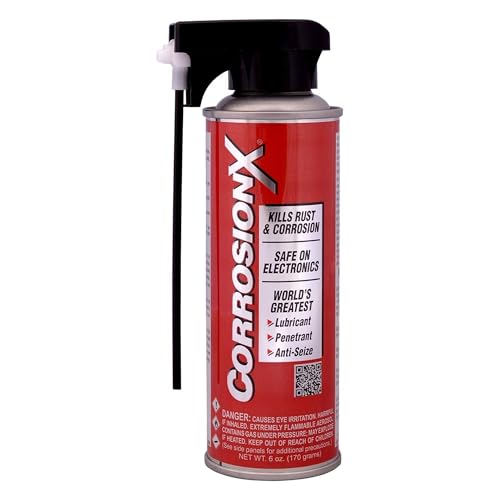
The standard CorrosionX Rust Inhibitor shares the same molecular-bonding technology as the Heavy Duty version but in a thinner, 6-ounce aerosol optimized for electronics and small mechanical parts. The dielectric film is rated above 39,000 volts, making it safe for battery terminals, sensors, and circuit boards where a conductive spray could cause failures. This is the same formula qualified by the U.S. Navy for advanced marine corrosion protection, which speaks to its reliability in salt-heavy environments.
Owner feedback consistently highlights how well this spray displaces moisture on marine gear, outboard motors, and trailer connections. It penetrates deeply into threaded fasteners and cable pulleys, freeing rusted parts while leaving a protective barrier that resists washout from rain and salt spray. The 6-ounce can is compact enough to stow in a glove box or tool kit for on-the-go touch-ups.
The trade-off is the smaller can size, which limits coverage on large underbody areas. For whole-frame protection you would need multiple cans, making the Heavy Duty version more economical for big jobs. But for anyone focused on electrical systems, marine components, or seasonal storage of small engines, this is a targeted solution that outperforms generic penetrating oils.
What works
- Navy-qualified dielectric film safe for sensitive electronics
- Moisture-displacing formula creeps deep into threaded seams
- Compact size fits easily into portable tool kits
What doesn’t
- Small can requires multiple purchases for full-vehicle underbody work
- Thinner viscosity can drip from vertical panels in hot conditions
4. JENOLITE Waxoil Rust Prevention Aerosol 16 oz

JENOLITE Waxoil brings a traditional thick waxy fluid approach to rust prevention at a budget-conscious price point. The formula is designed to drive out moisture while depositing a semi-solid coating that, according to the manufacturer, self-seals if scratched or punctured. It sprays readily into box sections, door sills, wheel arches, and chassis cavities where gravity-fed oils might not reach. The 16-ounce can holds a generous amount of product for the money.
The wax contains a rust-killing additive that attacks existing corrosion while blocking new formation, which is useful for treating vehicles that already show surface oxidation. Owner accounts describe it as a good option for winter underbody prep on daily drivers, especially in regions that use road salt. The aerosol format makes it easy to apply without compressed air equipment.
Where the Waxoil falls short of premium competitors is long-term durability in extreme conditions. Some users report the film softens under continuous engine heat or pressure washing, requiring more frequent reapplication. It also lacks the dielectric certification needed for direct use on exposed electronics. For bare-metal underbody protection on a budget, it delivers dependable short-to-mid-term results.
What works
- Thick formula holds well inside cavities and vertical panels
- Integrated rust killer treats existing oxidation on contact
- Generous 16-ounce can at a wallet-friendly price point
What doesn’t
- Film softens under high heat or repeated pressure washing
- No dielectric rating for safe use on electrical connectors
5. PB Blaster Penetrating Oil Spray 11 oz 6-Pack
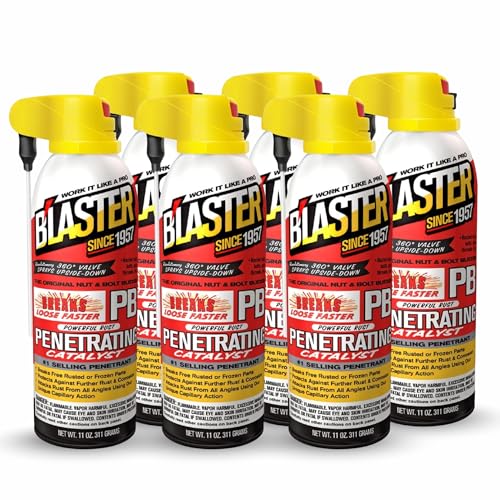
PB Blaster is the industry standard for breaking rusted and frozen hardware, and this six-pack delivers eleven ounces per can with the same penetrating catalyst formula trusted by mechanics and DIYers. The low surface tension allows the oil to creep deep into thread crevices where moisture sits, loosening seized nuts, bolts, and fittings that other sprays cannot reach. It also leaves a protective film that helps block future moisture intrusion.
The ProStraw with adjustable flow control gives two spray patterns — a wide fan for surface coverage and a focused stream for precision targeting inside tight engine bays or suspension joints. The formula is 50-state VOC compliant, so it meets regulatory standards across the country. Users frequently report it frees bolts that have been rusted for years, saving hours of cutting and grinding.
While PB Blaster excels as a penetrant, it is not a long-term rust prevention coating in the way wax-based sprays are. The protective film is thin and will wash off over time if exposed to direct rain or pressure washing. Using it as a first step to free hardware before applying a dedicated barrier spray creates a stronger overall protection strategy for restoration or winter maintenance.
What works
- Deep capillary action frees bolts that other penetrants cannot budge
- Adjustable ProStraw delivers precise stream or wide spray coverage
- Six-pack format keeps the workshop stocked for heavy repair cycles
What doesn’t
- Thin film is not intended for long-term outdoor corrosion barriers
- Penetrating oil smell is stronger than wax-based alternatives
Hardware & Specs Guide
Wax-Based Film Protection
Wax-based sprays like JENOLITE Waxoil and CRC 06026 dry into a flexible semi-solid layer that bonds to metal surfaces. This film remains active even after minor scratches because the material flows back together at a microscopic level. Wax coatings are ideal for underbody panels, frame rails, and the inside of door cavities because they do not drip off in summer heat. The trade-off is that waxy films can collect dust and may soften under prolonged high-temperature exposure near exhaust components.
Dielectric Barrier for Electronics
CorrosionX Rust Inhibitor carries a dielectric rating exceeding 39,000 volts, meaning it blocks electrical current while preventing moisture ingress. This makes it safe to spray directly on battery terminals, fuse boxes, sensors, and circuit boards. Products without this certification can cause shorts or corrosion between dissimilar metals. For marine or coastal vehicles where salt spray attacks every connector, a dielectric formula is essential for preventing intermittent electrical failures.
Penetrating Catalyst Chemistry
PB Blaster uses a low-surface-tension catalyst that wicks into microscopic gaps between threaded fasteners and the surrounding metal. This capillary action breaks the bond of iron oxide crystals that form between rusted surfaces. Penetrating oils are not designed to stay on the surface long-term; their job is to reach the root of the corrosion and lubricate the joint so it can be freed. After freeing hardware, a barrier spray should be applied to prevent future seizure.
Self-Healing and Polar Bonding Technology
CorrosionX Heavy Duty uses polar bonding, where the formula’s molecules are attracted to metal at a sub-surface level, creating a chemical bond rather than just a surface coating. If the film is scratched or punctured, the surrounding material flows into the gap and re-seals. This technology is the primary reason the Heavy Duty spray can claim up to five years of indoor protection. It also prevents electrolysis between dissimilar metals, a common failure point in aluminum-steel joints.
FAQ
Can I use rust prevention spray on painted surfaces?
How often should I reapply rust prevention spray on a daily driver?
Will rust prevention spray damage oxygen sensors or catalytic converters?
Can I use penetrating oil as a permanent rust prevention coating?
Final Thoughts: The Verdict
For most buyers, the best rust prevention spray winner is the CorrosionX Heavy Duty because its self-healing polar-bonding film provides the longest reliable protection across automotive, marine, and industrial use. If you primarily need to protect electrical connectors and battery terminals from galvanic corrosion, grab the CorrosionX Rust Inhibitor for its Navy-qualified dielectric barrier. And for freeing rusted bolts before applying a final coating, nothing beats the PB Blaster 6-Pack as a shop essential for any restoration or maintenance project.

Certification: BSc in Mechanical Engineering
Education: Mechanical engineer
Lives In: 539 W Commerce St, Dallas, TX 75208, USA
Md Amir is an auto mechanic student and writer with over half a decade of experience in the automotive field. He has worked with top automotive brands such as Lexus, Quantum, and also owns two automotive blogs autocarneed.com and taxiwiz.com.