The road bike market under this ceiling is a battlefield of trade-offs — lightweight aluminum frames cut costs but sacrifice compliance, entry-level carbon offers aero gains but often ships with budget gruppo groupsets that wear quickly, and electronic shifting remains a pipe dream until you climb higher. The real challenge isn’t finding a bike that fits your budget; it’s identifying which compromises actually matter for your riding style and which ones quietly undermine your experience. After spending weeks combing through geometry charts, component specs, and owner-reported durability data across dozens of models, a clear hierarchy of value emerges for anyone willing to look past marketing claims.
I’m Amir — the founder and writer behind Four Wheel Ask. My approach to evaluating road bikes focuses on frame material quality, groupset tier hierarchy, braking system reliability, and real-world owner satisfaction trends rather than inflated marketing wattage claims.
This analysis breaks down six distinctly different platforms that each solve the equation of performance versus cost in their own way, helping you match your priorities — whether that means maximum speed, all-weather braking confidence, or all-road versatility — to the right build. For anyone looking for a reliable, spec-smart purchase, understanding these nuances is what separates a satisfying buy from a regretful one when shopping for best road bikes under 1500.
How To Choose The Best Road Bikes Under 1500
Navigating the sub-1500 road bike segment requires understanding that every dollar saved on the frame is often spent — with interest — on inferior components or heavier wheels. The key is identifying which spec sheet numbers translate to real-world performance and which are marketing fluff.
Frame Material: Aluminum vs. Carbon Fiber
At this price cap, you will encounter mostly aluminum alloy frames with occasional carbon fiber offerings. Aluminum is durable and cost-effective but transmits more road vibration. Carbon fiber, when properly engineered, absorbs chatter better and saves significant weight — but budget carbon can suffer from lower-grade layup schedules that reduce impact resistance. Look for butted tubing on aluminum frames and T700 or T800 carbon grades on carbon frames for the best balance.
Groupset Tier: The Heart of Reliability
Shimano dominates this segment with groupsets ranging from entry-level Tourney to the respectable SORA and the new U6000 line. Higher tier groupsets offer lighter weight, crisper shifting, and better long-term durability. A bike with a SORA or U6000 groupset will outlast and outperform a bike with a lower-tier groupset by a wide margin, making it a smarter investment even if the frame is slightly heavier.
Braking System: Caliper vs. Disc
Traditional caliper brakes are lighter and simpler but lose stopping power in wet conditions. Mechanical disc brakes offer better modulation and all-weather performance at a slight weight penalty. Hydraulic disc brakes — rare at this price — provide the best stopping power and feel. Consider your typical riding conditions: dry, fair-weather riders can save weight with calipers; year-round or wet-weather riders should prioritize disc brakes.
Quick Comparison
On smaller screens, swipe sideways to see the full table.
| Model | Category | Best For | Key Spec | Amazon |
|---|---|---|---|---|
| SAVADECK Carbon Gravel | Gravel / Road | All-surface versatility | T800 Carbon, U6000 11spd, Hydraulic Disc | Amazon |
| SAVADECK Carbon Road | Road / Racing | Weight weenies & beginners | T800 Carbon, SORA 18spd, 8.9kg | Amazon |
| Schwinn Fastback | Road | Performance geometry value | Butted Aluminum, 14spd STI, Caliper Brakes | Amazon |
| Schwinn Phocus 1.6 | Hybrid / Fitness | Entry-level fitness riding | Aluminum Frame, 24spd, Mechanical Disc | Amazon |
| Movcan V80 Electric | Electric / Commuter | Motor-assisted commuting | 1000W Motor, 48V 13Ah, 28MPH | Amazon |
| VOLTVOGUE Electric | Electric / Off-Road | Budget e-bike with suspension | 750W Motor, 48V 20Ah, Full Suspension | Amazon |
In‑Depth Reviews
1. SAVADECK Carbon Gravel Bike
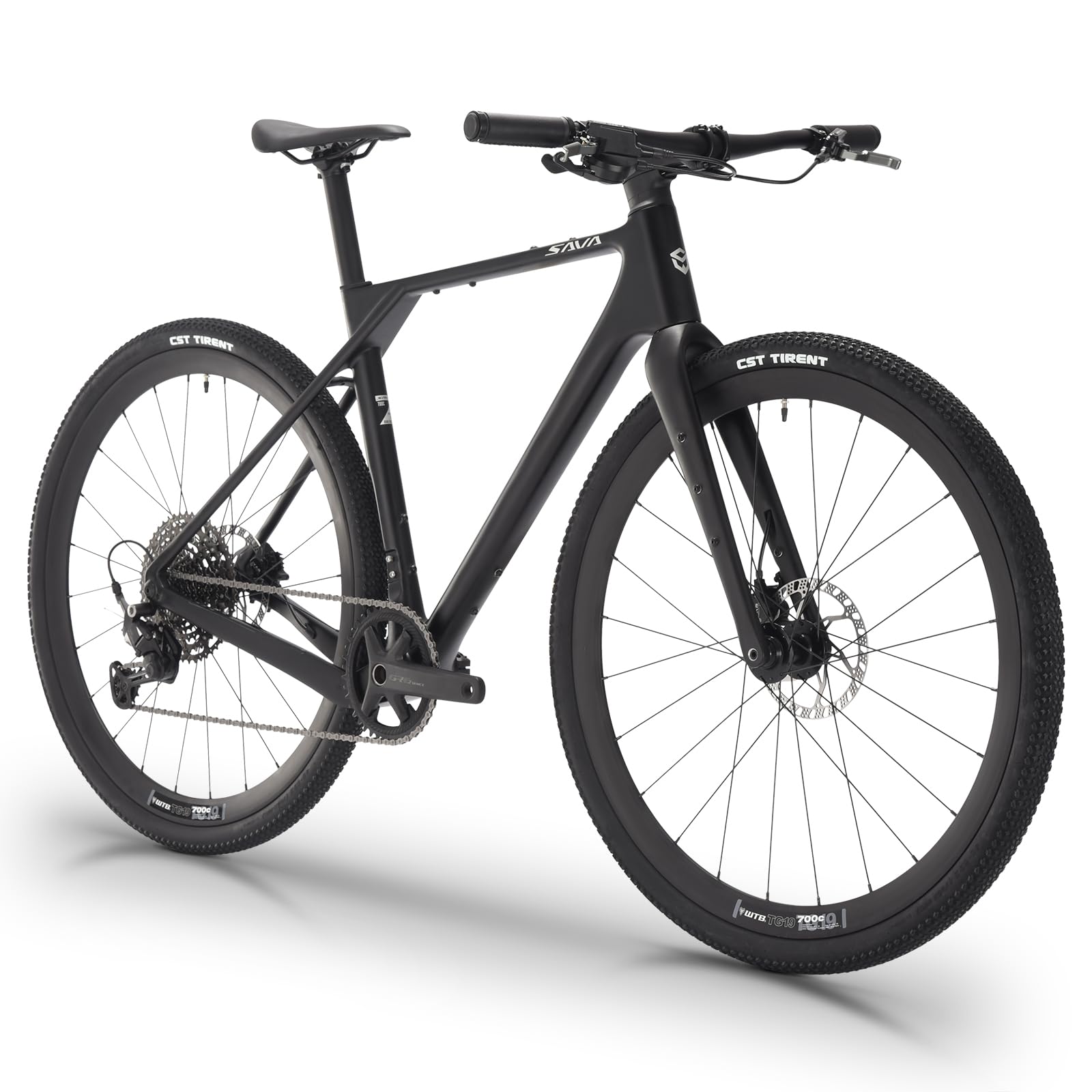
The SAVADECK Carbon Gravel Bike sits at the upper boundary of this price tier and delivers a complete package that punches well above its weight class. The T800 R21 carbon fiber frame and fork bring the total build to just 10.4kg, offering a strength-to-weight ratio that aluminum simply cannot match at any price point. What sets this platform apart is the fully integrated Shimano U6000 11-speed groupset — a professional-grade drivetrain that provides crisp, reliable shifting across a wide gear range suitable for both pavement and loose surfaces. The internal cable routing not only improves aerodynamics but also protects cables from dirt and moisture, extending component life.
Hydraulic disc brakes are a rare find at this price, and the ones on this build deliver consistent stopping power in wet or dry conditions without the hand fatigue associated with mechanical disc systems. The 700x40c tires provide a meaningful traction advantage over standard 28c road tires, making this bike genuinely capable on gravel, hardpack, and even light singletrack. The 45-spoke wheel build adds durability for riders who want to explore beyond the pavement without worrying about rim damage.
Assembly is straightforward with 90% pre-build from the factory, and the included tool kit covers everything needed to finish the setup. Owner feedback consistently highlights the confidence-inspiring stability at speed and the comfortable upright geometry that reduces lower back strain on longer rides. The only real trade-off is the slightly narrower tire clearance compared to dedicated gravel frames, but for most riders mixing road and light off-road, this bike represents the most balanced and future-proof investment available.
What works
- Genuine T800 carbon frame and fork at an aggressive price point
- Shimano U6000 11-speed drivetrain shifts with precision and durability
- Hydraulic disc brakes provide excellent modulation and all-weather stopping power
What doesn’t
- Limited tire clearance compared to dedicated gravel frames
- Stock wheels are durable but heavier than premium aftermarket options
2. SAVADECK Carbon Road Bike

The SAVADECK Carbon Road Bike targets riders who prioritize light weight and aero efficiency above all else. At just 8.9kg for the complete build, this is one of the lightest bikes available without stepping above this budget threshold. The T800 carbon fiber frame extends through the fork and seat tube, creating a unified structure that delivers a lively, responsive feel during acceleration and climbing. The wind tunnel-developed tube shapes with contoured stays and a tapered head tube reduce drag while maintaining the torsional rigidity needed for confident cornering at speed.
The Shimano SORA 18-speed groupset is the entry point into Shimano’s performance road hierarchy, and it delivers smooth, reliable shifting that instills confidence in new riders. The 2×9 configuration provides a broad enough gear range for moderate climbing and flat-road speed, though experienced riders may eventually crave the closer ratios of a 11-speed cassette. The Oval Concepts 6061 alloy 40mm wheelset paired with Continental Ultra Sport II 700x25C tires offers a solid foundation with good puncture resistance and reasonable rolling resistance for the price.
Full internal cable routing keeps the cockpit clean and reduces wind drag, while the included platform pedals allow first-time road riders to start riding immediately without additional purchases. Assembly is straightforward at 90% pre-build, and most owners report completing setup in under 20 minutes. The primary consideration is the braking system — linear pull calipers are adequate for dry conditions but require more hand effort in the wet compared to disc brakes. This bike is best suited for fair-weather riders and racers who value every gram saved.
What works
- Ultra-light 8.9kg build makes climbing and accelerating effortless
- Wind tunnel-designed aero frame reduces drag at speed
- Shimano SORA drivetrain offers reliable, smooth shifting for the price
What doesn’t
- Caliper brakes lack stopping power in wet conditions
- Limited to 25c tires for maximum comfort
3. Schwinn Fastback

The Schwinn Fastback represents a legacy brand’s attempt to deliver performance road geometry without breaking the bank. The N LITENED GOLD triple-butted aluminum frame is the centerpiece — butting reduces weight where material isn’t structurally needed while reinforcing high-stress areas like the bottom bracket and head tube junctions. The result is a frame that feels stiffer under power than standard aluminum builds, translating rider input directly into forward motion. The aluminum fork keeps the front end responsive, though it lacks the vibration-damping qualities of carbon.
The Shimano AO70 14-speed STI shift/brake levers are an older generation groupset, but they still provide reliable indexed shifting and integrated brake levers that keep hands in position during rapid gear changes. The Promax aluminum caliper brakes are adequate for dry-weather riding but demand respect in the wet. Alex X2200 double-wall rims wrapped with Schwinn’s own road tires offer a durable, serviceable wheel package that handles potholes and rough pavement better than ultralight race wheels.
Fit range is generous, accommodating riders from 5’4″ to 6’2″, making this a versatile option for households with multiple riders of different heights. The Schwinn sport saddle and performance bar tape add a layer of comfort that reduces fatigue on longer rides. Owners consistently report that this bike holds up well over years of use with routine maintenance. The main compromise is the 14-speed gearing, which offers fewer ratios than modern groupsets, making fine-tuning cadence on rolling terrain more challenging.
What works
- Triple-butted aluminum frame offers excellent stiffness-to-weight ratio
- Generous fit range accommodates a wide variety of rider heights
- Double-wall rims improve durability on rough pavement
What doesn’t
- 14-speed drivetrain offers limited gear range for varied terrain
- Caliper brakes require careful modulation in wet conditions
4. Schwinn Phocus 1.6 Disc Road Bike

The Schwinn Phocus 1.6 blurs the line between hybrid fitness bike and road bike, making it an accessible entry point for riders transitioning from casual cycling to more serious road riding. The aluminum fitness frame uses a slightly more upright geometry than pure race bikes, reducing strain on the lower back and neck for newer riders. The alloy carbon fork — a blend of aluminum steerer with carbon blades — provides a modest weight saving and some vibration damping over a full aluminum fork, though it doesn’t match a full carbon unit for compliance.
The 24-speed Shimano drivetrain with EZ Fire shifters offers the widest gear range on this list, making it the easiest option for climbing steep hills with a loaded bike. The mechanical disc brakes are a meaningful upgrade over calipers — they provide consistent stopping power in wet conditions and require less hand effort at the lever. The high-profile alloy double-wall rims with paired spokes are noticeably lighter and stiffer than basic OEM wheels, contributing to a more responsive feel when accelerating out of corners.
Mechanical disc brakes at this price point are a significant advantage for riders who don’t want to compromise on stopping confidence. The Phocus 1.6 fits riders 5’4″ to 6’2″ and the aluminum crank provides a broad gear range for both flat speed and climbing. Owner reports indicate the bike is reliable out of the box with minimal tuning required. The main trade-off is the hybrid geometry, which reduces aerodynamic efficiency compared to a pure road frame, but for fitness-focused riders this translates directly to comfort on longer rides.
What works
- Mechanical disc brakes provide reliable all-weather stopping power
- 24-speed gearing offers excellent range for climbing and speed
- Alloy carbon fork reduces weight and vibration over full aluminum
What doesn’t
- Hybrid geometry sacrifices aero efficiency for comfort
- EZ Fire shifters are less intuitive than integrated STI levers
5. Movcan V80 Electric Bike
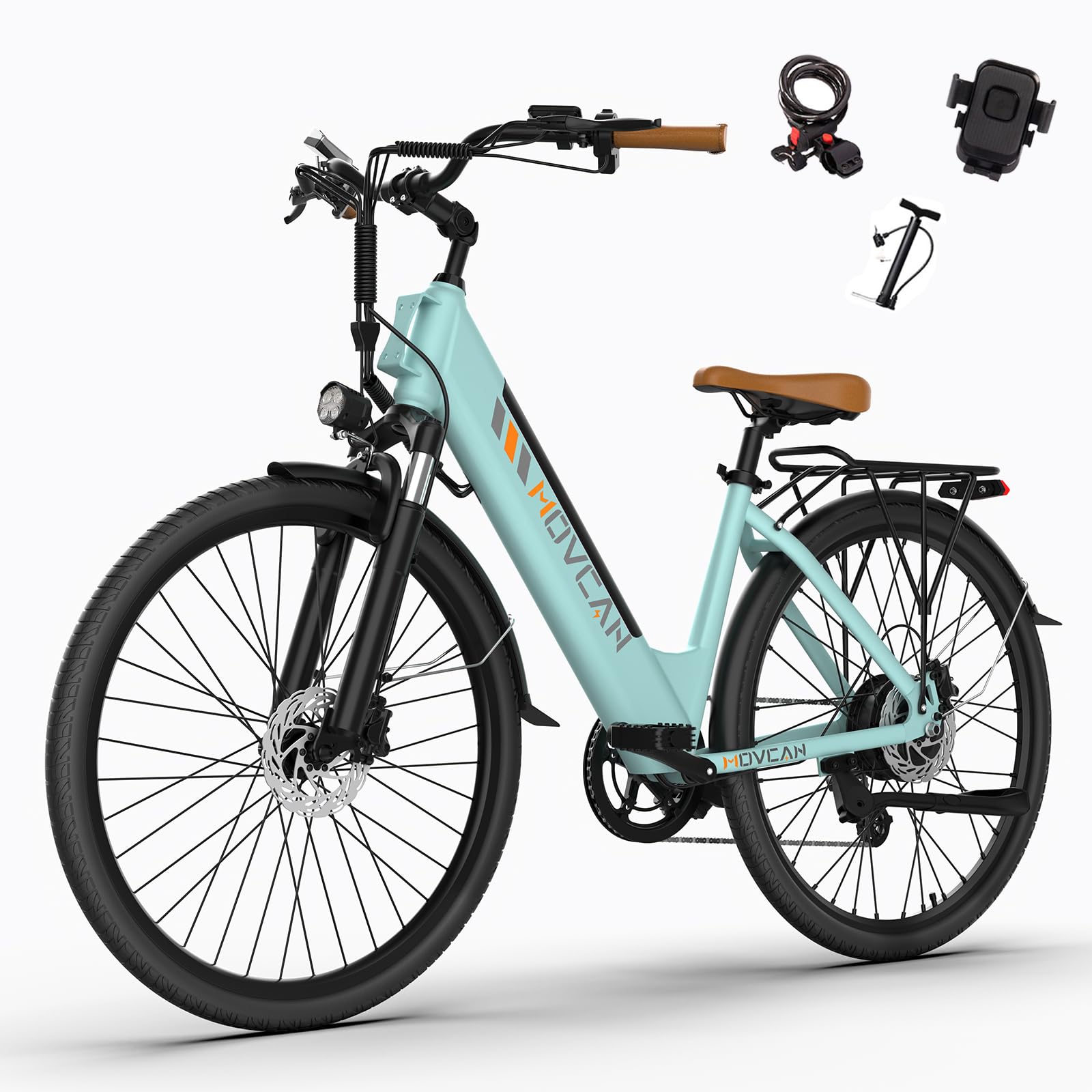
The Movcan V80 Electric Bike represents a departure from traditional road bikes, offering motor-assisted commuting capability that expands the definition of what a road bike can do at this price. The 1000W peak brushless hub motor delivers 80Nm of torque, providing enough power to climb 30-degree grades without exhausting the rider. The 48V 13Ah battery is UL2849 certified with a BMS system for safety, and the removable design allows convenient charging at home or the office. Range is rated up to 70 miles in pedal-assist mode and 30 miles in pure electric mode.
The 26-inch puncture-resistant tires with 1.95-inch width provide better traction and stability than narrow road tires, though they increase rolling resistance on pavement. The front suspension fork and rear 5-level suspension work together to smooth out rough roads, making this a viable option for commuters dealing with potholes and uneven surfaces. The 7-speed Shimano drivetrain works in conjunction with four riding modes — pure electric, PAS, cruise, and manual — giving the rider full control over how much assistance they want.
The LCD display tracks speed, mileage, and battery level, and the cruise control function engages after 8 seconds of steady speed for reduced hand fatigue. Dual disc brakes provide adequate stopping power for the 28 MPH top speed. Assembly is 90% pre-done with tools included. The main consideration for road-oriented buyers is the weight — at roughly 50-60 pounds, this is significantly heavier than a standard road bike, and the 26-inch wheels feel less responsive at speed than 700c road wheels.
What works
- Powerful 1000W peak motor easily handles steep hills
- Removable UL-certified battery offers up to 70 miles of range
- Full suspension and puncture-resistant tires improve comfort on rough roads
What doesn’t
- Heavy weight compared to standard road bikes
- 26-inch wheels lack the rollover efficiency of 700c road wheels
6. VOLTVOGUE Electric Bike
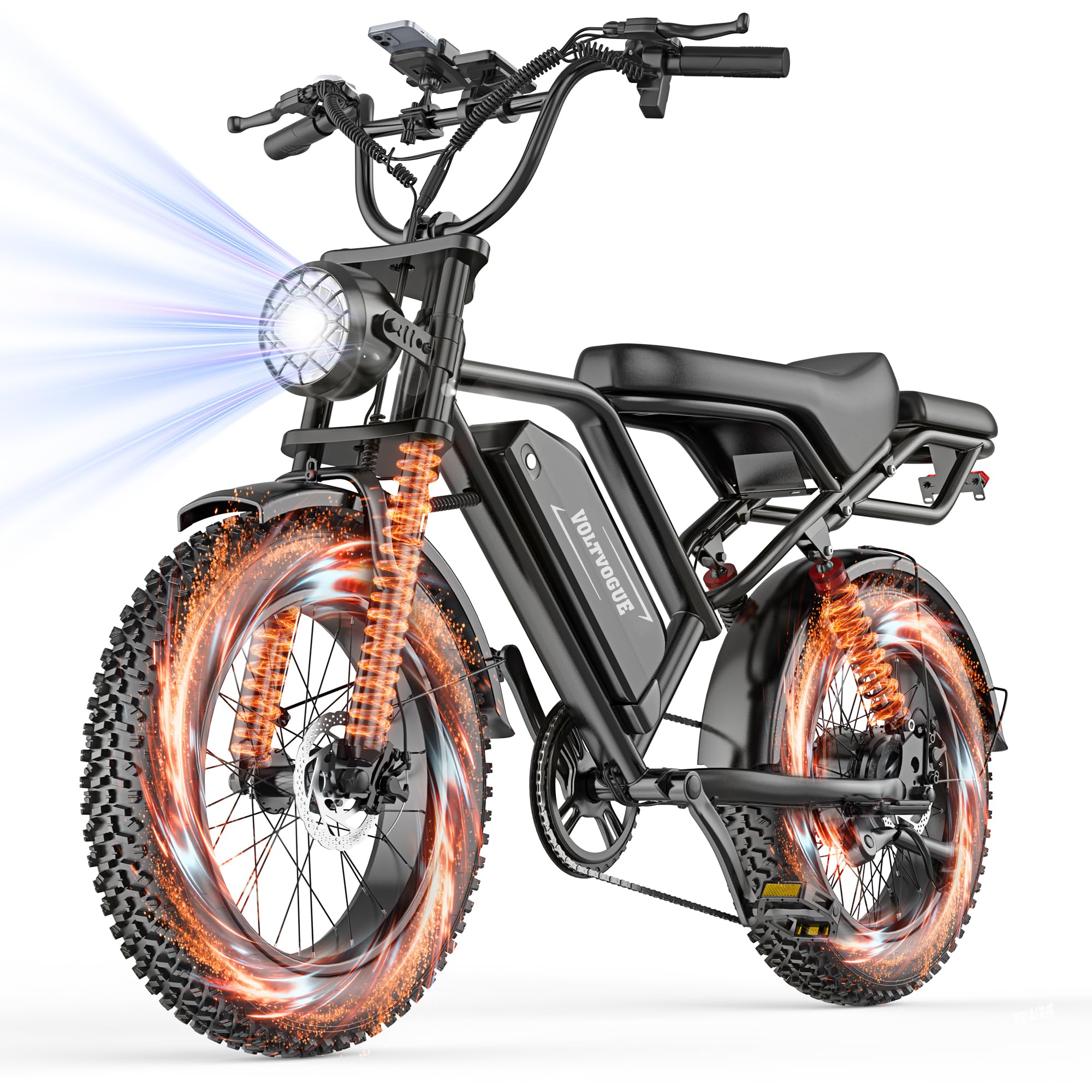
The VOLTVOGUE Electric Bike enters the market as the most budget-conscious option in this lineup, but it brings a compelling set of features that make it worth considering for specific use cases. The 750W brushless hub motor peaks at 1500W, delivering enough torque to reach 31 MPH while climbing moderate grades. The 48V 20Ah battery is the largest capacity in this group at 960Wh, offering a claimed range of 40-70 miles per charge — a meaningful advantage for longer commutes or recreational rides where charging access is limited.
The 20-inch fat tires are a standout feature, providing exceptional traction on loose surfaces like sand, snow, and gravel. The full dual suspension system with four shock absorbers — two front and two rear — effectively filters vibration from rough terrain, making this bike more comfortable on off-road trails than any traditional road bike. The 7-speed drivetrain with a branded derailleur provides smooth gear transitions, and the smart cruise control engages automatically after 8 seconds at steady speed, reducing throttle hand fatigue on long straight sections.
The included back seat expands carrying capacity significantly, allowing the bike to double as a light cargo hauler or a people mover for short trips. Assembly is 90% pre-complete, and the 1-year warranty on motor, battery, and charger provides basic peace of mind. The primary caveat for road-focused buyers is the 20-inch wheel size, which feels noticeably different from standard 700c road wheels — the smaller diameter accelerates quickly but requires more pedal cadence to maintain speed, and the fat tires create substantially more rolling resistance on pavement.
What works
- Massive 960Wh battery provides exceptional range for the price
- Full suspension and fat tires excel on loose or uneven surfaces
- Included back seat adds cargo or passenger versatility
What doesn’t
- 20-inch wheels and fat tires create high rolling resistance on pavement
- Motor power delivery can feel abrupt at low speeds
Hardware & Specs Guide
Frame Materials Explained
Aluminum alloy frames dominate the sub-1500 category due to their favorable cost-to-weight ratio. Butted aluminum uses varying wall thickness along the tube — thinner in low-stress areas to save weight, thicker at stress points for durability. Carbon fiber frames at this price typically use T700 or T800 grade fibers, with T800 offering higher tensile strength and stiffness. Carbon’s advantage is vibration damping and weight savings, but lower-grade carbon can be more susceptible to impact damage than aluminum. The Schwinn Fastback uses triple-butted aluminum, while both SAVADECK models use T800 carbon — a meaningful distinction that affects ride quality and long-term fatigue resistance.
Groupset Tiers & Shifting Performance
Shimano’s road groupset hierarchy in this price range typically starts at Tourney (entry-level, 7-8 speed), moves to SORA (9-speed, the entry performance tier), and reaches up to U6000 (11-speed, professional-grade). More speeds generally mean closer gear ratios, allowing finer cadence adjustment on rolling terrain. The SAVADECK Carbon Road ships with SORA 18-speed (2×9), while the SAVADECK Carbon Gravel uses U6000 11-speed (1×11 or 2×11 depending on configuration). The Schwinn Fastback’s older AO70 14-speed groupset works reliably but offers fewer ratios than modern 18- or 22-speed setups. Wider gear ranges benefit climbing, while closer ratios benefit maintaining optimal cadence on flats.
Braking Systems: Disc vs. Caliper
Caliper brakes are lighter and simpler but their stopping power diminishes significantly in wet conditions. Mechanical disc brakes use a cable to actuate the caliper, offering better modulation and wet-weather performance with a moderate weight penalty. Hydraulic disc brakes use fluid pressure for the most consistent, powerful stopping with the least hand effort. The Schwinn Phocus 1.6 uses mechanical discs, the SAVADECK Carbon Gravel uses hydraulic discs, and the Schwinn Fastback and SAVADECK Carbon Road use caliper brakes. For riders in wet climates or those who descend steep hills, disc brakes provide a measurable safety advantage that justifies the weight increase.
Wheel Size & Tire Width Impact
700c wheels are the road cycling standard, offering low rolling resistance and efficient momentum retention. 26-inch and 20-inch wheels accelerate faster but have higher rolling resistance and feel less stable at speed. Tire width plays a major role in comfort and traction — 25c tires are standard for road racing, 28-32c offers a balance of comfort and speed, and 40c or wider tires provide significant off-road capability at the cost of pavement efficiency. The SAVADECK Carbon Gravel’s 40c tires offer genuine all-surface versatility, while the VOLTVOGUE’s 20-inch fat tires are optimized for loose terrain but feel sluggish on asphalt. Matching wheel and tire choice to your primary riding surface is essential.
FAQ
Is carbon fiber worth it at this price point?
What groupset should I look for under 1500?
Should I choose disc brakes or caliper brakes on a road bike?
Can I use a gravel bike for road riding?
How important is wheel size for road cycling?
Final Thoughts: The Verdict
For most buyers, the best road bikes under 1500 winner is the SAVADECK Carbon Gravel Bike because it combines a genuine T800 carbon frame, a professional-grade Shimano U6000 11-speed groupset, and hydraulic disc brakes into a single versatile package that handles everything from pavement to gravel without compromise. If you want the lightest possible build for pure road performance and climbing, grab the SAVADECK Carbon Road Bike at 8.9kg with its wind tunnel-developed aero frame. And for a proven, durable aluminum option with reliable disc brakes and the widest gear range for fitness riding, nothing beats the value of the Schwinn Phocus 1.6.

Certification: BSc in Mechanical Engineering
Education: Mechanical engineer
Lives In: 539 W Commerce St, Dallas, TX 75208, USA
Md Amir is an auto mechanic student and writer with over half a decade of experience in the automotive field. He has worked with top automotive brands such as Lexus, Quantum, and also owns two automotive blogs autocarneed.com and taxiwiz.com.