Electric scooters have taken over urban commuting by delivering a compact solution that bridges the gap between walking and driving, but the sheer variety of motor ratings, battery capacities, and tire types can leave even seasoned buyers paralyzed with indecision. The wrong choice — prioritizing looks over real-world range or peak speed over reliable braking — leads to a scooter that feels heavy, slow, or unsteady on imperfect pavement.
I’m Amir — the founder and writer behind Four Wheel Ask. I’ve spent years analyzing motor wattage, battery management systems, suspension geometry, and safety certifications on electric scooters, cross-referencing manufacturer claims against aggregated owner feedback to separate genuine performance from marketing exaggeration.
Whether you’re a campus commuter, a weekend explorer, or a daily rider in a hill-heavy city, this guide distills the critical specs into actionable advice so you can confidently pick one of the best electric scooters available today. Scroll down for my full analysis of the best rated scooters.
How To Choose The Best Rated Scooters
Selecting the right electric scooter means understanding the trade-offs between power, range, comfort, and portability. The table stakes are motor rating and battery size, but the finer details — suspension travel, tire compound, braking system type — determine whether your daily ride feels effortless or exhausting.
Motor Power: Watts Matter More Than Peak Claims
Look for the continuous (nominal) motor wattage, not the inflated peak power number. A 500W nominal motor handles moderate hills and riders up to 220 lbs without bogging down. Pushing beyond 800W nominal gives you brisk acceleration and 20-25% grade climbing ability, but also adds weight and reduces range. If your commute is flat, 350W-500W is ample; for hilly terrain or heavier loads, target 600W nominal or higher.
Battery Capacity and Real Range
Manufacturers quote range at low speeds on flat ground with a lightweight rider — your real-world mileage is typically 60-70% of the advertised figure. Battery capacity measured in watt-hours (Wh) is the most reliable spec: a 360-480Wh pack delivers 15-20 genuine miles in mixed conditions, while 550-650Wh packs stretch past 30 miles. Pay attention to charge time as well; fast-charging support (under 6 hours full) is a quality-of-life feature you’ll appreciate daily.
Suspension, Tires, and Braking
Ride comfort is determined by suspension geometry and tire type. Front and rear spring or hydraulic suspension dramatically reduces vibration on cracked pavement. Pneumatic (air-filled) tires offer the best grip and shock absorption but are puncture-prone; split-rim designs simplify tube replacement. Drum brakes provide consistent, low-maintenance stopping power in wet conditions, while electronic regenerative brakes add efficiency but should never be the sole braking system.
Quick Comparison
On smaller screens, swipe sideways to see the full table.
| Model | Category | Best For | Key Spec | Amazon |
|---|---|---|---|---|
| Segway ZT3 Pro | Premium | Long range off-road performance | 43.5-mile max range / 1600W peak | Amazon |
| Hiboy MAX Pro | Premium | Ultra-long urban commutes | 46.6-mile max range / 650W motor | Amazon |
| Segway Ninebot MAX G2/G3 | Premium | Balanced commuting with traction control | 43-mile range / 1000W peak motor | Amazon |
| NAVEE GT3 Pro | Mid-Range | Tech-heavy daily riding | 37-mile range / 1000W peak motor | Amazon |
| iScooter iX3 | Mid-Range | Versatile commuting with adjustable handlebars | 25-mile range / 800W motor | Amazon |
| CUNFON RS500 | Mid-Range | Quiet, smooth pavement cruising | 35-mile range / 1000W peak motor | Amazon |
| VOLPAM SP08 | Mid-Range | Entry-level performance with app features | 23-mile range / 500W motor | Amazon |
| NIU 100P | Mid-Range | Compact urban commuting | 18-mile range / 300W motor (600W peak) | Amazon |
| Gotrax SA1 | Budget | Lightweight short-distance travel | 12-mile range / 250W motor | Amazon |
In‑Depth Reviews
1. Segway ZT3 Pro
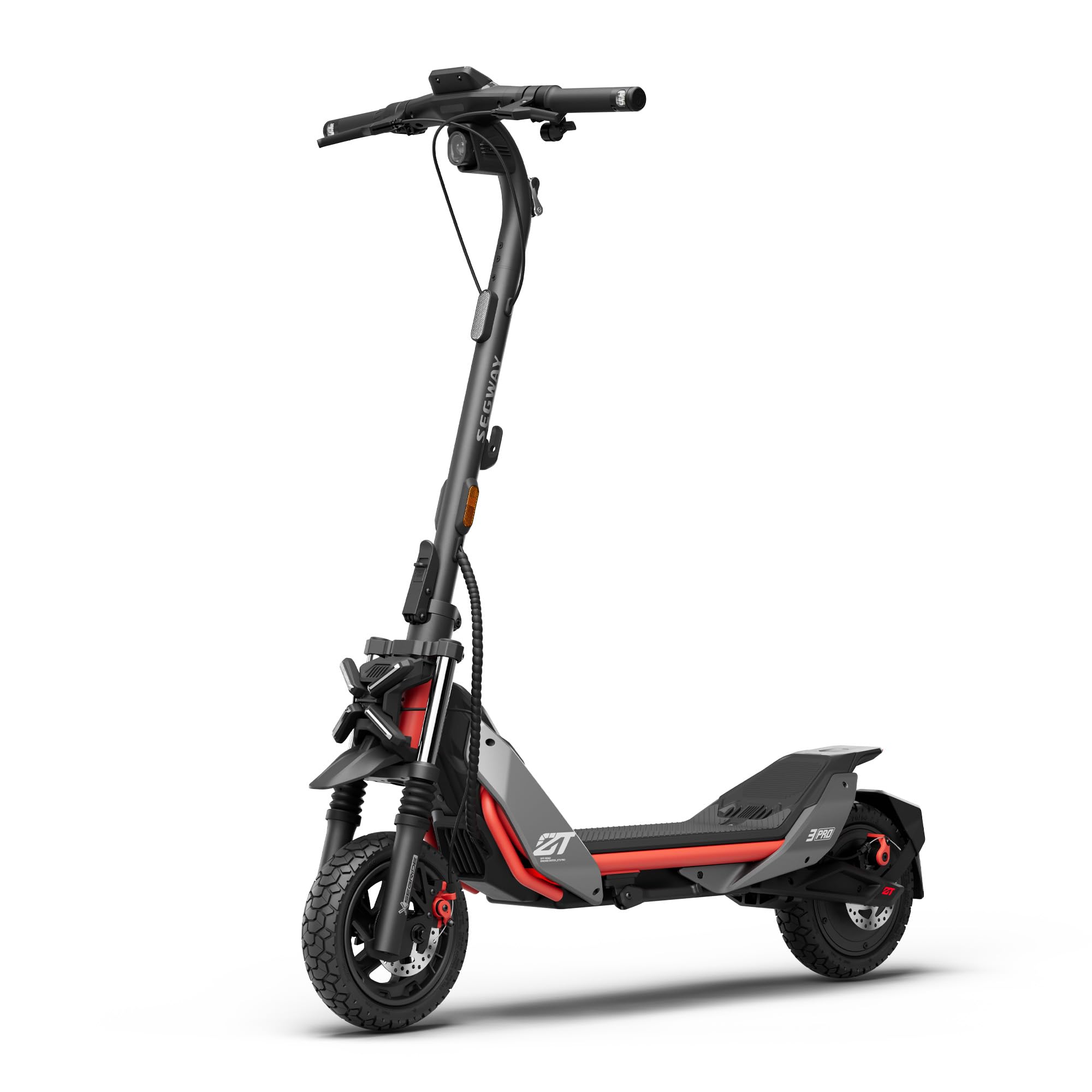
The Segway ZT3 Pro sits at the top of this list because it nails the trifecta that serious riders demand: real-world range, genuine off-road capability, and charging speed that eliminates overnight waits. The 1600W peak motor delivers a 24.9 MPH top speed and can pull a 200 lb rider up a 25% grade without the motor bogging down, a feat that lesser scooters can only claim in ideal lab conditions. The 11-inch tubeless tires paired with dual front telescopic and rear spring suspension absorb potholes and gravel chatter better than any other scooter in this lineup.
What pushes the ZT3 Pro beyond a mere spec sheet winner is the 43.5-mile range achieved in ECO mode and the 4-hour flash charge that fills the battery completely — double the convenience of the typical 8-hour charge common on mid-range models. The UL-2272 certification provides genuine peace of mind for electrical safety, and the Segway ecosystem holds its value when resold. Riders over 220 lbs will see the real range drop to roughly 30-33 miles, which is still competitive with most premium models.
It’s not the lightest scooter at 65.5 lbs, so you won’t want to carry it up three flights of stairs daily. The fixed handlebar height also means shorter riders (under 5’4”) may find the riding position slightly stretched. But if you value torque, battery life, and off-road composure, this is the strongest all-rounder in the premium tier.
What works
- Best-in-class 43.5-mile range with flash charge
- 1600W peak motor climbs steep grades effortlessly
- 11-inch tubeless tires and dual suspension for rough terrain
- UL-2272 certified with dual disc brakes for safety
What doesn’t
- Heavy at 65.5 lbs for carrying upstairs
- Fixed handlebars less ideal for shorter riders
- Premium price point may exceed casual budgets
2. Hiboy MAX Pro

The Hiboy MAX Pro carves out a niche for riders who prioritize maximum commute distance over outright speed. Its 48V 15Ah battery pack delivers a genuine 46.6-mile maximum range, which in mixed riding (20% hills, 80% flat pavement) still translates to roughly 34-38 miles before it needs a wall outlet. The 650W peak motor isn’t the most aggressive off the line, but it runs efficiently at the 22 MPH top speed without drawing excessive current that shortens battery life.
Comfort is a strong suit here: the 11-inch pneumatic tires with split hub design make tube replacement straightforward, and the front and rear suspension system soaks up expansion joints and shallow ruts that would rattle your hands on a rigid scooter. The UL2272 certification confirms electrical safety, and the side ambient lighting and drum brakes provide confident visibility and stopping power on evening commutes. The 265 lb max load rating is generous enough to carry a backpack or delivery bag without sag.
At 51.6 lbs, it’s a middleweight — portable enough for trunk storage but heavy for extended carrying. The 8-hour charge time feels dated compared to the flash-charging Segway ZT3 Pro. Still, for riders whose priority is squeezing every possible mile out of a charge, the Hiboy MAX Pro delivers the best range-per-dollar in this review.
What works
- Class-leading 46.6-mile max range for long commutes
- 11-inch pneumatic tires with split hub for easy repair
- Dual suspension for a smooth, comfortable ride
- 265 lb max load capacity
What doesn’t
- 8-hour charge time is slow vs. premium competitors
- 650W motor lacks punch for steep hills
- Heavy for its motor class at over 50 lbs
3. Segway Ninebot MAX G2/G3
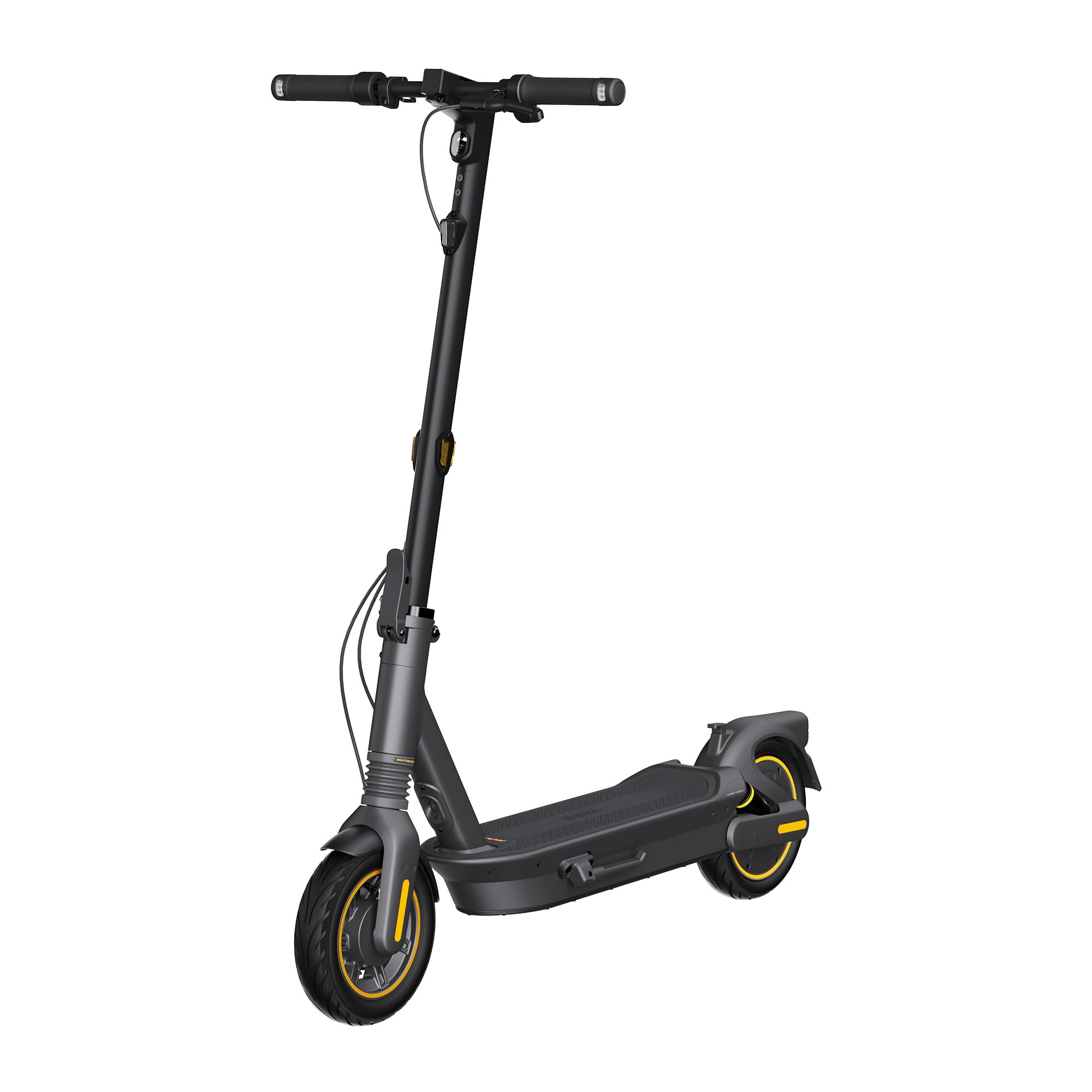
The Segway Ninebot MAX G2/G3 series is the first electric scooter in this price tier to integrate TCS traction control — a feature previously reserved for high-end motorcycles. This system actively reduces wheel slip on wet pavement, loose gravel, and painted lane markings, making it the safest choice for riders who can’t avoid rain-slicked streets or sandy bike paths. The 1000W peak motor pushes the scooter to 22 MPH, and the 551 Wh battery yields a real-world range of roughly 30 miles in mixed conditions.
The ride quality is enhanced by a dual suspension setup — front hydraulic fork plus rear spring — that provides progressive damping on bigger bumps without the pogo-stick effect of cheaper coil-only systems. The integrated Apple Find My feature lets you locate the scooter via your iPhone if it gets misplaced, a thoughtful touch for commuters who lock their scooter outside coffee shops. The UL-2272 certification and bright 360-degree lighting system round out a safety package that few competitors match.
The 53.5 lb curb weight is at the upper end of this bracket, and the 6-hour charge is average but not exceptional. The fixed handlebar height may feel cramped for riders over 6’1”. However, for riders who prioritize all-weather stability over sprint speed, the Ninebot MAX series sets a new standard for traction and control.
What works
- TCS traction control for wet and loose surfaces
- Hydraulic front suspension provides superior bump absorption
- Apple Find My integration for anti-theft tracking
- UL-2272 certified with integrated turn signals
What doesn’t
- Heavy at 53.5 lbs for daily lugging
- 6-hour charge is adequate but not fast
- Handlebar height not adjustable for taller riders
4. NAVEE GT3 Pro
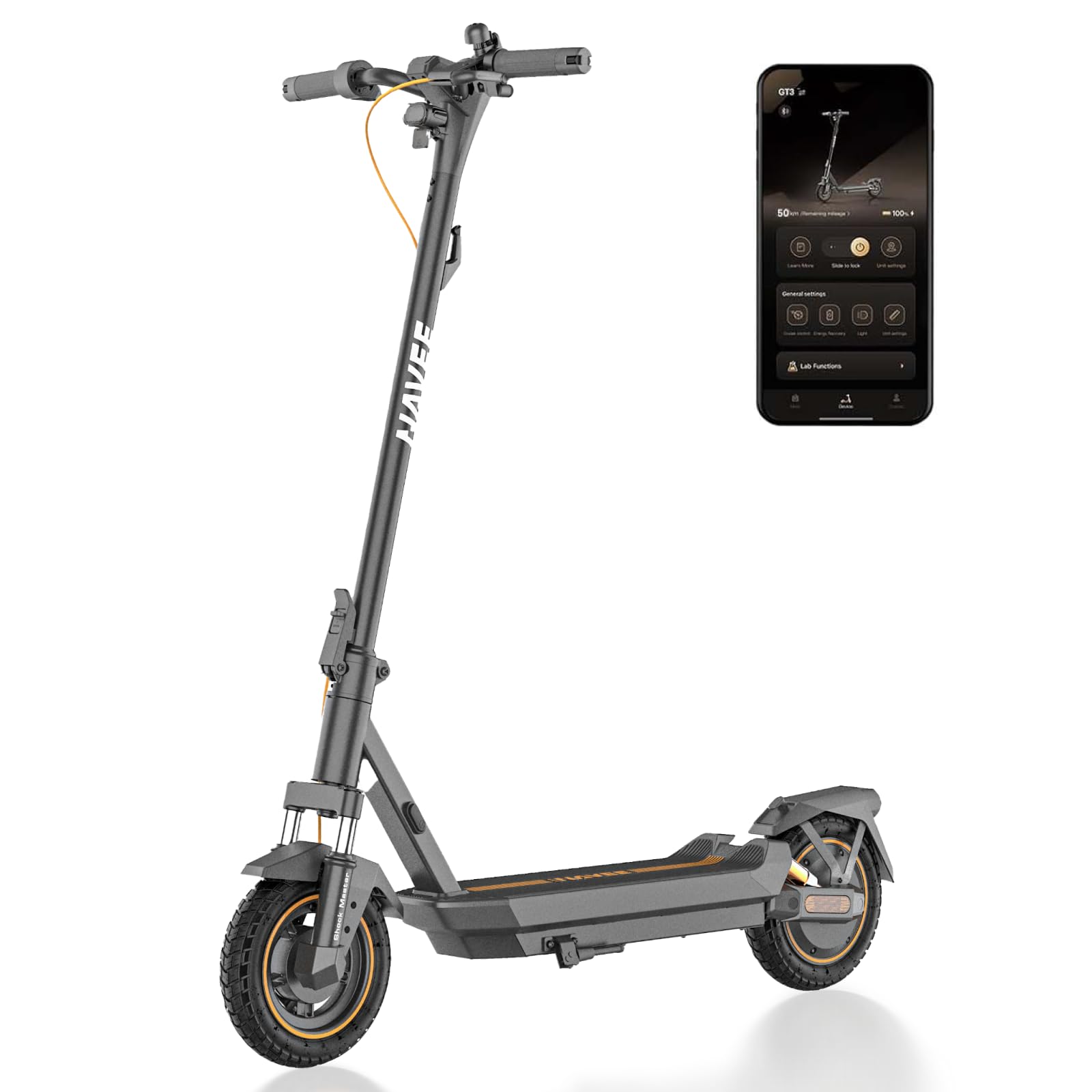
The NAVEE GT3 Pro punches above its price bracket by offering features typically found on + scooters: a 1000W peak motor, 37.5-mile max range, and TCS traction control for wet-surface grip. The 477Wh BMS-managed battery delivers consistent voltage output even as the pack depletes, so the 20 MPH top speed holds steady rather than fading in the last quarter of the range. The three riding modes — Sport (20 MPH), Daily (12 MPH), and Pedestrian (3 MPH) — are genuinely useful transitions, not just marketing buzzwords.
The suspension system pairs a front fork with a rear damping cylinder, which handles moderate bumps well but falls short of the plushness offered by the hydraulic front setup on the Segway Ninebot MAX. The 10-inch pneumatic tires are puncture-resistant and provide decent rollover capability on gravel paths. The Apple Find My integration and Bluetooth proximity lock add anti-theft confidence that is rare at this price point. At 48.5 lbs, it’s one of the lightest long-range scooters in this roundup, making it genuinely feasible to carry onto a bus or up a flight of stairs.
The 8-hour charge cycle is the main compromise — you’ll need to plug it in overnight rather than topping off during a lunch break. The fixed handlebar design also means taller riders (over 6 feet) may find the cockpit slightly cramped during extended rides. For tech-focused buyers who want smart features and long range without crossing into premium price territory, the NAVEE GT3 Pro is a compelling sweet spot.
What works
- 37.5-mile range with 1000W peak motor
- TCS traction control for wet-road safety
- Apple Find My and Bluetooth lock for security
- Lightest long-range option at 48.5 lbs
What doesn’t
- 8-hour charge time is slower than premium rivals
- Suspension not as plush as hydraulic setups
- Cockpit may feel tight for riders over 6 feet
5. iScooter iX3

The iScooter iX3 distinguishes itself with an adjustable handlebar that ranges from 44.5 to 52.8 inches — a practical advantage for households where multiple riders of different heights share the same scooter. The 800W brushless motor peaks at 25 MPH and handles 20-25° inclines with respectable torque, making it suitable for suburban commuters who face a few moderate hills. The 480Wh battery yields a real-world range of roughly 18-20 miles per charge, which aligns with the typical 8-12 mile round-trip commute.
It ships fully assembled out of the box — a welcome detail that saves 20-30 minutes of tedious bolt-tightening. The 10-inch off-road pneumatic tires paired with front and rear dual shock absorbers provide a stable platform on rough pavement, and the directional signals plus ambient lighting improve visibility at night. The iScooter Club app allows speed limiting and scooter locking, which is useful for fleet management or family sharing. The 51 lb weight is middle-of-the-pack, but the one-step folding mechanism makes stowing it in a trunk effortless.
The display uses a color LCD that is easier to read in direct sunlight than the monochrome screens on cheaper scooters, though the font is small for eyeglass wearers. The drum brakes offer consistent stopping power but lack the progressive feel of disc brakes during panic stops. For households that need one scooter to fit everyone from a 5’2” teen to a 6’0” adult, the iX3’s height adjustability makes it the most versatile mid-range option.
What works
- Adjustable handlebar (44.5-52.8 inches) fits multiple riders
- Pre-assembled out of the box — no setup required
- 800W motor handles moderate hills with ease
- Directional signals and ambient lighting for night safety
What doesn’t
- Real-world range closer to 18 miles than advertised 25
- 51 lb weight is average for the motor class
- Drum brakes lack the bite of disc brakes
6. CUNFON RS500
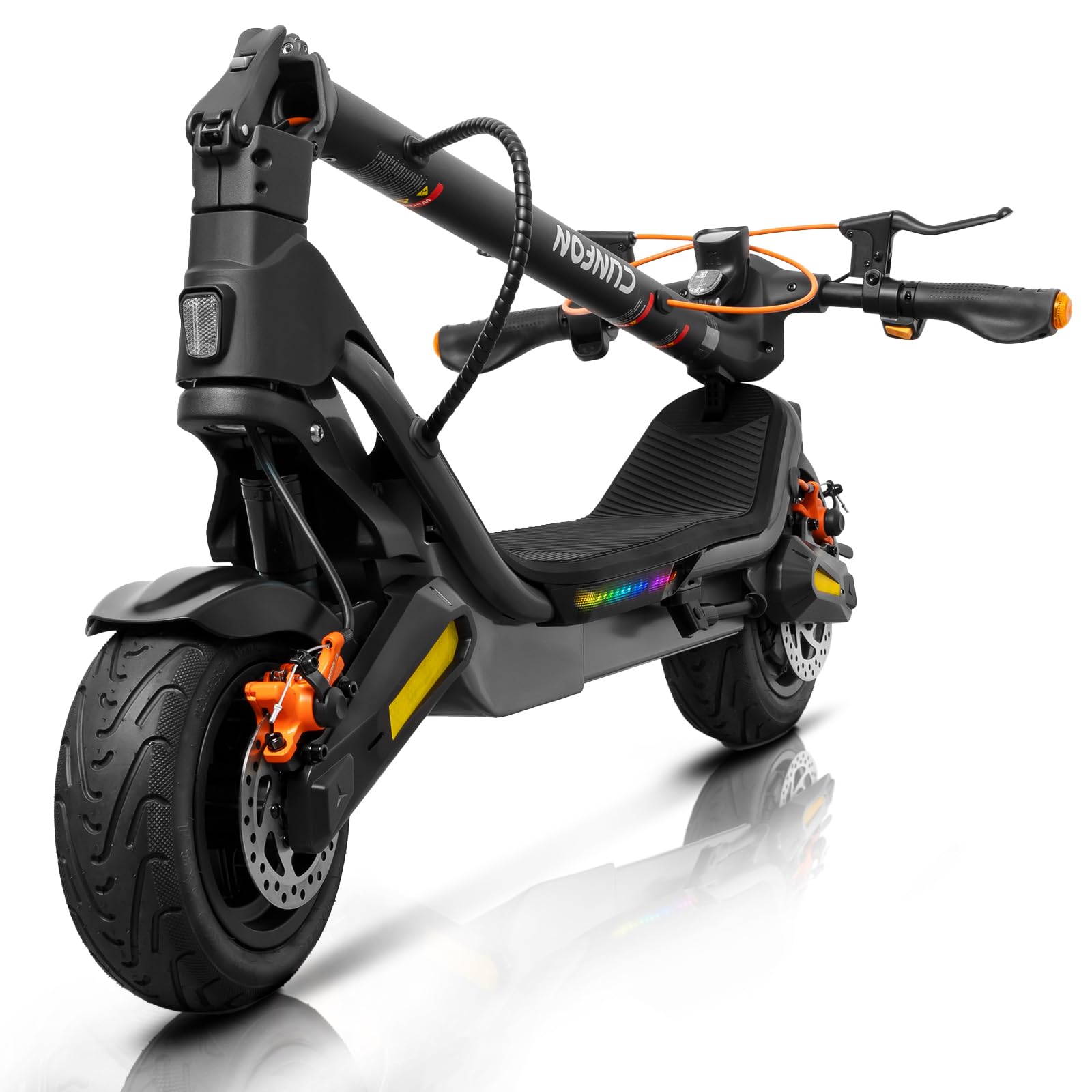
The CUNFON RS500 prioritizes ride refinement and low noise over straight-line speed. The 624Wh battery is one of the larger packs in this mid-range group, pushing a real-world range of 25-30 miles on mixed terrain. The 1000W peak motor moves the scooter up to 25 MPH, but the real story is the C-type spring suspension system and 9.5mm thickened tubeless road tires that produce an unusually quiet, vibration-free ride on asphalt. The square brake pads increase friction surface area, which results in less squeal during deceleration compared to standard drum brakes.
The design language is clean and minimalist, with curved handlebars that feel more natural over long rides than the straight bars found on most competitors. The 360-degree integrated lighting system changes color based on riding status — blue for coasting, red for braking — which adds a practical safety layer for night riding. The UL-2272 compliance means the battery and electrical system meet the same safety standard as the premium Segway models, a certification that budget-tier scooters often skip.
The 44.5-inch deck is relatively compact, so taller riders with size 13+ shoes may find their heels hanging off the back during acceleration. The 6-8 hour charge is standard for this class, and there is no companion app for firmware updates or ride tracking. For sedation-minded commuters who want to arrive without rattled nerves, the RS500’s quiet, smooth character is a genuine differentiator.
What works
- Exceptionally quiet ride with square brake pads
- 624Wh battery for 25-30 real-world miles
- Curved handlebars improve long-ride ergonomics
- UL-2272 certified with 360-degree lighting
What doesn’t
- Compact deck may not fit large feet comfortably
- No companion app for smart features
- 6-8 hour charge is average at this price tier
7. VOLPAM SP08
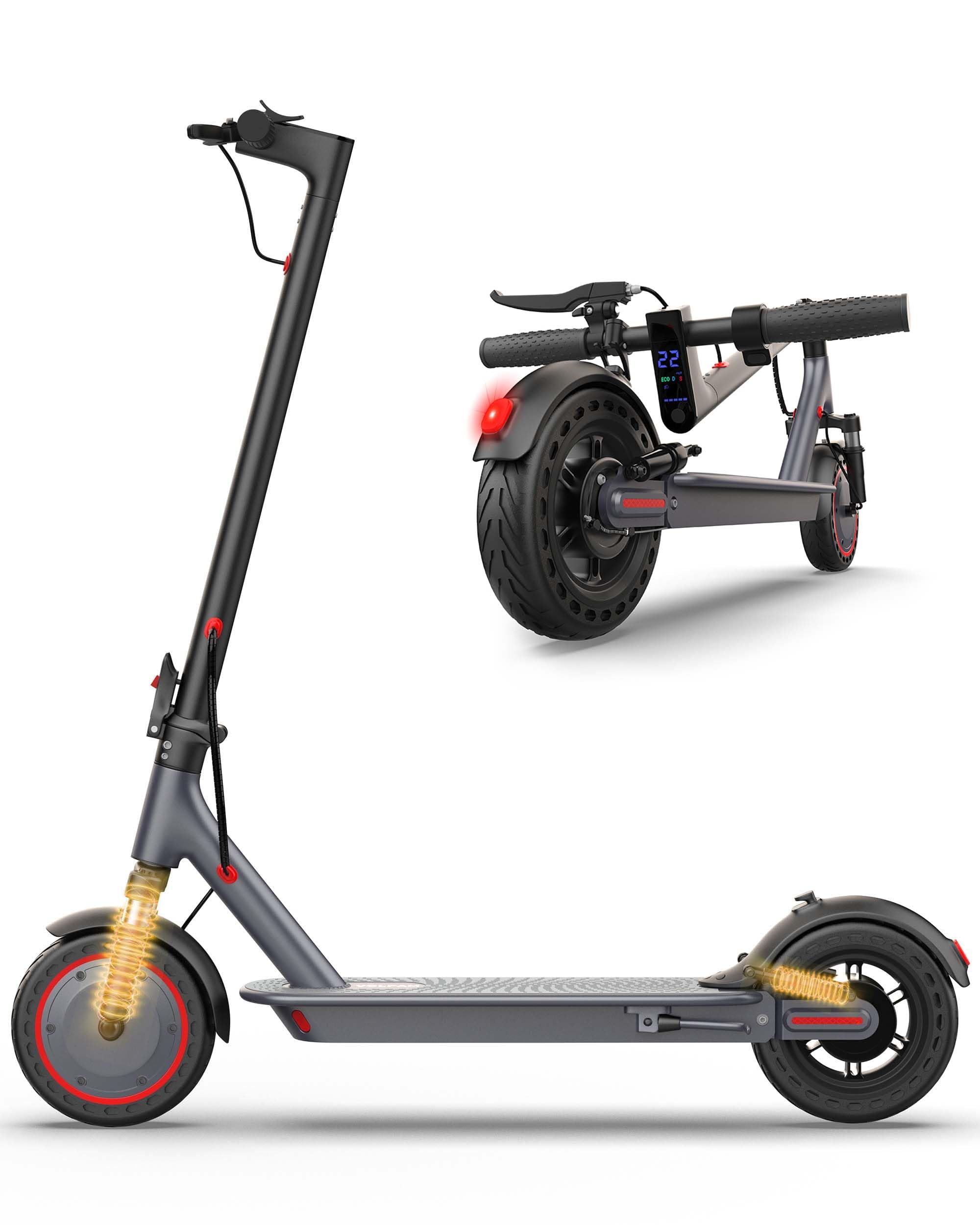
The VOLPAM SP08 delivers a compelling package for budget-conscious buyers who refuse to compromise on comfort. The 500W motor pushes the scooter to 21 MPH, and the 23-mile max range is realistic for 15-18 miles of mixed riding. The standout features at this price point are the dual suspension system — front fork plus rear spring — and the 10-inch solid tires, which eliminate the risk of flats entirely. Riders on campus or flatter suburban roads will appreciate the maintenance-free tire setup that never requires inflation or tube replacement.
The companion app adds unexpected value: you can lock the scooter via Bluetooth, view real-time speed and battery stats, and adjust gear modes directly from your phone. The mechanical drum brake paired with electronic EABS provides adequate stopping power, though the engagement feels slightly grabby compared to more linear systems on higher-end models. The 265 lb max load rating covers heavier riders without sag, and the bright headlight improves visibility on unlit paths.
The 5-hour charge time is faster than many scooters in this class, reducing downtime between rides. The plastic fenders feel less robust than the metal ones on the NIU 100P or Segway models, and the solid tires transmit more road texture to the handlebars than pneumatic alternatives. But for value-focused shoppers who want suspension and app connectivity without crossing the threshold, the VOLPAM SP08 is hard to beat.
What works
- Dual suspension with maintenance-free solid tires
- Companion app for locking and ride tracking
- Fast 5-hour charge time
- 265 lb max load rating
What doesn’t
- Solid tires transmit more vibration than pneumatics
- Plastic fenders feel less durable
- Brake engagement can feel grabby
8. NIU 100P
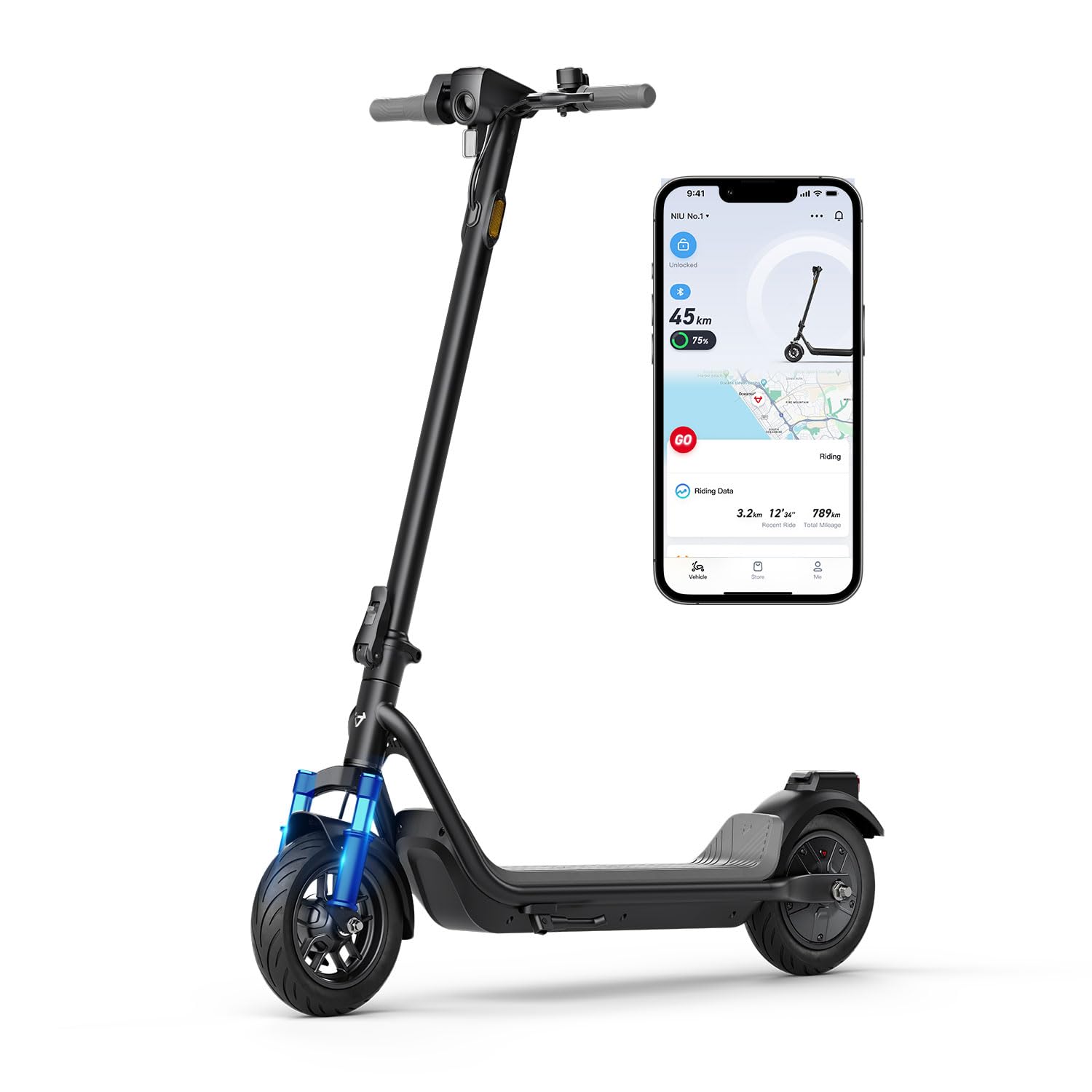
The NIU 100P is the most compact scooter in this review, weighing only 38.1 lbs while still carrying a 300W motor (600W peak) that hits 17.4 MPH. Its 18-mile max range is realistic for 13-15 miles of mixed riding, making it ideal for short campus loops or last-mile connections to train stations. The 36mm dual-stroke suspension is unusually generous for a sub-40 lb scooter, allowing it to soak up cobblestone alleys and brick pathways that would rattle a rigid frame.
The 9.5-inch pneumatic tube tires deliver a compliant ride, though they are more vulnerable to punctures than the solid tires on the VOLPAM SP08. Bluetooth connectivity and the NIU app let you adjust speed modes, set battery charge limits, and lock the scooter remotely — a rare feature set at this weight class. The 2-step folding mechanism collapses the scooter in under 10 seconds, and the folded package is compact enough to slide under a subway seat or into a compact car trunk.
The 300W nominal motor is the most significant limitation: the 15% hill climbing ability means steep grades will slow you to a crawl, and heavier riders (above 200 lbs) will notice sluggish acceleration from a standstill. The regenerative rear brake is more of a range extender than a primary stopper, requiring early anticipation of stops. For lightweight urban dwellers whose commutes are flat and short, the NIU 100P is an exceptionally portable and well-connected option.
What works
- Lightest scooter on the list at 38.1 lbs
- 36mm dual-stroke suspension for a compact frame
- Bluetooth connectivity with NIU app features
- Fast 2-step folding for easy storage
What doesn’t
- 300W motor struggles on hills over 15% gradient
- Pneumatic tires prone to punctures
- Acceleration feels sluggish for heavier riders
9. Gotrax SA1
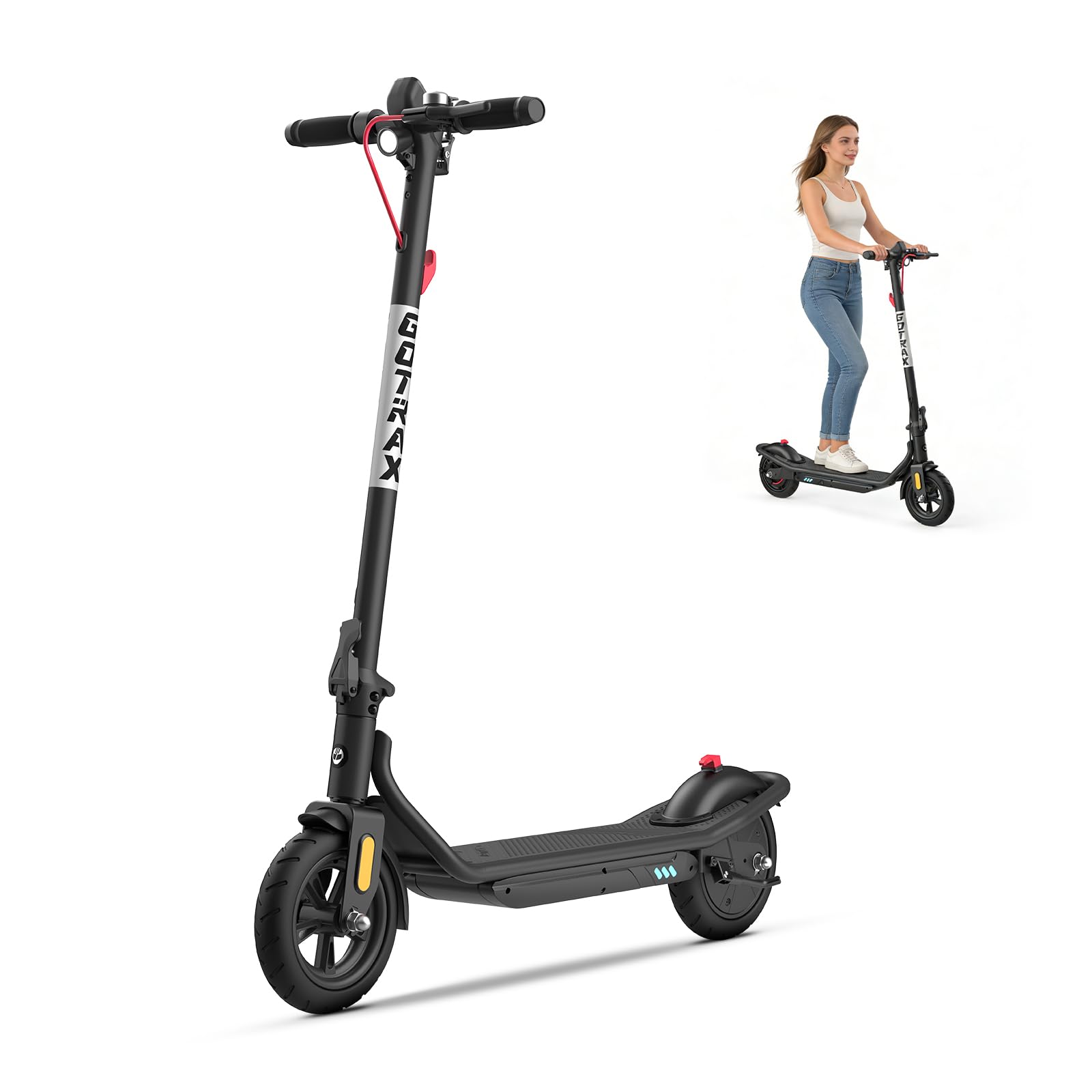
The Gotrax SA1 is the entry-level gateway to electric scooters, designed for short-distance riders who want a reliable, low-complexity machine without financial overcommitment. The 250W motor peaks at 15.5 MPH and the 36V 5.2Ah battery delivers 9-12 miles of range — enough for a 4-mile round-trip commute or errands around a college campus. The real differentiator here is the hybrid tire setup: an 8.5-inch front pneumatic tire that cushions the ride paired with a rear solid tire that guarantees zero flats and zero maintenance.
The mechanical EABS combined with the rear drum brake provides adequate stopping power at the 15.5 MPH top speed, though you won’t want to trust it for panic stops on steep descents. The 33 lb curb weight makes it one of the easier scooters to carry up a flight of stairs, and the folding mechanism shrinks it to 40×16×18 inches for storage under a desk or in a closet. The big LCD display is legible in daylight and includes a cruise control feature that maintains speed on straight stretches, reducing thumb fatigue.
The 10% hill climbing ability is the strictest limitation here — you’ll need to kick-assist on anything steeper than a gentle incline. The 220 lb max load means heavier riders will see reduced range and slower acceleration. The plastic deck grip can feel slippery when wet. For absolute beginners or students who need a low-cost, low-maintenance scooter for flat, short trips, the SA1 does exactly what is asked of it without fuss.
What works
- Hybrid tire setup — front pneumatic for comfort, rear solid for zero flats
- Lightweight at 33 lbs for easy carrying
- Cruise control reduces fatigue on long straight sections
- Very budget-friendly entry price
What doesn’t
- 250W motor struggles on any incline over 10%
- Real-world range is closer to 9 miles than 12
- 220 lb max load limits heavier riders
- Plastic deck grip is slippery when wet
Hardware & Specs Guide
Motor Wattage & Torque Curve
The nominal motor wattage determines sustained cruising ability, while peak wattage handles short bursts for acceleration and hill climbing. A 250W nominal motor is sufficient for flat ground and lightweight riders, but you’ll want 500W-800W nominal for moderate hills and 1000W+ for steep grades or heavy loads. Motors with higher nominal ratings also run cooler under load, extending their service life.
Battery Chemistry & Range Factors
Lithium-ion packs rated in Wh determine how far you can travel. Real-world range is typically 60-70% of the advertised figure due to rider weight, wind, hills, and frequent stop-and-go riding. Scooters with smart BMS (battery management system) cells deliver more consistent voltage as the battery depletes, reducing the power fade that cheaper packs exhibit in the final 20% of their charge.
Tire Types and Ride Dynamics
Pneumatic (air-filled) tires offer the best grip and shock absorption but require periodic inflation and are prone to punctures. Solid tires eliminate flats but transmit more road vibration and have less traction on wet surfaces. Tubeless tires on split rims offer a compromise — they hold air better than tube-type tires and can be repaired with plugs, though they are heavier and stiffer.
Suspension Design: Travel Matters
Front-only suspension helps with basic bumps, while dual suspension (front and rear) is essential for comfort on broken pavement. Spring-based systems are durable and low-maintenance, but hydraulic and damping-cylinder setups offer progressive absorption that prevents bottoming out on larger impacts. Suspension travel of 30mm or more is considered adequate for urban commuting.
FAQ
What motor wattage do I need for moderate hills?
How do I calculate real-world range from advertised numbers?
Are solid tires better than pneumatic for commuting?
What does UL-2272 certification actually guarantee?
Can I ride an electric scooter in the rain?
Final Thoughts: The Verdict
For most buyers, the best rated scooters winner is the Segway ZT3 Pro because it delivers the longest verified range, the fastest charging time, and the most confident off-road composure in a single package that also carries UL-2272 safety certification. If you want the maximum commute distance between charges, grab the Hiboy MAX Pro and its 46.6-mile range. And for value-conscious riders who refuse to sacrifice suspension comfort or app connectivity, nothing beats the VOLPAM SP08.

Certification: BSc in Mechanical Engineering
Education: Mechanical engineer
Lives In: 539 W Commerce St, Dallas, TX 75208, USA
Md Amir is an auto mechanic student and writer with over half a decade of experience in the automotive field. He has worked with top automotive brands such as Lexus, Quantum, and also owns two automotive blogs autocarneed.com and taxiwiz.com.