The right set of hoops transforms your motorcycle’s handling, braking, and overall confidence—whether you’re carving canyons or logging highway miles. Sorting through compounds, ply ratings, and tread patterns can be overwhelming when every brand claims superior grip and longevity.
I’m Amir — the founder and writer behind Four Wheel Ask. Over the past decade I’ve studied thousands of tire spec sheets, analyzed owner mileage reports, and compared construction data to separate marketing hype from real-world performance.
This guide focuses on delivering genuine value without the noise, helping you pinpoint the best price on motorcycle tires for your specific riding style and machine.
How To Choose The Best Price On Motorcycle Tires
Selecting the right tire starts with understanding your bike’s requirements and your riding environment. The key factors are construction type, rubber compound, tread design, and size compatibility.
Construction: Bias-Ply vs. Radial
Bias-ply tires use overlapping cord layers for a stiffer sidewall, making them durable and affordable—ideal for cruisers and touring bikes. Radial tires feature belts running across the cords, offering better heat dissipation and more flexible sidewalls for sporty handling. Your bike’s original equipment and suspension setup dictate which works best.
Compound and Tread Patterns
Single-compound tires provide consistent performance but may wear faster in the center. Dual-compound designs place a harder rubber strip in the center for longevity and softer edges for cornering grip. Tread patterns with deep sipes and circumferential grooves improve water evacuation and wet traction, while directional patterns optimize cornering stability.
Load Index and Speed Rating
The load index indicates the maximum weight a tire can support at full inflation, while the speed rating (H, W, V, etc.) defines the top safe speed. Matching these to your bike’s weight and performance capabilities is critical for safety and tire life.
Quick Comparison
On smaller screens, swipe sideways to see the full table.
| Model | Category | Best For | Key Spec | Amazon |
|---|---|---|---|---|
| Michelin Road 5 | Premium Radial | Wet grip touring | 180/55ZR-17, W-rated | Amazon |
| Bridgestone S22 | Hypersport | Dual-sport cornering | 110/70R17, W-rated | Amazon |
| Pirelli Diablo Rosso III | Premium Sport | High-speed cornering | 120/70ZR17 190/50ZR17, W-rated | Amazon |
| Dunlop Harley D402 | Cruiser OE | Harley touring stability | 130/82R16, H-rated | Amazon |
| Kenda KM1 Set | Sport Touring | All-round sport touring | 120/70-17 & 180/55-17, W-rated | Amazon |
| Bridgestone Exedra Max | Cruiser Radial | Long-mileage cruiser | 170/80B15, V-rated | Amazon |
| Continental Sport Set | Sport Radial | Aggressive street riding | 120/70-17 & 180/55-17 | Amazon |
| Michelin Pilot Power 2CT | Sport Dual-Compound | Leaning grip on a budget | 110/70ZR-17, W-rated | Amazon |
| Shinko 777 Front | Budget Cruiser | Entry-level cruiser front | 100/90-19, H-rated | Amazon |
| Dunlop D404 Rear | Budget Cruiser | Affordable cruiser rear | 130/90-16, H-rated | Amazon |
| Shinko SR777 Rear | Budget Cruiser | Heavy-duty cruiser rear | 150/80-16, H-rated | Amazon |
In‑Depth Reviews
1. Michelin Road 5 Touring Radial

The Road 5 earned its reputation as the wet‑grip benchmark among sport‑touring tires. Michelin’s proprietary XST Evo sipes remain effective even after significant wear, and the 2CT+ compound provides a harder center for mileage with softer shoulders for cornering. The ACT+ casing technology improves stability under load and reduces flex during aggressive transitions.
Owner feedback consistently highlights how the Road 5 maintains braking performance well past the 3,000‑mile mark—a direct result of the self‑locking sipes. The directional tread pattern evacuates water efficiently, reducing hydroplaning risk at highway speeds. For riders who encounter rain frequently or cover long distances, this tire is a clear frontrunner.
One trade‑off is the premium price point, but the combination of longevity and exceptional wet traction justifies the investment for most touring and sport‑touring applications. The 180/55ZR‑17 size fits a wide range of middleweight and heavyweight sport‑touring bikes.
What works
- Best‑in‑class wet grip even after thousands of miles
- Stable at high speeds with minimal tread squirm
- Dual‑compound design extends center tread life
What doesn’t
- Initial break‑in can feel slightly stiff
- Premium price might deter casual riders
2. Bridgestone Battlax Hypersport S22

The S22 is Bridgestone’s premier hypersport tire for modern street‑sport bikes. Its front and rear compounds incorporate fine‑grain silica to improve wet grip, while the increased pattern rigidity sharpens turn‑in response. The dual‑compound rear puts a harder centre strip under power and softer shoulders for cornering confidence.
Reviews from track‑day riders note the S22 offers predictable feedback at lean angles exceeding 45 degrees. The tread pattern is directional and features full‑depth sipes that maintain water channeling as the tire wears. For street riders who push hard on canyon roads, this tire delivers a reassuring blend of mechanical grip and slip angle communication.
Some owners report that the centre compound can square off under heavy straight‑line highway use, so it’s best suited for riders who enjoy frequent cornering. The 110/70R17 front size is common on 600cc and liter‑class sport bikes.
What works
- Excellent dry grip with fast warm‑up
- Wet performance improved over previous S21
- Responsive turn‑in without being twitchy
What doesn’t
- Centre tread wears faster during highway miles
- Limited sizes for touring or cruiser bikes
3. Pirelli Diablo Rosso III Set

The Diablo Rosso III is a direct descendant of Pirelli’s World Superbike technology. Its bi‑compound construction places a wide soft stripe on the shoulder for maximum grip from mid‑lean—an area most sport riders spend time in. The front tire’s profile is designed to maintain a consistent contact patch under hard braking.
Owner reports emphasize the Rosso III’s progressive slip feel, which aids confidence when approaching the limit. The tire heats quickly from cold starts and holds temperature well during aggressive stints. On wet roads, the silica‑enhanced compound provides better traction than previous generations, though it still demands caution in standing water.
This set (120/70ZR17 front, 190/50ZR17 rear) fits many modern superbikes and liter‑class sport machines. The wear rate is competitive for the hypersport category, typically lasting 4,000‑6,000 miles depending on riding style.
What works
- Superb mid‑corner grip from soft shoulder compound
- Fast warm‑up time for early morning rides
- Consistent feedback at high lean angles
What doesn’t
- Not ideal for heavy touring or straight‑line commuting
- Premium price for a two‑tire set
4. Dunlop Harley Davidson D402 Front

The D402 is the factory‑approved touring tire for Harley‑Davidson motorcycles. Its three‑ply polyester casing with two fiberglass belts delivers the stability required for heavy touring rigs. The computer‑optimized tread profile and offset center groove reduce cupping—a common complaint on cruiser tires—and improve tracking over rain grooves and bridge gratings.
Riders who have used the D402 for cross‑country trips report consistent wear across the tread surface, with many exceeding 8,000 miles on the front. The tire’s H‑speed rating accommodates the legal limits of most touring routes. Installation is straightforward, and the tire maintains a planted feel even with a fully loaded bagger.
One downside is that it’s designed primarily for OEM fitment, so aftermarket sizes are limited. The 130/82R16 size is common on many Road King and Electra Glide models.
What works
- Exceptional stability under heavy loads
- Reduces cupping for longer tread life
- Approved by Harley‑Davidson for warranty compliance
What doesn’t
- Limited availability outside 16‑inch cruiser sizing
- Stiffer sidewall may feel harsh on rough pavement
5. Kenda KM1 Sport Touring Set

Kenda’s KM1 is a radial sport‑touring tire that targets riders who want high‑speed stability without breaking the bank. The optimized apex geometry balances stability and agility, while the four‑ply construction adds durability for loaded touring. The tread pattern is designed to promote even wear and includes deep grooves for wet weather confidence.
Owner feedback highlights how quickly the cold‑adapted rubber compound reaches operating temperature. The set includes matching front and rear sizes (120/70‑17 and 180/55‑17), covering popular models like the Kawasaki Ninja 650 and Suzuki V‑Strom. Several riders have clocked over 6,000 miles with minimal squaring.
While not as refined as Michelin or Pirelli options at higher price points, the KM1 offers a compelling balance of grip, longevity, and affordability for the sport‑touring segment.
What works
- Fast warm‑up from cold starts
- Durable 4‑ply construction for loaded riding
- Affordable two‑tire set for budget‑conscious riders
What doesn’t
- Wet grip trails premium competitors
- Limited size range for non‑sport touring bikes
6. Bridgestone Exedra Max

The Exedra Max is built specifically for heavy cruiser applications. Its unique wide shape reduces rider fatigue by offering a larger contact patch that distributes weight evenly. The silica‑enhanced rubber compound improves wet traction without compromising mileage—two priorities for touring riders who pack thousands of miles each year.
Rider surveys indicate that the Exedra Max typically delivers 10,000‑12,000 miles on the rear, which is outstanding for a large cruiser tire. The directional tread pattern channels water effectively, and the V‑speed rating (up to 149 mph) provides a safety margin for highway cruising. The 170/80B15 size fits many Harley Softail and Touring models.
Some owners mention a slight hum at low speeds due to the aggressive tread pattern, but this fades at highway speeds. Overall, it’s a superb choice for riders who prioritize mileage and stability over aggressive cornering.
What works
- Exceptional rear tire lifespan for cruisers
- Wide profile reduces fatigue on long trips
- Good wet grip thanks to silica compound
What doesn’t
- Not designed for sport‑oriented riding
- Limited size options beyond 15‑ and 16‑inch rims
7. Continental Sport Tire Set

Continental’s sport radial set (120/70‑17 front, 180/55‑17 rear) targets riders who demand precise handling and high‑speed stability. The tire features a specialized sport compound that offers strong dry grip and predictable breakaway characteristics at the limit. The tread pattern includes multiple sipes to channel water, though wet performance is not its primary strength.
Feedback from street riders indicates that these tires warm up quickly and maintain consistent grip through spirited cornering. The construction uses a stiff carcass that reduces sidewall flex, giving the rider immediate steering response. Many riders use these tires for track days as well as aggressive street riding.
Because the compound is biased toward dry performance, wear rates are moderate—expect around 4,500‑5,500 miles depending on use. The set fits middleweight sport bikes and many 600‑750cc machines.
What works
- Sharp turn‑in and high‑speed stability
- Excellent dry grip for aggressive street riding
- Predictable slide characteristics
What doesn’t
- Wet traction is adequate but not class‑leading
- Center tread wears quickly with highway miles
8. Michelin Pilot Power 2CT

The Pilot Power 2CT brings Michelin’s dual‑compound technology to an accessible price point. Harder rubber in the centre resists acceleration wear, while softer shoulders provide grip up to 51.2 degrees of lean—more than enough for aggressive sport riding. The tire is directional and includes tread sipes for wet‑weather reassurance.
Owner reports highlight the 2CT’s ability to handle hard braking and rapid direction changes without squirming. The tire warms up quickly and maintains a consistent feel throughout a ride. For sport riders on a budget, this tire offers many of the characteristics of premium models at a lower entry point.
One compromise is tread life: dual‑compound designs can still wear faster in the centre under heavy throttle, and some riders report squaring after 4,000 miles of commuting. The 110/70ZR‑17 size fits many 600cc supersport bikes perfectly.
What works
- Excellent lean angle capability
- Good value for dual‑compound technology
- Decent wet grip for a sport tire
What doesn’t
- Center tread can square off with highway use
- Not as durable as touring‑focused tires
9. Shinko 777 Front HD 100/90-19

The Shinko 777 HD is a budget‑friendly bias‑ply tire designed for V‑Twin and metric cruisers. Its heavy‑duty reinforced carcass adds stability for heavier bikes, while the rubber compound focuses on grip and comfort. The tread includes functional sipes and grooves that improve traction in wet and dry conditions, a feature often lacking in entry‑level tires.
Many cruiser owners on forums praise the 777 for its planted feel during acceleration and braking. The 100/90‑19 front size fits hundreds of models, including Sportsters, Shadows, and Vulcans. Riders often pair this front tire with the SR777 rear for a full set that delivers consistent handling at a significantly lower cost than premium brands.
While the tire performs well for its price, it lacks the sophisticated compounds of pricier options, so high‑speed stability and extreme lean angles are not its forte. It’s best suited for relaxed cruising and commuting.
What works
- Affordable price point for budget builds
- Heavy‑duty casing improves stability
- Good wet and dry grip for everyday riding
What doesn’t
- Not designed for high‑speed or aggressive cornering
- Shorter lifespan than premium cruiser tires
10. Dunlop D404 Rear 130/90-16
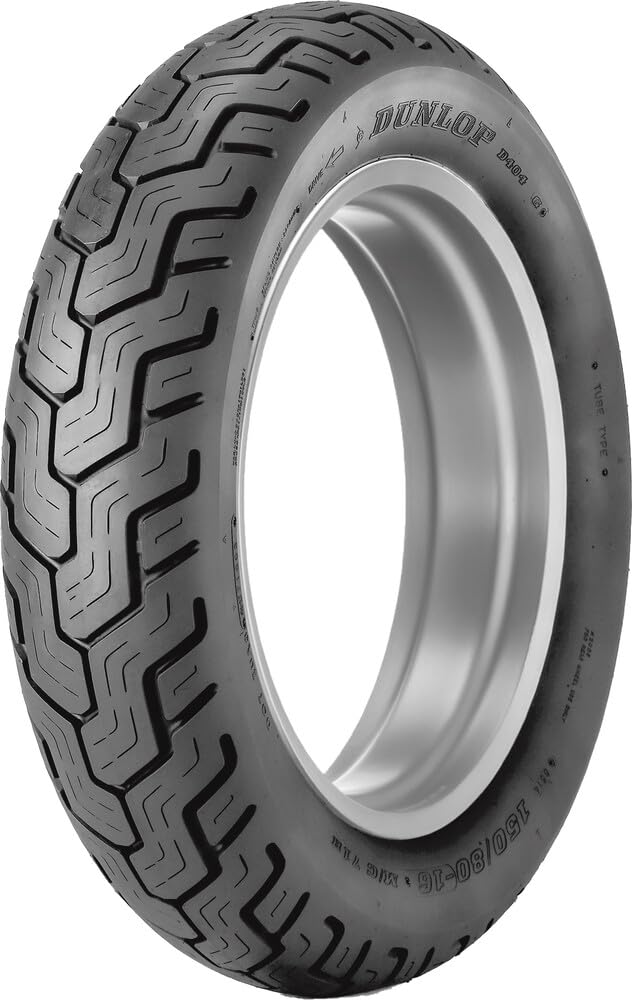
The Dunlop D404 rear is a bias‑ply tire that balances mileage and grip for cruiser riders. Its tread compound is formulated to resist wear while providing enough grip for predictable handling. The front and rear tread patterns are designed to enhance water evacuation, improving wet‑weather confidence.
Owners appreciate the D404’s smooth ride and consistent wear pattern. Many report achieving 7,000‑9,000 miles on the rear, which is respectable for this category. The 130/90‑16 size fits a wide range of mid‑size cruisers, making it a popular replacement tire for models like the Yamaha V‑Star 650 and Honda Shadow 750.
Where the D404 falls short is in aggressive cornering—the bias‑ply construction can feel vague at higher lean angles. It’s ideal for straight‑line cruising and gentle curves, but sport riders will want a radial alternative.
What works
- Good tread life for a budget cruiser tire
- Smooth ride quality on highways
- Effective water evacuation at moderate speeds
What doesn’t
- Limited cornering performance
- Not a performance tire for aggressive riders
11. Shinko SR777 HD Rear 150/80-16

The SR777 HD is the heavy‑duty rear companion to the Shinko 777 front. It features aramid‑belted construction that increases load capacity and improves stability under stress. The directional tread pattern with functional sipes provides grip for both wet and dry conditions, and the reinforced carcass gives a planted feel during acceleration and braking.
Cruiser owners who have installed this tire note that it feels stable even when carrying a passenger or loaded saddlebags. The 150/80‑16 size is common on many touring and cruiser models, including those from Harley, Honda, and Kawasaki. Riders regularly report achieving 6,000‑8,000 miles on the rear with proper inflation.
As with other budget options, the SR777 HD doesn’t match the refinement of premium tires. It can feel stiff when cold and lacks the grip of softer compounds. Still, for riders seeking a durable, affordable rear tire for everyday use, it’s a strong contender.
What works
- Aramid belts increase load capacity
- Stable with heavy loads and passengers
- Good value for a heavy‑duty cruiser tire
What doesn’t
- Stiff ride when cold
- Cornering grip lags behind premium models
Hardware & Specs Guide
Tire Construction
Bias-ply tires use crisscrossing cord layers that create a stiff casing, making them durable and inexpensive. Radial tires have plies running perpendicular to the tread, allowing for a more flexible sidewall that absorbs bumps and improves contact patch consistency at high speeds. Most modern sport, touring, and adventure bikes are designed for radial fitment, while classic cruisers and some entry-level models still use bias-ply.
Dual-Compound Technology
Dual-Compound (2CT) tires combine a harder rubber strip in the center with softer compound on the shoulders. This design extends tread life during straight-line riding while providing maximum grip when cornering. Variations like Michelin’s 2CT+ or Pirelli’s Bi-Compound adjust the soft area location for different riding styles. Single-compound tires offer uniform performance but may wear faster or grip less depending on formulation.
Speed Ratings Explained
Speed ratings indicate the maximum sustained speed a tire can handle. Common motorcycle ratings include H (130 mph), V (149 mph), W (168 mph), and Y (186+ mph). Choosing a rating that exceeds your bike’s top speed provides a safety margin. Using a lower‑rated tire can lead to overheating and failure at high velocities.
Tread Depth and Wear Indicators
New motorcycle tires typically have 4/32″ to 10/32″ tread depth. Minimum legal depth is 2/32″ in most regions. Many tires incorporate wear bars that become flush with the tread when replacement is needed. Directional tires require correct rotation to ensure optimal water evacuation, while symmetric patterns can be mounted either way.
FAQ
How long should motorcycle tires last?
Can I mix different tire brands front and rear?
What does the tire size code mean?
Is a lower price acceptable for budget tires?
Final Thoughts: The Verdict
For most buyers, the price on motorcycle tires winner is the Michelin Road 5 because it delivers class‑leading wet grip, long tread life, and stable handling for sport‑touring and commuting riders. If you want uncompromising cornering performance, grab the Bridgestone Battlax S22. And for a budget‑friendly cruiser set, nothing beats the Shinko 777 HD paired with the SR777 HD rear.

Certification: BSc in Mechanical Engineering
Education: Mechanical engineer
Lives In: 539 W Commerce St, Dallas, TX 75208, USA
Md Amir is an auto mechanic student and writer with over half a decade of experience in the automotive field. He has worked with top automotive brands such as Lexus, Quantum, and also owns two automotive blogs autocarneed.com and taxiwiz.com.