Choosing engine oil for a truck isn’t about picking a bottle off the shelf — it’s about matching viscosity, additive chemistry, and certification to your specific powertrain’s demands. The wrong formulation accelerates wear, triggers sludge buildup, and shortens engine life considerably.
I’m Amir — the founder and writer behind Four Wheel Ask. I spend my time analyzing market trends, decoding manufacturer specifications, and aggregating real-world owner feedback to identify which lubricants actually deliver on their promises.
The right oil keeps your engine clean and running reliably. This guide evaluates the best oil for trucks using real technical specs and owner reviews.
How To Choose The Best Oil For Trucks
Truck engines operate under higher thermal loads and greater stress than passenger car powerplants. Selecting the right lubricant requires understanding three core factors that directly impact longevity and performance.
Viscosity Grades and Temperature Range
The SAE viscosity grade determines how the oil flows at different temperatures. A 15W-40 performs well in warmer climates and high-load conditions, while a 5W-40 offers superior cold-start protection for northern winters. Always consult your owner’s manual for the manufacturer-recommended range, then consider your local climate before choosing.
Synthetic Versus Conventional Formulations
Full synthetic oils deliver better thermal stability, longer drain intervals, and improved protection against deposit formation compared to conventional blends. The upfront cost difference is offset by reduced engine wear and extended service life, particularly for turbocharged and high-mileage diesel engines that run hotter.
Certifications and Additive Chemistry
API ratings such as CK-4 and CJ-4 indicate the oil meets specific wear protection and emission-system compatibility standards. Older engines may use CI-4 or CH-4 specifications, but newer trucks with diesel particulate filters require low-ash formulations. Matching the certification to your engine’s requirements prevents costly emission component damage.
Quick Comparison
On smaller screens, swipe sideways to see the full table.
| Model | Category | Best For | Key Spec | Amazon |
|---|---|---|---|---|
| Shell Rotella T6 10W-30 | Full Synthetic | Modern diesel longevity | API CK-4, 500k mile warranty | Amazon |
| Delo 400 XSP 5W-40 | Full Synthetic | Sub-zero cold starts | SAE 5W-40, SN rated | Amazon |
| LIQUI MOLY Special Tec AA 5W-30 | Full Synthetic | Gas truck refinement | 5L bottle, low viscosity | Amazon |
| Mobil 1 Turbo Diesel Truck 5W-40 | Full Synthetic | Quiet diesel operation | Mixed fleet compatible | Amazon |
| Shell Rotella T4 15W-40 | Conventional Blend | Older engine reliability | Triple Protection tech | Amazon |
| Royal Purple 04154 15W-40 | Synthetic Blend | Wear protection focus | 1 gallon, 15W-40 grade | Amazon |
| Mobil 1 Advanced 5W-20 | Full Synthetic | Light truck gas engines | ILSAC GF-6, 10k mile | Amazon |
In‑Depth Reviews
1. Shell Rotella T6 Full Synthetic 10W-30 Diesel Engine Oil

Shell Rotella T6 represents the benchmark for full synthetic diesel protection in a 10W-30 viscosity. The Triple Protection Plus technology targets wear, deposits, and oil breakdown simultaneously, making it suitable for both highway cruising and stop-and-go delivery cycles. Owner reports consistently highlight noticeably smoother idle and reduced engine noise after the first oil change.
The formulation meets CK-4, CJ-4, and CI-4 PLUS specifications, covering virtually every modern diesel engine with EGR systems and diesel particulate filters. Extended drain capability reduces maintenance frequency, and the factory backs it with a limited warranty valid up to 500,000 miles when used exclusively. This oil ships in a three-gallon case, which conveniently matches the oil capacity of many heavy-duty pickups.
Packaging feedback indicates occasional lid leakage during shipping, so inspecting the jugs upon arrival is prudent. That minor handling concern aside, the owner consensus places Rotella T6 at the top for overall protection, cold-start performance, and value per mile.
What works
- Excellent wear protection across wide temperature range
- Extended drain intervals reduce maintenance downtime
- Compatible with all modern emission-control systems
What doesn’t
- Shipping packaging can allow lid leaks in transit
- Premium price point over conventional blends
2. Delo 400 XSP SAE Heavy Duty Synthetic Diesel Engine Oil 5W-40

Chevron’s Delo 400 XSP is a heavy-duty synthetic that punches well above its price tier. The 5W-40 formulation promotes consistent cold-engine starting in sub-zero temperatures, a critical advantage for operators in northern climates who need reliable cranking power on winter mornings. Owner reviews from Powerstroke and Cummins users report zero oil consumption over extended 7,500-mile change intervals.
The SN rating means this oil is also compatible with gasoline engines, giving mixed-fleet owners a single lubricant option for both diesel trucks and gas-powered vehicles. Field reports note quieter idle and smoother operation compared to conventional 15W-40 oils, particularly in turbocharged gasoline engines where oil shearing was previously a concern.
Some users mention the gallon jug design could benefit from a more secure pouring spout, but the overall feedback positions Delo 400 XSP as a strong contender for drivers who want synthetic protection without stepping up to the highest price bracket.
What works
- Exceptional cold-flow properties for winter starts
- SN rated for both diesel and gas engine compatibility
- Negligible oil consumption over long drain intervals
What doesn’t
- Jug spout design makes pouring less precise
- Fewer API certifications than some competitors
3. LIQUI MOLY Special Tec AA SAE 5W-30

LIQUI MOLY brings German engineering to the truck oil segment with its Special Tec AA 5W-30. The fully synthetic formulation includes molybdenum disulfide additive technology originally developed for aviation emergency lubrication, providing a safety net even under extreme oil-loss scenarios. Owners of turbocharged gasoline trucks report noticeably reduced valvetrain noise and smoother idle after switching from conventional oils.
Optimal stability to aging and outstanding engine cleanliness are the headline benefits here. The 5W-30 viscosity suits late-model gasoline trucks that specify lighter oils for fuel economy, and the five-liter bottle covers the typical oil-change capacity of most light-duty pickups. Compatibility with turbochargers and catalytic converters is explicitly confirmed in the formulation.
The primary limitation is availability in larger volumes — the five-liter size works well for passenger trucks, but operators of heavy-duty diesels requiring 10+ quarts per change may find the bottle size less economical. Still, for gas truck owners prioritizing refinement, this oil punches above its weight.
What works
- Molybdenum additive provides emergency wear protection
- Noticeable reduction in engine noise and vibration
- Excellent thermal stability and oxidation resistance
What doesn’t
- Limited to 5-liter bottle size for smaller capacities
- Best suited for gas trucks, not heavy diesel applications
4. Mobil 1 Turbo Diesel Truck Full Synthetic Motor Oil 5W-40

Mobil 1 Turbo Diesel Truck is engineered specifically for modern diesel engines requiring long drain capability and exceptional performance under high heat. Owner reviews consistently note a dramatic reduction in engine noise compared to both Amsoil and Hot Shot Secret alternatives, with multiple verified buyers describing the idle as noticeably smoother and quieter after the switch.
The mixed-fleet compatibility is a standout feature — this oil meets the demanding specifications of major truck manufacturers including Cummins, Powerstroke, and Duramax, allowing fleet operators to stock a single oil across different engine families. Low-temperature sludge buildup protection and high-temperature deposit control are both addressed in the additive package.
Some owners note that the 5W-40 viscosity may consume slightly more oil in older high-mileage engines that have worn piston rings, but for well-maintained powertrains this formulation delivers consistent pressure and reliable protection across the entire drain interval.
What works
- Dramatic noise reduction reported by diesel owners
- Mixed-fleet certification reduces inventory complexity
- Strong low-temperature flow for cold starts
What doesn’t
- May show consumption in high-mileage worn engines
- Not ideal for gasoline engines due to diesel-specific additive focus
5. Shell Rotella T4 Triple Protection 15W-40 Diesel Engine Oil
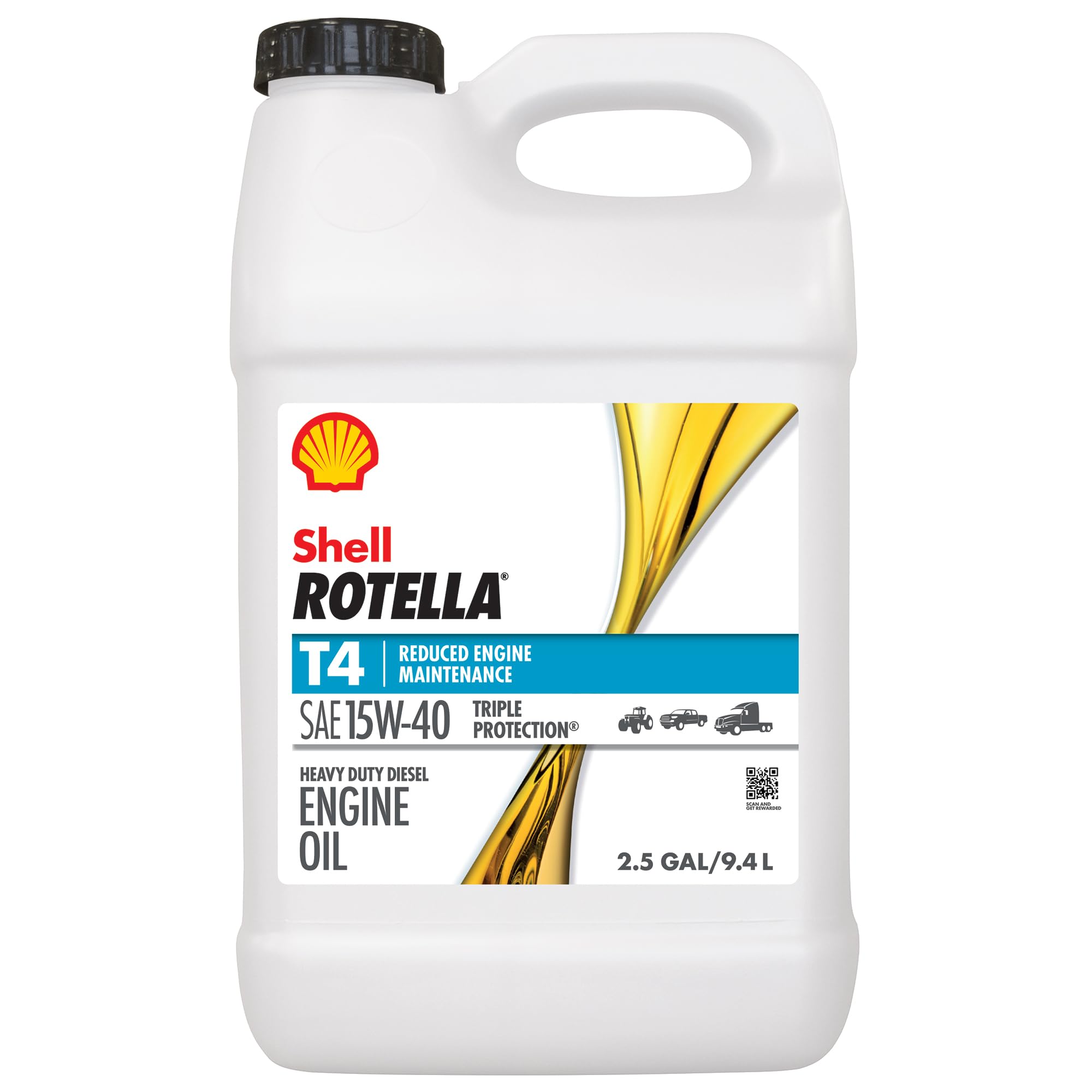
Shell Rotella T4 is the conventional blend that built the brand’s reputation in diesel circles. The Triple Protection technology focuses on three failure modes — wear, deposits, and oil breakdown — delivering significantly better wear protection than previous-generation oils. The 2.5-gallon container conveniently covers the oil-change capacity of many heavy-duty trucks without needing a second jug.
Enhanced shear stability ensures viscosity remains consistent under high-load conditions, maintaining optimal oil pressure even when towing or hauling heavy loads. Owners of older trucks with high mileage often prefer T4 because the conventional formulation tends to leak less through aged gaskets compared to full synthetics, which can find their way past worn seals.
The trade-off is shorter recommended drain intervals compared to full synthetic alternatives. Truck owners who drive fewer than 10,000 miles annually will find the value proposition compelling, while high-mileage operators may prefer stepping up to a synthetic for extended oil life.
What works
- Exceptional value per gallon for conventional oil
- Less prone to leaking through worn engine seals
- Shear-stable formulation maintains oil pressure
What doesn’t
- Shorter drain intervals than full synthetics
- Not ideal for extreme cold-weather operation
6. Royal Purple 04154 15W-40 Oil

Royal Purple has cultivated a loyal following among truck owners who prioritize wear protection above all else. The 15W-40 formulation uses a proprietary additive technology that reduces friction at the molecular level, contributing to both extended engine life and modest fuel efficiency gains. Long-term owners report using this oil for over a decade across multiple vehicles with consistent results.
The compatibility with ethanol-containing fuels and superior corrosion protection make this a strong choice for trucks that sit for extended periods or operate in humid environments. Catalytic emission system protection is built into the chemistry, addressing the concern of premature converter failure that can result from improper oil formulations.
The one-gallon size is convenient for topping off between changes, but full oil changes on heavy-duty trucks will require purchasing multiple jugs. Some users note the 15W-40 viscosity feels thicker during winter startup compared to multi-viscosity synthetics, though the trade-off is robust protection at operating temperature.
What works
- Proprietary additive reduces friction effectively
- Excellent corrosion and ethanol protection
- Strong catalytic converter compatibility
What doesn’t
- Single-gallon size requires multiple purchases for full change
- Thicker cold-weather flow compared to 5W-40 alternatives
7. Mobil 1 Advanced Full Synthetic Motor Oil 5W-20

Mobil 1 Advanced Full Synthetic 5W-20 is the entry point for gas-powered light trucks that specify a low-viscosity oil. The ILSAC GF-6 certification brings low-speed pre-ignition protection and timing chain wear prevention, two critical factors for modern turbocharged gasoline engines found in half-ton pickups. The formulation controls oxidation to prevent oil breakdown up to 10,000 miles between changes.
Excellent internal heat protection up to 500 degrees Fahrenheit and cold-weather performance down to -30 degrees Fahrenheit cover the full operating spectrum. The six-quart pack conveniently satisfies the oil capacity of most light-duty trucks, and owners consistently describe the value as strong for a full synthetic at this price tier.
The 5W-20 viscosity is not appropriate for diesel engines or older gasoline trucks that specify heavier oils, so confirming your owner’s manual recommendation is essential. For late-model gas trucks requiring light-viscosity synthetic, this is a reliable and affordable option that meets modern engine protection standards.
What works
- ILSAC GF-6 certified for modern gas engines
- Excellent thermal and cold-flow range
- Strong value for full synthetic at this tier
What doesn’t
- Not suitable for diesel engines
- 5W-20 too light for older gasoline trucks
Hardware & Specs Guide
Viscosity Flow Characteristics
The first number in the SAE rating indicates cold-weather flow — lower numbers like 5W pump more easily at freezing temperatures. The second number represents high-temperature viscosity at operating temperature. A 30-grade oil flows thinner than a 40-grade at 212°F, affecting oil pressure readings and high-load film strength.
API Certification Tiers
CK-4 is the current standard for heavy-duty diesel engines with emission controls, offering improved protection against oxidation and shear. CJ-4 is the predecessor specification still suitable for many older engines. For gasoline engines, SN and SP ratings indicate phosphorus and sulfur limits that protect catalytic converters.
Additive Package Components
Zinc dialkyldithiophosphate provides anti-wear protection for camshafts and lifters, while detergents neutralize combustion byproducts to prevent sludge. Dispersants keep soot particles suspended in the oil rather than settling on internal surfaces. Molybdenum compounds reduce friction at boundary lubrication points.
Drain Interval Factors
Severe service conditions — frequent towing, extended idling, dusty environments, and short-trip cold operation — all accelerate oil degradation. Full synthetics typically tolerate longer intervals than conventional oils, but the most reliable approach is used-oil analysis to determine actual degradation rates for your specific driving pattern.
FAQ
What viscosity oil is best for my truck?
How often should I change my truck oil?
Can I use diesel oil in a gasoline truck?
What does API CK-4 mean on oil labels?
Is full synthetic oil worth the extra cost for trucks?
Final Thoughts: The Verdict
For most buyers, the best oil for trucks winner is the Shell Rotella T6 Full Synthetic 10W-30 because it delivers the broadest certification coverage, extended drain capability, and consistent owner-reported performance across both light and heavy diesel applications. If you prioritize cold-weather starting and gas-engine compatibility, grab the Delo 400 XSP 5W-40. And for budget-conscious owners with older engines, nothing beats the Shell Rotella T4 Triple Protection 15W-40.

Certification: BSc in Mechanical Engineering
Education: Mechanical engineer
Lives In: 539 W Commerce St, Dallas, TX 75208, USA
Md Amir is an auto mechanic student and writer with over half a decade of experience in the automotive field. He has worked with top automotive brands such as Lexus, Quantum, and also owns two automotive blogs autocarneed.com and taxiwiz.com.