Handing over your hard-earned cash to a shop for a simple code scan stings every time — especially when you know the fix is something you could handle yourself in the driveway. The difference between a frustrating guessing game and a confident repair comes down to holding the right diagnostic tool in your hand. Most basic readers just spit out a code and leave you stranded, while the better ones give you the data, context, and control to actually understand what your car needs. That gap is exactly what this guide is built to close.
I’m Amir — the founder and writer behind Four Wheel Ask. I’ve spent years analyzing market data, comparing specifications, and studying owner feedback to identify diagnostic tools that deliver real value for home mechanics.
Whether you’re tracking down an intermittent misfire, preparing for emissions testing, or just want to know what that glowing dashboard light really means, the right scanner changes everything. After evaluating dozens of OBD2 scanners, I’ve identified the best obd2 scanner for home mechanic as the model that balances professional features with everyday usability.
How To Choose The Best OBD2 Scanner For Home Mechanic
Walking into the scanner market unprepared is a fast way to waste money on a tool that either does too little or costs way more than you need. Home mechanics need a specific balance: enough capability to diagnose real problems, but without the subscription traps and dealer-level complexity that belongs in a professional shop. Understanding a few core distinctions will keep your purchase sharp and your wallet safe.
System Coverage
The most common mistake is buying a scanner that only reads engine codes. While check engine diagnostics cover a lot, modern vehicles store fault data in the ABS module, airbag system, and transmission controller. A home mechanic who plans to do brake jobs or suspension work benefits enormously from a tool that reads at least ABS and SRS codes. Multi-system scanners cost more upfront but eliminate the frustration of chasing a problem you cannot see.
Live Data and Graphing
A code tells you what failed, but live data tells you why. Scanners that display real-time sensor readings — oxygen sensor voltage, fuel trims, coolant temperature, engine RPM — allow you to watch components in action. Graphing capability takes this further by showing you trends and intermittent dropouts that a static number cannot reveal. For intermittent issues, this feature alone can save hours of guesswork.
Software Updates and Subscription Costs
The scanner market is shifting toward subscription models, but the best home mechanic tools offer free lifetime updates. Vehicle protocols change, new models arrive, and bug fixes are inevitable. A scanner that requires annual fees to stay current quickly becomes an expensive paperweight. Prioritize tools with manufacturer-backed free updates and avoid any product that locks basic functionality behind a paywall.
Quick Comparison
On smaller screens, swipe sideways to see the full table.
| Model | Category | Best For | Key Spec | Amazon |
|---|---|---|---|---|
| BlueDriver LSB2 | Bluetooth | Smartphone-based diagnostics | Bluetooth + Free App | Amazon |
| Innova 5410 | Handheld | All-system diagnostics | 4-System + RS2 App | Amazon |
| BLCKTEC 460T | Handheld | Advanced reset functions | 12 Resets + AutoVIN | Amazon |
| KINGBOLEN Ediag Elite | Bluetooth | Bidirectional control | Bi-Directional + Lifetime | Amazon |
| FOXWELL NT614 Elite | Handheld | Essential reset services | 4 Systems + 5 Resets | Amazon |
| GEARWRENCH GWSMARTBT | Bluetooth | OE-level bidirectional | Bi-Directional + Free Updates | Amazon |
| TOPDON AD600S | Handheld | Android-based standalone | Android 11 + 5″ Display | Amazon |
| TOPDON AD800BT V2.0 | Bluetooth | Wireless full-system | Bi-Directional + CANFD | Amazon |
| LAUNCH X431 PRO3 V5.0 | Professional | Dealer-level capability | All-System + Topology | Amazon |
| Autel AL549 | Handheld | ABS and battery testing | ABS + Battery Test | Amazon |
| A-Premium AD200 | Handheld | Entry-level diagnostics | 15+ Functions + Live Data | Amazon |
In‑Depth Reviews
1. BlueDriver Bluetooth Pro OBDII Scan Tool
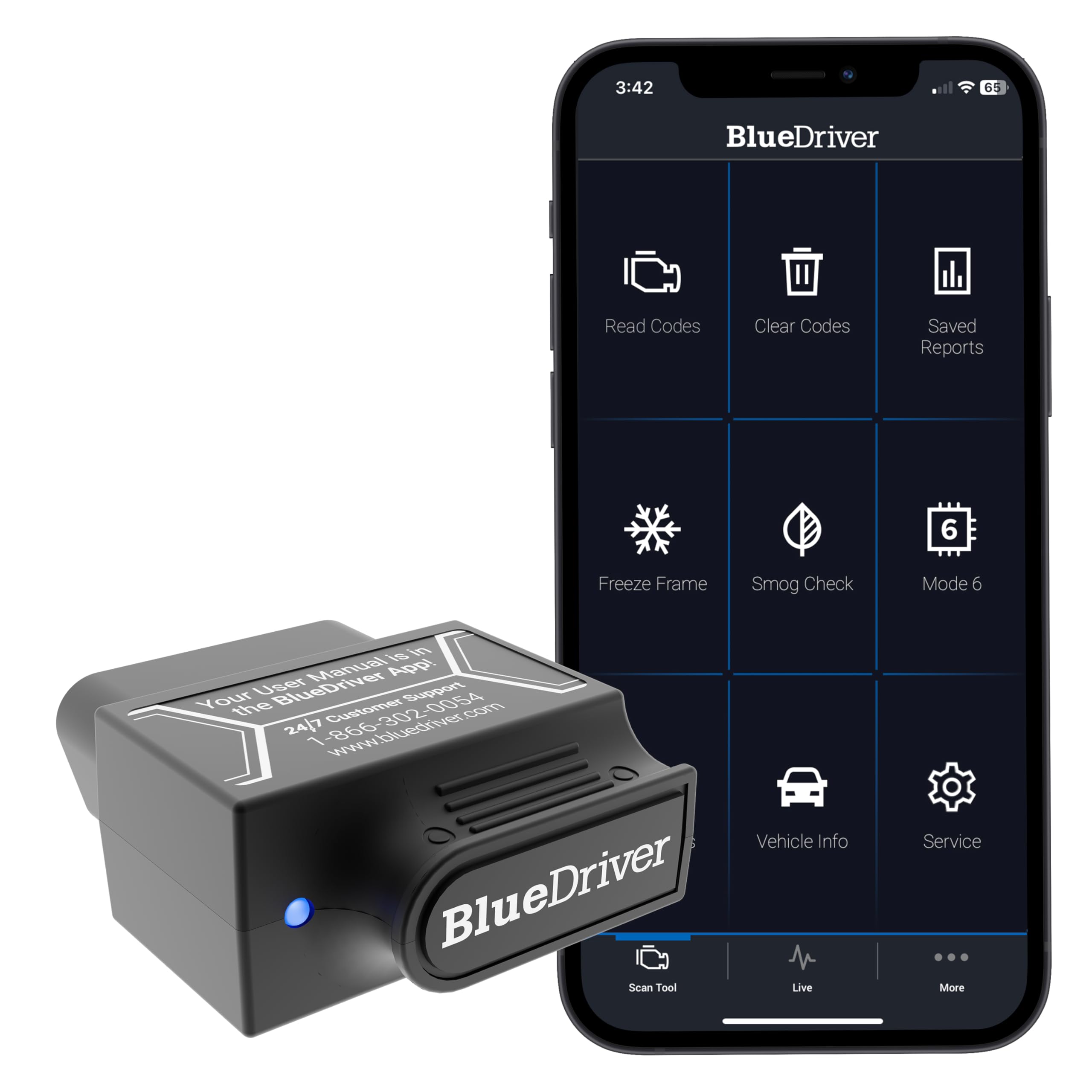
The BlueDriver is the scanner that home mechanics recommend to each other — and for good reason. It pairs instantly with your smartphone, requires no subscription fees, and reads codes across engine, ABS, SRS, and transmission systems. Where it truly separates from the pack is the integrated repair database that shows user-reported fix success rates and links to replacement parts, turning a code read into a actionable repair plan.
Owner feedback consistently highlights the durable build quality and the fact that the unit stays live in the OBD2 port without draining the battery. The live data graphing capability allows you to monitor oxygen sensor cycling, fuel trim activity, and timing advance in real time. Users report that it works reliably on vehicles as old as 1996 and as new as current-year models, with the ability to export scan history for record keeping.
The only tradeoff is that it relies entirely on your phone screen, which some users find less convenient than a dedicated handheld unit. Additionally, the advanced repair data requires an internet connection, though the core scanning functions work offline. For the home mechanic who values depth of information and a clean, modern interface, the BlueDriver is a genuinely well-rounded choice.
What works
- Excellent repair database with fix success rates
- No subscription fees for full functionality
- Reliable Bluetooth connection across many vehicle brands
What doesn’t
- Relies on smartphone screen and app
- Advanced features require internet access
2. Innova 5410 All-System OBD2 Scanner
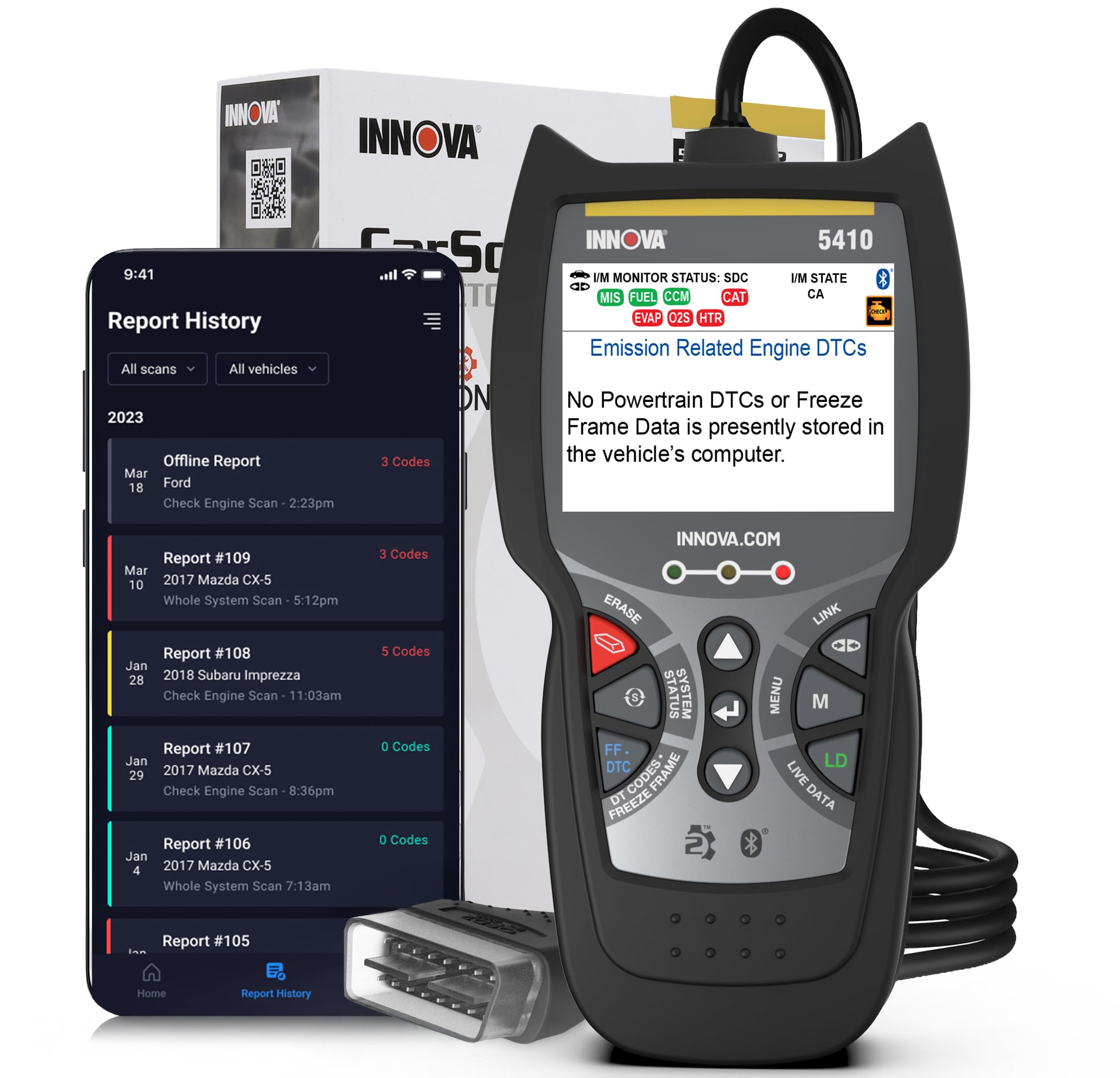
The Innova 5410 bridges the gap between a weekend DIY tool and something a shop apprentice would grab. It reads and clears codes across engine, ABS, SRS, and transmission systems, and pairs with the RepairSolutions2 app to deliver verified fixes, maintenance schedules, and TSB information. The handheld form factor means you are not tied to a phone, and the built-in screen provides clear readouts without any app dependency.
User reports note that the scanner automatically retrieves the VIN and pulls live sensor data including RPM, fuel trims, coolant temperature, and oxygen sensor voltage. The ability to view this data in real time helps pinpoint intermittent problems that a basic code reader would miss. Owners also appreciate the optional OBD1 connector support, which extends coverage to older vehicles that fall outside the standard OBD2 window.
The downside is that the RepairSolutions2 app, while powerful, requires separate installation and account setup. Some users mention that initial firmware updates can be time-consuming, and the scanner does not offer bidirectional control. For the home mechanic who wants a solid standalone unit with strong software backing, the Innova 5410 represents a well-engineered middle ground.
What works
- Standalone operation without phone dependency
- Strong RepairSolutions2 app integration
- Optional OBD1 connector coverage
What doesn’t
- Initial firmware updates take time
- No bidirectional testing capability
3. BLCKTEC 460T OBD2 Scanner

The BLCKTEC 460T packs dealer-level capability into a handheld package that home mechanics can actually afford. It scans all available systems, not just the engine, and delivers twelve popular reset services including ABS bleeding, EPB reset, SAS calibration, DPF regeneration, throttle relearn, and battery registration. The AutoVIN feature identifies the vehicle automatically, while AutoScan and AutoReLink continuously monitor for fault codes without requiring button presses.
Owner feedback emphasizes the large 4.3-inch color display that makes live data graphing easy to read, even in bright conditions. The ability to overlay up to four data streams on a single graph helps mechanics spot correlations between sensor readings. The companion RepairSolutions2 app adds verified fix databases, warranty information, and maintenance schedules, all without subscription fees. Users also highlight the sturdy storage case and long OBD2 cable as thoughtful touches.
The main limitation is that not all reset functions work on every vehicle, and compatibility should be verified before purchase. Some users report that the initial setup process requires a few steps to pair with the app. For the home mechanic who wants to perform their own brake bleeds, throttle calibrations, and battery registrations, the BLCKTEC 460T is a compelling package.
What works
- Comprehensive 12-reset service suite
- Large 4.3-inch color display with data graphing
- Free lifetime updates with no subscriptions
What doesn’t
- Reset function compatibility varies by vehicle
- App pairing requires initial setup steps
4. KINGBOLEN Ediag Elite Bluetooth Scanner
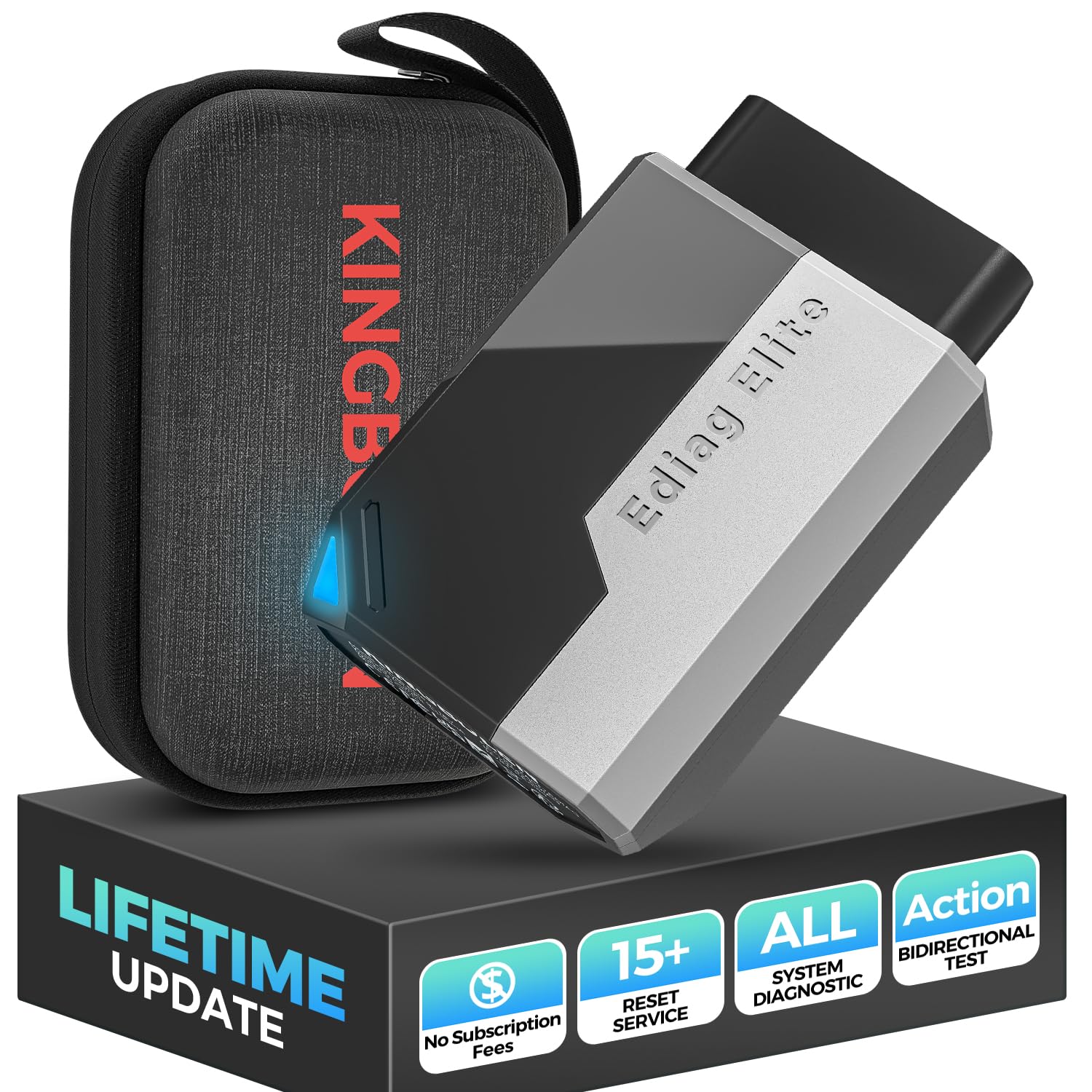
The KINGBOLEN Ediag Elite brings bidirectional control to the home mechanic segment at a price point that usually requires a significant jump. Bidirectional testing allows you to command components — activate fuel pumps, cycle solenoids, operate windows — directly from your phone, which transforms diagnostic capability from passive reading to active testing. The unit supports full system diagnostics across all modules and includes 15 maintenance resets such as oil reset, TPMS relearn, and throttle matching.
Aggregate owner feedback highlights the intuitive Ediag app interface and the reliable Bluetooth 5.2 connection that maintains signal up to 33 feet. The AutoVIN recognition speeds up the initial connection, and users appreciate the ability to view live data in multiple formats including graphs, gauges, and numerical displays. The scanner supports CANFD protocol and FCA AutoAuth, which broadens compatibility with newer and Chrysler-family vehicles.
Some users note that the scanning process can be slightly slower than wired alternatives, and the special functions vary significantly depending on the vehicle make and model. Additionally, the activation process requires app download and account registration. For the home mechanic who wants bidirectional power without jumping to professional pricing, the Ediag Elite delivers strong value.
What works
- Bidirectional control at a competitive price
- Stable Bluetooth 5.2 connection
- Full system diagnostics with 15+ resets
What doesn’t
- Scan speed slower than wired units
- Function availability depends heavily on vehicle
5. FOXWELL NT614 Elite OBD2 Scanner

The FOXWELL NT614 Elite is designed around the specific maintenance tasks that home mechanics face most often. It scans four critical systems — engine, ABS, SRS, and transmission — and includes five popular reset services: ABS bleeding, SAS calibration, EPB reset, oil reset, and throttle relearn. The AutoVIN feature identifies the vehicle in roughly 15 seconds, and the built-in DTC library explains fault codes directly on the device screen without needing internet access.
User reports consistently mention that the NT614 Elite paid for itself on the first brake job or throttle service. The live data graphing capability displays sensor waveforms in real time, helping owners identify intermittent sensor failures and vacuum leaks. The 4.3-inch color display provides clear visibility, and the included protective case keeps the unit safe in a tool drawer. Lifetime WiFi updates ensure the scanner stays current with new vehicle protocols.
The primary drawback is that the instructions are not particularly detailed, leaving some users to learn through trial and error. Additionally, the reset functions do not cover every vehicle in the compatibility range, so pre-purchase verification is recommended. For the home mechanic focused on brake, suspension, and routine maintenance work, the NT614 Elite is a targeted and effective tool.
What works
- Fast AutoVIN vehicle identification
- Built-in DTC library works offline
- Five essential reset functions included
What doesn’t
- Instruction manual lacks detail
- Reset coverage varies by vehicle
6. GEARWRENCH Professional Bi-Directional Scan Tool

The GEARWRENCH GWSMARTBT brings OE-level bidirectional diagnostics to the home mechanic with a no-subscription commitment that stands out in the industry. It offers full live actuation testing — you can command fuel pumps, cooling fans, and solenoids directly from your smart device — and supports 23 vehicle reset and relearn functions including throttle matching, ABS bleeding, TPMS reset, and steering angle calibration. The free software updates policy means your tool improves over time without extra cost.
Owner feedback highlights the impressive vehicle coverage, with users reporting successful diagnostics on BMW, Subaru, Ram, Toyota, and Nissan models. The FCA AutoAuth bypass is a notable feature for owners of Chrysler, Dodge, Jeep, and Ram vehicles, granting access to modules that many scanners cannot reach. The live data mapping and freeze frame capture help mechanics record and review sensor behavior during test drives.
Some users note that the Bluetooth setup requires manual permission grants on Android devices, and the scanner must be registered to a single phone. The scanning speed is slightly slower than wired units, though still acceptable for home use. For the serious DIY mechanic who wants dealer-level bidirectional control with no future fees, the GEARWRENCH is a strong investment.
What works
- Full bidirectional control with live actuation
- FCA AutoAuth support for Chrysler vehicles
- Free lifetime software updates
What doesn’t
- Bluetooth setup requires manual permissions
- Registered to one phone only
7. TOPDON AD600S Upgraded OBD2 Scanner

The TOPDON AD600S is a fully standalone Android-based diagnostic tablet that eliminates the need for a phone or laptop. It runs Android 11 with a 5-inch high-definition display and 32GB of storage, providing a dedicated diagnostic environment that boots quickly and responds instantly. The scanner covers four systems — engine, transmission, ABS, and SRS — and includes nine reset functions spanning oil, BMS, ABS, SAS, EPB, DPF, TPMS, throttle, and injector coding.
Aggregate user reviews consistently praise the fast AutoVIN recognition and the intuitive touch interface. The built-in DTC lookup provides detailed fault code descriptions directly on the device, and the live data graphing helps visualize sensor behavior. The unit supports over 67 global brands and 10,000 vehicle models, making it one of the more broadly compatible options in its range. Lifetime WiFi updates keep the software current without cable connections.
Some users report that the AutoVIN function occasionally struggles with certain models, requiring manual VIN entry. The 32GB storage is generous for a dedicated scanner, but heavy users may find it fills up over time. For the home mechanic who prefers a dedicated tablet experience over phone apps, the AD600S delivers a polished and capable package.
What works
- Standalone Android tablet with 5-inch HD display
- Nine reset functions including injector coding
- Broad vehicle coverage with lifetime updates
What doesn’t
- AutoVIN not always reliable on every model
- Storage may limit extensive data logging
8. TOPDON AD800BT V2.0 Bidirectional Scan Tool

The TOPDON AD800BT V2.0 steps up to full professional-grade diagnostics with bidirectional control, 28 service functions, and wireless Bluetooth convenience. It provides OE-level access to all vehicle modules — not just the standard four — and includes advanced capabilities like ACC shut-off, window calibration, coolant bleeding, AdBlue reset, and stop-start reset. The CANFD protocol support ensures compatibility with newer GM and Ford vehicles, while FCA AutoAuth provides secure access to Chrysler-family systems.
Owner feedback highlights the AutoVIN technology that identifies the vehicle in one touch, eliminating manual make and model selection. The wireless Bluetooth VCI dongle provides a 33-foot operating range, allowing diagnostics from inside the cabin or under the hood. The 6-inch display offers clear data visualization, and the long-lasting rechargeable battery makes it practical for mobile use. Users with experience using professional-level tools note that the AD800BT compares favorably to units costing significantly more.
A small number of users report occasional Bluetooth disconnection issues with the ALDL plug, and the initial firmware update process requires patience. The 28 service functions vary by vehicle, so pre-purchase verification is important. For the home mechanic who wants professional wireless diagnostics and broad service coverage, the AD800BT V2.0 is a well-rounded choice.
What works
- 28 advanced service functions
- Wireless Bluetooth with 33-foot range
- CANFD and FCA AutoAuth support
What doesn’t
- Occasional Bluetooth dropouts reported
- Firmware update process takes time
9. LAUNCH X431 PRO3 V5.0 Scanner

The LAUNCH X431 PRO3 V5.0 represents the ceiling of what a home mechanic can reasonably own without stepping into dealership equipment. It offers OE-level ECU coding — both online and offline — with detailed guidance that makes complex coding accessible. The topology mapping feature provides a visual diagram of all vehicle modules and their interconnections, reducing diagnostic time significantly. It includes over 55 reset services and 4,000 active tests for bidirectional control.
User reports consistently highlight the build quality and comprehensive accessory package that includes multiple adapters for OBD1 and manufacturer-specific connections. The Android-based tablet runs smoothly, and the AutoVIN feature populates vehicle information quickly. The DBSCar VII VCI provides reliable wireless diagnostics up to 33 feet. Owners who have used Snap-on and other professional tools note that the LAUNCH offers comparable capability at a fraction of the investment.
The primary considerations are the learning curve and the update policy. The sheer depth of functions can be overwhelming for beginners, and software updates require a paid subscription after the initial two-year period. For the home mechanic who works on multiple vehicles and wants dealer-level coding capability, the LAUNCH X431 PRO3 V5.0 is the most powerful option on this list.
What works
- OE-level ECU coding with detailed guidance
- Topology mapping for faster diagnosis
- 55+ reset services and 4000 active tests
What doesn’t
- Steep learning curve for beginners
- Paid updates after initial two-year period
10. Autel AutoLink AL549 OBD2 Scanner
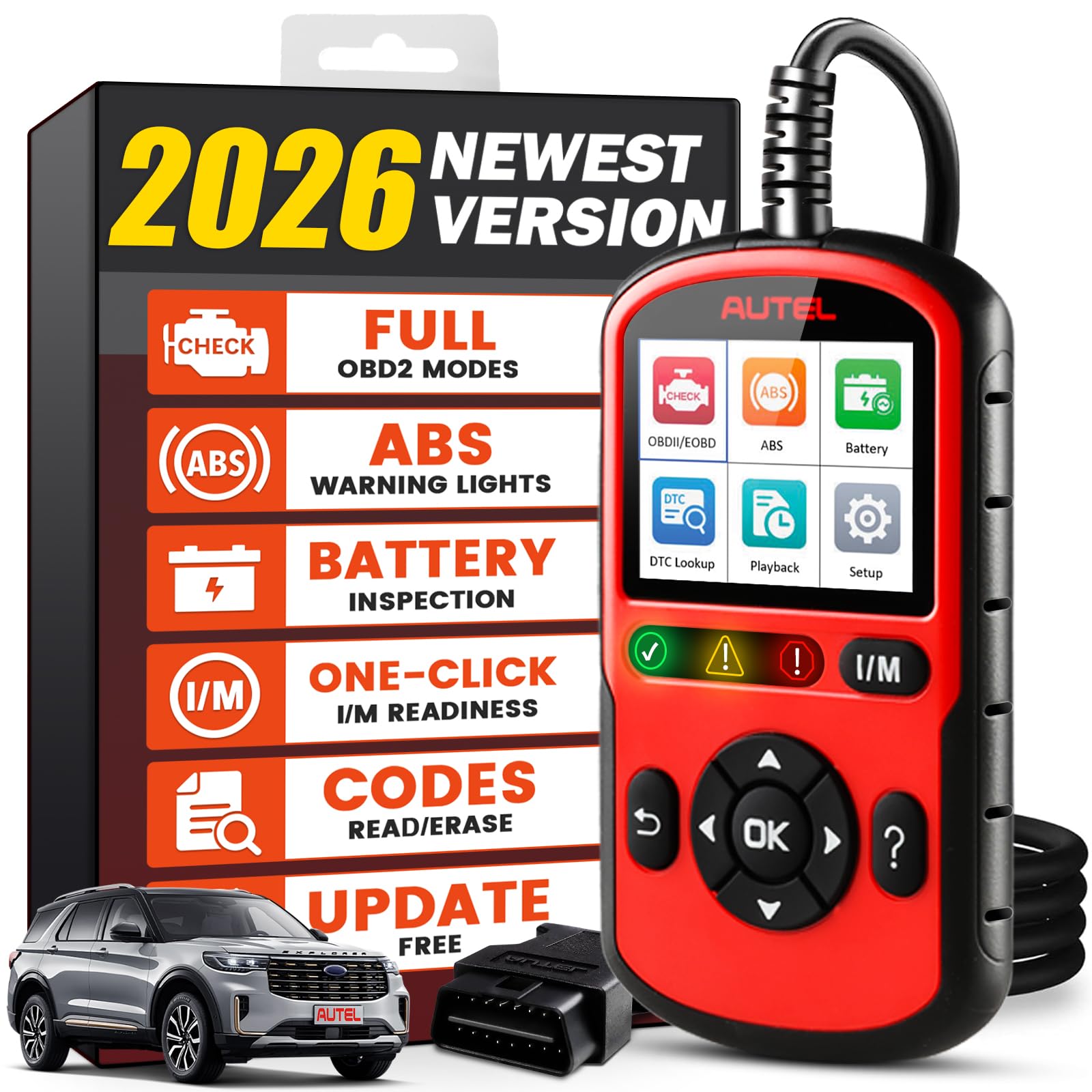
The Autel AutoLink AL549 is the upgraded successor to the popular AL519 and AL529 models, adding ABS diagnostics and battery testing to the standard OBD2 feature set. It reads and clears codes for both the engine and ABS systems, and includes a universal car battery and charging system test that checks starting capability and alternator performance. The 2.8-inch TFT color display and built-in speaker provide visual and audible feedback during diagnostics.
Owner feedback highlights the one-click I/M readiness check as a standout feature for emissions testing preparation. The live data display shows real-time sensor readings, and the ability to record and print diagnostic reports via USB adds practical utility for record keeping. The scanner supports English, French, and Spanish language menus, broadening its accessibility. Lifetime free updates via PC keep the device compatible with newer vehicle models.
Some users note that the ABS diagnostic function does not cover all vehicle brands — Subaru and Mitsubishi are explicitly excluded — and it only works on vehicles manufactured between 1996 and 2020. The user manual is minimal, and the initial registration process for the Maxi software can be frustrating. For the home mechanic who needs targeted ABS and battery testing alongside standard engine diagnostics, the AL549 delivers solid capability at a reasonable entry point.
What works
- ABS diagnostics and battery testing included
- One-click I/M readiness check
- Lifetime free PC-based updates
What doesn’t
- ABS coverage limited to pre-2020 vehicles
- Subaru and Mitsubishi not supported for ABS
11. A-Premium AD200 Professional OBD2 Scanner
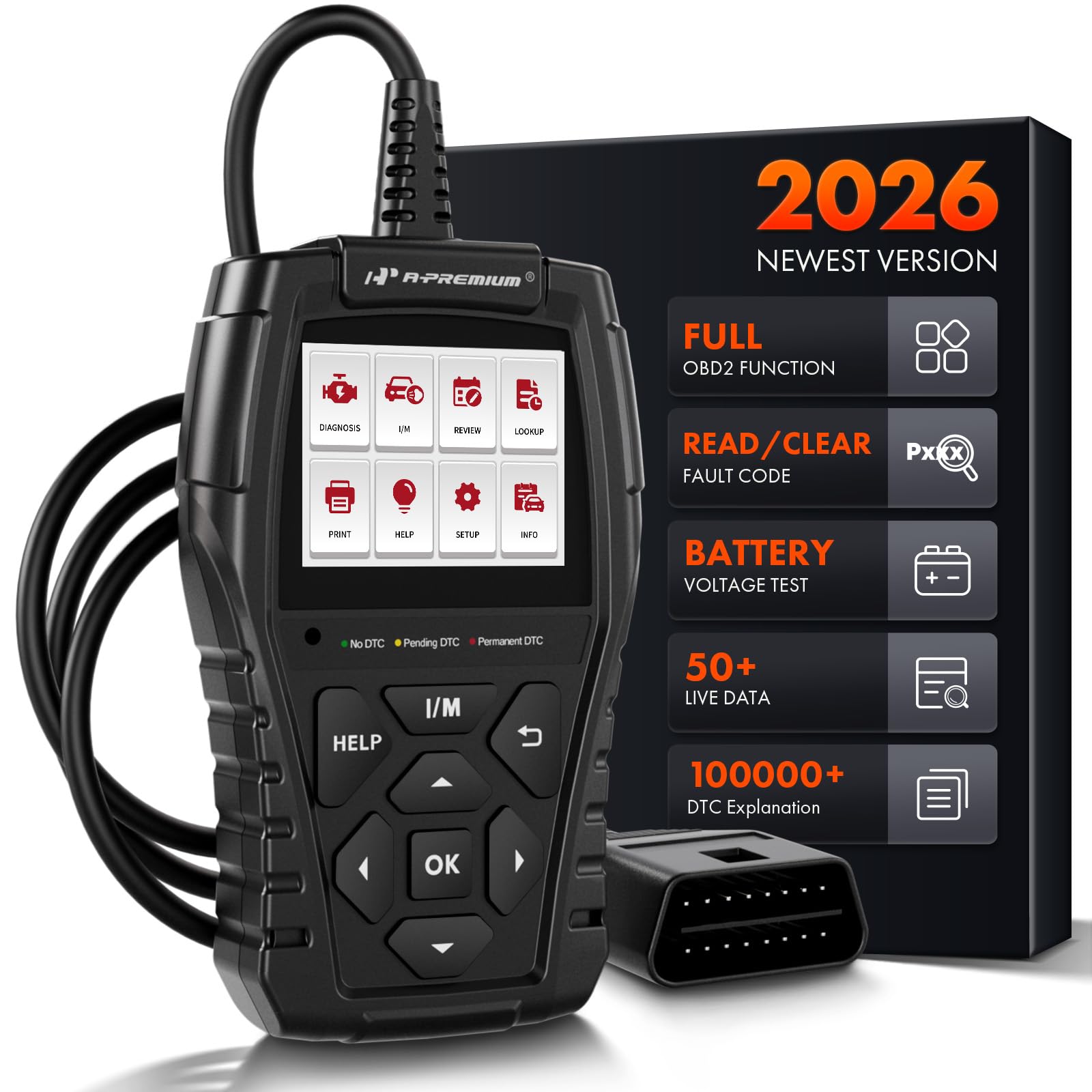
The A-Premium AD200 proves that a home mechanic does not need to spend heavily to get reliable diagnostic information. It supports over 15 functions including code reading and clearing, I/M readiness, EVAP and oxygen sensor testing, freeze frame capture, and real-time data stream graphing. The device can read up to 50 data parameters such as battery voltage, coolant temperature, engine RPM, fuel rail pressure, and transmission gear status, providing a comprehensive view of engine health.
User feedback consistently highlights the ease of use and clear 2.4-inch color display. The three warning lights — green, yellow, red — provide an immediate visual assessment of fault severity, which is particularly helpful for less experienced users. The scanner supports data recording and report printing, allowing owners to share diagnostic information with a professional mechanic. Compatibility extends from 1996 to current models across North American, European, and Asian vehicles.
The main limitation is that the AD200 is engine-system only — it does not access ABS, SRS, or transmission modules. The 160×128 display resolution is adequate but noticeably less sharp than premium options. For the home mechanic on a tight budget who primarily needs to diagnose check engine lights and monitor sensor data, the AD200 delivers functional capability without overspending.
What works
- Excellent value for basic engine diagnostics
- Reads up to 50 live data parameters
- Visual warning light system for fault severity
What doesn’t
- Engine system only — no ABS or SRS
- Lower screen resolution than premium models
Hardware & Specs Guide
Processor and Memory
The scanner’s internal processor directly affects how quickly it communicates with your vehicle’s ECU. Entry-level models use basic ARM chips that handle standard OBD2 protocols without delay. Premium units like the TOPDON AD600S run Android 11 on a dedicated processor with 32GB storage, allowing faster data processing, smoother live data graphing, and more responsive menu navigation. For home mechanics who plan to use advanced features like bidirectional control or data logging, a faster processor reduces frustration significantly.
Display Quality
Screen resolution and size determine how readable your live data and fault code information will be. Budget scanners typically use 1.77-inch or 2.4-inch displays with 160×128 resolution — adequate for basic code reading but limited for graphing. Mid-range and premium units range from 2.8-inch TFT color screens up to 5-inch and 6-inch high-definition panels. Higher resolution displays allow you to view multiple data parameters simultaneously and make graph-based analysis far more useful. If live data trending is important to your diagnostic process, prioritize a larger, sharper screen.
Vehicle Protocol Support
All OBD2 scanners support the standard protocols — KWP2000, ISO9141-2, J1850 VPW, J1850 PWM, and CAN. However, modern vehicles increasingly use CANFD (CAN Flexible Data-Rate) and DoIP (Diagnostics over Internet Protocol). Scanners like the TOPDON AD800BT and LAUNCH X431 PRO3 include CANFD support, which is essential for diagnosing newer GM, Ford, and European vehicles. FCA AutoAuth support is another critical feature for owners of Chrysler, Dodge, Jeep, and Ram vehicles, as it bypasses the secure gateway that blocks basic scanners.
Build and Cable Quality
Physical durability matters when a scanner lives in a tool bag or gets dropped on concrete. The most robust units feature reinforced plastic housings, strain-relieved OBD2 connectors, and cables that resist kinking. Premium scanners like the LAUNCH X431 PRO3 come in hard-shell cases with organized compartments for adapters and cables. Cable length is another practical consideration — a 3.9-foot lead provides enough reach to route the cable through a window for under-hood diagnostics, while shorter cables limit positioning flexibility.
FAQ
What features should a home mechanic look for in an OBD2 scanner?
Can an OBD2 scanner diagnose ABS and airbag issues?
What is bidirectional control and do I need it?
How often do OBD2 scanners need software updates?
Final Thoughts: The Verdict
For most buyers, the best obd2 scanner for home mechanic winner is the BlueDriver LSB2 because it combines comprehensive diagnostics, a no-subscription model, and an exceptional repair database into a package that works seamlessly with your smartphone. If you want standalone operation with professional-grade reset functions, grab the BLCKTEC 460T. And for dealer-level bidirectional control without recurring fees, nothing beats the GEARWRENCH GWSMARTBT. The right scanner pays for itself the first time you skip a shop visit and fix the problem yourself.

Certification: BSc in Mechanical Engineering
Education: Mechanical engineer
Lives In: 539 W Commerce St, Dallas, TX 75208, USA
Md Amir is an auto mechanic student and writer with over half a decade of experience in the automotive field. He has worked with top automotive brands such as Lexus, Quantum, and also owns two automotive blogs autocarneed.com and taxiwiz.com.