Choosing the right rubber for your motorcycle is the single most consequential decision you will make for both safety and riding enjoyment. The contact patch between your bike and the asphalt determines everything from cornering confidence to braking distance in a downpour, making a well-informed selection far more critical than chasing the lowest price or a flashy tread pattern.
I’m Amir — the founder and writer behind Four Wheel Ask. My approach relies on deep market research, deconstructing tire construction data, analyzing compound formulations, and cross-referencing verified owner feedback across hundreds of riding conditions to identify which models truly deliver on their promises.
This guide breaks down the top contenders across cruiser, sport, and touring categories so you can match the right rubber to your machine and riding style. Whether you are chasing canyon apexes or logging highway miles, finding the right set of best moto tires requires understanding how each model’s construction and compound align with your specific demands.
How To Choose The Best Moto Tires
Selecting the right tire involves more than matching a size number. You need to consider your bike’s weight, your typical riding environment, and how you balance mileage against outright grip. Understanding a few core principles will prevent costly mismatches and keep you planted on every ride.
Construction Type: Bias vs. Radial
Bias-ply tires use crisscrossing layers of cord, which makes them stiffer and more durable for heavy cruiser loads. Radial tires feature cords running perpendicular to the tread, offering a more flexible sidewall. This flexibility translates to better heat dissipation, superior grip at high lean angles, and a smoother ride on sport and touring machines. Most modern sport bikes demand radial construction for optimal performance.
Compound and Tread Design
Tire compounds range from hard, long-wearing rubber to soft, sticky formulations that deliver maximum cornering grip at the expense of mileage. Multi-compound designs (like bi-compound or 2CT) place a harder center strip for straight-line durability and softer shoulders for cornering confidence. Tread patterns with deep siping and wide grooves evacuate water effectively, a critical feature for riders who face unpredictable weather.
Load Rating and Speed Index
Every tire carries a load index (the maximum weight it can support) and a speed rating (the maximum safe speed). A touring bike loaded with gear and passenger demands a higher load index than a lightweight commuter. The speed rating should match or exceed your motorcycle’s top speed capability. Ignoring these numbers risks premature wear and potential failure under load.
Quick Comparison
On smaller screens, swipe sideways to see the full table.
| Model | Category | Best For | Key Spec | Amazon |
|---|---|---|---|---|
| Shinko 777 Front H.D. | Cruiser | Heavy cruiser stability | Bias, H-speed rated, 908 lb load | Amazon |
| Bridgestone Exedra Max | Cruiser | Touring mileage and wet grip | Bias, H-speed rated, 908 lb load | Amazon |
| Pirelli Diablo Rosso III | Sport | High-performance cornering | Radial, W-speed rated, bi-compound | Amazon |
| Bridgestone Battlax S22 | Sport | Wet and dry grip balance | Radial, silica-infused compound | Amazon |
| Shinko SR777 HD White Wall | Cruiser | Classic look with grip | Bias, reinforced carcass, white wall | Amazon |
| Michelin Road 5 | Sport Touring | Wet weather confidence | Radial, XST Evo siping, 2CT+ compound | Amazon |
| Continental ContiMotion | Sport | Budget performance tire | Radial, steel-belted, 17-inch rim | Amazon |
| Dunlop D402 Harley | Cruiser | Harley touring stability | Bias, 3-ply polyester, fiberglass belts | Amazon |
| Kenda KM1 (2-Pack) | Sport Touring | Value 2-pack for sport touring | Radial, 4-ply, advanced rubber compound | Amazon |
| Michelin Road 6 Rear | Sport Touring | Longest tread life and wet grip | Radial, Water Evergrip, 2CT+ technology | Amazon |
| Dunlop American Elite Rear | Cruiser | Extended tread wear for baggers | Radial, 180/65-16, high load capacity | Amazon |
In‑Depth Reviews
1. Michelin Road 5 Touring Radial Tire

Michelin’s Road 5 has earned a reputation as one of the most capable all-weather sport-touring tires available. The patented XST Evo siping technology maintains stopping distance even after thousands of miles, a claim few competitors can make. Owner reports consistently highlight exceptional wet traction, with many noting that the tire feels planted in rain and on painted road markings. The 2CT and 2CT+ compounds provide a dual-compound solution that balances straight-line durability with soft shoulder grip for aggressive cornering.
Construction quality is evident from the radial casing and the ACT+ technology that improves stability and handling response compared to the preceding Pilot Road 4. Feedback from long-distance riders indicates that the Road 5 delivers strong mileage, with several owners reporting over twelve thousand miles on a set before replacement is needed. The tire warms up quickly in cooler temperatures, offering immediate grip from the first corner without a lengthy warm-up period.
Where the Road 5 truly shines is in its ability to inspire confidence in variable conditions. Riders using the tire on bikes ranging from lightweight Ducati Monsters to heavier BMW touring rigs praise its predictable slide characteristics and resistance to flat-spotting. For a rider seeking a single set of tires that handles daily commutes, weekend canyon runs, and multi-state touring, the Road 5 represents a benchmark that is difficult to beat.
What works
- Exceptional wet grip even after high mileage
- Quick warm-up and strong cold traction
- Dual-compound design extends center tread life
- Proven stability and predictable handling
What doesn’t
- Not designed for high-horsepower track use
- Some riders prefer more aggressive shoulder grip for track days
2. Michelin Road 6 Rear Tire
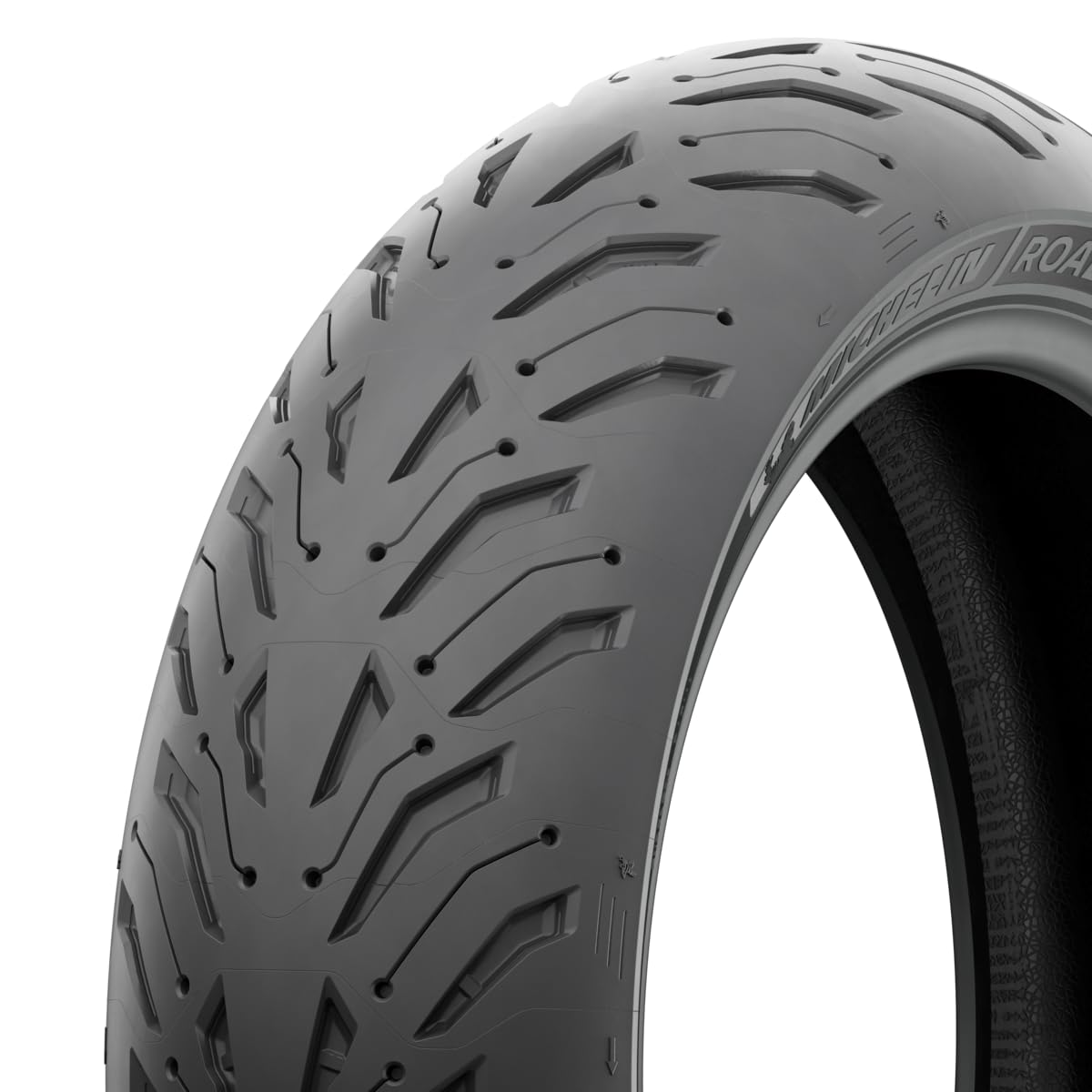
The Michelin Road 6 builds on two decades of innovation, refining the formula that made the Road 5 a favorite among sport-touring riders. The key advancement is the Water Evergrip Technology, which delivers fifteen percent more wet grip compared to the Road 5. Owner feedback confirms that this rear tire provides tenacious traction in heavy rain, with several riders noting that they can maintain a spirited pace on damp roads without any nervousness. The 2CT+ technology adds rigidity for improved stability under hard braking and acceleration.
Tread life is a standout feature, with the Road 6 offering a ten percent improvement over its predecessor. Reports from riders on high-mileage bikes like the Honda Gold Wing and BMW R1200RT indicate that the tire handles straight-line commuting without excessive flat-spotting, while still delivering confident cornering performance. The compound heats up quickly, providing immediate grip even in cooler morning temperatures. Owners who track their bikes note that the Road 6 handles intermediate-level pace without overheating, which is impressive for a tire focused on longevity.
One of the most praised aspects of the Road 6 is its ability to maintain consistent performance throughout its life. Several owners report that the tire still feels fresh at four thousand miles, with plenty of tread remaining for further use. The predictable slide characteristics and resistance to wear make it an excellent choice for riders who want a single tire that excels in both wet commuting and dry sport riding without compromising on mileage.
What works
- Industry-leading wet grip and water evacuation
- Improved tread life over the Road 5
- Quick warm-up and consistent performance
- Excellent stability at high speeds
What doesn’t
- Premium price point compared to budget options
- Not the best choice for dedicated track use on high-HP bikes
3. Pirelli Diablo Rosso III

Pirelli’s Diablo Rosso III is a high-performance sport tire developed with technology from the World Superbike Championship. The bi-compound construction places a soft compound on the shoulders for maximum grip at high lean angles, while the center section uses a harder compound for stability under straight-line acceleration and braking. Owner feedback from sport bike riders on machines like the Hayabusa, Ninja 650, and CBR600RR is overwhelmingly positive, with many noting that the tire offers immediate, confidence-inspiring grip from the first ride.
The tire’s wet performance is surprisingly strong for a sport-focused model, with several owners reporting solid traction in rain and on damp pavement. The large footprint area contributes to excellent stability during high-speed cornering, and the advanced bi-compound technology ensures that the tire maintains grip even as the rider transitions from upright to full lean. Riders who push their bikes on canyon roads praise the predictable feedback and the tire’s ability to hold a line without any nervousness.
Durability is reasonable for a sport tire, with owners reporting several thousand miles of aggressive street riding before the rear shows significant wear. The Rosso III is not intended for high-mileage touring, but for the rider who prioritizes cornering confidence and responsive handling, it strikes a strong balance between grip and usable life. The included Pirelli keychain is a small bonus that adds to the overall presentation.
What works
- Superb dry grip with bi-compound technology
- Solid wet traction for a sport tire
- Quick warm-up and predictable feedback
- Competitive pricing for performance levels
What doesn’t
- Moderate tread life compared to touring tires
- Not ideal for heavy touring or commuting focus
4. Bridgestone Battlax Hypersport S22

Bridgestone’s Battlax Hypersport S22 is engineered as a premium sport tire that excels in both dry and wet conditions. The rear compound uses fine-grain silica to improve wet performance, while the front and rear pattern design enhances overall grip. Owner feedback consistently ranks the S22 as one of the best wet weather street tires available, with several riders noting that it provides strong grip even when cold and in rain. The tire is a direct successor to the popular S21 and improves on that model’s wet traction without sacrificing dry performance.
Riders who have used the S22 on track days and aggressive street rides report that the tire sticks like glue, with predictable feedback at high lean angles. The tire warms up quickly in cooler temperatures, with one owner reporting excellent grip at temperatures as low as fifty degrees Fahrenheit. The handling response is sharp and direct, thanks to increased pattern rigidity that improves stability during hard braking and acceleration.
Mileage is on the lower side for a street tire, with most owners reporting around five thousand miles on a set before replacement is needed. This is expected for a tire focused on maximum grip. For the rider who wants a high-performance tire that offers confidence in wet conditions and excels in dry corners, the S22 represents a strong choice. The competitive pricing relative to other hypersport tires adds to its appeal for budget-conscious sport riders.
What works
- Outstanding wet grip and cold traction
- Predictable, high-grip dry performance
- Quick warm-up and sharp handling response
- Strong value for a hypersport tire
What doesn’t
- Shorter tread life compared to touring options
- Some owners prefer more progressive slide characteristics
5. Shinko 777 Front H.D.

Shinko’s 777 series has become a go-to choice for cruiser riders seeking a strong balance of grip, comfort, and affordability. The Heavy Duty version features a reinforced carcass that provides a more stable and planted feel, particularly on heavier V-Twin and metric cruiser models. Owner feedback highlights the tire’s ability to reduce handlebar shake, with one rider on a Yamaha Bolt noting a significant reduction in vibration after installation. The rubber compound is formulated to maximize grip and comfort, delivering confidence under acceleration, braking, and cornering.
The tread design includes functional siping and grooves that provide superior traction in both wet and dry conditions. Multiple riders have praised the 777 for its performance in rain, with no reports of groove drift at highway speeds. The tire is available in a wide range of sizes to fit many V-Twin and metric cruisers, making it a versatile option for owners of Harley-Davidson, Yamaha, Kawasaki, and other cruiser brands. The bias construction with aramid belts adds durability without making the ride harsh.
What makes the Shinko 777 stand out is its value proposition. Riders consistently report that it offers comparable handling and wear to big-brand tires at a lower investment. The Heavy Duty carcass adds stability for touring and daily use, and the tire has proven reliable on multi-state trips. For the cruiser rider who wants a well-rounded tire that does not break the budget, the 777 is a strong contender that delivers consistent performance across varied conditions.
What works
- Excellent grip and comfort for cruiser riding
- Reinforced Heavy Duty carcass improves stability
- Strong wet traction with no groove drift
- Great value for the price
What doesn’t
- Bias construction not ideal for aggressive cornering
- Some riders note higher low-speed turning effort
6. Shinko SR777 HD White Wall Rear

For cruiser riders who want the classic aesthetic of a white wall tire without sacrificing modern performance, the Shinko SR777 HD White Wall delivers a compelling package. The vivid white sidewalls provide a clean, vintage look that enhances the appearance of V-Twin and metric cruisers without the premium pricing of heritage-brand white walls. Owner feedback from riders on Yamaha Bolts, Kawasaki Vulcans, and Victory Highballs is overwhelmingly positive, noting that the tire offers stiff grip and zero wobble even at higher speeds.
The rubber compound is the same formulation used in the standard 777 series, providing maximum grip and comfort. Riders report that the tire handles well in all weather conditions, with one owner completing a seven-thousand-mile cross-country trip through heat, snow, and rain without any issues. The tread design includes functional siping and grooves that provide traction in wet conditions, and the Heavy Duty reinforced carcass adds stability for loaded touring. The ride quality is smooth, and the tire feels planted on the road.
One of the most appreciated aspects of the SR777 HD White Wall is its ability to combine classic style with modern grip. Owners note that the tire offers better handling than expected from a budget-friendly white wall, with improved cornering response and a lighter front-end feel. The tire proves that you do not have to choose between a vintage look and safe, reliable traction. For the cruiser owner who values appearance and performance, this Shinko is a smart pick.
What works
- Classic white wall look at a budget-friendly price
- Strong grip and stability for cruiser riding
- Proven reliable on long-distance trips
- Good wet traction and handling response
What doesn’t
- White walls require more maintenance to keep clean
- Bias construction may not suit high-performance sport riding
7. Bridgestone Exedra Max

Bridgestone’s Exedra Max is designed specifically for cruiser applications, with a rubber compound and tread pattern optimized for long mileage and reduced rider fatigue. The unique wide shape of the tire profile supports touring-style riding, improving stability on straight highways while still offering sufficient grip for sweeping corners. Owner feedback from riders on bikes like Yamaha V-Star 950 and Honda Valkyrie indicates that the tire delivers strong wet and dry traction, with predictable handling characteristics that inspire confidence.
The tread pattern is engineered for water evacuation, making the Exedra Max a capable tire in damp conditions. Riders report that the tire holds the road well in rain and tight corners, though it does require some throttle control to avoid rear wheel slip under hard acceleration. The construction uses a bias layout with an H-speed rating, making it suitable for highway use. The tire arrives with a current manufacturing date, a detail that buyers appreciate in ensuring they are getting fresh rubber.
Mileage is a strong point, with one owner reporting over twenty-five thousand miles on the original tire before replacement. While some riders note that the tire does not last as long if ridden aggressively, the majority agree that it provides good value for the mileage it offers. The Exedra Max is a solid choice for cruiser and touring riders who prioritize longevity and all-weather capability without needing the highest level of sport performance.
What works
- Excellent tread life for cruiser and touring use
- Strong wet traction and water evacuation
- Predictable handling and stability
- Current manufacturing dates on delivery
What doesn’t
- Not designed for aggressive cornering or track use
- Some riders find rear grip lacking under hard acceleration
8. Dunlop American Elite Rear

Dunlop’s American Elite is a leading aftermarket choice for riders of touring and bagger motorcycles who demand extended tread wear without compromising on grip. The radial construction provides a smoother ride and better heat dissipation compared to bias-ply options, which is critical for heavy Harley-Davidson touring bikes. Owner feedback from riders on Road Glides, Street Glides, and Electra Glides is overwhelmingly positive, with many noting that the American Elite offers a night-and-day improvement in traction over stock Dunlops, particularly in wet and cold conditions.
The tire’s tread design is optimized for long highway mileage, with several owners reporting over eighteen thousand miles on a single rear tire. The compound provides excellent grip in both wet and dry conditions, and riders praise the tire for its quiet, smooth operation at speeds above one hundred miles per hour. The American Elite handles the weight of a fully loaded touring bike without any squirrely behavior, inspiring confidence during long-distance trips. The high load capacity (over twelve hundred pounds) makes it suitable for heavily loaded bikes.
What sets the American Elite apart is its consistency over time. Owners who have used the tire for years report that it maintains its handling characteristics throughout its life, without becoming noisy or developing balance issues. The tire is a premium option that commands a higher investment, but the return in terms of mileage and all-weather confidence makes it a favorite among serious touring riders who value longevity and safety.
What works
- Exceptional tread life for touring use
- Strong grip in wet, dry, and cold conditions
- Quiet and smooth at high speeds
- High load capacity for loaded touring
What doesn’t
- Premium price point
- Not designed for aggressive sport riding
9. Dunlop D402 Harley Front

The Dunlop D402 is the approved replacement tire for Harley-Davidson touring models, engineered and tested in partnership with the manufacturer to provide maximum performance on big twin motorcycles. The construction features a three-ply polyester casing with two fiberglass belts, which adds stability for the demands of touring riding. Owner feedback from riders of older Harley models, such as the 1990 Fatboy and 1991 Heritage, indicates that the D402 offers a significant safety upgrade over worn or outdated tires, with better grip, durability, and gas mileage.
The computer-optimized tread profile includes an offset center groove that improves rider confidence over rain grooves and steel-grated bridges. This design also helps reduce cupping, a common issue on heavy touring bikes that can lead to uneven wear and vibration. Riders report that the tire provides a stable, planted feel even when the bike is loaded with gear or a passenger. The tubeless design simplifies puncture repair and reduces rotational weight compared to tube-type tires.
For owners of Harley-Davidson touring and cruiser models who want a direct-fit replacement that maintains the bike’s original handling characteristics, the D402 is a reliable choice. The tire is built to handle the weight and power of large V-Twins, and owner feedback consistently praises its long life and predictable performance. It is a no-surprises tire that does the job without fuss, making it a solid pick for riders who prioritize dependability over cutting-edge performance.
What works
- Direct OEM replacement for Harley touring models
- Robust 3-ply construction for stability
- Offset groove reduces cupping and improves rain-groove tracking
- Long-lasting and dependable
What doesn’t
- Bias construction not ideal for aggressive cornering
- Limited to cruiser and touring applications
10. Continental ContiMotion

Continental’s ContiMotion is a budget-friendly sport tire that punches above its price point, offering surprisingly aggressive performance for street riders. The radial construction with steel belting provides good stability at highway speeds, and the tread pattern is designed for all-weather grip. Owner feedback from riders on sport bikes like the Kawasaki ZX-6R, Honda VFR, and Aprilia Mille indicates that the ContiMotion delivers confident cornering grip and predictable behavior in damp conditions.
The tire’s ride quality is slightly on the stiffer side, with some riders noting that it transmits more road imperfections than premium touring tires. However, this firmness translates to sharp handling response and good feedback during spirited riding. Riders report that the tire warms up quickly and provides reliable grip in temperatures as low as forty degrees Fahrenheit. The tread wears moderately quickly under aggressive use, but the performance it offers for the price makes it an attractive option for daily commuting with occasional canyon carving.
Where the ContiMotion excels is as an affordable upgrade for riders who want a radial tire with predictable grip without investing in a hypersport model. It handles well in wet conditions and provides stable braking performance. For the budget-conscious sport rider who wants a tire that can handle daily duties and weekend twisties, the ContiMotion represents a solid value that does not feel like a compromise.
What works
- Low price with strong performance for the cost
- Predictable grip in wet and dry conditions
- Radial construction offers good stability
- Quick warm-up and responsive handling
What doesn’t
- Stiffer ride may not suit all preferences
- Moderate tread life under aggressive riding
11. Kenda KM1 Sport Touring 2-Pack

Kenda’s KM1 is a sport-touring tire designed to offer a balance of performance, durability, and value in a convenient front-and-rear two-pack. The radial construction features an optimized apex geometry that delivers high-speed stability while maintaining agile handling for a variety of riding styles. Owner feedback from riders using the KM1 on sport-touring motorcycles highlights the tire’s impressive grip in both wet and dry conditions, with several owners noting that it outperforms expectations for a budget-friendly option.
The tread design promotes even wear over time, and the advanced rubber compound heats up quickly from cold temperatures, providing consistent performance from the moment you start riding. The four-ply construction adds strength and longevity, making the tire suitable for long-distance touring. Riders report that the KM1 offers good cornering stability and smooth highway cruising, with minimal noise and vibration. The 2-pack format simplifies ordering and ensures that you are running a matched set.
Some owners note that the tire is sensitive to road grooves and can exhibit a slight weave at high speeds, but this is balanced by its strong wet traction and affordable pricing. The KM1 is not a hypersport tire, but it delivers reliable performance for riders who want a competent sport-touring tire without paying a premium. For the rider looking for a complete set that provides good grip and durability for everyday use, the Kenda KM1 2-pack is a practical and affordable solution.
What works
- Great value for a complete front and rear set
- Strong wet and dry grip for sport touring
- Quick warm-up and consistent performance
- Durable 4-ply construction
What doesn’t
- Some sensitivity to road grooves and weaving
- Stiff sidewalls can make installation challenging
Hardware & Specs Guide
Load Index and Speed Rating
The load index indicates the maximum weight a tire can support at full inflation. For example, a load index of 77 supports up to 908 pounds, while a load index of 81 supports 1,200 pounds. Speed ratings (such as H, W, Y) define the maximum safe speed. A W rating (168 mph) is common on sport bikes, while H (130 mph) suits most cruisers. Always match or exceed the original equipment specifications.
Bias vs. Radial Construction
Bias-ply tires use overlapping cord layers, producing a stiffer carcass that handles heavy loads well but rides firmer. Radial tires use cords running perpendicular to the tread, offering a more flexible sidewall that improves heat dissipation, grip at lean, and ride comfort. Modern sport and touring bikes overwhelmingly favor radial construction for its superior performance.
Compound Technology
Tire compounds range from hard, long-wearing rubber to soft, sticky formulations. Multi-compound designs (like Michelin 2CT or Pirelli bi-compound) place a harder compound in the center for durability and softer rubber on the shoulders for cornering grip. Silica-infused compounds improve wet traction without sacrificing dry grip, making them popular for all-weather tires.
Tread Patterns
Tread design directly affects water evacuation and noise. Deep grooves and siping (small slits) channel water away to reduce hydroplaning risk. Sport tires often have minimal tread for maximum contact area, while touring tires feature intricate patterns for long-wear and wet performance. The offset center groove on some cruiser tires improves stability on rain grooves and steel bridges.
FAQ
How often should I replace my motorcycle tires?
Can I mix different tire brands on my motorcycle?
What does the speed rating mean on a motorcycle tire?
Final Thoughts: The Verdict
For most buyers, the best moto tires winner is the Michelin Road 5 because it offers the best balance of wet grip, dry handling, and tread life for sport-touring and daily riding. If you want maximum cornering confidence for canyon rides, grab the Pirelli Diablo Rosso III. And for heavy cruiser touring with classic styling, nothing beats the Dunlop American Elite for longevity and all-weather reliability.

Certification: BSc in Mechanical Engineering
Education: Mechanical engineer
Lives In: 539 W Commerce St, Dallas, TX 75208, USA
Md Amir is an auto mechanic student and writer with over half a decade of experience in the automotive field. He has worked with top automotive brands such as Lexus, Quantum, and also owns two automotive blogs autocarneed.com and taxiwiz.com.