An oil filter is the last line of defense against abrasive particles circulating through your engine. For vehicles that have accumulated significant mileage, the margin for error shrinks — wear tolerances loosen, seals age, and sludge deposits become a real threat. Choosing a filter that maintains flow while trapping finer contaminants is no longer optional; it is the difference between a reliable daily driver and a rebuild waiting to happen.
I’m Amir — the founder and writer behind Four Wheel Ask. I have spent years analyzing filtration media technology, tearing down competitive filters, and cross-referencing owner durability reports across high-mileage fleets to identify which products actually deliver on their promises.
High-mileage engines demand better filtration, and the best high mileage oil filter delivers extended protection with superior contaminant capture.
How To Choose The Best High Mileage Oil Filter
Selecting a filter for an engine that has crossed the 75,000-mile mark requires looking beyond brand recognition. The internal condition of a high-mileage powerplant changes in three key ways, and the filter must compensate for each: wider bearing clearances allow more particulates to circulate, degraded valve-guide seals let combustion byproducts into the oil, and accumulated varnish restricts oil flow through narrow passages. A filter designed for a new engine simply cannot address these conditions effectively.
Filtration Media Type
Standard cellulose media captures particles in the 40-to-50-micron range. Synthetic-blended or full-synthetic media (often a polyester or microglass composite) can trap particles down to 20 to 25 microns at the same flow rate. For a high-mileage engine, that extra efficiency translates directly into reduced abrasive wear on cam lobes, bearings, and piston rings.
Anti-Drainback Valve Material
When the engine shuts off, oil drains out of the filter housing. On startup, the pump must refill the filter before oil reaches the upper valvetrain — a period called dry-start. Silicone anti-drainback valves hold their seal much longer than rubber or nitrile versions, which stiffen and crack with age and heat cycling. A silicone valve keeps oil in the filter even after days of sitting.
Burst Strength and Center Tube Construction
Extended service intervals push the filter to its structural limits. The center tube must resist collapsing under high oil-pressure differentials, especially when cold oil spikes pressure on startup. Spiral-wound or double-helix metal center tubes maintain integrity far better than spot-welded or cardboard-core designs.
Quick Comparison
On smaller screens, swipe sideways to see the full table.
| Model | Category | Best For | Key Spec | Amazon |
|---|---|---|---|---|
| Purolator PBL14461 | Premium Mid-Range | Best Overall | SmartFUSION synthetic media, 99% at 20 microns | Amazon |
| WIX 57060 | Mid-Range | Value Pick | Blended media, 99% at 26 microns, silicone drainback | Amazon |
| K&N HP-7023 | Premium | Lexus/Toyota | Synthetic-blend media, 20K-mile rating, wrench-off nut | Amazon |
| Purolator PBL22500 | Premium Mid-Range | Ford/GM Trucks | SmartFUSION synthetic media, steel casing | Amazon |
| K&N HP-4003 | Premium | RAM/Dodge/Cummins | Synthetic-blend media, wrench-off nut, 20K-mile rating | Amazon |
In-Depth Reviews
1. Purolator PBL14461 PurolatorBOSS

The PurolatorBOSS line consistently ranks at the top of independent filtration teardown comparisons, and the PBL14461 validates that reputation with a SmartFUSION full-synthetic media that achieves over 99 percent dirt removal at 20 microns. For a high-mileage engine where bearing clearances are wider and contamination loads are higher, that level of efficiency directly reduces the abrasive particle count circulating through the oil galleries.
The PuroSEAL gasket uses an ethylene acrylic compound that resists compression set far better than standard nitrile O-rings, which is critical for engines that see high oil temperatures during towing or extended highway runs. The silicone anti-drainback valve maintains a positive seal even after the vehicle sits for days, eliminating the dry-start rattle that accelerates wear on older valvetrains. Owners report consistently clean oil analysis results across 8,000-to-10,000-mile change intervals.
The double-helix metal center tube provides the burst resistance needed to handle cold-start pressure spikes without collapsing. This filter fits select Acura, Honda, Genesis, Hyundai, Kia, Subaru, and Toyota models, making it a versatile option for Asian-market high-mileage fleet vehicles.
What works
- Full-synthetic media captures particles below 20 microns
- Ethylene acrylic gasket resists heat aging and leakage
- Silicone anti-drainback valve prevents dry starts
What doesn’t
- Larger outer diameter can be tight in some chassis
- Not compatible with domestic truck applications in this P/N
2. WIX 57060
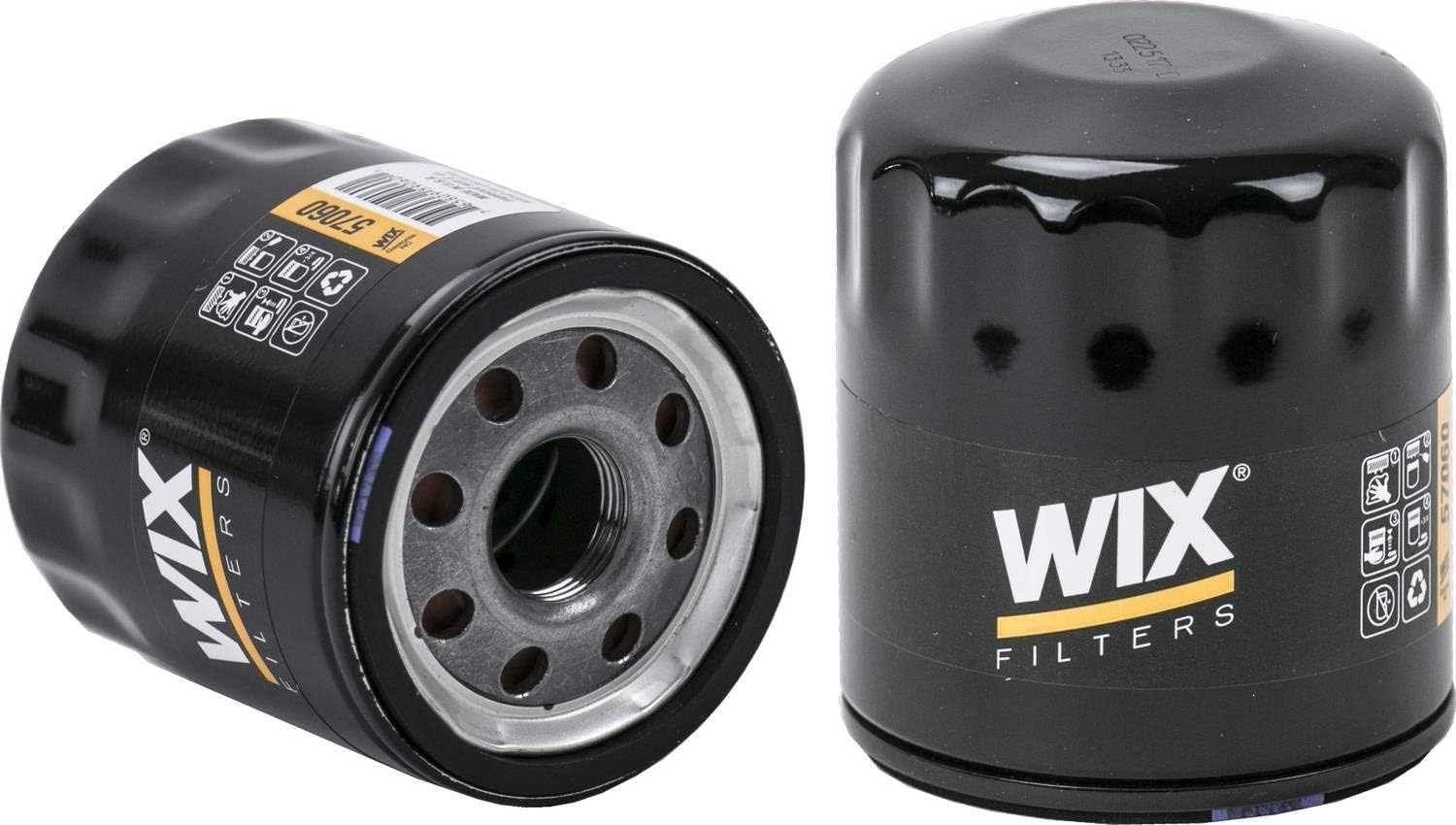
WIX has built a decades-long reputation among professional technicians for consistent manufacturing quality, and the 57060 reflects that engineering discipline. The advanced blended media achieves 99 percent efficiency at 26 microns — a spec that, while slightly coarser than the PurolatorBOSS, still substantially outperforms basic cellulose filters at a lower acquisition cost. For budget-conscious owners of GM, Chrysler, and Alfa Romeo platforms, this represents a strong cost-per-mile value.
The silicone anti-drainback valve holds oil in the filter housing during shutdown, which is particularly important for engines that experience short-trip duty cycles where the filter would otherwise drain between starts. The housing and baseplate threading meet or exceed OE burst-pressure requirements, and the filter is rated for up to 15,000 miles when paired with synthetic oil — a realistic interval for highway-driven high-mileage vehicles.
Owner feedback across RAM Hemi trucks and GM V8 platforms indicates no sealing issues or bypass valve chatter across typical 5,000-to-7,500-mile change windows. This filter is a pragmatic choice for those who change oil on a strict schedule and want a proven, no-surprises product.
What works
- Consistent OE-level fit and thread quality
- Silicone anti-drainback valve holds seal reliably
- Broad compatibility with GM, Chrysler, and import platforms
What doesn’t
- Media efficiency spec is coarser than full-synthetic competitors
- Paper media element limits service life versus synthetic variants
3. K&N HP-7023
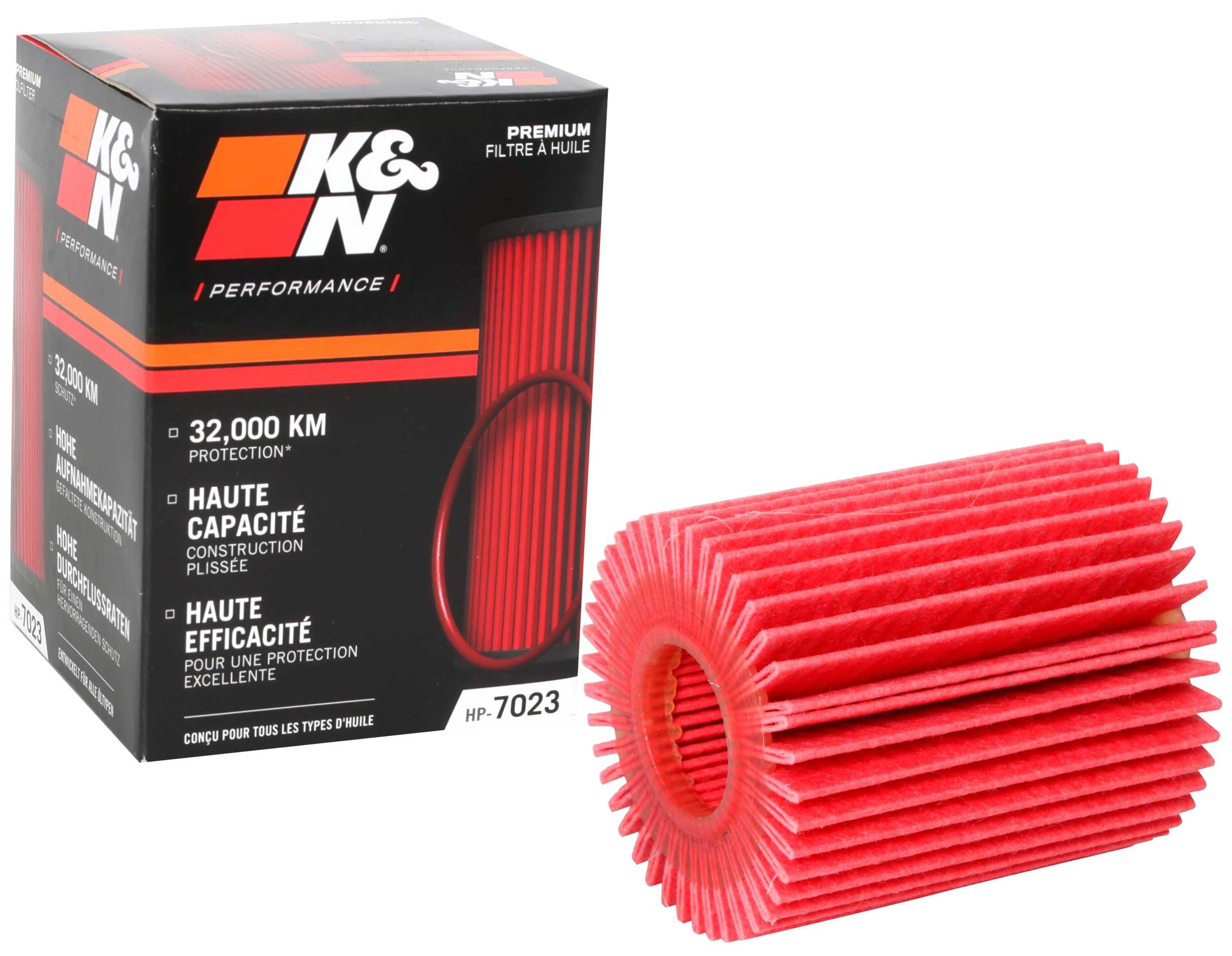
K&N markets its oil filters on flow performance, and the HP-7023 delivers with a pleated synthetic-blend media that balances low restriction against high contaminant capacity. The welded hex nut on the canister dome simplifies removal without requiring a strap wrench — a genuine convenience for high-mileage vehicles where corrosion or overtightening at the last oil change has made the filter stubborn. This filter is compatible with select Lexus and Toyota models, including the 4Runner and IS series.
Laboratory burst-test data indicates the housing withstands pressures well above the typical bypass valve opening point, which matters for engines that see cold climate starts where oil viscosity spikes momentarily. The filtration media is designed for use with synthetic, conventional, and blended oils, so there is no compatibility concern when transitioning between oil types during a high-mileage maintenance regimen.
Owner reports from 4Runner and IS250 applications note that the anti-drainback valve retains oil effectively even after a week of sitting, and the filter threads engage smoothly without cross-threading. The 20,000-mile service rating assumes ideal conditions, but most users sensibly change at shorter intervals.
What works
- Welded hex nut simplifies removal without special tools
- Synthetic-blend media offers strong capacity and flow
- Compatible with all oil types including synthetic blends
What doesn’t
- Limited vehicle fitment compared to broader catalog filters
- No published micron-efficiency rating for comparison
4. Purolator PBL22500 PurolatorBOSS

The PurolatorBOSS platform shares the same SmartFUSION synthetic media technology as the PBL14461 but is configured for domestic full-size trucks and SUVs. The PBL22500 fits Ford F-150, Explorer, Edge, Chevrolet Silverado, Traverse, Tahoe, GMC Acadia, Sierra, and Yukon models — vehicles that typically see heavier loads and extended idle periods, which accelerate oil degradation and increase contaminant loading.
The heavy-duty steel casing provides extra dent resistance compared to standard rolled-shell filters, which is relevant when the filter is mounted in a vulnerable location under the chassis. The double-helix metal center tube prevents collapse under the higher bypass pressures common during cold starts in V8 engines, and the silicone anti-drainback valve maintains oil column height in the filter during overnight shutdown.
Users with Silverado ZR2 and F-150 5.0 Coyote applications report straightforward fitment and zero leaks at the gasket interface. The filter is physically larger than standard OE replacements, so clearance should be confirmed before installation, particularly on vehicles with skid plates or aftermarket oil coolers.
What works
- Full-synthetic media with extended dirt-holding capacity
- Reinforced steel casing resists physical damage
- Double-helix center tube handles extreme pressure spikes
What doesn’t
- Larger canister may not fit tight engine bays
- Limited to domestic and certain Asian applications
5. K&N HP-4003
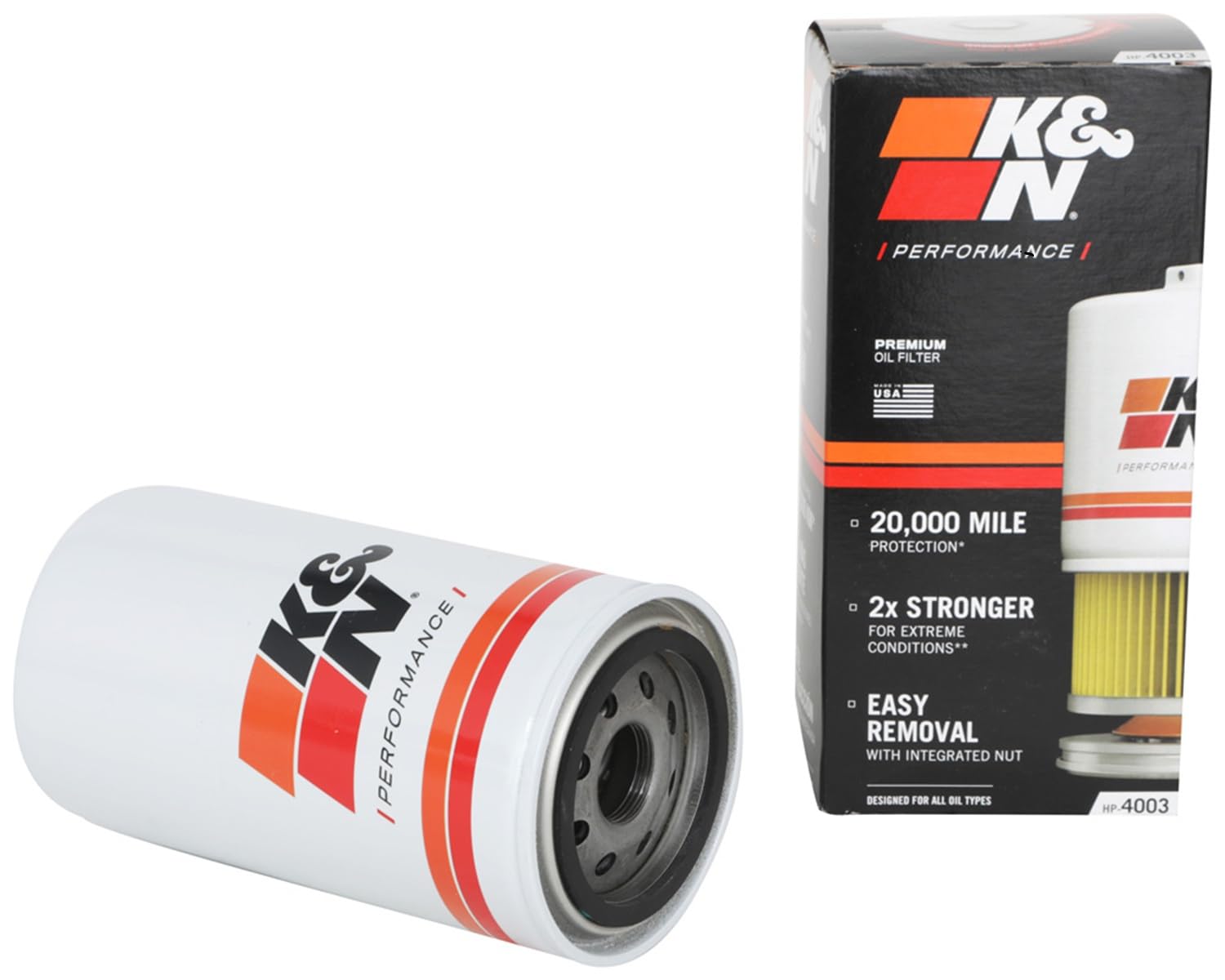
The HP-4003 is K&N’s largest spin-on filter in this comparison, designed primarily for RAM and Dodge trucks including the 5.9L and 6.7L Cummins diesel applications. The pleated synthetic-blend media provides the flow capacity that turbocharged diesel engines require, where oil contamination rates are substantially higher due to soot loading and fuel dilution. The welded hex nut at the base of the filter dome allows removal with a standard socket or wrench, which is a real advantage on diesel trucks where access space is limited.
Laboratory testing indicates the housing burst strength exceeds the demands of diesel injection systems, which can generate higher oil-pressure spikes than gasoline engines. The filter is rated for 20,000 miles under ideal conditions, though most diesel owners operating in severe service — towing, off-road, or extended idle — will change at shorter intervals. The anti-drainback valve is effective at preventing dry starts, which is critical for diesel engines that rely on immediate oil pressure to protect turbocharger bearings.
Owner feedback from 5.9L Cummins and 6.7L Power Stroke applications confirms reliable sealing and consistent oil analysis results. One user reported 409,000 miles on a RAM 1500 Hemi using this filter exclusively, which speaks to its long-term compatibility with high-mileage platforms.
What works
- Hex-nut wrench-off design simplifies service on trucks
- High burst strength suitable for diesel applications
- Pleated synthetic-blend media handles heavy soot loading
What doesn’t
- Premium positioning relative to comparable mid-range filters
- Efficiency data is not published for direct comparison
Hardware & Specs Guide
Micron Efficiency Ratings
Filtration efficiency is measured as the percentage of particles of a given size that the media captures. Filters with synthetic media (PurolatorBOSS) achieve over 99 percent at 20 microns. Blended-media filters (WIX, K&N) typically hit 99 percent between 24 and 30 microns. For a high-mileage engine with looser clearances, a filter that traps finer particles reduces long-term abrasive wear on bearings and cam lobes.
Anti-Drainback Valve Materials
Three common materials are used: nitrile rubber, silicone, and ethylene acrylic. Nitrile hardens with heat cycles and eventually leaks. Silicone maintains elasticity across a wider temperature range and resists compression set. Ethylene acrylic (used in PurolatorBOSS gaskets) combines the heat resistance of silicone with improved oil resistance. A failed anti-drainback valve allows oil to drain from the filter, causing a dry-start lag that accelerates valvetrain wear.
Center Tube Construction
The center tube carries the structural load when the filter bypass valve opens or when cold oil creates high pressure differentials. Spot-welded tubes fail under repeated stress. Spiral-wound or double-helix metal tubes (PurolatorBOSS) distribute stress evenly and resist collapse. Cardboard-core filters should be avoided entirely for high-mileage or extended-interval use.
Burst Pressure and Bypass Valve Calibration
Filters are tested to burst pressure, typically above 200 PSI for premium units. The bypass valve opens when the filter media becomes clogged or when cold oil restricts flow. A calibrated bypass valve set between 8 and 15 PSI ensures consistent oil delivery without starving the engine during cold starts. Filters with no published burst or bypass data should be treated skeptically.
FAQ
What makes a filter specifically suited for high-mileage engines?
Can I use a standard filter on a high-mileage engine?
How often should I change the filter on a high-mileage vehicle?
Does a higher micron-efficiency rating reduce oil flow?
Is the wrench-off nut on K&N filters worth the premium?
Final Thoughts: The Verdict
For most buyers, the best high mileage oil filter winner is the Purolator PBL14461 PurolatorBOSS because its full-synthetic media, silicone anti-drainback valve, and double-helix center tube deliver the highest contaminant capture rate in this comparison at a reasonable cost. If you want the proven reliability of a shop-standard brand at a lower price point, grab the WIX 57060. And for a diesel truck or RAM Hemi application where the wrench-off nut simplifies service, nothing beats the K&N HP-4003.

Certification: BSc in Mechanical Engineering
Education: Mechanical engineer
Lives In: 539 W Commerce St, Dallas, TX 75208, USA
Md Amir is an auto mechanic student and writer with over half a decade of experience in the automotive field. He has worked with top automotive brands such as Lexus, Quantum, and also owns two automotive blogs autocarneed.com and taxiwiz.com.