Picking the wrong heater for your garage workshop means either freezing through winter projects or watching your electric meter spin out of control. The right one delivers consistent warmth without breaking your budget or creating safety hazards, but the sheer variety of fuel types, BTU ratings, and mounting options makes it easy to overpay for features you do not need or under-spec for the space you actually have.
I’m Amir — the founder and writer behind Four Wheel Ask. My approach to evaluating garage workshop heaters centers on cross-referencing manufacturer claims with verified owner feedback across thousands of data points, analyzing how real-world BTU output, build materials, and safety certifications hold up under sustained use rather than just quoting spec sheets.
Comparing BTU output, fuel types, and safety systems confirms the DREO stands out as the most versatile pick for the best heater for garage workshop.
How To Choose The Best Heater For Garage Workshop
Selecting a workshop heater comes down to matching your space, power availability, and heating preferences with the right fuel type and output level. The following breakdown covers the critical factors that separate a smart purchase from a regrettable one.
Understand Your BTU Requirements
British Thermal Units measure heat output, and the rule of thumb is roughly 10 to 15 BTU per square foot for an average-height garage with moderate insulation. A standard two-car garage around 400 to 500 square feet typically needs 5,000 to 8,000 BTU for basic warmth, but if your workshop has high ceilings, poor insulation, or you live in a colder climate, that number climbs significantly. Oversized units cycle on and off too frequently, wasting energy, while undersized units run continuously without ever reaching your target temperature.
Fuel Type Trade-Offs
Electric heaters offer clean, quiet operation and zero venting requirements, making them ideal for smaller, well-insulated garages where you already have 120V or 240V outlets. Propane models deliver higher BTU output without relying on grid power, which matters for larger spaces or off-grid workshops, but they require adequate ventilation to prevent carbon monoxide buildup. Diesel heaters provide the highest fuel efficiency for sustained use in very cold environments, though they come with a higher upfront cost and more complex installation.
Safety Certifications Matter
Any heater used in an enclosed garage workshop must include automatic shut-off features for tip-overs and overheating. Look for ETL or UL listings that verify the unit passed independent safety testing. Propane and diesel units should also include low-oxygen shut-off sensors that cut fuel flow if oxygen levels drop too low. These certifications are not just paperwork — they directly prevent the scenarios that cause workshop fires and carbon monoxide poisoning.
Quick Comparison
On smaller screens, swipe sideways to see the full table.
| Model | Category | Best For | Key Spec | Amazon |
|---|---|---|---|---|
| DREO DR-HSH034 | Electric PTC | Whole-room even heating | 1500W, 3D oscillation, ECO mode | Amazon |
| Gasland MHA18BN | Propane Radiant | Large garage quiet operation | 18,000 BTU, 450 sq ft, 3 heat modes | Amazon |
| GiveBest Wall Heater | Smart Electric | Smart home integration | 1500W, WiFi/Alexa, 120° oscillation | Amazon |
| Remington LP Forced Air | Propane Forced Air | High-BTU industrial spaces | 60,000 BTU, 1500 sq ft, electronic ignition | Amazon |
| LF Bros 5KW Diesel | Diesel Forced Air | Off-grid and frigid climates | 17,000 BTU, 110V/12V/24V, remote | Amazon |
| Mr Heater Portable Buddy | Portable Propane | Small workshop spot heating | 9,000 BTU, 225 sq ft, low-oxygen shut-off | Amazon |
| JNDRO Wall-Mounted | Wall Mount Electric | Space-saving permanent install | 1500W, ECO thermostat, 24H timer | Amazon |
In-Depth Reviews
1. DREO DR-HSH034 Space Heater
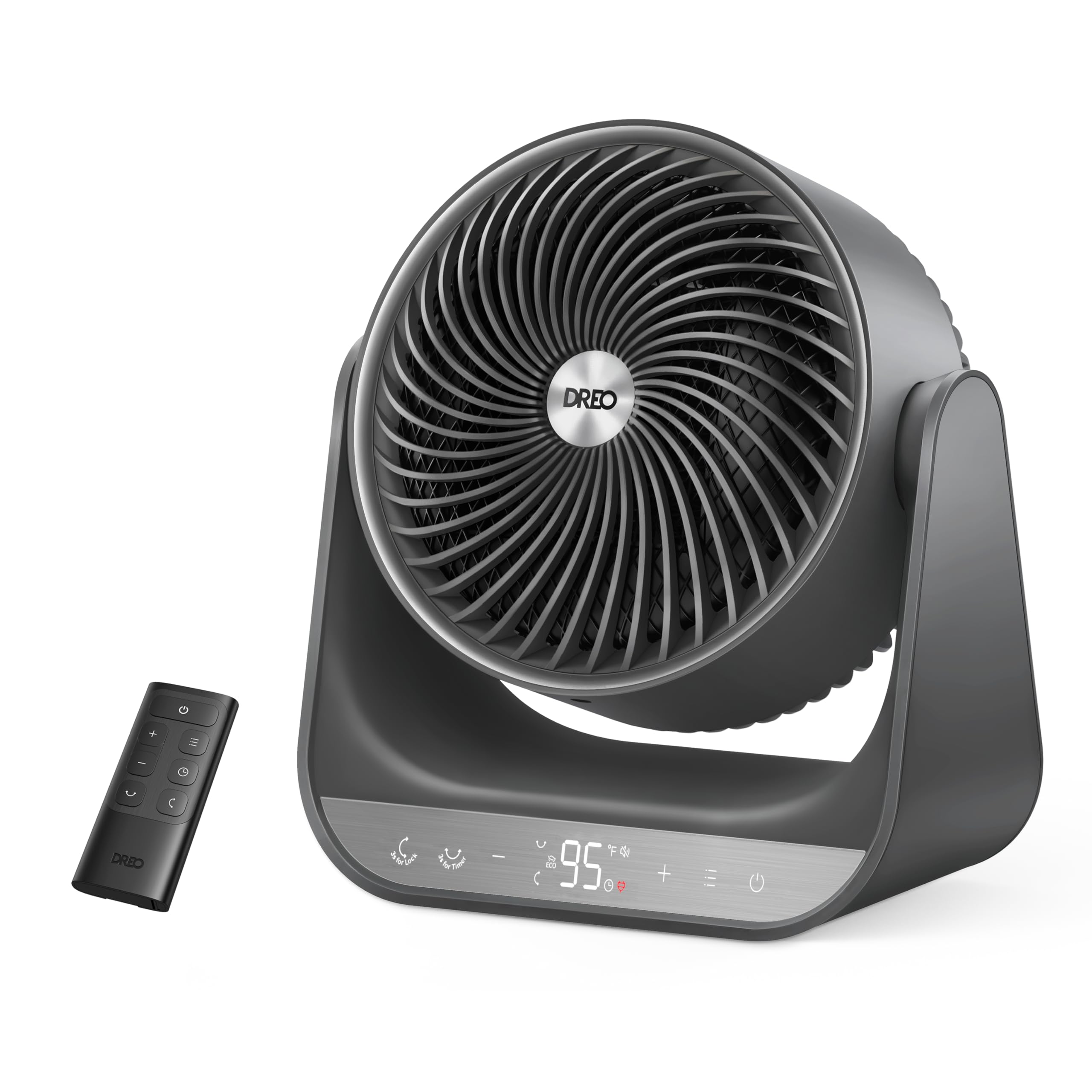
The DREO DR-HSH034 stands out because its 60-degree vertical combined with 90-degree horizontal oscillation creates genuinely even heat distribution that most fixed-direction units cannot match. Owner feedback consistently highlights how the 12 ft/s airflow eliminates cold spots even in awkwardly shaped garages where single-direction heaters leave the far corner frigid. The PTC ceramic element delivers heat within two seconds, which makes a meaningful difference when you step into a cold workshop and want immediate relief rather than waiting through a long warm-up cycle.
The brushless DC motor keeps noise at roughly 34 dB, so the heater does not drown out conversation or radio while you work. The ECO mode automatically adjusts power output based on ambient temperature, which directly translates to lower electricity consumption during prolonged use. The 1-degree Fahrenheit temperature increments from 41 to 95 degrees give precise control that most competing units in this segment lack.
ETL listing with overheat shut-off and tip-over protection covers the essential safety bases for an enclosed garage environment. The 12-hour programmable timer adds convenience for users who want the space pre-warmed before they start their shift. At 6.5 pounds, the pedestal form factor is light enough to reposition easily, though it does occupy floor space that wall-mounted units save.
What works
- Dual-plane oscillation eliminates cold spots better than fixed designs
- Whisper-quiet DC motor does not interfere with workshop radio or conversation
- Precise 1°F temperature adjustment with effective ECO savings mode
What doesn’t
- Pedestal footprint takes up floor space in tight workshop layouts
- 1500W output may struggle in uninsulated garages below freezing
2. Gasland MHA18BN Propane Radiant Heater

The Gasland MHA18BN delivers 18,000 BTU of radiant heat covering up to 450 square feet, which puts it squarely in the sweet spot for medium-to-large workshops that need serious warmth without requiring a full forced-air system. The cabinet-style design houses the 20-pound propane tank internally, keeping it out of sight and reducing trip hazards — a detail that matters in busy workshop floors where snagged hoses have caused accidents. Owner reports emphasize that the three heating modes allow meaningful adjustment between quick warm-up and sustained maintenance heating.
One of the strongest arguments for this unit is that it requires zero electricity to operate. For workshops in areas prone to power outages or for users who want to keep heating costs separate from their electric bill, this independence is a genuine advantage. The built-in wheels and carrying handle make relocation straightforward, so you can move it from the workbench area to storage or to a different zone as your project needs shift.
Safety coverage includes tip-over shut-off and low-oxygen shut-off, both of which are non-negotiable for any fuel-burning heater used in an enclosed space. The ultra-quiet operation is a frequently praised feature in owner feedback — unlike forced-air propane units that sound like a jet engine, this radiant model produces minimal noise, making it viable for spaces where you also use power tools or hold conversations.
What works
- Zero electricity requirement provides off-grid independence during outages
- Internal tank storage reduces trip hazards on busy workshop floors
- Near-silent operation suits noise-sensitive work environments
What doesn’t
- Radiant heat warms objects directly rather than circulating air evenly
- Requires adequate ventilation per manufacturer guidelines for indoor use
3. GiveBest Wall Heater for Indoor Use
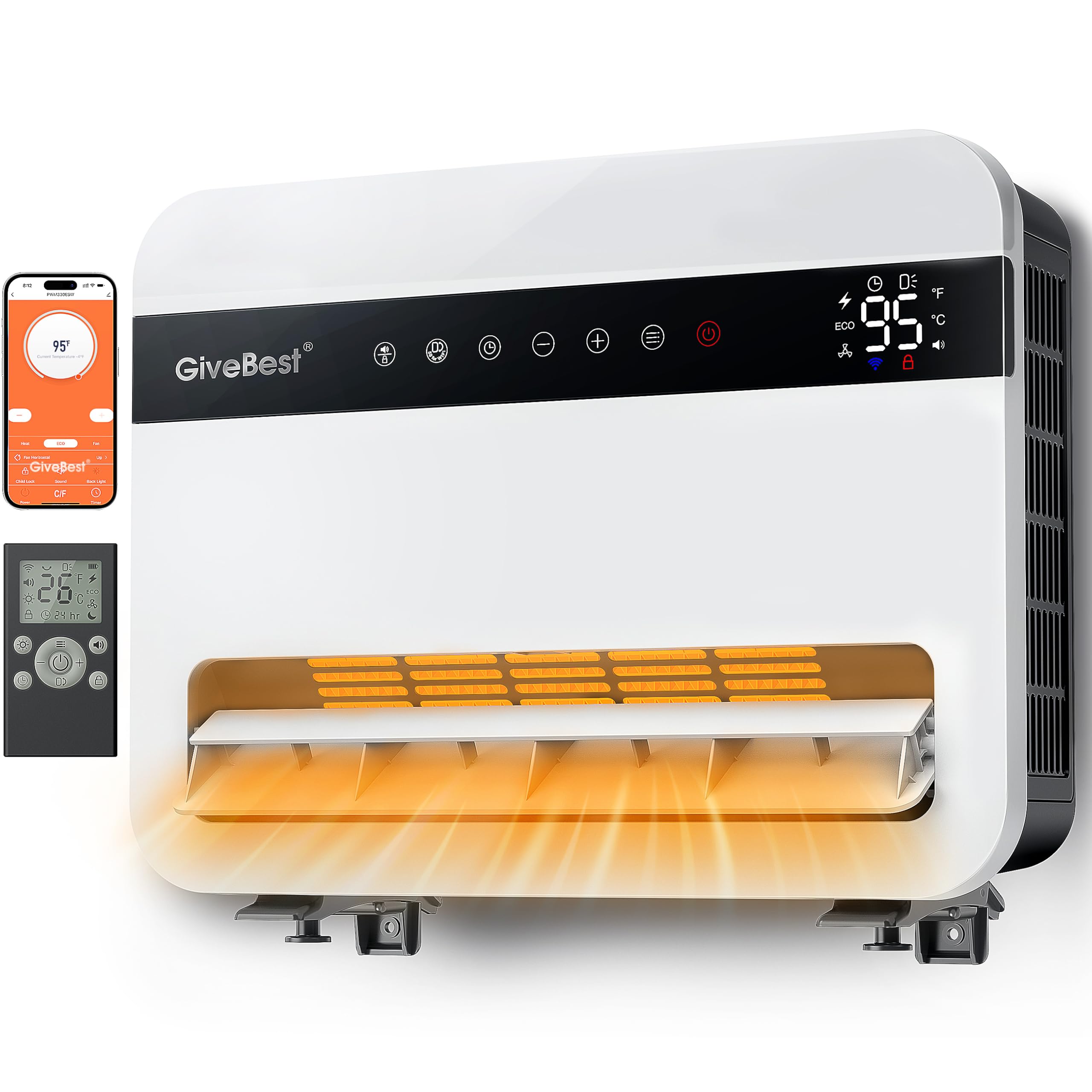
The GiveBest wall heater brings smart home integration to the garage workshop with WiFi control via smartphone app, voice commands through Alexa, and the convenience of a remote control and touchscreen panel. The 120-degree vertical oscillation is unusually wide for a wall-mounted unit, distributing warm air across a broad arc rather than blasting a narrow stream directly in front of the heater. Owner feedback frequently mentions how the rapid two-second heat-up time makes a tangible difference when entering a cold garage and wanting comfort immediately.
The dual mounting flexibility is a practical advantage — the unit ships with both wall-mount hardware and a standing base, so you can install it permanently or keep it portable depending on your workshop layout. The ECO mode claims up to 40 percent energy savings by adjusting power based on ambient temperature, which aligns with what experienced users report about their monthly bills during sustained winter use. The 24-hour timer allows pre-scheduling so the garage is warm when your workday starts.
ETL certification with flame-retardant materials and overheat protection provides the baseline safety assurance needed for an enclosed workshop. The child lock function adds an extra layer of security for households where kids access the garage. The 1500W output covers spaces up to roughly 200 square feet effectively, though larger workshops may need supplementary heat sources or a higher-BTU primary unit.
What works
- Smart WiFi and Alexa integration enables remote temperature scheduling
- Wide 120° oscillation covers more floor area than typical wall units
- Can be wall-mounted or used freestanding for layout flexibility
What doesn’t
- 1500W output limits effective coverage to smaller garages
- App setup requires stable WiFi signal in workshop location
4. Remington LP Forced Air Heater
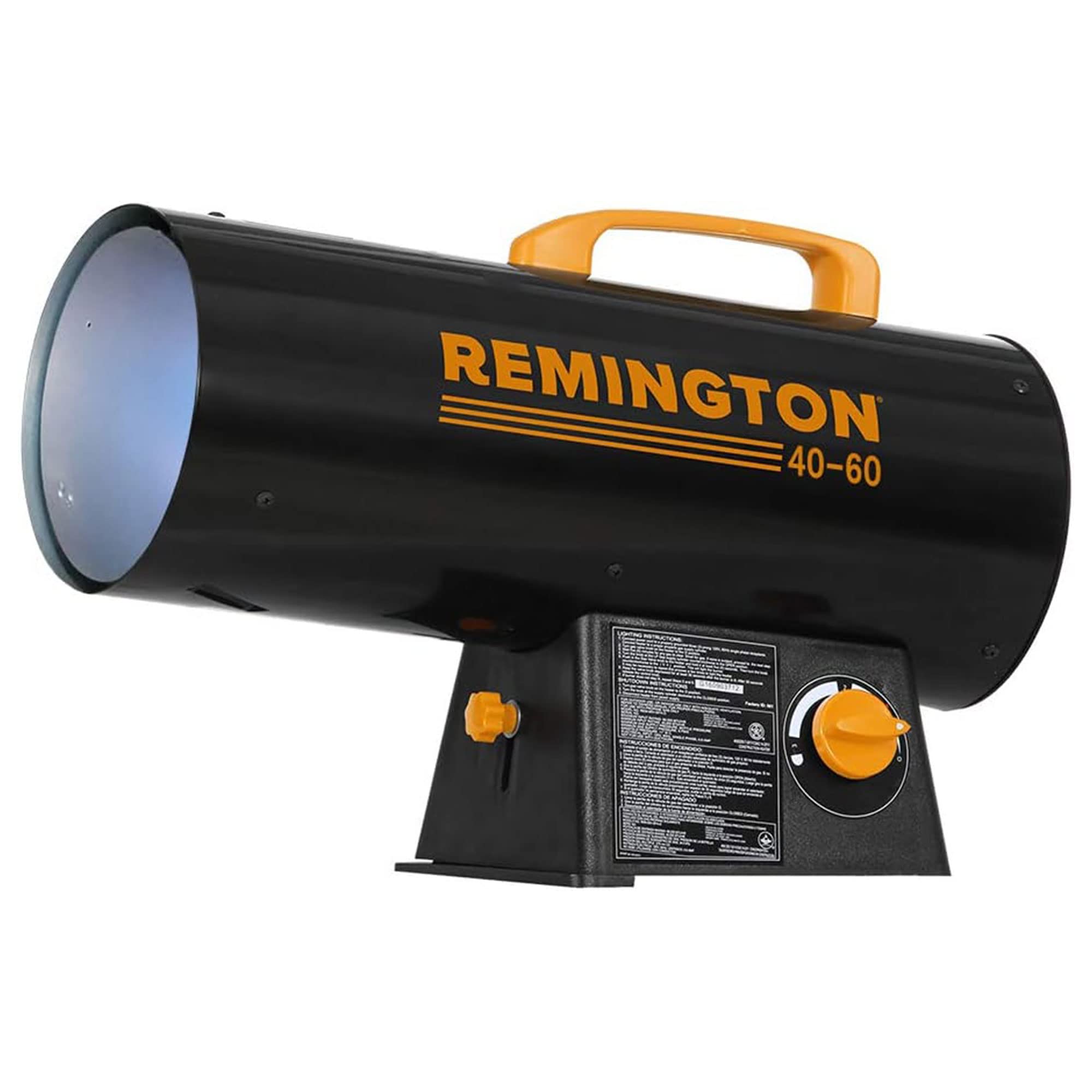
The Remington LP forced air heater produces 60,000 BTU, making it the highest-output unit in this comparison by a wide margin and capable of warming spaces up to 1,500 square feet. This is the heater you choose when your workshop is essentially a heated barn, construction site, or commercial garage where smaller residential units would run continuously without keeping up. The heavy-duty steel construction is visibly more rugged than consumer-grade heaters, designed to survive job-site bumps and drops that would dent thinner sheet-metal housings.
Variable heat settings and an adjustable-height stand let you direct the forced air stream where it is needed most, whether that means blasting heat toward a specific work area or circulating air across the entire space. The electronic ignition provides a quick start without fumbling with matches or lighters, and the included 10-foot LP hose with regulator gets you connected to a standard 20-pound propane tank immediately. At 11 pounds, it is lighter than its industrial appearance suggests, making transport between sites manageable.
Safety systems include a thermocouple, high-temperature limit shut-off, and flame-out fuel cut-off that stops gas flow if the flame extinguishes. Note that this unit is rated for outdoor use per manufacturer guidance, meaning it requires adequate ventilation if used inside a workshop — it is best suited for spaces with large roll-up doors or active ventilation systems rather than tightly sealed garages.
What works
- Massive 60,000 BTU output heats very large workshop spaces quickly
- Steel construction withstands job-site abuse better than plastic housings
- Variable heat settings and adjustable stand offer directional control
What doesn’t
- Rated outdoor use requires active ventilation for indoor operation
- Forced-air noise level is significantly higher than radiant models
5. LF Bros 5KW All-in-One Diesel Heater
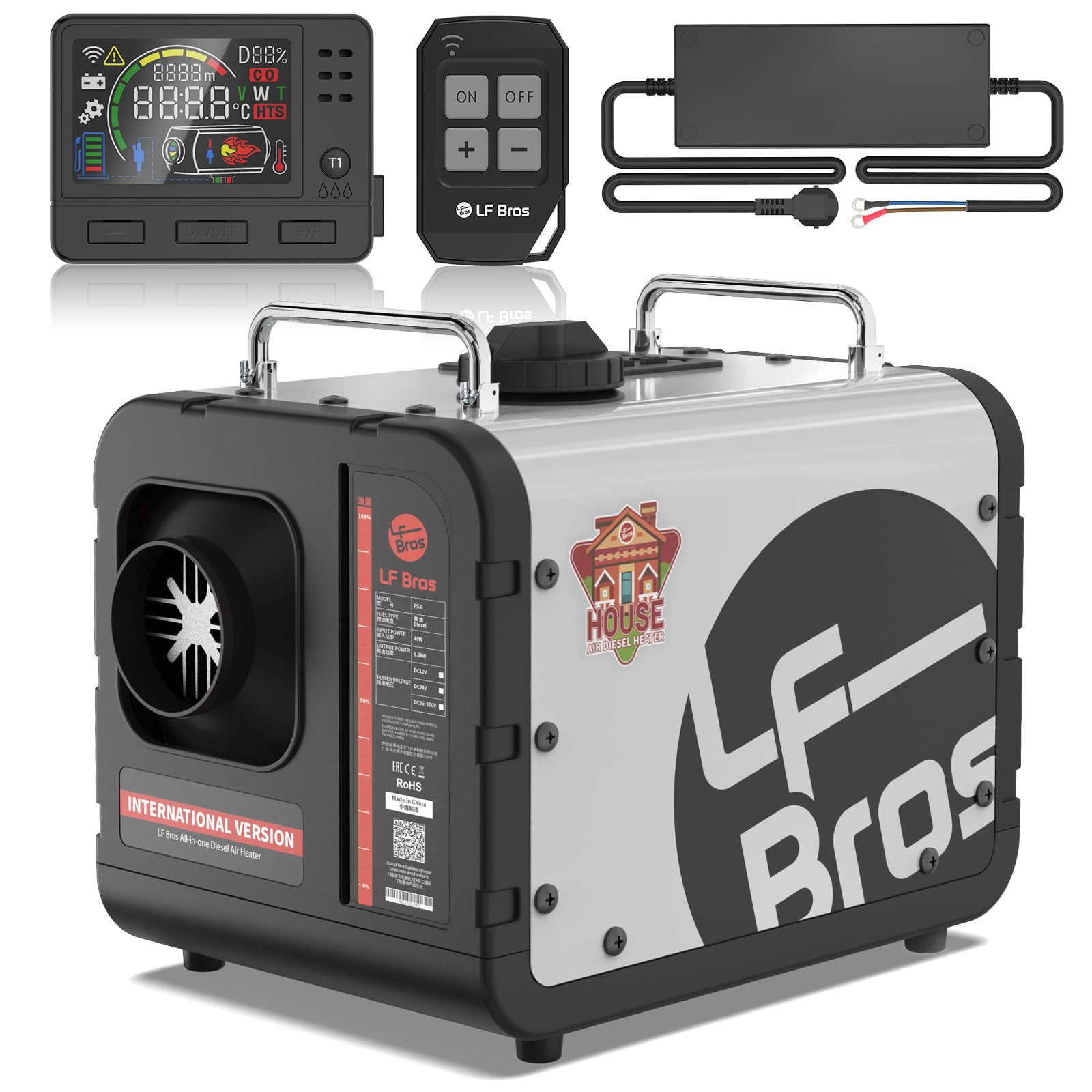
The LF Bros diesel heater brings a different value proposition to the workshop: extremely efficient fuel-based heating that runs on diesel rather than propane or electricity. The 5KW output translates to roughly 17,000 BTU, and the fuel consumption of 0.18 to 0.53 liters per hour means a single 5-liter tank can run for many hours of continuous operation. The all-in-one design integrates the heater, fuel tank, LCD controller, and remote into a single compact chassis, eliminating the separate tank and hose clutter that propane setups require.
The multi-voltage support is a standout feature — the kit includes a 110V transformer so you can plug directly into a standard wall outlet, but it also supports 12V and 24V for use in vehicles, campers, or off-grid workshop setups. Operation range from -40°F to 104°F means it starts reliably even in extreme cold where propane pressure can drop. Owner feedback emphasizes the oil-leaking-proof fuel tank cap with internal thread design that prevents spills during transport or vibration.
The LCD screen displays working status clearly, and the remote control works up to 100 feet away. Setup requires following the detailed instruction booklet or QR-code-linked installation tutorial, and the delicate packaging with foam protection suggests the manufacturer understands these units ship to users who may be installing them in remote locations. The 11.8-kilogram weight reflects the integrated tank and diesel-grade components.
What works
- Multi-voltage support (110V/12V/24V) works on-grid or off-grid
- Extreme cold performance down to -40°F outperforms propane alternatives
- Integrated tank design reduces hose clutter in the workshop
What doesn’t
- Higher upfront cost compared to equivalent-BTU electric or propane units
- Diesel fuel requires refill trips and proper storage handling
6. Mr Heater Portable Buddy 9,000 BTU
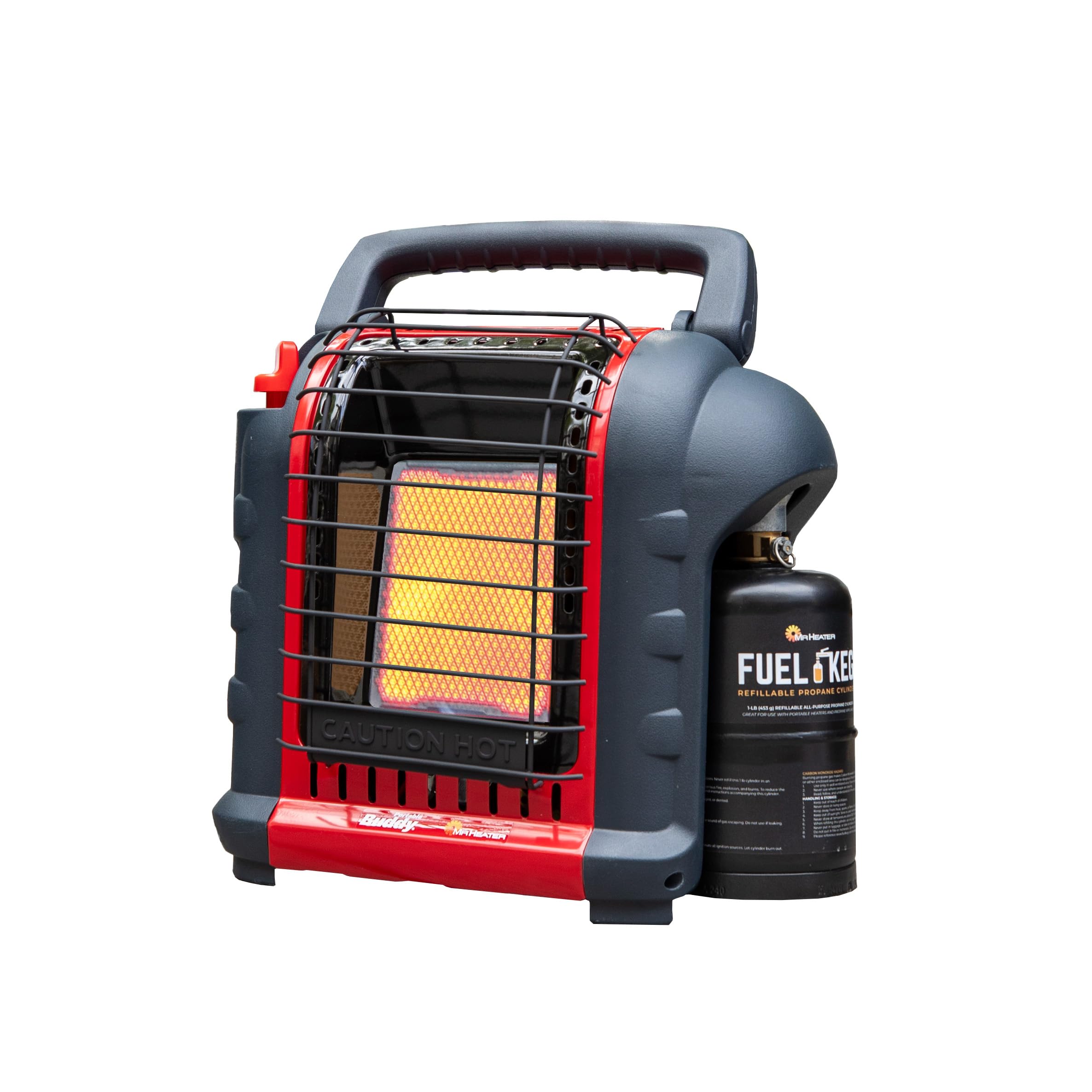
The Mr Heater Portable Buddy has earned its reputation as the go-to small-space propane heater through years of consistent owner feedback and field use. The 4,000 or 9,000 BTU output settings cover up to 225 square feet, making it appropriate for single-car garages, small workshops, or spot heating around a workbench in a larger space. The compact 15-inch height and 7.7-inch depth let it sit on a workbench or shelf without dominating the workspace, and the 5.4-hour runtime on low with a 1-pound propane cylinder is practical for a full work session.
The indoor-safe designation is the critical differentiator here — unlike many propane heaters that explicitly require outdoor ventilation, the Portable Buddy uses a low-oxygen safety system that automatically shuts off the heater if oxygen levels drop to an unsafe threshold. Combined with the self-extinguishing materials in the construction, this makes it one of the few propane heaters that can legally and safely operate inside an enclosed garage without major ventilation retrofits. The piezo igniter provides reliable push-button starts without batteries.
Owner reports highlight the durability of the steel housing and the simplicity of the two-setting control as major advantages — there are no digital displays, WiFi connections, or complex thermostats to fail over time. The trade-off is that the radiant heat primarily warms objects directly in its path rather than circulating air, and the 225-square-foot coverage limit means larger workshops will need multiple units or a more powerful primary heater.
What works
- Indoor-safety certified with low-oxygen shut-off for enclosed garages
- Compact size fits on workbench or shelf without taking floor space
- Proven reliability with simple two-setting mechanical controls
What doesn’t
- Coverage limited to 225 sq ft for single-car workshop spaces
- 1-pound propane cylinders need frequent replacement during extended use
7. JNDRO Wall-Mounted Space Heater
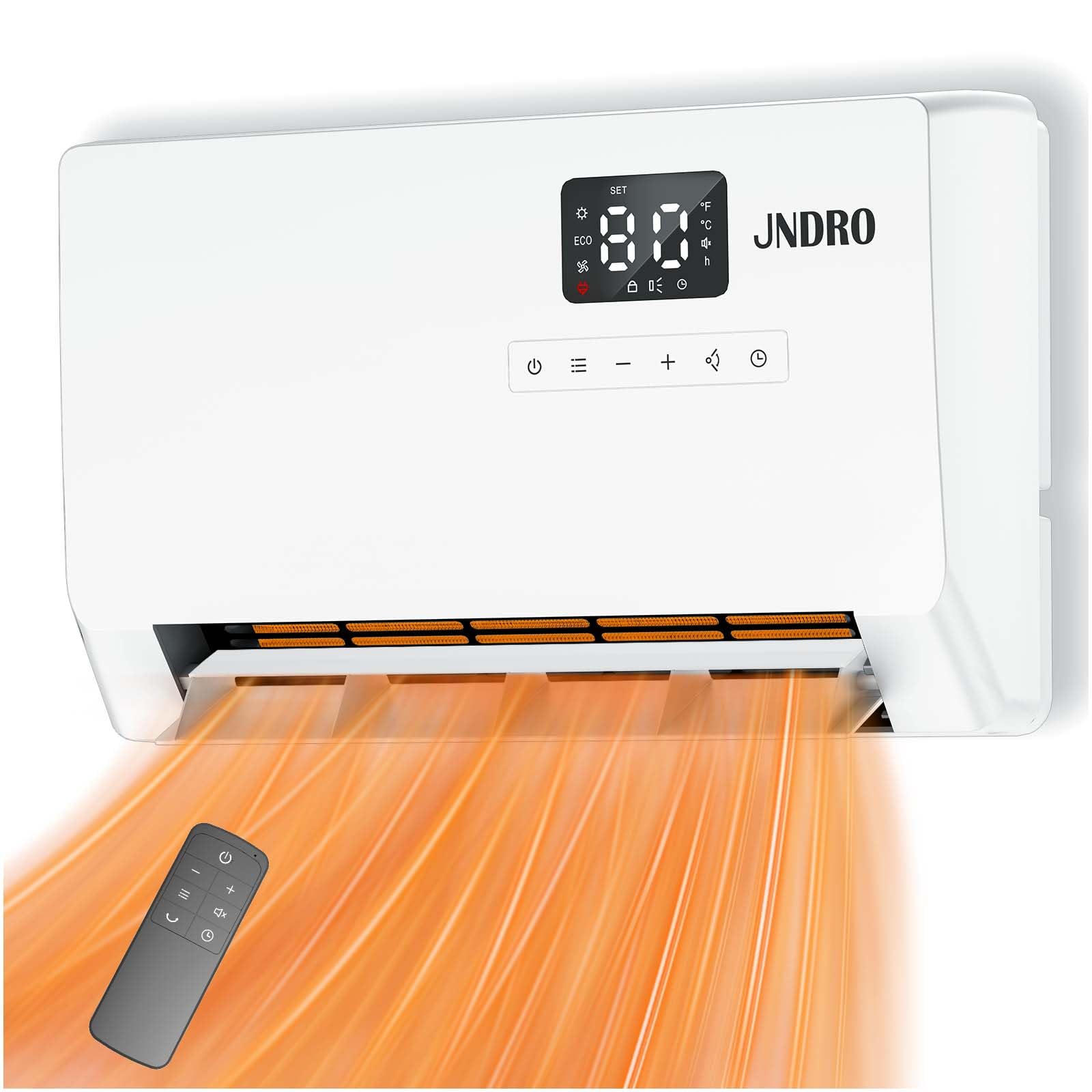
The JNDRO wall-mounted electric heater prioritizes space efficiency above all else, with a slim 4.65-inch profile that mounts flush against the wall and keeps the floor completely clear for workshop equipment and storage. The ECO energy-saving thermostat mode automatically adjusts heating power based on ambient temperature, maintaining comfort while reducing power draw during steady-state operation. The temperature range spans 41°F to 95°F, giving enough adjustment for year-round use as either a primary heat source in mild climates or supplemental warmth in colder regions.
The three oscillation angles — 60, 90, and 120 degrees — distribute heat across a wider area than fixed-wall units, partially compensating for the 200-square-foot coverage limitation. The remote control and clear LED display make adjustments easy from across the garage, and the 24-hour timer allows pre-programmed warm-up schedules. The child lock feature adds a layer of safety for households where the garage doubles as a play or storage area.
Owner feedback points to the quiet operation and the clean aesthetic as strong positives, particularly for attached garages where the heater is visible from living spaces. The 30-day return and 12-month replacement policy provides a reasonable safety net, though the 200-square-foot coverage is the primary limitation — this heater works well for compact one-car garages or as a supplement, but it will not handle a full two-car workshop alone.
What works
- Ultra-slim wall-mount design saves valuable floor workshop space
- ECO mode reduces power consumption during sustained operation
- Multiple oscillation angles improve heat distribution for a wall unit
What doesn’t
- 200 sq ft coverage limits use to compact garage spaces
- Wall installation requires permanent mounting and nearby outlet
Hardware & Specs Guide
BTU Output vs. Square Footage
BTU rating directly determines how large a space a heater can effectively warm. For a typical insulated garage workshop, expect roughly 10 BTU per square foot for mild climates and 15 to 20 BTU per square foot for colder regions or poorly insulated spaces. Electric heaters max out around 5,120 BTU (1500W at 120V), which covers roughly 150 to 250 square feet. Propane and diesel units offer higher outputs: a 9,000 BTU unit covers about 225 square feet, 18,000 BTU covers up to 450 square feet, and industrial forced-air units at 60,000 BTU can handle spaces up to 1,500 square feet. Always size up rather than down if your garage has high ceilings, large roll-up doors, or minimal insulation.
Fuel Type Efficiency and Runtime
Electric heaters convert nearly 100 percent of input energy to heat but draw significant amperage — a 1500W unit pulls 12.5 amps, which can trip breakers if other tools run on the same circuit. Propane offers higher BTU output without grid dependency: a 1-pound cylinder runs a 9,000 BTU heater for roughly 2.4 hours on high and 5.4 hours on low, while a 20-pound tank connected to a 60,000 BTU forced-air unit may run 10 to 15 hours depending on the heat setting. Diesel heaters provide the best fuel economy for sustained high-output use, consuming 0.18 to 0.53 liters per hour with a 5-liter tank lasting extended sessions, and they maintain full output in sub-zero temperatures where propane pressure drops.
Safety Certification Tiers
ETL and UL listings indicate the heater passed independent laboratory testing for electrical and fire safety. For propane and diesel units, low-oxygen shut-off sensors are the most critical safety component — they detect declining oxygen levels in an enclosed space and automatically cut fuel flow before conditions become dangerous. Tip-over shut-off is mandatory for any portable heater and uses a mechanical switch that kills power or fuel flow if the unit tilts past a certain angle. Heaters constructed with flame-retardant materials add an extra layer of protection against internal component failures. Always verify that any fuel-burning heater you intend to use indoors carries specific indoor-safety approvals rather than assuming outdoor-rated units are safe in a closed garage.
Installation and Placement Considerations
Wall-mounted electric heaters save floor space but require permanent installation near a dedicated outlet or hardwired connection, and their coverage is limited by the fixed position. Freestanding electric heaters offer flexibility to move the heat source where it is needed but occupy floor space and create trip hazards from cords. Propane radiant heaters with internal tank storage reduce hose clutter but still require adequate clearance from combustible materials and proper ventilation. Forced-air propane units need the most clearance and produce the highest airflow velocity, making them suitable for large open spaces rather than tight workshops. Diesel heaters require fuel storage and exhaust venting if used as permanent installations, though all-in-one portable designs simplify the setup for temporary use.
FAQ
What size heater do I need for a two-car garage workshop?
Can I use a propane heater in my garage without ventilation?
Is it cheaper to heat my garage with electric or propane?
How long does a diesel heater run on a full tank?
Final Thoughts: The Verdict
For most buyers, the heater for garage workshop winner is the DREO DR-HSH034 because it combines even heat distribution with whisper-quiet DC motor operation and precise ECO temperature control at a mid-range investment point. If you need a fuel-independent solution for larger spaces or frequent power outages, grab the Gasland MHA18BN for its zero-electricity propane operation and quiet radiant heat. And for extreme cold performance with the lowest long-term fuel cost, nothing beats the LF Bros 5KW Diesel Heater with its multi-voltage support and sub-zero starting capability.

Certification: BSc in Mechanical Engineering
Education: Mechanical engineer
Lives In: 539 W Commerce St, Dallas, TX 75208, USA
Md Amir is an auto mechanic student and writer with over half a decade of experience in the automotive field. He has worked with top automotive brands such as Lexus, Quantum, and also owns two automotive blogs autocarneed.com and taxiwiz.com.