Cold-weather riding demands more than just layering up—it requires purpose-built gear that actively manages heat retention and distribution. Without it, exposed extremities and a chilled core drain both comfort and focus, turning a pleasant ride into a battle against the elements.
I’m Amir — the founder and writer behind Four Wheel Ask. I’ve spent years analyzing owner feedback, comparing heating element designs, and studying battery performance data across the heated motorcycle gear market to identify what actually holds up on the road.
Comparing heat zones, battery capacity, and the difference between battery-powered and 12V systems helps you choose the best heated motorcycle gear.
How To Choose The Best Heated Motorcycle Gear
Selecting the right heated gear for motorcycle riding involves more than just picking the warmest-looking option. You need to consider power source, heat distribution, weather protection, and how the gear integrates with your existing jacket or riding suit.
Battery-Powered vs. 12V Hardwired Systems
Battery-powered jackets, vests, and gloves offer complete portability—no wires to connect to the bike. They are ideal for riders who switch between multiple motorcycles or want gear that works off the bike as well. However, runtime is limited by battery capacity. Hardwired 12V systems, like the Gerbing liner, plug directly into the motorcycle’s electrical system, delivering unlimited heat as long as the engine runs. The trade-off is a permanent tether to the bike and installation work to connect the controller.
Heat Zone Placement and Coverage
The number of heating zones matters less than where they are positioned. Core coverage (chest, back, abdomen) is standard on most vests and jackets, but the best motorcycle gear also targets the collar, shoulders, and kidneys. For gloves, heating elements in the fingers and thumb tips are critical—many budget options only heat the back of the hand. Pocket heating is a premium feature that keeps your hands warm when you stow them between rides.
Battery Capacity and Runtime
Battery capacity is measured in milliamp-hours (mAh). Higher mAh numbers generally mean longer runtime, but the real-world duration depends on the heat setting used. On low, a quality 10,000mAh pack may last 8–10 hours; on high, that drops to 3–4 hours. Larger 16,000–18,400mAh packs push high-setting runtime to 5–7 hours. Always look for UL or CE certification on the battery for safety. Also note whether the connector is proprietary—some vests only work with their own battery packs.
Fit, Layering, and Weather Resistance
Heated gear should fit snugly against the body without restricting movement. For motorcycle use, it must layer comfortably under your riding jacket without bunching. Look for windproof and water-resistant outer shells or at least a durable water-repellent finish. Features like stand collars, adjustable cuffs, and zippered vents add versatility across temperature swings. Machine-washable construction is a practical bonus for long-term maintenance.
Quick Comparison
On smaller screens, swipe sideways to see the full table.
| Model | Category | Best For | Key Spec | Amazon |
|---|---|---|---|---|
| ORORO Dual Control Jacket | Jacket | Dual-zone heat control | 5 heat zones, pocket heating | Amazon |
| Gerbing Heated Jacket Liner | Liner | Hardwired 12V use | 7 heat zones, heated collar | Amazon |
| Venture Heat Softshell Jacket | Jacket | Water-resistant shell | Softshell, battery included | Amazon |
| WASOTO Fur-Lined Jacket | Jacket | High-capacity battery | 18,400mAh pack, fur lining | Amazon |
| Venustas Fleece Vest | Vest | Lightweight layering | 6 heating zones, recycled fleece | Amazon |
| Venustas Fleece Jacket | Jacket | Soft interior warmth | Fleece-lined, battery pack | Amazon |
| Wulcea Graphene Jacket | Jacket | Women-specific fit | Graphene heating, fur lining | Amazon |
| SAVIOR HEAT Gloves | Gloves | Fingertip heating | 7.4V battery, touchscreen | Amazon |
| Hecusma Heated Vest | Vest | Entry-level value | 9 zones, 16,000mAh battery | Amazon |
In‑Depth Reviews
1. ORORO Men’s Dual Control Heated Jacket
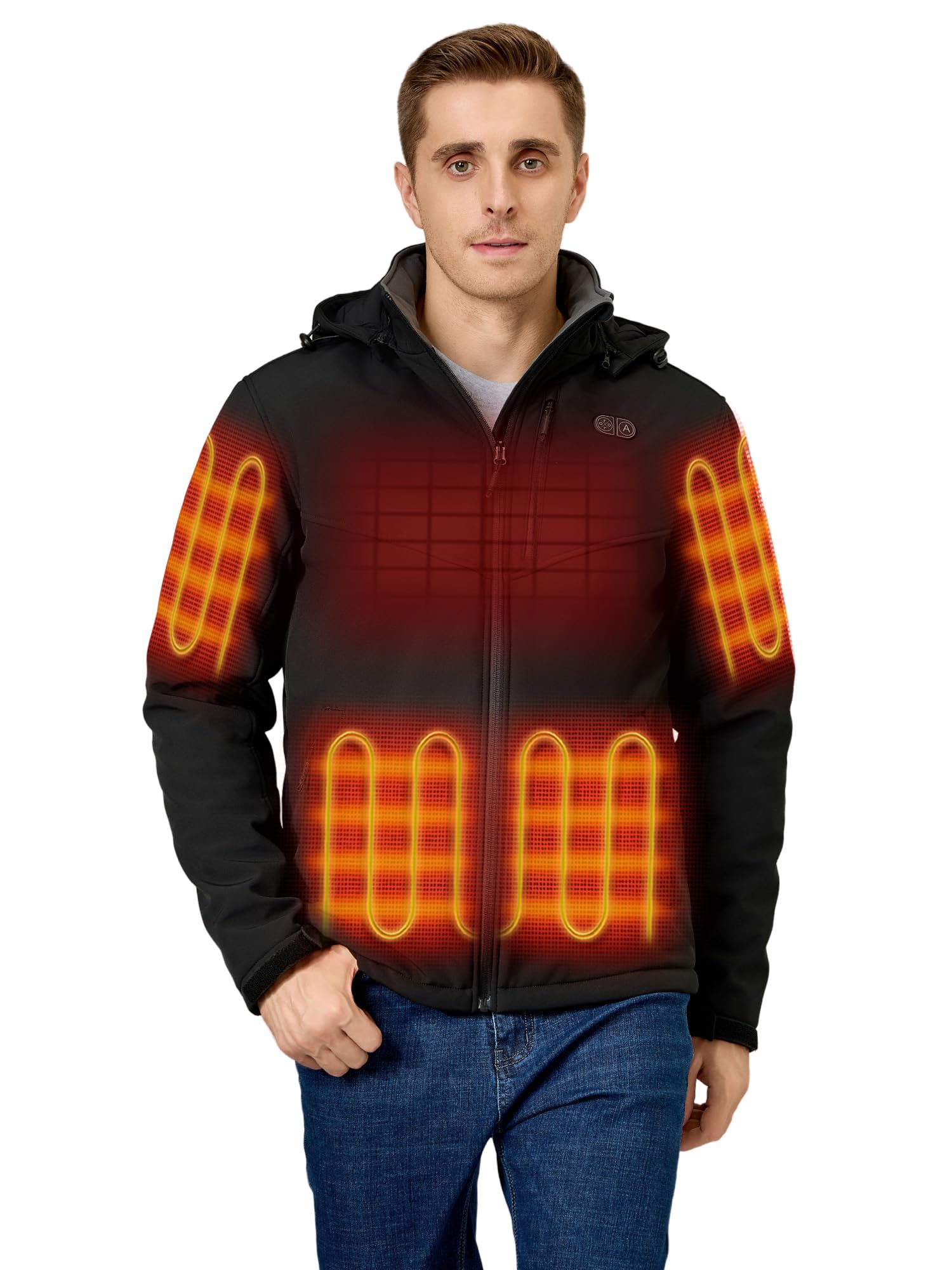
The ORORO Dual Control Heated Jacket stands out for its independent upper and lower heat zone control, allowing riders to tailor warmth precisely where it is needed. With five heating zones including pocket heating, this coat addresses both core warmth and hand comfort—a combination rarely found at this level. The tailored cut layers well under a riding jacket without adding excessive bulk, and the outer shell offers respectable wind resistance for highway speeds.
Owner feedback consistently highlights the build quality and the intuitive dual-control interface. Users report quick heat-up times and appreciate being able to warm their hands inside the pockets during stops. The battery is compact and fits securely in the interior pocket without pulling on the garment. Fit runs slightly tailored through the shoulders, so sizing up is a common recommendation for those layering over sweaters.
The drawstring hood design has drawn some criticism for being less refined, but this is a minor complaint against an otherwise well-executed heated jacket. For riders who want zonal control without stepping up to a hardwired system, this is the most balanced option on the market.
What works
- Independent upper and lower heat zone control
- Pocket heating keeps hands warm during stops
- High build quality and clean tailoring
What doesn’t
- Hood drawstring design feels less premium
- Shoulders may fit snug when layering thick sweaters
2. Gerbing Heated Jacket Liner

The Gerbing Heated Jacket Liner is the benchmark for hardwired motorcycle heated gear. Designed to plug directly into the bike’s 12V electrical system, it eliminates battery anxiety entirely—heat is available as long as the engine is running. Seven heat zones cover the chest, back, collar, and sleeves, with the heated collar receiving consistent praise from owners who ride in subfreezing temperatures.
Long-term owner reports indicate that Gerbing maintains its heat output reliably across years of use. The liner cut is deliberately oversized to fit comfortably under a riding jacket, and the slick nylon shell allows easy donning and doffing. Riders who pair this liner with Gerbing’s pants liner, gloves, and socks describe a complete cold-weather system that transforms winter riding comfort.
Some owners note that the sleeve heating elements sit on the outer arm rather than the inner crook of the elbow, which can leave a cool spot where wind hits directly. The tailored-for-American-fit sizing runs generously, so checking the size chart is recommended. For riders committed to year-round riding, this is the gold standard.
What works
- Unlimited runtime via 12V motorcycle connection
- Heated collar is excellent for cold-weather touring
- Proven long-term durability from a trusted brand
What doesn’t
- Requires installation of controller and wiring
- Sleeve heat elements miss the inner elbow area
3. Venture Heat Men’s Heated Jacket
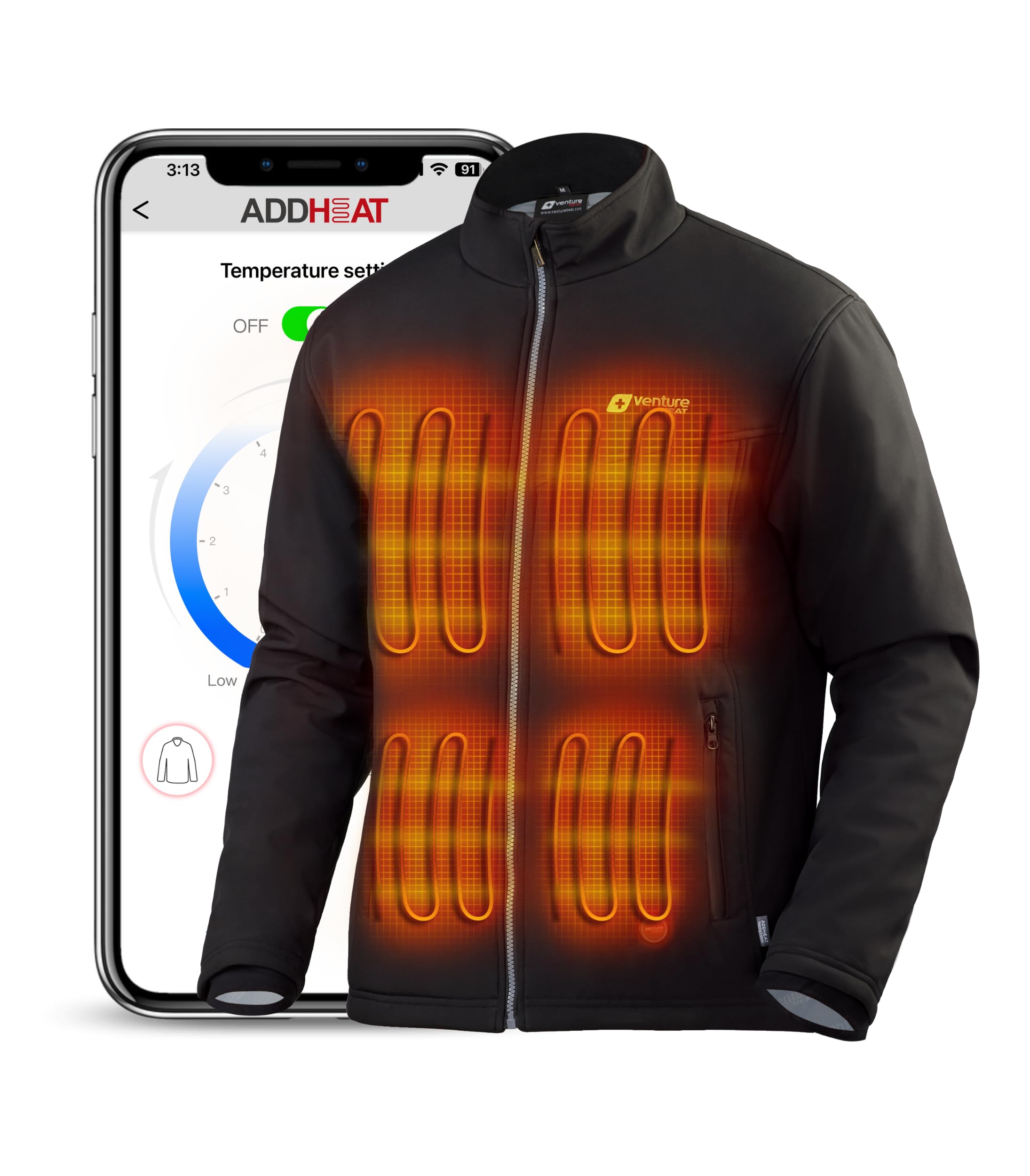
The Venture Heat Men’s Heated Jacket uses a softshell outer construction that provides water resistance and wind blocking without the stiffness of a traditional shell. The heating elements warm quickly and deliver consistent heat across the core and collar area. As a self-contained battery-powered jacket, it offers freedom from the motorcycle’s electrical system while still providing sufficient warmth for commuting and day rides.
Owner feedback frequently mentions that the jacket is warm even without the heating elements activated, thanks to the quality of the softshell fabric and insulation. On low heat, battery life supports several hours of riding, though owners note that high heat draws the battery down faster than expected—roughly one to two hours. Many users invest in an additional higher-capacity battery for all-day use.
The fit aligns well with standard sizing, and the jacket accommodates a hoodie or fleece underneath without restricting mobility. The included battery is adequate for shorter trips, but riders planning full-day tours should consider a spare. Overall, this is a solid choice for riders who prefer the simplicity of battery power in a weather-resistant package.
What works
- Softshell fabric offers wind and water resistance
- Warm even without the heating element active
- Comfortable, flexible fit for layering
What doesn’t
- Battery runtime on high setting is limited
- Additional batteries recommended for full-day rides
4. WASOTO Heated Jacket with Fur Lining
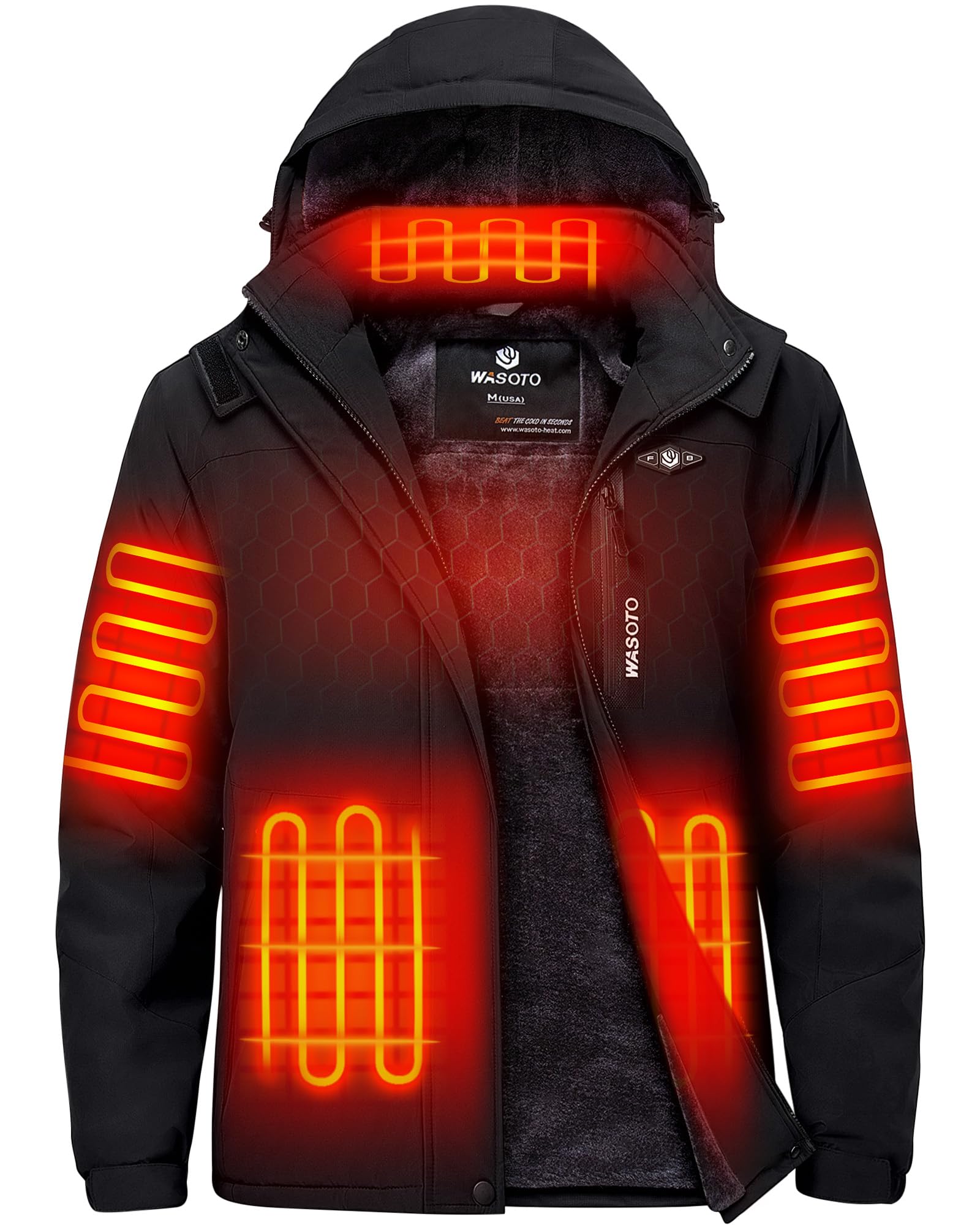
The WASOTO Heated Jacket packs an 18,400mAh battery—one of the largest capacities available in a consumer heated jacket—providing extended runtime for long rides. The fur lining adds considerable passive insulation, meaning the jacket keeps you warm even before you press the power button. Owners in cold-weather states like Colorado report that the jacket handles subfreezing temperatures with ease.
Heating performance is consistent across the core zones, and the jacket heats up noticeably within a minute of activation. The fur lining is soft against the skin, and the outer shell feels durable enough for regular use. Battery life on medium heat comfortably covers a full day of riding, and the included charger replenishes the pack in a few hours.
Fit feedback is generally positive, though taller riders note that the jacket length could be slightly longer for ideal coverage. The lack of drawstrings on the hem has also been mentioned as a minor oversight for sealing out drafts. At this price point with this battery capacity, the WASOTO delivers exceptional value for riders who prioritize runtime.
What works
- Very large battery capacity for all-day riding
- Fur lining provides excellent passive warmth
- Quick heat-up time under one minute
What doesn’t
- Jacket length could be longer for tall riders
- No hem drawstrings to seal out drafts
5. Venustas Men’s Heated Fleece Vest
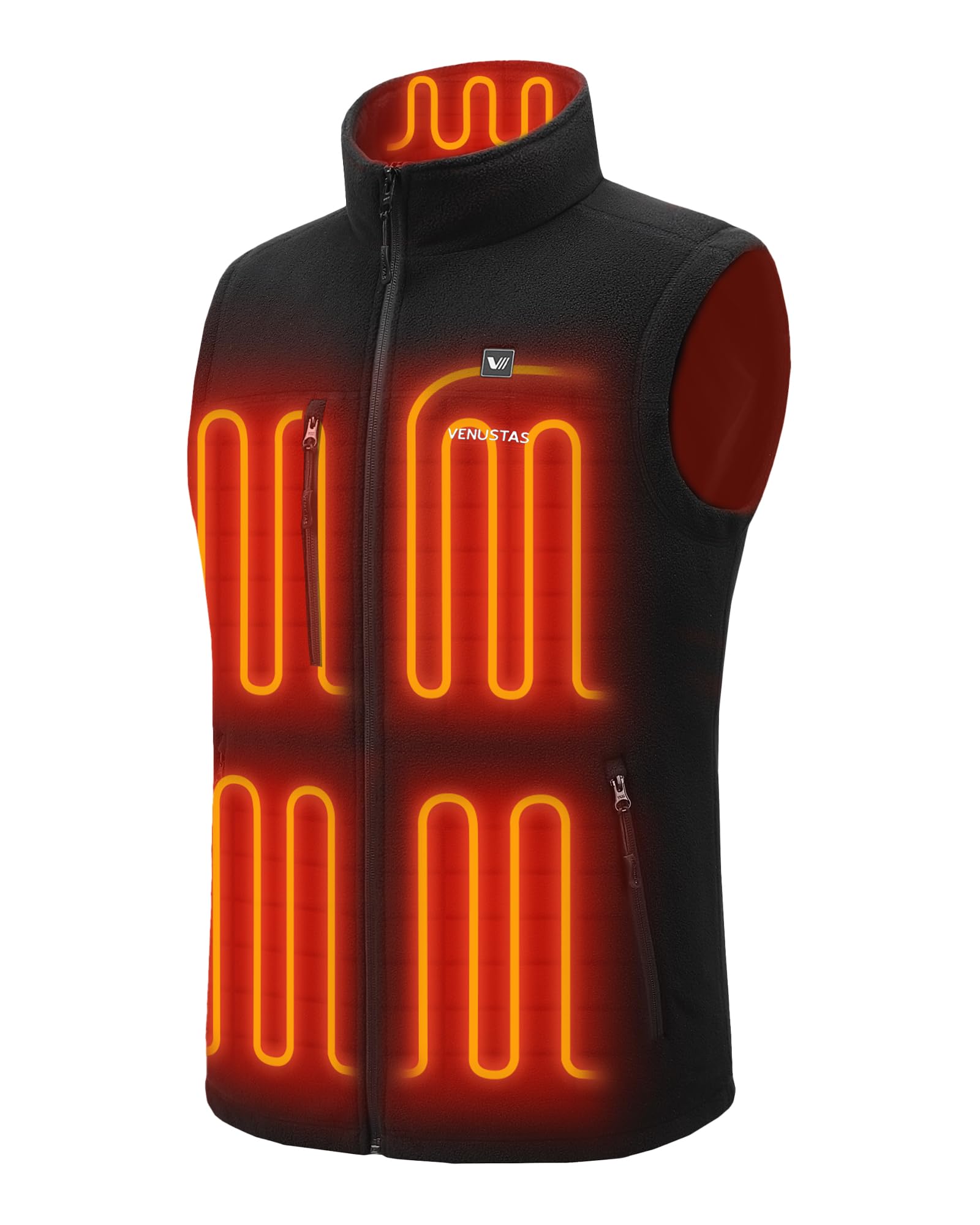
The Venustas Heated Fleece Vest takes a lightweight approach to heated gear, using six heating zones distributed across the chest, back, and kidneys. The recycled fleece construction feels soft against the skin and breathes well, making it an excellent mid-layer under a riding jacket. The slim profile means no bunching or restriction when you’re tucked in on the bike.
Owner reports consistently praise the comfort and the effective heat distribution. The vest heats up quickly and the three temperature settings provide flexibility across different conditions. On low heat, the battery runs close to the advertised 10 hours, which covers multiple days of commuting. Venustas customer support receives positive marks for promptly addressing battery issues with replacements when needed.
The pocket heating zones are noted to be less intense than the core panels, which is a minor disappointment for those expecting uniform warmth across all zones. The fleece material also attracts pet hair, as several owners mention. For riders who want a barely-there heated layer that works under their existing gear, this vest delivers.
What works
- Lightweight and comfortable as a mid-layer
- Good battery life on low heat setting
- Responsive customer service from Venustas
What doesn’t
- Pocket heating zones are less warm than core areas
- Fleece material attracts lint and pet hair
6. Venustas Men’s Fleece Heated Jacket
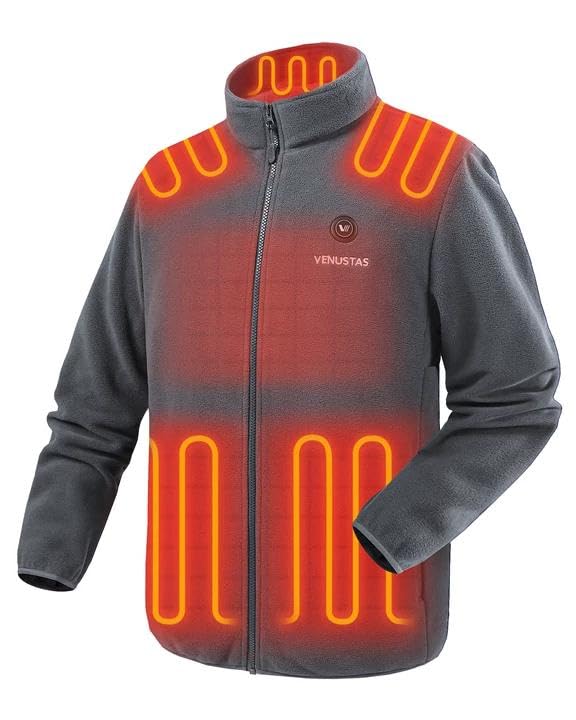
The Venustas Fleece Heated Jacket combines the soft interior comfort of fleece with battery-powered heating for a casual warm layer that works on and off the bike. The fleece lining traps heat effectively, while the heating elements add targeted warmth to the core areas. The jacket fits slightly roomy, which allows for a hoodie or thermal layer underneath without feeling restrictive.
Owner feedback highlights the jacket’s ability to heat up rapidly once the button is activated—though some users missed the button location initially since the instructions were sparse. The three heat settings give good range, with medium being the sweet spot for most cold-weather riding. Customer support is responsive, with one owner receiving a replacement battery quickly after reporting a shut-off issue.
The standard battery provides acceptable runtime for short to medium rides, but several owners mention upgrading to the larger battery for extended use. The charging speed on the larger pack is slower, and the added weight is noticeable in the pocket. For riders who prioritize comfort and a softer hand feel, this jacket is a strong mid-range contender.
What works
- Soft fleece lining is comfortable and warm
- Fast heat-up time once activated
- Responsive customer support for battery issues
What doesn’t
- Standard battery runtime is average
- Larger battery charges slowly and adds weight
7. Wulcea Graphene Heated Jacket for Women

The Wulcea Graphene Heated Jacket uses graphene heating elements, a material known for efficient and uniform heat distribution. Designed specifically for women, the fit is tailored and flattering without sacrificing warmth. The fur lining adds substantial passive insulation, and owners in cold northeastern winters report staying comfortable even without activating the heating function.
Owner reviews are overwhelmingly positive, with many describing this as the warmest coat they have ever owned. The medium heat setting is sufficient for most conditions, and the battery holds up well through a full season of use. The jacket feels substantial and well-constructed, with a weight that signals durability rather than bulk.
Some owners note that the battery runtime on high is shorter than expected—around one hour—which limits the jacket’s usefulness for all-day rides on the maximum setting. A few buyers also needed to exchange for a smaller size due to generous cut. For women riders looking for a heated jacket that does not compromise on style or warmth, this is a standout option.
What works
- Graphene heating provides even, efficient warmth
- Tailored women’s fit with stylish design
- Excellent passive insulation from fur lining
What doesn’t
- Battery runtime on high is about one hour
- Fit may run large for some body types
8. SAVIOR HEAT Heated Motorcycle Gloves

The SAVIOR HEAT Heated Motorcycle Gloves distinguish themselves by placing heating elements in the fingers and thumb tips—not just the back of the hand. This makes a tangible difference when riding in near-freezing temperatures, as fingertip warmth is critical for maintaining dexterity on the controls. The gloves use 7.4V rechargeable batteries and offer three heat settings with a simple button interface on the outer cuff.
Long-term owner reports are impressive, with several users reporting four-plus years of reliable service. The combination of lambskin leather and polyester outer shell provides decent water resistance, while the HIPORA waterproof layer handles light rain and snow. Carbon fiber knuckle protection adds a layer of safety for motorcycle use. Many riders use these gloves in conjunction with heated grips for maximum hand warmth.
Fit can be tricky—some users find the sizing runs slightly large, and the gloves are not ideally shaped for smaller women’s hands despite being marketed as unisex. The touchscreen compatibility works but is less responsive than a bare finger. For riders who have struggled with cold fingers on other gloves, the fingertip heating here is a genuine solution.
What works
- Heating elements extend to fingertips and thumbs
- Proven long-term durability from multiple seasons
- Carbon fiber knuckle protection for riding safety
What doesn’t
- Sizing runs large, especially for smaller hands
- Touchscreen responsiveness is average
9. Hecusma Heated Vest with Battery Pack
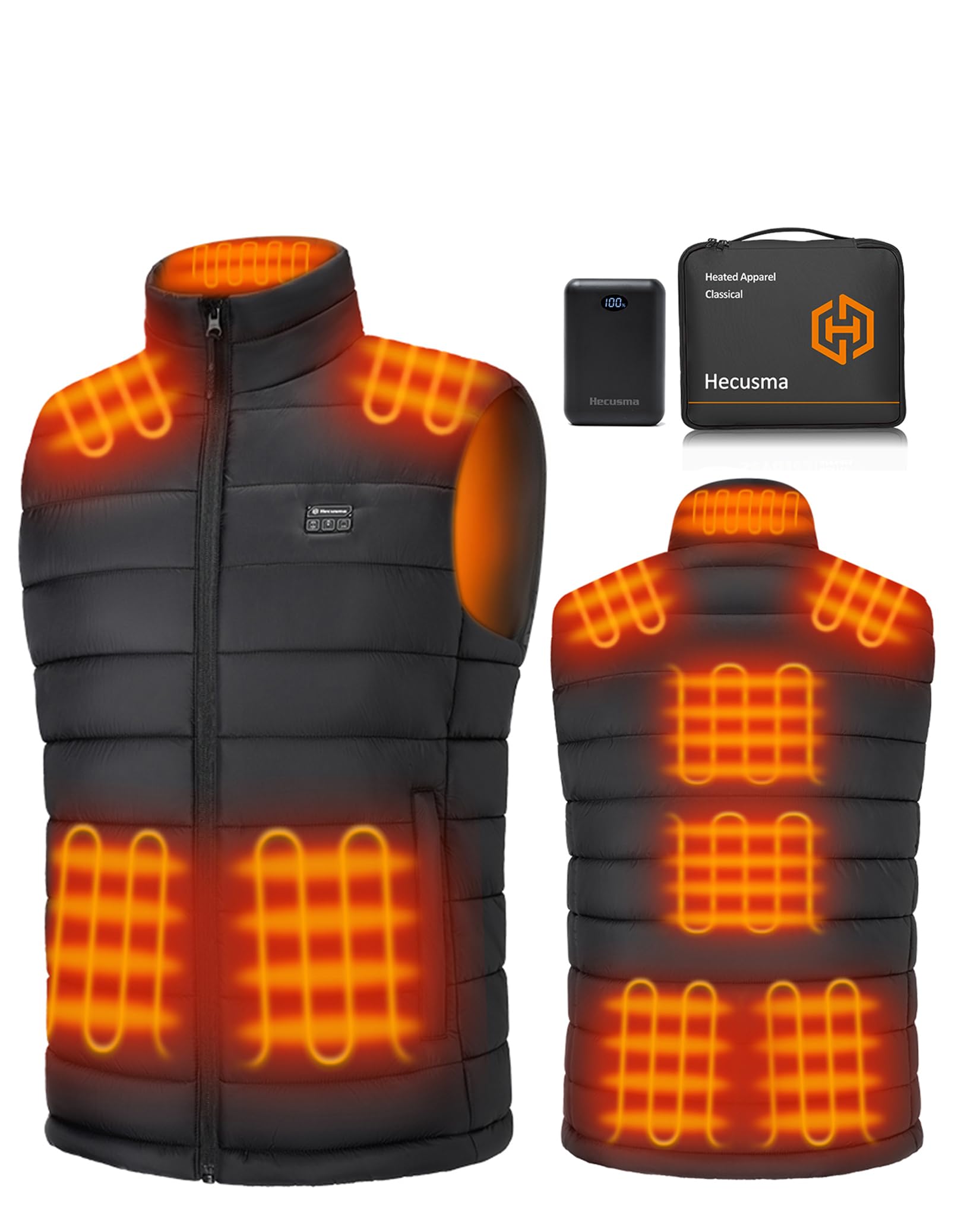
The Hecusma Heated Vest delivers an impressive nine heating zones—covering the neck, shoulders, abdomen, back, and waist—with a 16,000mAh battery that provides extended runtime on lower settings. The 4-in-1 independent controller allows each zone to be adjusted separately or turned off entirely, giving the rider granular control over heat distribution. The vest is lightweight and designed to be worn as a standalone layer or under a jacket.
Owner feedback highlights the vest’s effectiveness for activities like hunting and outdoor work, but it translates well to motorcycle use as a core warming layer. The waterproof and windproof outer material blocks cold air effectively, and the stand collar adds neck protection. Sizing is reported as true to size, and the vest accommodates a range of body types without feeling restrictive.
The proprietary battery connector means you cannot substitute a standard power bank, which limits flexibility. The charging time is also on the longer side. For the price, the heat zone count and battery capacity make this vest a strong entry-level option for riders looking to add core warmth without investing in a full heated jacket system.
What works
- Nine heating zones with independent zone control
- Large 16,000mAh battery for extended runtime
- Lightweight and easy to layer under riding gear
What doesn’t
- Proprietary battery connector limits replacement options
- Battery charging time is relatively long
Hardware & Specs Guide
Battery Capacity & Chemistry
Heated gear batteries are typically lithium-ion packs rated in milliamp-hours (mAh). Common capacities range from 7,400mAh to 18,400mAh. Higher mAh translates directly to longer runtime, but also adds weight. Look for UL or CE certification to ensure the battery has passed safety testing for overcharge, short circuit, and thermal runaway protection. Some brands use proprietary connectors that lock you into their battery ecosystem, while newer models are moving toward USB-C for universal compatibility.
Heat Zone Architecture
Heat zones refer to the number of independently controlled heating panels in a garment. A typical vest may have 6 to 9 zones covering the chest, back, kidneys, collar, and shoulders. Jackets with pocket heating add a layer of hand comfort during stops. The key metric is not just the count but the coverage area—wider panels with even carbon-fiber or graphene distribution prevent hot spots and cold gaps. Dual-zone controllers allow upper and lower body temperature to be set separately.
Weather Resistance Standards
Motorcycle-specific heated gear should offer at minimum a water-resistant outer layer or DWR coating. Fully waterproof membranes like HIPORA add protection against rain and snow but can reduce breathability. Windproofing is equally critical—wind chill at highway speeds can drop perceived temperature by 20–30 degrees Fahrenheit. Look for quilted shells, sealed seams, and stand collars that block drafts from entering at the neckline.
12V vs. Battery System Trade-offs
Hardwired 12V systems connect directly to the motorcycle’s battery via a controller and lead set. They provide unlimited runtime and consistent heat output regardless of ambient temperature. The trade-off is installation complexity and being tethered to the bike. Battery-powered systems offer portability and off-bike use but are limited by pack capacity and may output less heat in extreme cold as battery chemistry slows down. Hybrid users often run battery gear for short commutes and 12V liners for long tours.
FAQ
How long does heated motorcycle gear stay warm on a single charge?
Can I wash heated motorcycle gear with the battery inside?
Is battery-powered or hardwired 12V gear better for motorcycle riding?
Do heated gloves actually keep your fingers warm on a motorcycle?
Final Thoughts: The Verdict
For most buyers, the best heated motorcycle gear winner is the ORORO Dual Control Heated Jacket because it balances zonal heat control, pocket heating, and battery power in a well-tailored package that layers easily under riding gear. If you want hardwired unlimited runtime for touring, grab the Gerbing Heated Jacket Liner. And for budget-friendly core warmth with impressive zone control, nothing beats the Hecusma Heated Vest.

Certification: BSc in Mechanical Engineering
Education: Mechanical engineer
Lives In: 539 W Commerce St, Dallas, TX 75208, USA
Md Amir is an auto mechanic student and writer with over half a decade of experience in the automotive field. He has worked with top automotive brands such as Lexus, Quantum, and also owns two automotive blogs autocarneed.com and taxiwiz.com.