Compromised caliper pin lubrication is the leading mechanical cause of premature brake pad wear, rotor warping, and persistent brake noise. Using the wrong grease invites rubber boot swelling, moisture ingress, and eventual pin seizure, transforming a routine pad swap into a costly caliper replacement.
I’m Amir — the founder and writer behind Four Wheel Ask. My research focuses on analyzing thermal degradation thresholds, rubber compatibility data, and long-term owner feedback to separate formulations that deliver consistent performance from those that fail within a single service interval.
The reality of the aftermarket is that many greases either melt away at high temperature or chemically attack the EPDM rubber boots protecting your slide pins. This guide compares the top contenders for the title of best grease for brake caliper pins, evaluating each on real-world durability and material safety.
How To Choose The Best Grease For Brake Caliper Pins
Selecting the right grease goes beyond picking the highest-temperature rating. The wrong formulation can destroy rubber boots, attract dirt, or simply evaporate after a few heat cycles. Focus on these four factors to ensure long-term, trouble-free operation.
Base Material: Silicone vs. Ceramic vs. Synthetic
Silicone-based greases are generally the gold standard for caliper pins because they remain stable, do not swell natural or synthetic rubber, and resist water washout. Ceramic-infused synthetic greases offer extreme temperature resistance but must be explicitly labeled as rubber-safe. Pure petroleum-based greases should never be used near brake rubber components.
Temperature Range
Standard driving generates caliper pin temperatures between 200°F and 400°F under normal conditions. Track use, towing, or mountainous terrain can push those numbers higher. Choose a grease with an upper continuous rating of at least 400°F to avoid liquefaction and loss of lubricity.
Viscosity and Consistency
The best caliper pin greases are thick enough to cling to vertical pin surfaces without dripping, but not so stiff that they prevent smooth pin movement. An NLGI #2 grade is typical for this application. Overly thin greases migrate away from the pin surface, leaving the metal exposed to moisture and corrosion.
Contaminant Protection
Look for greases that include corrosion inhibitors specifically designed to neutralize road salt and moisture intrusion. A grease that simply lubricates without providing a hydrophobic barrier will fail to protect the pin from galvanic corrosion and eventual seizure.
Quick Comparison
On smaller screens, swipe sideways to see the full table.
| Model | Category | Best For | Key Spec | Amazon |
|---|---|---|---|---|
| ACDelco GM OE 10-4019 | Premium | OE-grade rubber safety | PTFE/Silicone blend; 8 oz | Amazon |
| Permatex 24121 Green | Premium | Professional shop volume | Silicone; 236 ml | Amazon |
| Ford Motorcraft XG-3-A | Premium | Ford/Jeep direct fit | Silicone; 3 oz | Amazon |
| Permatex Ceramic Extreme 24127 | Premium | Extreme high-heat zones | Ceramic solids; 1 oz | Amazon |
| PowerStop 4OZPSLUBE | Mid-Range | Complete brake job pack | Ceramic/Silicone; 4 oz | Amazon |
| Versachem 26080 | Mid-Range | General DIY use | Synthetic; 8 oz | Amazon |
| AGS BK-44 | Mid-Range | Rubber-safe silicone option | Silicone; 8 oz | Amazon |
| CRC Sta-Lube SL3303 | Mid-Range | Multi-vehicle fleet use | Synthetic; 12 wt. oz | Amazon |
| Keze Ceramic Brake Grease | Value | Noise elimination on budget | MCA/Ceramic; 8 oz | Amazon |
| ZDBB Ceramic Brake Lubricant | Value | Budget-friendly bulk pack | Ceramic; 8 oz | Amazon |
| FOTU 707 Dielectric Grease | Value | Electrical connector use | Silicone; 4 oz (2-pack) | Amazon |
In‑Depth Reviews
1. ACDelco GM Original Equipment 10-4019
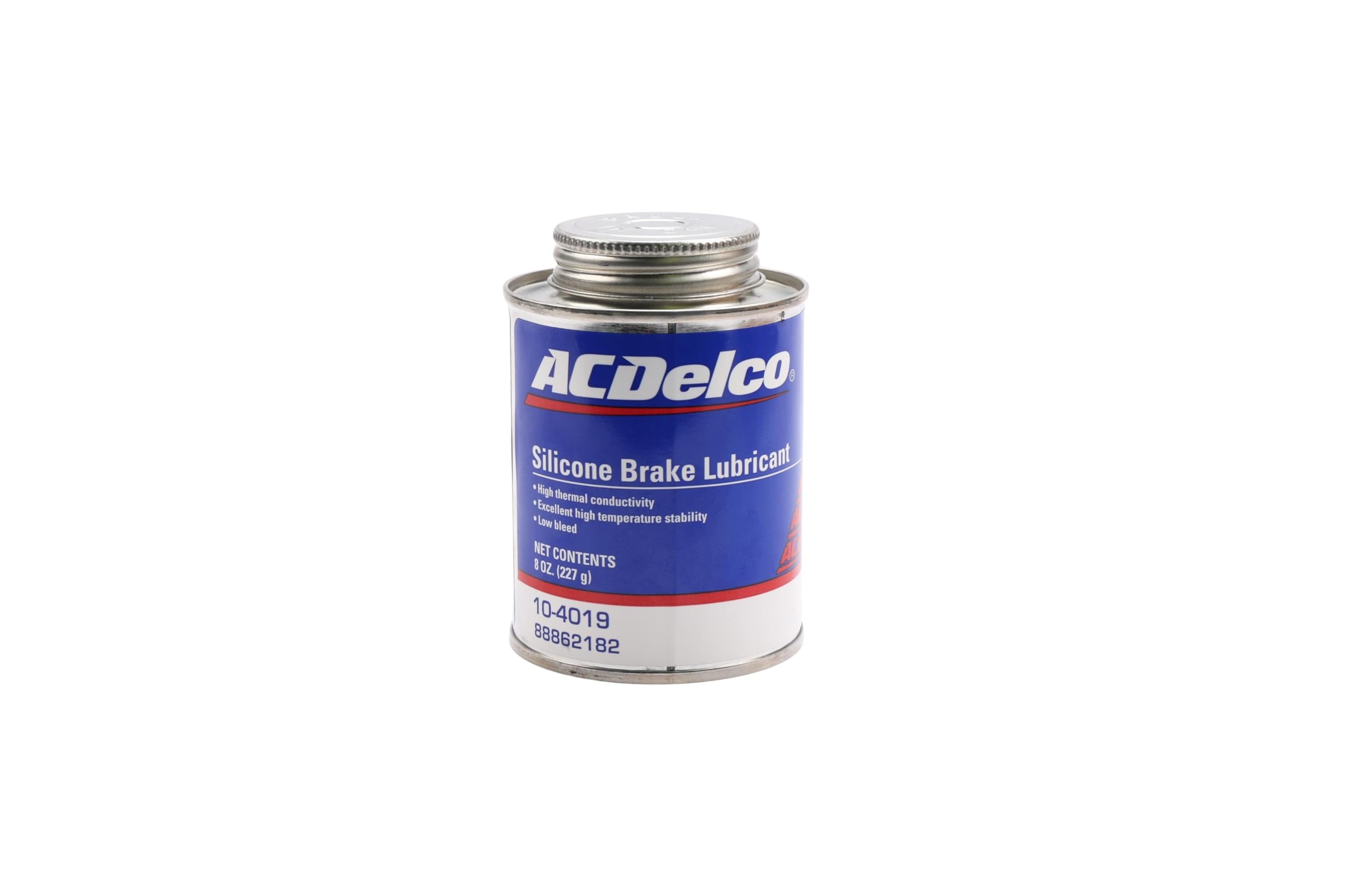
This is the exact lubricant specified by General Motors for their brake systems, formulated with a PTFE and silicone blend engineered for compatibility with EPDM rubber boots and seals. The data sheet confirms it resists water washout and provides a low coefficient of friction that reduces pin stiction over long service intervals. Owner reports consistently note it prevents the annual disassembly required by lesser greases.
The viscosity is notably thick, trapping minimal air during application, and it maintains its consistency through repeated heat cycles without liquefying. Multiple owners who tested competing brands found this compound outperformed them in preventing rubber swelling and moisture ingress. The brush applicator inside the cap is a basic design, but the grease itself delivers professional-grade results on vehicles from Honda to Audi.
While the premium price per ounce is substantial, the longevity and material safety justify the investment for those who prioritize reliability over cost. For any owner who has experienced a seized guide pin due to swollen rubber, this is the definitive remedy. It represents the highest standard for rubber-safe caliper pin lubrication on the market.
What works
- Factory-specified OE formulation for GM vehicles
- Excellent rubber compatibility with no swelling
- Extremely thick, long-lasting consistency
- Contains ceramic-like fillers for low friction
What doesn’t
- Premium price per ounce is steep
- Basic applicator; better served by a brush or swab
- Overkill for a single brake job
2. Permatex 24121 Green Silicone Brake Lubricant
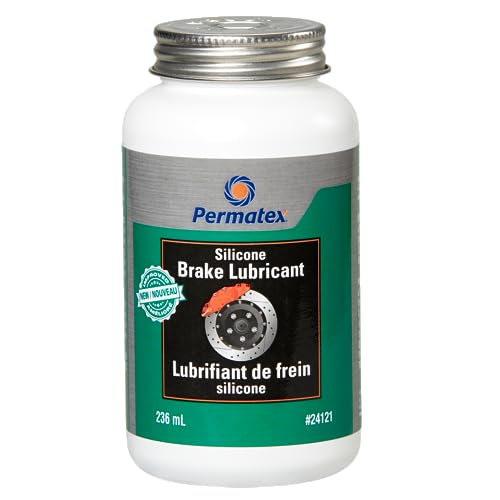
Permatex 24121 is a pure silicone lubricant in a generous 236 ml container, specifically designed for caliper sliders, pivot points, and rubber O-rings. Its silicone base ensures absolute compatibility with natural and synthetic rubber, eliminating any risk of boot swelling or degradation. This compound has a smooth, non-greasy feel that applies evenly and clings to vertical surfaces without running.
Journeyman technicians report using this exclusively for over a decade, finding it equally effective on fuel injector O-rings, water pump seals, and brake hardware. The included brush in the metal cap provides decent coverage, though some users have noted the stick can arrive bent. The green color allows for visual confirmation of proper application coverage.
Volume-wise, this is one of the best values for shop use, as a single container will service dozens of brake jobs. It does not have the extreme high-temperature rating of ceramic compounds, but it’s perfectly matched to the thermal demands of daily-driven vehicles and light towing. It is a straightforward, no-compromise solution for rubber-safe brake lubrication.
What works
- Excellent rubber and plastic compatibility
- Large volume ideal for professional use
- Smooth, consistent viscosity
- Tested and trusted for over a decade by technicians
What doesn’t
- Not intended for extreme 1000°F+ applications
- Brush stick can be bent upon arrival
- Thickness can trap air if not carefully applied
3. Ford Motorcraft XG-3-A Silicone Brake Caliper Grease

Ford Motorcraft XG-3-A is the factory-specified silicone compound for disc brake caliper slide pins across Ford, Lincoln, and Mercury models. Its formulation is engineered to resist water and heat while providing a high-voltage seal for secondary ignition wires, making it a true multi-purpose dielectric grease. The silicone base guarantees safe interaction with EPDM rubber steering rack boots and caliper pin boots alike.
Owner feedback from Jeep Wrangler and Ford truck owners confirms it prevents rotor warping and eliminates brake noise when applied during pad replacement. Some units have arrived without a cap, but the grease itself performs identically to the larger ACDelco compound, albeit in a smaller, more targeted 3-ounce bottle. The consistency is thick enough to stay in place but not so stiff that it hinders pin movement.
It is also effective as a distributor cap coating for voltage leak suppression, adding utility beyond brake service. For owners of Ford products or those who simply want a trusted, OEM-grade silicone grease without the premium pricing of the ACDelco option, this fits perfectly. It lacks the extreme temperature ceiling of ceramic blends but is ideal for normal driving conditions.
What works
- Direct OEM specification for Ford/Lincoln/Mercury
- Excellent high-voltage dielectric properties
- Thick, clingy consistency
- Safe for all rubber brake components
What doesn’t
- Small 3 oz container
- Some units arrive without a cap seal
- Not designed for extreme track-level heat
4. Permatex Ceramic Extreme Brakes Lubricant 24127
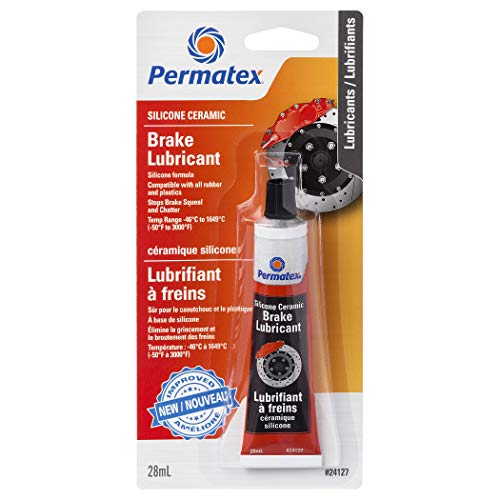
Permatex Ceramic Extreme utilizes a 100% synthetic formula loaded with ceramic solids to deliver ultra-high temperature performance that will not liquefy or melt away. This is the grease to reach for when standard silicone compounds hit their thermal ceiling, such as on tracked cars, heavy towing rigs, or vehicles in mountainous regions. The 1-ounce bottle is small, but a thin film is all that is required for a full brake job.
User reports confirm it eliminates brake chatter and noise effectively, with the ceramic particles providing a dry-film lubrication effect even if the carrier evaporates. The material is easy to apply and clean up, and it stays in place without migration. However, it must be explicitly verified as rubber-safe before applying to pin boots; some ceramic greases can be aggressive on certain seal materials.
It is a specialist product for specific high-heat scenarios rather than a general-purpose daily driver grease. If your driving never exceeds 400°F, a silicone compound is better suited for rubber longevity. But for those who push their brakes hard, this is one of the few greases that will remain in place and continue lubricating after the competition has turned to liquid.
What works
- Extreme high-temperature resistance
- Does not liquefy under heavy braking
- Effective noise and chatter elimination
- Easy to apply and clean up
What doesn’t
- Very small 1 oz container
- Must verify rubber compatibility for boots
- Overkill for normal street driving
5. PowerStop Silicone and Ceramic Brake Lube

PowerStop’s blend combines ceramic solids with a silicone carrier, creating a hybrid grease that offers both extreme temperature stability and rubber safety. The gray paste has a thick, putty-like consistency that clings tenaciously to metal surfaces and resists washout even during heavy rain or pressure washing. A single 4-ounce bottle is claimed to handle approximately 22 single-axle brake jobs, making it exceptionally economical for the DIY owner.
This compound is safe on metal, rubber, and plastic, which simplifies application across the entire brake system. It is designed to reduce squeal, prevent seizing, and protect against rust and corrosion. Owners report it stays in place and does not degrade over multiple heat cycles, maintaining its lubricity where other greases would dry out.
The primary tradeoff is the price per ounce compared to larger bottles of basic silicone grease. However, the performance combines the best attributes of both ceramic and silicone chemistries without forcing a compromise. For anyone wanting one grease that works on pins, pad abutment clips, and hub faces, this is the most versatile and effective choice available.
What works
- Excellent hybrid ceramic/silicone formula
- Thick, putty-like clingy consistency
- Safe on metal, rubber, and plastic
- Very economical with 22 axle jobs per bottle
What doesn’t
- Higher upfront cost per bottle
- Arrives in an oversized box with little protection
- May be too heavy for some slide pins
6. Versachem 26080 Synthetic Caliper Grease

Versachem 26080 is a high-temperature synthetic grease specifically formulated for disc brake calipers and hardware. It is designed to prevent brake squeal, increase brake life, and protect against rust and corrosion across a temperature range of -5°F to 400°F. The 8-ounce bottle with a curved brush offers excellent value for the DIY enthusiast who needs enough product for multiple vehicles.
Users consistently praise its smooth application and ability to quiet creeping brake noise. The blue color makes it easy to see where it has been applied, ensuring complete coverage. It is also recommended for spark plug boots, battery terminals, and electrical connections, adding versatility to a single purchase.
Its synthetic base provides stable lubrication, but it does not have the extreme thermal ceiling of a ceramic-laden grease. For the vast majority of daily drivers and light-duty trucks, this is more than adequate. It represents a smart balance of performance, quantity, and cost, making it a pragmatic choice for the home garage.
What works
- Good value for a generous 8 oz container
- Curved brush design simplifies application
- Smooth, quiet braking after application
- Multi-use for electrical and spark plug boots
What doesn’t
- Temperature range is moderate, not extreme
- Not optimized for rubber boot compatibility
- May be overkill in terms of quantity for one job
7. AGS Automotive Solutions Silicone Brake Lubricant BK-44
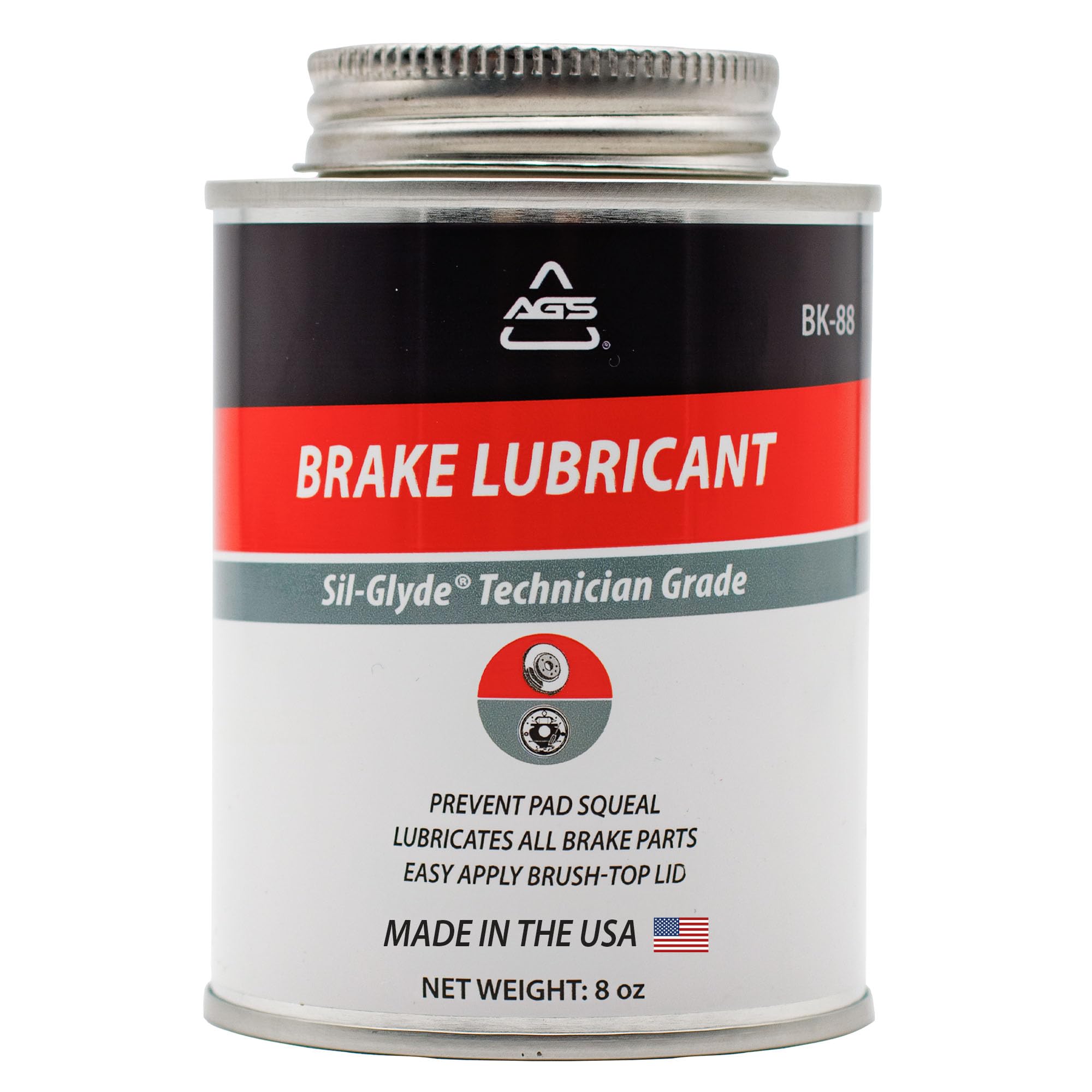
AGS BK-44 is a silicone-based lubricant explicitly designed for plastic and rubber compatibility, making it a safe choice for caliper pin boots and bushings. Its formula dampens vibrations to prevent squeaks and withstands temperatures up to 425°F. The 8-ounce brush-top can provides a large volume of product at a competitive price point.
Owner reviews highlight that it does not gum up or dry out after repeated heat cycles, retaining its lubricating properties effectively. The thick paste clings to caliper slides and fingers well, though some users note the brush-based container design makes it difficult to extract the final portion of grease. It is specifically recommended for caliper slide pins, setting it apart from general-purpose greases.
For those who perform regular brake maintenance on multiple vehicles, this is a reliable, cost-effective silicone grease. It lacks the extreme heat tolerance of ceramic compounds, but its rubber-safe formulation and 425°F ceiling cover the demands of nearly all passenger cars and light trucks.
What works
- Silicone base ensures rubber compatibility
- Does not dry out or gum up over time
- Large 8 oz volume
- Good value for the price
What doesn’t
- Brush design makes final extraction difficult
- Not designed for extreme high-heat applications
- Consistency is very thick, can be messy
8. CRC Sta-Lube SL3303 Brake Caliper Synthetic Grease
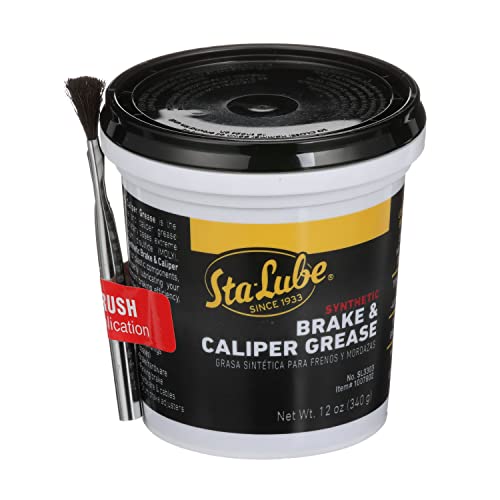
CRC Sta-Lube SL3303 is a synthetic grease that has earned a loyal following among professional mechanics and dedicated DIYers for its consistency and reliability. It is specifically formulated for brake calipers and high-friction metal contact points, though users have successfully applied it to gas grill valve stems and pool filter O-rings thanks to its synthetic composition.
The grease is safe for use on rubber components, which is critical for caliper pin boots. Some users noted that its texture and appearance differ slightly from the lubricants that come pre-packed with ACDelco replacement pads, but it performs without issue in brake service. The 12 wt. oz bottle is a professional quantity that will cover a large fleet of vehicles.
While it does not carry the extreme temperature rating of a ceramic grease, it is a respected, proven synthetic formula. Its primary strength is its multi-purpose utility within the brake system and beyond. For shop owners or serious home mechanics, this is a solid, bulk-purchase option.
What works
- Trusted by HVAC and automotive professionals
- Safe for rubber and plastic components
- Large container suitable for fleet maintenance
- Multi-purpose use beyond brakes
What doesn’t
- Texture differs from some OE greases
- Not the highest temperature rating available
- Large size may be excessive for one vehicle
9. Keze High Temp Ceramic Brake Caliper Grease
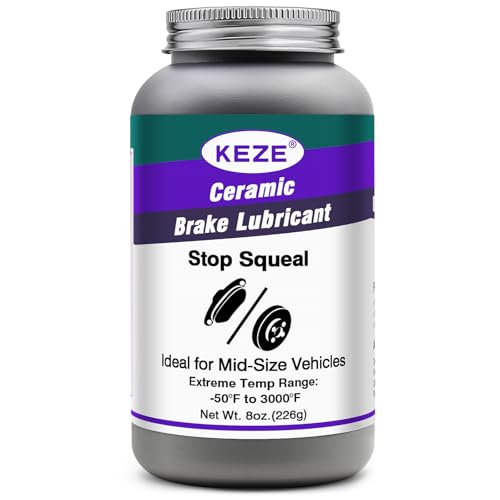
Keze Ceramic Brake Grease uses a synthetic MCA and ceramic powder blend to achieve a 3000°F flash point, making it one of the most heat-resistant options at an accessible price. It is specifically intended for caliper pins, sliders, and high-friction parts, and the purple, color-coded formula provides clear visual confirmation of coverage.
Buyers who applied it to sticky calipers reported immediate elimination of noise, vibrations, and uneven pad wear. The thick formula stays in place and does not run, and many noted that a small amount is sufficient for multiple jobs. It has also been used effectively as an emergency anti-seize compound.
The primary concern is that the extreme ceramic rating does not come with an explicit “rubber-safe” guarantee, so caution is warranted when applying near EPDM boots. For metal-on-metal sliding surfaces, however, it performs exceptionally well. It is a budget-friendly entry into ceramic lubrication for those who need high heat capacity.
What works
- Extremely high flash point of 3000°F
- Excellent cling and no-run consistency
- Cost-effective for the heat rating
- Color-coded for easy application verification
What doesn’t
- Rubber compatibility not explicitly confirmed
- May be overkill for standard street use
- Brush quality is average
10. ZDBB Ceramic Brake Lubricant High Temp
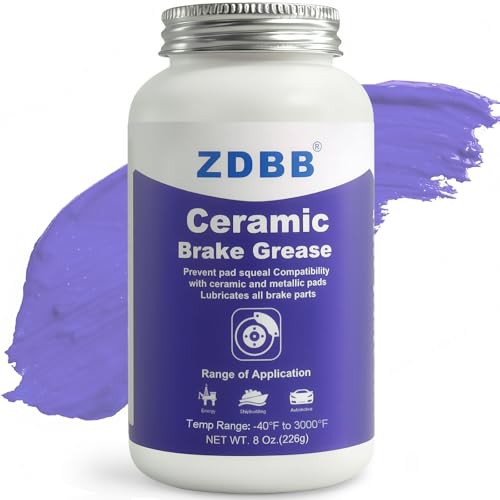
ZDBB Ceramic Brake Lubricant is a 100% synthetic formula with ceramic solids that forms a durable barrier against moisture and road salt. The 8-ounce bottle is an entry-level price for ceramic lubrication, making it an attractive trial for those curious about the benefits of ceramic-based greases. It claims a temperature range from -40°F to 3000°F.
Owners found it works well on caliper pins for vehicles like the Chevy Equinox and Impala, noting that a little goes a long way. The included brush is a convenient bonus for application, though one user noted the bristles tend to separate compared to a more expensive brush. The purple color provides good visibility for coverage.
As with other budget ceramic options, the lack of an explicit “safe for all rubbers” statement requires caution. It excels at preventing rust and lubricating metal parts, but should be verified for boot compatibility. For the price, it represents a functional entry into ceramic brake grease with effective corrosion protection.
What works
- Very budget-friendly price point
- Effective rust and corrosion protection
- High heat capacity for the price
- Comes with a brush for application
What doesn’t
- Brush bristles may be low quality
- Rubber safety is not explicitly confirmed
- May require more frequent reapplication
11. FOTU 707 Dielectric Grease

FOTU 707 is a dielectric silicone grease that, while primarily marketed for electrical connectors and battery terminals, is functionally a silicone lubricant suitable for rubber brake components. It is NLGI #2 grade, has a stable consistency from -55°F to 570°F, and is designed to prevent corrosion and corona discharge. The 2-pack of 4-ounce bottles with brushes offers exceptional value.
Users have successfully applied it to brake slide pins, confirming it works as an effective barrier against water ingress and oxidation. It has also been used to fix oxidation on battery switches and to lubricate sunroof tracks. The silicone base ensures it will not swell or degrade EPDM rubber.
The catch is that it is not specifically formulated as a brake caliper grease, so it may not have the extreme shear stability or anti-seize properties of a dedicated compound. For light-duty brake service and electrical work, it is a very capable and affordable option. Owners on a tight budget will find it effective for basic pin lubrication.
What works
- Exceptional value with 2-pack
- Silicone base is safe for rubber
- Effective water barrier and corrosion protection
- Multi-functional for electrical and brake use
What doesn’t
- Not specifically designed as brake caliper grease
- May lack high shear stability of dedicated products
- Grease is stiff and can be difficult to apply
Hardware & Specs Guide
Silicone vs. Ceramic Base
Silicone greases are the safest for rubber components, providing excellent lubrication without swelling or degrading EPDM boots. Ceramic greases offer superior high-temperature resistance but must be explicitly confirmed as rubber-safe before use on caliper pin boots. Synthetic blends combine the best attributes of both.
Temperature Rating (Continuous)
Standard silicone greases are rated to around 400°F to 500°F, which covers 99% of daily driving conditions. Ceramic greases can survive 2000°F+ flash points but may liquefy at lower continuous temperatures if not properly formulated. Always check the continuous rating, not the flash point.
Viscosity (NLGI Grade)
An NLGI #2 grade is ideal for caliper pins: thick enough to stay on the pin surface and resist water washout, yet soft enough to allow free pin movement. Greases that are too thin will migrate away, exposing the pin to moisture and corrosion. Overly stiff greases can bind the pin.
Water Washout Resistance
Brake components are exposed to water, mud, and road salt. A grease with high water washout resistance will maintain its lubricating film even when submerged. Look for formulations that specifically claim to be water-resistant or waterproof to prevent corrosion and pin seizure.
FAQ
Can I use regular bearing grease on brake caliper pins?
How often should brake caliper pin grease be reapplied?
Is it safe to use copper-based anti-seize on caliper pins?
How much grease should I apply to the caliper pins?
Final Thoughts: The Verdict
For most buyers, the grease for brake caliper pins winner is the PowerStop 4OZPSLUBE because it perfectly balances extreme-temperature protection with absolute rubber safety, all in a cost-effective 4-ounce bottle. If you want the absolute safest compound for your rubber components, grab the ACDelco 10-4019. And for a budget-friendly multi-use option that works for both brakes and electrical connectors, nothing beats the FOTU 707 Dielectric Grease.

Certification: BSc in Mechanical Engineering
Education: Mechanical engineer
Lives In: 539 W Commerce St, Dallas, TX 75208, USA
Md Amir is an auto mechanic student and writer with over half a decade of experience in the automotive field. He has worked with top automotive brands such as Lexus, Quantum, and also owns two automotive blogs autocarneed.com and taxiwiz.com.