Dragging a heavy trailer through mountain passes or hammering a locked diff across rock gardens puts thermal and mechanical stress on a gear set that standard axle fluids simply cannot handle. The wrong viscosity shears down in minutes under sustained load, allowing metal-on-metal contact that pits ring gears and wipes out limited-slip clutches. A proper GL-5 75W-90 synthetic must maintain its film strength above 220°F while staying fluid enough at -40°F to prevent dry starts on cold mornings.
I’m Amir — the founder and writer behind Four Wheel Ask. I’ve spent years analyzing gear oil formulations, extreme-pressure additive packages, and shear stability test data from real-world fleet and off-road applications to separate the genuine long-drain fluids from the marketing claims that thin out after a single season.
This guide evaluates five distinct GL-5 75W-90 gear oils across extreme-pressure protection, shear resistance, limited-slip compatibility, and thermal stability so you can confidently choose the right fluid for your differential, transfer case, or manual transmission. The best gl5 75w90 gear oil is the one that matches your specific driving demands, from daily highway cruising to competition-level abuse.
How To Choose The Best GL5 75W90 Gear Oil
Selecting the right GL-5 75W-90 gear oil comes down to three core factors: the base stock chemistry, the extreme-pressure additive formulation, and whether the fluid is pre-treated for limited-slip differentials. Ignoring any one of these leads to premature gear wear, noisy operation, or clutch chatter in an LSD.
Base Stock Chemistry: PAO, Ester, or Group III
Full-synthetic 75W-90 oils use either polyalphaolefin (PAO), ester, or hydroprocessed Group III base stocks. PAO provides excellent low-temperature flow and thermal stability but has limited polarity, meaning it does not cling to metal surfaces as aggressively as esters. Ester molecules are polar and bond to gear surfaces, creating a tenacious lubricating film even after the engine is shut off. Group III oils are cheaper to produce but oxidize faster under high heat, making them unsuitable for extended drain intervals. Look for formulations that blend PAO with esters for the best combination of cold flow and film strength retention.
Shear Stability: The KRL Test Matters
A 75W-90 oil that shears down to a 75W-80 after 20 hours of highway driving has lost its protective capability. The KRL 20-hour shear test measures how well a fluid holds its viscosity grade under mechanical stress. Premium gear oils maintain a final viscosity above 14 cSt at 100°C after the test, while lower-tier fluids drop below 12 cSt. For heavy towing or off-road use, insist on oils that advertise shearless or near-shearless performance, as these maintain film thickness across the entire life of the fluid.
Limited-Slip Compatibility: Pre-Mixed or Additive-Free
Limited-slip differentials with clutch packs require a friction modifier to prevent shudder during cornering. Some GL-5 gear oils come pre-formulated with the modifier — ideal for a direct fill without buying additional additives. Other high-performance racing oils omit the modifier intentionally, allowing tuners to add friction modifiers to their exact specification. If your vehicle has an LSD, check the owner’s manual. Using a non-LSD fluid in a clutch-type diff causes chatter and accelerated clutch wear. Using an LSD fluid in an open differential causes no harm but is unnecessary.
Quick Comparison
On smaller screens, swipe sideways to see the full table.
| Model | Category | Best For | Key Spec | Amazon |
|---|---|---|---|---|
| Triax Synergy Gear Max | Synthetic GL-5 | Ultra-long drain & heavy-duty towing | 500k-mile drain interval | Amazon |
| Red Line 58304 | Synthetic GL-5 | General drivetrain efficiency | Low-friction additive package | Amazon |
| Motul Gear 300 | Ester Synthetic GL-4/5 | Racing & synchronized gearboxes | KRL shear-proof film | Amazon |
| ACDelco 10-4016 | OEM Synthetic GL-5 | GM axle replacement & highway | Grape-scented formulation | Amazon |
| Royal Purple Max Gear (3-Pack) | Synerlec GL-5 | LSD performance & power transfer | Friction modifier included | Amazon |
In‑Depth Reviews
1. Triax Synergy Gear Max 75W-90 GL-5
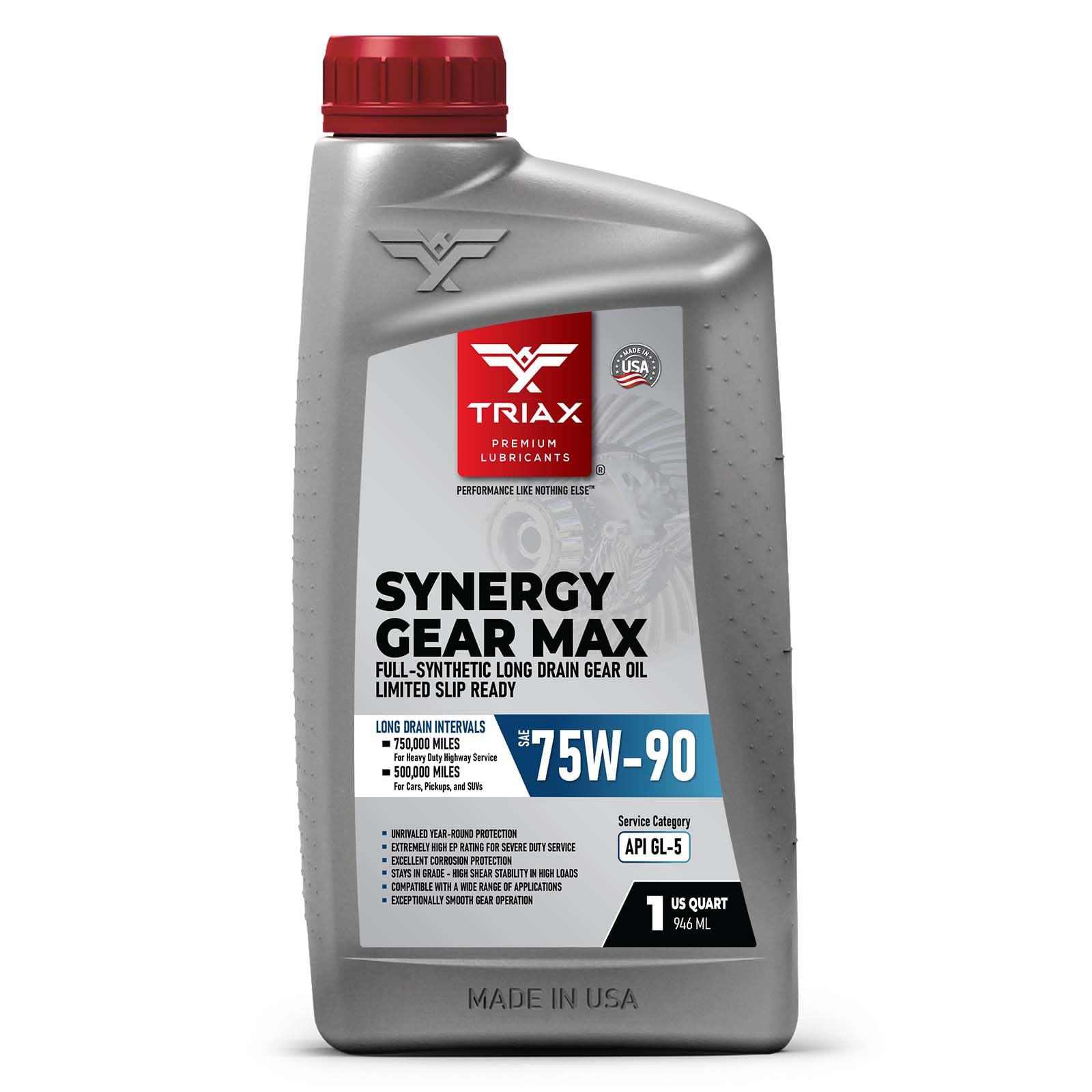
The Triax Synergy Gear Max delivers a PAO-and-ester blend that resists shear so effectively it claims up to 500,000-mile drain intervals in passenger vehicles and 750,000 miles in Class 8 highway trucks. That is not marketing fluff — the Stage 14 extreme-pressure load test rating means the oil film holds under forces that would break lower-tier fluids, and lab data shows up to 62% less wear than OEM requirements. This level of protection makes it ideal for heavy towing, off-road rock crawling, and any application where gear temps spike above 250°F.
What sets the Triax apart from every other fluid on this list is its universal compatibility with both limited-slip and open differentials. The friction modifier is already blended in, so there is no guesswork or separate additive purchase. The flash point of 222°C indicates high thermal stability, and the nearly shearless formulation means the viscosity grade stays at 75W-90 for the entire service life — no thinning into a 75W-80 after 10,000 miles. For a commercial operator or weekend wheeler who hates changing fluids, this is the set-and-forget champion.
On the downside, the Triax is not the easiest fluid to source locally compared to mass-market brands. The 1-quart bottle size is standard, but heavy-duty axle setups requiring 3+ quarts will need multiple bottles — and the price adds up on the initial fill.
What works
- Stage 14 extreme-pressure load rating exceeds all OEM and aftermarket standards
- Pre-blended friction modifier works in LSD and open diffs without additives
- 500,000-mile drain interval drastically reduces maintenance frequency
What doesn’t
- Limited retail availability compared to mainstream brands
- Higher upfront cost per quart than economy synthetics
2. Red Line 58304 75W90 Non-Slip Synthetic Gear Oil

The Red Line 58304 is engineered around one primary goal: reducing parasitic drag in the drivetrain to maximize power transfer and fuel economy. Its proprietary additive package produces a lower coefficient of friction than standard GL-5 fluids without sacrificing extreme-pressure protection. For daily drivers and highway commuters, this translates into measurable gains in gas mileage and reduced operating temperatures in the differential — typically running 10-15°F cooler than conventional fluids under identical loads.
Red Line formulates this as a non-slip gear oil, meaning it is designed for open differentials and non-LSD manual transmissions that do not require a friction modifier. The 75W-90 viscosity holds well under moderate load, and the synthetic base stock provides dependable cold-weather flow down to -45°F. This makes it a strong choice for northern-climate drivers who need reliable lubrication on frigid morning startups without waiting for the fluid to warm up and circulate.
The catch is that this fluid lacks pre-blended friction modifiers, so it is not suitable for clutch-type limited-slip differentials without adding an aftermarket modifier. If you have a Torsen or helical-gear LSD that does not require friction modifier, the Red Line works perfectly. But for a GM G80 or Ford Traction-Lok, you will need to buy a separate friction modifier additive. The 32-ounce bottle is standard, and the universal fit rating covers most passenger car and light-truck applications.
What works
- Reduced friction coefficient improves fuel economy in highway driving
- Excellent cold-weather fluidity down to -45°F for reliable startups
- Universal fit works across many makes and models
What doesn’t
- No pre-added friction modifier — requires separate additive for clutch LSDs
- Not designed for racing or extreme high-torque applications
3. Motul Gear 300 75W90 100% Synthetic Gear Oil
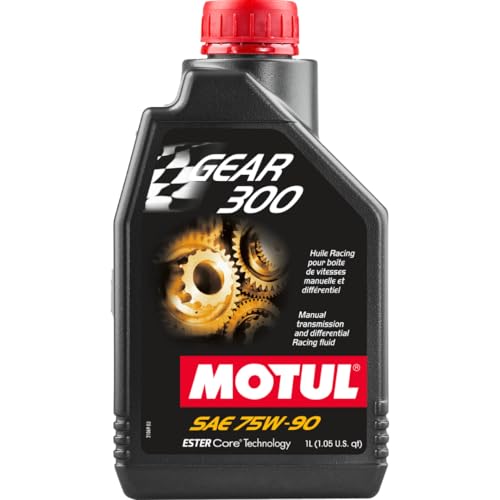
Motul Gear 300 is built on a 100% synthetic ester base stock, which gives it two critical advantages over PAO-only fluids: polar adhesion to gear surfaces and exceptional shear stability in the KRL 20-hour test. The ester molecules bond to ring-and-pinion surfaces, maintaining a lubricating film even after the engine is shut off — preventing dry-start scuffing on cold mornings. Under sustained high-load conditions like track days, hill climbs, or rally stages, the Gear 300 stays in its SAE 90 viscosity-grade window rather than thinning into a lower grade.
This fluid carries both API GL-4 and GL-5 certifications, making it safe for synchronized manual transmissions with brass synchros while still providing the extreme-pressure protection needed for hypoid differentials. The anti-foam and anti-emulsion properties are critical for racing applications where oil aeration from high-speed gear rotation can lead to cavitation and bearing failure. Additionally, the EP additive package handles shock loads well beyond what standard highway fluids can tolerate.
The limitation is that Motul Gear 300 is intentionally formulated without a friction modifier, so it is strictly for non-LSD differentials and gearboxes. If your vehicle has a clutch-type limited-slip, you will need to add a friction modifier separately — and Motul does not recommend using this with LSDs unless the manufacturer specifies it. The 1-liter bottle is slightly less volume than a standard US quart, so planning the fill quantity requires conversion attention. This is also a premium-priced fluid that does not offer extended drain intervals like the Triax.
What works
- Ester base stock provides polar film adhesion for startup protection
- KRL shear-proof — viscosity stays in grade under extreme load
- GL-4 and GL-5 compatible with synchronized gearboxes using brass synchros
What doesn’t
- No friction modifier — not suitable for clutch-type LSDs out of the bottle
- 1-liter bottle is smaller than a US quart, requires careful fill planning
4. ACDelco GM Original Equipment 10-4016 GL-5 75W-90

The ACDelco 10-4016 is the factory-fill spec for many General Motors trucks, SUVs, and passenger cars equipped with Dana or GM corporate axles. For owners who want to maintain OEM warranty compliance or simply prefer fluids that mirror the original build, this synthetic GL-5 lubricant delivers thermal stability across both high-speed highway operation and cold-temperature startup. The formula meets API GL-5 requirements and handles the severe service conditions found in towing, plowing, and off-road use common to GM 2500HD and 3500HD platforms.
A distinguishing feature is the grape-scented formulation, which is a quality-of-life improvement that makes the application process less unpleasant. Beyond the scent gimmick, the synthetic base stock provides dependable viscosity retention, though it does not advertise the extreme shear stability of the Triax or Motul options. For a stock Silverado or Suburban driven on pavement with occasional light towing, this fluid meets every requirement without over-engineering the specification. The 1-quart bottle size matches standard differential fill volumes.
The trade-off is that this is an OEM-focused product with no extended-drain claims. Standard service intervals of 30,000 to 60,000 miles apply, so owners looking for a lifetime or 100,000-mile solution will need to change it more frequently. Additionally, the additive package is tailored to GM axle specifications, and while it works in many other makes, it may not be the optimal choice for high-performance racing, heavy rock-crawling, or non-GM limited-slip units that require a specific friction modifier formulation.
What works
- Factory-fill spec for GM trucks and SUVs ensures OEM compliance
- Grape scent reduces odor during application
- Thermal stability for highway towing and cold-start conditions
What doesn’t
- No extended-drain capability — standard 30k-60k mile intervals
- Tailored to GM axles; may not be optimal for non-GM differentials
5. Royal Purple Max Gear 75W-90 (3-Pack)

The Royal Purple Max Gear employs the brand’s proprietary Synerlec additive technology, which bonds to metal surfaces at a molecular level to create a durable boundary layer that reduces friction and protects against shock loading. This makes it particularly effective for limited-slip differentials, where the friction modifier is already blended in — no separate additive purchase is required. The 3-pack of 1-quart bottles provides enough fluid for most truck and SUV rear axles with a single purchase, saving per-bottle cost compared to individual quarts.
Royal Purple claims the Max Gear reduces operating temperatures by up to 30°F compared to conventional petroleum-based gear oils, which extends bearing and seal life. The lower coefficient of friction also translates into a measurable reduction in drivetrain drag, improving fuel economy — a tangible benefit for 4WD vehicles that typically carry a fuel-economy penalty. For heavy-towing and off-road use, the extreme-pressure protection handles the high-torque conditions of crawling and mud-running without shearing down to a lower viscosity grade.
The downside is that Royal Purple’s 3-pack commands a premium price, and while the friction modifier is included, some aftermarket LSD setups still require a specific additional modifier to eliminate chatter. The fluid also does not advertise the extended drain capability of the Triax, so standard service schedules apply. The 75W-90 viscosity holds well, but the Synerlec film can take time to fully condition gear surfaces, with some users reporting temporary gear noise for the first 200-300 miles after filling.
What works
- Friction modifier pre-blended for clutch-type limited-slip differentials
- 3-pack provides complete fill volume for most truck rear axles
- Synerlec additive reduces operating temperature and drivetrain drag
What doesn’t
- Premium 3-pack price is higher than single-bottle alternatives
- Temporary gear noise possible during first 300 miles of conditioning
Hardware & Specs Guide
Shear Stability (KRL 20-Hour Test)
This is the single most important performance metric for any GL-5 75W-90 gear oil. The KRL tapered-roller bearing test subjects the fluid to 20 hours of continuous mechanical shear and measures how much the viscosity drops. A premium oil loses less than 10% of its initial viscosity, while budget options can drop 25% or more, effectively turning a 75W-90 into a 75W-80. For towing and off-road use, choose fluids that advertise “nearly shearless” or pass the KRL test with final viscosity above 14 cSt at 100°C.
Extreme-Pressure Additive Package (Stage Load Rating)
GL-5 certification requires passing the L-37 high-speed/high-torque axle test and the L-42 high-speed shock test. Beyond the certification, premium gear oils reference Stage load ratings from the FZG test rig — progressively higher stages (10 through 14) indicate the oil can handle greater loads before scuffing occurs. Triax Synergy Gear Max achieves Stage 14, meaning the EP additives prevent metal transfer even under extreme shock loads. Lower-tier GL-5 fluids typically pass Stage 10 or 11, sufficient for highway driving but marginal for rock-crawling or racing.
FAQ
Can I use GL-5 75W-90 gear oil in my manual transmission?
What happens if I use non-LSD gear oil in a clutch-type limited-slip differential?
How often should I change GL-5 75W-90 gear oil in a daily-driven truck?
Final Thoughts: The Verdict
For most buyers, the best gl5 75w90 gear oil winner is the Triax Synergy Gear Max because its Stage 14 EP rating and 500,000-mile drain interval eliminate the guesswork and maintenance hassle from differential ownership. If you want a racing-oriented fluid with proven KRL shear stability for synchronized gearboxes, grab the Motul Gear 300. And for a plug-and-play limited-slip solution that includes friction modifier in a convenient 3-pack, nothing beats the Royal Purple Max Gear.

Certification: BSc in Mechanical Engineering
Education: Mechanical engineer
Lives In: 539 W Commerce St, Dallas, TX 75208, USA
Md Amir is an auto mechanic student and writer with over half a decade of experience in the automotive field. He has worked with top automotive brands such as Lexus, Quantum, and also owns two automotive blogs autocarneed.com and taxiwiz.com.