Hypoid gears in your differential transfer massive torque through sliding contact, making lubricant selection a critical factor in long-term drivetrain health. The wrong oil accelerates wear, generates heat, and introduces noise that signals costly damage beneath your vehicle.
I’m Amir — the founder and writer behind Four Wheel Ask. I specialize in analyzing lubricant formulations, additive packages, and real-world owner data to separate marketing claims from measurable performance.
Choosing the right differential lubricant prevents premature gear wear, and this guide identifies the best gear oil hypoid for your specific needs.
How To Choose The Best Gear Oil Hypoid
Selecting the right hypoid gear oil requires matching the lubricant’s viscosity, additive chemistry, and certification level to your vehicle’s differential design and operating conditions. Ignoring any of these factors risks accelerated wear, noisy operation, or seal damage.
Viscosity Grade Selection
The SAE viscosity grade dictates how the oil flows at low and high temperatures. A 75W-90 grade works well for most passenger cars and light trucks across moderate climates, offering a balance of cold-flow fluidity and hot-film strength. Heavier towing, high ambient temperatures, or aggressive driving push the need toward a 75W-140 grade, which maintains a thicker film under extreme pressure and heat. Always consult the owner’s manual first — deviating from the recommended grade can alter shift feel in manual transmissions or cause limited-slip chatter.
API GL Rating and Additive Chemistry
API GL-5 oils contain higher levels of extreme-pressure additives, primarily sulfur-phosphorus compounds, that protect hypoid gears under the sliding contact unique to their design. GL-4 oils reduce the additive concentration for compatibility with yellow-metal synchronizers in manual transmissions. Using a GL-5 oil in a transmission that calls for GL-4 can cause brass synchro corrosion over time. Many modern synthetic oils carry both ratings, but verifying the specific certification for your application prevents long-term compatibility issues.
Synthetic vs. Conventional Base Oils
Synthetic base oils, particularly PAO and ester formulations, resist thermal breakdown far better than conventional mineral oils. This resistance translates to longer drain intervals, stable viscosity across temperature swings, and reduced sludge formation. Vehicles with extended service schedules, turbocharged engines, or heavy towing duty benefit most from the higher initial cost of synthetics. Conventional oils remain functional for older vehicles with modest power output and frequent change intervals, but the performance gap widens under sustained high-load operation.
Quick Comparison
On smaller screens, swipe sideways to see the full table.
| Model | Category | Best For | Key Spec | Amazon |
|---|---|---|---|---|
| Red Line 58204 | Full Synthetic | Racing & high-performance diffs | Heavy Shockproof, polyol ester | Amazon |
| Motul Gear 300 | 100% Synthetic Ester | Track & high-temp gearboxes | API GL-4/GL-5, unshearable film | Amazon |
| Lucas Oil 10121 | Synthetic Blend | High-temp stability on a budget | SAE 75W-140, long bearing life | Amazon |
| Royal Purple MAX GEAR | Full Synthetic | Heavy-duty towing & trucks | SAE 75W-140, premium protection | Amazon |
| Triax Synergy Gear Max | Full Synthetic PAO/Ester | Ultra-long drain intervals | 500K-mile rating, 75W-90 GL-5 | Amazon |
In‑Depth Reviews
1. Red Line 58204 Heavy Shockproof Gear Oil

Red Line 58204 uses a polyol ester base stock that delivers exceptional film strength under the extreme sliding loads found in hypoid differentials. The Heavy Shockproof formulation is purpose-built for racing applications including Sprint, Midget, Dirt Late Model, and NHRA rear ends, where gear engagement under full throttle creates instantaneous pressure spikes that conventional oils cannot contain. Owner reports consistently highlight reduced gear whine in high-mileage differentials after switching to this product, particularly in Subaru open diffs and Harley transmissions where noise suppression matters most.
The additive package exceeds API GL-5 specifications while maintaining a consistency that many describe as closer to liquid grease than typical gear oil. This physical property allows the lubricant to cling to gear teeth during cold starts and resist fling-off in high-RPM environments. The trade-off appears in synchronized transmissions — Red Line explicitly warns against using this oil in most synchro applications because the extreme slipperiness interferes with engagement. For hypoid differentials and non-synchro gearboxes, however, this formulation provides a measurable reduction in operating temperature and wear particle generation.
Reviewers with Harley-Davidson FXSTC transmissions report over 77,000 miles of smooth shifting without degradation, while Subaru owners note a marked reduction in differential noise after a brief flush-and-fill cycle. The 1-quart bottle size works well for most passenger vehicle diffs, though heavy trucks may require multiple units. The flip-top cap is straightforward but some users prefer a hand pump for easier transfer. Overall, this oil delivers race-grade protection that translates directly to quieter, longer-lasting street differentials.
What works
- Exceptional film strength reduces gear whine in worn diffs
- Polyol ester base resists thermal breakdown under sustained load
- Consistent positive feedback from racing and street applications
What doesn’t
- Not suitable for most synchronized manual transmissions
- Thick consistency makes hand-pump transfer slower
2. Motul Gear 300 75W90 100 Percent Synthetic Gear Oil
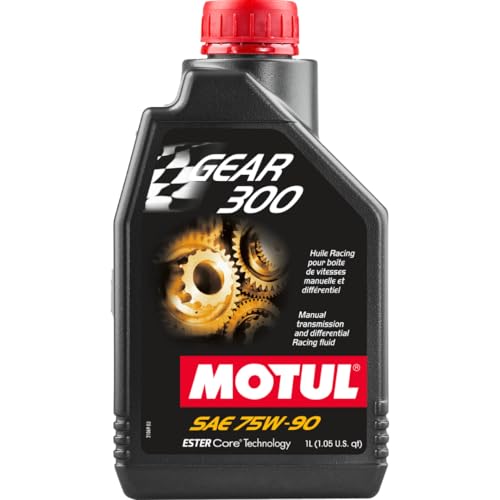
Motul Gear 300 is a 100 percent synthetic ester oil engineered specifically for racing and high-performance applications where hypoid gears experience extreme pressure and high torque. The formulation passes the KRL 20-hour shear test, meaning the viscosity remains stable under sustained stress rather than thinning out during extended track sessions or aggressive highway driving. The oil carries both API GL-4 and GL-5 certifications, which broadens its compatibility across manual transmissions, transfer cases, and non-limited-slip differentials without risking yellow-metal corrosion.
The ester base provides superior high-temperature stability, maintaining SAE 90 viscosity even when differential temperatures climb past the threshold where conventional synthetics begin to degrade. This stability directly reduces gear noise during high-speed operation and ensures consistent shift feel in cold-start conditions. Motul specifically formulated this oil without friction modifiers, making it ideal for open differentials and non-LSD applications where unnecessary additives can cause unpredictable clutch behavior. Owners of Subaru STi models and Ford F-150s report smooth engagement and reduced transmission whine after switching from OEM fluids.
Cold-weather performance is a standout feature — the low-temperature fluidity allows easier gear engagement during winter months without the resistance common in heavier-weight gear oils. The one-liter bottle is slightly smaller than a quart, so vehicles requiring a full differential fill may need two units. Some users note the lack of a built-in spout, but the bottle design pours cleanly with minimal dripping. For drivers who push their vehicles on track days or regularly tow near capacity, this oil delivers consistent protection across the full operating range.
What works
- Unshearable film maintains viscosity under extreme heat
- Dual GL-4/GL-5 rating covers transmissions and diffs
- Excellent cold-weather flow for easier winter shifting
What doesn’t
- No limited-slip friction modifier included
- Liter bottle is slightly smaller than a standard quart
3. Lucas Oil 10121 SAE 75W-140 Synthetic Gear Oil

Lucas Oil 10121 is a synthetic blend gear oil formulated with a 75W-140 viscosity rating that targets high-temperature stability in heavy-duty differentials and transmissions. The thicker viscosity grade provides a robust fluid film under load, making it a strong match for trucks that tow, haul, or operate in hot climates where thinner oils can shear and lose protective capacity. Owner reports from F-150 and Jeep Wrangler owners indicate consistent performance in factory limited-slip differentials without the chatter issues that sometimes arise with incompatible friction modifiers.
The additive package is designed to reduce gear noise and extend bearing life, and reviews across multiple vehicle platforms suggest the oil meets those claims in daily driving conditions. Lucas has a long-standing reputation in the automotive aftermarket for value-oriented lubricants, and this gear oil continues that trend by delivering reliable protection at a cost point well below premium ester-based competitors. The 1-quart bottle is practical for most passenger vehicles, and the straightforward formulation means fewer compatibility surprises during fluid changes.
Some skepticism appears in owner forums regarding Lucas gear oils, with isolated reports of shear instability under severe racing conditions. Those concerns are worth noting for track-day use, but for street-driven trucks and SUVs operating within normal load ranges, the oil performs reliably. Many users report smooth differential operation after switching from OEM fluids, with no unusual noise or temperature increase during extended highway driving. For budget-conscious owners who need a heavier-weight gear oil for towing or high-mileage differentials, this is a solid, proven option.
What works
- 75W-140 grade provides thick film for towing and heat
- Competitive price with reliable daily-driving performance
- Works well in factory limited-slip differentials
What doesn’t
- Synthetic blend may shear faster than full ester oils under extreme racing use
- Some owners report mixed results in high-RPM track applications
4. Royal Purple MAX GEAR 75W-140

Royal Purple MAX GEAR in 75W-140 is a full synthetic gear oil engineered for heavy-duty protection in differentials and transmissions operating under high load and temperature. The formulation uses Royal Purple’s proprietary Synerlec additive technology, which bonds to metal surfaces to reduce friction and wear even when the fluid film is compromised. This makes the oil particularly effective in towing applications, off-road use, and vehicles that carry heavy payloads where conventional gear oils can break down prematurely.
Owner feedback from Jeep Gladiator and Ford F-150 owners highlights chatter-free operation in limited-slip differentials after switching, with some noting that the oil eliminated noise that persisted with other synthetic brands. The 75W-140 viscosity provides a thicker cushion for hypoid gears under shock loads, and the synthetic base resists thermal degradation during sustained highway driving in hot climates. Reviewers consistently describe the oil as high quality, with many reporting long-term satisfaction across multiple fluid changes.
The price point sits at the higher end of the gear oil market, but the extended protection window and reduced wear accumulation can offset the upfront cost for owners planning to keep their vehicles beyond 100,000 miles. The 1-quart bottle is standard, and the oil flows well enough for pump or pour-in application. Some users note that the bottle design lacks a measuring window, so careful tracking of fill volume is necessary. For drivers who prioritize maximum protection over budget and want a trusted name in synthetic lubricants, this oil delivers consistent, durable performance.
What works
- Synerlec additive reduces friction and wear under heavy loads
- Chatter-free operation in limited-slip differentials
- Strong thermal stability for towing and hot climates
What doesn’t
- Higher cost than many comparable synthetic blends
- Bottle design lacks a measuring window for precise fills
5. Triax Synergy Gear Max 75W-90 GL-5 Limited Slip
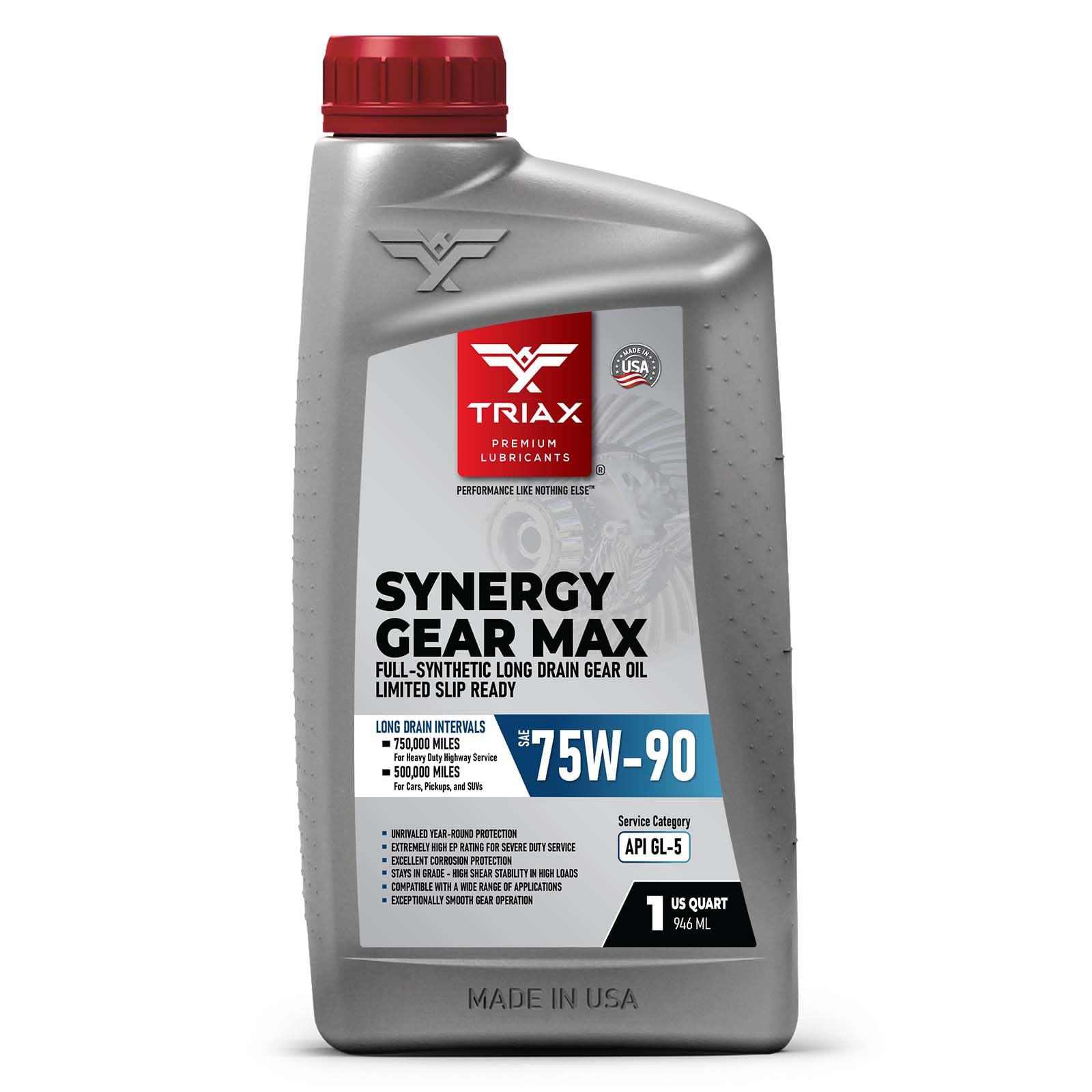
Triax Synergy Gear Max is a PAO and ester-based full synthetic gear oil that punches well above its price point with a claimed 500,000-mile drain interval for heavy-duty trucks and 750,000 miles for Class 8 highway applications. The formulation outperforms 99 percent of competing gear oils in wear control testing, delivering up to 62 percent less wear than OEM specifications across multiple standards. The oil exceeds the highest Stage 14 load test rating, which confirms its ability to resist pitting, scuffing, and glazing under the extreme contact pressures unique to hypoid gears.
Owner feedback from Toyota Tundra, Tacoma, and 4Runner owners is overwhelmingly positive, with users noting quiet differential operation and smooth performance at a cost well below comparable full synthetics from premium brands. The oil is rated for both limited-slip and non-limited-slip differentials, eliminating the guesswork about friction modifier compatibility. The bottle design has drawn some criticism — the cap can be difficult to use with standard hand pumps, and several owners report cutting the cap off to achieve a proper seal with their fill tool.
The shear stability is a standout feature; the PAO/ester blend resists viscosity breakdown over extended intervals, meaning the oil maintains its protective film long after conventional synthetics have degraded. For owners who perform their own maintenance and want a long-drain option without paying premium-brand prices, this oil delivers measurable laboratory-backed performance. The 1-quart bottle is adequate for most passenger vehicle differentials, and the flash point of 222 degrees Celsius indicates strong resistance to high-temperature volatility. The cap inconvenience is minor compared to the overall value this oil provides.
What works
- Exceptional wear control with up to 62 percent less wear vs. OEM specs
- Ultra-long drain interval reduces maintenance frequency
- PAO/ester blend provides near-shearless performance under load
What doesn’t
- Bottle cap design is difficult to use with hand pumps
- Less brand recognition compared to premium competitors
Hardware & Specs Guide
Viscosity Grades Explained
SAE 75W-90 and 75W-140 are the most common viscosity grades for hypoid gear oil. The “75W” indicates low-temperature performance — the oil must flow at -40°C to earn the 75W rating. The second number (90 or 140) represents high-temperature viscosity at 100°C. A 75W-90 oil provides balanced protection for most passenger vehicles, while 75W-140 offers a thicker film for towing, high ambient temperatures, or aggressive driving where heat builds faster. Choosing the wrong grade can cause excessive drag or inadequate film strength, so always cross-reference with the vehicle manufacturer’s specification.
GL-4 vs. GL-5 Ratings
API GL-5 gear oils contain roughly double the extreme-pressure additive content of GL-4 oils. These additives, primarily sulfur-phosphorus compounds, form a sacrificial layer on gear teeth that prevents metal-to-metal contact under the sliding action of hypoid gears. GL-4 oils reduce this additive concentration to protect yellow-metal components like brass synchronizer rings in manual transmissions. Many modern synthetics carry both ratings, but using a dedicated GL-5 oil in a transmission that specifies GL-4 can corrode synchros over time. Conversely, GL-4 oil in a hypoid differential may not provide sufficient protection under high torque.
FAQ
Can I use GL-5 gear oil in my manual transmission?
What happens if I use the wrong viscosity gear oil?
How often should I change hypoid gear oil?
Do I need friction modifier for limited-slip differentials?
Final Thoughts: The Verdict
For most buyers, the best gear oil hypoid winner is the Red Line 58204 Heavy Shockproof because it delivers race-proven film strength and noise reduction at a price that undercuts premium ester competitors. If you want a track-capable option with dual GL-4/GL-5 compatibility, grab the Motul Gear 300. And for heavy-duty towing on a tighter budget, nothing beats the Lucas Oil 10121 75W-140.

Certification: BSc in Mechanical Engineering
Education: Mechanical engineer
Lives In: 539 W Commerce St, Dallas, TX 75208, USA
Md Amir is an auto mechanic student and writer with over half a decade of experience in the automotive field. He has worked with top automotive brands such as Lexus, Quantum, and also owns two automotive blogs autocarneed.com and taxiwiz.com.