Transferring fuel or extracting engine oil shouldn’t require a physics lesson in siphoning or a cleanup crew for spilled gasoline. Yet most pumps on the market either burn out after two uses, leak from poor seals, or simply cannot move fluid fast enough to justify the hassle. The difference between a frustrating maintenance chore and a five-minute job comes down to choosing a unit with the right motor, hose length, and fluid compatibility — and most buyers skip that research entirely.
I’m Amir — the founder and writer behind Four Wheel Ask. My recommendations come from analyzing hundreds of owner reports, comparing build quality across multiple price tiers, and studying the engineering behind fluid transfer systems to separate reliable performers from short-lived disappointments.
Whether you are draining a lawn mower, emptying a boat tank, or performing a car oil change without crawling underneath, the right pump saves time and eliminates mess. After analyzing over 40 fuel transfer pumps, I found the models that deliver truly reliable, spill-free operation — the best gasoline extractor pump.
How To Choose The Best Gasoline Extractor Pump
Selecting the right fluid transfer pump requires matching the tool to the liquid you are moving, the power source available, and the frequency of use. A pump built for thin diesel fuel will struggle with cold gear oil, and a battery-powered unit designed for occasional lawn mower refueling will not survive daily commercial use. Understanding the core specifications helps you avoid wasted money and frustration.
Motor Type and Power Source
Electric pumps with 12V DC motors deliver consistent flow for engine oil and transmission fluid extraction, but many cannot handle gasoline due to spark risks from brushed motors. Battery-powered pumps running on AA cells offer portability and safety for gasoline transfer but sacrifice sustained flow rate. Pneumatic and manual vacuum extractors eliminate electrical hazards entirely and work with any fluid, though they require physical effort or an air compressor. Choose based on whether you prioritize speed, portability, or universal fluid compatibility.
Flow Rate and Hose Reach
Flow rate, measured in gallons per minute (GPM), determines how quickly the job gets done. A 3 GPM pump empties a 5-gallon fuel can in under two minutes, while a 1 GPM unit takes five minutes for the same task. Hose length matters just as much — a 51-inch hose reaches deep into truck fuel tanks and boat hatches, while shorter hoses limit you to lawn equipment and small engines. Always verify that the hose material is chemically compatible with the fluid you plan to pump.
Fluid Compatibility and Build Materials
Not every pump works with every liquid. Many electric oil extractors explicitly warn against gasoline because the motor can ignite fumes or the internal seals degrade. For gasoline, diesel, and kerosene, look for pumps with polyethylene hoses, plastic or cast-iron housings, and sealed motor compartments. Bronze or steel impellers handle diesel and kerosene safely, while nylon impellers work best with oils. Cast-iron pumps like those from Fill-Rite offer the longest service life for high-volume fuel transfer in commercial settings.
Quick Comparison
On smaller screens, swipe sideways to see the full table.
| Model | Category | Best For | Key Spec | Amazon |
|---|---|---|---|---|
| Harpy Eagle HE-001 | Electric Oil Pump | DIY oil changes on cars, SUVs, boats | 100W Motor, 1 GPM, Storage Case | Amazon |
| Fill-Rite FR1204H | Commercial Pump | High-volume gasoline/diesel transfer | 15 GPM, Cast Iron, Lifetime Warranty | Amazon |
| VEVOR 6.5L | Pneumatic Extractor | Garage oil changes without electricity | 6.5L Tank, Pneumatic/Manual Dual-Mode | Amazon |
| Keimi FN901 | Battery Pump | Portable gasoline transfer for tractors | 3.2 GPM, Battery/USB, Auto-Stop | Amazon |
| FEEDRON FDR-FT | Battery Pump | Fast refueling of generators, mowers | 3.8 GPM, USB Type-C, Auto-Stop | Amazon |
| AUTOJDM AT-01 | Battery Pump | Safe refueling with overfill protection | 3.2 GPM, 30s Alert Beep, 4 Adapters | Amazon |
| SUPERFASTRACING 6.5L | Manual Extractor | Brake fluid, power steering fluid swaps | 6.5L Tank, Hand Pump, Transparent Hose | Amazon |
| anngrowy FT-100 | Battery Pump | Occasional gasoline can emptying | 3.2 GPM, 4 AA, 51-Inch Hose | Amazon |
| Orion Motor Tech DTP-12 | Diesel Pump | Diesel/kerosene tank filling and draining | 12 GPM, 16.4 ft Suction, Cast Steel | Amazon |
| FAITIO MOT0910A | Electric Oil Pump | Engine oil, gear oil, transmission fluid | 100W Motor, 30 Min Continuous | Amazon |
| AIGMISON AG100 | Electric Oil Pump | Budget oil changes on cars, motorcycles | 100W Motor, 3 Pipes, Aluminum Alloy | Amazon |
In‑Depth Reviews
1. Harpy Eagle HE-001
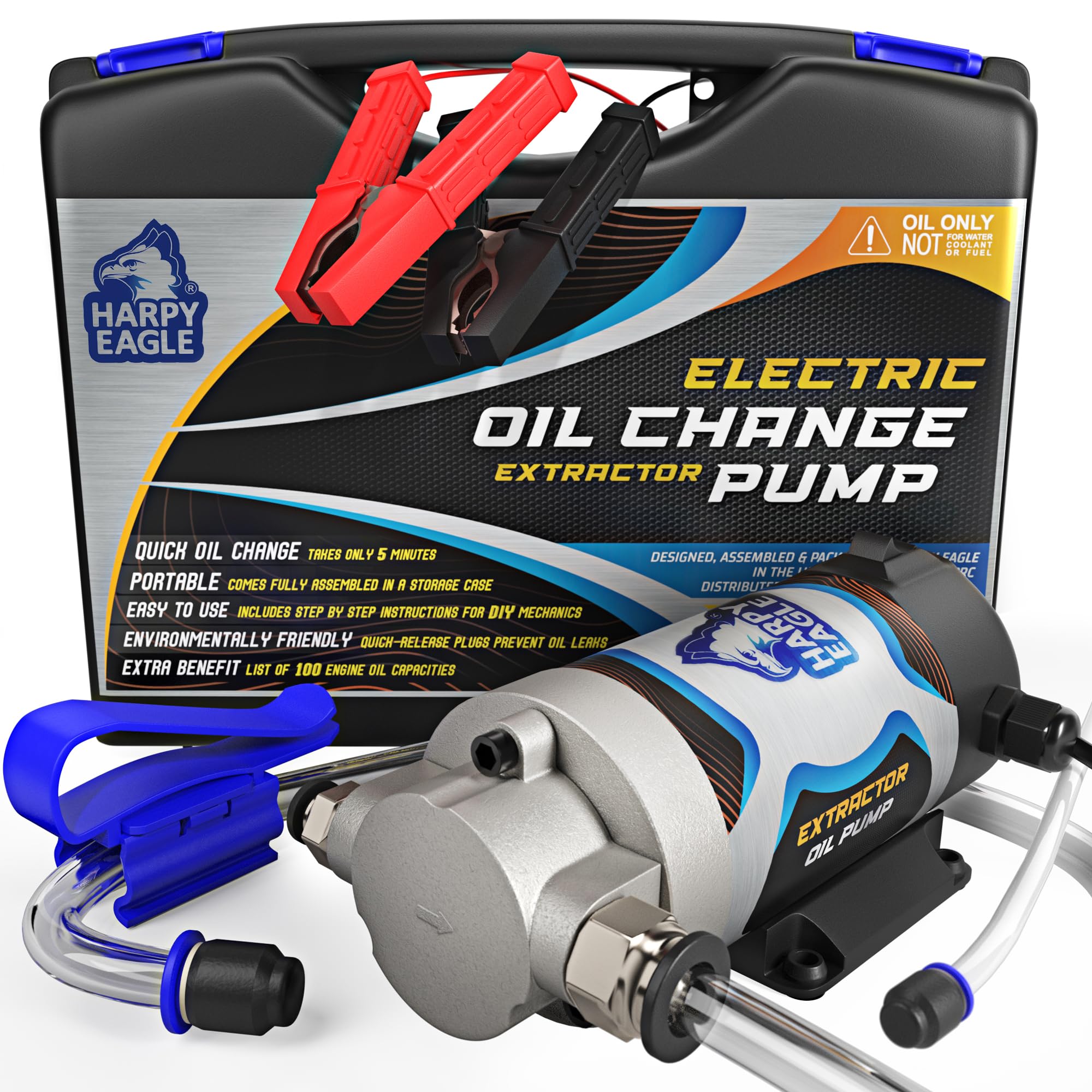
The Harpy Eagle HE-001 stands apart from the crowd of plastic-bodied extractors with its fully assembled, all-metal pump construction. While most competitors rely on nylon gears and thin aluminum housings, this unit uses a rotary engine built entirely from metal with no plastic internal parts, making it significantly more durable under repeated use. The 100W motor delivers up to 1 gallon per minute, and the extended 4-foot hoses reach deep into SUV and truck oil pans without requiring an extension.
What really elevates this pump is the attention to usability details that DIYers actually need. The power cable uses straight construction at 59 inches — double the length of typical coiled cables — so you can reach a battery in a pickup without stretching. Quick-release plugs prevent oil spillage during storage, and a dedicated clip holds the hose in place when draining into a container. The included storage case keeps everything organized, and the manual, written by a certified Master ASE mechanic, includes oil capacity specs for 100 car models.
Owner reports consistently praise the build quality and straightforward operation, with many noting that it made oil changes on boats, trucks, and SUVs far simpler than jacking up the vehicle. A few users mentioned that the pump left about a quart in the pan on some vehicles, so a drain plug may still be needed for a complete change. Overall, this is the most thoughtfully designed electric extractor for the home mechanic who values durability and convenience.
What works
- All-metal rotary pump with no plastic internals
- Extended 4-foot hoses and 59-inch power cable
- Includes storage case and ASE-written manual
- Quick-release plugs prevent spillage during storage
What doesn’t
- Not designed for gasoline or diesel fuel transfer
- May leave residual oil in pan on some engines
- Motor can get warm during extended operation
2. Fill-Rite FR1204H

The Fill-Rite FR1204H represents the commercial-grade standard for fuel transfer, built with a cast-iron housing that withstands rough operating environments where lesser pumps fail. Designed for 12V battery-powered bung mounting on trailers and truck beds, this rotary vane pump moves up to 15 gallons per minute and can pull fuel from tank depths of 8 feet while discharging up to 37 feet vertically. It handles gasoline, diesel, kerosene, ethanol blends, methanol blends, and biodiesel without compatibility concerns.
Thermal overload protection prevents the motor from overheating during abnormal usage, and the removable junction box rotates 180 degrees for easier electrical wiring in tight spaces. The pump includes a 3/4-inch elbow, a 5-foot 12-gauge ground wire, wire nuts, and PTFE tape for installation. Fill-Rite backs the 1200 series with a limited lifetime warranty, reflecting confidence in the cast-iron construction and rotary vane technology that maintains consistent flow even as components wear.
Experienced users note that while the pump does not quite hit the advertised 15 GPM in real-world conditions, it still delivers excellent speed and reliability compared to plastic-bodied alternatives. The pump weighs 21 pounds, so mounting is permanent rather than portable. For farms, workshops, and commercial fleets that need daily fuel transfer without failures, the FR1204H is the long-term investment that pays for itself in avoided downtime.
What works
- Cast-iron housing with exceptional durability
- 15 GPM flow rate for high-volume transfer
- Thermal overload protection and lifetime warranty
- Compatible with gasoline, diesel, kerosene, and biofuels
What doesn’t
- Heavy 21-pound design limits portability
- Real-world flow slightly below advertised rating
- Vehicle-specific fit, not universal
3. VEVOR 6.5L Fluid Extractor

The VEVOR 6.5L fluid extractor offers a dual-mode design that works with compressed air or manual hand pumping, making it one of the most versatile options for shops without dedicated electric pumps. In pneumatic mode, it extracts oil quickly — owners report draining 4 liters from a boat engine in under 5 minutes — while manual mode provides a backup option when no air compressor is available. The 6.5-liter tank holds enough capacity for most passenger car oil changes without needing to stop and empty.
The kit includes four sizes of extraction tubes: a main tube, two extension tubes in different diameters, and a flexible suction hose reaching 58 inches. This variety ensures compatibility with dipstick tubes on cars, motorcycles, boats, lawn mowers, and tractors. The transparent hose allows visual confirmation of fluid flow, and the sturdy plastic tank resists tipping during operation. Sealing rings and a detailed manual round out the package.
Warming the engine before extraction is essential — owners stress that cold oil takes significantly longer. The manual priming process requires 5 to 10 slow pumps to establish flow, after which it self-siphons effectively. A few users recommend having a compressor for best results, as manual-only operation can be tiring for larger jobs. Overall, the VEVOR offers exceptional value for DIYers who want pneumatic speed with manual fallback.
What works
- Dual-mode pneumatic and manual operation
- Large 6.5L capacity for full oil changes
- Includes four extraction tubes for various engines
- Self-siphoning after initial prime
What doesn’t
- Requires warm oil for best performance
- Manual mode can be slow for large engines
- Tank is hard plastic, not metal
4. Keimi FN901
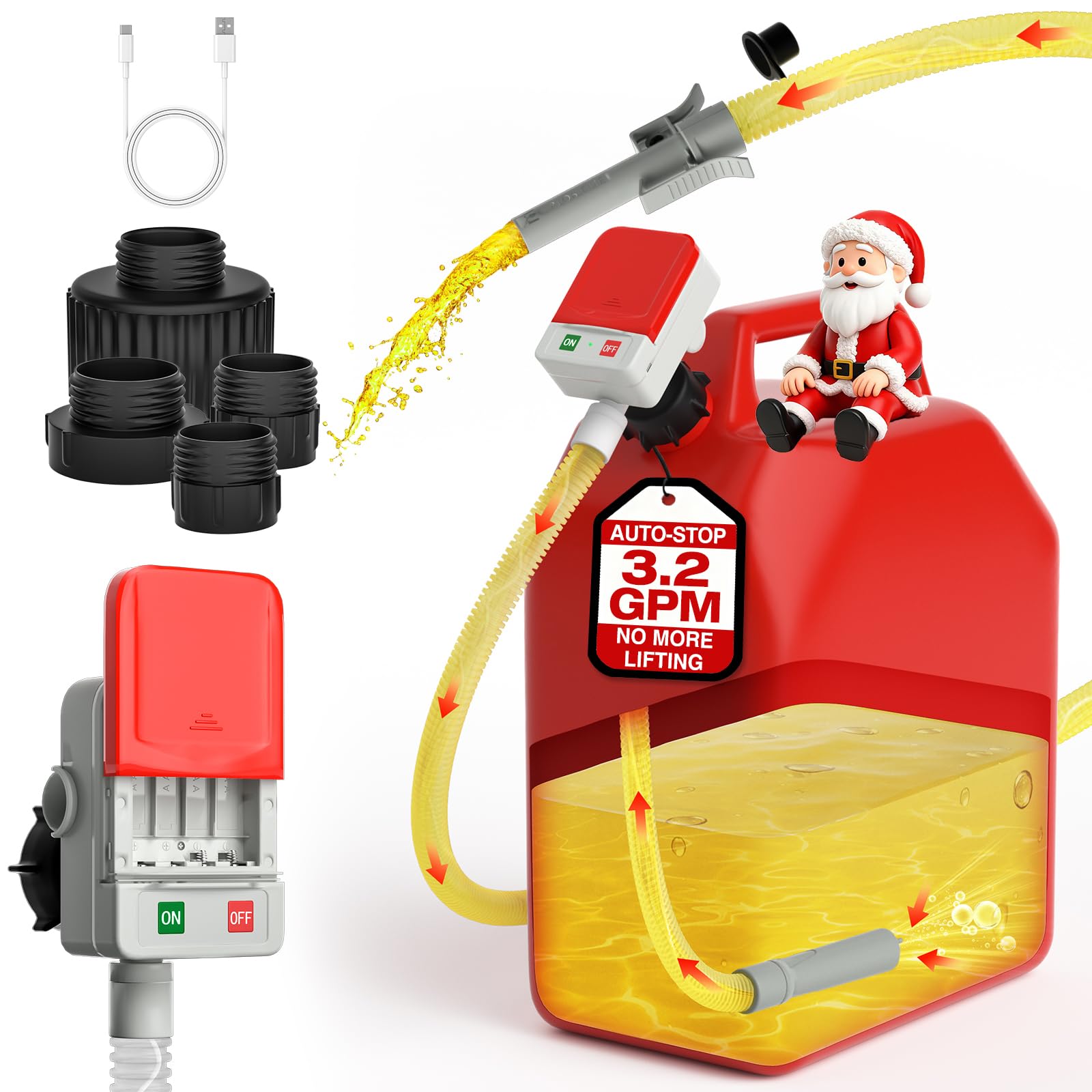
The Keimi FN901 is a thoughtfully engineered battery-powered fuel transfer pump that prioritizes portability and spill prevention. It runs on 4 AA batteries for standard use or 2 AA batteries in a pinch, and the included USB-C cable allows connection to a power bank, car charger, or wall adapter for extended operation without battery drain. The 3.2 GPM flow rate empties a 5-gallon fuel can in under two minutes — significantly faster than manual siphoning.
The auto-stop sensor in the nozzle automatically halts flow when the tank reaches full, preventing overflows and fuel waste. Four included adapters (2.0, 2.1, 2.75, and 3.75 inches) fit most North American fuel cans, and the 51-inch hose provides ample reach for filling tractor, motorcycle, and boat tanks. The pump comes in a compact storage bag for garage or trunk organization.
Owners consistently report that the Keimi makes refueling equipment like diesel tractors and generators far easier than lifting heavy cans. The auto shut-off works reliably, though some users note that the corrugated hose retains fuel and requires air drying before storage to prevent fumes. Battery life is adequate for several fill-ups, but USB power is the preferred method for longer jobs. This pump strikes an excellent balance between convenience, safety, and price.
What works
- Battery and USB-C dual power options
- Auto-stop sensor prevents overfills
- 4 can adapters for universal fit
- Compact storage bag included
What doesn’t
- Corrugated hose retains fuel after use
- Batteries drain faster with repeated use
- Auto-stop nozzle design limits some positioning
5. FEEDRON FDR-FT

The FEEDRON FDR-FT claims the highest flow rate among the battery-powered options at 3.8 GPM, making it the fastest choice for transferring gasoline, diesel, kerosene, and non-potable water. The pump features a sensitive auto-stop sensor that triggers both a flow cutoff and an audible beeper when the tank is full or the sensor contacts liquid, adding an extra layer of safety against overflows. The one-button operation with LED indicator keeps the interface simple even in low-light conditions.
Power comes from 4 AA batteries or a USB Type-C connection to a wall adapter or power bank, giving flexibility for both workshop and field use. The pump weighs only 1.4 pounds and includes four can adapters for standard North American fuel containers. The reinforced metal clip on the nozzle secures it to the fill neck for hands-free operation, and the strong ABS shell protects the internal components from minor impacts.
Customer feedback highlights the fast transfer speed and reliable auto-shutoff as the standout features, with many using it for lawn tractors, snow blowers, and generators. A few owners noted that the cap lacks a rubber grommet, allowing vent holes to leak fuel when the pump is left attached to a full can during transport. Removing the pump after use and draining the hose prevents this issue entirely. For speed-focused users who want the fastest battery-powered option, this is the top contender.
What works
- Fastest battery-powered flow at 3.8 GPM
- Auto-stop sensor with audible beeper alert
- USB Type-C power for extended runtime
- Lightweight 1.4-pound design
What doesn’t
- Cap vent holes can leak during transport
- Requires battery removal when not in use
- Plastic construction, not for heavy commercial use
6. AUTOJDM AT-01

The AUTOJDM AT-01 differentiates itself from other battery-powered fuel pumps with a 30-second alert beep that sounds when the auto-stop sensor engages, providing an audible confirmation that the tank is full and flow has stopped. This feature is particularly useful when filling equipment in noisy environments or when the pump is positioned out of direct line of sight. The pump delivers up to 3.2 GPM with sufficient battery power and works with gasoline, kerosene, diesel, and non-potable water.
Four can adapters cover the standard North American sizes (2.0, 2.1, 2.75, and 3.75 inches), and the 51-inch polyethylene hose resists rust and corrosion from fuel exposure. A built-in locking clip secures the nozzle to the receiving receptacle for hands-free operation, and the portable storage bag keeps everything organized when not in use. The pump runs on 4 AA batteries for best performance, with 2 AA batteries as an emergency fallback.
Owner experiences are largely positive, with many noting that the pump eliminated the need to lift heavy 5-gallon cans for ATV, tractor, and generator refueling. A few users reported variability in flow rate depending on battery brand and condition, with name-brand alkaline cells providing noticeably better performance. One owner had an initial unit with weak flow, but the company replaced it promptly, and the replacement worked perfectly. Overall, the AUTOJDM offers solid value with the added safety of an audible alert.
What works
- 30-second alert beep confirms auto-stop activation
- 4 adapters fit most North American cans
- Locking clip for hands-free operation
- Rust-resistant polyethylene hose
What doesn’t
- Flow rate varies with battery quality
- Not suitable for continuous commercial use
- Some units may need replacement under warranty
7. SUPERFASTRACING 6.5L Manual Extractor

The SUPERFASTRACING 6.5L manual vacuum extractor takes a different approach from electric pumps, relying on hand-pumped vacuum to draw fluid into a 6.5-liter tank. This design eliminates any risk of electrical sparks, making it inherently safer for gasoline and other flammable fluids, while also working perfectly with engine oil, brake fluid, power steering fluid, and gear oil. The transparent hose allows visual monitoring of the extraction process, and the durable metal pedal fixes the tank in place during operation.
The working pressure range of 70 to 170 PSI provides strong suction once the vacuum is established. Users report that after about 10 hand pumps, the extractor self-siphons and continues draining without further pumping. The included multiple tube diameters fit various dipstick tubes and fill ports, making it versatile across different vehicles and equipment. The 6.5-liter tank holds enough for most passenger car oil changes in a single fill.
Owners appreciate the mess-free operation and the ability to change oil without jacking up the vehicle. The main criticisms center on assembly quality — some units arrive with loose screws or poorly fitted tubes that require tightening before first use. The extraction process is slower than electric pumps, taking about 15 minutes to drain warmed oil. For home mechanics who prioritize safety and simplicity over speed, this manual extractor is a reliable choice that requires no batteries or power cords.
What works
- Safe for gasoline with no electrical spark risk
- Self-siphoning after initial vacuum pump
- Transparent hose for visual fluid monitoring
- Multiple tube diameters for various vehicles
What doesn’t
- Slower extraction than electric pumps
- Some quality control issues with assembly
- Hose length may be short for some applications
8. anngrowy FT-100
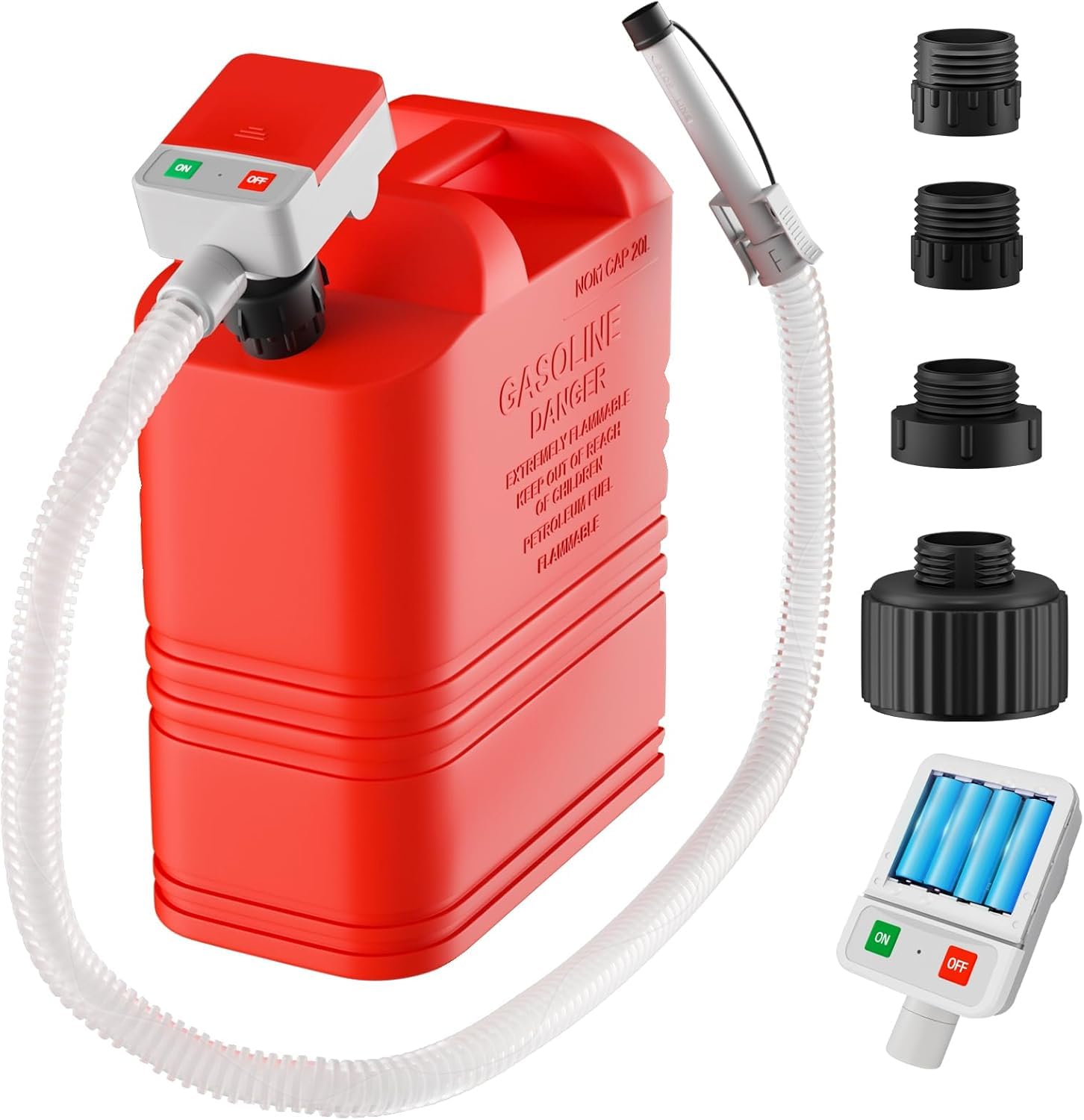
The anngrowy FT-100 is a CSA-certified battery-powered fuel transfer pump that offers a straightforward solution for moving gasoline, diesel, kerosene, and non-potable water at up to 3.2 GPM. Powered by 4 AA batteries (or 2 in an emergency), it provides enough flow for occasional refueling tasks without the need for AC power or vehicle batteries. The CSA certification confirms it meets Canadian and US safety standards for fuel handling.
The kit includes four can adapters sized 2.0, 2.1, 2.75, and 3.75 inches to fit most North American fuel containers, along with a 51-inch hose made from durable polyethylene plastic that resists rust and corrosion. The 19-inch extended intake hose reaches the bottom of standard gas cans for complete emptying. A portable storage bag keeps the pump and accessories together in the trunk or garage.
User feedback is generally positive, with many praising how much easier it makes filling lawn mowers, generators, and motorcycles compared to lifting and tipping heavy cans. The auto-stop feature works well according to most owners. A common complaint is that the pump drains batteries relatively quickly — roughly 40 to 50 gallons per set of alkaline cells — making USB-powered alternatives more economical for regular use. Some users also noted that the included adapters do not fit all 7-gallon containers perfectly. For light, occasional use, this pump delivers solid performance at a reasonable entry point.
What works
- CSA certified for safe fuel handling
- 4 can adapters fit most containers
- Long 51-inch hose for easy reach
- Portable storage bag included
What doesn’t
- Batteries drain quickly with regular use
- Adapters may not fit large 7-gallon cans
- Not for continuous or commercial use
9. Orion Motor Tech DTP-12

The Orion Motor Tech DTP-12 is a 12V electric fuel transfer pump built around a cast steel impeller and copper motor, designed specifically for diesel and kerosene transfer. It delivers up to 12 GPM with a maximum suction lift of 16.4 feet and a discharge height of 32 feet, making it suitable for filling equipment, emptying storage tanks, and moving large volumes of low-viscosity oil. The pump uses 3/4-inch NPT threaded connections for secure hose attachment.
An internal bypass valve protects the motor from burning out if the discharge line becomes clogged, and a metal strainer filters impurities from the fluid to prevent internal damage. The mountable base with a reinforced handle makes the pump portable enough to move between workstations while allowing permanent installation in a shop. The impeller is made of cast steel for durability, though this also means it is not suitable for gasoline due to the risk of spark ignition from metal-on-metal contact.
Owner feedback highlights the impressive flow rate and the pump’s ability to empty a 5-gallon container in under a minute. The noise level is notable — several users describe a loud screeching sound during operation, likely from the bearing or impeller. The included wiring is thin (18-gauge), and some owners chose to upgrade it for better current delivery. For diesel and kerosene transfer where high volume matters more than quiet operation, this pump delivers exceptional value.
What works
- High 12 GPM flow for fast transfer
- Cast steel impeller and copper motor
- Internal bypass valve protects against clogs
- 16.4 ft suction lift reaches deep tanks
What doesn’t
- Not for gasoline due to spark risk
- Noisy operation during use
- Thin wiring may need upgrading
10. FAITIO MOT0910A

The FAITIO MOT0910A is a 12V 100W electric oil extractor pump that targets budget-conscious DIYers who need a reliable tool for engine oil, gear oil, and transmission fluid changes. The pure copper motor delivers a flow rate of 1 to 4 liters per minute depending on fluid viscosity and temperature, with a maximum continuous operation of 30 minutes — sufficient for multiple oil changes in a single session. Every pump is tested at the factory with a few drops of light oil, so any residual oil on arrival is normal and not a sign of prior use.
Operation is straightforward: connect the battery clamps to a 12V source, insert the appropriate suction hose into the dipstick tube, and let the pump extract the fluid. The pump works best when the engine oil is warmed to 104-140°F for faster flow. It is compatible with cars, motorcycles, pressure washers, lawn mowers, marine engines, and jet skis, though the manufacturer explicitly advises against using it with gasoline, diesel, or water.
Owner experiences are mixed but skew positive. Many users report successful oil changes on VW GTI, lawn mowers, and generators, praising the speed and convenience compared to drain plug methods. However, a significant minority experienced pump lockup after initial use, with some discovering metal debris from manufacturing that required disassembly and cleaning. Running the motor in reverse polarity freed the pump in several cases. For the price, the FAITIO delivers acceptable performance if you are willing to inspect and potentially service the pump before first use.
What works
- 100W copper motor for reliable extraction
- Works on cars, motorcycles, mowers, and marine
- Easy battery clamp connection
- Factory tested before shipping
What doesn’t
- Not for gasoline, diesel, or water
- Some units arrive with metal debris inside
- Pump lockup reported by multiple users
11. AIGMISON AG100

The AIGMISON AG100 is an entry-level 12V 100W electric oil extractor pump that offers the lowest entry point for DIY oil changes. Despite the budget positioning, it uses a high-quality aluminum alloy housing with a pure copper motor that is corrosion-resistant and designed to prevent oil leakage or short circuits. The pump includes three hose sizes — 6mm, 8mm, and 10mm — with hose clamps and battery clamps, allowing adaptation to different dipstick tube diameters.
The pump is designed for engine oil and gear oil changes on cars and motorcycles, with the manufacturer explicitly stating it is not suitable for gasoline, diesel, or water. Warming the engine to 104-140°F before extraction is recommended for best performance. The clear hoses allow visual monitoring of the fluid extraction process, and the hose length can be adjusted by cutting to suit specific applications.
Customer reviews tell a split story. Many owners report successful oil changes on vehicles like VW GTI, praising the pump for making the job easy without crawling under the car. One user with visual impairment found it helpful for refilling oil. However, a notable number of buyers received units that did not work at all — the motor failed to turn on, or the fittings were incorrectly threaded. Quality control appears inconsistent, making this a gamble for the price. For buyers on a strict budget who are willing to accept some risk, the AG100 can work well, but the FAITIO or VEVOR options offer better reliability for a modest increase.
What works
- Lowest entry price for electric oil extraction
- Aluminum alloy housing with copper motor
- Three hose sizes for various dipstick tubes
- Clear hoses for visual fluid monitoring
What doesn’t
- Not for gasoline, diesel, or water
- Quality control issues with motor and fittings
- Some units arrive non-functional
Hardware & Specs Guide
Motor Power and Duty Cycle
Electric extractor pumps typically use 12V DC motors rated between 60W and 100W. Higher wattage generally means faster extraction, but duty cycle — the maximum continuous run time before the motor needs to cool — matters just as much. A 100W pump with a 30-minute duty cycle can handle multiple oil changes in one session, while pumps without duty cycle ratings may overheat if run too long. Battery-powered pumps do not face this limitation because the battery drain becomes the limiting factor before motor overheating occurs.
Flow Rate and Fluid Viscosity
Flow rate is always specified for low-viscosity fluids at operating temperature. A pump rated at 3.2 GPM for warm gasoline will move significantly less volume when pumping cold 20W-50 engine oil. For oil extraction, warming the engine to 104-140°F is essential to achieve rated flow. For fuel transfer, the flow rate advertised is achievable with fresh batteries or adequate power supply. When comparing pumps, look for real-world owner reports rather than relying solely on the published GPM figure.
Hose Materials and Fluid Compatibility
Hose construction determines which fluids a pump can safely handle. Polyethylene (PE) hoses resist gasoline, diesel, kerosene, and oil, making them the most versatile choice for fuel transfer. PVC hoses work with water and some oils but degrade quickly when exposed to hydrocarbons. Rubber hoses with synthetic liners handle high-temperature oil but may swell with gasoline. Always verify chemical compatibility before pumping any fluid — using the wrong hose material can cause leaks, hose failure, or contamination of the fluid being transferred.
Auto-Stop Sensor Technology
Battery-powered fuel transfer pumps increasingly include auto-stop sensors in the nozzle that detect when the receiving tank is full. These sensors use either optical or conductivity-based detection to trigger an automatic shutoff. Optical sensors are more reliable across different fluid types, while conductivity sensors may be affected by fluid additives or contamination. The best implementation includes both automatic shutoff and an audible alert (beep or buzzer) to confirm that the flow has stopped, preventing overfills even when the operator is not watching the nozzle.
FAQ
Can I use an oil extractor pump for gasoline?
How do I choose between battery-powered and 12V electric pumps?
Why does my pump need warm oil to work effectively?
How do I prevent fuel spills when using a battery-powered transfer pump?
What is the difference between a manual vacuum extractor and an electric pump?
Final Thoughts: The Verdict
For most buyers, the best gasoline extractor pump winner is the Harpy Eagle HE-001 because it combines all-metal construction, extended hoses, and a storage case into a package that outperforms every other electric extractor at its level for DIY oil changes. If you need a portable solution for gasoline transfer with spill protection, grab the Keimi FN901 for its battery/USB flexibility and reliable auto-stop sensor. And for high-volume commercial fuel transfer, nothing beats the Fill-Rite FR1204H with its cast-iron durability and lifetime warranty.

Certification: BSc in Mechanical Engineering
Education: Mechanical engineer
Lives In: 539 W Commerce St, Dallas, TX 75208, USA
Md Amir is an auto mechanic student and writer with over half a decade of experience in the automotive field. He has worked with top automotive brands such as Lexus, Quantum, and also owns two automotive blogs autocarneed.com and taxiwiz.com.