That weeping valve cover or the constant seep from your transmission pan can turn a solid road trip into a roadside headache. The right gasket material is the difference between a dry engine bay and a greasy mess, but choosing between a squeezable tube and a rigid sheet often stalls the project before it starts.
I’m Amir — the founder and writer behind Four Wheel Ask. I’ve spent years dissecting automotive sealant specifications, comparing Shore durometer ratings, and parsing manufacturer data to see which silicone compounds actually hold pressure without turning brittle.
Whether you are patching a supercharger flange or fabricating a custom coolant crossover plate, this guide breaks down the best options on the market. After comparing Shore hardness, temperature tolerances, and real-world application methods, you will know exactly which gasket silicone rubber belongs in your toolbox.
How To Choose The Best Gasket Silicone Rubber
Picking the right gasket material is not about grabbing the cheapest tube off the shelf. You need to match the compound’s physical properties to the temperature, pressure, and fluid exposure your joint will face.
Shore Hardness and Flexibility
The Shore A durometer scale measures how resistant the rubber is to indentation. A rating around A55 to A65 is the sweet spot for most automotive gaskets. Softer compounds conform better to irregular flange surfaces but may squirm out under high clamp load, while harder sheets hold shape on flat, machined surfaces. For water pumps or thermostat housings, target A60 to A65.
Temperature Tolerance
Standard RTV silicone typically handles up to 300°C, but continuous exposure near that ceiling can degrade the seal over time. Sheet silicone rated from -100°F to 400°F covers most engine bay applications. For turbo or supercharger flanges, look for compounds that explicitly state resistance to both sustained high heat and thermal cycling without cracking.
Oil and Fluid Resistance
Not all silicone resists oil equally. Standard general-purpose sheets swell or soften when soaked in hot engine oil or gear lube. If your gasket sits in a wet environment like a valve cover or transmission pan, choose an RTV or sheet explicitly formulated for oil resistance. Food-grade silicone offers excellent chemical inertness, but verify it includes hydrocarbon resistance before using it in a differential.
Quick Comparison
On smaller screens, swipe sideways to see the full table.
| Model | Category | Best For | Key Spec | Amazon |
|---|---|---|---|---|
| MATNIKS 12×12 Sheet | Sheet | Custom flat gaskets | Shore A65, 12x12x1/16 in | Amazon |
| MATNIKS 3-Pack White | Sheet Multi-Pack | Food-grade sealing | Shore A60, -100°F to 400°F | Amazon |
| 1DFAUL RTV Black | RTV Tube | Engine/gearbox sealing | Oil-resistant, 300°C max | Amazon |
| Sil-Bond Food Grade | RTV Tube | Potable water / food contact | NSF/FDA rated, 350°F | Amazon |
| FOYLEAD Rubber Sheet | Sheet | DIY vibration damping | Shore A55, 12x12x1/16 in | Amazon |
In‑Depth Reviews
1. MATNIKS Silicone Rubber Sheet 12×12
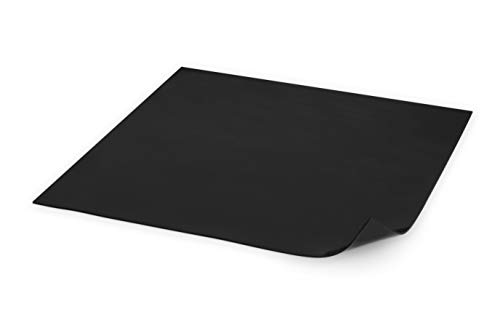
This black MATNIKS sheet lands squarely in the sweet spot of Shore A65 durometer, giving you enough rigidity to resist extrusion on a machined flange while still conforming to minor surface imperfections. The 12×12-inch footprint yields plenty of material for a full intake manifold gasket set or several small covers, and the 1/16-inch thickness is the default choice for flanges where bolt torque is moderate.
Temperature range from -100°F to 400°F covers everything from a cold-start in winter to the heat soak around an exhaust crossover. The tensile strength of 6 MPa and elongation of 400% means it stretches without tearing during installation, and the UV resistance keeps it flexible even if the gasket is partially exposed under the hood. It cuts cleanly with a utility knife or heavy scissors.
Vibration damping is a hidden bonus here — using this sheet between a transmission tunnel panel and the body can kill resonance that causes interior rattles. For the DIY mechanic who wants a single material that works on water outlets, thermostat housings, and simple cover plates, this is the most versatile sheet on the list.
What works
- Excellent balance of firmness and conformability at A65
- Wide -100°F to 400°F operating window
- Clean cutting without crumbling or fraying edges
What doesn’t
- Single sheet only — no multi-pack option
- Not explicitly oil-resistant for wet sump applications
2. MATNIKS Food Grade Silicone Rubber Sheet 3-Pack

This three-pack of white 6×6-inch sheets is the go-to when your sealing surface must not contaminate consumables. The A60 Shore hardness is slightly softer than the A65 black sheet, giving it an edge for filling slight warpage on plastic flanges or cookware lids. Each sheet is 1/16-inch thick, and the pack provides enough material for multiple small projects without buying a large roll you will not finish.
The temperature rating matches the black MATNIKS at -100°F to 400°F, making it safe for microwave oven covers or sous-vide container seals. The white color makes it easy to inspect for cleanliness and wear over time. Cutting with scissors works well, and the material holds a clean edge without curling.
Tensile strength of 6 MPa and elongation of 400% are identical to the premium black sheet, so you are not sacrificing mechanical performance for the food-grade designation. For anyone building a home brewery or food-processing setup who also needs gasket material for automotive use, this three-pack is a practical dual-purpose stock.
What works
- Three sheets in one pack for multi-project versatility
- Food-safe composition with high temp rating
- Softer A60 durometer conforms to irregular surfaces
What doesn’t
- 6×6 size limits large flange coverage
- White color shows grime quickly
3. 1DFAUL RTV Silicone Gasket Maker
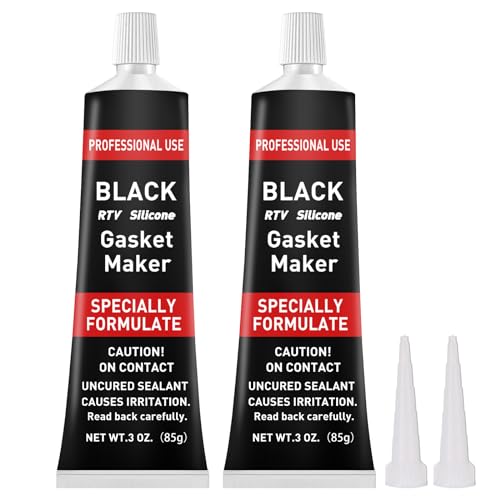
When you face an irregularly shaped gearbox cover or a supercharger snout with no precut gasket, this RTV in a tube is the solution. The 1DFAUL compound is formulated specifically for high-temp, oil-rich environments, with a maximum operating temperature of 300°C and pressure resistance rated above 10 MPa. The medium-to-high viscosity ensures it stays in place on vertical surfaces without sagging.
Surface prep is critical with this sealant — the instructions emphasize cleaning with a solvent before application, then applying even pressure during the 30-minute tack-free cure at 25°C. The final cure reaches full strength in about 24 hours, so it is not ideal for a quick turnaround rebuild. Once cured, the seal remains flexible and resists cracking from thermal cycling and vibration.
The 170g tube is a practical size for several gasket jobs, but the squeeze tube design can be messy if you are not careful with the nozzle. This is not a sheet material, so it works best on joints where you want a formed-in-place bead rather than a pre-cut gasket. For a water pump or oil pan that has a complex bolt pattern, this RTV is a strong choice.
What works
- Excellent oil, anti-freeze, and fluid resistance
- High pressure rating for boosted applications
- Fast tack-free time at room temperature
What doesn’t
- Not ideal for flat, large-area flanges
- Curing time limits immediate reassembly
4. Sil-Bond Food Grade RTV Silicone Sealant

The Sil-Bond clear RTV is the specialist on this list for applications that demand NSF and FDA compliance while retaining automotive-grade durability. Rated for 350°F continuous service, it bonds to metal, glass, ceramic, and most plastics, making it useful for sealing a sink flange or a water filter housing as easily as an intake air duct. The transparent finish leaves a clean appearance that is invisible on light-colored surfaces.
Full cure takes 24 hours, but the self-leveling behavior means it spreads into narrow gaps without leaving voids. The heavy-duty designation shows in its resistance to weather exposure, so it holds up on exterior lighting housings or RV roof vents without yellowing or becoming brittle. The 10.3-ounce tube is larger than most consumer cartridges, covering multiple sealing jobs without a second purchase.
Be aware that this is not a dedicated engine oil gasket maker — while it resists water and weather excellently, prolonged immersion in hot oil may degrade the seal. However, for coolant crossover pipes, thermostat housings, or any application where food safety is a concern, this Sil-Bond tube is the safest pick.
What works
- NSF/FDA certified for food contact
- Bonds to a wide variety of substrates
- Clear finish is cosmetically discreet
What doesn’t
- Not formulated for hot oil submersion
- Long 24-hour cure time for full strength
5. FOYLEAD Silicone Rubber Sheet

The FOYLEAD sheet offers an entry-level price point without abandoning the core properties needed for basic sealing and cushioning. At a Shore A55 durometer, it is softer than the MATNIKS options, which makes it ideal for anti-vibration pads under a compressor or as a cushioned liner in a tool drawer rather than a high-pressure flange gasket. The 12×12-inch dimensions match the MATNIKS black sheet for coverage.
The material is waterproof, heat resistant, and cuts easily with a blade or scissors to fit custom shapes. The manufacturer notes minimal odor out of the package, which is a nice touch if you are using it indoors for crafts or speaker baffles. It handles dustproofing and sound insulation roles well because the softer compound absorbs vibration energy more effectively than harder sheets.
Where this sheet falls short is in demanding automotive sealing — the softer durometer can lead to extrusion under high clamp load from bolts, and the chemical resistance is not explicitly rated for prolonged oil contact. If your project is a dry cover gasket or a non-pressurized air box, it will work fine. For a transmission pan or oil fill cap, go with a harder sheet or an RTV.
What works
- Very soft A55 durometer for anti-vibration use
- Low odor and easy to cut
- Affordable entry into silicone sheet material
What doesn’t
- Too soft for high-pressure flange gaskets
- Not certified for oil or fuel resistance
Hardware & Specs Guide
Shore A Durometer
This scale measures indentation hardness of elastomers. For gasket silicone rubber, A55 is soft and conformable for vibration pads, A60 offers a good balance for general sealing, and A65 provides rigidity for high-pressure flanges. Always match the durometer to the flange flatness and bolt torque of your specific application.
Temperature Range
Standard silicone rubber sheets maintain flexibility between -100°F and 400°F. RTV sealants in a tube often extend higher, up to 300°C, but sustained high heat can cause the release of acetic acid in some formulations. Check the continuous service temperature, not just the max intermittent rating, for engine-mounted gaskets.
FAQ
Can I use a silicone sheet to replace a paper gasket on my oil pan?
What is the difference between RTV in a tube and a precut sheet?
How thick should my silicone gasket be for a water pump replacement?
Final Thoughts: The Verdict
For most buyers, the gasket silicone rubber winner is the MATNIKS 12×12 Black Sheet because it combines the ideal A65 hardness with a generous working area and a temperature range that covers 99% of automotive DIY jobs. If you need a multi-pack for food-safe projects, grab the MATNIKS 3-Pack White. And for sealing an oil-soaked engine component where no precut gasket exists, nothing beats the 1DFAUL RTV Gasket Maker.

Certification: BSc in Mechanical Engineering
Education: Mechanical engineer
Lives In: 539 W Commerce St, Dallas, TX 75208, USA
Md Amir is an auto mechanic student and writer with over half a decade of experience in the automotive field. He has worked with top automotive brands such as Lexus, Quantum, and also owns two automotive blogs autocarneed.com and taxiwiz.com.