An oil leak that drips onto your driveway or smokes against the exhaust manifold is more than an annoyance — it is a signal that your gasket sealant choice failed. Most DIYers and pros alike reach for whatever tube is closest, but the chemistry between the sealant and the oil, heat cycle, and surface prep determines whether that repair holds for a season or a decade.
I’m Amir — the founder and writer behind Four Wheel Ask. I’ve spent years breaking down automotive sealant formulations, cross-referencing material safety data sheets with real owner reports across forums, and comparing temperature tolerances, oil resistance ratings, and cure behavior for oil-contact gasketing jobs.
There is no universal tube that works on every flange, but a handful of formulations consistently outperform the rest in oil-contact scenarios. The best gasket sealer for oil depends on your repair—oil pan, valve cover, or timing chain—and this guide compares top options using real-world data.
How To Choose The Best Gasket Sealer For Oil
Selecting a gasket sealer for oil-contact surfaces requires evaluating three core variables: the operating temperature of the joint, the type of oil and additives the sealant will contact, and the cure behavior needed for the assembly process. Ignoring any one of these leads to premature failure, rework, and contaminated oil passages.
Temperature Resistance
Oil pans, timing covers, and valve covers see sustained heat between 200°F and 300°F under normal driving, with spikes well beyond that near exhaust components or turbochargers. A sealant rated for at least 400°F continuous service provides a safe margin. Formulations that soften or embrittle at high temperature lose clamping force and begin seeping within weeks.
Oil & Chemical Compatibility
Modern engine oils contain detergents, dispersants, and friction modifiers that can break down standard silicone or acrylic sealants over time. Look for products explicitly tested against mineral oils, synthetic blends, and coolants. Sensor-safe formulations prevent oxygen sensor and catalytic converter contamination from volatile curing byproducts.
Cure Type: Anaerobic vs. RTV vs. Non-Hardening
Anaerobic sealants cure in the absence of air between tight-fitting metal flanges, making them ideal for rigid joints like differential covers and timing chain housings. RTV silicones cure by moisture exposure and work well on slightly irregular surfaces and flexible assemblies. Non-hardening sealants remain semi-plastic indefinitely, absorbing vibration without cracking — a strong choice for aluminum valve covers prone to thermal expansion.
Surface Material & Preparation
Cast iron, aluminum, and steel each have different coefficients of thermal expansion and surface porosity. Some anaerobic formulas require close-fitting rigid flanges, while RTV compounds accommodate moderate gaps. All sealants demand absolutely clean, oil-free, dry surfaces for maximum adhesion. Residue from old gasket material or degreasers undermines bond strength immediately.
Quick Comparison
On smaller screens, swipe sideways to see the full table.
| Model | Category | Best For | Key Spec | Amazon |
|---|---|---|---|---|
| Victor Reinz Reinzosil | RTV Silicone | Overall Performance | -58°F to 482°F range | Amazon |
| Toyota Genuine FIPG | FIPG | OE Replacement | -76°F to 482°F range | Amazon |
| LOCTITE 518 | Anaerobic | Metal Flanges | Sensor-safe, non-corrosive | Amazon |
| Rutland 500°F RTV | RTV Silicone | High Heat Areas | 500°F intermittent rating | Amazon |
| Hylomar Blue | Non-Hardening | Vibration-Prone Joints | Unlimited assembly time | Amazon |
In‑Depth Reviews
1. Victor Reinz 70-31414-20 Reinzosil RTV Silicone
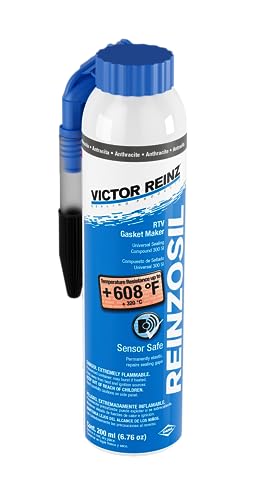
Victor Reinz Reinzosil occupies the top spot because it combines the widest usable temperature window with fast, acid-free curing and verified resistance to synthetic oils, diesel, and coolant. Rated from -58°F to 482°F continuous, with brief tolerance up to 608°F, this RTV silicone handles everything from a frozen northern oil pan to a hot turbo drain line without losing elasticity. The acid-free cure means no corrosive byproducts that could pit aluminum flanges or damage oxygen sensors over time.
The 200 ml pressurized can delivers a consistent, easy-to-control bead, and the formula remains odorless during application. Sealing gaps as small as 0.006 inches means it works on precision-machined surfaces as well as lightly irregular castings. Owner feedback across heavy-truck and performance-engine builds repeatedly cites zero seepage after multiple oil-change cycles, even on applications where paper gaskets previously failed within months.
Where Reinzosil truly separates itself is in fluid resistance. Many RTV silicones swell or soften when submerged in synthetic oil containing high detergent loads. Victor Reinz specifically formulated this compound to resist mineral oils, synthetic blends, petrol, diesel, greases, hot and cold water, and salt water. For a DIYer or shop that wants one sealant for multiple oil-contact jobs — oil pan, valve cover, timing cover, water pump — this tube delivers the broadest compatibility without compromise.
What works
- Wide continuous temperature range from -58°F to 482°F
- Acid-free, odorless cure protects sensors and aluminum
- Excellent resistance to synthetic oils, diesel, and coolant
What doesn’t
- Pressurized can requires careful storage to maintain shelf life
- Premium price compared to basic RTV tubes
2. Toyota Genuine Fluid 00295-00103 FIPG

Toyota Genuine Fluid Formed-in-Place Gasket is the factory-spec sealant for millions of Toyota and Lexus engines, but its formulation works equally well on any engine where vibration resistance and wide thermal stability are priorities. This black RTV cures to an elastic body that absorbs shock and movement without cracking, making it particularly effective on aluminum valve covers and oil pans that expand and contract differently from the block. The operating range of -76°F to 482°F covers the coldest start to the hottest sustained highway run.
Five-minute tack-free time allows for quick assembly without waiting — a real advantage in a production or heavy-repair environment where downtime costs money. The tube is formulated specifically to resist engine oil, coolant, and various chemicals, and owner reports across multiple platforms confirm that it holds up through extended oil change intervals without hardening or shrinking. Many Lexus and Toyota owners note that switching to this FIPG eliminated chronic valve cover seepage that paper gaskets or generic RTV could not stop.
Application versatility is another strong point. Toyota lists this sealant for water pumps, oil pans, valve covers, engine heads, fuel pumps, thermostat housings, oil pumps, and intake manifolds. While it carries the Toyota branding, the chemistry is universal for any flanged joint that sees oil and vibration. The 3 oz tube provides enough material for multiple small repairs or one larger oil pan gasket replacement, making this a premium choice for owners who prioritize OE-grade reliability over generic alternatives.
What works
- Exceptional vibration and impact resistance from elastic cured body
- Wide temperature range (-76°F to 482°F) for extreme climates
- Proven on multiple Toyota engine families with decades of owner validation
What doesn’t
- Small 3 oz tube may not be enough for larger oil pan jobs
- Premium-priced for a brand-specific sealant
3. LOCTITE 518 Automotive Anaerobic Gasket Maker
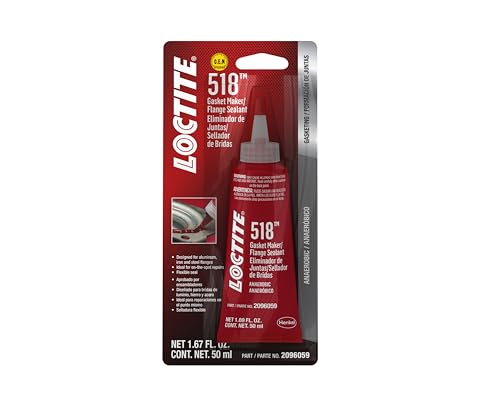
LOCTITE 518 represents a fundamentally different cure mechanism from the RTV silicones above. Instead of curing by moisture, this anaerobic formula hardens in the absence of air between close-fitting metal surfaces, creating a rigid, gap-filling seal that resists oil pressure and flange flex. It is designed specifically for aluminum, iron, and steel flanged mating surfaces, making it a strong choice for transmission case covers, differential housings, and timing chain tensioner covers where a semi-rigid seal is desirable.
The sensor-safe, low-odor, non-corrosive formulation means it will not contaminate oxygen sensors or attack aluminum components during cure. LOCTITE engineered this compound for on-the-spot and emergency repairs — if a conventional gasket is out of stock, this tube steps in without needing to wait for parts delivery. The 50 ml size is generous for multiple smaller repairs, and the putty-like consistency stays in place during assembly without sagging or running.
Where this product demands attention is surface compatibility. It is optimized for rigid metal-to-metal flanges and does not perform well on plastic covers or porous castings. The anaerobic cure also requires a reasonably tight flange gap — typically less than 0.030 inches — so warped or heavily scored surfaces may need straightening first. For shops that work on transmissions, transfer cases, and engine timing covers, LOCTITE 518 provides a dependable, fast-curing alternative to RTV with excellent oil resistance.
What works
- Anaerobic cure creates rigid, oil-pressure-resistant seal on metal flanges
- Sensor-safe and non-corrosive formulation protects electronics and aluminum
- Ideal for emergency repairs when conventional gaskets are unavailable
What doesn’t
- Not suitable for plastic covers or highly warped flanges
- Requires close-fitting metal surfaces for proper anaerobic cure
4. Hylomar Blue Gasket Marker and Thread Sealant

Hylomar Blue is a legacy formulation that has been sealing gas and diesel engines worldwide for decades, and its enduring popularity stems from a feature no RTV or anaerobic compound matches: it never fully hardens. This non-setting, non-drying sealant remains semi-plastic for the life of the assembly, absorbing vibration, thermal expansion, and minor flange movement without cracking or losing adhesion. For aluminum valve covers on engines that experience wide temperature swings, this characteristic alone prevents the weeping that rigid sealants eventually develop.
Unlimited assembly time is a practical advantage that professional mechanics appreciate. With RTV silicones, you have a finite window before skin-over begins, and reopening a joint means reapplying. Hylomar Blue allows you to position, reposition, torque, and re-torque without degrading the seal. The 100 gram tube provides substantial coverage for multiple jobs, and the included nozzle permits precise bead application. Vibration resistance is a headline feature — the sealant is specifically approved for automotive transmission and engine applications where movement is constant.
The trade-off is that Hylomar Blue is not a gap-filler. It seals mated surfaces that are already flat and true, but it will not bridge large irregularities or compensate for warped flanges. It also requires a thin, even application — too much and the excess can squeeze into oil passages. For owners who maintain air-cooled engines, classic cars, or any assembly that gets repeatedly disassembled and reassembled, Hylomar Blue offers a rework-friendly, permanent seal that no quick-curing tube can replicate.
What works
- Non-hardening formula absorbs vibration without cracking
- Unlimited assembly time allows repositioning without reapplication
- Proven on gas and diesel engines across multiple decades of use
What doesn’t
- Not designed for filling surface irregularities or warped flanges
- Requires thin application to avoid excess squeeze-out into passages
5. Rutland 500°F RTV High Heat Silicone Sealant
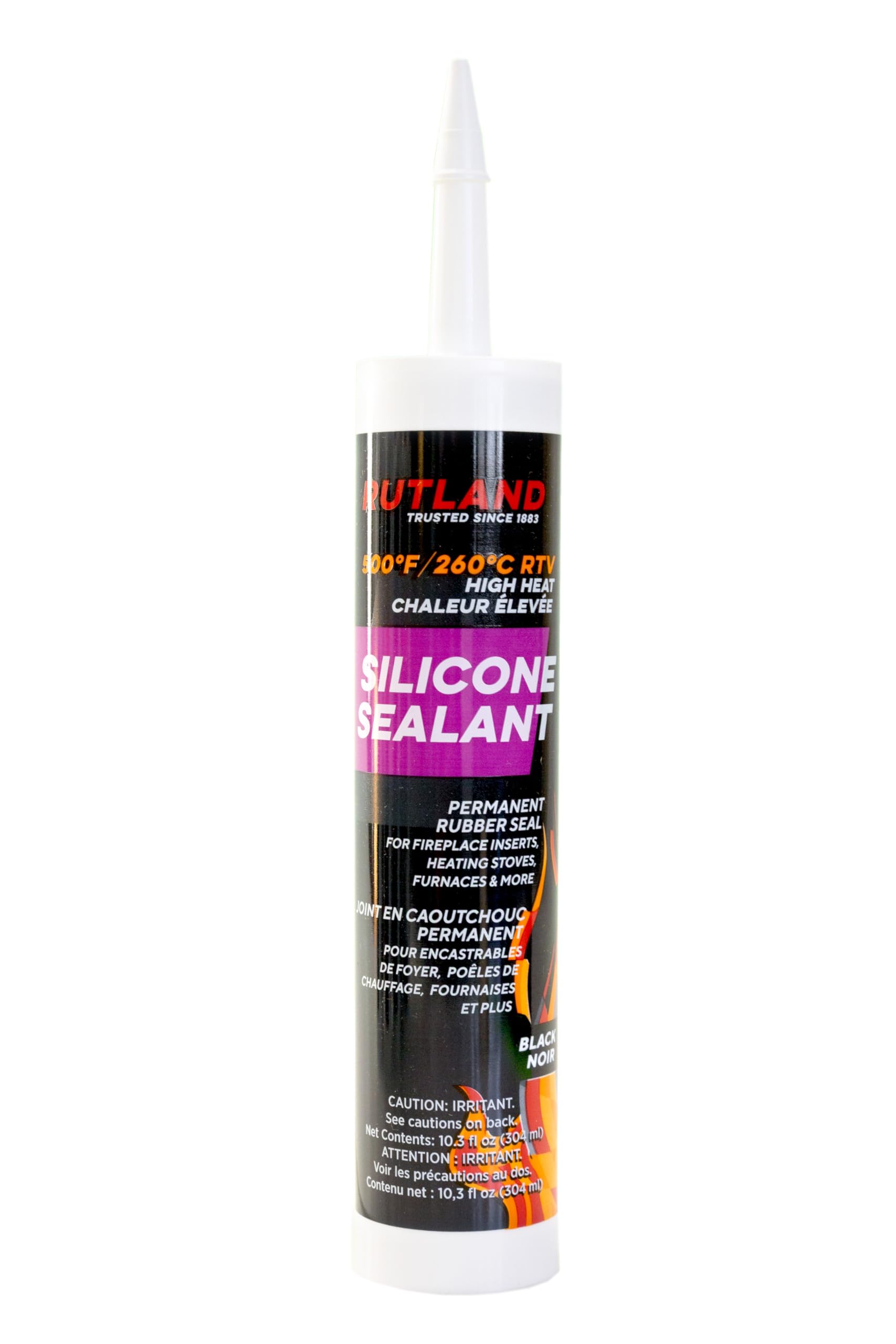
Rutland 500°F RTV High Heat Silicone occupies a unique niche in the gasket sealer category because its primary design target is not engine oil pans but high-temperature sealing applications — fireplace inserts, solar panel repairs, heat shielding, and ceramic tiles. However, its 500°F intermittent rating and 450°F continuous capability make it a legitimate option for exhaust-side oil seals, turbo drain lines, and any oil-contact joint near a heat source where standard RTV would soften and flow out.
The formula adheres to glass, metal, plastics, fiberglass, wood, brick, and stone, which gives it unusual versatility for mixed-material assemblies. The acetoxy cure system produces a tough, flexible seal that remains elastic through repeated thermal cycling. For a valve cover on an air-cooled engine or an oil return line on a turbocharged setup, this silicone maintains its seal where conventional RTV would embrittle and crack. The 10.3 oz cartridge provides ample material for large or multiple repairs.
There are important caveats for oil-contact use. Acetoxy-cure silicones release acetic acid during curing, which can cause corrosion on sensitive metals if not fully cured before oil exposure. The sealant is oil-resistant but not specifically formulated for continuous oil immersion like the Victor Reinz or Toyota FIPG options. It excels in applications where heat is the primary challenge and oil contact is secondary or intermittent. For a dedicated oil pan gasket replacement, a dedicated automotive RTV or anaerobic product is a safer choice.
What works
- Withstands 500°F intermittent and 450°F continuous heat
- Adheres to glass, metal, plastic, fiberglass, and masonry surfaces
- Remains flexible through repeated thermal cycling
What doesn’t
- Acetoxy cure releases acetic acid that may corrode sensitive metals
- Not specifically formulated for continuous oil immersion
Hardware & Specs Guide
Temperature Range & Thermal Limits
The operating temperature of a gasket sealer determines where it can be used without degradation. Continuous service ratings indicate the sustained temperature the cured sealant can withstand without softening, embrittling, or losing adhesion. Intermittent ratings reflect brief spikes — heat soak after shutdown or near exhaust components. For oil pan and valve cover applications, a continuous rating of at least 400°F provides a safe margin above normal operating oil temperatures of 200°F to 250°F. Premium formulations like the Victor Reinz Reinzosil and Toyota FIPG extend from -58°F to 482°F continuous, covering arctic starts and desert highway runs. Anaerobic sealants generally have a narrower thermal window but excel in oil-pressure resistance on rigid flanges.
Chemical Resistance & Oil Compatibility
A gasket sealer for oil must resist not only the base oil but also the additive package — detergents, dispersants, anti-wear agents, and friction modifiers that vary between conventional and synthetic formulations. RTV silicones can swell, soften, or lose adhesion when exposed to high-detergent synthetic oils if they are not specifically formulated for oil contact. Anaerobic sealants generally offer excellent oil resistance because they cure into a thermoset plastic that does not absorb fluids. Non-hardening sealants like Hylomar Blue rely on physical adhesion rather than chemical bonding, so surface cleanliness and application thickness directly affect long-term oil resistance. Always verify that the sealant is labeled for use with engine oil, not just general-purpose gasketing.
FAQ
Can I use standard RTV silicone as a gasket sealer for oil pans?
What is the difference between anaerobic and RTV gasket makers for oil sealing?
How long should I wait before adding oil after applying gasket sealer?
Final Thoughts: The Verdict
For most buyers, the best gasket sealer for oil winner is the Victor Reinz Reinzosil because it combines the widest temperature range, excellent synthetic oil resistance, and sensor-safe acid-free curing in one tube. If you need OE-grade vibration resistance for a Toyota or any engine with aluminum covers, grab the Toyota Genuine FIPG. And for a classic non-hardening seal that never cracks on repeatedly serviced joints, nothing beats the Hylomar Blue.

Certification: BSc in Mechanical Engineering
Education: Mechanical engineer
Lives In: 539 W Commerce St, Dallas, TX 75208, USA
Md Amir is an auto mechanic student and writer with over half a decade of experience in the automotive field. He has worked with top automotive brands such as Lexus, Quantum, and also owns two automotive blogs autocarneed.com and taxiwiz.com.