A drafty garage door wastes energy, invites pests, and lets moisture creep into your workspace. The right seal transforms that gap into a tight barrier that keeps your garage dry, quiet, and insulated through every season.
I’m Amir — the founder and writer behind Four Wheel Ask. I’ve spent years analyzing weather sealing materials, comparing rubber compounds, and studying owner feedback on garage door trim performance across dozens of brands and installation methods.
Matching the correct profile and material to your door track is the difference between a seal that lasts a decade and one that cracks within a year. After examining rubber compounds, T-end fit, and long-term owner durability data, this guide reveals the best garage door molding for lasting home protection.
How To Choose The Best Garage Door Molding
Selecting the right seal starts with identifying your door track profile and the material that matches your climate. The wrong choice leads to gaps, premature cracking, or a seal that simply won’t stay in place. Focus on these three factors before buying.
Understand Seal Profiles: T-End, U-Bottom, and Threshold
Garage door seals fall into two main categories: bottom seals that slide into the track on the door itself, and threshold seals that adhere to the floor. Bottom seals use either a T-end or U-bottom profile to lock into the retainer channel. Measure the width of your track channel — common sizes are 1/4-inch and 5/16-inch for T-ends. Threshold seals sit on the concrete and work alongside a bottom seal for extra protection against water and drafts.
Material Matters: Rubber, Vinyl, and EPDM Compared
Standard vinyl seals are affordable and easy to find, but they stiffen and crack in freezing temperatures. Rubber seals offer better flexibility across a wider temperature range. EPDM rubber stands above both with superior ozone, UV, and temperature resistance, remaining pliable from well below zero to over 200 degrees Fahrenheit. If you live in an area with extreme winters or hot summers, EPDM justifies its higher cost through longevity.
Getting the Right Fit: Measuring Your Track
Remove a small section of your old seal and measure the width of the T-channel or retainer groove with a caliper or ruler. Also measure the overall width of the bottom seal from edge to edge. Standard widths range from 3 inches to 4 1/8 inches. Order a length slightly longer than your door width to allow for trimming. Most manufacturers recommend adding one to two feet to account for shrinkage and alignment adjustments during installation.
Quick Comparison
On smaller screens, swipe sideways to see the full table.
| Model | Category | Best For | Key Spec | Amazon |
|---|---|---|---|---|
| Holikme 22ft | Bottom Seal | All-around weather protection | 22ft, 5/16″ T-End, EPDM Rubber | Amazon |
| Jin&Bao 20ft | Threshold Seal | Water diversion and floor sealing | 20ft Threshold, Blue Safety Strip | Amazon |
| Earthtec 16ft | Bottom Seal | Easy DIY replacement | 16ft, 1/4″ T Style, Vinyl | Amazon |
| CloudBuyer 20ft | Threshold Seal | Heavy-duty threshold sealing | 20ft Threshold, EPDM Rubber | Amazon |
| DGSL 20ft | Bottom Seal | Budget-friendly replacement | 20ft, 5/16″ T-End, Rubber | Amazon |
In‑Depth Reviews
1. Holikme Garage Door Seals Bottom Rubber
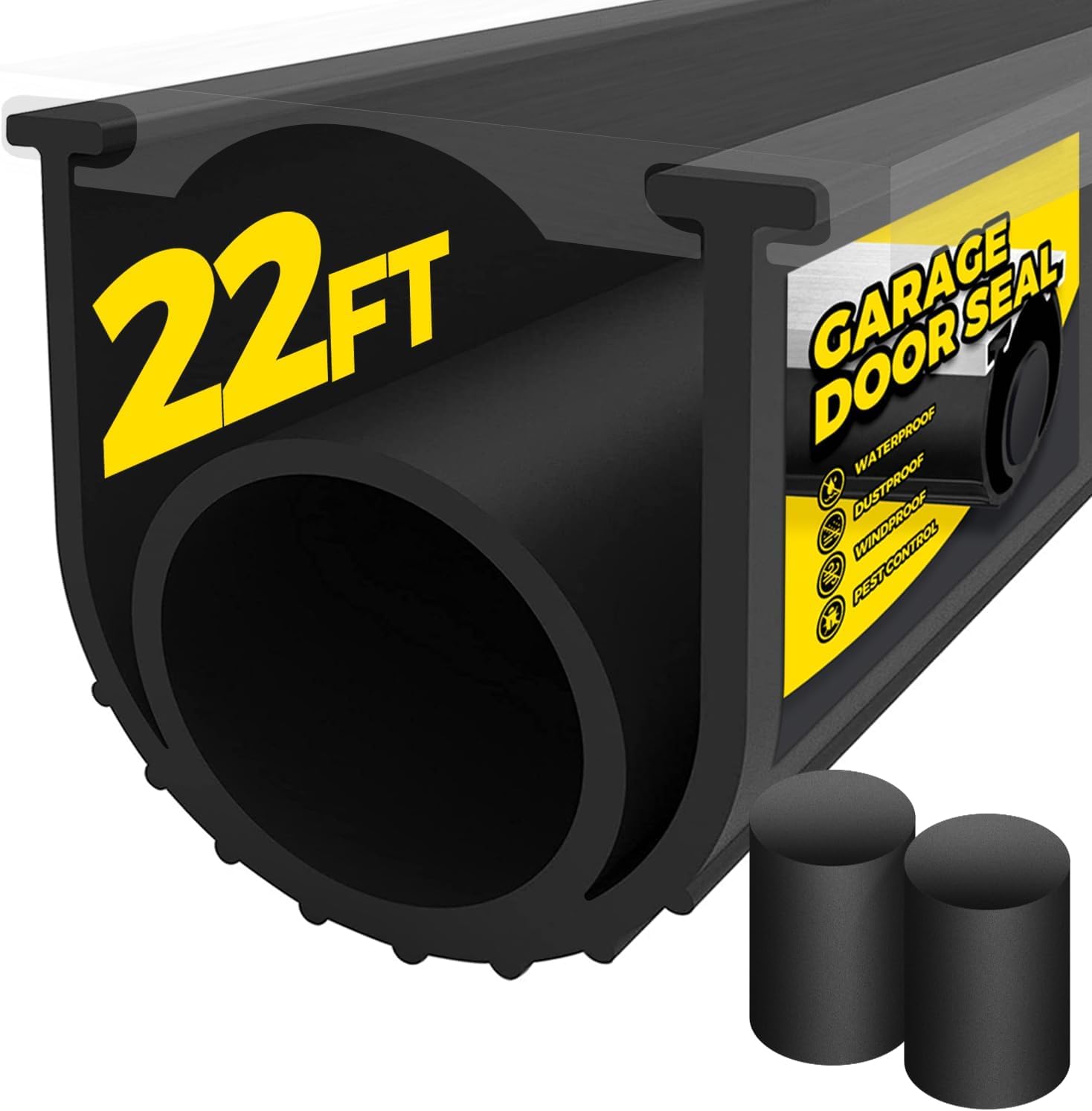
The Holikme seal uses EPDM rubber, a material that resists cracking, ozone damage, and UV degradation far better than standard vinyl or basic rubber compounds. With a temperature range spanning -40 to 240 degrees Fahrenheit, it remains flexible through deep winter freezes and summer heat alike. The 5/16-inch T-end and 4 1/8-inch width fit a wide range of standard garage door tracks, and the 22-foot length provides enough material for a 20-foot door with trimming room.
Two rubber end plugs come included, a detail that prevents bugs, debris, and small rodents from entering the hollow channel of the seal. Owner reports consistently note that the material feels thicker and more substantial than local hardware store alternatives. Multiple users mention that the seal slides into the track smoothly when the channel is cleaned and lubricated beforehand, and that the fit tightens up noticeably after a few open-close cycles.
Some reviewers found the rubber slightly firmer than expected on the first installation, requiring patience when feeding it through the track. A few noted that the 22-foot length measured slightly short in colder weather due to thermal contraction, so installing on a warmer day improves the fit. Overall, the combination of premium EPDM construction, included end plugs, and competitive pricing makes this the most balanced choice for most homeowners.
What works
- Premium EPDM rubber stays flexible in extreme temperatures
- Included rubber end plugs block pests and debris
- Generous 22ft length allows trimming for precise fit
What doesn’t
- Rubber feels stiff during initial installation in cold weather
- May require lubrication in the track for smooth feeding
2. Jin&Bao Universal Garage Door Threshold Seal Strip

The Jin&Bao threshold strip takes a different approach by sealing the gap between the garage door and the floor rather than replacing the bottom seal on the door itself. This makes it an excellent secondary barrier for garages prone to water intrusion, wind-driven rain, or snow melt seeping under the door. The 20-foot length, 3.7-inch width, and 0.6-inch height provide a substantial ramp that diverts water away from the interior.
The blue safety strip running along the top edge is a practical addition — it increases visibility for anyone walking through the doorway, reducing trip hazards. The serrated groove pattern on the underside creates a mechanical bond with the adhesive, and the rubber compound handles temperatures from -40 to 284 degrees Fahrenheit without cracking or drying out. Owner feedback highlights that the strip effectively holds back about an inch of standing water when properly installed on clean concrete.
Installation requires careful surface preparation and a full 48-hour cure time with the door closed to ensure proper adhesion. Some reviewers recommend purchasing a stronger commercial-grade adhesive separate from the included tubes, especially for uneven or porous concrete. A few users noted that the strip can shift slightly over time if the floor sees heavy foot traffic or vehicle tire roll-over before the adhesive fully sets.
What works
- Excellent water diversion for flood-prone garages
- Blue safety strip improves door-way visibility
- Serrated underside creates strong adhesive bond
What doesn’t
- Requires thorough surface prep and long cure time
- Included adhesive may not suffice on rough concrete
3. Earthtec 3″ Garage Door Bottom Seal Weatherstrip

The Earthtec seal offers a straightforward vinyl solution for garages with a 1/4-inch T-style retainer channel. The double T design creates a secure lock that resists pulling out during door operation, and the 3-inch overall width covers most standard door gaps. Vinyl is a cost-effective material that works well in moderate climates where temperature swings stay within a reasonable range.
Owner reports consistently praise the ease of installation, with many completing the swap in under ten minutes after removing the old seal. The gray color blends well with most garage door bottoms and hides dirt better than black alternatives. Reviewers with older doors — including models from the 1950s — reported that the 1/4-inch T-end fit snugly into vintage retainer channels that had worn slightly over decades of use.
Vinyl becomes stiff in freezing temperatures, which can cause the seal to crack or lose flexibility during extreme cold snaps. Some users noted that the 16-foot length assumes a perfectly square door opening, and doors with wider tolerances may require ordering extra length for proper trimming. This seal is best suited for temperate regions or garages that don’t experience prolonged subzero conditions.
What works
- Very quick installation with minimal tools required
- Double T design holds securely in retainer channel
- Gray color hides dirt and blends with door profiles
What doesn’t
- Vinyl stiffens and may crack in extreme cold
- Shorter 16ft length limits trimming margin
4. CloudBuyer 20Ft Weather Stripping Universal Garage Door Threshold Seal

The CloudBuyer threshold seal brings heavy-duty EPDM construction to the floor-sealing category, paired with a 20-ounce tube of glue gel for a strong initial bond. The 3.5-inch width and 0.5-inch profile create a low-profile ramp that vehicles can roll over without peeling the strip away from the concrete. EPDM rubber ensures the seal remains pliable in cold weather and won’t dry out under intense sun exposure.
Owner reports indicate that the included adhesive performs well when the concrete is thoroughly cleaned and dry, with many users leaving the door closed for 48 hours to maximize bond strength. The 20-foot length accommodates most standard single and double garage doors with room to spare. Several reviewers paired this threshold strip with a new bottom seal and reported near-total elimination of water ingress during heavy rain.
Some users found that the adhesive tubes provided were slightly smaller than expected, requiring careful application to cover the full length of the strip. A few reviewers on uneven or pitted concrete recommended using a trowel-grade epoxy or construction adhesive instead. The seal itself earns consistent praise for durability, with multiple owners reporting excellent performance after two years of seasonal weather exposure.
What works
- Heavy-duty EPDM withstands extreme weather conditions
- Low profile allows smooth vehicle roll-over
- Comes with large 20oz adhesive tube for strong bond
What doesn’t
- Adhesive may need supplementing on rough surfaces
- Requires clean, dry concrete for proper adhesion
5. DGSL Door 20FT U-Bottom Weather Stripping Rubber Seal

The DGSL U-bottom seal uses a five-sixteenth-inch T-end and a 3.75-inch width with seven internal insulation rounds designed to compress and fill uneven floor gaps. The rubber compound handles temperatures from -40 to 140 degrees Fahrenheit, making it suitable for most climates outside extreme desert heat. The 20-foot length provides flexibility for 16 to 18-foot doors with adequate trimming allowance.
Owner reviews frequently mention that this seal solved rodent intrusion problems, with several rural homeowners reporting that mice could no longer squeeze under the door after installation. The multi-chamber design creates a series of air pockets that reduce sound transmission and improve thermal insulation compared to solid rubber seals. Installation involves sliding the T-end into the track retainer, and users report that spraying the channel with silicone lubricant simplifies the process significantly.
Some reviewers noted that the rubber felt slightly thinner than premium-grade alternatives, and a few experienced minor shrinkage over time in direct sunlight exposure. The seal works best as a direct replacement for existing U-bottom weatherstripping and may not fit doors with unusual retainer channel dimensions. For budget-conscious buyers who need a functional seal without premium material costs, this option delivers reliable performance at a accessible entry point.
What works
- Seven insulation layers improve sound and thermal barrier
- Effective at blocking small rodents and pests
- Flexible rubber remains pliable in freezing temps
What doesn’t
- Rubber feels thinner than premium EPDM alternatives
- May shrink slightly under prolonged sun exposure
Hardware & Specs Guide
Seal Materials Compared
Vinyl is the most affordable option but loses flexibility below freezing and can crack after a few winters. Standard rubber offers a middle ground with better cold-weather performance but degrades faster under UV exposure. EPDM rubber is the premium choice — it resists ozone, UV radiation, and extreme temperatures from -40 to over 240 degrees Fahrenheit without becoming brittle or soft. For garages in regions with significant seasonal temperature swings, EPDM provides the longest service life and most consistent seal.
T-End vs. Threshold Designs
T-end bottom seals slide into a retainer channel on the garage door itself and seal against the floor when the door closes. Threshold seals adhere directly to the concrete floor and create a raised barrier that the door presses against. T-end seals are the primary weather barrier for most garage doors, while threshold strips act as a secondary defense against water intrusion. Many homeowners combine both: a quality T-end bottom seal paired with a threshold strip for maximum protection against heavy rain and snow melt.
FAQ
What type of garage door molding do I need for my door?
How do I measure for a replacement garage door seal?
Can I install garage door weather stripping myself?
How long does garage door weather stripping last before needing replacement?
Final Thoughts: The Verdict
For most buyers, the best garage door molding winner is the Holikme 22ft Bottom Seal because it combines premium EPDM rubber construction with included end plugs and a generous length at a fair price point. If you need a threshold seal for water diversion, grab the Jin&Bao Threshold Strip with its visible safety strip and wide temperature tolerance. And for a budget-friendly bottom seal replacement, the DGSL U-Bottom Seal gets the job done without breaking the bank.

Certification: BSc in Mechanical Engineering
Education: Mechanical engineer
Lives In: 539 W Commerce St, Dallas, TX 75208, USA
Md Amir is an auto mechanic student and writer with over half a decade of experience in the automotive field. He has worked with top automotive brands such as Lexus, Quantum, and also owns two automotive blogs autocarneed.com and taxiwiz.com.