Protecting a young rider’s head isn’t just about grabbing any helmet off the shelf. The chin bar of a full-face design absorbs impacts that a half-shell can’t touch, and the weight distribution has to be dialed for a child’s neck strength, not an adult’s. A poorly fitted or flimsy helmet turns every small crash into a high-risk event, especially on BMX tracks and off-road trails where a gravel bite or a hard fall to the chin is a real possibility.
I’m Amir — the founder and writer behind Four Wheel Ask. I’ve spent years analyzing youth automotive safety gear, breaking down build materials, certification standards, and real-world feedback from parents who put these helmets through daily abuse.
The right balance of safety certification, lightweight construction, and a secure fit defines the full face youth bmx helmet that will keep your child protected without causing neck fatigue on long rides.
How To Choose The Best Full Face Youth BMX Helmet
A full-face youth helmet isn’t an area to cut corners. The shell must absorb high-velocity impacts, the liner must manage energy transfer, and the overall weight must be low enough that a child doesn’t develop neck strain during a long ride. Three factors separate a safe investment from a dangerous gamble.
Certification Level — DOT vs. ECE vs. CPSC
DOT (FMVSS 218) is the minimum standard for motorized off-road use in the U.S., covering impact attenuation and penetration resistance. ECE 22.06 is a stricter European standard that includes rotational impact testing and variable-speed impacts. For pure BMX or bicycle use, CPSC certification is the legal requirement. A helmet that carries DOT and ECE dual certification gives the broadest protection envelope for kids using the helmet across dirt bikes, ATVs, and push bikes.
Shell Material and Weight
ABS (Acrylonitrile Butadiene Styrene) is the dominant shell material in this price range — it’s tough, impact-resistant, and cost-effective. The critical spec is finished weight. A youth helmet should stay under 3 pounds; anything above that risks cervical spine fatigue on a child who hasn’t developed full neck strength. Injection-molded polycarbonate shells can shave ounces while maintaining impact performance, which is why premium options often use that construction.
Liner and Fit Adjustments
The EPS (Expanded Polystyrene) liner is the actual impact absorber — it crushes on impact to decelerate the head. A multi-density EPS liner handles a wider range of impact forces. The cheek pads and comfort liner should be removable and washable to manage sweat and odor during hot summer rides. The chin strap must use either a double D-ring or a quick-release buckle that a young rider can operate independently, but that won’t come loose during a crash.
Quick Comparison
On smaller screens, swipe sideways to see the full table.
| Model | Category | Best For | Key Spec | Amazon |
|---|---|---|---|---|
| ILM Z705 | Mid-Range | Dual-certified all-rounder | 2.4 lbs / DOT+ECE 22.06 | Amazon |
| Fox Racing V Core MIPS | Premium | Advanced rotational protection | 16 oz / MIPS + DOT+ECE | Amazon |
| OUMURS Youth | Mid-Range | Ultra-lightweight combo set | 2.31 lbs / DOT FMVSS 218 | Amazon |
| OutdoorMaster Grizzly | Premium | Mountain bike / DH race | 750 g / EPP chin bar | Amazon |
| Razor Child Full Face | Budget-Friendly | Lightweight push-bike use | 1.1 lbs / EPS liner | Amazon |
| Typhoon Youth | Budget-Friendly | Entry-level DOT coverage | 3.5 lbs / ABS shell | Amazon |
| ILM BLD-818 | Budget-Friendly | Complete kit with goggles | 2.8 lbs / DOT certified | Amazon |
In‑Depth Reviews
1. ILM Youth Z705 Kids ATV Dirt Bike Helmet

The ILM Z705 pulls ahead by carrying both DOT FMVSS 218 and ECE 22.06 certifications at a mid-range cost. The dual certification means it has passed more stringent impact testing than many youth helmets, including rotational force protocols that single-cert lids skip. Weighing just 2.4 pounds, it sits 20% lighter than comparable ABS-shell options, which is a meaningful difference for a child riding multiple laps on a track.
The package includes a pair of gloves, a balaclava, and UV-resistant goggles, effectively delivering a full gear bundle as a single purchase. The four-in-one kit eliminates the need to separately source eye protection or neck coverage, simplifying the buy for parents. The quick-release buckle is easy for small fingers to operate, and the adjustable sun visor rotates to block glare during afternoon rides.
Multiple vents channel airflow across the top and chin, reducing sweat buildup during high-exertion riding. The cheek pads are removable and washable, which helps manage the inevitable dirt and moisture that accumulates after a day on the trails. The oval shape fits most head profiles securely without excessive pressure points.
What works
- Dual DOT + ECE certification for broader impact protection
- Very light 2.4 lb shell reduces neck strain
- Full kit includes goggles, gloves, and balaclava
What doesn’t
- Not recommended for children under 5 years due to weight
- Chin strap design can feel snug on larger youth heads
- Visor adjustment is slightly stiff out of the box
2. Fox Racing V Core MIPS Motocross Helmet

Fox Racing’s V Core MIPS brings a level of rotational impact mitigation rarely seen in youth-oriented helmets. The MIPS (Multi-directional Impact Protection System) layer sits between the EPS liner and the comfort padding, allowing the head to slide relative to the shell during an angled crash — a design proven to reduce brain injury risk. At just 16 ounces, it’s one of the lightest full-face options on the market, which makes it viable for younger riders with limited neck strength.
The magnetic visor release system is a standout safety feature: the visor stays secure under normal roost but detaches cleanly during a crash to prevent leverage forces on the neck. Nine intake vents and four exhaust ports create strong airflow, keeping the interior cool even during aggressive motocross sessions. The injection-molded polycarbonate and ABS composite shell uses four shell sizes and five EPS sizes to achieve a precise fit across youth head shapes.
It carries both DOT and ECE 22.06 certifications, matching the highest safety standards available in this segment. The double D-ring closure provides a secure retention system that won’t slip during a wreck, though it requires slightly more dexterity to fasten than a quick-release buckle. The liner is fully removable and washable, maintaining freshness after repeated use.
What works
- MIPS layer reduces rotational forces on angled impacts
- Extremely light at 16 ounces
- Magnetic visor release prevents neck strain in crashes
What doesn’t
- Double D-ring strap is less convenient than quick-release
- Premium price point may exceed some budgets
- Initial fit is very tight; needs a break-in period
3. OUMURS Youth DOT Dirt Bike Helmet

The OUMURS Youth helmet hits a sweet spot between weight, certification, and included accessories. At 2.31 pounds, it’s up to 20% lighter than many youth helmets in its tier, and the DOT FMVSS 218 certification confirms it meets federal impact standards for off-road use. The shell uses a high-impact ABS outer layer bonded to a dense EPS foam liner, a proven combination for managing crash energy.
The helmet comes with a pair of gloves and a goggle, mirroring the ILM Z705 bundle but at a slightly lower tier. The quick-release buckle uses a one-hand snap action that young riders can manage without adult assistance. The visor rotates and is removable, offering flexibility for different riding conditions — you can flip it up for trail vision or remove it entirely for track days.
The liner and cheek pads are fully removable and machine-washable, which is critical for keeping the helmet fresh after sweaty summer rides. Sizing runs from Small (19.25 inches circumference) up to XL (22 inches), covering the 5-to-14 age range cleanly. The snug fit promotes safety but parents should consider ordering one size up for a looser feel if the child is between growth spurts.
What works
- Ultra-light construction at 2.31 lbs
- Includes gloves and goggles
- Removable, washable liner and cheek pads
What doesn’t
- Goggle quality is basic; may need replacement quickly
- Fit runs very snug; measuring before purchase is essential
- EPS liner density feels slightly softer than premium helmets
4. OutdoorMaster Grizzly Full Face MTB Helmet

The OutdoorMaster Grizzly diverges from the motocross-focused helmets on this list by using an EPP (Expanded Polypropylene) collarbone impact system in the chin bar instead of standard EPS foam. EPP doesn’t collapse permanently on impact, meaning the chin bar retains more protective structure after a hard fall. At 750 grams, it’s one of the lightest full-face options on the market, making it a strong candidate for older youth riders who are into downhill MTB and aggressive BMX.
Twenty-seven ventilation channels run through the shell, providing airflow that rivals open-face helmets. The chin bar has shock pads that add another layer of protection during frontal impacts. The visor pivots upward to accommodate goggle storage, and the goggle-strap channel keeps eyewear secure during rough descents.
The fit system uses two sets of D-rings of different thicknesses, allowing a minor adjustment to dial in the cheek pad pressure. The liner is removable and washable. One trade-off: the Grizzly is certified for cycling use, not motorized off-road vehicles. It’s ideal for push bikes, BMX racing, and downhill MTB, but it lacks DOT certification for dirt bikes or ATVs.
What works
- EPP chin bar absorbs repeated impacts without permanent damage
- Very light 750 g weight
- 27 vents provide exceptional airflow
What doesn’t
- Not DOT certified; not for motorized vehicle use
- Adult sizing may not fit younger children
- No MIPS or rotational protection system
5. Razor Child Full Face Helmet
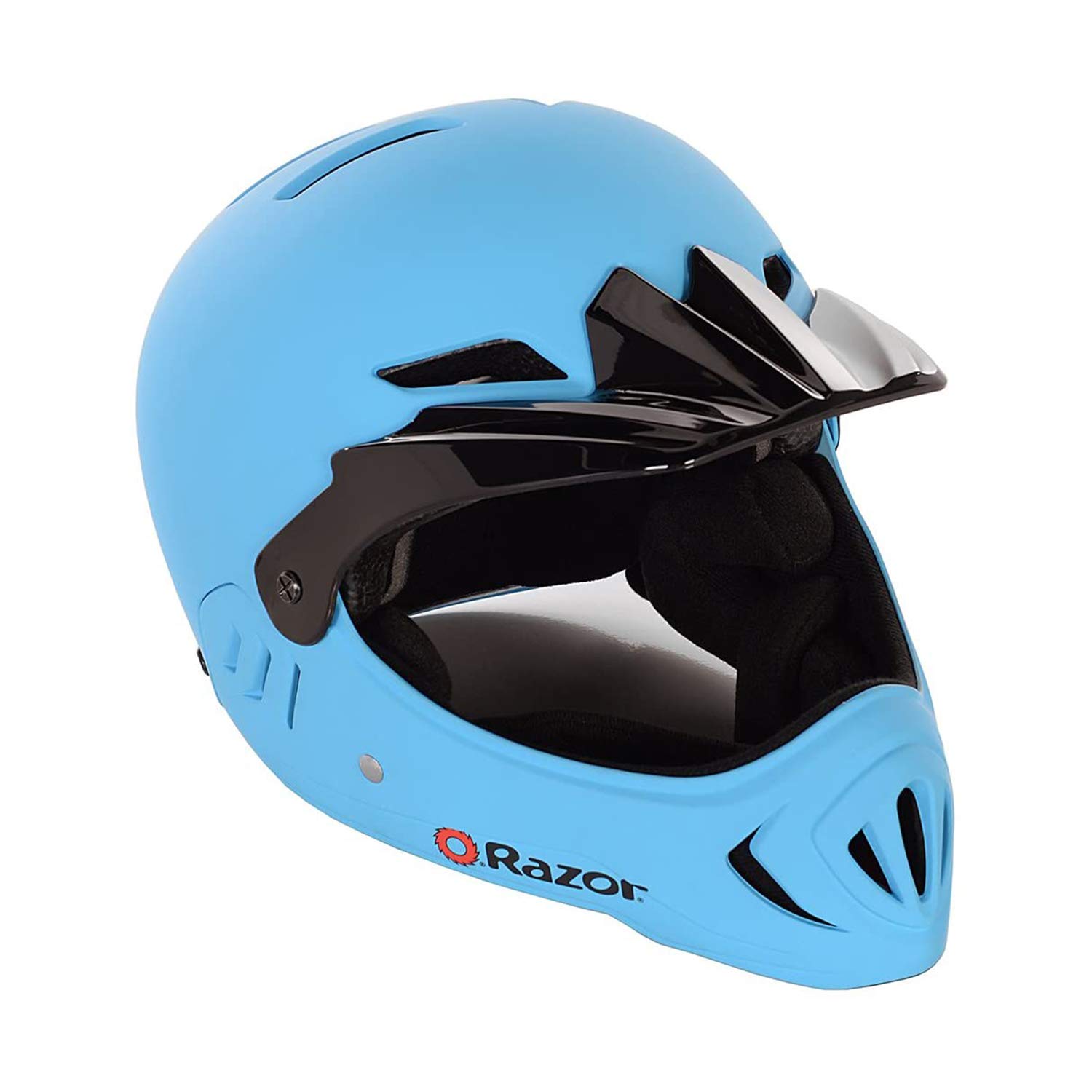
The Razor Child Full Face Helmet is the lightest option in this lineup at just 1.1 pounds, making it a suitable choice for younger children ages 5 to 8 who are riding bicycles, scooters, or electric ride-ons. The EPS liner and plastic outer shell provide basic impact protection for non-motorized speeds, and the ergonomic interior padding keeps the helmet stable during active movement.
The side-release buckle system is simple for kids to operate and fastens securely without requiring adult assistance. The head size range of 19.69 to 21.26 inches fits most elementary-age children, and the matte color options appeal to kids who want a clean, understated look. The helmet is designed for biking, skating, and similar push-powered activities, so it doesn’t carry DOT certification — a key distinction for parents who need motorized vehicle protection.
The lack of a visor reduces aerodynamic drag at low speeds, and the open chin bar design improves airflow compared to sealed motocross helmets. However, the open chin bar also means less coverage for the lower face and jaw in a forward fall. The packaging is fully recyclable, which aligns with eco-conscious purchasing preferences.
What works
- Extremely light at 1.1 lbs, ideal for young children
- Easy side-release buckle for independent use
- Comfortable padding for all-day wear
What doesn’t
- Not DOT certified; not suitable for motorized vehicles
- Open chin bar provides less jaw protection
- No visor for sun or debris deflection
6. Typhoon Youth Full Face Motorcycle Helmet

The Typhoon Youth Helmet is a straightforward DOT-certified full-face option that prioritizes legal compliance and impact protection over weight savings. The ABS shell and EPS liner meet the FMVSS 218 standard, covering motorized off-road vehicles like youth ATVs and dirt bikes. It comes standard with a clear flip-up shield, adjustable chin and brow ventilation, and a D-ring strap with comfort padding.
At 3.5 pounds, it’s the heaviest helmet on this list, and customer feedback indicates it’s best suited for children aged 5 and older due to the neck muscle demands. The sizing runs from Youth Small (18-19 inches) to Youth XL (21-22 inches), with multiple color options including black, green, and blue. The interior padding is removable and washable, helping manage the wear and tear of frequent use.
The flip-up shield is a practical feature for kids who transition between riding and walking without wanting to remove the helmet. The ventilation system includes chin and brow vents that improve airflow, though the overall weight makes it less suitable for long-duration riding compared to lighter options. Typhoon Helmets has a decade-long history of producing certified helmets, which adds a layer of trust in build consistency.
What works
- DOT certified for motorized vehicle use
- Flip-up shield adds convenience for stop-and-go riding
- Removable, washable interior padding
What doesn’t
- Heavy at 3.5 lbs; not suitable for children under 5
- Sizing runs small per customer reports
- Lacks modern venting design of lighter competitors
7. ILM Kids BLD-818 Dirt Bike Helmet
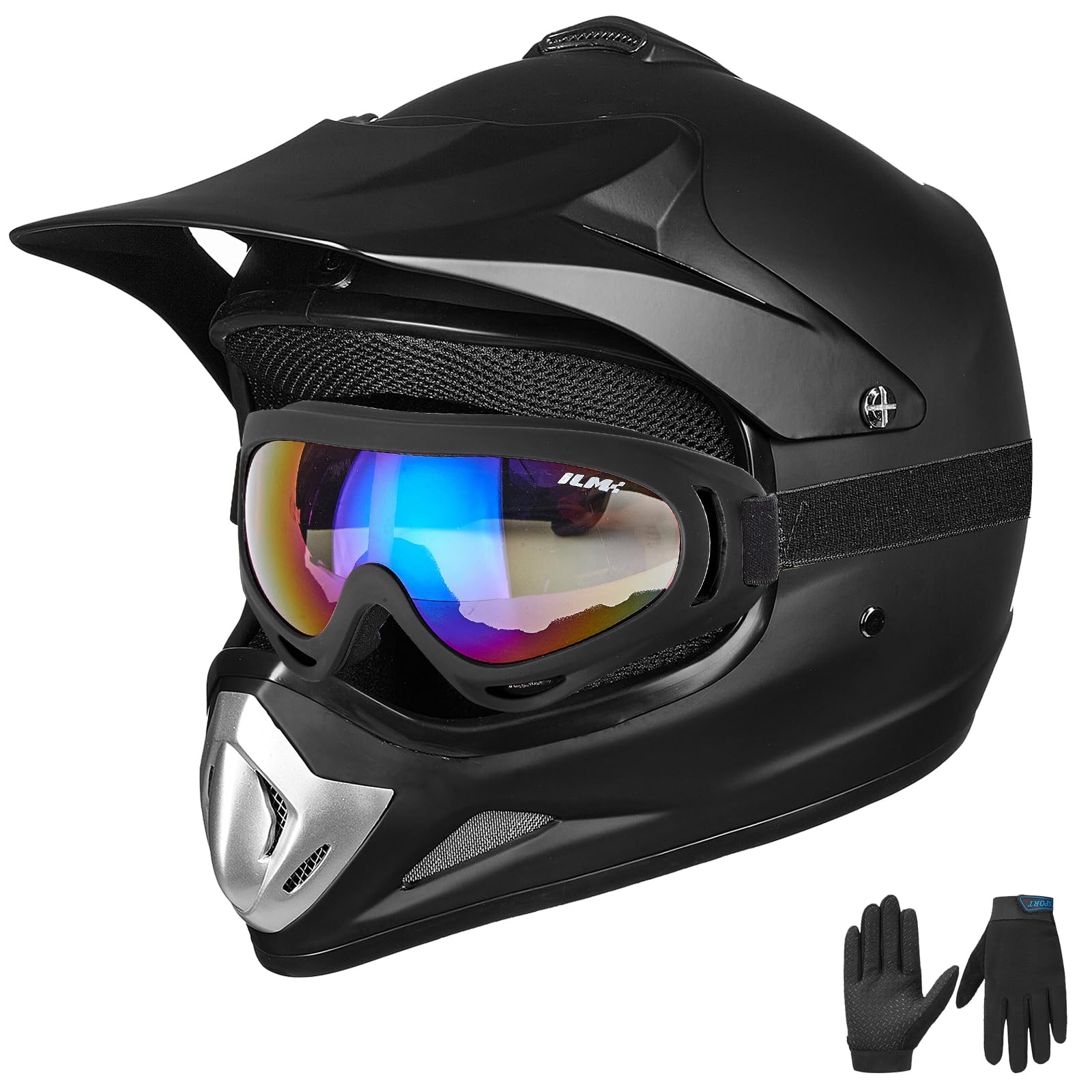
The ILM BLD-818 delivers a complete package for parents who want a helmet, goggles, and gloves in one purchase without stepping into a premium budget. The high-strength ABS shell and EPS buffer layer meet DOT FMVSS 218 standards, providing the baseline impact protection required for dirt bike and ATV use. At 2.8 pounds, it sits in the middle of the weight range for this list — heavier than the OUMURS but lighter than the Typhoon.
Four vents — including chin and top intakes — create a direct airflow path that replaces hot interior air with fresh air, keeping the rider cooler on sunny trail days. The adjustable shatterproof sun visor rotates to block direct sunlight and reduces glare, improving visibility when the sun is low on the horizon. The quick-release chin strap is manageable for youth riders, and the fully removable microfiber liner simplifies cleaning after muddy rides.
Customer feedback consistently notes that the gloves included in the kit run small, so parents should size up for those accessories. The helmet itself fits to spec when the head circumference is measured accurately. The matte black finish hides scratches better than glossy shells, which helps the helmet maintain a clean appearance after rough use on gravel tracks or wooded trails.
What works
- Includes goggles and gloves for a complete kit
- DOT certified for motorized off-road protection
- Adjustable removable visor for sun protection
What doesn’t
- Gloves in the kit run small; size up for a proper fit
- 2.8 lb weight is heavier than premium alternatives
- Ventilation is adequate but not as robust as higher-end models
Hardware & Specs Guide
ABS vs. Polycarbonate Shells
The outer shell’s job is to distribute impact energy across the EPS liner and prevent penetration by sharp objects. ABS (Acrylonitrile Butadiene Styrene) is the standard material for budget and mid-range youth helmets — it’s rigid, durable, and inexpensive. Polycarbonate shells, often injection-molded, can be lighter while maintaining similar impact resistance. For young riders, polycarbonate’s lower weight reduces neck fatigue, but ABS offers better resistance to cracking under repeated low-speed impacts common in BMX and trail riding.
EPS Liner Density Gradients
EPS (Expanded Polystyrene) foam compresses during a crash to absorb the kinetic energy that would otherwise transfer to the skull. Single-density EPS liners are standard at budget price points and perform well against a narrow range of impact forces. Multi-density EPS liners, found in premium helmets like the Fox V Core, use varying foam densities so that low-speed impacts are absorbed by the outer layer while high-velocity impacts are handled by the denser inner layer. For youth riders who may fall at both slow bicycle speeds and higher ATV speeds, a multi-density liner provides a wider safety envelope.
FAQ
What head circumference range does a youth full-face BMX helmet typically cover?
Is a DOT-certified youth helmet safe for bicycle BMX use?
How tight should a full-face youth helmet fit across the cheeks?
Final Thoughts: The Verdict
For most buyers, the full face youth bmx helmet winner is the ILM Z705 because it combines dual DOT and ECE 22.06 certification with a light 2.4-pound shell and a complete accessory kit at a mid-range price. If you want advanced rotational impact protection and the lightest possible weight, grab the Fox Racing V Core MIPS. And for a budget-friendly kit that includes goggles and gloves without compromising DOT certification, nothing beats the ILM BLD-818.

Certification: BSc in Mechanical Engineering
Education: Mechanical engineer
Lives In: 539 W Commerce St, Dallas, TX 75208, USA
Md Amir is an auto mechanic student and writer with over half a decade of experience in the automotive field. He has worked with top automotive brands such as Lexus, Quantum, and also owns two automotive blogs autocarneed.com and taxiwiz.com.