A full face helmet is the single most important safety investment a motorcyclist makes, yet the market is flooded with options that vary wildly in protection, comfort, and real-world performance. Sorting through shell composites, certification standards, ventilation layouts, and owner-reported noise levels requires separating marketing claims from engineering reality.
I’m Amir — the founder and writer behind Four Wheel Ask. My approach combines deep analysis of materials science, crash-test certification data, ventilation thermodynamics, and aggregated feedback from thousands of owner reports to identify which designs actually deliver on their promises.
Assessing shell quality, airflow, and owner reviews identifies the best full face motorcycle helmet for riders prioritizing safety and comfort every ride.
How To Choose The Best Full Face Motorcycle Helmet
Selecting a full face helmet requires understanding how certification tiers, shell construction, ventilation engineering, and fitment interact to determine both protection and daily usability. The right choice balances impact performance with comfort factors that keep you focused on the road.
Safety Certifications: DOT, Snell, and ECE
DOT certification is the mandatory minimum in the US, testing impact attenuation, penetration resistance, and retention system strength. Snell M2020 standards impose stricter energy management thresholds and additional impact sites, often resulting in thicker EPS liners and heavier shells. ECE 22.06, widely used internationally, evaluates rotational force management and a broader range of impact angles. Helmets carrying multiple certifications, such as DOT and Snell, typically offer a higher assurance of protection across varied crash scenarios.
Shell Materials and Impact Energy Management
Polycarbonate shells provide adequate impact resistance at a lower cost but tend to be heavier and less consistent in energy dispersal across repeated impacts. Composite shells — fiberglass, carbon-Kevlar blends, or proprietary weaves like Shoei’s AIM — offer superior strength-to-weight ratios and more predictable deformation under load. Multi-density EPS liners further refine energy absorption by staging resistance based on impact severity. The shell material directly influences helmet weight, which affects neck strain during extended rides.
Ventilation, Noise, and Real-World Comfort
Channeled ventilation systems with independently closable intake and exhaust ports allow riders to regulate internal temperature and reduce fogging. However, vents create pathways for wind noise, which accumulates with speed and can cause hearing fatigue on highway journeys. Chin curtains and breath guards mitigate turbulence, while aerodynamically optimized shell shapes reduce lift and buffeting. The trade-off between airflow and acoustic comfort is a defining characteristic of each design, and owner-reported noise levels often reveal shortcomings that spec sheets obscure.
Quick Comparison
On smaller screens, swipe sideways to see the full table.
| Model | Category | Best For | Key Spec | Amazon |
|---|---|---|---|---|
| Shoei RF-1400 | Premium Full Face | All-round premium protection and aerodynamics | Snell/DOT, Fiberglass AIM shell, 3.6 lbs | Amazon |
| ScorpionEXO Covert FX | Premium Full Face | Street fighter style with modern safety standards | DOT/ECE 22.06, TCT-Ultra Composite, 2.9 lbs | Amazon |
| HJC i10 | Mid-Range Full Face | Snell-certified value with Bluetooth readiness | DOT/Snell M2020, Polycarbonate, XX-Large | Amazon |
| Bell MX-9 Adventure MIPS | Adventure Full Face | Dual sport riding with MIPS rotational protection | DOT, MIPS, Polycarbonate shell | Amazon |
| LS2 Stream II | Mid-Range Full Face | Aerodynamic sport design with integrated sunshield | DOT/ECE 22.06, KPA shell | Amazon |
| Fox Racing V Core MIPS | Off-Road Full Face | Motocross and trail riding with maximum airflow | DOT/ECE 22.06, MIPS, Polycarbonate/ABS | Amazon |
| Shoei Neotec II | Premium Modular | Touring versatility with flip-up convenience | DOT, AIM shell, 4.1 lbs | Amazon |
| Bell Qualifier | Entry Full Face | Budget-conscious street riding | DOT, Polycarbonate shell | Amazon |
| ILM 861A | Entry Full Face | Dual visor value with Pinlock readiness | DOT, ABS shell, 2.31 kg | Amazon |
| O’Neal 1SRS | Off-Road Entry | Dirt bike and off-road entry-level riding | DOT, Off-road full face design | Amazon |
| 1Storm HB89 | Budget Modular | Flip-up functionality on a tight budget | DOT, Thermoplastic alloy, 4 lbs | Amazon |
In-Depth Reviews
1. Shoei RF-1400 Full Face Motorcycle Helmet

The Shoei RF-1400 represents the latest evolution in a long-running lineage of premium full face helmets, combining a compact fiberglass Advanced Integrated Matrix shell with multi-density EPS for refined energy management. Owner reports consistently highlight the absence of pressure points even after hours of riding, a direct result of Shoei’s five-shell and five-EPS sizing strategy that accommodates a broad range of head shapes. The CWR-F2 shield system with dual-pin lock readiness delivers optical clarity and a tight seal against wind intrusion.
Aerodynamic refinement is a standout attribute — multiple owners note minimal drag and lift at interstate speeds, with the shell’s shape working in concert with the integrated spoiler to reduce buffeting. Ventilation is managed through a three-position forehead intake and a top exhaust, though the forehead vent can be awkward to operate with gloved hands. Noise levels at highway velocity are notably lower than comparably priced competitors, though no helmet is silent; the included chin curtain and breath guard are essential for maximum acoustic comfort.
Bluetooth intercom integration requires trimming speaker mount foam in some cases, but the speaker pockets accommodate most systems. The RF-1400 includes a Pinlock EVO lens, breath guard, chin curtain, and helmet bag. Owners considering this helmet should be aware that the fit is snug on initial wear and the process of putting it on and taking it off can feel tight — this is by design for retention security. For riders seeking a benchmark in protection, aerodynamics, and long-haul comfort, this helmet sets the standard.
What works
- Exceptional aerodynamic stability at highway speeds
- Superior noise management with included chin curtain
- Multi-shell and EPS sizing for precise fit
- Pinlock EVO lens included for fog-free operation
What doesn’t
- Forehead vent difficult to operate with gloves
- Very tight on and off during initial break-in
- Premium pricing places it above mid-range budgets
2. ScorpionEXO Covert FX Full Face Adult Motorcycle Helmet

The ScorpionEXO Covert FX takes a distinct visual direction with its street fighter styling, but the engineering beneath the surface is equally purposeful. The TCT-Ultra Composite shell is remarkably lightweight — owner reports confirm the medium size weighs approximately 2.9 pounds — without sacrificing impact dispersal properties. Dual certification to DOT and ECE 22.06 means it has passed a wider range of impact tests, including rotational force evaluation, which is a meaningful advantage over helmets that carry only DOT approval.
Ventilation performance earns praise from owners who describe this as among the quietest helmets they have used, aided by the included neoprene aero skirt that reduces chin curtain turbulence. The aero-tuned intake and dual-position mouth vent allow customization of airflow for defogging versus cooling. However, the front vent control is located inside the chin area and requires removing a hand from the bar to adjust while riding, a compromise for the clean exterior profile. The EverClear fog-free shield ships with the helmet and provides 95% UV protection.
Bluetooth readiness is well-executed with 50mm speaker pockets that align naturally with the ear position. Owner feedback indicates that JBL 45mm speakers fit without modification, though larger units may require trimming the EPS foam. The KwikFit cheek pads are sculpted to accommodate eyeglasses, and the reflective material integrated into the pads improves nighttime visibility. For riders who prioritize a lightweight shell, modern certification, and a distinctive aesthetic, this helmet delivers a compelling package.
What works
- Extremely lightweight TCT-Ultra Composite shell
- ECE 22.06 certification for advanced impact protection
- Very quiet operation with included aero skirt
- Excellent speaker pocket placement for Bluetooth
What doesn’t
- Front vent control awkward to access while riding
- Top vent left-right function unclear in open/closed positions
- Some owners report whistling noise with visor up above 25 mph
3. HJC i10 Solid Full Face Motorcycle Helmet
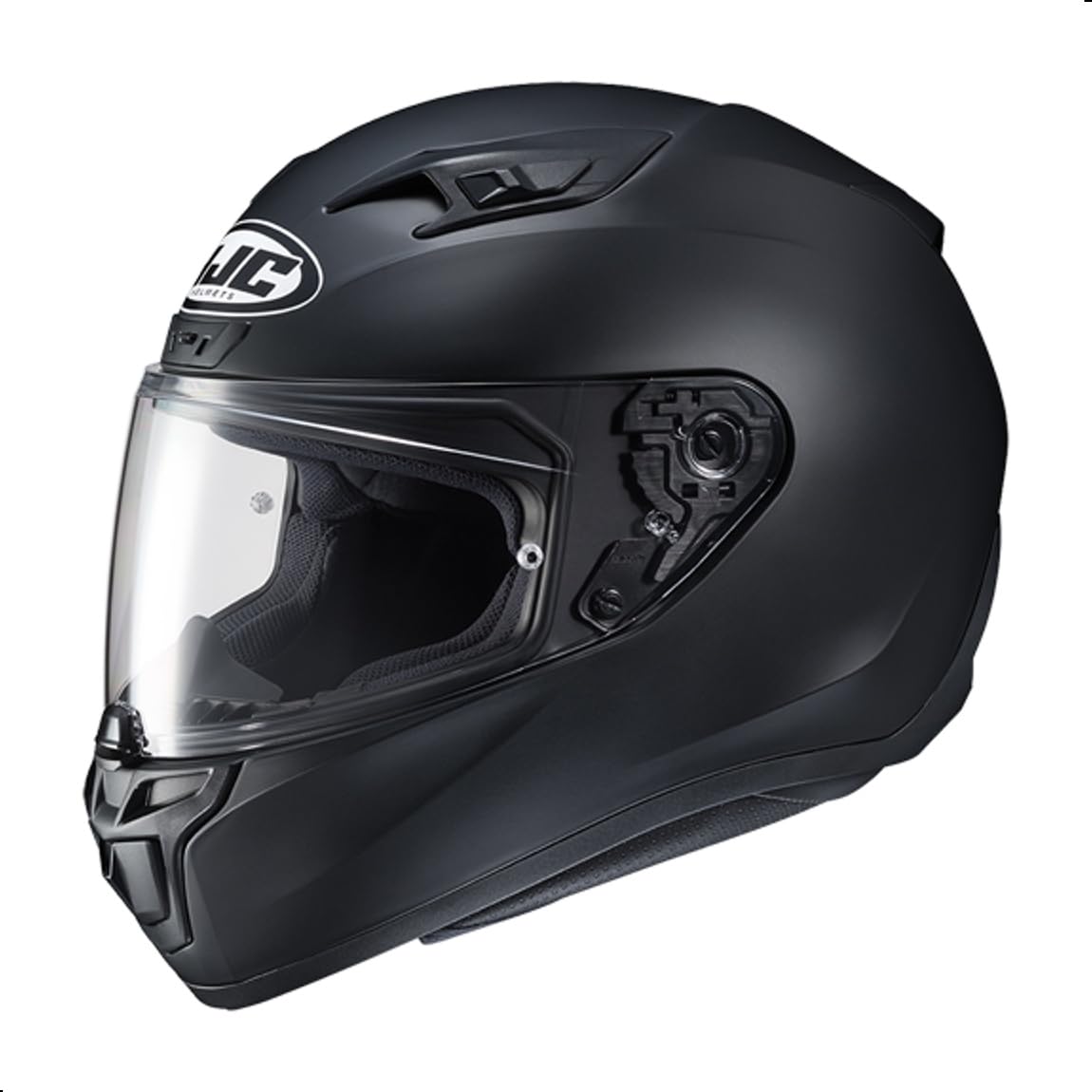
The HJC i10 occupies a rare position in the market — it carries both DOT and Snell M2020 certification while remaining accessible to riders who do not want to spend premium-tier money. The polycarbonate shell is lightweight and designed using CAD modeling to optimize fit across head shapes. Owners consistently note that the helmet fits true to size for most head profiles, though a significant subset reports that it runs small, so careful measurement and ordering one size up from typical is a common recommendation among owner accounts.
Ventilation is a strong suit, with the Advanced Channeling system moving air effectively through the interior and exhausting heat and humidity. Multiple owner reviews mention that the helmet does not feel stuffy even in warmer conditions, and the removable and washable MoistureWick liner dries quickly. Noise levels are described as moderate for the price tier — not class-leading, but a chin curtain aftermarket addition substantially reduces wind turbulence for riders who find the stock noise noticeable on longer highway stints.
The HJ-31 shield is Pinlock-ready and provides 99% UV protection, with optional mirrored and anti-fog shields available separately. Smart HJC readiness allows integration with 20B and 10B Bluetooth systems, though the communication kit is sold separately. The i10 is a strong candidate for newer riders who want Snell-level assurance without committing to a composite-shell price point, as well as experienced riders seeking a reliable backup or commuter lid.
What works
- Snell M2020 certification at a mid-range price
- Effective ventilation that prevents heat buildup
- Lightweight polycarbonate shell reduces neck strain
- Smart HJC ready for Bluetooth integration
What doesn’t
- Sizing runs small — order up from measured size
- Stock noise levels benefit from aftermarket chin curtain
- Padding feels less premium than higher-tier helmets
4. Bell MX-9 Adventure MIPS Motorcycle Helmet

The Bell MX-9 Adventure MIPS is engineered for riders who split time between pavement and dirt, combining a full face shell with a visor peak and off-road-capable ventilation. The inclusion of MIPS technology — a low-friction layer designed to reduce rotational forces during angled impacts — adds a layer of protection that is especially relevant for adventure riding where variable terrain increases the likelihood of oblique collisions. Owner feedback confirms the helmet flows a substantial amount of air, making it a strong choice for hot-weather riding in both dry and wet conditions.
Fitment is optimized for Western-shaped heads, with a round-oval profile that accommodates glasses without temple pressure. The wide field of view works well with goggles, and the visor peak is functional for blocking sun and roost, though it catches wind above 40 mph and creates noticeable lift. Ventilation controls are minimal — only the mouth vent can be closed — meaning riders in cold climates may experience more airflow than desired. Wind noise escalates above 55 mph, and ear protection is recommended for sustained highway use.
The liner is plush and comfortable for long days in the saddle, and the helmet is Cardo and Sena compatible for communication system installation. Owner reviews consistently describe this as one of the best value options in the adventure segment, offering MIPS protection at a price that undercuts many competitors. Riders with intermediate-oval head shapes may find the fit less accommodating, and the inability to close all vents limits year-round versatility, but for warm-weather dual sport use, the MX-9 delivers strong performance.
What works
- MIPS rotational protection at a competitive price
- Exceptional airflow for hot-weather riding
- Comfortable fit for Western head shapes with glasses
- Wide field of view works with goggles
What doesn’t
- Visor peak catches wind above 40 mph
- Only mouth vent is closable — limited cold-weather versatility
- Wind noise requires ear protection at highway speeds
5. LS2 Stream II Full Face Motorcycle Helmet

The LS2 Stream II employs a Kinetic Polymer Alloy shell that balances weight savings with structural rigidity, meeting ECE 22.06 standards that include rotational force management through the AREM system. Owner feedback emphasizes the aerodynamic profile — the shell cuts through airflow with minimal turbulence, and the dynamic ventilation system moves air effectively through the interior. The integrated sunshield extends lower than many competitors, providing better coverage for riders who prefer not to wear sunglasses beneath the helmet.
Comfort and finish earn consistent praise, with the gloss black version noted for its deep, durable paint quality. However, multiple owners report that cheek pads are tight even when following the size chart, often requiring a size up from measured head circumference. The dropdown visor is convenient but has limitations: it fogs more readily than the outer shield, and some riders find it not dark enough for bright sunlight. The outer visor has only two detent positions, which restricts partial-opening options for ventilation at low speeds.
Wind noise at highway speeds is noticeable but manageable, and the helmet survived a highway debris impact in one owner’s account, with the manufacturer honoring a warranty replacement for the damaged mouthpiece. The Pinlock EVO pins are installed on the outer clear shield, though the Pinlock insert is sold separately. For riders who value a sporty aerodynamic design, integrated sunshield functionality, and modern ECE certification at a mid-range price, the Stream II is a well-rounded contender.
What works
- Aerodynamic KPA shell reduces drag at speed
- Integrated sunshield extends lower than many rivals
- ECE 22.06 certification with rotational force management
- Good ventilation flow-through design
What doesn’t
- Cheek pads run tight — size up recommended
- Dropdown visor fogs easily in cool conditions
- Outer visor only has two open positions
6. Fox Racing V Core MIPS Motocross Dirt Bike Helmet

The Fox Racing V Core MIPS is purpose-built for off-road riding, combining a lightweight injection-molded polycarbonate and ABS shell with MIPS rotational impact protection. The helmet meets both DOT and ECE 22.06 standards, providing international certification assurance. Owner reports consistently highlight the exceptional ventilation — nine intake and four exhaust vents create substantial airflow that keeps riders cool during aggressive trail riding and motocross sessions. The magnetic visor release system is designed to detach under crash loads, reducing the risk of neck strain during impacts.
Fitment requires attention: multiple owners note the helmet runs small compared to typical sizing, with several accounts of adults needing a size larger than their usual football or bicycle helmet size. The initial fit is very snug, but the padding conforms after approximately five rides. The mouth vent is positioned effectively and prevents fogging even during high-exertion riding in cooler conditions. The matte black finish is consistent and durable, holding up well to mud and cleaning.
The V Core is not designed for street use at sustained highway speeds — the ventilation that makes it excellent for off-road riding also creates significant wind noise on pavement. However, for e-bike riders operating at higher speeds, owners report the helmet provides good protection and comfort. The flexible side pads accommodate slightly small sizing without compromising retention. For dedicated off-road riders seeking MIPS protection, excellent ventilation, and solid build quality, this helmet delivers targeted performance.
What works
- Outstanding ventilation for hot and intense riding
- MIPS rotational protection included
- Magnetic visor release reduces crash-related neck strain
- DOT and ECE 22.06 dual certification
What doesn’t
- Sizing runs small — confirm measurements carefully
- High wind noise unsuitable for extended highway use
- Not optimized for street riding aerodynamics
7. Shoei Neotec II Modular Motorcycle Helmet

The Shoei Neotec II brings premium engineering to the modular format, combining a flip-up face cover with Shoei’s Advanced Integrated Matrix shell construction for strength and weight management. The integrated QSV-1 sun shield is anti-fog and anti-scratch, providing quick light adjustment without stopping. Owner feedback consistently ranks this among the quietest modular helmets available, with noise reduction technology that effectively dampens wind and road sounds at touring speeds.
Ventilation is comprehensive, with upper and lower intake ports and a rear exhaust that work together to prevent fogging and manage interior temperature. Owners in the Pacific Northwest report that venting is effective enough to keep the shield clear in cool, damp conditions. The micro-ratchet chin strap allows precise tension adjustment and easy operation with gloves. The CNS-3 shield and base plate system provides a secure seal and smooth operation, and the included Pinlock EVO lens further enhances fog-free performance.
Bluetooth integration with SENA systems is seamless, with speaker pockets and microphone routing designed into the liner. The modular feature allows communication without removing the helmet, a practical advantage for touring riders who frequently interact with navigation or fellow riders. The Neotec II is heavier than dedicated full face helmets at 4.1 pounds, and the buckle position can feel like it rides on the neck for some owners. For riders who prioritize modular convenience, quiet operation, and Shoei’s build quality, this helmet is a benchmark in its category.
What works
- Class-leading noise control for a modular helmet
- Integrated sun visor with anti-fog and anti-scratch coating
- Excellent ventilation prevents fogging in cool weather
- Seamless SENA Bluetooth integration
What doesn’t
- Heavier than dedicated full face helmets at 4.1 lbs
- Buckle position can feel uncomfortable on the neck
- Premium pricing limits accessibility
8. Bell Qualifier Helmet, Matte Black

The Bell Qualifier has long served as a go-to entry point for riders seeking a reliable full face helmet without stretching their budget. The polycarbonate shell keeps weight manageable, and the face opening provides good peripheral vision that enhances situational awareness. Owner feedback indicates the helmet fits true to size for most head shapes, though the cheek pads are initially tight and require a break-in period before reaching optimal comfort. The matte black finish is consistently praised for its clean, understated appearance.
Noise management is the most frequently cited compromise — multiple owner reports describe the Qualifier as noticeably loud, particularly compared to mid-range and premium options. The ventilation system is functional but does not significantly reduce interior temperature on hot days, and some owners report that the vents do not make a substantial difference in airflow. The shield mechanism is basic but functional, and the PlexView face shield resists scratches reasonably well for the price tier.
Glasses wearers face challenges with the Qualifier: the temple area can create pressure points, and some owners resort to cutting the earpieces off their glasses for a comfortable fit. Aftermarket shield availability is good, though tinted and mirrored shields can cost nearly as much as the helmet itself. For riders on a strict budget who need DOT certification and a recognizable brand, the Qualifier delivers adequate protection, but the noise and ventilation compromises make it a stepping stone rather than a long-term solution for frequent riders.
What works
- Affordable entry point with trusted brand recognition
- Good peripheral vision from face opening
- Clean matte black finish holds up well
What doesn’t
- Noticeably loud at highway speeds
- Ventilation has limited cooling effectiveness
- Glasses fitment is problematic for some users
9. ILM Full Face Dual Visor Motorcycle Helmet Model 861A

The ILM 861A delivers a dual visor system — outer clear shield and retractable inner sunshield — at a price that undercuts most competitors offering similar functionality. The ABS shell with high-density EPS foam meets DOT standards, and the design includes a rear spoiler with a passive vent for warm air extraction. Owner feedback emphasizes the striking visual appearance, with several noting that the helmet attracts compliments and looks more expensive than its price suggests.
Comfort is a strong point for the price tier: the cheek pads are plush and the liner is removable and washable. The quick-release chin strap is convenient and allows easy tension adjustment. However, wind noise becomes noticeable above 50 mph, particularly with the top vents open, and the outer box packaging has been reported as minimal, though the helmet itself arrives well-protected. The Pinlock EVO pins are installed on the outer shield, but the Pinlock insert is not included.
Bluetooth speaker pockets are integrated into the liner, making communication system installation straightforward. The helmet is lightweight for its class, and the dual visor functionality works smoothly with positive detents. The 861A is well-suited for new riders who want a modern look and dual visor convenience without a significant financial commitment, or as a spare passenger helmet. Owners should be aware that the outer visor can fog in cold conditions without the Pinlock insert installed.
What works
- Dual visor system with smooth retractable sunshield
- Lightweight ABS shell for the price tier
- Plush removable padding with Bluetooth speaker pockets
- Eye-catching design that looks premium
What doesn’t
- Wind noise increases significantly above 50 mph
- Pinlock insert not included with the helmet
- Outer visor fogs easily without Pinlock in cool weather
10. O’Neal 1SRS Adult Dirt Bike Helmet

The O’Neal 1SRS is a dedicated off-road helmet designed for dirt bike and trail riding, featuring an extended chin bar and visor peak optimized for motocross use. Owner feedback highlights the helmet’s sturdy build quality and comfortable fit, with several noting that it feels more substantial and secure than typical downhill mountain bike helmets. The field of view is generous, and the included storage bag is a practical addition for transport and protection between rides.
Fitment is consistent with sizing charts, and the helmet accommodates a range of head shapes without pressure points. The weight is moderate — heavier than a mountain bike helmet but lighter than many dual sport helmets — and the shell feels solid during use. The matte finish options are visually appealing and hold up well to the rigors of off-road riding. The helmet does not include a face shield, so goggles are required for eye protection.
Ventilation is adequate for trail riding, though riders pushing hard in hot conditions may desire more airflow than the 1SRS provides. The liner is comfortable for short to medium rides but lacks the moisture-wicking refinement of premium off-road helmets. The 1SRS is an excellent choice for entry-level dirt bike riders, weekend trail enthusiasts, or parents outfitting younger riders who are transitioning from bicycle helmets to proper motorcycle head protection.
What works
- Sturdy build quality at an accessible price point
- Good field of view for off-road situational awareness
- Comfortable fit with consistent sizing
- Includes practical storage bag
What doesn’t
- Not suitable for street use without additional eye protection
- Ventilation adequate but not class-leading for hot conditions
- Liner lacks premium moisture-wicking performance
11. 1Storm Motorcycle Modular Full Face Helmet HB89
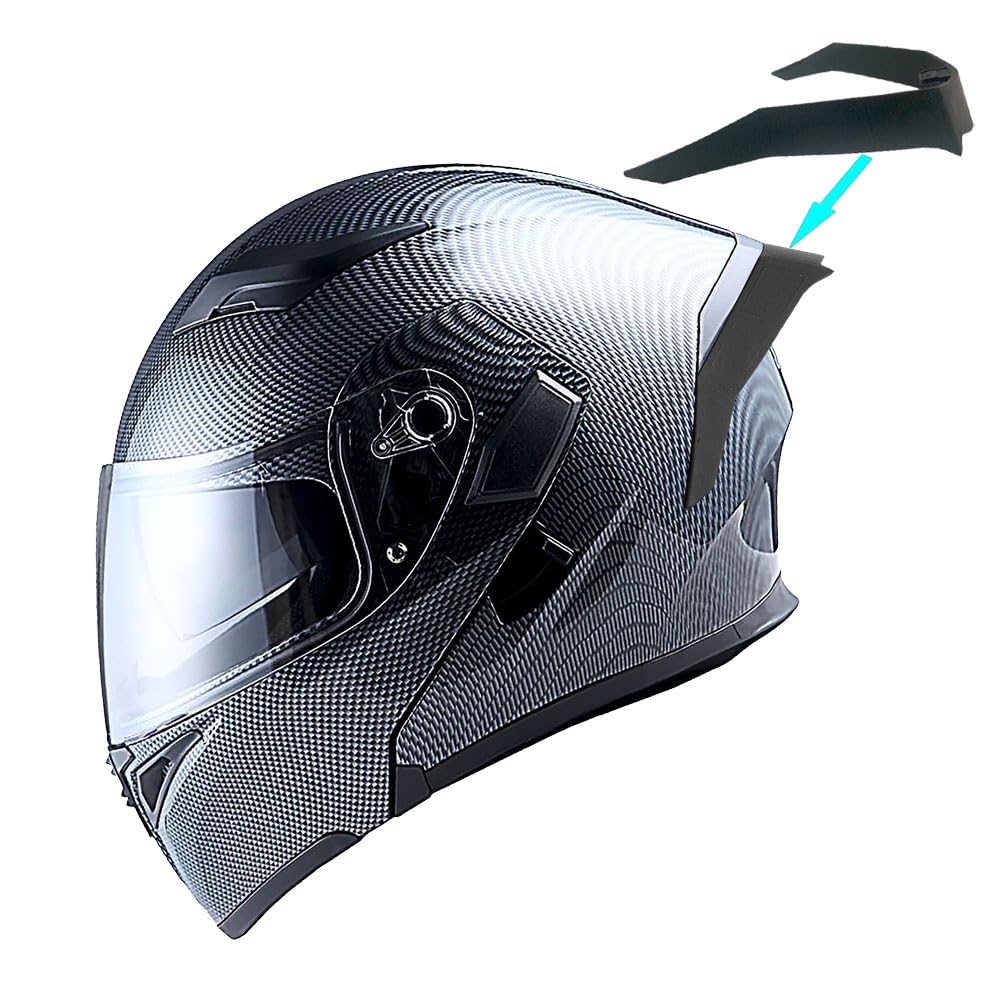
The 1Storm HB89 brings modular flip-up functionality and a dual visor system — inner smoked lens and outer clear shield — to a price point that is notably lower than established brands. The thermoplastic alloy shell is durable and features a glossy UV-protective finish that resists fading. Owner accounts consistently praise the value proposition, with several comparing the feature set favorably to helmets costing multiple times more. The modular mechanism operates smoothly, and the retractable sun visor works as intended.
Padding is described as very soft and comfortable, with a snug fit that does not create pain points during shorter rides. The quick-release chin strap is convenient. However, weight is a noticeable compromise — the helmet weighs approximately 4 pounds, and several owners report neck fatigue on longer rides. Ventilation is basic, with minimal airflow through the shell, and the helmet tends to run warm in mild temperatures. The vent switch on the mouth shield has been reported to loosen over time.
Road noise is pronounced above 60 mph, making ear protection advisable for highway use. The face shield is prone to fogging in cool weather, and replacement shields are inexpensive but lower in optical quality than premium options. The HB89 includes a storage bag and comes in a well-presented box. For riders who need modular convenience on a strict budget — such as urban commuters doing short trips — this helmet provides functional performance. It is also a practical option for a passenger helmet reserved for occasional use.
What works
- Modular flip-up design at a very accessible price
- Dual visor system with retractable inner sunshield
- Soft cushiony padding with comfortable fit
- Includes storage bag and glossy UV-protective finish
What doesn’t
- Noticeably heavy — 4 pounds cause neck fatigue on long rides
- High road noise above 60 mph requires ear protection
- Limited ventilation leads to warm interior
- Face shield fogs easily in cool weather
Hardware & Specs Guide
Shell Materials and Construction
The shell material determines weight, impact energy distribution, and durability. Polycarbonate and ABS shells are cost-effective but heavier, while fiberglass composites and proprietary weaves like Shoei’s AIM or ScorpionEXO’s TCT-Ultra offer higher strength-to-weight ratios. Multi-density EPS liners provide staged energy absorption, with softer foam managing low-speed impacts and denser foam handling higher-energy events. Helmets with multiple shell and EPS sizes — rather than a single shell with varying internal padding — achieve a more precise fit across head sizes and improve impact performance by reducing shell mass and inertia during a crash.
Certification Standards and What They Mean
DOT FMVSS 218 is the US mandatory minimum, testing impact attenuation at two drop heights, penetration resistance, and retention system strength. Snell M2020 is voluntary and more stringent, requiring impacts at multiple sites on the shell and higher energy thresholds. ECE 22.06 is the European standard and includes rotational impact testing, a feature not explicitly required by DOT or Snell. Helmets meeting multiple certifications generally offer a higher margin of protection, but certification alone does not guarantee real-world performance — shell geometry, EPS density staging, and fitment quality are equally critical factors in overall safety.
Ventilation Systems and Thermal Management
Ventilation performance depends on intake channel design, exhaust port placement, and the pressure differential created by the helmet’s aerodynamic profile. Helmets with independently closable intakes and exhausts allow riders to modulate airflow based on temperature and precipitation. Chin vents direct air across the shield interior to reduce fogging, while top intakes channel air over the rider’s head for evaporative cooling. The trade-off with aggressive ventilation is increased wind noise, which can cause hearing fatigue at sustained highway speeds. Chin curtains and breath guards are effective accessories for reducing turbulence and noise without eliminating airflow entirely.
Fitment and Head Shape Compatibility
Full face helmets rely on cheek pad pressure and crown fit to maintain proper retention during an impact. The three primary head shape categories are round-oval, intermediate-oval, and long-oval, and helmet manufacturers design shells around specific shape profiles. A helmet that feels comfortable in the store may not provide optimal protection if the shape does not match the rider’s head geometry. Cheek pads break in over time and should be snug enough to prevent the helmet from rotating without causing pain. Helmets with replaceable cheek pads in multiple thicknesses allow fine-tuning of fitment for both safety and comfort.
FAQ
What is the difference between DOT, Snell, and ECE certification?
How should a full face motorcycle helmet fit?
What shell material provides the best protection?
Are modular flip-up helmets as safe as full face helmets?
How often should a motorcycle helmet be replaced?
Final Thoughts: The Verdict
For most buyers, the best full face motorcycle helmet winner is the Shoei RF-1400 because it combines Snell-certified protection, class-leading aerodynamics, and noise management that reduces rider fatigue on long rides. If you want a lightweight composite shell with modern ECE 22.06 certification and street fighter styling, grab the ScorpionEXO Covert FX. And for Snell-level safety at a mid-range price, nothing beats the HJC i10 for value-conscious riders who refuse to compromise on certification standards.

Certification: BSc in Mechanical Engineering
Education: Mechanical engineer
Lives In: 539 W Commerce St, Dallas, TX 75208, USA
Md Amir is an auto mechanic student and writer with over half a decade of experience in the automotive field. He has worked with top automotive brands such as Lexus, Quantum, and also owns two automotive blogs autocarneed.com and taxiwiz.com.