A failing fuel filler hose turns every trip to the pump into a guessing game — drips, vapor escape, and that unmistakable raw fuel odor near the rear wheel well are all signs the rubber has surrendered to age and ethanol-blended fuel. Choosing a replacement means navigating SAE ratings, inner diameter tolerances, and material compatibility that most parts stores simply do not explain.
I’m Amir — the founder and writer behind Four Wheel Ask. I study material composition data, cross-reference SAE and ISO certification requirements, and aggregate owner-reported longevity across hundreds of fuel system repair threads to separate well-engineered components from parts that degrade before their time.
Whether you are restoring a classic truck or maintaining a daily driver, selecting the right filler hose determines whether the repair lasts one season or a decade. After analyzing dozens of options across multiple price tiers, the best fuel tank filler hose balances flexibility, chemical resistance, and accurate dimensions for a reliable seal.
How To Choose The Best Fuel Tank Filler Hose
Selecting a filler hose is not about picking the thickest rubber or the longest length. The wrong choice introduces fuel odor, vapor loss, or a pump nozzle that clicks off repeatedly. Focus on three areas before you buy.
SAE Rating and Fuel Compatibility
Filler hoses intended for automotive gasoline typically carry SAE 30R5 or SAE J1527 certification. The 30R5 standard covers low-pressure fuel fill and vent applications with ethanol blends up to E10 or E15. For marine environments or E85 compatibility, J1527 Type A1-15 is the benchmark. A hose without a printed rating may degrade internally when exposed to modern fuel additives, shedding particles into the tank.
Inner Diameter and Dimensional Accuracy
Filler neck hoses must match the metal fill tube and tank inlet within a few millimeters. Common inner diameters range from 1.5 inches for standard passenger vehicles to 2.5 inches for older trucks with large-diameter filler necks. A hose that is too loose allows fuel splash-back during refueling; one that is too tight stresses the clamps and creates a leak path. Measure your existing components rather than guessing based on model year alone.
Flexibility vs. Pre-Formed Shapes
Universal bulk hose works well for straight or gently curved runs where you cut the length yourself. Pre-formed assemblies with molded bends and integrated vent lines are essential when the original routing includes tight radius turns or factory bracketry. Using a universal hose in a cramped space can kink the inner liner, restricting fuel flow and triggering premature pump shut-off.
Quick Comparison
On smaller screens, swipe sideways to see the full table.
| Model | Category | Best For | Key Spec | Amazon |
|---|---|---|---|---|
| Gates 23964 | Flexible Hose | Universal custom installs | 1.5″ ID, 3 ft, −40°F to +212°F | Amazon |
| Continental 58524 | Marine Grade | Marine and high-heat use | 1.5″ ID, 48 in, −25°F to +212°F | Amazon |
| EVIL ENERGY 3/8 | Fuel Line | High-pressure systems | 3/8″ ID, 10 ft, 300 PSI max | Amazon |
| TRQ FNA69489 | Pre‑Formed | Ford F‑Series rear tank | Direct fit, 1987‑1996 F‑150/250/350 | Amazon |
| AA Ignition F47Z9034P | Pre‑Formed | Ford Ranger / Mazda B‑Series | Direct replacement, 1993‑1997 | Amazon |
| Forwinparts 15003858 | Complete Assembly | Chevy/GMC trucks 1988‑2000 | 2″ ID, 14.25 in, includes cap | Amazon |
| APDTY 143743 | Direct Fit | Ford Bronco rear tank | 12 in, 2.5″ to 2.0″ stepped | Amazon |
In‑Depth Reviews
1. Gates 23964 Flexible Gasoline Fuel Filler Neck Hose

Gates has been a benchmark name in fluid-handling components for decades, and the 23964 filler hose reflects that engineering pedigree. Built with a high-quality Nitrile tube and a cover that meets SAE 30R5 requirements, this three-foot section handles gasoline, gasohol blends with ethanol or methanol, diesel, and biodiesel up to B20 without internal degradation. The temperature range spans −40°F to +212°F, which covers everything from arctic winter starts to high-mileage summer towing.
The 1.5-inch inner diameter matches the most common filler neck size found on light trucks, SUVs, and older passenger cars. Installers report that the material cuts cleanly with a sharp utility knife or wire cutters, and the wall stiffness provides enough structure to resist collapsing under clamp pressure while remaining pliable enough to route around moderate obstacles. The hose does not include pre-molded bends, so it works best on straight or gently curved fill tube layouts.
Owner feedback across multiple forums highlights the Gates 23964 as the go-to choice when the original equipment hose has been discontinued or when custom routing is required. The 20 PSI maximum pressure rating is well within the zero-to-low-pressure demands of a gravity-fed or low-pressure fuel fill system. For anyone needing a dependable bulk hose that will not harden or crack within two seasons, this is the standard against which other universal options should be measured.
What works
- Proven SAE 30R5 certification for fuel compatibility
- Excellent cold‑weather flexibility down to −40°F
- Clean cuts without fraying or delamination
What doesn’t
- No pre‑formed bends for tight factory routing
- Limited to 20 PSI working pressure
2. Continental 58524 Fuel Fill / Marine Exhaust Hose

Continental ContiTech is a heavyweight in industrial and automotive hose manufacturing, and the 58524 model is built for applications where standard automotive hose falls short. The two-ply synthetic construction with an embedded helix wire prevents kinking even in tight-radius installations, making it suitable for both fuel filler neck and fuel tank vent applications. The black chemivic wrapped finish provides abrasion resistance that bare rubber hoses lack, particularly in areas where the hose contacts frame rails or body panels.
With a 1.5-inch inner diameter and a 48-inch length, this hose offers extra reach for longer fill tube runs or for installations where the tank inlet is positioned well behind the fuel door. The temperature rating of −25°F to +212°F covers the typical operating range for marine and automotive environments. Owners frequently note that the wire helix allows the hose to hold its shape around corners without collapsing, a significant advantage over unreinforced bulk hose in confined chassis spaces.
The marine-grade designation means this hose meets or exceeds the permeation standards required for below-deck fuel system components in boats. While automotive applications do not legally require marine certification, the tighter vapor barrier reduces fuel odor inside the cabin or garage. For enthusiasts restoring a vintage truck or building a custom fuel system where routing requires sharp bends and where long-term durability is the priority, the Continental 58524 justifies its position at the top of the material-quality spectrum.
What works
- Helix wire reinforcement prevents kinking
- Abrasion‑resistant chemivic outer cover
- 48‑inch length accommodates longer runs
What doesn’t
- Stiffer than unreinforced hose in cold weather
- Premium price reflects marine certification
3. EVIL ENERGY 3/8 Marine Fuel Line Hose Type A1-15
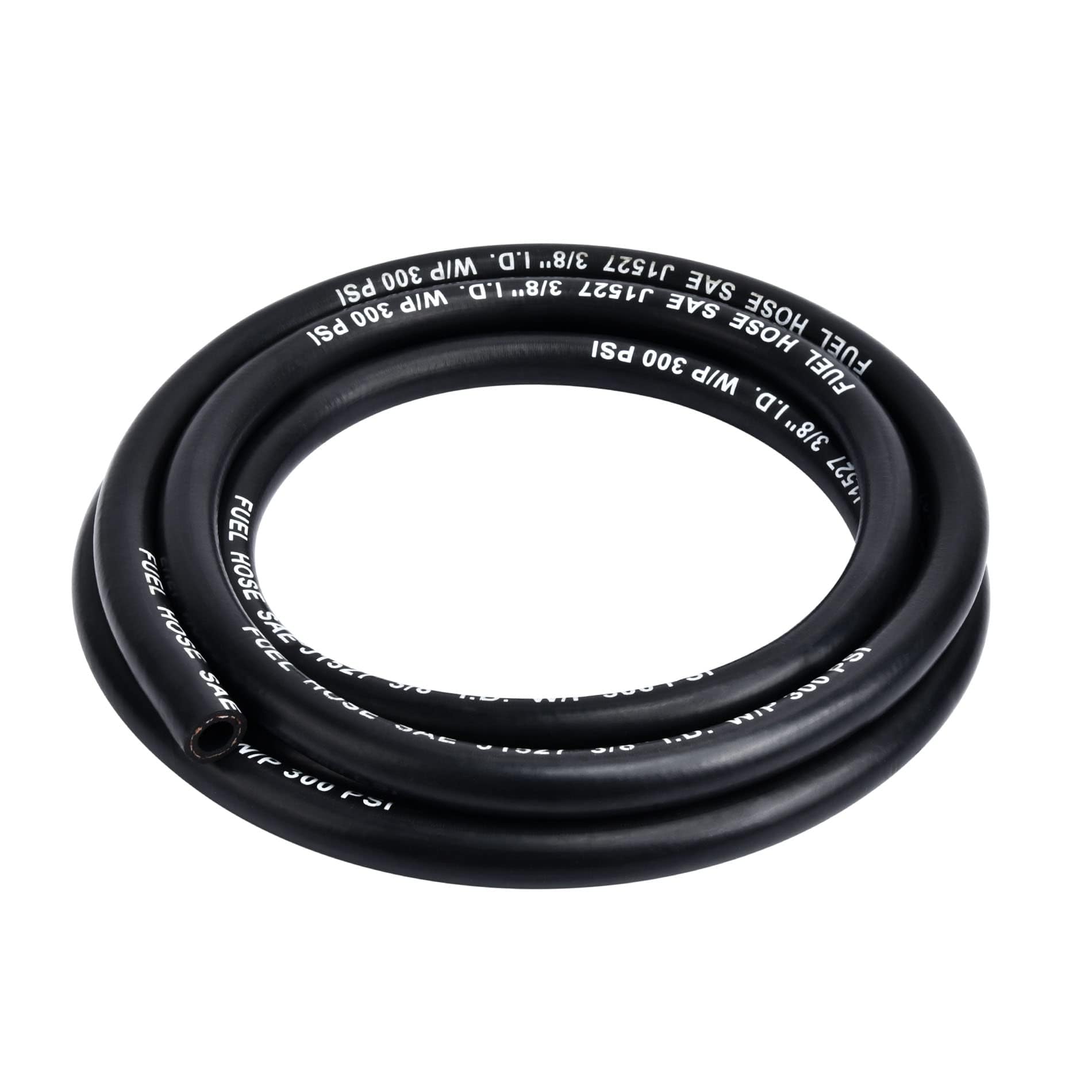
EVIL ENERGY targets the performance and marine markets with a 3/8-inch fuel line that carries SAE J1527 Type A1-15 certification, ISO 7840 Type A1 approval, and NMMA/CE acceptance. These credentials place it well above standard automotive fuel hose in terms of permeation resistance and fire safety. The construction uses an NBR inner layer reinforced with polyester fiber braid and an NBR-plus-PVC outer layer that resists weather, UV exposure, and ozone cracking.
The standout specification is the maximum working pressure of 300 PSI with a burst pressure of 900 PSI. While fuel filler neck applications operate at near-zero pressure, this rating speaks to the overall build quality and liner integrity. The hose is compatible with gasoline, diesel, and E85, giving it flexibility for flex-fuel vehicles or carbureted applications where ethanol content varies. The 10-foot length provides generous material for multiple repairs or for running a dedicated return line alongside the filler neck.
Owner reports emphasize that the hose maintains its flexibility even after prolonged exposure to ethanol-rich fuels, a common failure point for bargain-priced rubber lines. The polyester braid reinforcement does not kink easily, and the outer layer resists abrasion better than standard neoprene. For those who want a performance-grade fuel line that can also serve as a filler hose in high-ethanol or marine environments, the EVIL ENERGY line delivers certifications that most universal hoses simply do not carry.
What works
- Full marine certification with J1527 A1‑15
- 300 PSI working pressure for demanding systems
- E85 compatible without liner degradation
What doesn’t
- 3/8″ ID limits use to vent or return lines
- Overbuilt for standard filler neck duty
4. TRQ Rear Tank Mounted Fuel Tank Filler Neck
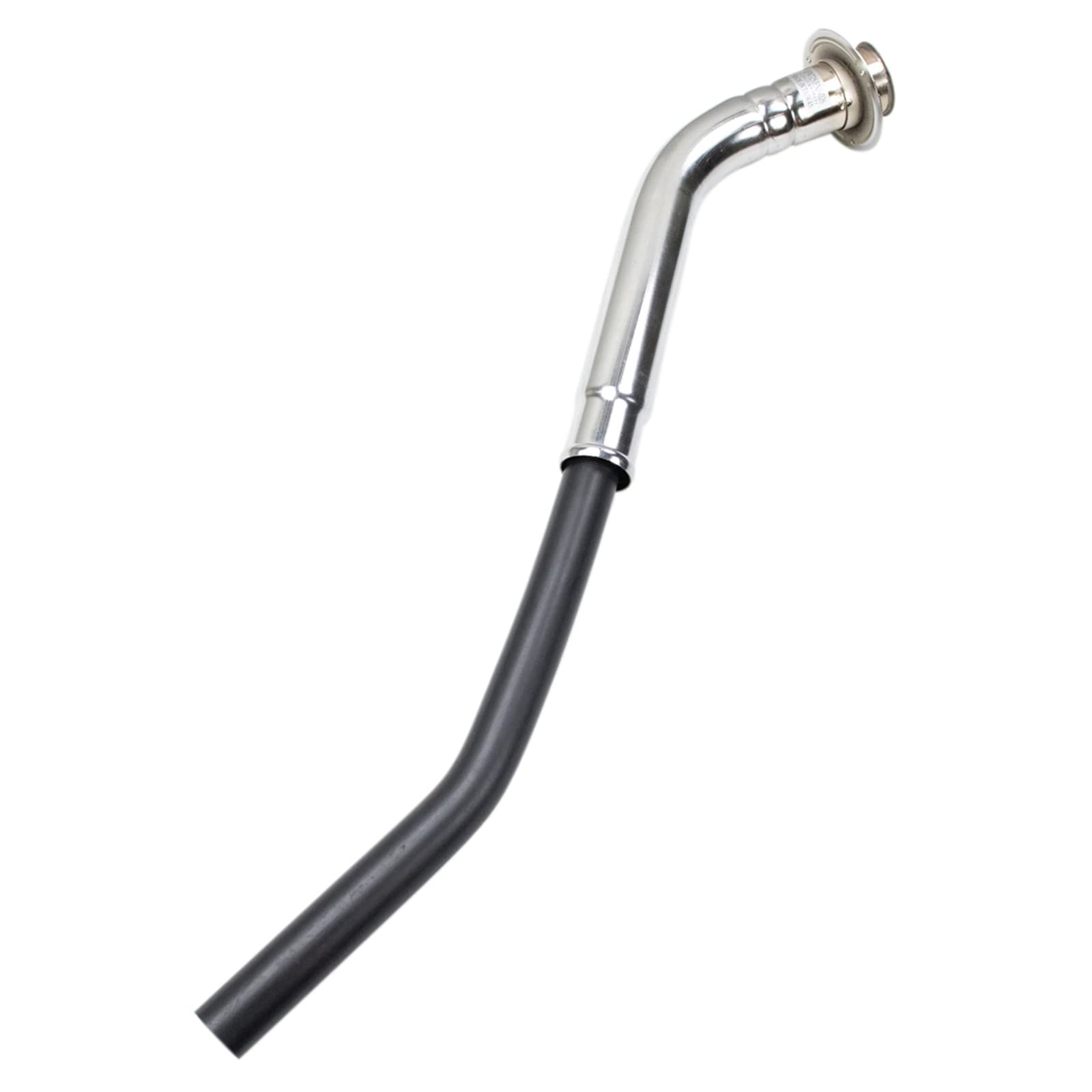
TRQ has built a reputation for producing direct-fit replacement components that match the original equipment geometry, and this rear tank filler neck for 1987‑1996 Ford F‑150 and 1987‑1997 F‑250/F‑350 trucks is a textbook example. The assembly comes pre-assembled with the filler neck tube, rubber hose section, and mounting bracketry ready to install without cutting, splicing, or adapting. Reference numbers E7TZ 9034 B and FN725 cross-reference to the factory Ford part.
The machined exterior finish resists corrosion better than the bare steel used on early OEM assemblies, and the integrated rubber hose section is molded to the exact angle required for the rear tank location behind the axle. Owners who have dealt with the original Ford three-piece setup report that this one-piece design eliminates the leak points that develop at the rubber-to-metal junctions over time. The included hose clamps use a full-width band design rather than the worm-gear style that can dig into the rubber.
TRQ provides a comprehensive DIY video library for installation guidance, which is particularly helpful for first-time restorers. The unit weighs 3.29 pounds and measures 33 inches across, reflecting the full span from the fuel door to the rear tank inlet. For anyone working on a Ford truck with the rear saddle tank configuration, this pre-engineered assembly removes the guesswork and reduces installation time compared to piecing together universal components.
What works
- Factory‑matched geometry for direct bolt‑in
- Corrosion‑resistant machined finish
- Full integration reduces potential leak points
What doesn’t
- limited to Ford F‑Series rear tank application
- Higher cost than universal bulk hose
5. AA Ignition Gas Tank Fuel Filler Neck Hose

AA Ignition specializes in aftermarket replacement parts that match OEM specifications without the dealer price tag, and this fuel filler neck assembly for 1993‑1997 Ford Ranger and 1994‑1997 Mazda B‑Series pickups delivers on that promise. The assembly replaces multiple part numbers including F47Z9034P, AL5Z9034A, AL5Z9034C, and F47Z9034, covering the standard cab and extended cab models on 108‑ or 125‑inch wheelbases. It does not fit Flareside or Splash models, so verifying the bed style is essential before purchase.
The construction combines a rugged powder-coated steel fill tube with a reinforced rubber hose section and stainless steel hose clamps. The powder coating resists the corrosion that commonly attacks the lower section of the fill tube where road splash accumulates. Owners who replaced their original rusted assemblies note that the stainless clamps do not corrode and seize like the original carbon steel hardware, making future disassembly easier if the tank ever needs to be dropped.
The standout feature is the lifetime warranty: if the assembly develops a leak or fails, the manufacturer replaces it without requiring a proof-of-purchase song and dance. This level of backing is rare for a fuel system component in this segment and signals confidence in the material quality. For Ranger and B‑Series owners looking for a reliable replacement that will outlast the truck itself, the AA Ignition assembly offers the lowest total cost of ownership over the long term.
What works
- Lifetime replacement warranty
- Powder‑coated tube resists corrosion
- Stainless steel clamps included
What doesn’t
- Does not fit Flareside or Splash bed styles
- Requires wheelbase measurement to confirm
6. Forwinparts Fuel Gas Tank Filler Neck Hose with Cap

Forwinparts offers a complete fuel filler neck assembly that includes the tube, cap, and vent line connections for 1988‑2000 Chevrolet and GMC C‑Series and K‑Series pickups and Suburbans. The assembly replaces part numbers 15003858, 15712144, 577‑824, and 577824, covering both two-wheel-drive and four-wheel-drive chassis. The 2-inch inner diameter fill pipe and 0.625-inch vent tube match the factory specifications for the GMT400 platform.
The construction uses stainless steel for the main tube, which eliminates the rust-through failure that plagues the original mild steel fill necks on these trucks. The included cap fits the OE filler neck opening and uses the same tether attachment point. Owners installing this assembly report that the length of 14.25 inches matches the original tube exactly, so the fuel door aligns properly without bending or shimming the mounting bracket.
Forwinparts backs the assembly with a one-year unlimited mileage guarantee, which provides a safety net during the first year of service. The vent tube is pre-bent to the correct angle for the GMT400 frame rail routing, saving the installer from having to bend and risk kinking a replacement vent line. For Chevrolet and GMC truck owners dealing with a rotted fill neck that weeps fuel during every fill-up, this complete kit simplifies the repair and provides a cap that matches the factory key if the original was lost.
What works
- Stainless steel tube eliminates rust recurrence
- Includes cap and vent line connections
- 14.25″ length matches factory GMT400 fit
What doesn’t
- Limited to 1988‑2000 Chevy/GMC trucks
- One‑year warranty is shorter than some competitors
7. APDTY 143743 Replacement Rear Gas Tank Fuel Filler Neck Rubber Hose

APDTY focuses on producing replacement parts that mirror the original design, and this filler neck hose for the 1987‑1996 Ford Bronco rear gas tank addresses a known weak point in the fuel system. The hose measures 12 inches in length with a stepped design: the big end has a 2.5-inch inner diameter to mate with the fuel tank inlet, while the small end tapers to 2.0 inches outer diameter to connect with the filler tube. This stepped configuration matches the factory hose geometry and eliminates the need for a reducing adapter.
The replacement references part numbers E1TZ‑9047‑K and E1TZ9047K, which are the original Ford service numbers. Owners of Broncos with the 32‑gallon rear tank report that the original hose hardens and develops cracks at the tank inlet after roughly a decade of service, making this a routine maintenance item. The APDTY hose uses a rubber compound that remains pliable enough to slide over the metal fittings without requiring heat or lubricant, though a small amount of soapy water eases installation.
The 0.8-pound weight reflects the relatively short length and single-material construction. No vent line is integrated, so the existing vent must be transferred from the original hose or replaced separately. For Bronco owners who want a direct swap that preserves the factory fill rate without the constant clicking of a restricted filler neck, this hose restores the system to its original performance with minimal effort.
What works
- Stepped ID matches factory Bronco rear tank
- Pliable rubber installs without heat
- Direct replacement for E1TZ‑9047‑K
What doesn’t
- Only fits 1987‑1996 Ford Bronco rear tank
- No integrated vent line
Hardware & Specs Guide
Material Composition & Fuel Compatibility
Filler hoses are typically constructed from Nitrile (NBR), PVC-blended NBR, or synthetic rubber compounds reinforced with polyester fiber braid or helix wire. NBR offers excellent resistance to gasoline, diesel, and ethanol blends but degrades faster when exposed to high-concentration methanol. Hoses with a PVC outer layer add UV and ozone protection for exposed runs. Always verify SAE 30R5 or J1527 certification before using any hose with ethanol-blended pump fuel; unrated hoses may swell, harden, or delaminate internally within months.
Dimensional Accuracy & Clamping
The inner diameter of a filler hose must match the metal fill tube within +/- 0.030 inches to ensure proper compression by the hose clamp. A loose fit allows the hose to twist under clamp pressure, creating a spiral leak path. Full-band clamps distribute force evenly around the circumference and are preferable to worm-gear clamps on thin-wall filler hoses. Pre-formed assemblies eliminate dimensional guesswork by matching the exact bend radius and tube length of the original equipment.
Temperature & Pressure Ratings
Filler neck hoses operate in a low-pressure environment, typically below 5 PSI, but they must withstand underhood temperatures near the engine bay and ambient cold in northern climates. A minimum temperature range of −40°F to +212°F covers the full operating envelope for street-driven vehicles. Marine-rated hoses often carry a narrower cold range (−25°F) but offer superior vapor permeation resistance required for enclosed fuel system compartments.
Bulk Hose vs. Pre-Formed Assemblies
Bulk hose is cost-effective for simple straight runs and allows the installer to cut exactly the length needed. Pre-formed assemblies include the metal fill tube, molded rubber section, and factory bend angles, which are critical when the filler neck must navigate around suspension components or frame crossmembers. Choosing bulk hose for a complex routing path increases the risk of kinking, which restricts fuel flow and causes the pump nozzle to shut off prematurely.
FAQ
What SAE rating should I look for in a fuel filler hose?
Can I use a universal bulk hose instead of a pre-formed assembly?
How do I measure the correct inner diameter for my filler neck?
Will a marine grade hose work better on my street truck?
What causes a fuel filler hose to fail prematurely?
Final Thoughts: The Verdict
For most buyers, the best fuel tank filler hose winner is the Gates 23964 because it combines proven SAE 30R5 certification, a wide temperature range, and the flexibility to adapt to various installations without breaking the budget. If you need a pre-engineered bolt-on solution, grab the TRQ Rear Tank Assembly for Ford trucks or the AA Ignition assembly for Rangers and B‑Series pickups. And for marine or high-ethanol applications where vapor permeation resistance is a priority, nothing beats the Continental 58524 with its wire helix reinforcement and J1527 certification.

Certification: BSc in Mechanical Engineering
Education: Mechanical engineer
Lives In: 539 W Commerce St, Dallas, TX 75208, USA
Md Amir is an auto mechanic student and writer with over half a decade of experience in the automotive field. He has worked with top automotive brands such as Lexus, Quantum, and also owns two automotive blogs autocarneed.com and taxiwiz.com.