When your four-wheeler’s exhaust note turns into an embarrassing rasp or the drone inside the cab drowns out your thoughts, it is time to look beyond the stock system. The right exhaust does not just change the sound—it affects torque delivery, heat management, and how the machine breathes at higher RPMs.
I’m Amir — the founder and writer behind Four Wheel Ask. I spend my time analyzing market data, comparing material specifications, and aggregating real owner feedback across dozens of ATV, UTV, dirt bike, and scooter exhaust systems to identify what truly holds up over time.
Whether you ride a Polaris, Honda, Yamaha, or Jeep, the aftermarket exhaust landscape is full of false promises and fitment headaches. After studying owner feedback and comparing build quality across price ranges, this guide reveals the genuine best four-wheeler exhaust for your machine.
How To Choose The Best Four-Wheeler Exhaust
Selecting the right exhaust for an ATV, UTV, or dirt bike comes down to three interconnected factors: material durability, fitment accuracy, and the sound profile you want. Skip any of these during your research and you risk buying a system that either rattles apart, leaks at the header joint, or sounds worse than stock.
Material Construction and Longevity
Stainless steel offers the best corrosion resistance and handles high heat without discoloring, making it the default choice for riders who keep machines for years. Aluminum reduces weight significantly but can develop cracks around weld joints under constant vibration. Mild steel is the cheapest option but rusts quickly if the coating chips. Owner feedback consistently shows that exhausts listed as “stainless” often use stainless only for the outer shell while the internal baffles remain mild steel—check the full spec before ordering.
Fitment and Bolt-On Reality
No matter how well a system is built, if the mounting bracket holes do not align or the mid-pipe angle mismatches your frame, the install turns into a grinding-and-welding session. Across the reviews analyzed for this guide, the most common complaint is bracket misalignment requiring hole elongation or rewelding. OEM-style chambered units tend to offer the most predictable fit because they mirror factory dimensions. Performance pipes, especially those made for multiple model years, often require minor modifications regardless of what the listing claims.
Sound Output and Legal Considerations
Straight-through baffle designs produce a louder, higher-pitched note and flow more volume, but they also increase the risk of exceeding local noise ordinances on public trails. Chambered systems, like those found on OEM-replacement units, keep decibel levels close to stock while still releasing some additional grunt. If you ride on managed land or in a community with strict noise rules, a unit that includes a spark arrestor and removable quiet core is worth the premium.
Installation Complexity and Required Modifications
Many budget exhausts arrive with weld slag blocking the inlet, bent flanges, or bolt holes that sit millimeters off. Plan for die-grinder work, longer bolts, and possibly a new gasket regardless of the price tier. Systems marketed as “direct fit” often still require patience with spring tension and bracket rotation. Professional installation is recommended for full systems that replace the header pipe, especially on fuel-injected models where exhaust changes can affect O2 sensor readings.
Quick Comparison
On smaller screens, swipe sideways to see the full table.
| Model | Category | Best For | Key Spec | Amazon |
|---|---|---|---|---|
| Big Gun Exhaust 07-1122 | Slip-On | Overall mid-range ATV upgrade | Aluminum/Stainless, hexagonal body | Amazon |
| Big Gun Exhaust 07-1272 | Slip-On | Honda Rancher performance | Stainless Steel, spark arrestor ready | Amazon |
| ETL INDUSTRIES JK Exhaust | Axle-Back | Jeep Wrangler JK aggressive tone | 304 Stainless, dual-wall tips | Amazon |
| The Silent Rider BT-825 | Silencer | John Deere Gator cabin drone reduction | Black matte powder coat, round shape | Amazon |
| Caltric TRX300FW | OEM Replacement | Honda Fourtrax quiet stock replacement | Aluminum, chambered OEM style | Amazon |
| MMG GY6 Exhaust | Full System | GY6 125cc-150cc scooter upgrade | Aluminum body, stainless connector | Amazon |
| JFG RACING Dirt Bike Exhaust | Slip-On | Hawk 250 / CRF230F budget build | Stainless Steel, 38mm outlet | Amazon |
| WQSING Sportsman Muffler | OEM Replacement | Polaris Sportsman 500 budget fix | Steel, chambered design | Amazon |
| Kids ATV Parts Yamaha Jog Pipe | Full System | Minarelli 50cc 2-stroke top end | Handmade steel, high-RPM tuned | Amazon |
In‑Depth Reviews
1. Big Gun Exhaust 07-1122 Eco System Slip-On

The Big Gun Eco System occupies a sweet spot in the aftermarket exhaust world: it delivers a noticeable improvement in sound and throttle response without requiring a full re-pipe or a second mortgage. Owner reports consistently note that the brushed aluminum finish looks clean even after repeated trail use, and the hexagonal profile gives the bike a more aggressive stance compared to round cans. Multiple reviewers observed a small but real torque gain in the mid-range, which translates to better low-speed control on technical terrain.
Installation feedback is generally positive, though a recurring theme is that the spring-mounted connection sits in an awkward position relative to the stock lower bracket. A few owners noted that the system does not come with a gasket, so plan to purchase a copper crush gasket separately before starting the job. The sound is described as deeper than OEM without crossing into obnoxious territory, which makes it suitable for riders who want presence without drawing complaints from neighbors or trail enforcers.
The biggest point of debate in the reviews is jetting. While Big Gun markets the Eco System as a bolt-on that does not require carburetor changes, multiple verified buyers report that the bike ran lean after installation and needed a main jet adjustment to restore proper throttle response. This is common with any exhaust that increases flow, so factor in the cost of a jet kit if your machine is carbureted. Still, for the price, this is the most balanced slip-on available for general ATV use.
What works
- Noticeable mid-range torque improvement without excessive noise
- Brushed aluminum body resists corrosion and looks clean after extended use
- Hexagonal shape provides a unique aesthetic that stands out from round cans
- Can be used with OEM header pipe, simplifying the swap
What doesn’t
- No mounting gasket included, requiring a separate purchase for a proper seal
- Spring location interferes with the lower stock mount on some models
- Carbureted machines almost always require rejetting despite marketing claims
2. Big Gun Exhaust 07-1272 ECO Utility Silver Slip-On
Built specifically for Honda Rancher models, the 07-1272 variant of the Big Gun Eco series addresses one of the most common complaints from trail riders: the need for a controlled sound level that does not scare wildlife or irritate camping neighbors. Owners report that running this exhaust with both the quiet core insert and the spark arrestor installed produces a “perfect growl” that is assertive without the piercing rasp associated with straight-through designs like HMF. The stainless steel construction ensures that the pipe holds up to mud, water crossings, and pressure washing without surface rust.
Fitment across the 420 and 350 Rancher platforms has generated mixed feedback. Several buyers on 420 models reported a smooth installation with no alignment issues, while a 350 owner noted that the muffler simply did not match the mounting points. This inconsistency suggests that the system is engineered around the 420 chassis and requires adaptation for other variants. The lack of detailed installation documentation compounds the problem, with multiple reviewers wishing the kit included the front pipe copper crush gasket and rear pipe gasket that are not available at most local parts stores.
Sound quality is where this exhaust truly shines. The combination of the Eco series baffling and the optional quiet core produces a tone that one owner described as “having that perfect growl but not as overpowering and annoying as an HMF.” Riders who prioritize low cabin noise and want to maintain good relations with trail neighbors will find this system compelling. The discounted price relative to full-race systems makes it a strong value proposition, provided you confirm fitment for your specific year and displacement before ordering.
What works
- Quiet core and spark arrestor create a trail-legal sound profile that avoids excessive noise
- Stainless steel construction withstands harsh riding conditions without rust
- Noticeable improvement in throttle response on Honda Rancher 420 models
- Lightweight design reduces overall machine weight by several pounds
What doesn’t
- Inconsistent fitment across Rancher 350 and 420 chassis variants
- No installation instructions or gaskets included in the package
- Required gaskets are difficult to source locally and add unexpected cost
3. ETL INDUSTRIES Exhaust System for Jeep Wrangler JK
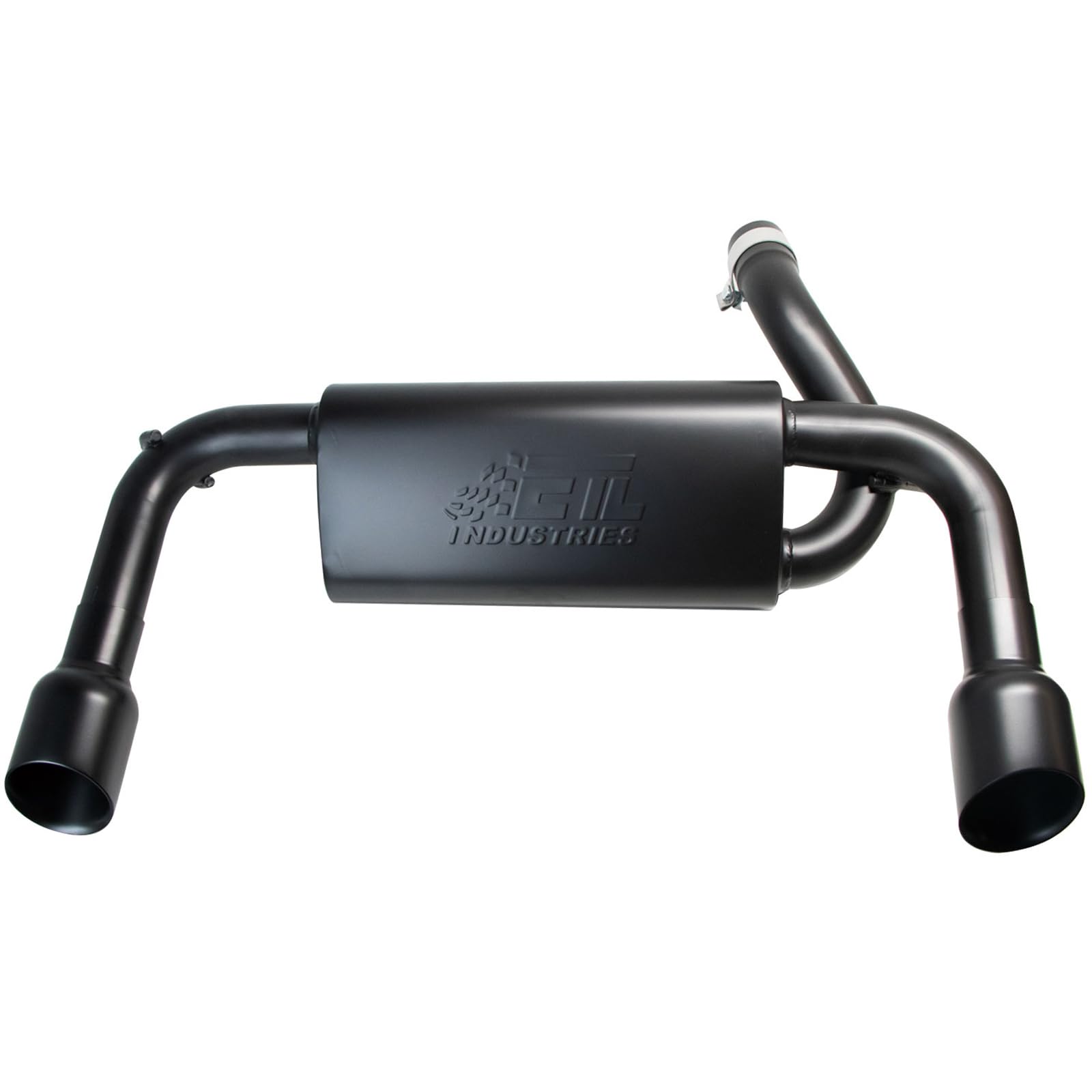
The ETL INDUSTRIES axle-back exhaust for the JK Wrangler stands out as one of the few systems in this guide that is marketed as a true no-cut, no-drill installation. The 2.5-inch inlet high-flow design feeds into a 4-inch dual-wall 304 stainless tip finished in matte black, which integrates seamlessly with the aggressive look of a modified Jeep. Owner feedback confirms that the hardware lines up well with factory hangers and that the entire swap can be completed with basic hand tools in under an hour, though an air tool is recommended to achieve proper torque on the clamps.
Sound characterization from verified buyers is overwhelmingly positive, with multiple owners describing the tone as a “throaty growl” that enhances the driving experience without creating unbearable drone at highway speeds. One buyer noted that his daughter loves the new sound, indicating that the volume increase is substantial but not offensive. A practical tip that emerged from the reviews is to drive the Jeep for a short period after installation, then re-check the connection bracket, as initial settling can cause a quarter-inch slip if the hardware was only hand-tightened.
Despite the strong overall reception, a few owners pointed out that removing the factory exhaust hangers can be the hardest part of the job, especially on older JK models where corrosion has bonded the rubber isolators to the metal tabs. Ordering replacement hangers ahead of time is a sensible precaution. The matte black coating has held up well in early reviews, with no reports of peeling or discoloration after several months of use. For JK owners seeking a dramatic sound upgrade without cutting into the factory pipe, this system delivers consistent results.
What works
- True bolt-on installation with no cutting or drilling required on JK models
- Deep throaty exhaust note that enhances the driving experience without excessive drone
- 304 stainless steel with matte black coating resists corrosion and looks aggressive
- Dual-wall tip design adds visual depth to the rear bumper area
What doesn’t
- Factory hangers can be difficult to remove on older or rusted JK frames
- Hand-tightened clamp connections may slip slightly during initial heat cycles
- Professional installation recommended despite the simple design
4. The Silent Rider BT-825 ATV Silencer
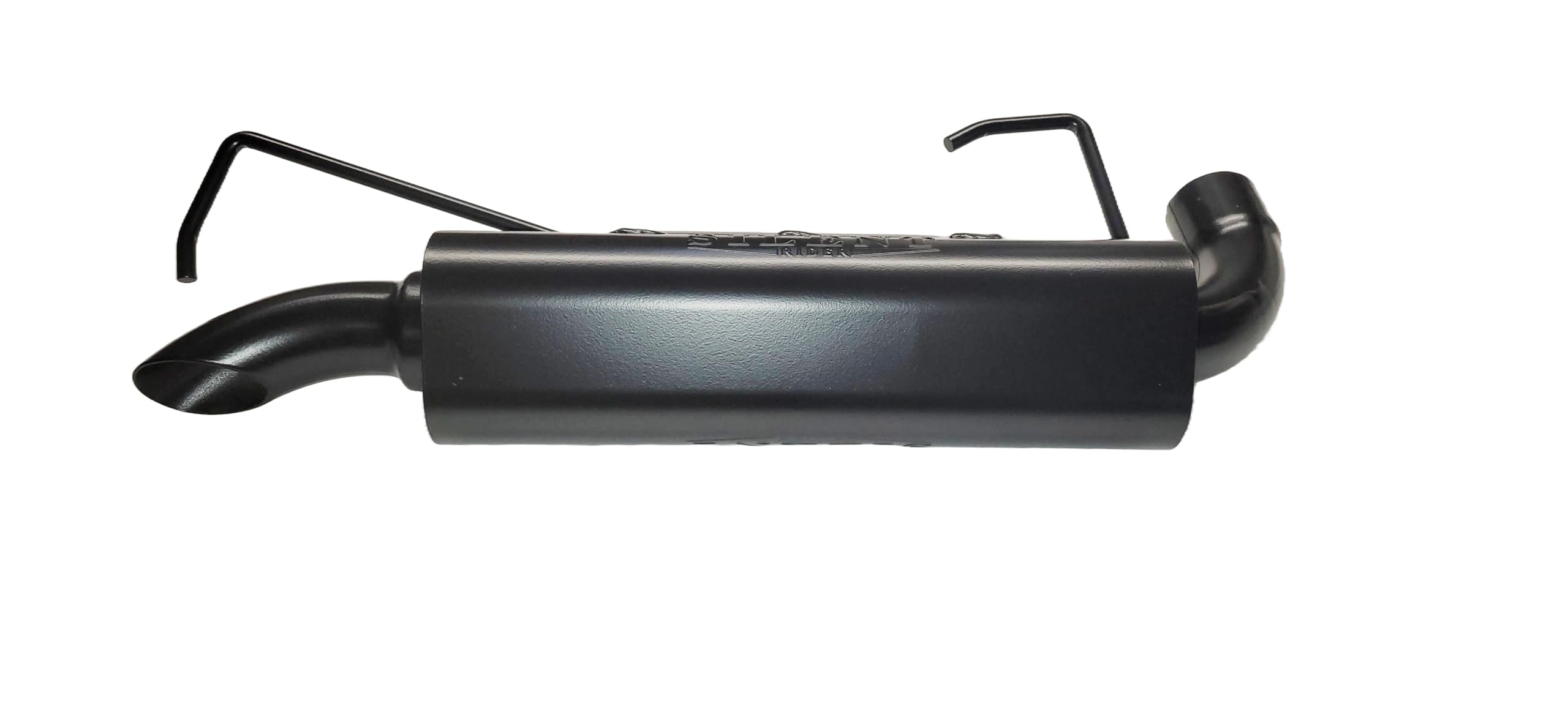
The Silent Rider BT-825 occupies a unique niche in the exhaust market: it is designed specifically to reduce noise rather than amplify it. Built for the John Deere Gator 825i and 835 series, this silencer targets the low-frequency cabin drone that many UTV owners find fatiguing on long rides. Verified buyers report that the factory exhaust on the 825i produces a pronounced resonance even at modest speeds, and the BT-825 cuts that drone dramatically, making the cab noticeably more comfortable for both driver and passenger.
Installation time is consistently reported as roughly 15 minutes, with the biggest challenge being the removal of the stock muffler rather than mounting the new unit. The black matte powder coat finish blends well with the Gator’s underside and does not show dirt or scratches easily. Several owners who use their machines for hunting noted that the silencer reduced the audible range of the vehicle from approximately half a mile down to under a hundred yards, which is a meaningful advantage for approaching game without spooking it.
Not every buyer experienced the same level of noise reduction. One verified review stated that the decibel level was unchanged after installation and that the machine simply sounded higher-pitched rather than quieter. This variance may be due to differences in the condition of the original exhaust system or how the silencer interfaces with existing wear. The manufacturer does offer a one-year warranty, and refunds were processed for the dissatisfied buyer. On balance, the majority of owners report an 80 percent reduction in perceived exhaust noise with no measurable loss of power or fuel economy.
What works
- Significant reduction in cabin drone and overall exhaust volume for UTV riders
- Quick 15-minute installation with sturdy mounting brackets and included hardware
- No negative impact on engine performance or fuel efficiency reported by most owners
- Black matte finish blends with the vehicle underside and resists cosmetic wear
What doesn’t
- Noise reduction results vary between individual units and vehicle conditions
- Some buyers reported no measurable decibel drop despite high expectations
- Specific to John Deere Gator 825i/835 models with limited cross-platform compatibility
5. Caltric Exhaust Muffler for Honda TRX300FW
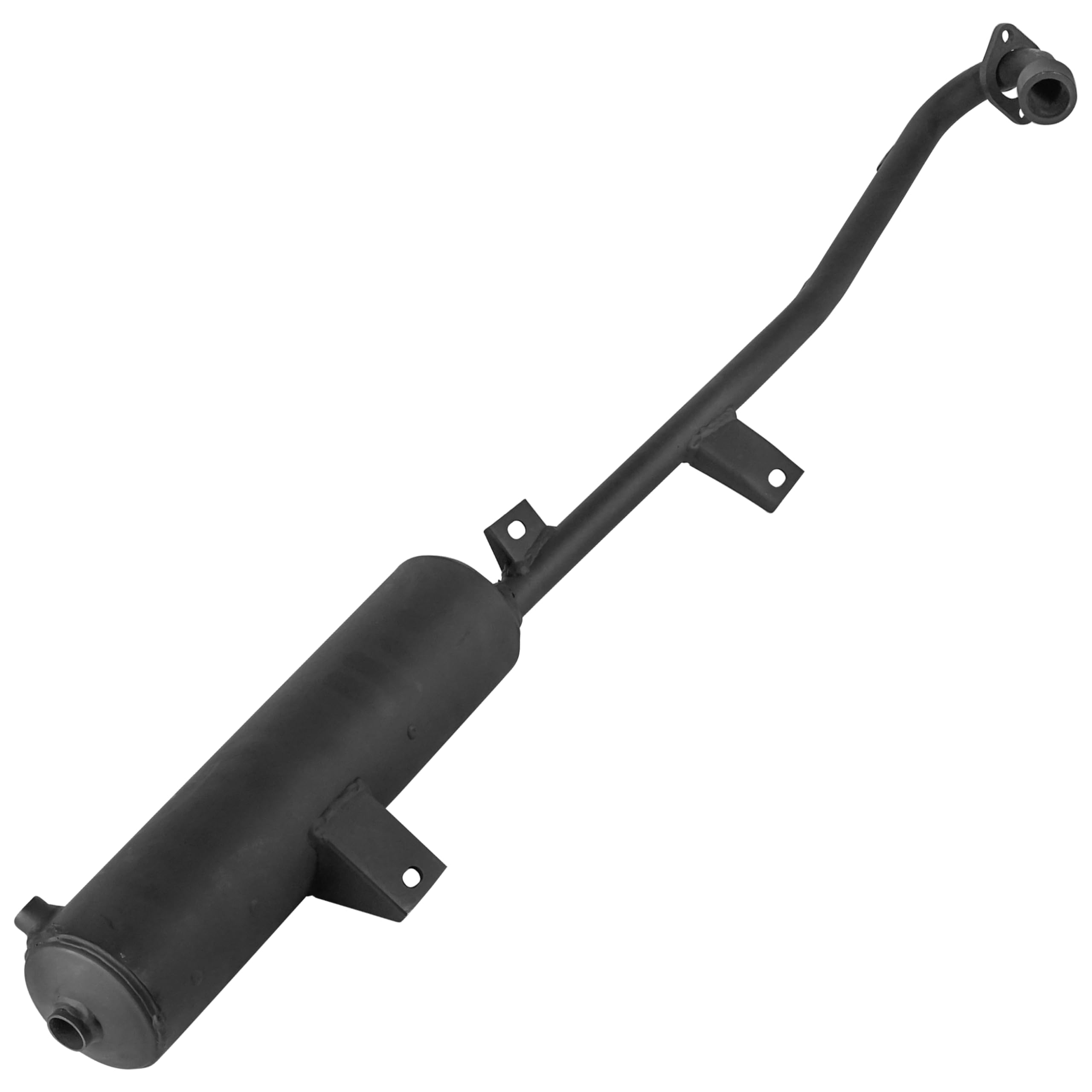
The Caltric TRX300FW muffler represents the closest thing to a factory replacement for the Honda Fourtrax 300 4×4 without visiting a dealership. The chambered OEM-style construction prioritizes quiet operation and predictable fitment, which is exactly what owners of older ATVs need when the original exhaust has rusted through or developed internal baffle rattle. Every verified owner reported that the sound level matches or closely approximates the original equipment, which is a rare compliment in the aftermarket space.
Fitment across the 1993–2000 model range is generally excellent, with the majority of buyers describing a straightforward swap that required only basic hand tools. A few reviewers noted that the mounting holes needed slight elongation to align perfectly, but this was described as a minor adjustment rather than a major fabrication task. One critical detail is that the muffler does not include the copper crush gasket for the header pipe connection, so ordering one separately is essential to prevent exhaust leaks at the joint. Using grease to hold the new gasket in place during assembly is a tip shared by multiple experienced installers.
Build quality feedback is uniformly positive, with owners praising the aluminum construction for its resistance to corrosion and the overall fit-and-finish that rivals Honda’s own parts. The 90-day warranty offers basic protection, though the consistent five-star ratings suggest that most units perform reliably well beyond that period. For anyone maintaining a Fourtrax 300 who wants to keep the machine sounding stock without paying dealer prices, this Caltric unit is the obvious choice.
What works
- OEM-style chambered design delivers factory-quiet sound levels that do not disturb trail neighbors
- Aluminum construction resists rust and keeps weight low on the rear of the ATV
- Exceptional fitment across a wide range of model years with minor adjustment needed
- Dramatically lower cost compared to OEM dealer replacement parts
What doesn’t
- Copper crush gasket not included and must be purchased separately for a proper seal
- Some mounting holes require slight filing or elongation for perfect alignment
- Not designed for performance gains, only as a direct OEM substitute
6. MMG Exhaust System for GY6 125cc-150cc Scooters

The MMG full exhaust system for GY6 engines is designed as a complete replacement package that includes the front link pipe, muffler can, and all necessary mounting hardware. The combination of an aluminum muffler body with a stainless steel connector pipe aims to balance weight savings with corrosion resistance at the joint that sees the most heat. Verified buyers report that the system bolts onto 125cc and 150cc GY6-based scooters with reasonable accuracy, though some noted that the internal pipe condition varied between units.
Aesthetic feedback is mixed but leans positive. The aluminum body looks clean and modern when first installed, but several owners observed that the black finish begins to fade and discolor after sustained use, particularly on machines that spend time in direct sunlight. The sound is noticeably louder than stock, which some riders appreciate for its aggressive note, while others find it excessive for daily commuting. The low ride height of the muffler body also poses a scraping risk on scooters like the Ruckus or Maddog when leaning into tight turns.
Quality control appears to be the main variable with this system. While some buyers described the unit as well-constructed and easy to install, a notable minority received pipes with internal rust, cut holes, or slag blockage that prevented proper fitment. The manufacturer specifies a six-month limited warranty, which offers some recourse for defective units. Given the variability, this system is best suited for scooter owners who are comfortable performing minor modifications and who value the full-system upgrade package over absolute plug-and-play convenience.
What works
- Complete system includes front pipe, muffler, and all mounting hardware for a full replacement
- Aluminum body reduces weight compared to stock steel exhaust systems
- Noticeably louder sound profile provides a sportier scooter experience
- Reasonable price point for a full-system upgrade on budget GY6 builds
What doesn’t
- Quality control is inconsistent, with some units arriving rusted or blocked with slag
- Low muffler positioning causes scraping on corners for low-riding scooters
- Finish fading and discoloration reported after extended use in sunlight
- Professional installation recommended despite the straightforward design
7. JFG RACING Dirt Bike Exhaust Slip-On
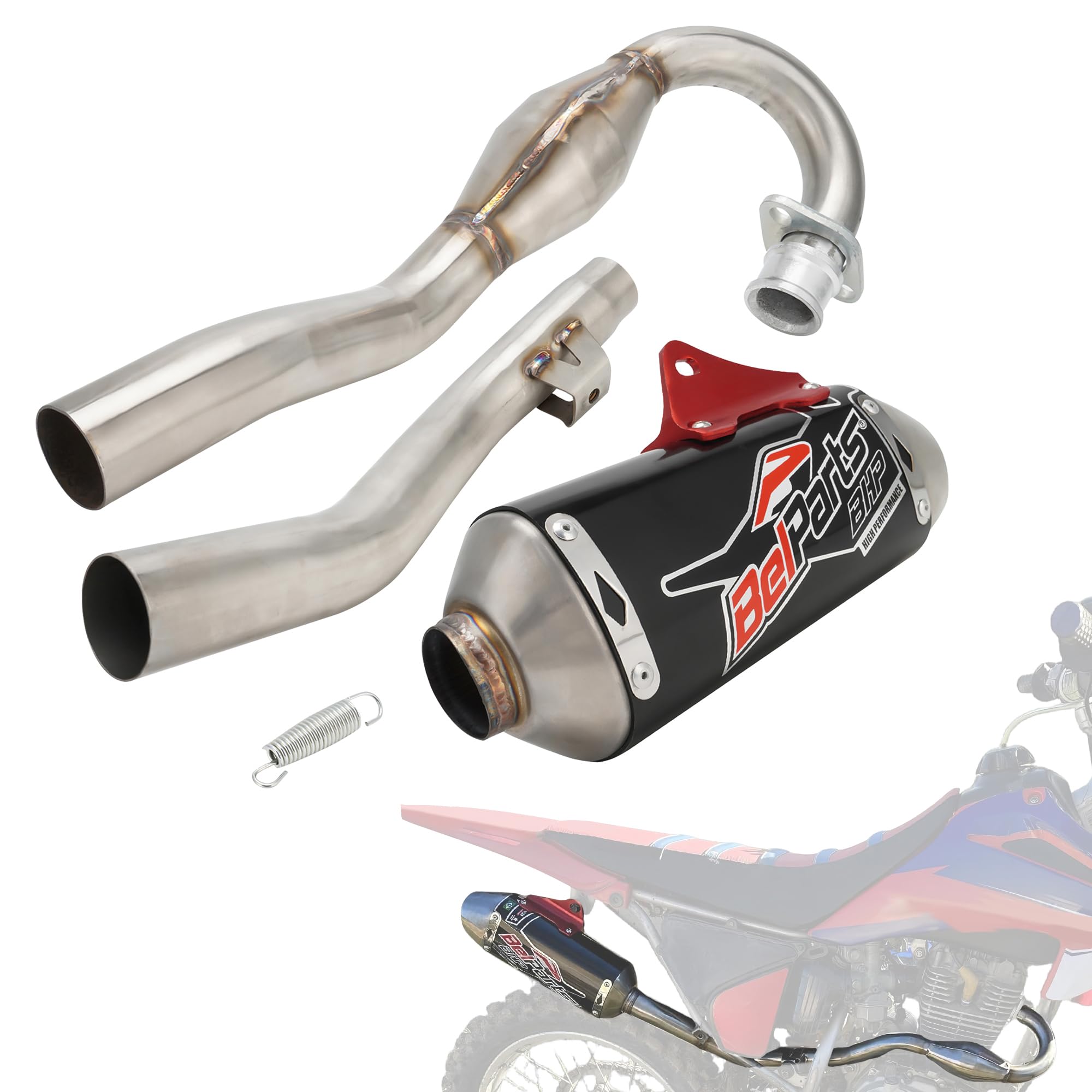
The JFG RACING slip-on exhaust is one of the most popular budget performance upgrades for the Hawk 250, CRF230F, and DRZ125 platforms. Owner reports consistently describe the sound as “pretty darn good” once the muffler is broken in, with a tone that is significantly louder than stock while still maintaining a pleasant character. The stainless steel construction gives the pipe a quality look at a price point that undercuts premium brands by a wide margin. Multiple buyers noted that the system transformed the feel of their bike, particularly when paired with a larger carburetor.
Fitment across the listed applications is where the JFG system reveals its budget origins. While the header bolts up to the DRZ125 and Hawk 250 without major issues, the mid-pipe bends and mounting bracket positions frequently require modification. Owners on the CRF230F found that the muffler mount needed a new hole drilled, and the mid-pipe connection was loose enough that a self-tapping screw was required to secure it. The weld quality is described as functional rather than beautiful, with no reports of leaks but plenty of comments about rough surface finish.
A critical consideration for trail riders is that the JFG system does not include a spark arrestor. Owners riding in areas with mandatory spark arrestor requirements, such as Minnesota, had to purchase and install an aftermarket unit separately. The pipe is also notably loud, which could attract unwanted attention on noise-sensitive trails. Despite these caveats, the value proposition is strong for DIY builders who are comfortable with basic fabrication and want to extract more character from their Chinese or Japanese dual-sport without spending four to five hundred dollars on a name-brand system.
What works
- Dramatic sound improvement over stock that deepens significantly after the break-in period
- Stainless steel construction offers good durability at a fraction of premium-brand pricing
- Compatible with Hawk 250, CRF230F, DRZ125, and XR150 with minor adaptation
- Clear performance gain when paired with a larger carburetor and intake upgrades
What doesn’t
- Mid-pipe bends and bracket positions require grinding, drilling, or welding for proper alignment
- No spark arrestor included, making it illegal for trail use in some states
- Weld quality is functional but cosmetically rough with visible slag in some areas
- Exhaust volume may exceed acceptable levels for noise-restricted riding areas
8. WQSING Muffler Silencer for Polaris Sportsman 500
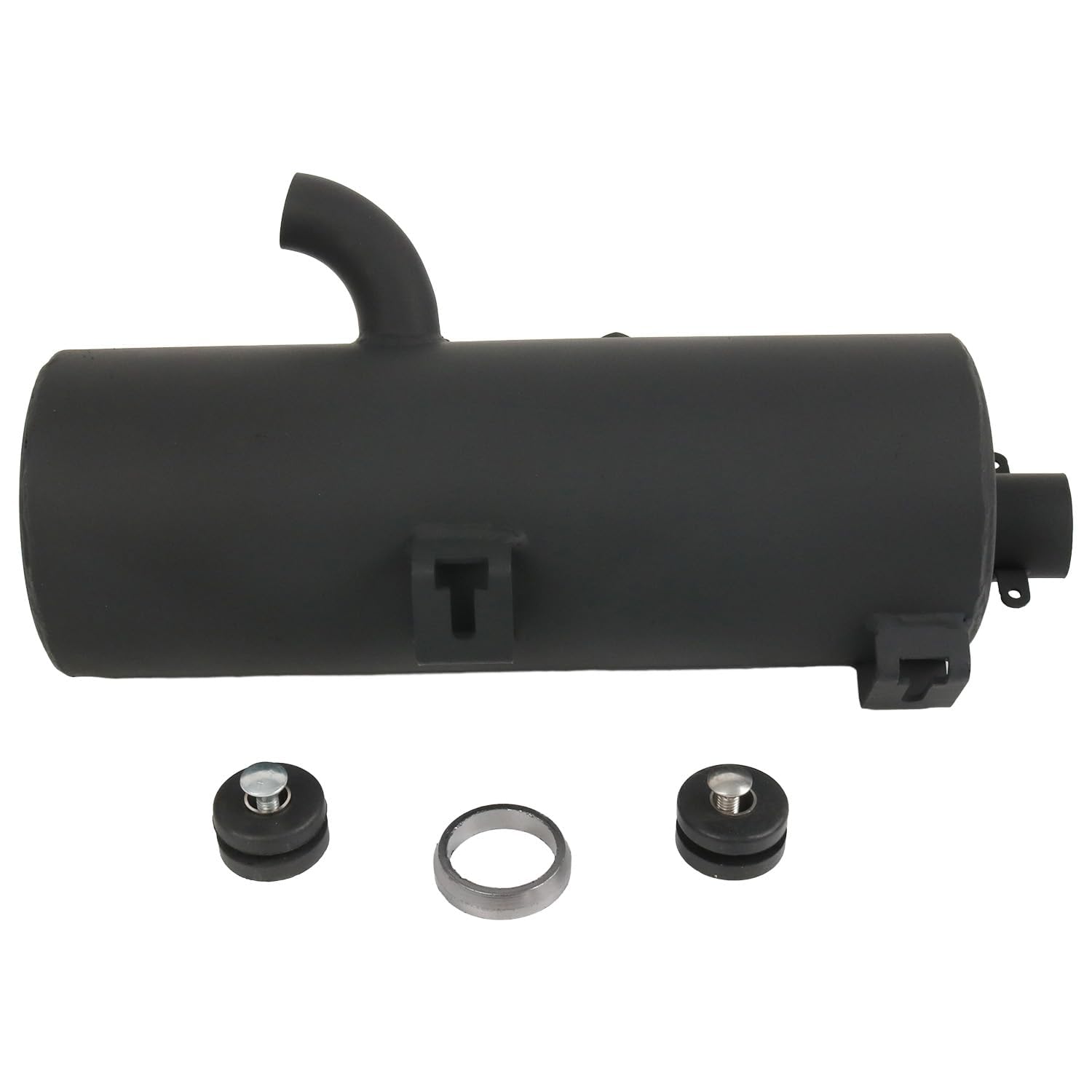
The WQSING muffler is positioned as the lowest-cost chambered replacement for the Polaris Sportsman 500, 335, and Xplorer 500 from the late 1990s through early 2000s. At this price point, the value proposition is straightforward: it gets the machine running quietly again without the -plus cost of an OEM unit. Verified buyers who went in with realistic expectations reported that the muffler “gets the job done” and performs adequately after minor fitting adjustments. The chambered design keeps the sound profile close to stock, which is a priority for riders who use their ATVs on shared land.
Quality control is the defining issue with this product. Several buyers received units with bent inlet pipes or weld slag blocking the internal passage, requiring immediate work with a die grinder before the muffler could be installed. The mounting brackets are described as “close enough,” with most owners needing to slot or elongate at least one hole to achieve proper alignment. One reviewer noted that the included bolt rattled loose during the first ride, which is a common issue with budget hardware packs and easily solved with thread locker.
The customer review profile tells a clear story: buyers who treat this as a temporary fix or a budget band-aid are satisfied, while those expecting a precision-engineered part are disappointed. The one-year warranty provides some reassurance, but the prevalence of fitment issues suggests that this muffler is best suited for mechanically adept owners who already own a die grinder and a set of files. For a machine that sees occasional use and needs a functioning exhaust without breaking the bank, the WQSING muffler fills that role adequately.
What works
- Extremely low price point makes it accessible for budget-conscious ATV owners
- Chambered design keeps sound levels reasonable and appropriate for trail use
- Fits a wide range of Polaris Sportsman and Xplorer models from 1996-2001
- One-year manufacturer warranty provides basic purchase protection
What doesn’t
- Frequent quality control issues including bent inlets, weld slag, and bracket misalignment
- Hardware is low-grade and prone to loosening without thread locker compound
- Installation requires grinding and modification even for basic fitment
- Not a durable long-term solution for riders who push their machines hard
9. Kids ATV Parts Performance Exhaust for Yamaha Jog 50cc

This handmade performance pipe targets the Minarelli vertical engine platform used in Yamaha Jog, Breeze, Zuma, and a wide range of 50cc 2-stroke scooters. The design is optimized for high-RPM power delivery, with verified owners reporting that the engine can reach 10,000 RPM or more without the silencer installed. The power band hits hard around 4,500 RPM and pulls cleanly through the mid-range before tapering off near the top, which is exactly the characteristic that 2-stroke tuners look for in an aftermarket pipe.
Fitment is the barrier to entry for this exhaust, as it is with most handmade pipes. The bracket mounting points do not align perfectly with stock scooter frames, and virtually every buyer reported needing to open up bolt holes with a file or drill. The pipe is designed for the Minarelli vertical engine and will fit into the general chassis space, but the exact mounting solution varies by scooter model. Owners of Buddy 50 and Zuma 50 machines confirmed that the pipe works well after the bracket holes are adjusted, but the process requires patience and basic tools.
Sound quality is a standout feature. Multiple owners described the exhaust note as “awesome” and noted that the volume is manageable for most riders despite the performance-oriented design. The pipe is well-constructed with clean welds, though one buyer suggested that spending roughly fifty percent more on a name-brand pipe might save the fitment hassle. For scooter enthusiasts who enjoy the fabrication aspect of tuning and want a genuine performance gain from their 50cc build, this pipe delivers the top-end rush that the stock exhaust restricts.
What works
- Significant top-end power increase with a clear power band hit at 4,500 RPM
- Handmade steel construction with clean welds and a distinctive race-style appearance
- Manageable sound level that avoids the ear-piercing rasp of some 2-stroke pipes
- Capable of supporting 10,000+ RPM operation on built Minarelli engines
What doesn’t
- Mounting brackets require filing or drilling to align with most scooter frames
- No silencer included for street-legal operation in noise-regulated areas
- Fitment varies significantly between different scooter models and years
- Price advantage narrows when compared to name-brand pipes that fit better
Hardware & Specs Guide
Material Types and What They Mean for Longevity
Exhaust systems in this guide use three primary materials. Stainless steel, typically 304 grade, offers the best combination of corrosion resistance and heat tolerance, making it the recommended choice for machines that see mud, water, and winter storage. Aluminum reduces weight by roughly thirty percent compared to steel but is more prone to cracking at weld junctions under constant vibration—the MMG GY6 system uses an aluminum body with a stainless connector to mitigate this. Mild steel is the cheapest option but requires a protective coating and will rust from the inside out once the high-heat paint burns off, which is the budget trade-off seen in the WQSING Sportsman muffler.
Sound Output: Chambered vs. Straight-Through
Chambered designs, like the Caltric TRX300FW and the WQSING Sportsman muffler, use internal baffles to reflect and cancel sound waves before they exit the tailpipe. This produces a tone close to stock and keeps decibel levels friendly for trail riding. Straight-through or performance designs, such as the JFG RACING slip-on and the Kids ATV Parts Minarelli pipe, use a perforated core wrapped in packing material. They flow more volume and produce a sharper, louder note but require periodic repacking to maintain sound quality. The Big Gun Eco series sits in between, using a hybrid baffle system that allows quiet core inserts to be swapped in for trail compliance.
Mounting Systems and Bracket Configurations
OEM-style replacements like the Caltric unit use a single hanger bracket that bolts directly to the frame in the factory location, offering the most predictable install. Slip-on performance systems typically use spring-loaded hangers with two or three attachment points, which provide vibration isolation but require precise alignment to avoid rattling. Axle-back systems designed for vehicles like the Jeep JK use band clamps at the pipe joint and hang from factory rubber isolators. Owners should budget for replacement isolators if the originals are aged, as the reviews for the ETL INDUSTRIES system highlight that removal is often harder than the installation itself.
Spark Arrestors and Trail Legality
Many managed riding areas require a USDA-approved spark arrestor on all internal combustion engines. The Big Gun 07-1272 and the Silent Rider BT-825 both accommodate spark arrestors as part of their design, while the JFG RACING and Kids ATV Parts systems do not include this feature. Adding an aftermarket spark arrestor to a pipe not designed for one can reduce flow and alter the power curve, so riders should verify compliance before purchasing if they ride on public land. The ETL INDUSTRIES JK exhaust is designed for on-road use and does not require a spark arrestor, but Jeep owners who take their rigs off-road should check local forestry regulations.
FAQ
What is the difference between a slip-on exhaust and a full system?
Will a new exhaust require carburetor rejetting?
How do I know if an exhaust will fit my specific four-wheeler model?
Why do some exhausts come with a removable quiet core?
How important is the copper crush gasket for exhaust installation?
Final Thoughts: The Verdict
For most buyers, the best four-wheeler exhaust winner is the Big Gun Exhaust 07-1122 Eco System Slip-On because it balances sound improvement, build quality, and price without requiring a full header replacement or major fabrication work. If you need a quiet OEM replacement that simply works, grab the Caltric TRX300FW. And for JK Wrangler owners who want a throaty growl with a no-cut install, nothing beats the ETL INDUSTRIES axle-back system.

Certification: BSc in Mechanical Engineering
Education: Mechanical engineer
Lives In: 539 W Commerce St, Dallas, TX 75208, USA
Md Amir is an auto mechanic student and writer with over half a decade of experience in the automotive field. He has worked with top automotive brands such as Lexus, Quantum, and also owns two automotive blogs autocarneed.com and taxiwiz.com.