Dropping in a replacement or upgrade engine for a four-wheeler is one of those moves that either transforms the machine or turns into a weekend-long headache that stretches into months. The difference almost always comes down to whether the chosen powerplant actually matches the chassis, the riding style, and the kind of abuse the vehicle will see. Skimping on research here means buying twice — or worse, dealing with mounting holes that don’t line up and wiring that fights you at every turn.
I’m Amir — the founder and writer behind Four Wheel Ask. Over years of diving deep into spec sheets, owner forums, and parts catalogs, I have developed a sharp eye for separating genuinely well-engineered four-wheeler engines from units that look good in product photos but disappoint in the real world.
For anyone rebuilding a tired ATV, upgrading a pit bike, or swapping a powerplant into a utility rig, locking in the best four-wheeler engine comes down to matching displacement, mounting geometry, transmission type, and cooling system to the specific application without overspending on features that won’t matter on the trail.
How To Choose The Best Four-Wheeler Engine
Selecting a drop-in engine for an ATV, go-kart, or utility vehicle requires more than just matching the displacement number. The mounting footprint, transmission layout, electrical compatibility, and cooling system all play a decisive role in whether the swap goes smoothly or turns into a fabrication project. Owners who rush past these details often end up with an engine that sits in the corner of the garage rather than bolted into the frame.
Mounting Pattern and Starter Location
This is the most common point of failure in an engine swap. Many Chinese-made 200cc and 250cc engines share similar hole spacing, but engines with a bottom-mounted starter motor often use a different bolt pattern altogether. Measuring the existing mounting points and cross-referencing them with the engine’s dimensions before ordering saves hours of cutting and welding. The CG250-style engines are widely used precisely because their mounting ears line up with the majority of popular ATV frames.
Transmission Type and Reverse Gear
Manual transmission engines with a hand clutch offer the most control on technical trails but demand more from the rider. Semi-automatic units eliminate the clutch lever while still giving gear selection, which suits younger or less experienced operators. Fully automatic CVT engines are the simplest to drive and are common on youth quads and utility machines. Reverse gear availability varies widely — some budget engines omit it entirely, which can be a dealbreaker on tight trails or in loading situations.
Cooling System and Cylinder Construction
Air-cooled engines dominate the budget-to-mid-range market because they are simple and lightweight, but they reach thermal limits faster during sustained hard use. Aluminum cylinder heads with cast iron sleeves offer a solid balance of heat dissipation and wear resistance. Engines with all-aluminum construction shed heat quickly but may wear faster in dusty conditions. For utility machines that see long work sessions, the extra weight of a cast iron sleeve is a durability advantage worth considering.
Quick Comparison
On smaller screens, swipe sideways to see the full table.
| Model | Category | Best For | Key Spec | Amazon |
|---|---|---|---|---|
| Briggs & Stratton 17.5 HP | Premium | Lawn tractor & utility replacement | 500cc, 9-amp electric start, cast iron sleeve | Amazon |
| HHH 200cc Utility ATV | Premium | Adult utility riding & hauling | 177cc, CVT automatic, reverse, 23/22-inch wheels | Amazon |
| maXpeedingrods 420cc | Performance | Go-karts, log splitters & heavy tools | 420cc OHV, electric + recoil start, 1-inch shaft | Amazon |
| X-PRO Storm 125 | Design | Youth ATV with safety controls | 125cc 4-stroke, remote shutoff, speed governor | Amazon |
| Lifan 125cc | Value | Trail bike & pit bike swaps | 125cc semi-auto, 4-speed, 20mm shaft | Amazon |
| X-PRO 4-Stroke w/Reverse | Premium | 200cc-250cc ATV rebuilds needing reverse | Vertical 4-stroke, manual transmission, electric start | Amazon |
| ICEBear 110cc Youth ATV | Battery | Entry-level kids’ quad | 110cc automatic CVT, remote shutoff, 6-inch tires | Amazon |
| LOYALHEARTDY CG250 | Value | Budget 250cc ATV replacement | 250cc single, 5-speed manual, air-cooled | Amazon |
| YIPONYT 200cc/250cc | Performance | ATV engine swap with manual transmission | 250cc vertical, 5-speed, electric/foot start, CDI | Amazon |
| DNYSYSJ 125CC | Design | Go-kart & buggy power | 119.7cc semi-auto, 3-speed, reverse, wiring harness | Amazon |
| MotoTec Demon 50cc | Value | Youth gas dirt bike | 50cc 2-stroke, kick start, alloy steel frame | Amazon |
In‑Depth Reviews
1. Briggs and Stratton Vertical 17.5 HP 500cc INTEK Engine

Briggs and Stratton’s 17.5 HP INTEK engine has been a staple in the lawn and utility replacement market for years, and this 500cc vertical shaft unit carries the brand’s reputation for straightforward reliability. The cast iron cylinder sleeve is a standout feature at this displacement level — it provides a wear-resistant bore surface that extends service life significantly compared to plain aluminum cylinders. The dual-element air filter adds another layer of protection for engines running in dusty mowing or job-site conditions, which is exactly the kind of real-world engineering that reduces ownership headaches over time.
The linear balancing system Briggs uses in this INTEK series does a credible job of reducing vibration at typical operating speeds, which translates to less fatigue on both the equipment and the operator during longer work sessions. The 9-amp electric start is robust enough to spin the 500cc displacement reliably even in cooler weather, and the 1-inch shaft with a 7/16-inch tapped end and 1/4-inch keyway fits the vast majority of standard riding mower and utility equipment spindles. This engine is designed as a direct replacement for a wide range of popular lawn tractors, which simplifies the sourcing process for anyone working on a common chassis.
Installation documentation is minimal, so owners should be prepared to reference the original engine’s wiring layout rather than relying on a detailed included manual. The engine weighs enough that a second set of hands or a lift is advisable during the swap, and the shipping weight listed at under an ounce on the spec sheet is clearly a data entry error — the actual unit is substantial. For anyone needing a durable, well-supported vertical shaft engine for a mower or utility machine, this Briggs INTEK delivers proven longevity without exotic parts that are hard to find later.
What works
- Cast iron cylinder sleeve dramatically improves bore longevity
- Linear balancing system keeps vibration low during sustained operation
- Standard 1-inch shaft fits most mower and utility equipment spindles
What doesn’t
- No detailed installation manual included with the engine
- Listed weight appears to be incorrect in the spec sheet
2. HHH 200cc ATV Big Utility Four Wheeler CT-200-1

The HHH CT-200-1 is a full-size utility ATV powered by a 177cc 4-stroke air-cooled engine paired with a fully automatic CVT transmission that includes a dedicated reverse gear. This platform is aimed squarely at adults and larger youth riders who need a machine that can handle trail riding, light hauling, and utility tasks without the complexity of a manual gearbox. The D-N-R transmission layout makes operation intuitive — twist the throttle and go, with no clutch lever or shift pattern to manage on rough terrain.
The utility focus shows in the details: front and rear luggage racks allow carrying extra gear, the front bumper offers a degree of protection in low-speed impacts, and the bright LED headlight paired with enlarged tail lights enables safe riding in low-light conditions. The 23-inch front and 22-inch rear tires are substantially larger than what most youth-oriented quads carry, which translates to better ground clearance and a more stable ride over uneven surfaces. The widened rear tires further improve traction and cornering stability, addressing a common weak point on narrower ATV designs.
Assembly is required — the machine ships approximately 70 percent assembled in a metal crate, with the buyer needing to install the tires, handlebars, and a few other components. The first oil change is mandatory immediately after assembly to remove any shipping preservatives or debris from the initial break-in. The engine’s 177cc displacement is modest for a full-size ATV, so buyers expecting high-speed performance may find it adequate rather than thrilling, but for utility work and moderate trail riding the power delivery is well matched to the chassis.
What works
- Automatic CVT with reverse makes operation simple for all skill levels
- Large 23/22-inch wheels provide excellent ground clearance and stability
- LED lighting and utility racks add genuine trail and work functionality
What doesn’t
- Requires significant assembly and immediate break-in oil change
- 177cc engine is adequate but not powerful for aggressive riding
3. maXpeedingrods 15HP 420cc Gas Engine
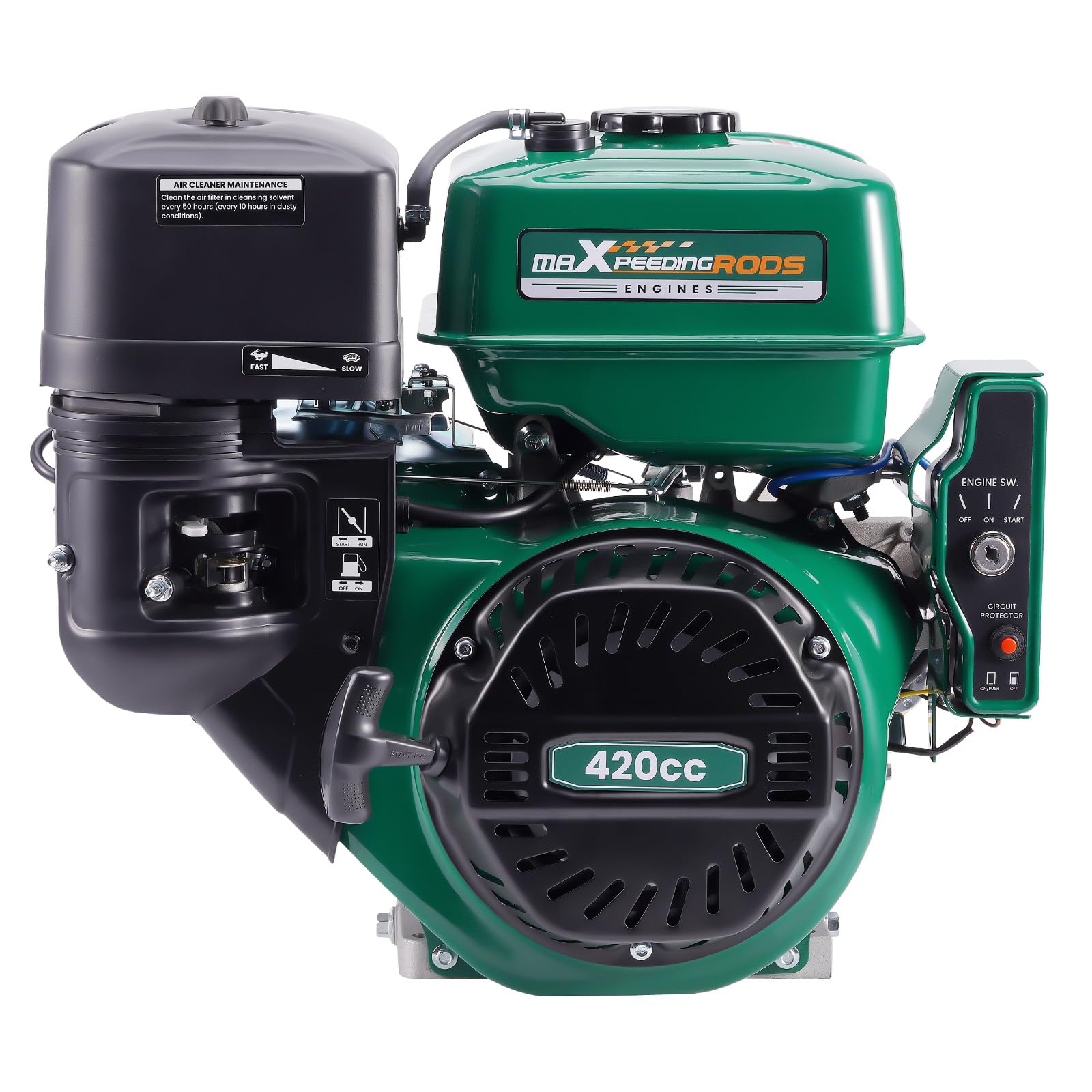
maXpeedingrods has carved out a reputation for offering solid-value horizontal shaft engines that punch above their price point, and the 420cc OHV model is one of their most versatile offerings. With a displacement of 420cc and a compression ratio of 8.0:1, this engine produces an honest 15 horsepower that is well suited for go-karts, log splitters, compressors, lawn mowers, water pumps, and pressure washers. The bore and stroke dimensions of 90mm by 66mm indicate a relatively oversquare design that favors torque production at lower RPM, which is exactly what utility and recreational applications demand.
The dual-start system is a practical feature that reduces frustration in the field — the electric start via key turn is convenient for daily use, while the recoil backup ensures the engine can still be fired up if the battery goes flat or the starter solenoid fails. The OHV (overhead valve) layout contributes to both power output and fuel efficiency by improving the engine’s breathing compared to side-valve designs. The low-oil automatic shutoff is a genuine longevity feature that prevents the engine from running under lubrication-starved conditions, which is the cause of a significant number of premature failures in utility engines.
The 1-inch diameter shaft with a 1/4-inch keyway and 3/8-inch threaded end is a standard configuration that fits most clutch and pulley setups used in the go-kart and small-equipment world. The fuel tank capacity of 6 liters provides a reasonable run time between refills for most applications. Owners should note that the engine is shipped without oil, so filling the crankcase with SAE 10W-30 before the first start is mandatory. The horizontal shaft orientation is important to confirm before purchase — this engine is not designed for vertical shaft mower deck applications.
What works
- Dual electric and recoil start provides reliable ignition redundancy
- OHV design improves fuel efficiency and power delivery across the RPM range
- Standard 1-inch shaft with keyway fits most clutch and pulley systems
What doesn’t
- Shipped without oil — must be filled before initial startup
- Horizontal shaft orientation limits application to specific equipment types
4. X-PRO Storm 125 125cc ATV Quad

The X-PRO Storm 125 is a youth-oriented ATV that uses a reliable 125cc 4-stroke engine as its foundation, but the real engineering focus here is on the control and safety systems that surround the powerplant. The engine itself is an air-cooled single-cylinder unit designed to prevent overheating during typical youth riding sessions, and the 4-stroke layout keeps fuel mixing simple with no premix requirements. The 125cc displacement is a well-established size for younger riders transitioning from smaller displacement machines, offering enough torque to climb gentle inclines without delivering intimidating speed.
What distinguishes the Storm 125 from basic youth quads is the wireless remote cutoff switch that allows a parent or supervisor to kill the engine from up to 20 meters away. This is paired with a handlebar-mounted speed governor that can be adjusted from a low setting of around 5 km/h up to a level appropriate for an experienced young rider. The combination means the same machine can grow with the rider’s skill level without requiring a separate purchase. The upgraded swing arm and cast steel spindle assembly address durability weak points that plagued earlier budget youth ATVs, reducing the likelihood of suspension and steering failures.
The 2.25-meter minimum turning radius is notably tighter than many competitors, which improves maneuverability in confined spaces and on tight trails. The engine’s 125cc power output is modest but well matched to the chassis and intended rider weight range. Buyers should be aware that assembly is required and that the included documentation may not cover every step in detail. The speed governor and remote shutoff systems should be tested before each ride to confirm they are functioning correctly, as these are the primary safety layers for young operators.
What works
- Wireless remote shutoff provides parent-controlled engine kill from distance
- Adjustable speed governor lets the quad adapt as the rider gains experience
- Upgraded spindle and swing arm improve durability over earlier budget quads
What doesn’t
- Assembly instructions could be more thorough for first-time builders
- Engine power is adequate for beginners but not for aggressive trail riding
5. Lifan 125cc Engine Semi-Auto 4 Stroke

Lifan’s 1P54FMI 125cc engine is a well-known powerplant in the mini-bike, trail bike, and pit bike world, and for good reason. The 4-stroke semi-automatic design means the rider shifts through the N-1-2-3-4 gear pattern using only the foot lever — there is no hand clutch to manipulate, which reduces the learning curve for new riders and simplifies operation on technical terrain. The shaft diameter is 20mm, and the engine comes with a 15-tooth 428 chain sprocket installed, which is a standard size that fits the vast majority of mini-bike and pit bike drivetrains.
The mounting hole spacing follows the convention used by Honda CT70, CRF110, and a wide range of Chinese clone frames, making this engine a direct replacement or upgrade for countless small-displacement bikes. The kit includes the engine itself, intake manifold, kick starter, and manifold kit, though buyers should verify that their specific frame uses the same mounting pattern before ordering. The Lifan brand carries more recognition and quality assurance than generic unbranded Chinese engines, which gives owners better access to replacement parts and technical information down the road.
The semi-auto transmission eliminates the need to coordinate clutch lever and throttle, which is a genuine advantage in slow-speed technical riding where stalling is common. The 125cc displacement produces modest power suitable for entry-level to intermediate riders, and the air-cooled design keeps weight low. Owners should plan to change the oil frequently — the small crankcase volume means the oil degrades faster than in larger engines. The kick starter is reliable but requires a consistent technique; some owners have reported that the engine can be stubborn to start when cold without a properly adjusted carburetor.
What works
- Semi-auto clutch eliminates hand clutch operation for easier trail riding
- Standard mounting pattern fits a huge range of mini-bikes and pit bikes
- Lifan brand offers better parts availability than generic clone engines
What doesn’t
- Cold starts can be inconsistent without careful carburetor tuning
- Small crankcase oil volume requires frequent change intervals
6. X-PRO 4-Stroke Vertical ATVs Engine with Reverse
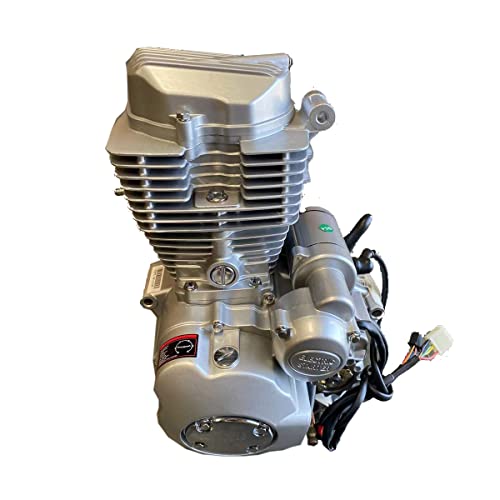
X-PRO’s vertical 4-stroke engine is designed specifically as a drop-in replacement for 200cc and 250cc ATVs, and the inclusion of a manual reverse gear sets it apart from many budget engines that omit this function entirely. The vertical cylinder orientation matches the majority of Chinese-made ATV chassis, and the electric start system provides convenient ignition without requiring a kick starter for daily use. The 65-pound weight reflects the presence of the starter motor, reverse gear assembly, and the robust metal construction that X-PRO has used across their powertrain lineup.
The manual transmission requires a hand clutch, which gives the rider full control over gear engagement and engine braking — an advantage on steep descents and technical sections where automatic transmissions can feel vague. The reverse gear is engaged through a separate lever or shift pattern, allowing the rider to extricate the machine from tight spots without pushing. The engine’s compatibility with 200cc and 250cc ATVs depends on the mounting hole pattern matching, and X-PRO specifically warns against purchasing this engine if the original unit has a bottom-mounted starter, as the mounting holes differ.
Prospective buyers should carefully study the product images and compare the mounting flange layout to their existing engine before committing to the purchase. The engine is sold as a long-block assembly that includes the major components, but peripheral items such as the carburetor, CDI box, voltage regulator, and ignition coil are not included and must be sourced separately. The 12-volt electrical system is standard for this class of ATV, but the wiring harness integration will require some familiarity with the machine’s existing electrical layout.
What works
- Integrated reverse gear is a significant convenience for trail maneuvering
- Vertical cylinder orientation matches most Chinese ATV chassis designs
- Electric start eliminates kick-start effort on a 250cc displacement engine
What doesn’t
- Mounting pattern does not fit ATVs with bottom-mounted starter motors
- Carburetor, CDI, and other peripheral components must be purchased separately
7. ICEbear 110cc ATV Four Wheeler for Kids

The ICEbear 110cc ATV is a complete youth quad built around a fully automatic 4-stroke engine, designed to give entry-level riders a safe and manageable introduction to off-road riding. The automatic CVT transmission eliminates the need for any clutch or shift coordination — the rider simply twists the throttle to go and releases it to slow down, which allows the child to focus entirely on steering and terrain reading rather than drivetrain management. The 110cc displacement is a popular size for the 8-to-14 age range, offering enough torque for gentle trails without delivering power that overwhelms a novice.
Safety features are heavily emphasized. The wireless remote control allows a parent to shut off the engine from a distance, which provides peace of mind when the young rider moves out of direct supervision range. The speed limiter lets adults cap the maximum speed to match the child’s experience level, and the engine stop switch on the handlebar gives the rider their own kill option. The 6-inch tires are smaller than what larger ATVs carry, which keeps the seat height low and the center of gravity manageable for smaller riders, reducing the likelihood of tip-overs during turns.
The steel frame and full suspension provide a surprisingly capable platform for light trail use, and the electric start adds convenience over pull-start alternatives. The machine weighs approximately 190 pounds, which is substantial for a youth quad but helps keep it planted on loose surfaces. Buyers should be prepared for some assembly and should check the chain tension, tire pressure, and all fasteners before the first ride. The engine is air-cooled, so sustained high-RPM operation in hot conditions should be avoided to prevent overheating. The included tool kit covers basic adjustments but owners may want to supplement it with their own wrenches.
What works
- Fully automatic CVT eliminates clutch and shift learning challenges
- Wireless remote shutoff provides essential parent-controlled safety
- Electric start simplifies ignition for younger riders with less strength
What doesn’t
- Air-cooled engine can overheat during extended full-throttle running
- 190-pound weight is heavy for a youth quad if it needs to be lifted or pushed
8. LOYALHEARTDY CG250 250CC ATV Engine

The LOYALHEARTDY CG250 is a vertical single-cylinder 4-stroke engine that follows the established CG250 platform layout, which has become something of a standard in the Chinese ATV replacement market. With a displacement of 250cc and a compression ratio of 9.0:1, it produces a maximum horsepower output of approximately 13.4 horsepower at 8500 RPM and a peak torque of 14.5 Nm at 7000 RPM. The air-cooled design keeps weight and complexity low, though it does place a practical limit on how long the engine can be run at high load without thermal stress building up.
The 5-speed manual transmission uses a wet multi-plate clutch, which provides smooth engagement and good durability as long as the oil is changed on schedule. The engine comes with the intake pipe, drive sprocket, sprocket cover, and spark plug pre-installed, which saves some assembly time. However, the buyer should note that the carburetor, battery, CDI unit, voltage regulator, and ignition coil are not included in the package. This is a common sourcing pattern for replacement engines, but first-time swappers may be caught off guard by the additional cost and effort required to source these components.
The mounting pattern is designed to fit most Chinese 200cc and 250cc ATV frames, but the critical caveat is that this engine will not work with chassis that use a bottom-mounted starter configuration — the mounting holes do not line up. There is no reverse gear on this engine, which can be a significant inconvenience in tight trails or during loading. The lack of an included installation manual means the buyer needs to be comfortable with basic engine swap procedures or have access to online resources. For the price point, the CG250 offers decent value as a replacement for a matching failed engine, but it is not a plug-and-play upgrade for every chassis.
What works
- CG250 platform is widely used, making parts and information accessible
- Wet multi-plate clutch provides smooth engagement and consistent feel
- Intake pipe, sprocket, and spark plug are pre-installed for convenience
What doesn’t
- No reverse gear limits maneuverability in tight spaces
- Carburetor, CDI, and other critical components are not included
9. YIPONYT 200cc/250cc 4-Stroke ATV Engine
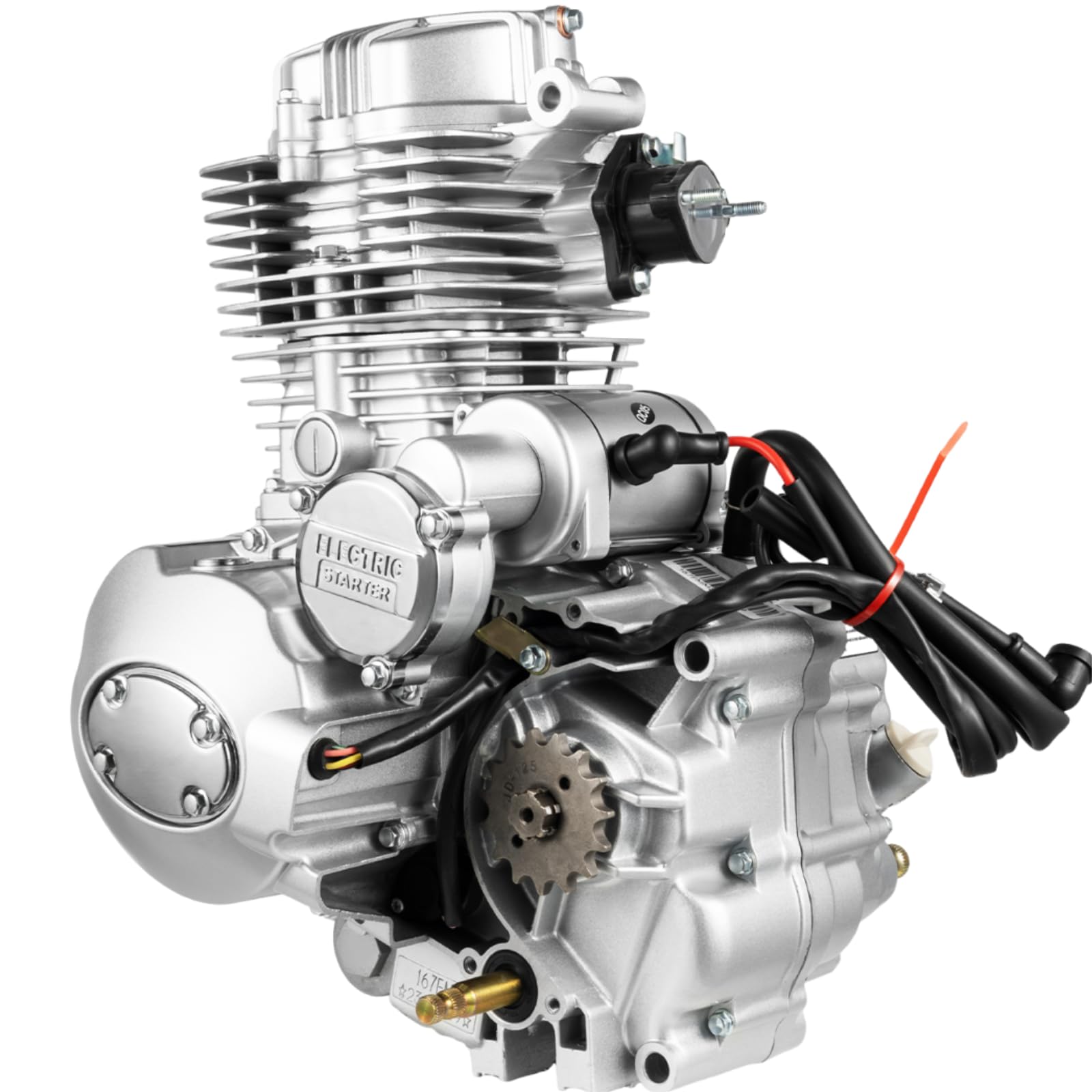
The YIPONYT 200cc/250cc engine is another CG250-style vertical single-cylinder 4-stroke, but with some material choices that differentiate it from the basic LOYALHEARTDY unit. The use of an aluminum cylinder head and aluminum cylinder block is intended to improve heat dissipation and reduce overall weight compared to engines with cast iron bores. The reduced weight is a genuine advantage in chassis that are already heavy, and the improved cooling capacity of aluminum can help the engine maintain consistent power output during moderately demanding riding sessions.
The dual-start system — combining electric start with a foot kick starter — provides redundancy that is genuinely useful in the field. If the battery is depleted or the electric starter fails, the kick starter can still get the engine running without needing a jump pack. The 5-speed manual transmission with a wet clutch follows the same pattern as other CG250 derivatives, and the 9.0:1 compression ratio is compatible with standard unleaded gasoline. The 28-kilogram weight (approximately 62 pounds) is reasonable for a 250cc engine with a starter motor and transmission attached.
Compatibility is limited to ATVs where the mounting holes match the CG250 pattern, and the same bottom-mounted starter exclusion applies — if the original engine has the starter mounted below the cylinder, this unit will not bolt up. The included components are the same basic bundle: intake pipe, drive sprocket, sprocket cover, and spark plug. The carburetor, CDI, voltage regulator, and ignition coil must be sourced separately, which adds to the total project cost. The absence of reverse gear is consistent with this engine class and should be factored into the buying decision for anyone riding in terrain that requires frequent backing up.
What works
- Aluminum cylinder and head construction improves cooling and reduces weight
- Electric and kick start redundancy is valuable for remote riding areas
- CG250-compatible mounting fits a wide range of Chinese ATV frames
What doesn’t
- No reverse gear limits usability in confined trail sections
- Peripheral components like carburetor and CDI are not included
10. DNYSYSJ 125CC Engine 4-Stroke with Reverse & Wiring Harness

The DNYSYSJ 125cc engine is a horizontal single-cylinder 4-stroke that comes with a semi-automatic 3-speed transmission and, notably, a reverse gear — a feature that is uncommon at this displacement and price point. The bore and stroke measurements of 52.4mm by 55.5mm yield a displacement of 119.7cc, placing it right in the heart of the 110cc-to-125cc category. The compression ratio of 9.0:1 is standard for this class, and the electrical start system ensures convenient ignition without requiring kick-start strength from the operator.
The inclusion of a wiring harness with this engine is a practical advantage that reduces the electrical guesswork during installation. For someone swapping this into a go-kart, buggy, or small ATV, having the harness pre-configured for the CDI, coil, and starter saves hours of tracing wires and soldering connectors. The semi-automatic transmission (no hand clutch) with reverse makes this engine particularly well suited for go-kart applications where the driver needs simple forward-neutral-reverse control without complex shift patterns. The air-cooled design keeps weight manageable and eliminates the risk of coolant leaks in a chassis that may see rough use.
The horizontal shaft orientation is important to confirm — this engine is not a direct drop-in for vertical-shaft ATV chassis. Potential buyers should measure their existing engine’s mounting pattern and shaft orientation before purchasing. The 3-speed gearbox provides a limited gear range compared to 4-speed or 5-speed units, which can be a constraint in applications requiring both low-speed torque and higher top speed. The engine is best suited for lightweight vehicles where the 125cc power output and simple transmission are well matched to the vehicle weight and intended use case.
What works
- Reverse gear is a rare and valuable feature at the 125cc displacement level
- Included wiring harness simplifies electrical installation significantly
- Semi-auto transmission with reverse is ideal for go-kart applications
What doesn’t
- Horizontal shaft orientation limits compatibility with vertical-shaft chassis
- 3-speed gearbox offers a narrower ratio spread than 4- or 5-speed options
11. MotoTec Demon 50cc 2-Stroke Kids Gas Dirt Bike
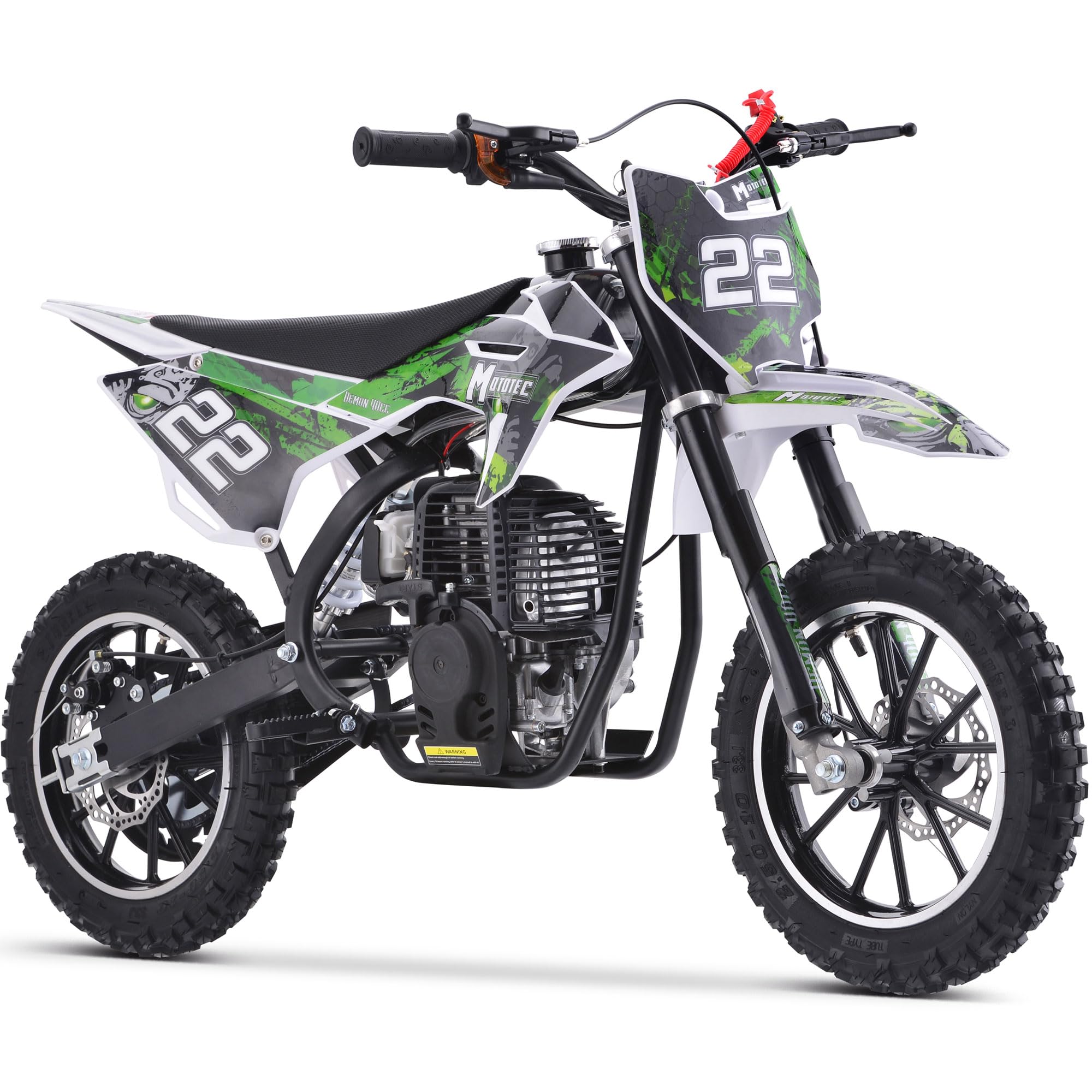
The MotoTec Demon 50cc is a youth-oriented gas dirt bike that uses a 2-stroke engine — a significant departure from the 4-stroke engines that dominate the rest of this list. The 2-stroke design delivers power on every revolution, which gives this small-displacement engine a surprisingly lively power-to-weight ratio compared to a 4-stroke of similar displacement. For a young rider moving up from a pedal bike or an electric machine, the 2-stroke’s power delivery provides a more engaging introduction to internal combustion engines, though it does require premixing oil with the fuel.
The 50cc displacement is at the lower end of the youth spectrum, making this bike suitable for riders aged roughly 6 to 10 depending on height and experience. The alloy steel frame provides a sturdy platform that can withstand the drops and bumps that come with learning to ride off-road. The 60-pound weight is light enough that most parents can lift the bike out of a truck bed or carry it over obstacles, yet substantial enough to feel stable on loose terrain. The 30-day parts replacement warranty is minimal but does provide some protection against manufacturing defects during the initial break-in period.
The kick-start mechanism is reliable once the starting technique is learned, but younger riders may struggle to generate enough kick speed to fire the engine consistently. The 2-stroke engine also produces a sharper exhaust note than a 4-stroke, which some parents and neighbors may find objectionable. Assembly is required, and the included tool kit covers only the most basic tasks. The carburetor tuning often needs adjustment out of the box to account for altitude and temperature differences from the factory setting. For families looking for the simplest possible powerplant, a 4-stroke engine may be a better fit, but the Demon 50cc rewards those willing to learn the 2-stroke routine with a genuinely fun riding experience.
What works
- 2-stroke engine delivers strong power-to-weight ratio for a 50cc platform
- 60-pound curb weight is manageable for parents to lift and transport
- Alloy steel frame offers good durability for entry-level riders
What doesn’t
- Kick start can be difficult for younger riders to operate consistently
- 2-stroke engine requires premixing fuel and oil at every fill-up
Hardware & Specs Guide
Displacement and Power Output
The displacement of a four-wheeler engine — measured in cubic centimeters (cc) — is the primary indicator of its potential power output, but it is not the sole factor. A 250cc engine with a 9.0:1 compression ratio and a tuned intake will produce different real-world power than a 250cc engine with a lower compression ratio and restrictive intake. Horsepower figures in the spec sheet are typically measured at the crankshaft without accounting for drivetrain losses, so expect a 15 to 20 percent reduction in wheel horsepower after the transmission and belt or chain losses are factored in. Torque curves matter more than peak horsepower numbers for utility and trail riding applications.
Cooling System Types
Air-cooled engines are the most common across the budget-to-mid-range spectrum because they eliminate the weight, complexity, and maintenance of a liquid cooling system. However, air-cooled engines reach thermal equilibrium at a higher temperature and are more susceptible to power loss and detonation during prolonged high-load operation. Liquid-cooled engines maintain more consistent operating temperatures and can sustain peak power output longer, but they add weight, require coolant changes, and introduce potential leak points. For intermittent recreational use, air cooling is adequate — for racing, heavy utility work, or desert riding, liquid cooling is a clear advantage.
Transmission Configurations
Manual transmissions with a hand clutch give the rider the most control over power delivery and engine braking, making them the preferred choice for technical off-road riding. Semi-automatic transmissions eliminate the hand clutch while still allowing gear selection via the foot lever — this simplifies operation without sacrificing gear range. Fully automatic CVT transmissions are the simplest to operate and are common on youth quads and utility machines, but they absorb some power through belt friction and can overheat during sustained steep climbing or heavy loads. Reverse gear availability varies widely and should be verified before purchase if tight-trail maneuvering is expected.
Cylinder and Piston Materials
Cast iron cylinder sleeves offer excellent wear resistance and are forgiving when oil change intervals are stretched, but they add weight and can run hotter than aluminum. Aluminum cylinders with Nikasil or similar coatings shed heat quickly and reduce reciprocating mass, allowing higher RPM and faster throttle response, but they wear faster if the air filter is compromised and dust enters the intake. For engines that see moderate use with consistent maintenance, aluminum is fine — for work engines that see long hours and sometimes neglected oil changes, a cast iron sleeve is the safer bet.
FAQ
How do I know if a replacement engine will fit my ATV or go-kart?
What does the compression ratio tell me about an engine?
Is it worth buying an engine with reverse gear?
What maintenance do four-wheeler engines require after installation?
Final Thoughts: The Verdict
For most buyers looking for a dependable drop-in powerplant, the best four-wheeler engine winner is the Briggs and Stratton 17.5 HP INTEK because it combines proven cast-iron cylinder durability, smooth linear balancing, and wide compatibility with standard utility equipment. If you want a complete ride rather than a bare engine, the HHH 200cc Utility ATV delivers automatic convenience and big wheel stability for adult trail and work use. And for budget-conscious swappers working on a go-kart or small ATV, the maXpeedingrods 420cc offers strong OHV performance with dual-start reliability at a compelling value point.

Certification: BSc in Mechanical Engineering
Education: Mechanical engineer
Lives In: 539 W Commerce St, Dallas, TX 75208, USA
Md Amir is an auto mechanic student and writer with over half a decade of experience in the automotive field. He has worked with top automotive brands such as Lexus, Quantum, and also owns two automotive blogs autocarneed.com and taxiwiz.com.