When your Ford Transit Connect doubles as a mobile workshop, the right ladder rack determines whether your day runs smoothly or turns into a cargo-securing headache. A rack that integrates with your van’s roofline, handles heavy loads, and installs without major modification saves time and protects your investment.
I’m Amir — the founder and writer behind Four Wheel Ask. I’ve spent years analyzing product specifications, build quality, and owner feedback across commercial-grade van accessories to help contractors make informed purchasing decisions.
This guide breaks down the top options for carrying ladders, pipes, and lumber on your Transit Connect, covering everything from low-profile steel systems to aluminum crossbar setups. Find your ideal best ford transit connect ladder rack by comparing weight capacity, build materials, and no-drill installation across top-rated models.
How To Choose The Best Ford Transit Connect Ladder Rack
Selecting the right ladder rack for your Transit Connect requires evaluating material durability, installation method, weight capacity, and vehicle generation fitment. The wrong choice can lead to roof damage, wind noise, or insufficient load support for your daily workflow.
Steel vs Aluminum Construction
Steel racks offer higher load capacities and greater impact resistance but add significant weight to your roof line. Aluminum systems reduce overall weight and resist corrosion without a powder coating, though they typically carry lower maximum loads. For contractors who transport heavy materials daily, steel provides long-term durability. For those prioritizing fuel economy and occasional light loads, aluminum saves weight and simplifies installation.
No-Drill vs Drilling Installation
No-drill systems clamp onto existing factory roof rails or mounting points, making them ideal for leased vehicles or owners who want reversible modifications. Drilling systems create a permanent attachment that offers greater stability for heavy loads but permanently alters the vehicle. Check your Transit Connect’s trim level before purchasing, as some systems are incompatible with factory roof rails or Titanium models.
Weight Capacity and Distribution
Manufacturers list maximum load capacities based on evenly distributed weight across all crossbars. Exceeding these limits risks roof panel damage and compromised handling. For standard extension ladders, a 300 to 500-pound system provides sufficient headroom. For multiple ladders or combined lumber loads, look for systems rated at 750 to 800 pounds with multiple tie-down points per bar.
Generation Fitment
The Ford Transit Connect has distinct first-generation (2008 to 2013) and second-generation (2014 onward) body styles with different roof contours and mounting points. Always verify that your chosen rack explicitly lists your model year and trim level. Some universal systems claim compatibility but require custom adjustments that compromise security.
Quick Comparison
On smaller screens, swipe sideways to see the full table.
| Model | Category | Best For | Key Spec | Amazon |
|---|---|---|---|---|
| MELIPRON Van Roof Rack | Van Rack | Best Overall | 800 lbs, No-Drill, Rear Roller | Amazon |
| StarONE 46″ Ladder Rack | Ladder Rack | Performance | 800 lbs, No-Drill, 3 Bar | Amazon |
| Vantech GFY 2 Bar | Ladder Rack | Value | 500 lbs, No-Drill, Steel | Amazon |
| AA-Racks AX312 3 Bar | Crossbars | Design | 450 lbs, 3 Bar, Aluminum | Amazon |
| Vantech H1 Low Profile | Low Profile | Premium | 500 lbs, 10.5″ Height, Steel | Amazon |
| AA-Racks ADX32-TR | Van Rack | Classic | 500 lbs, 60″ Bars, Drilling | Amazon |
| Vantech 2 Bar System | Roof Rack | Budget | 300 lbs, No-Drill, Wind Foil | Amazon |
| AA Racks AX302 | Van Rack | Heavy Duty | 750 lbs, 72″ Bars, Aluminum | Amazon |
| Vantech H1 for Transit | Roof Rack | Workhorse | 750 lbs, Steel, Galvanized | Amazon |
In‑Depth Reviews
1. MELIPRON Van Roof Rack with Rear Roller

The MELIPRON system stands out with its integrated rear cargo roller, a feature that protects your tailgate and brake light when sliding long ladders onto the roof. This design consideration alone saves contractors from costly body repairs over time. The adjustable supporting base allows you to maintain proper clearance from the rear door, eliminating friction points that wear down paint and seals.
With an 800-pound load capacity and no-drill installation onto factory roof rails, this rack delivers both muscle and convenience. The alloy steel construction with white powder-coated finish resists rust and corrosion, while the included ladder guides and nylon straps keep cargo stable during transit. This is a purpose-built solution for Transit Connect owners who load and unload frequently.
Build quality centers on heavy-duty alloy steel with anti-rust treatment, ensuring the rack maintains structural integrity even after years of outdoor exposure. The 3-bar configuration distributes weight evenly across the roof, reducing stress concentration on any single mounting point. For contractors who prioritize cargo protection and ease of use, this system represents a well-engineered investment.
What works
- Rear roller eliminates tailgate and light damage during loading
- No-drill installation saves time and preserves vehicle structure
- Adjustable base maintains proper door clearance
What doesn’t
- Higher price point compared to basic 2-bar systems
- Heavier steel construction adds roof load
2. StarONE 46″ Van Ladder Rack

The StarONE 3-bar system offers an impressive 800-pound capacity in a no-drill package designed specifically for 2014-on Transit Connect models. The kit includes hook-and-loop straps, ladder stoppers, and mounting holes for comprehensive cargo security that keeps multiple ladders and long materials firmly in place during transit.
Build quality centers on stainless steel fasteners and anti-scuff rubber strips on the crossbars that prevent damage to your ladders and cargo. Rubber pads at the mount bases help prevent water leaks, a thoughtful touch for vans parked outdoors in wet conditions. The 45-pound system weight reflects the robust steel construction.
Rubber caps on each post reduce wind noise at highway speeds, making this a practical choice for daily drivers who spend significant time on the road. The straightforward installation process targets contractors who need a reliable rack without complex setup. For those who regularly max out their cargo capacity, this system provides headroom for heavy loads.
What works
- High 800-pound capacity handles heavy combined loads
- No-drill setup with comprehensive hardware included
- Rubber components reduce noise and prevent water leaks
What doesn’t
- Heavier steel construction affects fuel economy
- Limited to 2014-on Transit Connect models
3. Vantech GFY Heavy Duty 2 Bar Ladder Roof Rack

The Vantech GFY brings a 500-pound capacity in a heavy-duty steel configuration with galvanized and powder-coated finish. This 2-bar system is specifically engineered for 2014-on Transit Connect models, ensuring proper fitment out of the box without the need for custom adjustments or adapter kits.
Steel construction at this price point delivers durability that aluminum systems sometimes compromise on. The material choice provides excellent impact resistance for contractors who frequently load and unload heavy extension ladders. The 5-year manufacturer warranty signals confidence in the build quality and long-term corrosion resistance.
Installation requires no drilling and integrates with existing mounting points, making this a viable upgrade for contractors who need a rugged rack without permanent vehicle modifications. The white finish matches standard fleet van aesthetics. For those seeking a straightforward, durable rack without premium features they will not use, this system hits the value sweet spot.
What works
- Galvanized steel with powder coat resists rust
- 5-year warranty provides long-term confidence
- No-drill installation preserves vehicle integrity
What doesn’t
- 2-bar configuration limits load distribution
- Heavier than aluminum alternatives
4. AA-Racks AX312 Aluminum Van Roof Rack Cross Bars
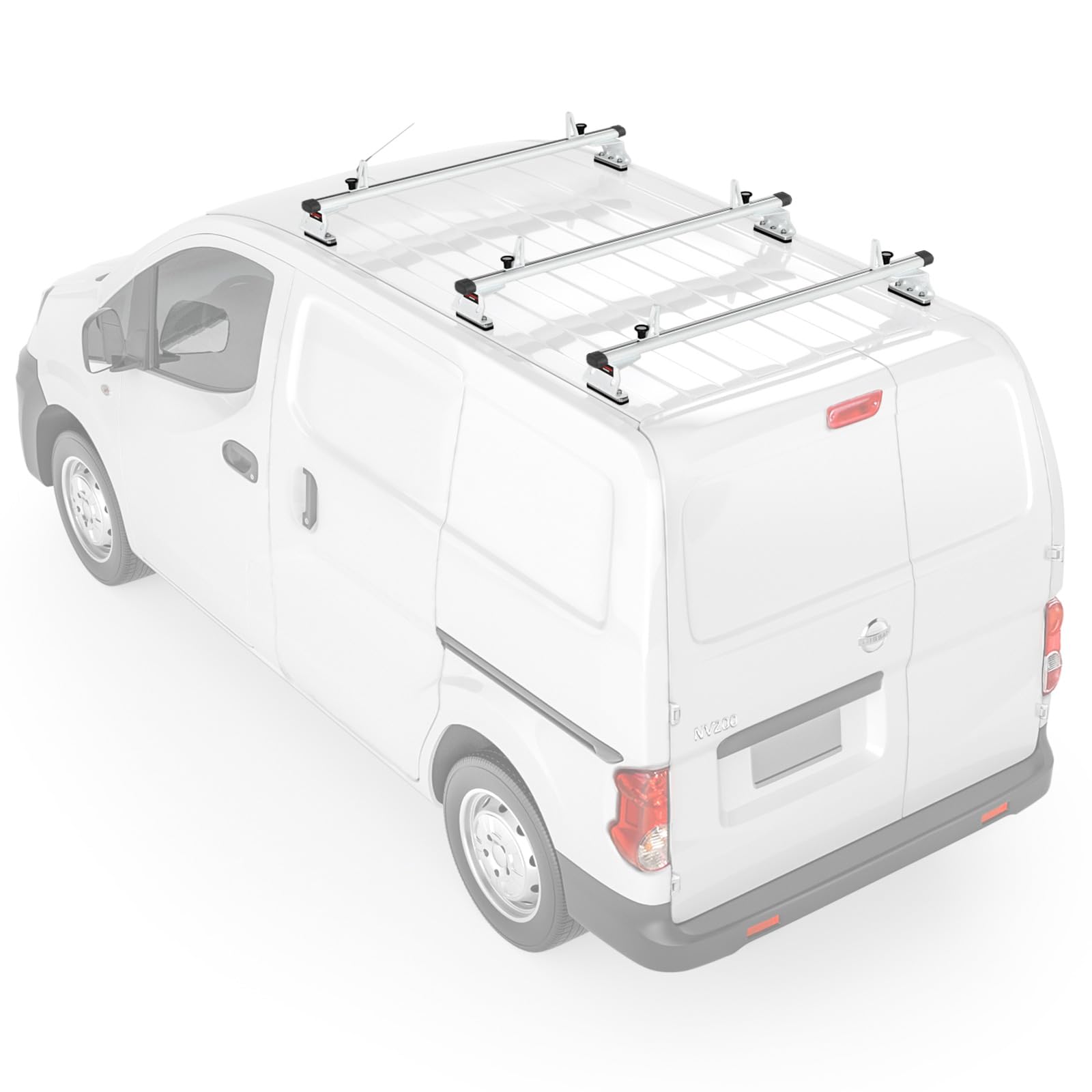
The AA-Racks AX312 employs a 3-bar aluminum design with a lower mounting base profile than their AX302 series, reducing overall height for better clearance in parking garages and low entrances. The 50-inch crossbars handle up to 450 pounds, providing sufficient capacity for standard ladder loads and bulky materials.
Stainless steel hardware paired with powder-coated aluminum provides corrosion resistance without the weight penalty of steel. The included ladder stoppers simplify securing bungees and tie-downs, reducing setup time at the start of each workday. The 20-pound system weight makes this one of the lighter options in the mid-range category.
Designed specifically for 2014-on Transit Connect, NV200, and City Express, this system offers cross-vehicle flexibility for contractors who operate mixed fleets. The thinner crossbar profile reduces wind resistance while maintaining structural integrity for daily ladder transport. For owners who value a clean, low-profile appearance, this rack delivers functional design.
What works
- Lightweight aluminum construction reduces roof load
- Low profile improves garage clearance
- Stainless steel hardware prevents corrosion
What doesn’t
- Lower capacity than steel alternatives
- Drilling required for installation
5. Vantech Steel H1 Low Profile 2 Bar Ladder Roof Rack
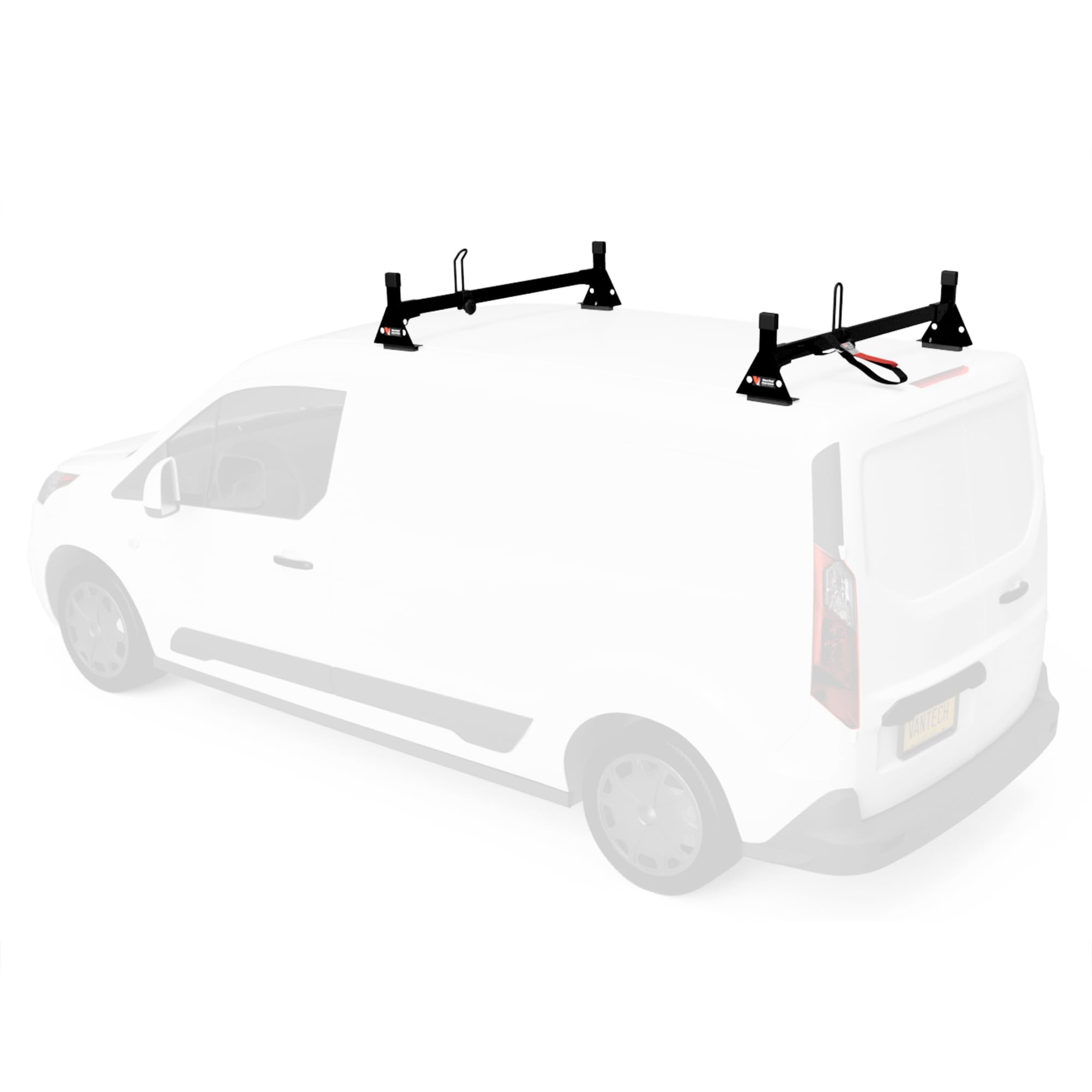
The Vantech H1 Low Profile system sits just 10.5 inches above the roofline, making it one of the most aerodynamic options for the Transit Connect. The 2-bar steel configuration carries 500 pounds with a footprint that minimizes drag and wind noise at highway speeds, a critical factor for contractors who cover long distances daily.
Mounting bases are 8 inches wide with four eyehooks per side, providing ample tie-down points for securing irregular cargo shapes. The system fastens onto existing factory mounting points without drilling, and the 34-pound steel construction delivers the stability needed for heavy ladder loads. The black powder-coated finish offers a professional appearance.
Note that this system does not fit vehicles with factory roof rails or Titanium trim models, so verify your specific configuration before purchasing. The low profile design is ideal for contractors who park in garages or navigate areas with height restrictions regularly. For those who prioritize aerodynamics and a clean roofline, this rack delivers premium engineering.
What works
- Ultra-low profile reduces wind noise and drag
- Wide mounting bases with multiple tie-down points
- No-drill installation on compatible models
What doesn’t
- Incompatible with factory roof rails or Titanium trim
- 2-bar design limits load distribution options
6. AA-Racks Model ADX32-TR Aluminum 2 Bar Utility Roof Rack
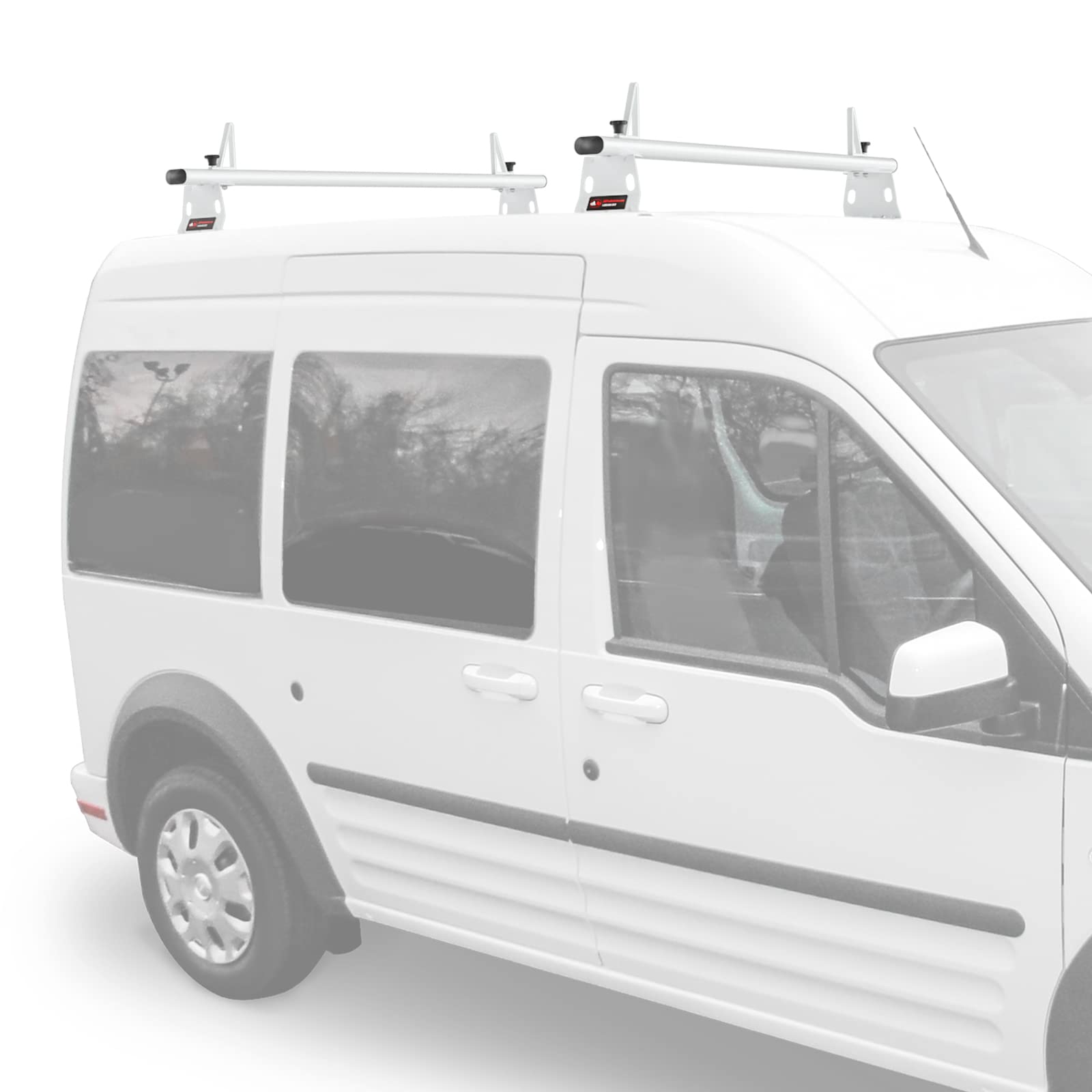
The AA-Racks ADX32-TR is designed for first-generation Transit Connect models from 2008 to 2013, making it a go-to choice for older work vans still in active service. The 60-inch crossbars provide wide support for oversized ladders and materials, extending beyond the roof footprint for maximum carrying width.
Each crossbar is rated at 250 pounds, totaling 500 pounds of capacity across the 2-bar system. The gauge 7 aluminum mounting base and powder-coated finish deliver weather resistance suited to daily commercial use. The anodized finishing adds an extra layer of corrosion protection for vehicles exposed to rain and road salt.
Installation requires drilling, which provides a permanent, secure attachment but means this rack is not ideal for leased vehicles or owners who prefer reversible modifications. Available in gloss white to match standard fleet colors, this system offers a traditional solution for contractors running first-generation Transit Connect vans that still have years of service ahead.
What works
- 60-inch crossbars handle oversized loads
- Anodized finish provides extra corrosion protection
- Specifically designed for first-generation Transit Connect
What doesn’t
- Drilling required limits reversibility
- Does not fit 2014-on Transit Connect models
7. Vantech 2 Bar Rack System for Transit Connect 2010-13
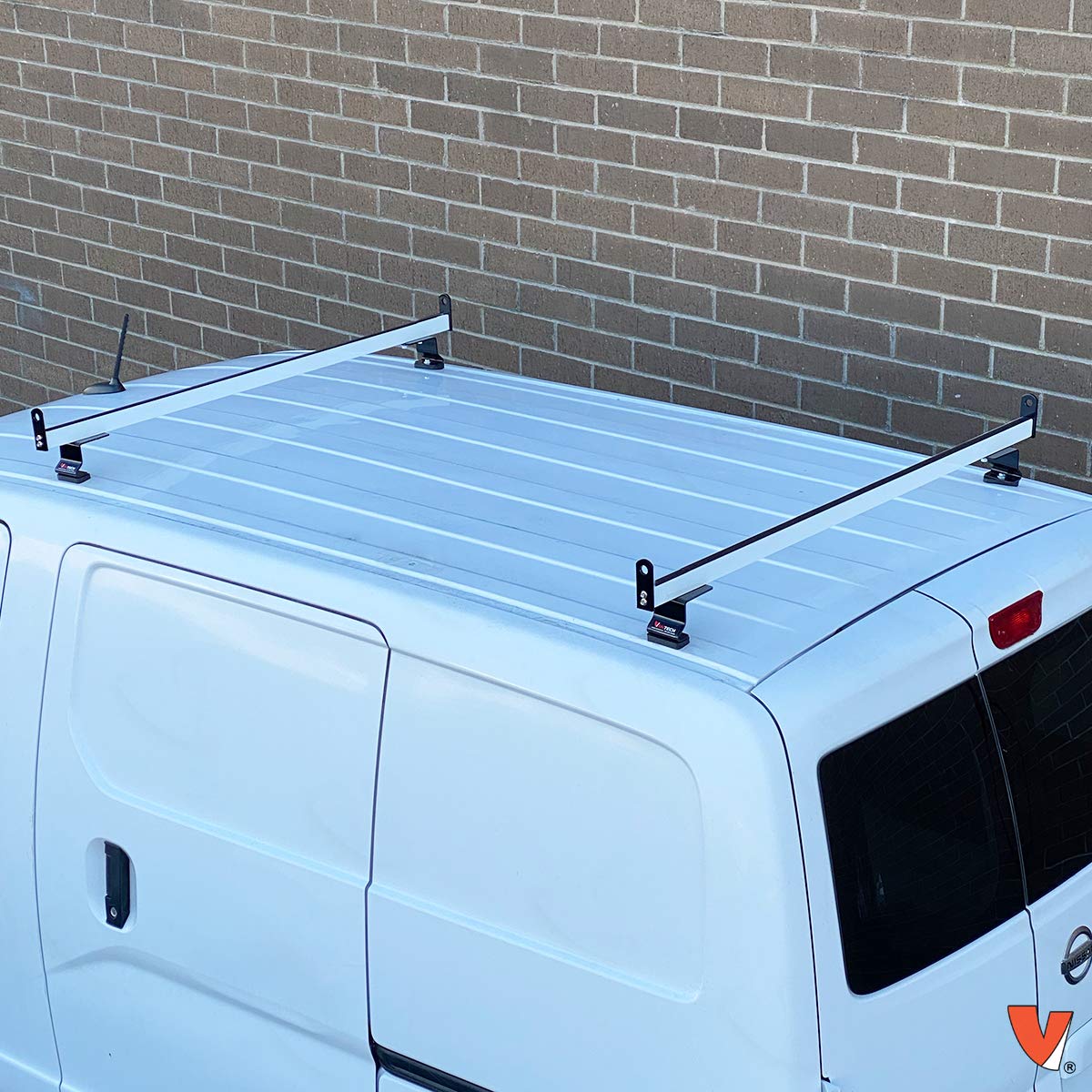
The Vantech 2 Bar System offers a no-drill installation for 2010-13 Transit Connect and NV200 models at a highly accessible entry point. The 50-inch extruded aluminum crossbars support 300 pounds evenly distributed, providing adequate capacity for single extension ladders and lighter construction materials.
The package includes a front wind foil to reduce noise, a feature typically found on more expensive systems and often overlooked at this level. White powder-coated aluminum construction keeps the total system weight at just 8 pounds, minimizing impact on fuel economy and making installation a one-person job with minimal strain.
With a height of only 6.5 inches to the top of the side support, this system maintains a low profile that integrates cleanly with the Transit Connect roofline. The four aluminum side supports each include an eyehook for basic tie-down security, suitable for lighter ladder loads. For contractors on a tight budget who need a functional rack without frills, this delivers essential capability.
What works
- Extremely lightweight at 8 pounds
- Front wind foil reduces highway noise
- No-drill installation on first-gen models
What doesn’t
- 300-pound limit restricts heavy load options
- Limited to 2010-13 Transit Connect and NV200
8. AA Racks Model AX302 Aluminum Van Ladder Roof Rack System

The AA Racks AX302 is a 3-bar, 72-inch system rated at 750 pounds, built for contractors who regularly carry multiple ladders or heavy construction materials. The extruded aluminum crossbars and gauge 7 aluminum mounting bases prioritize strength while keeping system weight manageable at 32 pounds.
This system uses stainless steel hardware throughout, eliminating rust concerns in wet climates. Each bar includes a pair of ladder stoppers for securing bungee cords and tie-downs. The anodized aluminum finish provides long-term corrosion resistance without the maintenance requirements of painted steel systems.
Note that this rack is designed for RAM ProMaster and full-size Ford Transit vans, not the Transit Connect. It is included here as a reference point for heavy-duty capabilities available in the broader van rack category. For Transit Connect owners, the design principles and material choices offer insight into what makes a truly heavy-duty rack system.
What works
- 750-pound capacity handles heavy commercial loads
- Stainless steel hardware eliminates corrosion
- 3-bar design distributes weight evenly
What doesn’t
- Designed for full-size vans, not Transit Connect
- 72-inch bars may overhang smaller vehicles
9. Vantech H1 for Ford Transit Cargo 2015-On 3 Bar Rack
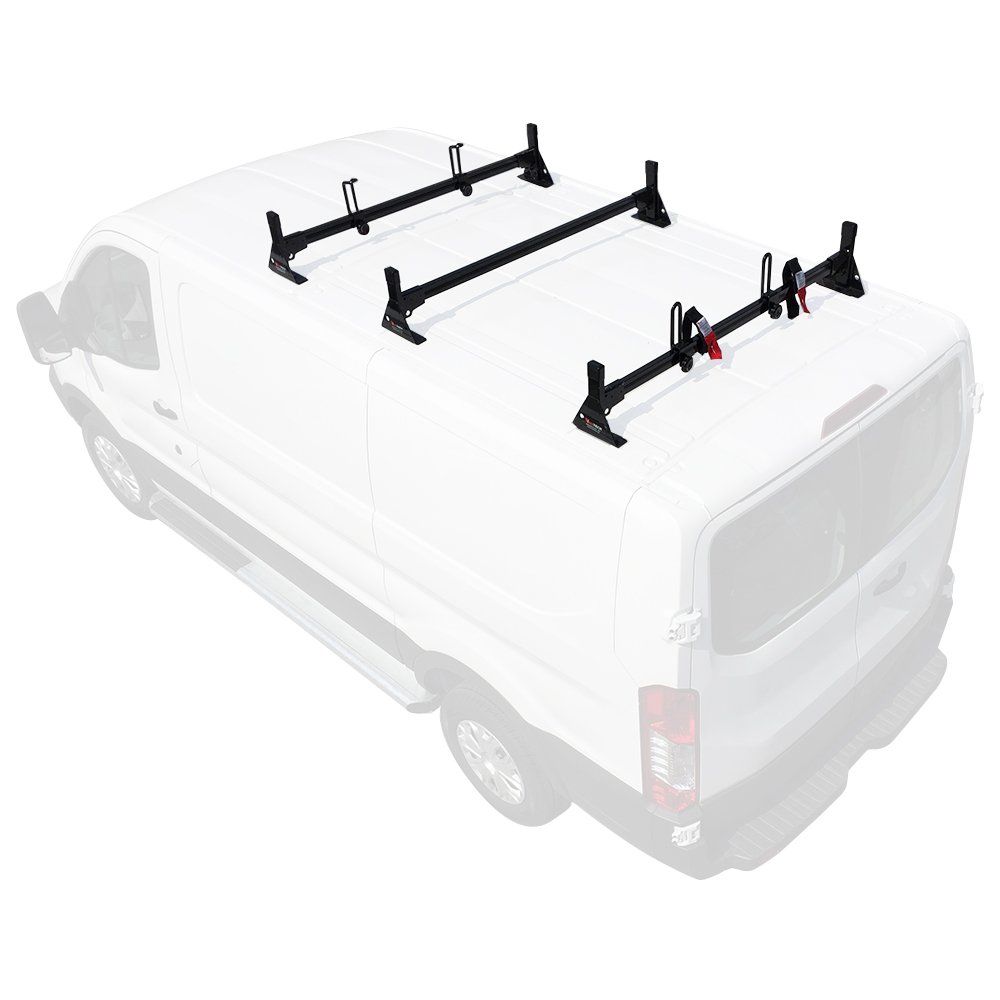
The Vantech H1 system for Ford Transit Cargo vans uses 14-gauge steel A500 crossbars in a 3-bar configuration rated at 750 pounds. The galvanized mounting base and accessories provide robust corrosion protection that outlasts standard powder-coated systems in harsh environments.
At 54 inches wide with a low profile design, this system balances load capacity with aerodynamics. The mounting bases are 11-gauge steel with 14-gauge crossbars, creating a structure that withstands years of heavy daily use without flexing or fatigue. The powder-coated black finish offers a professional appearance that complements cargo van aesthetics.
This rack is specifically designed for full-size Ford Transit Cargo vans from 2015 onward, not the Transit Connect. It represents the upper tier of Vantech’s commercial lineup for buyers who may upgrade to a larger van platform. For those running Transit Connect fleets, this system demonstrates the construction standards expected at the highest load ratings.
What works
- 14-gauge steel crossbars deliver exceptional durability
- Galvanized base resists rust in harsh conditions
- 3-bar configuration with 750-pound capacity
What doesn’t
- Designed for full-size Transit, not Transit Connect
- Higher price point reflects commercial-grade construction
Hardware & Specs Guide
Steel vs Aluminum Material Selection
Steel racks, typically made from 11 to 14-gauge alloy steel, offer higher load capacities and superior impact resistance but add 25 to 45 pounds to the vehicle roof. Aluminum systems weigh 8 to 20 pounds and resist corrosion naturally but usually cap at 450 to 500 pounds. The choice depends on whether you prioritize maximum carrying capacity or lighter weight for fuel economy. Galvanized steel with powder coating provides the best rust protection in salt-belt climates, while anodized aluminum excels in coastal environments.
Weight Capacity and Load Distribution
Manufacturers rate systems based on evenly distributed loads across all crossbars. A 3-bar system spreads weight over three contact points, reducing stress on any single roof section compared to a 2-bar system carrying the same load. Always include the weight of the rack itself when calculating total roof load. For reference, a typical 28-foot extension ladder weighs 40 to 60 pounds, while two ladders plus lumber can quickly reach 300 to 400 pounds. Never exceed the vehicle manufacturer’s roof load specification.
No-Drill vs Drilling Installation Methods
No-drill systems clamp onto factory roof rails or existing mounting points using brackets and U-bolts, allowing full reversibility for lease returns or resale. These systems typically install in 30 to 60 minutes with basic hand tools. Drilling systems use self-tapping screws or bolts into the roof panel, creating a permanent attachment that offers greater stability for heavy loads. Drilling voids certain roof warranties and requires careful sealing to prevent water intrusion. For leased vehicles, no-drill systems are the only viable option.
Wind Noise and Aerodynamic Design
Low profile designs with crossbar heights under 10 inches generate significantly less wind noise and drag than taller systems. Front wind foils, rubber post caps, and streamlined mounting bases all contribute to quieter highway operation. Contractors who spend extended hours on interstates should prioritize systems with noise-reduction features. Crossbar shape also matters — rectangular bars produce more turbulence than aerodynamic profiles. Some manufacturers include rubber gaskets between bars and mounts to eliminate vibration-induced noise at specific speeds.
FAQ
Can I install a ladder rack on my Ford Transit Connect without drilling?
What weight capacity do I need for typical ladder transport?
Will a ladder rack fit both first-generation and second-generation Transit Connect models?
How does a low profile rack affect wind noise and fuel economy?
Final Thoughts: The Verdict
For most buyers, the best ford transit connect ladder rack winner is the MELIPRON Van Roof Rack with Rear Roller because it combines 800-pound capacity, no-drill installation, and a rear cargo roller that protects your tailgate during loading. If you want a lightweight aluminum system with a low profile, grab the AA-Racks AX312. And for budget-conscious contractors running first-generation Transit Connect vans, nothing beats the value of the Vantech 2 Bar System with its integrated wind foil and sub-10-pound weight.

Certification: BSc in Mechanical Engineering
Education: Mechanical engineer
Lives In: 539 W Commerce St, Dallas, TX 75208, USA
Md Amir is an auto mechanic student and writer with over half a decade of experience in the automotive field. He has worked with top automotive brands such as Lexus, Quantum, and also owns two automotive blogs autocarneed.com and taxiwiz.com.