A torque converter is the unsung hero of any automatic transmission — it transfers engine power to the gearbox, multiplies torque at launch, and absorbs driveline shock. When that converter starts shuddering, slipping, or stalling at the wrong RPM, the entire driving experience suffers. Choosing the right replacement or upgrade requires understanding stall speed, lockup behavior, and build quality rather than just picking the cheapest option on the shelf.
I’m Amir — the founder and writer behind Four Wheel Ask. Over the years I’ve analyzed thousands of owner reports, compared stall speed curves across dozens of converter models, and evaluated build quality data from remanufacturers and aftermarket specialists to determine which units deliver consistent performance and which introduce more problems than they solve.
After deep research into owner reports and technical specs, these are the best ford torque converter selections for reliable performance and smooth driving.
How To Choose The Best Ford Torque Converter
Selecting a torque converter for a Ford transmission — whether it’s a 4R70W, 4R100, E4OD, or a GM-derived 4L60E used in some Ford platforms — requires matching stall speed to your engine’s torque curve, verifying the bolt pattern and pilot diameter, and deciding between a stock remanufactured unit and a higher-stall performance converter. The wrong choice can leave you with a soggy off-the-line feel or a converter that flashes too high for street driving.
Stall Speed and Engine Torque Curve
Stall speed is the RPM at which the converter transfers maximum torque from the engine to the transmission input shaft. A converter rated at 2000 RPM will “flash” to that RPM when you mat the throttle from a stop. If your engine makes peak torque at 3000 RPM, a 2000-stall converter leaves power on the table. For a stock 5.0L or 5.8L Ford V8, a stall speed between 1800 and 2200 RPM keeps the engine in its sweet spot for daily driving. Cammed or high-performance builds often need 2500 to 3200 RPM to get into the power band.
Bolt Pattern, Spline Count, and Pilot Diameter
Ford transmissions use specific flexplate bolt patterns and input shaft spline counts. A TH350/TH400 pattern measures 10.75 inches across, while some Ford units use a different spacing. The input shaft spline — typically 27 or 30 spline for most Ford automatics — must match the converter hub. The pilot diameter (the centering snout that fits into the crankshaft) varies by engine family; a mismatch here prevents the converter from seating properly and can damage the front pump.
Remanufactured vs New vs High-Stall
Remanufactured converters use recycled cores with new friction materials, bushings, and pump drives. They are cost-effective for stock replacements but carry risk if the core was poorly sorted or the rebuild was sloppy. New converters from brands like B&M and JEGS use fresh components and tighter tolerances. High-stall converters trade low-RPM drivability for improved launch performance — they are ideal for track use but can feel loose and generate extra heat in stop-and-go traffic.
Quick Comparison
On smaller screens, swipe sideways to see the full table.
| Model | Category | Best For | Key Spec | Amazon |
|---|---|---|---|---|
| B&M 20400 Tork Master 2000 | Premium Reman | Overall street performance | 1900-2100 RPM stall, 10.75″ bolt circle | Amazon |
| TTC 4L60E 2800-3200 High Stall | High Stall | Cammed LS builds | 2800-3200 RPM, 300mm, 30 spline | Amazon |
| Allstar ALL26900 2700-3000 | Race | High-horsepower track use | 2700-3000 RPM, 10″, TH350/400 | Amazon |
| JEGS 555-60400 | Street Performance | Budget performance upgrade | 2300-2700 RPM, 10.75″, up to 500 hp | Amazon |
| Allstar ALL26908 2000-2200 | Daily Driver | Street-driven trucks and classics | 2000-2200 RPM, TH350/400, painted | Amazon |
| B&M 400000 Turbo | Heritage | Mild performance street rods | 2200-2600 RPM, 11″, multiple fitments | Amazon |
| TTC GM92SS1 TMBX 300mm | Budget Reman | Stock 4L60E/4L65E replacement | 1400-1600 RPM, 300mm, 30 spline | Amazon |
| Futchoy 40 Series 1″ Bore | Go Kart | Small engine and kart builds | 1″ straight crank, 8-16 hp engines | Amazon |
| AKWH 674255 674256 | Emissions | Ford 3.5L/3.7L catalytic replacement | 3.5L/3.7L Ford/Lincoln, 2013-2019 | Amazon |
In‑Depth Reviews
1. B&M 20400 Tork Master 2000 Torque Converter

The B&M 20400 Tork Master 2000 is a remanufactured converter that replaces stock units with a modest stall increase for improved launch feel without ruining daily drivability. The stall rating of 1900-2100 RPM is calibrated around an engine producing 230 lb-ft at 2500 RPM, so it pairs naturally with mild small-block Ford builds. A new precision pump drive tube and powder-coated finish give it a quality edge over generic rebuilts.
ASE-certified technicians and hobbyist builders alike report a direct fit into TH350 and TH400 transmissions with standard 153-tooth flexplates and the 10.75-inch bolt pattern. Multiple long-term owner accounts note trouble-free operation spanning several years and tens of thousands of miles behind 327 and 350 crate engines as well as Buick 350 and Ford small-blocks. The paint finish can flake during installation, but this cosmetic issue does not affect function.
For anyone building a street-driven classic truck or hot rod with a mild cam and looking for a converter that simply works without chasing high-strung stall speeds, the B&M 20400 delivers predictable performance backed by decades of aftermarket trust. It is the strongest all-around choice for the widest range of Ford and GM automatic transmission builds.
What works
- Direct bolt-in for TH350/TH400 with 10.75″ pattern
- Stall speed matches mild street cams well
- Long service life reported across multiple builds
What doesn’t
- Paint can flake during installation
- Remanufactured core — quality depends on initial core condition
2. TTC 4L60E 4L65E 4L70E 2800-3200 High Stall Torque Converter
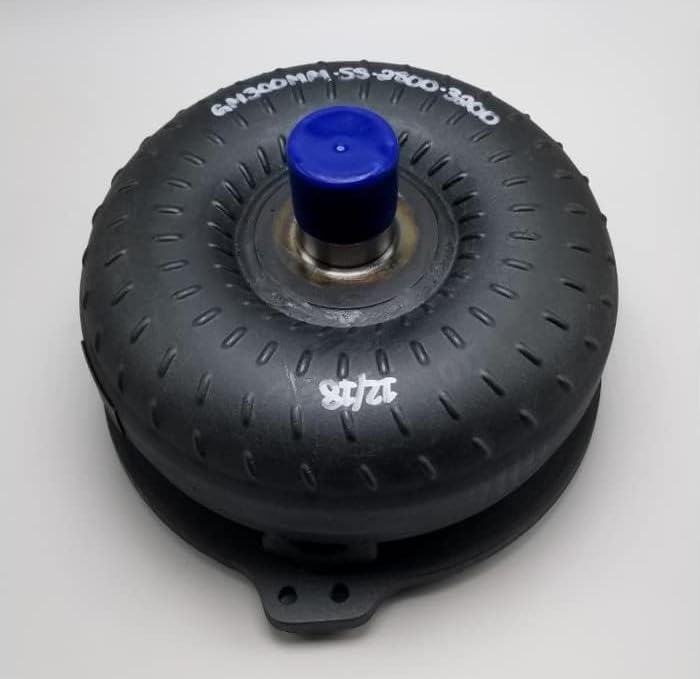
The TTC high-stall converter is built specifically for 4L60E, 4L65E, and 4L70E transmissions behind LS-style engines, making it a natural fit for Ford vehicles that have been swapped with GM drivetrains or for owners running late-model Ford platforms that use these transmission families. The 2800-3200 RPM stall range is engineered to match aggressive cam profiles that shift the power band upward, delivering a strong launch when the throttle opens.
Owner reports from builds using 6.0L LQ4 engines with stage 3 cams and 5.3L cammed setups confirm that the converter stalls consistently around 3000 RPM as advertised. The lockup function engages properly for highway cruising, which helps keep heat down during longer drives. The remanufactured unit includes an upgraded thrust washer, impeller hub, turbine hub, and mounting hardware — all assembled in-house to OEM standards.
This converter transforms a cammed truck or performance car from a soggy part-throttle disappointment into a vehicle that hits the power band immediately. The trade-off is a looser feel below 2500 RPM, which is expected for any high-stall unit. For dedicated street-and-strip builds where launching in the power band is the priority, the TTC 2800-3200 delivers exactly what the spec sheet promises.
What works
- Consistent 3000 RPM flash stall as measured by owners
- Lockup clutch functional for highway cruising
- Includes upgraded internal components over stock
What doesn’t
- Loose feel below 2500 RPM in daily driving
- Requires proper transmission tuning to maximize benefit
3. Allstar Performance ALL26900 10″ 2700-3000 RPM Stall Torque Converter

The Allstar Performance ALL26900 is a 10-inch diameter converter with a 2700-3000 RPM stall speed designed for TH350 and TH400 transmissions in high-horsepower applications. The smaller diameter reduces rotating mass and allows higher stall speeds without excessive fluid coupling losses, making it a popular choice for race cars and heavily modified street machines that spend more time at full throttle than in stop-and-go traffic.
Owner feedback from small-block Chevy 355 builds and even big-block 600 hp applications indicates that the converter holds up well under sustained abuse. One owner reported a defective unit with noise issues, but the majority of reviews highlight trouble-free performance and a stall speed that matches the advertised range. The painted exterior is basic but functional, and the 10.75-inch bolt pattern fits standard flexplates.
For builders who have moved beyond mild street cams and need a converter that keeps the engine in the upper part of the power band during launches, the ALL26900 offers proven durability at a price point well below dedicated race converters. It is not ideal for daily commuters, but for weekend warriors and track-day vehicles it delivers strong value.
What works
- Handles 600+ hp big-block builds reliably
- Stall speed matches advertised range
- Compact 10″ design reduces rotating mass
What doesn’t
- Not suited for daily street driving
- Quality control issues reported on rare units
4. JEGS 555-60400 Torque Converter 2300-2700 RPM Stall
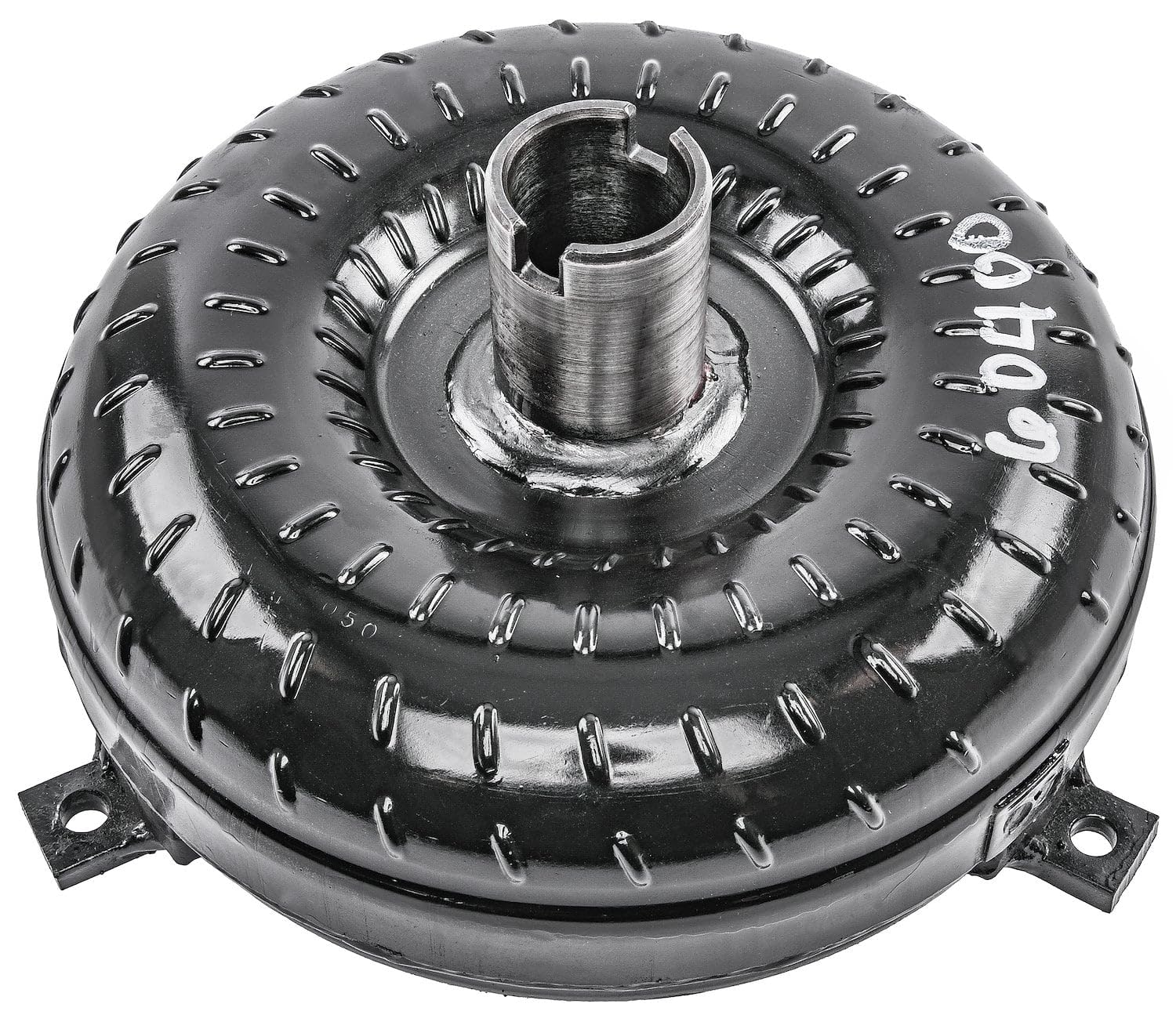
The JEGS 555-60400 is a performance converter built in the USA for TH350 and TH400 transmissions, with a stall range of 2300-2700 RPM that suits small-block Ford and Chevy engines making up to 500 horsepower without forced induction. The 10.75-inch flexplate bolt pattern and standard input shaft sizing make it a direct replacement for stock converters in a wide variety of muscle cars, trucks, and street rods.
Extended owner reports describe the converter performing well behind built 355 small-blocks with TH350 transmissions over several years of driving. The stall speed provides a noticeable improvement in launch feel compared to a stock converter without making the car feel loose in normal traffic. One owner noted the converter was slightly too small for their specific application, but the overwhelming majority report a proper fit and consistent performance.
For the builder who wants a meaningful upgrade in launch capability without stepping into high-strall territory that compromises drivability, the JEGS 2300-2700 converter delivers an excellent balance. The made-in-USA construction and budget-friendly positioning make it one of the best value propositions in the performance converter market.
What works
- Made in the USA with quality materials
- Great balance of street and performance stall
- Long-term reliability reported by multiple owners
What doesn’t
- Not recommended for engines over 500 hp
- Some fitment inconsistencies reported
5. Allstar Performance ALL26908 2000-2200 RPM Stall Torque Converter

The Allstar Performance ALL26908 is a 2000-2200 RPM stall converter designed for TH350 and TH400 transmissions in daily-driven vehicles that need a modest stall increase without sacrificing low-speed manners. The stall range is mild enough to keep the engine comfortable in stop-and-go traffic while providing a firmer launch than a stock replacement unit. The painted steel construction is basic but functional for street use.
Owners running TH350 transmissions behind built 350 engines with aggressive cams and heavy 33-inch tires report that the converter handled hard mountain driving and traffic without overheating when paired with an external cooler. Multiple reviews note that the converter is a remanufactured unit with old GM tags painted over — this is common in the budget segment and does not affect performance when the internal components are properly refreshed.
For a street-driven truck or classic car where the priority is reliability and a slightly improved launch over bone-stock performance, the ALL26908 delivers consistent results. It is not a race converter, but it also does not pretend to be one. Buyers should verify flexplate bolt pattern compatibility before installation, as some LS swap applications require minor drilling.
What works
- Mild stall suitable for daily driving
- Handles heavy vehicles and traffic without overheating
- Budget-friendly for entry-level builds
What doesn’t
- Remanufactured core with painted-over tags
- Bolt holes may need drilling for LS swaps
6. B&M 400000 11″ 2200-2600 RPM Turbo Torque Converter

The B&M 400000 is an 11-inch turbo torque converter with a 2200-2600 RPM stall range that fits multiple makes and models, including Ford applications compatible with TH350 and TH400 transmissions. The larger 11-inch diameter provides smoother fluid coupling and better heat dissipation than smaller converters, making it a solid choice for street rods and mild performance builds where drivability remains a priority.
Owner experiences are polarized. Enthusiasts running high-horsepower 383 stroker builds in lightweight T-Bucket roadsters report excellent results after dialing in idle RPM and transmission calibration. However, numerous buyers report that the converter fails to achieve the advertised stall speed — multiple owners measured only 1400 RPM stall even under heavy brake pressure, which matches stock converter behavior. Customer service issues and fitment discrepancies are also documented.
Given the mixed feedback, the B&M 400000 is best suited for buyers who understand the risks of a discontinued model with variable quality control. If you get a good unit, it performs well; if you do not, the return process can be frustrating. For most builders, the more consistent B&M 20400 or JEGS 555-60400 represent safer choices at similar or lower investment.
What works
- Smooth engagement when properly matched to the build
- Larger diameter aids heat dissipation
- Brand heritage with decades of aftermarket presence
What doesn’t
- Many units fail to reach advertised stall speed
- Discontinued model with inconsistent availability
- Customer service challenges reported
7. TTC GM92SS1-4L60E TMBX 300mm Torque Converter
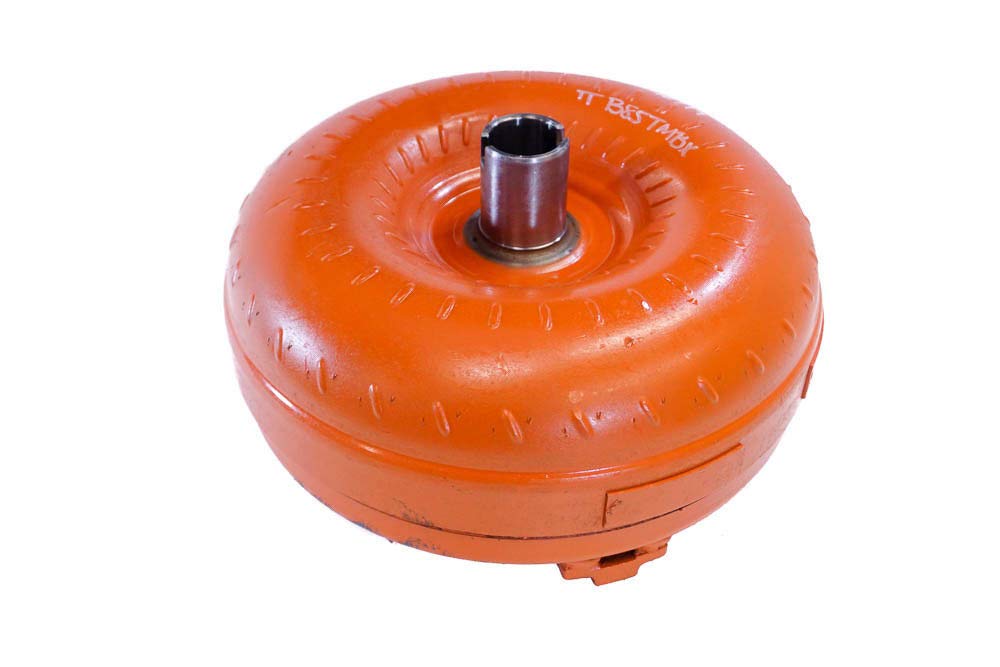
The TTC GM92SS1 is a remanufactured 300mm torque converter designed for 4L60E, 4L65E, and 4L70E transmissions with a stock-level 1400-1600 RPM stall speed. It uses carbon fiber friction materials and is built to meet OEM standards, making it a direct replacement for worn-out stock converters in trucks, SUVs, and passenger cars. The 30-spline input and standard bolt pattern ensure compatibility with the vast majority of LS-based drivetrains.
Owner feedback is overwhelmingly positive, with multiple accounts of improved highway fuel economy — one owner reported a jump from 17 MPG to over 21 MPG after installation behind a 4L65E. Others note smoother engagement and better lockup feel compared to the original converter. A minor fitment note: some owners found the bolt holes half a hole off from the flywheel, requiring the flywheel holes to be slightly enlarged — a common issue with remanufactured converters that is easily addressed.
For anyone with a 4L60E or 4L65E transmission in a Ford truck or SUV that has reached the point of converter failure or general wear, the GM92SS1 offers a cost-effective replacement that delivers genuine improvements in drivability. It is not a performance converter, but as a stock replacement with better-than-stock materials, it represents a smart update.
What works
- Improved fuel economy reported by multiple owners
- Smoother lockup engagement than stock
- Carbon fiber friction materials for durability
What doesn’t
- Bolt holes may need minor adjustment
- Stock stall speed — no performance gain
8. Futchoy 40 Series 1″ Bore Torque Converter Kit
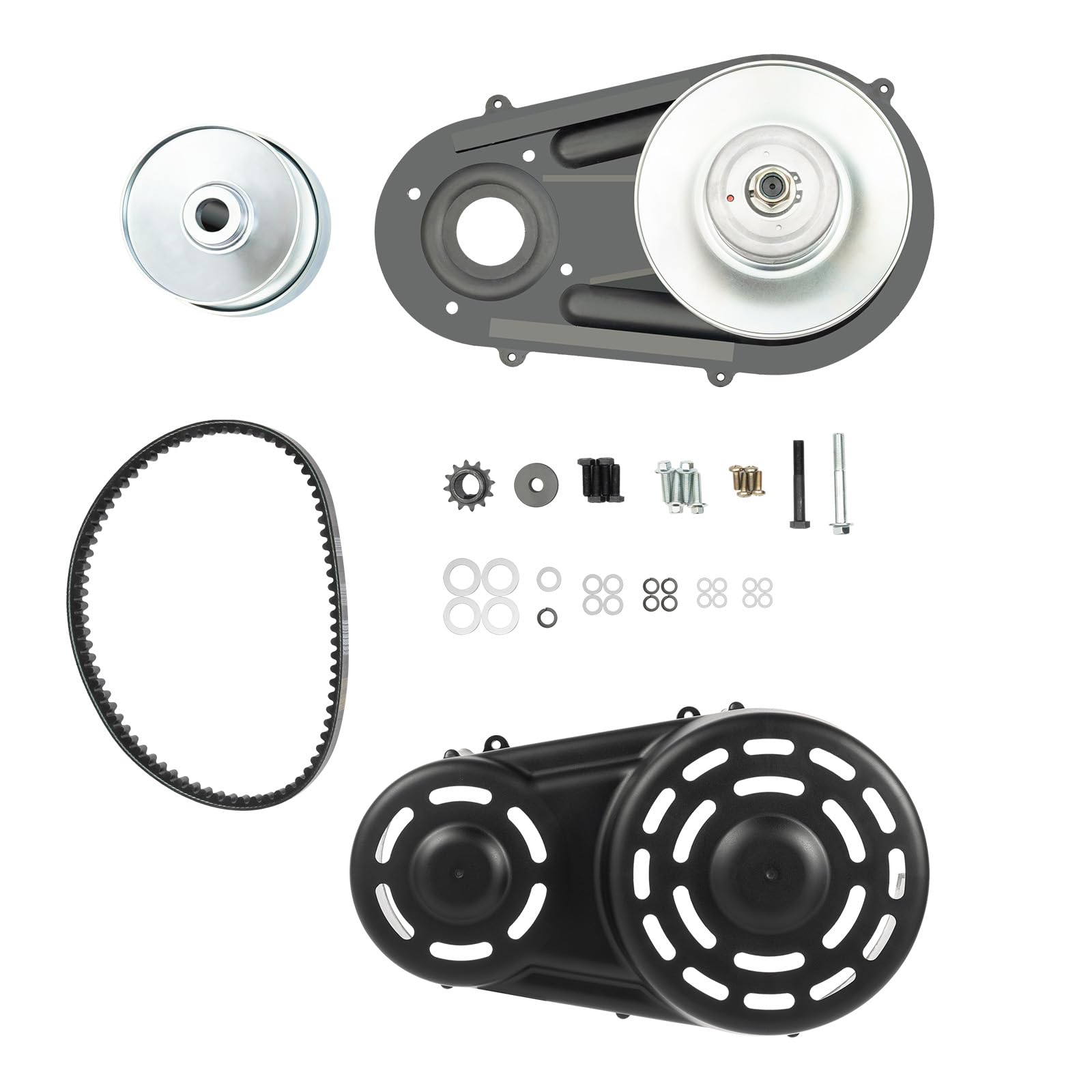
The Futchoy 40 Series Torque Converter Kit is a complete CVT-style clutch system designed for go-karts, minibikes, and small engine applications with 1-inch straight crankshafts and 8 to 16 horsepower engines. This is not an automotive transmission torque converter — it is a centrifugal clutch system with a drive pulley, driven pulley, belt, and mounting plate that replaces the need for a traditional gearbox on small utility vehicles.
User reports from kart builders running 420cc Duromax engines on two-seater Manco frames with balloon tires indicate the kit delivers responsive engagement and top speeds around 55 MPH after belt break-in. Some buyers experienced fitment issues with Predator 301cc engines, noting that the supplied bolts did not match the crankshaft threads. The kit requires careful measurement of engine shaft length, bolt pattern, and keyway size before installation.
For hobbyists building or repairing off-road karts and small utility vehicles, the Futchoy 40 Series provides a complete conversion package at a competitive price. It is not relevant to automotive torque converter applications for Ford trucks or cars, but within its intended market — small engine performance — it performs adequately with proper setup.
What works
- Complete kit includes all mounting hardware
- Responsive engagement after belt break-in
- Works well with larger 420cc class engines
What doesn’t
- Bolt fitment issues with some engine brands
- Belt may burn during initial break-in period
9. AKWH 674255 674256 Catalytic Converter Pair for Ford/Lincoln 3.5L 3.7L

The AKWH 674255 674256 is a pair of catalytic converters designed to replace the factory units on Ford Explorer, Flex, Taurus, Police Interceptor, and Lincoln MKS/MKT/MKZ models with 3.5L or 3.7L engines from 2013 to 2019. These are catalytic converters — emissions control devices — not torque converters. They bolt directly to the exhaust system and contain precious-metal catalyst substrates that reduce harmful exhaust gases before they reach the tailpipe.
Owner feedback is sharply divided. Some buyers report a successful fix for check engine lights related to catalyst efficiency, while others describe serious problems including units with no filter media inside, blocked O2 sensor bungs, and converters that failed internally within days of installation. Multiple customers report that the converters caused the vehicle to fail state emissions tests and triggered check engine lights due to insufficient catalytic material.
For owners of Ford 3.5L or 3.7L vehicles needing catalytic converters, the AKWH pair is priced competitively but carries significant risk regarding emissions compliance and build quality. Buyers in California, Colorado, New York, and Maine cannot purchase this item due to state emissions standards. A direct OEM replacement converter from Ford or a CARB-compliant aftermarket brand would be a more reliable investment for most owners.
What works
- Direct fitment for multiple Ford/Lincoln 3.5L/3.7L models
- Competitive pricing versus dealership parts
- Listed OEM part number cross-references
What doesn’t
- Multiple reports of missing internal filter media
- Fails state emissions tests in documented cases
- Cannot be shipped to CA, CO, NY, or ME
Hardware & Specs Guide
Stall Speed Explained
Stall speed is the engine RPM at which the torque converter transfers maximum torque to the transmission input shaft when the vehicle is stationary and the brakes are applied. A higher stall speed allows the engine to reach a more powerful part of its torque curve before the vehicle begins moving, improving launch feel. However, excessive stall speed creates a loose, “slippery” sensation at low speeds and generates additional heat in the transmission fluid. Matching stall speed to engine torque output is critical — a converter rated for 2300 RPM behind an engine making peak torque at 1800 RPM will feel sluggish and slow to respond.
Bolt Pattern and Flexplate Compatibility
The bolt circle diameter of the torque converter mounting flange must match the flexplate. The most common pattern for TH350/TH400 and many Ford transmissions is 10.75 inches, though some Ford units use 11.5-inch or other patterns. The pilot diameter — the centering hub that inserts into the crankshaft recess — varies by engine family (Ford small-block, Ford modular, LS, etc.). A pilot that is too large will not seat; one that is too small allows the converter to wobble, potentially destroying the front pump seal and bushing within minutes of startup.
Spline Count and Input Shaft Fitment
The input shaft of the transmission has a specific number of splines that must match the internal hub of the torque converter. Common counts are 27 spline (older Ford C4/C6, early TH350) and 30 spline (4L60E, 4L65E, late TH350/TH400). Installing a 30-spline converter on a 27-spline input shaft is physically impossible; the opposite will cause a loose fit that strips splines under load. Always confirm your transmission’s spline count before ordering.
Remanufactured vs New Converter Construction
Remanufactured converters start with a recycled core that is cleaned, inspected, and fitted with new friction materials, bushings, and seals. Quality varies widely depending on the core condition and the rebuilder’s standards. New converters use all-new components — turbine shell, impeller, stator, bearings, and clutch — and typically offer tighter dimensional tolerances and more consistent stall characteristics. New converters cost more but eliminate the risk of inheriting a worn or damaged core that was poorly refurbished.
FAQ
What does a torque converter actually do?
What does stall speed mean and why does it matter?
How do I know which torque converter fits my Ford transmission?
Can a higher stall converter hurt my transmission?
Should I choose a remanufactured or a new torque converter?
Final Thoughts: The Verdict
For most buyers, the best ford torque converter winner is the B&M 20400 Tork Master 2000 because it delivers a proven balance of mild stall improvement, direct fitment for TH350/TH400 transmissions, and long-term reliability backed by decades of aftermarket reputation. If you need a high-stall converter for a cammed LS swap, grab the TTC 4L60E 2800-3200 for consistent flash stall and lockup function. And for a budget-conscious upgrade that still improves launch feel, nothing beats the JEGS 555-60400 for value-driven performance.

Certification: BSc in Mechanical Engineering
Education: Mechanical engineer
Lives In: 539 W Commerce St, Dallas, TX 75208, USA
Md Amir is an auto mechanic student and writer with over half a decade of experience in the automotive field. He has worked with top automotive brands such as Lexus, Quantum, and also owns two automotive blogs autocarneed.com and taxiwiz.com.