A rough idle, a sudden stall at a stoplight, or a flat spot in the pedal feel — these are the calling cards of a throttle position sensor that has lost its way. The TPS is the single component that tells your Ford’s ECU exactly where your foot is, and when that signal gets noisy or drops out entirely, the engine management system has to guess. Guessing leads to surging, hesitation, and in some cases, a transmission that refuses to lock up. Sorting this sensor out is not a luxury; it is a fundamental step toward restoring driveability.
I’m Amir — the founder and writer behind Four Wheel Ask. My work focuses on dissecting OEM part specifications, analyzing material compositions across aftermarket suppliers, and cross-referencing long-term owner feedback to separate components that deliver lasting signal integrity from those that drift out of spec after a few thousand miles.
This evaluation of the best ford throttle body sensor options compares OEM Motorcraft against leading aftermarket alternatives for vehicle repair.
How To Choose The Best Ford Throttle Body Sensor
Selecting the right TPS or throttle body for your Ford comes down to understanding what part of the system has actually failed. A sensor that reads clean voltage at idle but breaks up under load is a different problem than a throttle plate that has carbon buildup preventing full closure. Knowing the distinction saves you from replacing parts that were never broken.
Standalone Sensor vs. Complete Throttle Body Assembly
A throttle position sensor is a small potentiometer that bolts onto the side of the throttle body. If your failure is limited to erratic voltage output — confirmed by a scan tool or multimeter — swapping just the TPS is the cost-effective route. However, many late-model Ford vehicles integrate the TPS into the electronic throttle body as a sealed unit. In those cases, the entire assembly must be replaced. The raw data includes both types, so matching the part to your vehicle’s configuration is non-negotiable.
OEM Specification vs. Aftermarket Fit
Motorcraft parts carry the exact calibration and connector geometry used on the assembly line. Aftermarket sensors from Delphi, Walker, or Dorman often match or exceed OE material specs, but the mounting hole slots and rotational range may require adjustment. The key spec to verify is the output type — analog voltage sweep for older Fords versus digital PWM for some newer applications — along with the physical connector shape.
Build Quality Indicators
The internal wiper material and sealing determine how long a TPS holds its calibration. Cheap sensors use plastic wiper arms that deform over time, producing erratic idle and throttle tip-in. Premium units use metal or ceramic hybrid wipers and sealed housings that resist moisture ingress. The weight of the component and the feel of the connector latch are rough proxies for internal quality before installation.
Quick Comparison
On smaller screens, swipe sideways to see the full table.
| Model | Category | Best For | Key Spec | Amazon |
|---|---|---|---|---|
| Motorcraft DY1164 | TPS Sensor | OE-grade replacement | Analog output, 5V max | Amazon |
| Delphi SS10382 | TPS Sensor | Value with durability | Digital output, flange mount | Amazon |
| Walker Products 200-91015 | TPS Sensor | Classic Ford trucks | OE interchange 1986–1996 | Amazon |
| IRONTREE S20020 | Throttle Body | Complete ETB swap | Pre-assembled actuator & sensors | Amazon |
| Motorcraft CX2403 | Sensor Assembly | OE fitment verification | Ceramic/metal construction | Amazon |
| ASTOU 977-300 | Throttle Body | Budget-friendly replacement | Fits Escape/Fusion 2.5L | Amazon |
| Dorman 977-300 | Throttle Body | Long-term reliability fix | Sensor Shield seal, 1M cycles tested | Amazon |
In‑Depth Reviews
1. Motorcraft DY1164 Throttle Position Sensor
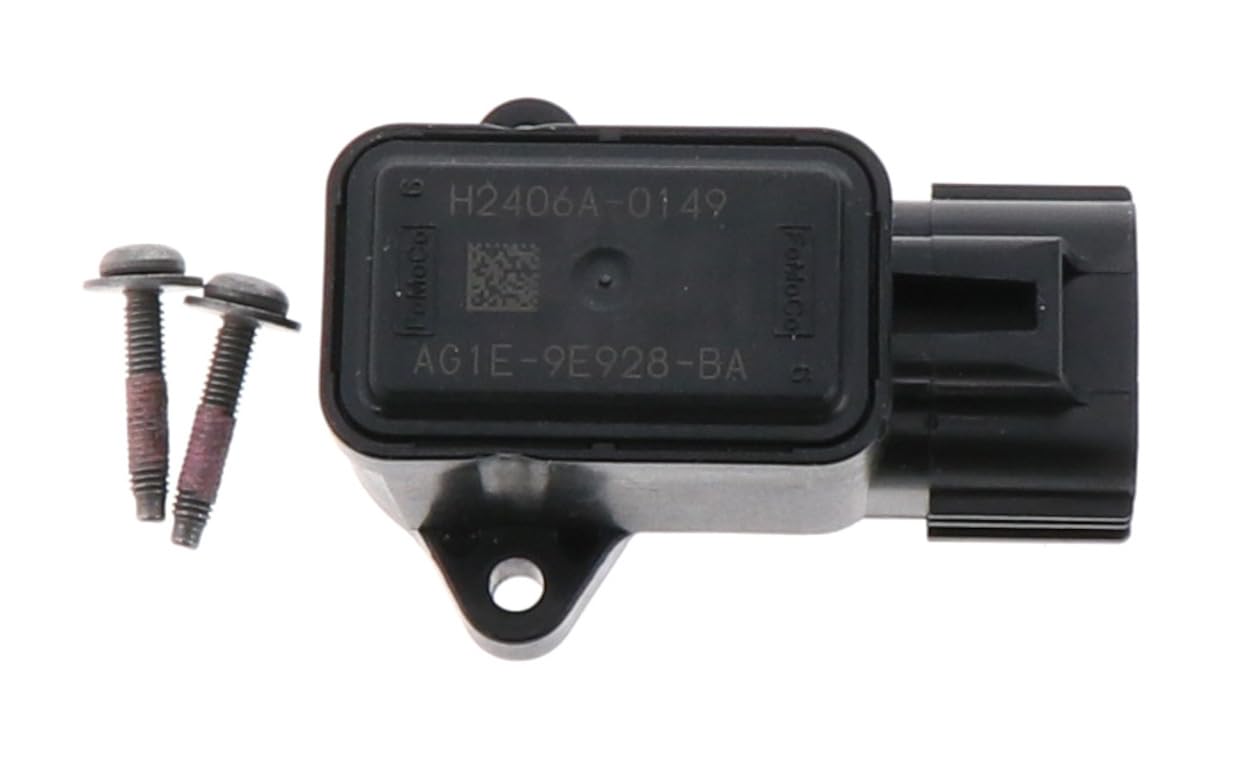
The Motorcraft DY1164 represents the third design revision of Ford’s factory TPS, and the engineering evolution is apparent in the refinement of the internal wiper track and housing seal. Owner reports on late-model Mustang GT and F-150 applications consistently note that earlier aftermarket sensors introduced idle hunting and throttle tip-in glitches that disappeared immediately after switching to this unit. The analog output sweeps cleanly across the full rotational range when monitored on a scope, which is the benchmark for proper ECU learning.
The ceramic-and-metal hybrid construction gives the wiper arm the rigidity needed to maintain contact pressure over thermal cycling. Plastic-bodied alternatives often lose that clamping force after repeated heat soak, producing a dead zone in the middle of the pedal travel. The DY1164 also includes the updated connector latch design that resists vibration loosening — a common failure point on first-gen sensors. The overall mass is notably heavier than budget options, which correlates directly with internal material density.
One verified owner on a 2010 F-150 with the 5.4L 3V noted that the outer housing profile differs slightly from the original sensor on his stock throttle body, though it mated correctly to an aftermarket BBK unit. This is a minor fitment nuance rather than a defect, but it underscores the importance of confirming connector orientation before final assembly. For anyone seeking the closest thing to factory-fresh signal behavior, this is the benchmark.
What works
- Third-gen design with proven wiper track improvements
- Ceramic and metal internal construction holds calibration
- Clean analog sweep eliminates tip-in hesitation
What doesn’t
- Profile variation may require confirmation against stock throttle body
- Premium pricing reflects OEM branding
2. Delphi SS10382 Throttle Position Sensor

Delphi supplies original equipment to multiple global automakers, and the SS10382 carries that same production-line DNA into the aftermarket channel. The sensor uses a digital output configuration that provides a clean voltage step to the ECU rather than the drifting analog curve that can trigger false throttle position codes. Verified owners on GM trucks with the 4.3L V6 have reported that this unit finally cured surging idle and hesitation issues that persisted through multiple warranty replacements of house-brand sensors.
The flange mount design uses metal-reinforced mounting ears that do not distort under fastener torque, ensuring the rotational arc remains aligned with the throttle shaft. Plastic-bodied sensors from lower-tier suppliers frequently crack at the ear junction when overtightened, introducing an air leak and an off-axis sweep. Delphi uses a sealed housing with an integrated o-ring at the shaft interface, which prevents solvent and moisture from migrating into the wiper track over time.
One review noted a unit that caused idle surge between 1500 and 1800 RPM after installation, which points to the possibility of a batch variance in the initial resistance range. The overwhelming majority of reports, however, describe a part that solves the exact symptoms it targets — hesitation on tip-in, erratic idle, and no-check-engine-light drivability issues. For the price point, the build quality punches above its weight and offers a realistic alternative to dealer-sourced parts for vehicles outside the Motorcraft ecosystem.
What works
- OE heritage with 80-plus years of production experience
- Sealed housing with shaft o-ring resists contamination
- Metal-reinforced mounting ears prevent distortion
What doesn’t
- Small risk of batch variance causing idle surge
- Digital output may not suit all ECU calibration strategies
3. Walker Products 200-91015 Throttle Position Sensor

Walker Products has built a strong reputation in the throttle position sensor aftermarket specifically for covering the extensive Ford truck and car range from 1986 through 1996. The 200-91015 includes a pigtail harness with both male and female terminals, which simplifies the swap on older Ford trucks where the original connector may be brittle or corroded. Owner reports on 1986 Broncos and 1993 F-150s with the 5.8L confirm that the sensor cured both low cold idle and high warm idle conditions that dealership diagnostics had misattributed to the IAC valve.
The silicon-based internal wiper material provides a different electrical behavior than metal-wiper sensors. It offers a slightly softer voltage transition that can mask minor throttle shaft wear on high-mileage engines, giving the ECU a more stable signal even when the mechanical linkage has play. The unit is manufactured to OE form, fit, and function specifications, and the OE interchange list covers nearly two dozen Ford and Lincoln part numbers from the E- and F-series eras.
One notable aspect from a verified Mustang 5.0 owner is that the mounting holes required slight enlargement — drilling out to the edge of the slots — to achieve proper adjustment range on the throttle body. This is a common accommodation on aftermarket TPS units for Fox-body applications and does not indicate a defect, but it adds a few minutes to the installation. For owners of 1986–1996 Ford trucks and cars who want a direct-fit solution with a serviceable pigtail, this unit delivers the correct behavior.
What works
- Includes pigtail harness for connector replacement
- Wide OE interchange covering two decades of Ford models
- Silicon wiper smooths signal on worn throttle shafts
What doesn’t
- Mounting slots may need minor enlargement on some applications
- Wire colors differ from factory — requires pin tracking
4. IRONTREE S20020 Electronic Throttle Body

The IRONTREE S20020 is a complete electronic throttle body assembly that integrates the throttle position sensor, actuator motor, and idle air control into a single pre-assembled unit. This eliminates the need to swap individual components on vehicles where the TPS is not serviceable separately. The assembly covers a broad range of 2004–2019 Ford and Lincoln applications including F-150, Explorer, Crown Victoria, Taurus, and Mustang — one part number that replaces dozens of OEM references.
The housing is built from metal and plastic materials that meet OE dimensional specifications, and the throttle plate is 100% computer-tested for airflow consistency before packaging. The actuator motor uses NPN output configuration that matches Ford’s PWM control strategy, ensuring that the ECU can command idle speed and transient response without adaptation lag. The unit also includes a modern style connector that plugs directly into the factory harness with no adapter required.
IRONTREE backs the assembly with a three-year warranty, which is longer than most OEM sensors and signals confidence in the internal component quality. The measurement accuracy is rated at ±1%, which is tighter than the typical wear tolerance on a used factory throttle body. For owners of 2005–2015 Ford trucks and sedans looking to refresh the entire air metering system rather than chasing individual sensor faults, this represents a comprehensive upgrade path.
What works
- Complete assembly with pre-installed sensors and actuator
- 100% computerized airflow testing before packaging
- Three-year warranty exceeds typical OE sensor coverage
What doesn’t
- Heavier than a standalone sensor — 1.29 kg total weight
- Coverage excludes some niche Ford variants
5. Motorcraft CX2403 Sensor Assembly

The Motorcraft CX2403 is a sensor assembly that uses ceramic and metal construction for thermal stability and signal accuracy. It is classified as a pressure sensor in technical documentation, but its application scope covers the throttle position sensing role on a range of Ford and Lincoln vehicles. The digital output provides a definitive on-off voltage transition that eliminates the analog drift problems that plague older TPS units with worn tracks.
The flange mount design uses Motorcraft’s standard connector interface, which means it plugs into the factory harness without adapter concerns. The ceramic internal substrate offers a coefficient of thermal expansion that closely matches the metal housing, reducing internal stress during heat cycles that can cause solder joint fatigue in all-plastic designs. The unit weighs roughly two pounds, indicating substantial internal shielding and robust terminal construction.
Fitment verification is required before purchase because the CX2403 crosses multiple makes and model years. Motorcraft’s cataloging system groups sensors by function rather than by visual appearance, so the connector orientation and mounting hole spacing may differ between some applications. For buyers who confirm compatibility through their VIN or OEM part number lookup, this unit delivers factory-matched signal behavior and the peace of mind that comes with genuine Ford-authorized components.
What works
- Ceramic and metal hybrid construction resists thermal stress
- Factory-matched digital output for clean signal switching
- Substantial weight indicates robust internal shielding
What doesn’t
- Requires careful fitment confirmation before ordering
- Cataloged as pressure sensor — may confuse casual buyers
6. ASTOU 977-300 Throttle Body Assembly
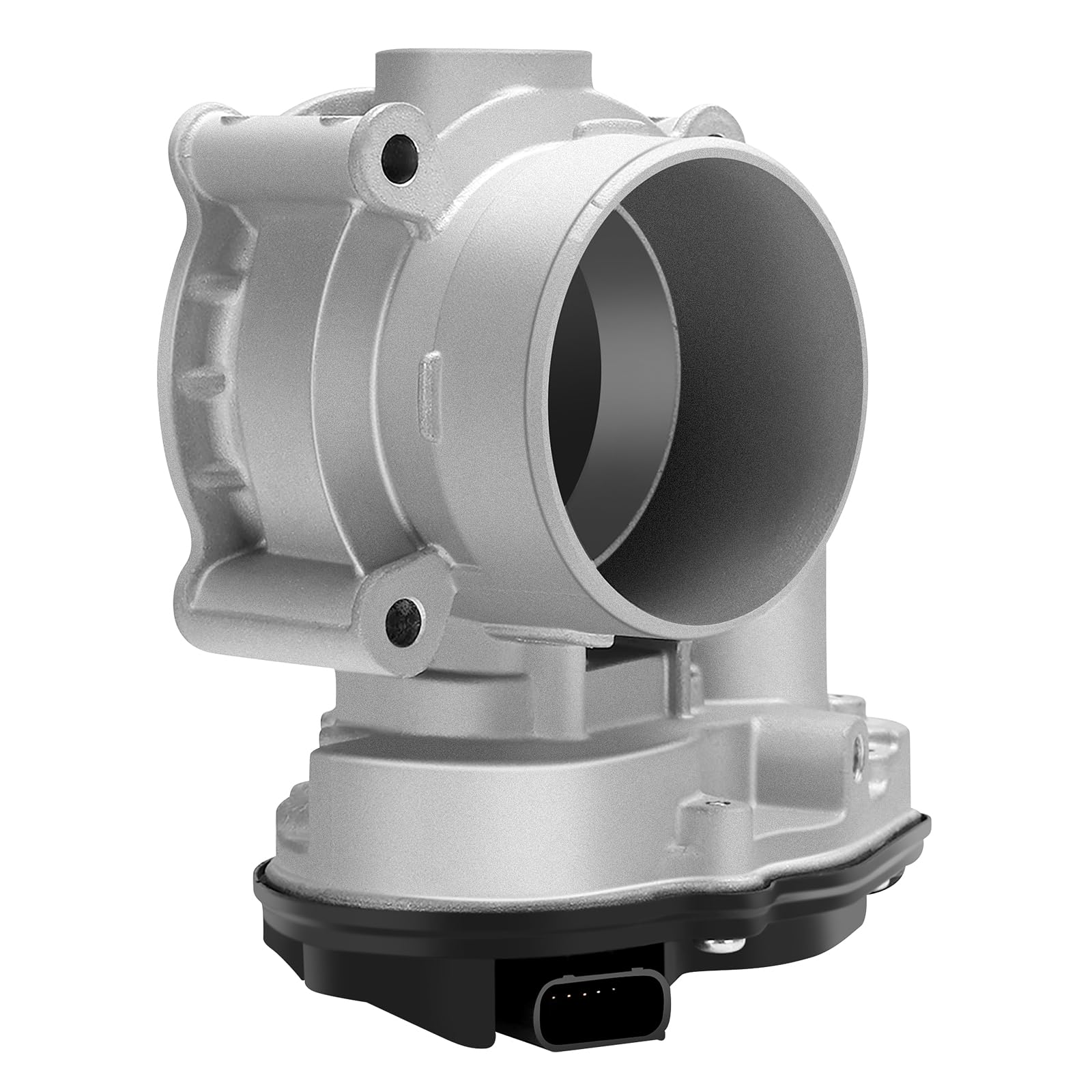
The ASTOU 977-300 is a complete electronic throttle body designed for 2009–2016 Ford Escape 2.5L, 2010–2016 Ford Fusion 2.5L, and 2009–2011 Mercury Mariner applications. It replaces OEM part numbers 977-300, 67-6015, S20067, and TB1030, among others. The unit is 100% new — not remanufactured — and includes the throttle plate, actuator motor, and position sensors pre-assembled for a direct mechanical swap.
The housing dimensions are 7.87 x 6.30 x 4.69 inches, and the assembly weighs 2.19 pounds, putting it in the same physical envelope as the factory unit. The manufacturer claims a 20% improvement in engine performance through optimized airflow, which is a marketing figure rather than a measured benchmark, but the core function of delivering stable idle and responsive tip-in is consistent with a properly functioning electronic throttle body. The unit includes the necessary gasket surface and bolt hole alignment for bolt-on installation.
ASTOU positions this as a budget-friendly alternative to the Motorcraft and Dorman assemblies for the Escape and Fusion platforms. The absence of verified owner reviews in the raw data means long-term durability data is limited, but the part number cross-reference and new-unit construction reduce the risk compared to used or remanufactured units. For owners of these common Ford platforms who need a functional throttle body at a lower entry point, this is the most accessible option.
What works
- 100% new construction — no core charge required
- Covers multiple OEM part numbers for Escape and Fusion
- Plug-and-play installation with pre-assembled components
What doesn’t
- Limited long-term owner feedback available
- Performance claims are manufacturer estimates only
7. Dorman 977-300 Throttle Body Assembly

The Dorman 977-300 is an upgraded replacement throttle body assembly that addresses a known failure mode in Ford’s electronic throttle bodies: moisture and debris entering through the butterfly shaft seal. Dorman’s proprietary Sensor Shield design uses a sealed bearing at the shaft passage to prevent contamination from reaching the internal position sensor and actuator motor. This is a targeted engineering fix rather than a simple clone of the OE part.
The housing is cast from new aluminum — not remanufactured — and the assembly has been endurance-tested for over one million cycles to verify mechanical reliability. It complies with Federal Motor Vehicle Safety Standards, which adds a layer of third-party validation that budget assemblies lack. The part replaces OEM numbers DS7Z9E926A and DS7Z9E926D, and the unit is backed by a limited lifetime warranty, which signals confidence in the upgraded seal design.
Dorman’s team of product experts in the United States performed vehicle try-on testing to confirm fitment across the compatible vehicle list. The unit is a direct plug-and-play replacement with no adapter harness required. For owners of Ford, Lincoln, and Mercury models affected by the throttle body failure pattern common around 80,000 to 120,000 miles, the Sensor Shield design offers a genuine durability improvement over both the original equipment and standard aftermarket replacements.
What works
- Sensor Shield butterfly shaft seal prevents future failures
- 1 million cycle endurance testing validates reliability
- Limited lifetime warranty with US-based product support
What doesn’t
- Premium pricing reflects upgraded engineering
- Coverage limited to specific Ford/Lincoln/Mercury models
Hardware & Specs Guide
Sensor Output Type
The output configuration determines how the ECU interprets throttle position. Analog sensors use a continuous voltage sweep — typically 0.5V to 4.5V — that the ECU converts to a position percentage. Digital sensors use a PWM or switched signal that provides discrete voltage steps. Older Ford applications use analog sensors, while many late-model electronic throttle bodies use digital protocols. Matching the output type to the ECU’s input strategy is critical; installing an analog sensor on a digital system will produce a constant fault code.
Material Construction
Internal wiper material directly affects service life. Plastic wiper arms deform under spring tension and thermal cycling, causing the voltage signal to develop dead spots. Metal or ceramic hybrid wipers maintain their shape and contact pressure for the full service life of the sensor. External housing materials — aluminum versus plastic — affect heat dissipation and connector durability. The Motorcraft DY1164 and Delphi SS10382 use metal-reinforced internals, while budget units often rely on all-plastic construction that degrades faster in underhood temperatures.
Mounting Configuration
Flange mount sensors use two or three bolt holes to attach to the throttle body. The orientation of the mounting slots determines the rotational adjustment range, which sets the closed-throttle voltage. Aftermarket sensors may use slightly different slot positions than the OE part, requiring the installer to enlarge or elongate the holes to achieve the correct base voltage. Complete throttle body assemblies bypass this issue entirely because the sensor is pre-aligned to the throttle plate within the factory housing.
Connector Compatibility
The physical connector shape and terminal layout must match the vehicle harness. Ford used multiple connector generations across model years — rectangular three-pin, oval three-pin, and six-pin variants for electronic throttle bodies. Some aftermarket sensors include a pigtail adapter that allows the installer to cut and splice, while others require the factory connector to click directly onto the sensor body. Checking connector images against your existing part before ordering prevents installation delays.
FAQ
What are the symptoms of a failing throttle position sensor on a Ford?
Can I clean a throttle position sensor instead of replacing it?
Do I need to calibrate a new TPS after installation on a Ford?
Is Motorcraft the only OEM brand for Ford throttle body sensors?
Final Thoughts: The Verdict
For most buyers, the best ford throttle body sensor winner is the Motorcraft DY1164 because it carries Ford’s latest design revision and provides the cleanest analog sweep for vehicles that use standalone TPS units. If you want a durable aftermarket alternative at a lower entry price, grab the Delphi SS10382 for its sealed housing and metal-reinforced mounting ears. And for a complete electronic throttle body with an upgraded seal that addresses a known long-term failure pattern, nothing beats the Dorman 977-300 with its Sensor Shield and limited lifetime warranty.

Certification: BSc in Mechanical Engineering
Education: Mechanical engineer
Lives In: 539 W Commerce St, Dallas, TX 75208, USA
Md Amir is an auto mechanic student and writer with over half a decade of experience in the automotive field. He has worked with top automotive brands such as Lexus, Quantum, and also owns two automotive blogs autocarneed.com and taxiwiz.com.