A cylinder hone can make or break an engine rebuild. Choose the wrong tool or grit, and you compromise oil retention, ring seal, and long-term durability. The market offers everything from adjustable stone hones to flexible ball-style brushes, each engineered for specific bore sizes, materials, and finish targets. Understanding those differences before you buy saves you time, money, and a second teardown.
I’m Amir — the founder and writer behind Four Wheel Ask. My buying guides are built on deep market research, specification cross-referencing, and aggregating real owner feedback to separate marketing claims from actual performance data.
After evaluating many options, our top pick for the best flex hone tool is the Brush Research GBD40024 due to its superior build and consistent finish.
How To Choose The Best Flex Hone Tool
Selecting the right cylinder hone requires matching abrasive type, grit rating, bore diameter, and tool design to your specific engine material and finish requirements. A mismatch at any of these variables leads to poor surface finish, inconsistent ring seating, or accelerated tool wear.
Abrasive Material Matters
Silicon carbide abrasives excel on cast iron, mild steel, and stainless steel — the most common cylinder materials in automotive engines. Aluminum oxide is better suited for non-ferrous materials like aluminum, brass, and bronze, including Nikasil-coated cylinders. Using the wrong abrasive can glaze the surface rather than cut it cleanly.
Grit Selection Directs Surface Finish
Grit rating determines the roughness of the finished bore. A 240 grit hone typically produces a 24 to 32 microinch finish, which is the standard target for many engine cylinder applications. Coarser grits remove more material faster but leave a rougher surface. Finer grits polish but may not remove enough material to deglaze properly.
Tool Design: Stone vs. Ball Hone
Adjustable stone hones use spring-loaded abrasive stones that expand against the cylinder wall. They offer precise pressure control and work well for larger bore corrections. Flexible ball hones use abrasive globules bonded to nylon filaments, providing self-centering, self-aligning action that creates a uniform crosshatch pattern with less risk of bore distortion.
Quick Comparison
On smaller screens, swipe sideways to see the full table.
| Model | Category | Best For | Key Spec | Amazon |
|---|---|---|---|---|
| Brush Research GBD40024 | Premium Ball Hone | Heavy-duty engine rebuilding | 4″ bore, 240 SC, 6″ abrasive length | Amazon |
| Pro-Graad TwistFlex 4-1/4″ | Flex Ball Hone | Consistent crosshatch on ferrous bores | 4.25″ bore, 240 SC, 3.54″ working length | Amazon |
| Kolvoii Cylinder Hone Set | Stone Hone Kit | Multi-size cylinder coverage | 3/4″ to 7″, 220 grit, 11 spare stones | Amazon |
| ZXQDRE 4-1/8″ Ball Brush | Flex Ball Hone | Single-step finishing and deburring | 4.125″ bore, 240 SC, self-centering | Amazon |
| Brush Research BC34240AO | Precision Ball Hone | Aluminum and non-ferrous cylinders | 0.75″ bore, 240 AO, 2.5″ abrasive length | Amazon |
| Powerbuilt Adjustable Hone | Stone Hone | Deglazing 2″ to 7″ cylinders | 2″-7″ range, 220 grit, flex shaft | Amazon |
| Lyhubmh 7PCS Hone Set | Stone Hone Kit | Budget-friendly multi-size set | 3/4″ to 7″, fine grit, storage box | Amazon |
In‑Depth Reviews
1. Brush Research GBD40024 FLEX-HONE 4″

Brush Research Manufacturing invented the original FLEX-HONE, and the GBD40024 represents the heavy-duty standard for engine rebuilding. Designed for bore diameters between 3.751″ and 4.000″, this 4″ silicon carbide hone uses abrasive globules bonded to flexible nylon filaments to create a consistent crosshatch finish on cast iron, mild steel, and stainless steel. The 240 grit rating targets the 24 to 32 microinch finish range that engine builders expect for proper ring seating and oil retention.
The tool is intentionally manufactured oversized — roughly ten percent larger than the nominal bore — which forces the abrasive spheres to maintain uniform contact pressure against the cylinder wall. That engineered oversize makes the hone self-centering, self-aligning, and self-compensating for wear throughout its service life. The 6″ abrasive length covers deep cylinder bores, and the 0.310″ shank fits standard drill chucks without adapters.
Owner reports consistently highlight the longevity of the abrasive globules and the uniformity of the crosshatch pattern across multiple cylinders. The heavy-duty construction handles extended use in brake cylinders, hydraulic cylinders, and engine blocks without premature breakdown. For shop-grade results on ferrous bores, this is the benchmark.
What works
- Consistent crosshatch finish across multiple cylinders
- Heavy-duty construction outlasts budget alternatives
- Self-centering design eliminates uneven bore contact
What doesn’t
- Premium pricing puts it above casual DIY budgets
- Limited to ferrous materials with silicon carbide grit
2. Pro-Graad TwistFlex Cylinder Hone 4-1/4″

The Pro-Graad TwistFlex targets bore diameters between 4.00″ and 4.27″, making it a strong choice for larger engine cylinders and hydraulic applications. The 240 grit silicon carbide abrasive spheres are bonded to flexible nylon stems that conform to bore irregularities while maintaining even pressure. The 0.354″ shank diameter provides a secure grip in standard drill chucks, and the 13.5″ overall length reaches deep bores without bottoming out.
Pro-Graad recommends a maximum spindle speed of 600 RPM with an optimum range of 300 to 500 RPM for producing the correct crosshatch pattern. The manufacturer advises limiting total run time to 20 to 45 seconds with 10 to 55 strokes per bore — a controlled approach that prevents over-honing and preserves the finish geometry. The tool also deburrs cross-drilled holes during the same pass, eliminating a separate step.
Users report that the TwistFlex produces a clean, repeatable crosshatch on mild steel and cast iron with minimal operator effort. The self-compensating design maintains consistent abrasive contact as the globules wear, extending useful life compared to rigid stone hones. A 30-day satisfaction guarantee backs the purchase for those testing the tool for the first time.
What works
- Excellent crosshatch consistency on ferrous bores
- Self-aligning design reduces operator error
- Deburrs cross-holes during the honing pass
What doesn’t
- Narrow bore range limits flexibility
- Requires strict RPM discipline for best results
3. Kolvoii Cylinder Hone Tool Set
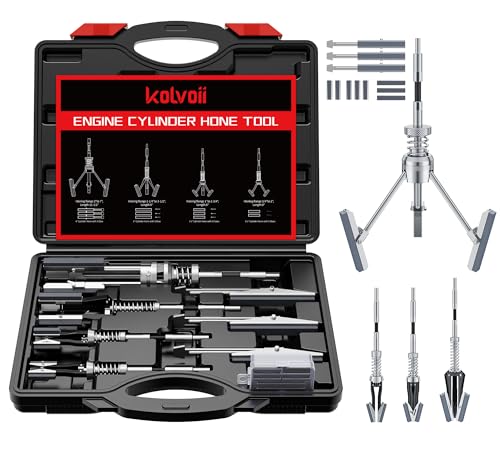
The Kolvoii set bundles four adjustable stone hones — 1-1/8″ with 2 claws, 1-1/8″ with 3 claws, 2″ with 3 claws, and 3″ with 3 claws — plus 11 replacement honing stones in 220 grit. This coverage allows the set to handle cylinders from 3/4″ up to 7″ in diameter, spanning small engines, motorcycles, automotive blocks, and marine applications. The structural-grade A36 steel construction with zinc coating resists corrosion and maintains dimensional stability under spring tension.
The self-aligning flexible shaft automatically adjusts within the cylinder bore, while a tension screw lets the user increase or decrease spring pressure against the stones. That adjustability is critical when switching between different cylinder materials or when compensating for stone wear over multiple jobs. The included storage case keeps the tools organized and protects the stones from chipping during storage.
Feedback from owners emphasizes the value of having four hone bodies and a large supply of replacement stones in one package. The 220 grit stones effectively remove carbon, glaze, and light scoring on cast iron and aluminum alloy cylinders. Some users note that the smaller hones require careful centering to avoid uneven material removal.
What works
- Comprehensive coverage from small to large bores
- 11 spare stones extend usable life significantly
- Adjustable spring pressure suits different materials
What doesn’t
- Smaller hones require careful centering
- Stone hones cannot deburr cross-holes in one pass
4. ZXQDRE 4-1/8″ Cylinder Hone Tool
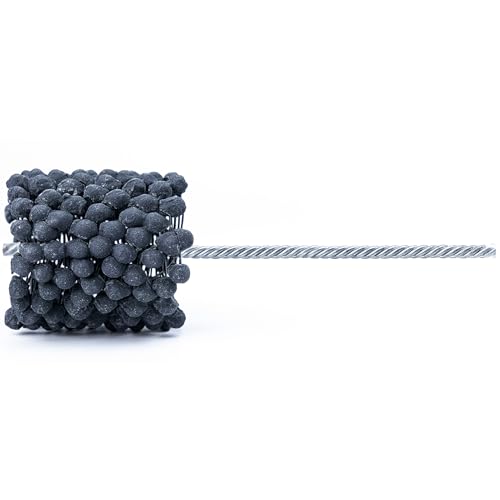
The ZXQDRE 4-1/8″ ball brush hone is engineered for bore diameters between 3.876″ and 4.125″, placing it squarely in the range of many automotive engine cylinders. The 240 grit silicon carbide abrasive spheres attach to flexible nylon filaments that conform to the bore geometry while maintaining uniform contact pressure. This design finishes the cylinder surface and deburrs cross-drilled oil passages in a single operation, reducing total machining time.
The self-centering and self-aligning characteristics of the oversized brush eliminate the need for precise piloting by the operator. Compatible with hand drills, drill presses, and CNC machines, the tool adapts to whatever spindle equipment is available in the shop. The 240 grit specification targets a 24 to 32 Ra microinch finish suitable for ring seating and oil retention on mild steel, stainless steel, and cast iron.
Users report that the ZXQDRE produces a clean, uniform crosshatch pattern with minimal vibration or chatter. The ball brush design is particularly effective at reaching the bottom of deep bores where rigid stone hones struggle. Some owners note that the tool works best with liberal application of honing oil and moderate spindle speeds in the 300 to 500 RPM range.
What works
- Effective single-pass finishing and deburring
- Self-centering design reduces operator skill requirement
- Works with hand drills and CNC equipment
What doesn’t
- Limited bore range for its size class
- Requires honing oil for proper cutting action
5. Brush Research BC34240AO FLEX-HONE 3/4″

The BC34240AO is a specialized tool designed specifically for aluminum, brass, bronze, and other non-ferrous materials, including Nikasil-coated cylinders. The 240 grit aluminum oxide abrasive spheres cut these softer materials cleanly without loading or glazing — a common failure point when using silicon carbide on non-ferrous surfaces. The 0.75″ bore diameter and 2.5″ abrasive length make it ideal for small engine cylinders, brake masters, hydraulic components, and valve guides.
Like all Brush Research FLEX-HONE tools, the BC34240AO is intentionally oversized to ensure self-centering and self-aligning operation. The 0.190″ shank fits into small drill chucks commonly used in portable tooling setups. The tool achieves a 24 to 32 microinch finish on non-ferrous materials, matching the surface finish requirements for proper seal and ring function in small-bore applications.
Owner feedback consistently praises the tool’s ability to produce a uniform crosshatch on aluminum cylinders without tearing or galling. The aluminum oxide grit maintains cutting efficiency throughout the tool’s life, and the flexible filament construction conforms to slight bore irregularities without distorting the cylinder geometry. This is the go-to choice for anyone rebuilding small engines or hydraulic cylinders made from non-ferrous materials.
What works
- Optimized for non-ferrous materials like aluminum
- Self-centering design eliminates alignment guesswork
- Consistent finish on small bores and valve guides
What doesn’t
- Small bore size limits application range
- Not suitable for ferrous cylinder materials
6. Powerbuilt Adjustable Cylinder Deglazer Hone
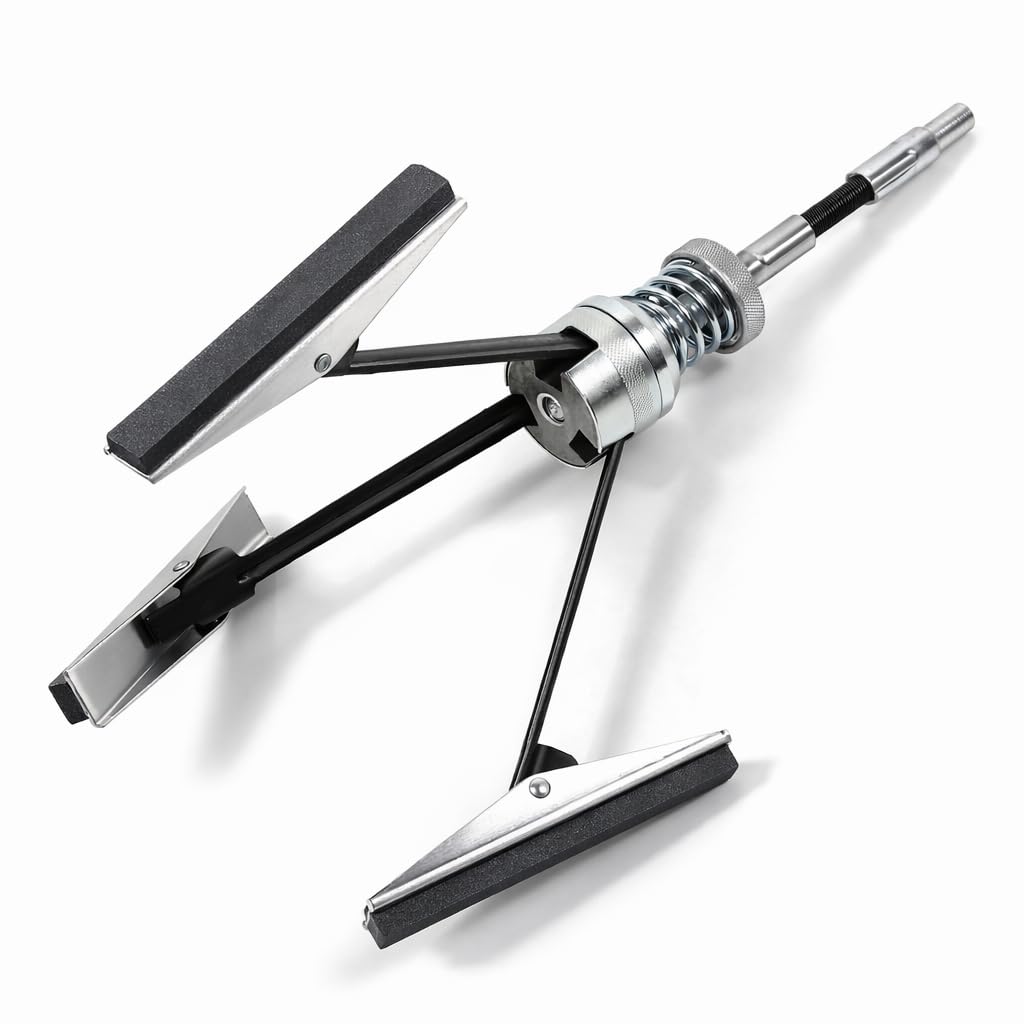
The Powerbuilt 648439 is a straightforward adjustable stone hone designed for deglazing engine cylinders from 2″ to 7″ in diameter. It uses three replaceable 4″ long, 220 grit stones mounted on spring-loaded arms that expand against the cylinder bore. The knurled wheel adjusts spring pressure, allowing the operator to control cutting aggressiveness based on the condition of the cylinder wall.
The flexible shaft dampens vibration and helps the tool follow the bore axis without binding. An adjustable collar and set screw allow the user to pre-set two maximum diameters for quicker setup when working on multiple cylinders of the same size. The 220 grit stones are fine enough for deglazing without removing excessive material, making this a practical choice for routine refreshes rather than heavy bore corrections.
Users highlight the lifetime warranty as a significant confidence booster for a tool in this segment. The stone replacement process is straightforward, and replacement stones are readily available. Some owners note that the spring tension adjustment requires periodic rechecking during extended use, and the tool works best at low drill speeds with generous lubrication.
What works
- Wide diameter range covers most cylinders
- Lifetime warranty adds long-term value
- Adjustable spring pressure for material control
What doesn’t
- Requires periodic spring tension adjustment
- Stone hones cannot finish and deburr simultaneously
7. Lyhubmh 7PCS Engine Cylinder Hone Tool Set
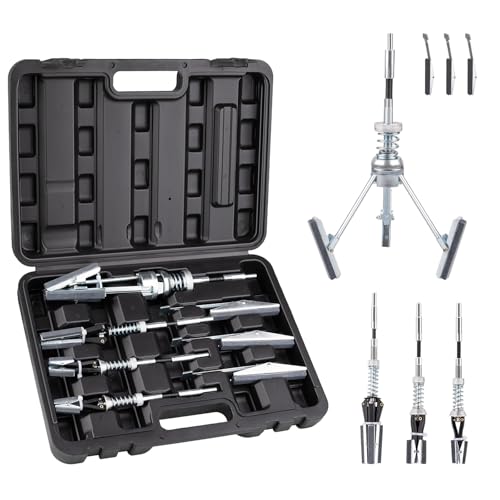
The Lyhubmh 7PCS set provides four hone tools — 1-1/8″ with 2 claws, 1-1/8″ with 3 claws, 2″ with 3 claws, and 3″ with 3 claws — along with three 4″ honing stones, all housed in a storage box. The fine grit silicon carbide stones are designed for cast iron and aluminum alloys, making the set usable across a variety of engine types including cars, motorcycles, boats, and small engines. The adjustable spring-loaded arms allow the operator to fine-tune the honing force for different bore conditions.
The self-aligning flexible shaft automatically adjusts within the cylinder bore, reducing the need for precise centering by hand. The recommended operating speed range of 300 to 700 RPM with an up-and-down stroke rate of approximately one pass per second provides a repeatable methodology for achieving consistent results. The zinc-plated coatings on the steel components resist rust and extend the service life of the tools in humid shop environments.
Owners appreciate the organized storage case and the variety of hone sizes included for the price point. The fine grit stones effectively remove carbon, glaze, and light wear marks without gouging. Some users note that the smaller hones require careful stone seating to avoid uneven contact, and the set is best suited for light deglazing rather than heavy bore correction work.
What works
- Multi-size set covers small to medium bores
- Storage box keeps components organized
- Adjustable spring pressure for controlled honing
What doesn’t
- Smaller hones need careful stone seating
- Best suited for light deglazing, not heavy correction
Hardware & Specs Guide
Abrasive Grit and Material Compatibility
Silicon carbide grit is ideal for ferrous materials such as cast iron, mild steel, and stainless steel — the most common cylinder materials in automotive engines. Aluminum oxide grit is formulated for non-ferrous surfaces like aluminum, brass, bronze, and Nikasil coatings. Using the wrong abrasive on a given material can lead to glaze formation, poor surface finish, or accelerated tool wear. Most flex hone tools use abrasive globules bonded to flexible nylon filaments, which cut cleanly and maintain consistent geometry throughout the tool’s life.
Self-Centering and Oversized Design
Premium flex hones are manufactured approximately ten percent oversized relative to the nominal bore diameter. This engineered oversize forces the abrasive filaments to deflect as they enter the bore, creating uniform contact pressure around the entire circumference. The result is a self-centering, self-aligning action that produces a consistent crosshatch pattern without requiring precise operator alignment. This design also compensates for tool wear, maintaining finish quality as the abrasive globules gradually break down during use.
Spindle Speed and Stroke Technique
Optimal spindle speed for most flex hones ranges between 300 and 600 RPM. Higher speeds generate excessive heat and can glaze the cylinder surface, while lower speeds may not produce adequate cutting action. The recommended stroke rate is approximately one complete up-and-down pass per second. Total contact time should be limited to 20 to 45 seconds per bore to avoid over-honing. Liberal application of honing oil or lightweight motor oil is essential for lubricating the abrasive interface and flushing away debris.
Bore Size Measurement and Tool Selection
Always order a flex hone by the actual bore diameter of the cylinder you are honing. Measure the bore with an inside micrometer or bore gauge at multiple points to confirm size and detect taper or out-of-round conditions. The tool’s working range is typically listed as a minimum and maximum bore diameter it can effectively finish. Using a hone that is too small for the bore reduces contact pressure and produces uneven results. Using one that is too large may overload the filaments and cause premature failure or bore damage.
FAQ
What is the difference between a stone hone and a flex ball hone?
What grit should I use for engine cylinder honing?
Can I use a flex hone with a hand drill?
How do I know what size flex hone to order?
How long does a flex hone tool last?
Final Thoughts: The Verdict
For most buyers, the best flex hone tool winner is the Brush Research GBD40024 because it delivers consistent, repeatable crosshatch finish on ferrous cylinders with heavy-duty construction that professional engine builders trust. If you need to cover multiple cylinder sizes on a budget, grab the Kolvoii Cylinder Hone Set for its four hone bodies and extensive replacement stone supply. And for non-ferrous materials like aluminum or small-bore precision work, nothing beats the Brush Research BC34240AO with its aluminum oxide abrasive optimized for softer alloys.

Certification: BSc in Mechanical Engineering
Education: Mechanical engineer
Lives In: 539 W Commerce St, Dallas, TX 75208, USA
Md Amir is an auto mechanic student and writer with over half a decade of experience in the automotive field. He has worked with top automotive brands such as Lexus, Quantum, and also owns two automotive blogs autocarneed.com and taxiwiz.com.