A slow leak that drops pressure overnight or a trail puncture that leaves you stranded — tire sealant is the difference between a minor delay and a full roadside ordeal. But not all formulas handle the same puncture sizes, temperature swings, or vehicle types, which makes picking the right one more critical than most drivers assume.
I’m Amir — the founder and writer behind Four Wheel Ask. I’ve spent years analyzing product specifications, studying chemical formulations, and cross-referencing thousands of owner reports to determine which sealants actually hold up under real-world conditions.
Whether you drive a passenger car, ride an e-bike, or tackle off-road trails, choosing the right formula matters for long-term reliability. After evaluating owner reports, these options deliver reliable puncture protection for any vehicle — this is the guide to the best flat tire sealant.
How To Choose The Best Flat Tire Sealant
Flat tire sealants vary widely in chemistry, puncture capacity, and intended use case. Understanding a few key variables will help you avoid buying a formula that dries out too quickly or fails to seal the hole sizes your driving environment throws at you.
Chemical Base: Latex vs. Synthetic
Latex-based sealants have been the standard for years, offering excellent elasticity and strong initial sealing. However, latex can degrade over time, especially in hot climates, and poses allergy risks for some users. Synthetic formulas — such as those using ethylene glycol or advanced polymers — resist drying longer, perform better in extreme cold, and are easier to clean off rims and tire interiors.
Puncture Size Rating
Most sealants list a maximum puncture diameter they can handle, typically ranging from ¼ inch to ½ inch. A ¼-inch rating covers nails, screws, and most road debris, while a ½-inch rating is better suited for off-road hazards like sharp rocks and sidewall tears. Always match the rating to the terrain you drive or ride on most frequently.
Vehicle Compatibility
Sealants designed for passenger vehicles often contain corrosion inhibitors and are safe for TPMS sensors, but they may not flow well in low-volume bicycle tires. Off-road formulas prioritize larger puncture sealing and water cleanup, while bike-specific sealants emphasize lightweight, fast sealing, and ammonia-free or latex-free compositions for wet-weather reliability.
Application Method
Preventive sealants are installed before a puncture occurs and remain liquid inside the tire, sealing holes as they happen. Emergency repair formulas are injected after a flat and often require an air source to reseat the bead. Some products combine both roles, but dedicated preventive sealants typically offer longer overall protection.
Quick Comparison
On smaller screens, swipe sideways to see the full table.
| Model | Category | Best For | Key Spec | Amazon |
|---|---|---|---|---|
| Orange Seal Endurance | Premium | Long-lasting bike protection | Seals ¼” punctures, 2-3x longer life | Amazon |
| Flat Out QuickStrike | Off-Road | ATV, UTV & fat tire e-bikes | Seals ½” punctures, contains Kevlar | Amazon |
| WTB TCS Sealant | Bicycle | Rapid sealing for tubeless tires | Seals 6mm punctures, ammonia-free | Amazon |
| Slime 60187 | Emergency | Passenger car slow leaks | Seals ¼” punctures, Thru-Core tech | Amazon |
| Slime 20240 Kit | Trail Kit | ATV/UTV trail-side repair | Includes inflator, plugs & CO2 | Amazon |
In‑Depth Reviews
1. Orange Seal Endurance Formula

Orange Seal’s Endurance Formula stands apart because of its extended service life — owners consistently report 60 to 120 days between top-offs, which is roughly two to three times longer than conventional latex sealants. The formula uses advanced nanite particles that bridge punctures up to ¼ inch and slices up to ½ inch, making it one of the most versatile options for both road and trail riding. The biodegradable composition also reduces environmental concerns during tire changes.
Field feedback highlights the product’s reliability across temperature extremes and tire compounds. Riders note that the sealant adheres well to rubber without causing delamination or rubber degradation, which preserves tire casing integrity over multiple seasons. The included injector system simplifies installation, though some users mention the injector can be finicky with thicker sealant consistency.
Where this sealant truly excels is in endurance cycling and gravel applications where extended intervals between reapplication matter. Owners of mountain bikes and road bikes alike report that the sealant remains liquid and sloshing inside the tire for months, maintaining readiness for unexpected punctures. For anyone looking for a set-and-forget solution with minimal maintenance, this is the standout choice.
What works
- Exceptional 60-120 day lifespan between top-offs
- Seals both small punctures and larger slices
- Biodegradable and eco-friendly formulation
- Compatible with all major tubeless tire brands
What doesn’t
- Supplied injector can clog with thick sealant
- Not designed for passenger car or ATV use
2. Flat Out QuickStrike Off-Road Formula

Flat Out QuickStrike redefines the off-road sealant category by integrating super-strong Kevlar fibers into its liquid formula, creating a mechanical barrier that plugs tread punctures up to ½ inch — double the capacity of most passenger-vehicle sealants. The QuickStrike formulation flows faster than the original Flat Out, which matters when you lose air quickly on a rocky trail. It works in both tubed and tubeless applications, and the water-washable cleanup means no sticky residue on rims or tools.
Owner testimonials reveal impressive real-world durability: one report notes eight screws, two Allen wrenches, and multiple nails sealed over two years without a flat. The one-time application is designed to last the life of the tire, which eliminates the need for periodic top-offs. This formula is specifically intended for ATVs, UTVs, dirt bikes, fat tire e-bikes, lawnmowers, and outdoor equipment — not passenger vehicles, so buyers should match it to the right machine.
The 32-ounce bag format makes installation straightforward, though measuring equal distribution between two tires can be imprecise without a graduated container. Some users report that the pump can clog if not cleared immediately after use, but the water-soluble nature of the fluid makes cleanup relatively simple. For off-road enthusiasts who want maximum puncture protection without recurring maintenance, this is the most capable option available.
What works
- Seals punctures up to ½ inch with Kevlar reinforcement
- Single application lasts the life of the tire
- Water washable — no sticky mess to clean
- Non-flammable and non-corrosive formula
What doesn’t
- Not recommended for passenger cars or highway vehicles
- Equal distribution between tires can be tricky
- Pump may clog without immediate cleaning
3. WTB TCS Tubeless Sealant
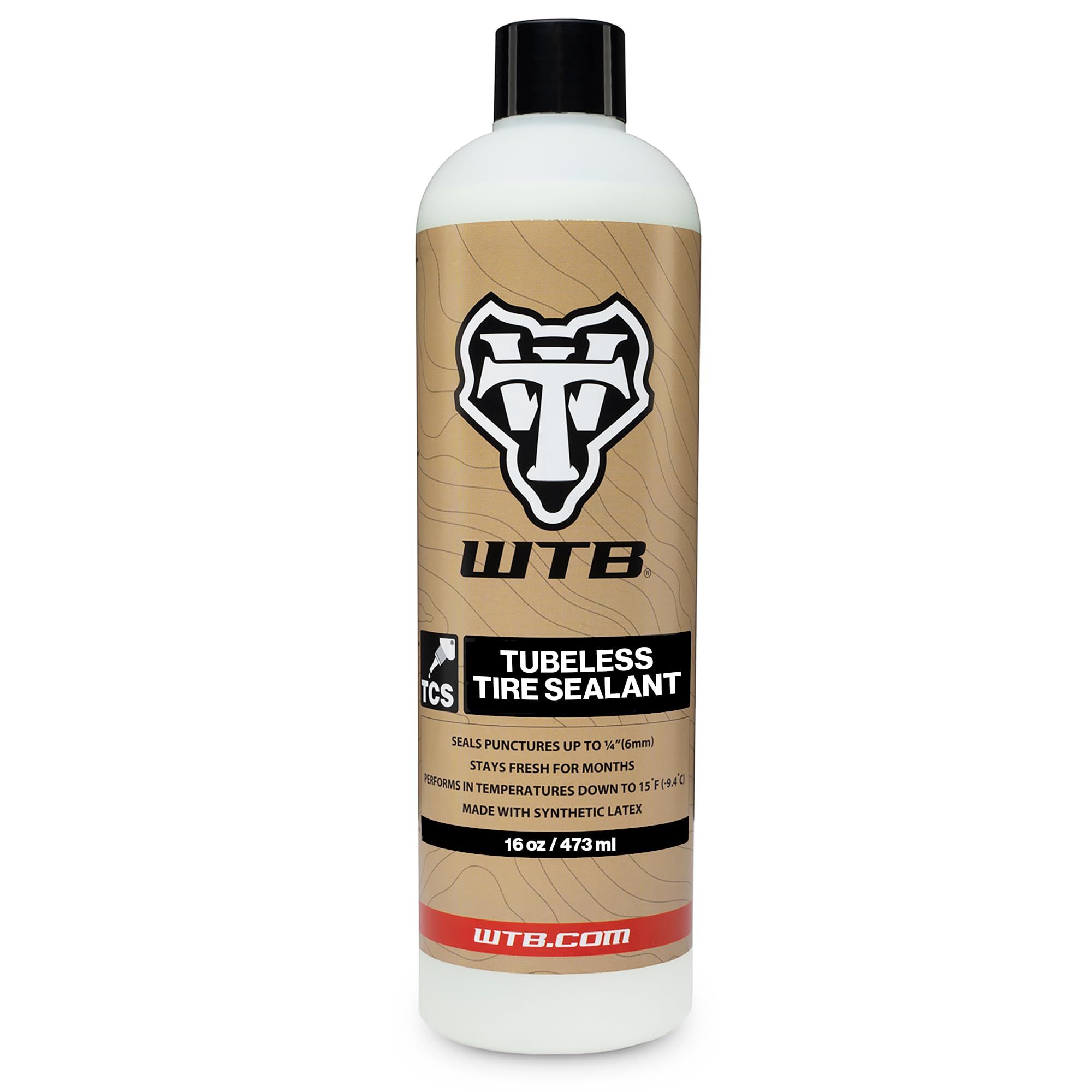
WTB’s TCS Sealant delivers rapid sealing for tubeless bicycle tires with a formulation that avoids ammonia and natural latex entirely. The ammonia-free design uses tackifying agents rather than evaporation to maintain seal integrity, which means the product remains effective in wet and cold conditions where ammonia-based sealants lose performance. The synthetic latex base also reduces allergy risks and extends shelf life inside the tire compared to natural rubber compounds.
Rider reports emphasize the sealant’s ability to handle sidewall tears — a notoriously difficult area for any sealant — with one owner describing a successful seal that held pressure long enough to ride home after a significant sidewall gash. The 6mm puncture rating covers typical trail debris, and the consistency is thin enough to flow easily through valve stems without clogging. Multiple users note that a single liter bottle lasted nearly two years of regular riding with periodic top-offs.
Where the WTB formula truly shines is in all-condition reliability. It is optimized to work down to 15°F, which makes it a strong choice for winter riders and wet-weather commuters. The lack of ammonia also means no harsh chemical odor during installation. For cyclists who want a dependable, low-maintenance sealant that plays well with a wide range of tire compounds and environmental conditions, this is the most balanced mid-range pick.
What works
- Ammonia-free formula performs in wet and cold conditions
- Can seal sidewall tears in an emergency
- Latex-free reduces allergy concerns
- Thin consistency flows easily through valves
What doesn’t
- Bicycle-specific — not suited for cars or ATVs
- Smaller 145g bottle may require frequent refills for high-volume tires
4. Slime 60187 Thru-Core Sealant

Slime’s 60187 Thru-Core formula is designed as an emergency repair solution for passenger vehicles, using a proprietary technology that eliminates the need to remove the valve core during installation. The 18-ounce bottle seals punctures up to ¼ inch in seconds and includes enough sealant for a single standard tire. Its non-toxic, non-flammable, and non-corrosive composition makes it safe for finished metal wheels and TPMS sensors.
Owner feedback paints a picture of a reliable stopgap for slow leaks that mechanics cannot locate. Multiple users describe losing 2 to 3 PSI per week for months, injecting Slime, and seeing pressure hold steady indefinitely. One Honda CRV owner reported a leak that had persisted for months with no source found at multiple shops — half a bottle of this sealant resolved it permanently. However, Slime explicitly labels this as a temporary formula that must be removed within three days or 100 miles for highway vehicles.
The real value here lies in convenience and accessibility. No jack, no tools, no valve core removal — just attach the hose, squeeze the bottle, and reinflate. For drivers who want a cheap, fast solution for an annoying slow leak or an emergency roadside fix, this is the most straightforward option. Just be aware that permanent use is not recommended, and the sealant should be professionally cleaned out after a short period to avoid rim corrosion or tire imbalance.
What works
- No valve core removal needed — fast installation
- Non-toxic and safe for metal wheels
- Effective at sealing mysterious slow leaks
- Works without jacking up the vehicle
What doesn’t
- Temporary fix — must be removed within 3 days or 100 miles
- Single-tire capacity only per bottle
- Not intended as a permanent preventive sealant
5. Slime 20240 ATV/UTV Repair & Inflation Kit

The Slime 20240 is not a sealant in the traditional sense but a complete trail-side repair kit that combines tire plugs, a mini CO2 inflator, and three 16-gram CO2 cartridges in one compact package. The twist-to-inflate head eliminates the guesswork of CO2 threading, and the kit includes a tire plug tool plus five plugs for sealing larger punctures that sealant alone cannot handle. It is specifically designed for ATV, UTV, and trailer tires where carrying a full air compressor is impractical.
Owner feedback consistently praises the kit’s portability and ease of use on the trail. Hunters and off-road riders note that the compact size fits easily in a saddlebag or cargo box, and the CO2 inflator provides enough pressure to reseat beads on balloon-style ATV tires. Some users mention that determining exact tire fill volume for different tire sizes requires some estimation, and the three cartridges may not fully inflate a large UTV tire from flat. A separate or additional CO2 source is recommended for bigger tires.
For anyone who rides off-road regularly, this kit fills a specific gap: it provides both the plugging and inflation capability that sealant alone cannot offer for large punctures or bead unseating. The plug-and-inflate approach is more reliable for gashes that exceed sealant capacity, making this a strong complement to a liquid sealant rather than a replacement. Riders who carry both liquid sealant and this plug kit have the most comprehensive puncture coverage.
What works
- Compact, trail-ready kit with plugs and CO2 inflator
- Twist-to-inflate head is simple to operate
- Includes five spare plugs for multiple repairs
- Great for ATV, UTV, and trailer emergency use
What doesn’t
- Three CO2 cartridges may not fill large UTV tires fully
- Not a sealant — does not prevent future punctures
- Requires some mechanical familiarity to use effectively
Hardware & Specs Guide
Active Ingredients & Chemistry
Sealants rely on fibrous particles suspended in a liquid carrier to bridge punctures. Latex-based formulas use natural rubber particles that coagulate on contact with air, while synthetic alternatives use ethylene glycol or polymer blends that resist drying and perform better in cold weather. Thicker carriers suspend larger particles (including Kevlar or nanite fibers) for sealing bigger holes but may require periodic re-agitation inside the tire. Ammonia-free formulations use tackifying agents instead of ammonia evaporation to maintain seal integrity, which improves performance in wet conditions.
Puncture Sealing Capacity
Most passenger-vehicle sealants are rated for punctures up to ¼ inch in diameter, covering nails, screws, and typical road debris. Off-road and heavy-duty formulas extend that range to ½ inch or more by incorporating longer, stronger fibers that bridge larger gaps. Bike-specific sealants typically rate at 6mm to ¼ inch and prioritize rapid sealing to minimize air loss during a ride. Sidewall tears remain the most challenging repair for any sealant, though some advanced formulations can temporarily seal them to get the rider home.
FAQ
How long does tire sealant last inside the tire?
Can I use bike tire sealant in my car?
Does tire sealant damage TPMS sensors?
How do I remove old sealant from a tire?
Final Thoughts: The Verdict
For most buyers, the best flat tire sealant winner is the Orange Seal Endurance Formula because it balances an industry-leading lifespan, biodegradable ingredients, and reliable sealing across puncture sizes. If you need maximum off-road protection with Kevlar reinforcement, grab the Flat Out QuickStrike. And for cyclists seeking a dependable, ammonia-free option that handles wet and cold conditions, nothing beats the WTB TCS Sealant.

Certification: BSc in Mechanical Engineering
Education: Mechanical engineer
Lives In: 539 W Commerce St, Dallas, TX 75208, USA
Md Amir is an auto mechanic student and writer with over half a decade of experience in the automotive field. He has worked with top automotive brands such as Lexus, Quantum, and also owns two automotive blogs autocarneed.com and taxiwiz.com.