An exhaust leak isn’t just a noise issue — it’s a sign that your exhaust sealant has failed under intense thermal cycling, where temperatures swing from freezing cold starts to hundreds of degrees within minutes. A sealant that cracks, shrinks, or peels under those conditions isn’t doing its job, leaving you with hissing exhaust fumes, lost backpressure, and potential carbon monoxide exposure inside the cabin.
I’m Amir — the founder and writer behind Four Wheel Ask. I’ve spent years analyzing the chemical composition, temperature ratings, and real-world durability of automotive sealants, cross-referencing manufacturer data with aggregated owner feedback to find the compounds that genuinely withstand extreme heat without turning brittle.
This guide cuts through the marketing claims to highlight the compounds that hold up where it matters most. These are the Best exhaust sealant high temp options that resist cracking and maintain flexibility at sustained thermal extremes.
How To Choose The Best Exhaust Sealant High Temp
Selecting an exhaust sealant isn’t about picking the one with the highest peak temperature number on the label. The real-world performance depends on how the compound handles thermal cycling, vibration, and prolonged exposure to moisture and road grime. Here are the critical factors to weigh.
Continuous vs. Intermittent Temperature Rating
Many high-temp sealants advertise a peak temperature like 650°F, but that figure often refers to intermittent exposure only. The continuous rating — the temperature the sealant can withstand indefinitely without degrading — is the true measure of durability for exhaust systems that run hot for long periods. A 500°F continuous rating is far more valuable on a daily driver than a 700°F intermittent rating that only lasts 30 minutes.
Cure Chemistry: Acetoxy vs. Neutral Cure
Acetoxy-cure silicones release acetic acid (vinegar smell) as they cure, which can corrode oxygen sensors and thin metal on older exhaust components. Neutral-cure formulas are sensor-safe and won’t attack metal over time. For modern vehicles with O2 sensors, a neutral-cure RTV is the safer long-term choice, though acetoxy options often bond more aggressively to bare steel.
Gap Fill and Flexibility After Cure
An exhaust joint isn’t a perfect mating surface. The sealant must fill gaps of 1-6 millimeters without sagging during application or cracking after curing. Look for sealants that retain some flexibility after full cure — a rigid sealant will shatter under the vibration of an engine, while a flexible compound can absorb movement between flanges and maintain a gas-tight seal through hundreds of heat cycles.
Quick Comparison
On smaller screens, swipe sideways to see the full table.
| Model | Category | Best For | Key Spec | Amazon |
|---|---|---|---|---|
| Permatex 81409 | RTV Silicone | Form-in-place gaskets | 650°F intermittent / 500°F continuous | Amazon |
| Surebond SB-188 T | Silicone Sealant | High-temp gasketing | 325 PSI tensile strength | Amazon |
| Rutland 76 | RTV Silicone | Fireplace & solar repair | 500°F continuous / 450°F sustained | Amazon |
| Thermo Tec 12001 | Protective Coating | Wrap protection & metal paint | Flash point -104°C | Amazon |
| Red Devil 0896 | HVAC Silicone | Low-temp duct sealing | -60°F to 400°F range | Amazon |
In‑Depth Reviews
1. Permatex 81409 High-Temp Red RTV Silicone Gasket, 11 oz.

The Permatex 81409 earns the top spot because its real-world temperature range — -65°F to 650°F intermittent — directly matches the demands of automotive exhaust systems that see both cold startup condensation and sustained highway heat. The red RTV formula is engineered to resist cracking, shrinking, and migrating caused by thermal cycling, which is the exact failure mode that plagues cheaper silicone gasket makers on valve covers and timing chain covers.
This sealant functions as a form-in-place gasket that can replace cut gaskets for oil pans, water pumps, thermostat housings, and transmission pans. The 11-ounce tube provides generous coverage for multiple jobs, and the initial hardening time of just one hour means you can torque down components and begin low-heat operation relatively quickly. The material type is silicone, and it fills gaps up to 6 millimeters — plenty for uneven mating surfaces.
The only trade-off is that this is a true automotive-grade gasket maker, not a general-purpose gap filler. It works best when applied as a thin bead on clean, dry flanges that are then torqued together. For sealing large gaps in a cracked exhaust pipe rather than a flange joint, a different product with more gap-filling body would be more appropriate.
What works
- Excellent thermal cycling resistance from -65°F to 650°F intermittent
- Forms a durable in-place gasket that resists oil and coolant
- 24-hour full cure provides a reliable, flexible seal
What doesn’t
- Best suited for flange joints rather than large gap-filling repairs
- Red color can be messy and visible on exposed gasket surfaces
2. Surebond SB-188 T High-Temp Silicone Sealant, 10.3 fl. oz.

The Surebond SB-188 T stands apart because of its 325 PSI tensile strength rating — a spec that directly translates to how much mechanical stress the cured sealant can handle before tearing. On exhaust systems where vibration at flange joints is constant, that tensile strength means the sealant holds its bond line even when the metal expands and contracts at different rates. The full cure time is 24 hours, which is standard for high-temp silicones.
This sealant is formulated to provide both electrical and thermal insulation, making it useful for applications beyond exhaust gaskets — such as insulating electrical connections near heat sources. The black color blends well with underhood components and doesn’t look out of place on visible exhaust flanges. The 10.3-ounce cartridge size is efficient for cartridge guns, allowing precise bead application without waste.
The packaging weight listed as 10 pounds is almost certainly a listing error for the individual unit, which is actually very light. Additionally, the surface recommendation of “window” suggests this sealant has versatility for home applications, but its primary strength for an automotive buyer remains its high-temperature gasketing capability on metal flanges.
What works
- Strong 325 PSI tensile strength for vibration resistance
- Effective electrical and thermal insulation properties
- Black color is low-profile for visible exhaust joints
What doesn’t
- Packaging specs have inconsistencies that may confuse buyers
- Full 24-hour cure time requires patient assembly
3. Rutland 500°F RTV High Heat Silicone Sealant Black
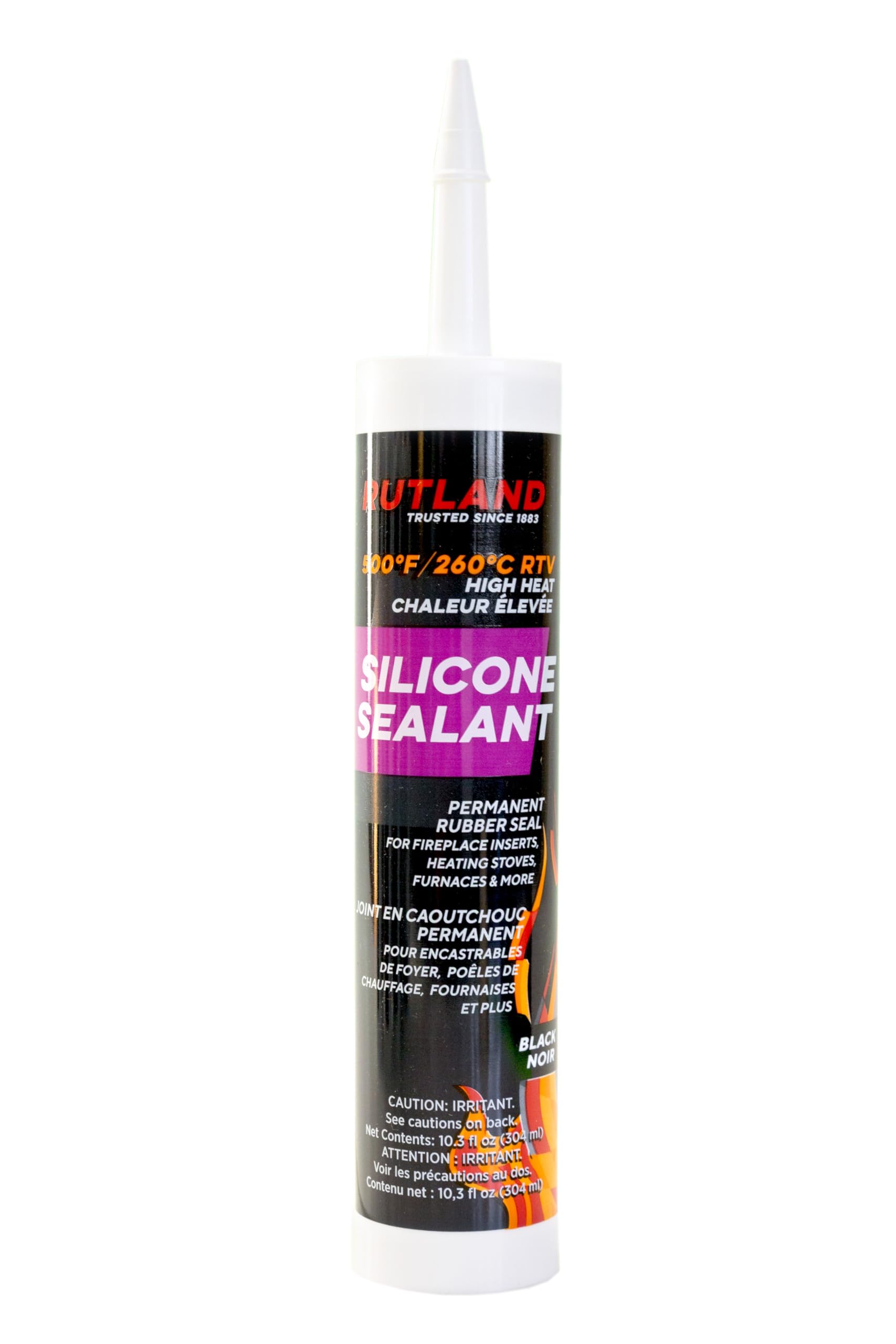
The Rutland 500°F RTV silicone provides honest temperature specs: a continuous rating of 450°F and intermittent capability up to 500°F. That 450°F continuous threshold is actually higher than many budget sealants that only brag about peak temps, and it’s sufficient for most naturally aspirated engine exhaust systems that rarely exceed 400°F sustained at the flange level. The acetoxy cure means it releases vinegar-like fumes during curing, but it bonds aggressively to metal, glass, masonry, wood, ceramic, and plastic.
Rutland specifically markets this for fireplace inserts, solar panel repairs, flashings, and ceramic tile installation around stoves, which confirms its genuine high-heat stability. The black finish is standard, and the 10.3-ounce cartridge fits standard caulking guns. Meets ASTM C92-86 standard for oil resistance and non-corrosiveness, making it safe for use near painted surfaces and metal components.
The trade-off with an acetoxy-cure silicone is the potential for acetic acid to corrode oxygen sensors if applied in a closed system near the sensor bung. For exhaust manifold gaskets or collector flanges on non-sensor-equipped vehicles or off-road rigs, this is a non-issue and the stronger adhesion is a genuine advantage. For modern OBD-II vehicles with post-cat sensors, neutral-cure alternatives are safer.
What works
- Honest 450°F continuous rating for sustained heat exposure
- Strong acetoxy-cure adhesion to bare metal surfaces
- Versatile for both automotive and home high-heat applications
What doesn’t
- Acetoxy cure can corrode O2 sensors on modern vehicles
- 500°F intermittent only, not continuous
4. Thermo Tec 12001 Black High Heat Coating 12 oz
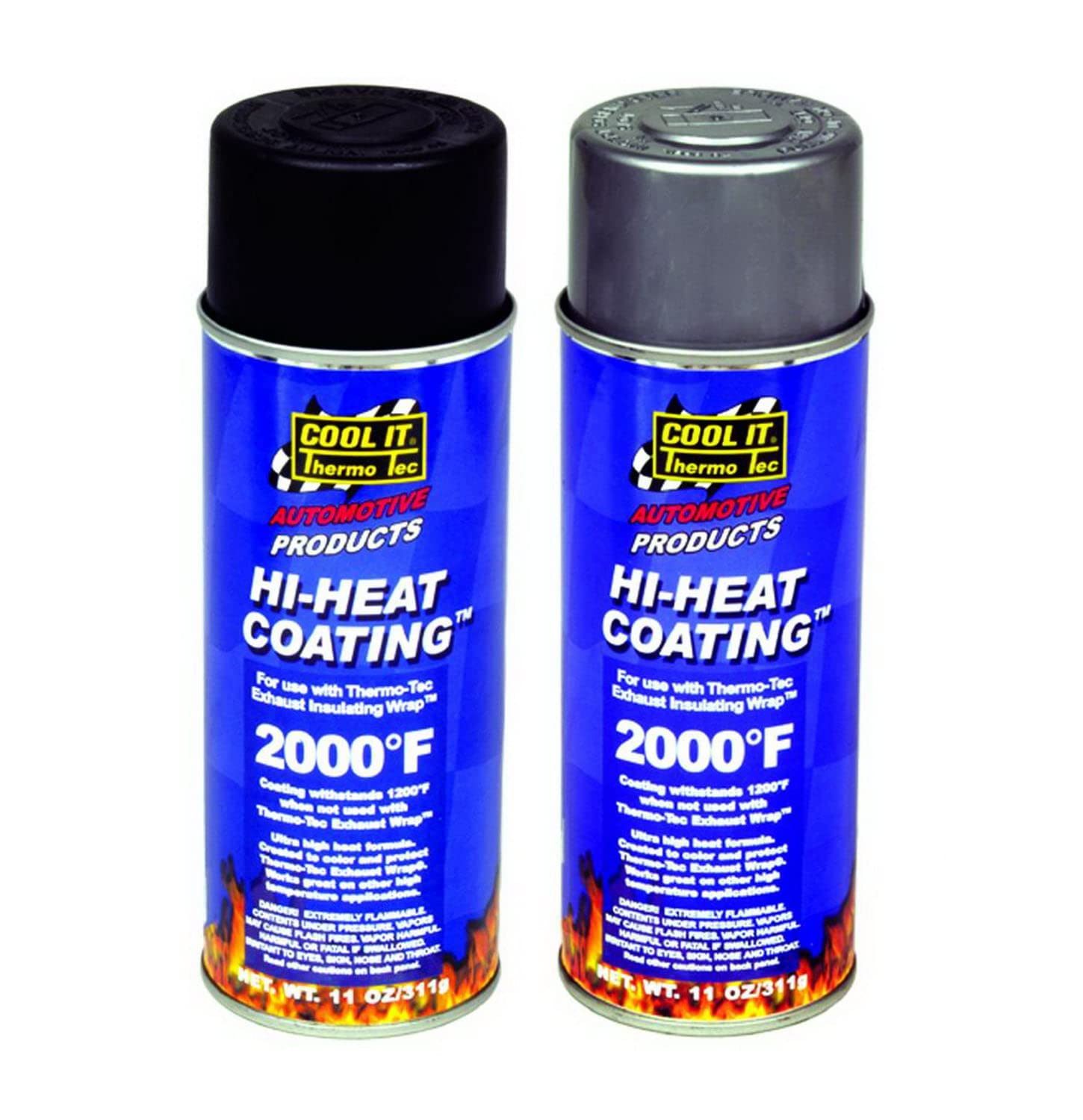
The Thermo Tec 12001 is fundamentally different from the other products on this list — it is not a gap-filling sealant but rather a protective coating designed to seal and protect exhaust wrap and bare metal surfaces. It works by depositing extra resins and binders that toughen the surface of fiberglass exhaust wrap, extending its life by protecting it from friction, moisture penetration, and harmful liquid spills like oil or coolant.
This coating can also be applied directly to bare metal exhaust components as a heat-resistant paint, giving a matte black finish that hides surface rust and provides a modest thermal barrier. The fast-drying formula is convenient for impatient builders, and flash point rating of -104°C indicates extreme volatility of the aerosol propellant, so proper ventilation is mandatory during application. The 12-ounce aerosol can delivers multiple coats on a typical set of header wrap.
If your goal is to seal a leaking exhaust joint, this coating will not fill gaps — it’s a thin liquid that dries to a hard film. Use it for its intended purpose of protecting existing wrap or adding a cosmetic finish to headers and downpipes. For a true sealant repair, you need one of the RTV silicone products on this list.
What works
- Seals and extends the life of expensive exhaust heat wrap
- Fast-drying and easy to apply with aerosol convenience
- Works as a direct-to-metal heat-resistant paint
What doesn’t
- Not a gap-filling sealant — cannot repair leaks
- Extremely low flash point requires careful ventilation
5. Red Devil 0896 Extreme Temperature HVAC/R Silicone Sealant

The Red Devil 0896 is an HVAC/R-grade silicone sealant with a temperature specification of -60°F to 400°F, making it strictly an entry-level option for exhaust applications. The 400°F upper limit is acceptable for cold-side exhaust components like intake runners or cold-air ducting, but it will break down on a hot exhaust manifold, catalytic converter, or muffler inlet that routinely sees 500°F+. The flexible formulation is designed to not crack, shrink, or peel under normal HVAC thermal loads.
Adhesion to metal, aluminum, concrete, glass, fiberglass, vinyl, and plastic makes it a versatile general-purpose sealant for non-critical joints. The white color stands out underhood, which may be a cosmetic drawback for visible applications. Made in the USA, and the paste form is easy to apply with a standard caulk gun for clean beads.
This is the budget choice because its temperature ceiling limits it to low-heat areas. For a cold-air intake joint, a resonator patch, or a non-critical exhaust hanger bushing repair, this is perfectly adequate and affordable. But for any flange or pipe where exhaust gases flow directly, choose one of the higher-rated silicones instead.
What works
- Excellent adhesion to a wide range of materials including metal and plastic
- Permanent flexibility prevents cracking and peeling
- Weather-resistant for exposed outdoor joints
What doesn’t
- 400°F max rating is too low for direct exhaust manifold or muffler use
- White color is conspicuous and not heat-resistant to high-temp paint
Hardware & Specs Guide
Continuous Temperature Rating
This is the temperature a sealant can endure indefinitely without degradation. The Permatex 81409 handles 500°F continuous, while the Rutland maintains 450°F. For a daily-driven vehicle, continuous rating is more meaningful than a peak number — a 650°F intermittent rating only applies for short bursts.
Cure Mechanism: Acetoxy vs. Neutral
Acetoxy-cure silicones (like Rutland) release acetic acid that bonds aggressively to metal but can corrode oxygen sensors. Neutral-cure formulas (like Permatex) are sensor-safe. For post-1996 OBD-II vehicles with heated oxygen sensors, neutral-cure RTV is the recommended choice to avoid sensor contamination.
FAQ
Can I use high-temp silicone sealant to patch a hole in my exhaust pipe?
How long does high-temp RTV silicone take to cure before I can start my engine?
Will high-temp exhaust sealant damage my oxygen sensors?
Final Thoughts: The Verdict
For most buyers, the Best exhaust sealant high temp winner is the Permatex 81409 because its 650°F intermittent rating, sensor-safe chemistry, and proven resistance to thermal cycling make it the most reliable choice for modern exhaust gasketing. If you want exceptional tensile strength and thermal insulation, grab the Surebond SB-188 T. And for a budget-friendly entry-level option that handles cold-side joints and non-exhaust uses, nothing beats the Red Devil 0896.

Certification: BSc in Mechanical Engineering
Education: Mechanical engineer
Lives In: 539 W Commerce St, Dallas, TX 75208, USA
Md Amir is an auto mechanic student and writer with over half a decade of experience in the automotive field. He has worked with top automotive brands such as Lexus, Quantum, and also owns two automotive blogs autocarneed.com and taxiwiz.com.