A 90-degree exhaust elbow looks like a simple part, but choosing the wrong one can choke your engine’s flow, create fitment headaches, or rust out in a single season. Whether you are fabricating a custom turbo outlet, repairing a rotted tailpipe section, or piecing together an intercooler route, the elbow you select sets the foundation for the entire system’s performance and longevity.
I’m Amir — the founder and writer behind Four Wheel Ask. I have spent years analyzing exhaust component specifications, comparing metallurgical data across brands, and synthesizing owner-reported durability trends to separate the parts that truly deliver from those that just look shiny on a shelf.
After evaluating material quality, bend precision, and owner satisfaction data across multiple price tiers, I present this research-backed guide to choosing the best exhaust pipe 90 degree elbow for your specific build.
How To Choose The Best Exhaust Pipe 90 Degree Elbow
Selecting the right elbow is more than matching a diameter. Material composition, wall thickness, bend method, and end finish all play a role in how well the part fits, how long it lasts, and how easily it integrates into your system. Here are the key factors to evaluate before buying.
Material: Mild Steel, Stainless, or Aluminum
Mild steel is the most affordable option and welds easily, but it requires a protective coating or paint to resist corrosion. Aluminized steel offers a middle ground with better rust resistance without the cost of stainless. Type 304 stainless steel provides the best durability against heat and oxidation, making it ideal for long-term installations, though it demands careful welding technique to avoid warping. Aluminum elbows are lightweight and common in intercooler and intake piping, but they are not suitable for direct exhaust heat exposure.
Wall Thickness and Gauge
Thicker walls (14-gauge / 0.078-inch) resist denting and provide a more robust weld surface, but they add weight and may require higher amperage from your welder. Thinner walls (16-gauge / 0.065-inch or 18-gauge / 0.048-inch) are easier to cut and weld on a budget machine, though they are more prone to damage from road debris and thermal cycling over time. Match the gauge to the rest of your existing exhaust tubing for consistent weld penetration.
Mandrel Bend vs. Press Bend
Mandrel-bent elbows maintain a consistent inner diameter through the entire curve, preserving exhaust velocity and preventing flow restriction. Press-bent elbows pinch the inside of the bend, reducing the cross-sectional area and creating turbulence. For performance-oriented builds, always verify that the elbow is mandrel-bent — most quality aftermarket elbows specify this clearly in their description.
Flared Ends and Leg Length
A flared or expanded end (slip-fit style) allows the elbow to slide over an adjacent pipe section, making tack welding and alignment easier before final welding. Straight-cut ends (butt-weld style) require precise alignment and are best for experienced fabricators. Leg length determines how much straight pipe you have on each side of the bend — longer legs offer more room for cutting and adjustment, while shorter legs are better for tight engine-bay packaging.
Quick Comparison
On smaller screens, swipe sideways to see the full table.
| Model | Category | Best For | Key Spec | Amazon |
|---|---|---|---|---|
| Walker Heavy Duty 41685 | Exhaust Elbow | OE-style replacement on trucks and cars | 3″ OD, aluminized steel, bolt-on | Amazon |
| KOTVTM 3″ 90° Elbow | Performance Elbow | High-temp custom exhaust and handrails | 3″ OD, 14GA SS304, 1.5″ legs | Amazon |
| A-KARCK 3″ 90° Bend | Mandrel Bend | Welded custom exhaust fabrication | 3″ OD, 304 stainless, flared end | Amazon |
| AC PERFORMANCE 3″ Elbow | Intercooler Pipe | Turbo intake and intercooler routing | 3″ OD, 6061 aluminum, 4″ leg | Amazon |
| X AUTOHAUX 4-Pack Elbow | Multi-Pack | Multiple joints or bracket fabrication | 3″ OD, SS304, 1.5mm wall, clamp-on | Amazon |
| OSIDU 4-Pack 90° Elbow | Stainless Pack | Bulk exhaust or structural projects | 3″ OD, 16GA SS304, polished finish | Amazon |
| DNA MOTORING ZTL-PP-30-90-RAW | DIY Tubing | Budget-friendly mild steel fabrication | 3″ OD, 18GA mild steel, slip-fit | Amazon |
In‑Depth Reviews
1. Walker Heavy Duty 41685 Exhaust Elbow

Walker is a household name in exhaust replacement parts, and the 41685 elbow reflects the company’s engineering focus on fit precision and longevity. Constructed from heavy-duty aluminized steel, this elbow resists surface corrosion far better than raw mild steel while remaining weldable with standard shop equipment. The 3-inch inlet and outlet outer diameters match common OE and aftermarket exhaust tubing sizes, making it a straightforward swap for rusted factory elbows on trucks, SUVs, and passenger cars.
The part features precision-bent geometry that maintains consistent exhaust flow direction without sharp kinks or crushed inner radii. Walker uses OE-style routings and connector profiles where applicable, which reduces the need for re-engineering hanger locations or pipe angles during installation. The aluminized coating extends component life in regions where road salt and moisture accelerate mild steel failure, giving this elbow an edge over uncoated alternatives at a similar price point.
Owner feedback across truck and van platforms highlights the 41685’s predictable fitment on stock exhaust systems and its compatibility with Walker catalytic converters and mufflers. Some users note that the aluminized finish requires careful handling during welding to avoid burning through the coating near the joint, but this is standard practice for any coated exhaust component. For a replacement elbow that balances cost, ease of installation, and corrosion resistance, this Walker part remains a reliable default choice.
What works
- Aluminized coating offers genuine corrosion protection over raw steel
- OE-style bends simplify alignment and hanger placement
- Widely available with confirmed fitment for multiple vehicle models
What doesn’t
- Heavier than stainless options due to thicker coating and steel
- Not suitable for high-visibility show builds due to matte finish
2. KOTVTM 3″ 90° Mandrel Bend Elbow

The KOTVTM 90-degree elbow stands out for its unusually thick wall — 14-gauge or 0.078-inch — which places it in a different durability category than most standard stainless elbows. Fabricated from SS304 stainless steel, this elbow resists oxidation and scaling at high exhaust temperatures while providing a robust weld surface that tolerates repeated heat cycles without cracking. The 1.5-inch leg length keeps the bend compact, ideal for tight chassis or engine bay routing where every inch of space counts.
Mandrel bending ensures the inner diameter remains consistent through the full 90-degree arc, preventing the flow restriction that plagues press-bent alternatives. The outer diameter measures a true 3 inches, matching standard stainless tubing for clean butt-weld joints. The stainless surface accepts a polish for show-quality appearance, and the material’s natural corrosion resistance eliminates the need for paint or coating in exposed installations.
Builders working on custom exhaust systems, turbo downpipes, or even structural projects like stair handrails praise this elbow for its dimensional accuracy and the confidence the thick wall provides during welding. The trade-off is that 14-gauge stainless requires more heat input from the welder — a 110-volt unit may struggle on full-penetration joints. For those with a capable TIG or MIG setup, however, the KOTVTM elbow delivers professional-grade results without requiring multiple passes.
What works
- Thick 14-gauge wall stands up to vibration and thermal stress
- True mandrel bend preserves full inner diameter throughout the turn
- Compact leg length fits tight engine bay clearances
What doesn’t
- Requires a higher-amperage welder for proper penetration
- Heavier than 16-gauge elbows, adding weight to the system
3. A-KARCK 3″ 90° Exhaust Tube

A-KARCK’s 90-degree mandrel bend is engineered for DIY fabricators who want a weld-ready stainless elbow without the premium price of boutique brands. The 3-inch outer diameter is formed from 304 stainless steel with a polished finish that resists road grime while offering a clean aesthetic for visible exhaust sections. Each pipe arrives with a flared end that simplifies initial positioning during tack-up, allowing the elbow to slide over an adjacent tube for a more stable fitment before final welding.
The mandrel-bending process produces a smooth, uninterrupted inner radius that supports high exhaust flow velocity, which is critical for naturally aspirated and turbocharged applications alike. The stainless composition handles sustained high heat without scaling, and the material’s natural oxide layer provides passive corrosion protection even when installed in salt-prone environments. A-KARCK also backs the elbow with a one-year warranty, which adds a layer of confidence for buyers who have been burned by off-gauge imports in the past.
Real-world builder reports indicate that the flared end fits snugly over standard 3-inch OD pipe, reducing the wrestling that often accompanies slip-fit joints. The straight leg segments offer enough length for generous cutting and adjustment before committing to a weld. Some users mention that the polished finish can burn or discolor around the weld zone if overheated, but this is cosmetic rather than structural. For a balance of price, material quality, and fabricator-friendly features, this elbow earns a solid recommendation.
What works
- Flared end simplifies alignment and tack-welding
- Polished 304 stainless offers long-term corrosion resistance
- One-year warranty provides purchase protection
What doesn’t
- Polished surface shows heat tint more readily than brushed finishes
- Leg length is moderate, limiting use in extremely tight spaces
4. AC PERFORMANCE 3″ Aluminum Elbow
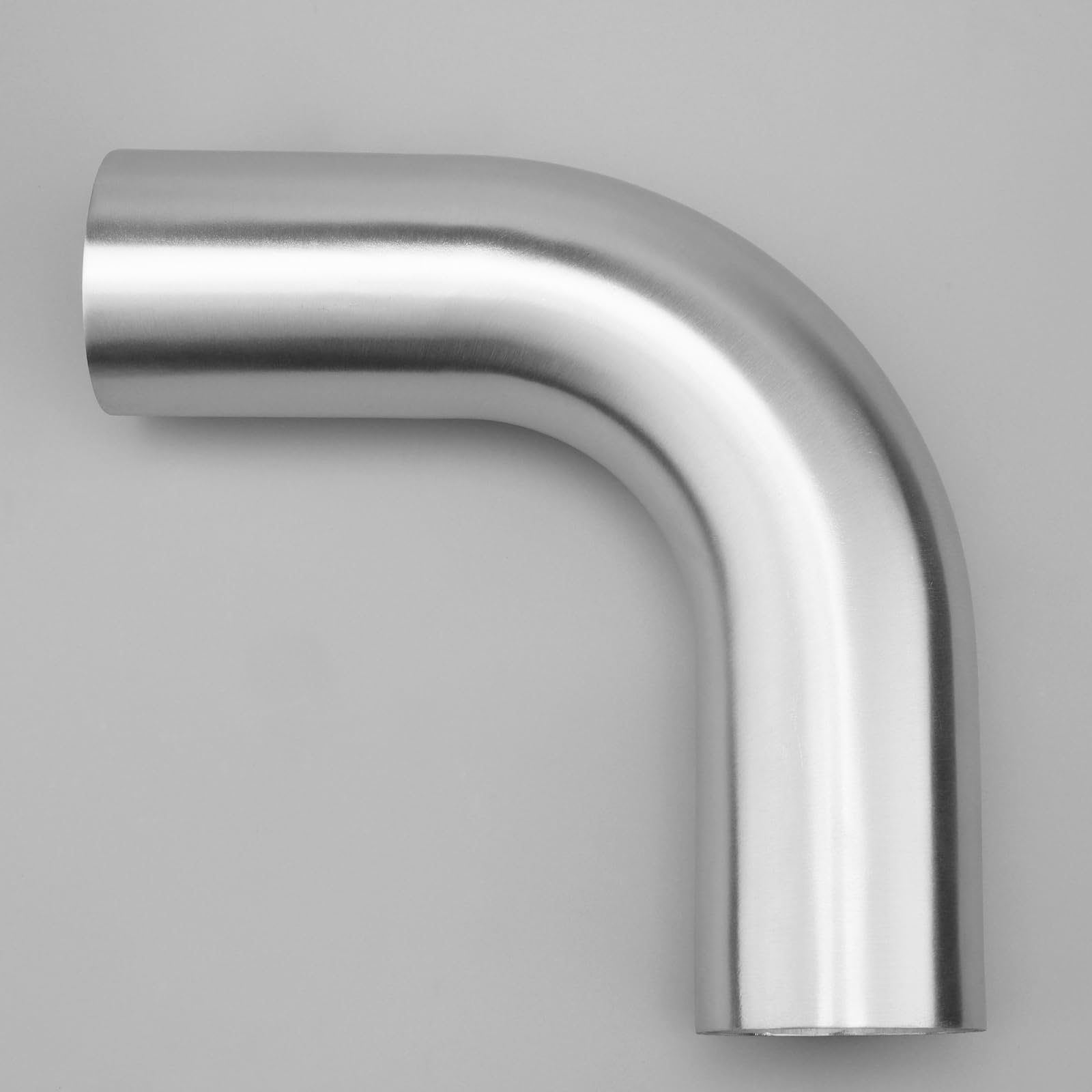
This AC PERFORMANCE elbow breaks the stainless steel mold by offering a 3-inch 90-degree bend in 6061 aluminum alloy, making it the go-to choice for intercooler piping, cold-side intake routing, and turbo inlet systems where heat rejection and weight reduction are priorities. The brushed finish provides a subtle satin look that matches most aluminum charge pipe kits, and the 0.071-inch wall thickness delivers a good balance of structural rigidity and light weight. Each leg measures 4 inches, giving fabricators generous material to trim for custom routing.
The mandrel-bent construction maintains a smooth bore through the entire arc, which is essential for maintaining boost pressure and reducing turbulence in forced-induction systems. Aluminum’s thermal conductivity helps dissipate under-hood heat more effectively than stainless in cold-side applications, contributing to lower intake air temperatures. The elbow is designed to be cut, spliced, or welded to fit specific layouts, and the material welds cleanly with a TIG machine using standard 4043 or 5356 filler rod.
Users building custom intercooler setups frequently cite the AC PERFORMANCE elbow’s consistent 76mm outer diameter as a perfect match for silicone couplers and T-bolt clamps, eliminating the step of searching for adapters. The brushed surface resists fingerprint smudging during mock-up, and the 6061 alloy withstands the vibration and pressure cycles of daily-driven turbo cars. While aluminum is not suitable for exhaust gas temperatures above about 400°F, this elbow was never intended for that role — within its intercooler and intake niche, it performs exceptionally well.
What works
- Lightweight 6061 aluminum is ideal for intercooler and intake piping
- 4-inch leg length provides plenty of room for trimming and couplers
- Brushed finish resists smudging and matches aftermarket charge pipes
What doesn’t
- Not suitable for hot-side exhaust temperatures above 400°F
- Softer than stainless — requires care to avoid denting during installation
5. X AUTOHAUX 4-Pack 90° Elbow
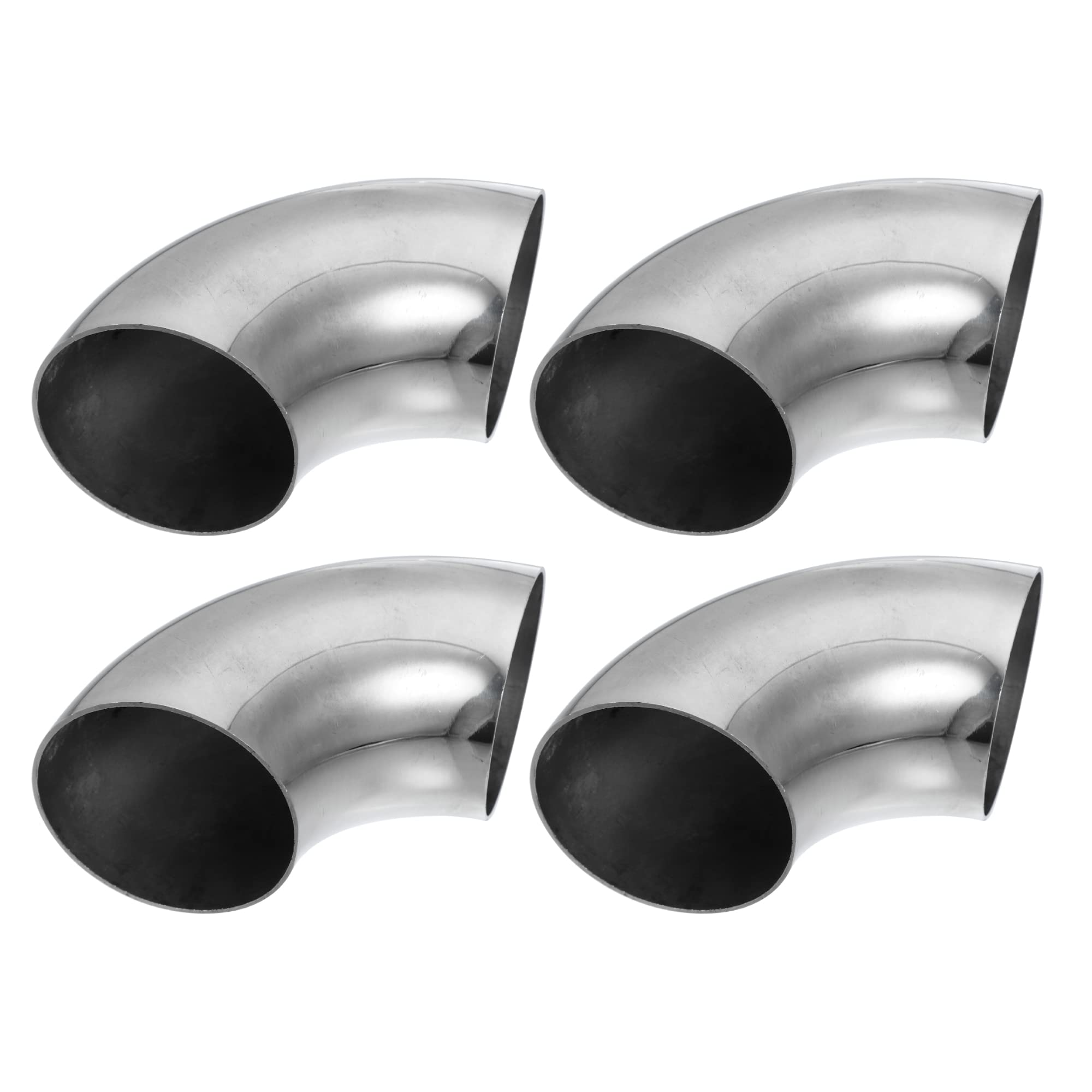
X AUTOHAUX delivers a four-pack of SS304 stainless steel 90-degree elbows that brings the per-piece cost down significantly compared to buying individual bends, making this set a strong value play for builders planning multi-joint exhaust systems or projects that require several turns. Each elbow features a 3-inch outer diameter with a 1.5-millimeter wall thickness, placing it in the 16-gauge range that balances weldability with structural durability. The back arc length measures 7.28 inches, providing ample straight section for cutting and fitting to your layout.
The elbows include raised humps near both ends that are designed to work with clamp-style connections, adding flexibility for builders who prefer a clamp-on installation over full welding. The stainless steel construction resists corrosion and high-temperature oxidation, and the polished silver tone gives a clean, uniform appearance across all four pieces. Each bend is mandrel-formed to maintain consistent cross-section through the curve, supporting smooth exhaust flow in both naturally aspirated and mild turbo applications.
Buyers tackling complete exhaust system overhauls or fabricating custom headers appreciate having matching elbows in one shipment — no hunting for a second piece that has a slightly different radius or finish. The clamp-ready ends also allow temporary mock-up before committing to welds, saving time during the layout phase. Some users note that the humps can interfere with butt-weld alignment if you choose to weld every joint, but they are easily ground down. For the cost-conscious builder who needs multiple elbows, this set delivers excellent material quality per dollar.
What works
- Four elbows for the price of two singles — strong value for multi-bend builds
- Clamp humps enable no-weld mock-up and final assembly
- Consistent mandrel-bend quality across all pieces in the set
What doesn’t
- Clamp humps must be ground down for flush butt-welded joints
- 16-gauge wall is thinner than premium 14-gauge alternatives
6. OSIDU 4-Pack 3″ 90° Mandrel Elbow

The OSIDU four-pack delivers another multi-elbow option for builders who want SS304 stainless with a mirror-polished surface that stands out in visible exhaust sections. Each elbow measures 3 inches outer diameter with a 1.5-millimeter wall thickness (16-gauge equivalent) and a 7.28-inch back arc length that matches the dimensional profile of other popular multi-packs. The polished finish is consistent across all four pieces, which matters for exhaust systems where the elbows remain visible — think side-exit pipes or custom bumpers.
Mandrel bending ensures that every elbow flows freely without internal restriction, supporting both exhaust gas evacuation and intake air delivery depending on your application. The 304 stainless composition provides high-temperature resistance up to around 1600°F in continuous service, with excellent oxidation resistance that prevents the flaking and pitting seen on lower-grade stainless materials. OSIDU backs the set with a 90-day manufacturer guarantee, giving first-time buyers a short window to confirm fitment and quality.
Fabricators report that the polished surface TIG-welds cleanly when proper filler rod and gas coverage are used, and the 16-gauge wall strikes a practical compromise between ease of cutting with a bandsaw and enough meat for solid weld penetration. The four-piece format works well for projects requiring multiple 90-degree transitions — such as a custom exhaust that wraps around a spare tire or a structural roll-bar element. The primary limitation is the 90-day warranty window, which is shorter than what some competing brands offer, but the price per elbow remains competitive for the material and finish quality provided.
What works
- Mirror-polished finish looks professional on visible exhaust sections
- Four elbows offer good value for multi-turn exhaust layouts
- Mandrel-bent 304 stainless handles high exhaust temperatures reliably
What doesn’t
- 90-day warranty is shorter than the industry norm
- Polished surface shows scratches and handling marks more easily than brushed
7. DNA MOTORING ZTL-PP-30-90-RAW 90° Bend

DNA MOTORING’s ZTL-PP-30-90-RAW is a no-frills entry-level elbow built from 18-gauge mild steel with a raw metallic finish, aimed at hobbyists and budget-restricted builders who need a functional bend without spending on stainless. The mandrel-formed tube maintains consistent 3-inch outer diameter through the curve, and one end features a flared opening that expands to 3.15 inches inner diameter for slip-fit connections over standard 3-inch pipe. The 18-gauge wall is the thinnest among the elbows reviewed here, making it easy to cut with a hacksaw or angle grinder and weld with a low-amperage machine.
The mild steel construction welds smoothly with standard ER70S-6 wire and requires minimal technique adjustment compared to stainless. However, the raw steel lacks any protective coating, meaning surface rust will begin forming within days if the part is not immediately painted or coated. This elbow is best suited for test-fit mock-ups, jig construction, or final installations where the entire system receives a high-temperature paint or ceramic coating after welding. DNA MOTORING includes a clear note that professional installation is recommended, which is a prudent warning given the thin wall’s sensitivity to weld burn-through.
Owner feedback emphasizes that this elbow is a good value for the price when used as a disposable template or for non-critical sections like cold-side exhaust extensions. The slip-fit flared end helps with initial alignment, and the raw surface accepts paint readily after degreasing. The primary downsides are the accelerated corrosion rate of uncoated mild steel in wet environments and the thin wall’s lower tolerance for exhaust leaks and thermal cycling. For the builder on a tight budget who plans to paint the final assembly, this DNA MOTORING elbow provides a functional path to a completed project without breaking the bank.
What works
- Lowest entry cost makes it ideal for mock-ups and budget builds
- Thin 18-gauge wall cuts and welds easily with basic equipment
- Slip-fit flared end aids alignment during tack-welding
What doesn’t
- Raw mild steel rusts rapidly without immediate painting or coating
- Thin wall is prone to burn-through for inexperienced welders
Hardware & Specs Guide
Mandrel Bending Explained
A mandrel bend uses a solid internal support rod (the mandrel) that follows the tube through the bending die, preventing the inner wall from collapsing or wrinkling. The result is a smooth, constant-diameter arc that preserves exhaust gas velocity and reduces backpressure. All of the elbows reviewed in this guide specify mandrel bending, which is the minimum standard for any performance-oriented exhaust system. Press bending, by contrast, relies only on external dies and typically deforms the inner radius by 10–15 percent, creating a flow restriction at every turn. When reading product descriptions, look for the word “mandrel” explicitly; if it is absent, assume the elbow is press-bent.
304 Stainless Steel Properties
Type 304 austenitic stainless steel contains 18–20 percent chromium and 8–10.5 percent nickel, which together form a passive oxide layer that resists corrosion up to approximately 1600°F in continuous exhaust service. This alloy does not require painting or coating, making it the preferred material for long-term installations in regions with road salt or humidity. The nickel content also provides good weldability when using 308L or 309L filler rod, though the higher thermal expansion rate compared to mild steel requires careful joint fit-up to avoid warpage. 304 elbows are more expensive than mild steel or aluminized alternatives, but the material’s service life in corrosive environments often justifies the premium.
FAQ
What is the difference between mandrel-bent and press-bent exhaust elbows?
Can I weld a 90-degree exhaust elbow myself at home?
What wall thickness should I choose for my exhaust system?
Is stainless steel worth the extra cost over mild steel for an exhaust elbow?
Final Thoughts: The Verdict
For most buyers, the best exhaust pipe 90 degree elbow winner is the Walker Heavy Duty 41685 because it combines proven aluminized-steel durability, OE-style fitment precision, and a price point that remains accessible for both replacement and custom work. If you need maximum wall thickness and stainless corrosion resistance for a high-stress or visible installation, grab the KOTVTM 14-Gauge Elbow. And for budget-conscious builders or mock-up work where every dollar counts, the DNA MOTORING mild steel elbow gets the job done without overspending.

Certification: BSc in Mechanical Engineering
Education: Mechanical engineer
Lives In: 539 W Commerce St, Dallas, TX 75208, USA
Md Amir is an auto mechanic student and writer with over half a decade of experience in the automotive field. He has worked with top automotive brands such as Lexus, Quantum, and also owns two automotive blogs autocarneed.com and taxiwiz.com.