Choosing the right plug for your home charging setup determines whether you’ll wake up to a full battery or face a range shortage before your morning commute. The connector type, amperage rating, and cable length directly shape the daily charging experience for any EV owner, and the wrong choice can mean frustratingly slow top-ups or an incompatible setup that simply won’t work with your vehicle. With the rapid shift toward standardized charging ports and the expansion of both J1772 and NACS ecosystems, understanding the hardware differences has never been more crucial for a seamless ownership experience.
I’m Amir — the founder and writer behind Four Wheel Ask. I analyze product specifications, build quality, and aggregated owner feedback to help readers make informed purchasing decisions for their vehicles.
Whether you drive a Tesla, a Ford Mustang Mach‑E, or a Hyundai Ioniq 5, finding the best ev charger plug means balancing your home’s electrical capacity with your daily driving habits and future vehicle plans.
How To Choose The Best EV Charger Plug
Selecting the right charging plug is about more than just picking a brand. You need to evaluate connector compatibility, amperage capacity, cable length, and whether a smart or dumb unit suits your lifestyle. Below are the three most important factors to consider before you buy.
Connector Type: J1772 vs. NACS
The most fundamental decision is matching the plug to your vehicle’s inlet. J1772 is the industry standard for most non‑Tesla EVs and plug‑in hybrids, while the North American Charging Standard (NACS) is native to Tesla vehicles. Many chargers now include adapters or offer dual‑connector configurations, but selecting a dedicated connector avoids the hassle of carrying an extra adapter and ensures a more secure fit over thousands of plug‑in cycles.
Amperage and Circuit Capacity
A Level 2 charger typically draws between 16A and 48A. Your charging speed scales with amperage: a 40A unit delivers around 9.6 kW, adding roughly 38 miles of range per hour. However, your home’s circuit breaker and wiring must support the draw. A 50A breaker is required for a 40A charger, while a 48A unit needs a 60A breaker and is usually hardwired. Check your electrical panel before purchasing to avoid tripping breakers or paying for speed you can’t use.
Smart Features vs. Simplicity
WiFi‑enabled chargers allow you to schedule charging during off‑peak hours, monitor energy consumption through an app, and receive over‑the‑air updates. For owners on time‑of‑use utility plans, smart scheduling can significantly reduce monthly costs. On the other hand, simpler units with a physical delay timer or no connectivity at all are more reliable in harsh weather and eliminate app‑related frustrations. Decide whether you value convenience features or bulletproof simplicity based on your charging routine.
Quick Comparison
On smaller screens, swipe sideways to see the full table.
| Model | Category | Best For | Key Spec | Amazon |
|---|---|---|---|---|
| EMPORIA NACS Level 2 | Smart Station | Tesla owners wanting full app control | 48A, 25ft cable, WiFi app | Amazon |
| EVIQO EVIPOWER | Smart Station | Weatherproof outdoor installation | 40A, 25ft cable, IP66, WiFi | Amazon |
| Lectron J1772 (WiFi) | Portable Smart | J1772 owners wanting portable WiFi charging | 40A, 16ft cable, app scheduling | Amazon |
| ApexCharger MACH 2 | Wall‑Mount Station | Homeowners wanting dual‑connector flexibility | 40A, 30ft cable, J1772+NACS | Amazon |
| EVDANCE 40A | Portable Display | Travelers wanting a clear TFT display | 40A, 25ft cable, adjustable current | Amazon |
| VEIPHLOX UC101 | Wall‑Mount Station | Garage owners wanting a tidy cable holster | 40A, 25ft cable, IP65 | Amazon |
| Lectron Vortex Adapter | Adapter | CCS1 EV owners using Tesla Superchargers | 500A, 1000V, NACS to CCS1 | Amazon |
| SEGUMA Tesla Charger | Portable Travel | Tesla owners needing a 25ft travel cable | 16A, 25ft cable, NACS | Amazon |
| bokman BKL24020 | Portable Value | Budget buyers wanting dual‑level charging | 40A, 20ft cable, physical timer | Amazon |
In‑Depth Reviews
1. EMPORIA Level 2 EV Charger (NACS)
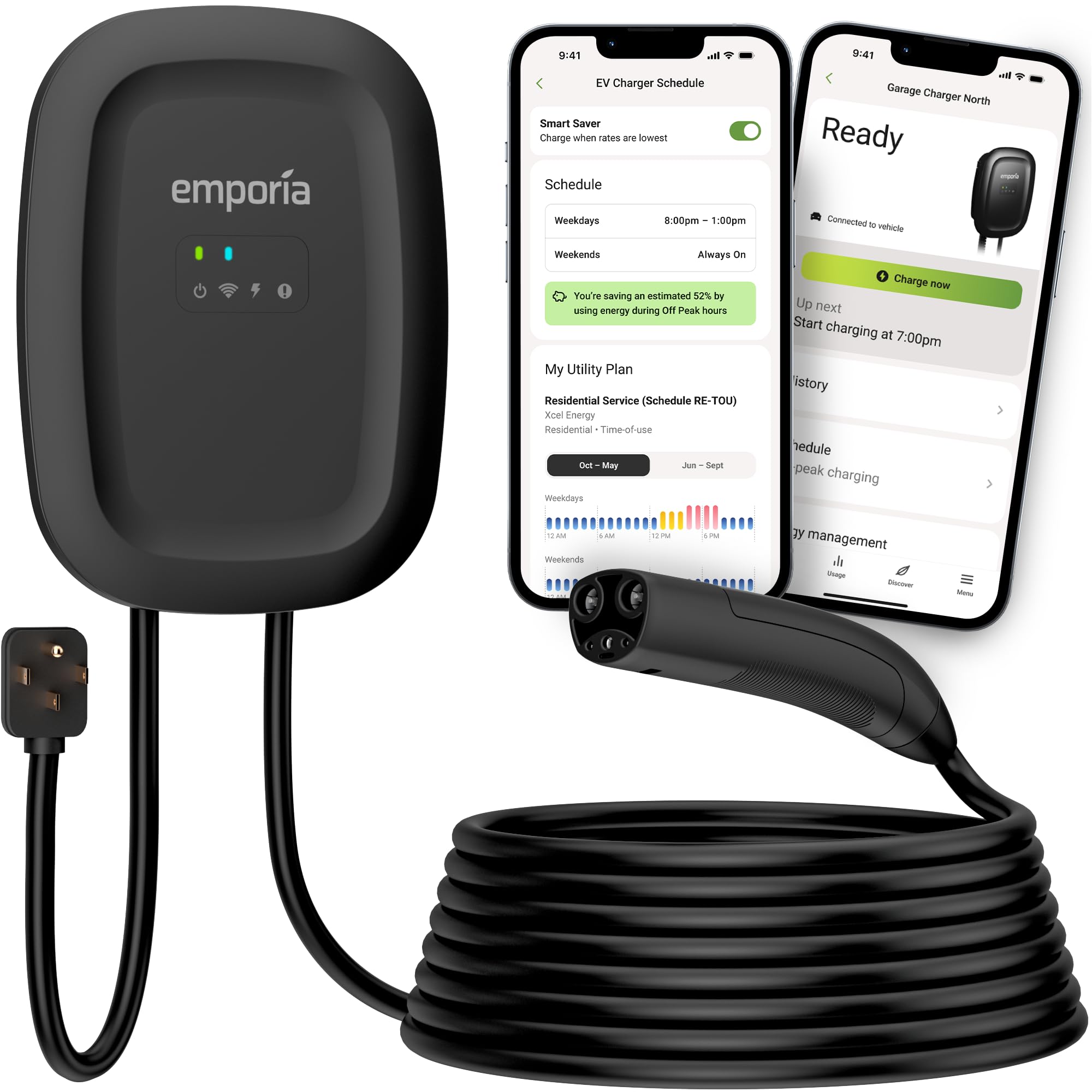
The EMPORIA NACS charger stands out as the most complete package for Tesla owners who want a dedicated home station without relying on an adapter. Its native NACS connector integrates seamlessly with Tesla’s charging port, including the button to remotely open the charge door, and the unit supports up to 48A when hardwired for a maximum of 46 miles of range per hour. The 25‑foot cable offers plenty of reach for standard garage layouts, and the build quality feels substantial with a robust handle and thick cable jacket.
Owner feedback consistently highlights the reliability of the EMPORIA app, which provides real‑time energy monitoring, scheduling for off‑peak rates, and straightforward firmware updates. The unit is UL listed and ENERGY STAR certified, giving peace of mind for those who want a long‑term installation. Many reviewers mention using the NEMA 14‑50 plug‑in configuration at 40A and later converting to hardwired for the full 48A, appreciating the flexibility during a home electrical upgrade.
At this price point, the EMPORIA delivers premium build and smart‑charging capabilities that rival units costing significantly more. The only compromise is the plastic enclosure, which feels less rugged than some metal‑bodied competitors, but the overall performance and app stability make this the top recommendation for most Tesla drivers.
What works
- Native NACS connector with port‑open button
- Excellent app for scheduling and energy tracking
- Flexible installation: plug‑in or hardwire
What doesn’t
- Plastic housing may not appeal to all buyers
- Requires 60A breaker for full 48A output
2. EVIQO NACS Charger
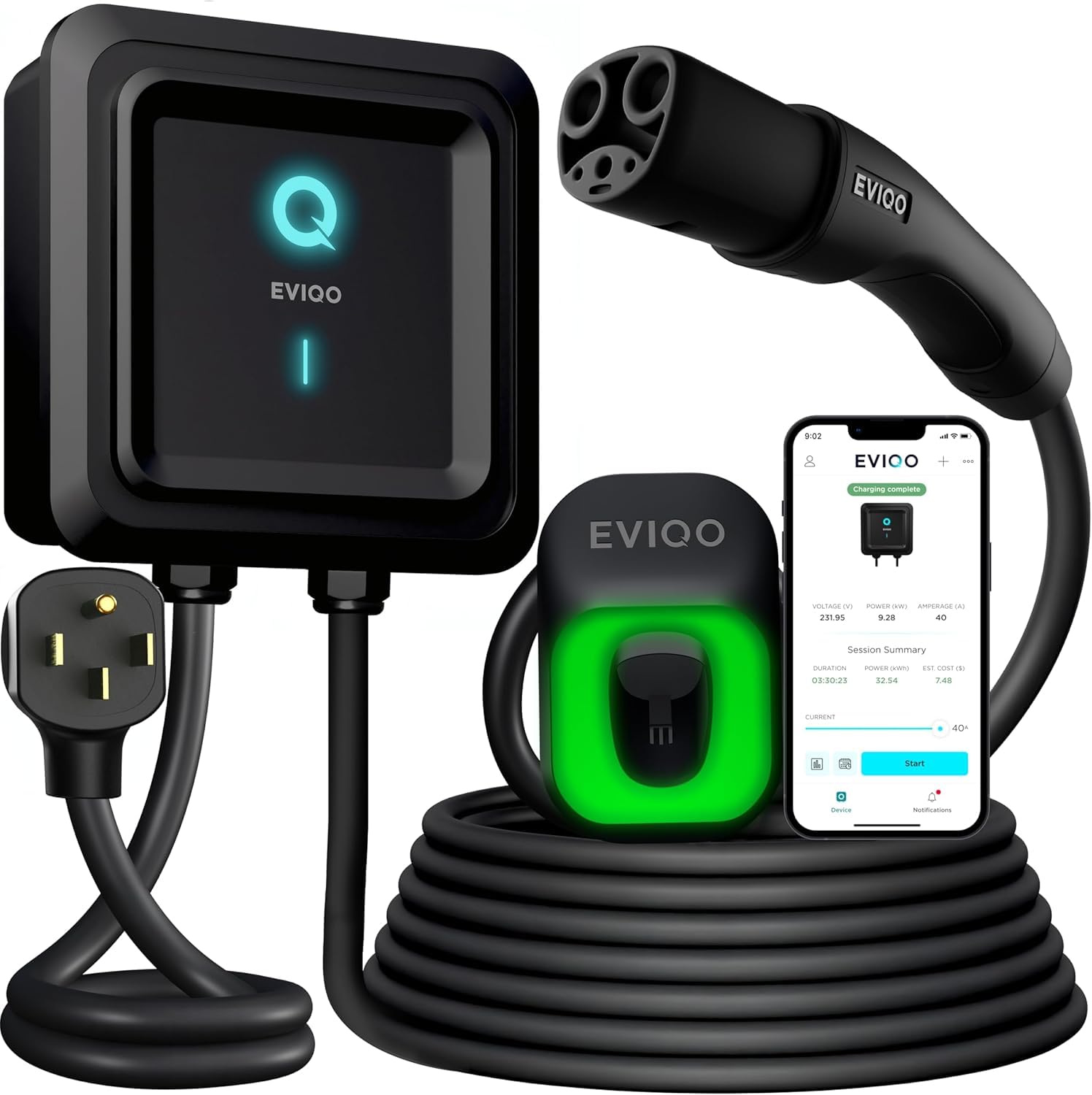
The EVIQO EVIPOWER is engineered for outdoor resilience, boasting an IP66 / NEMA‑4 weatherproof enclosure that shrugs off rain, snow, and dust without issue. Its 40A output (9.6 kW) via a NEMA 14‑50 plug delivers dependable Level 2 charging, and the 25‑foot cable provides the flexibility needed for both garage and driveway installations. The fluorescent holster is a thoughtful addition, making it easy to locate the connector in low‑light conditions.
WiFi connectivity runs on the 2.4 GHz band, and the app allows you to adjust the charging current from 6A to 40A, set schedules, and track consumption history. Owner reports indicate the app remains stable even when the charger is installed in a basement or detached garage, thanks to the enhanced antenna design. The side‑mounted reset button clears faults without needing to open the unit, simplifying maintenance. Multiple verified purchasers have noted the robust build quality of both the NACS and J1772 variants.
The 3‑year warranty and US‑based customer support add confidence for a long‑term purchase. While the price sits at the higher end of the mid‑range segment, the combination of certified weather resistance, smart features, and a strong warranty makes this an outstanding choice for those who charge outdoors or in harsh climates.
What works
- Superior IP66 weatherproofing for outdoor use
- Reliable WiFi connectivity through enhanced antenna
- Easy side‑reset button for quick troubleshooting
What doesn’t
- Premium price compared to portable alternatives
- Heavier unit at nearly 20 pounds
3. Lectron Level 2 J1772 Charger (WiFi Version)

The Lectron J1772 WiFi charger fills a specific niche for non‑Tesla EV owners who want smart‑charging features in a portable form factor. Rated for 40A at 240V, it can replenish most EVs overnight, and the 16‑foot cable is manageable for garages where the outlet is close to the parking spot. Energy Star, ETL, and FCC certifications assure buyers that the unit meets rigorous safety and efficiency standards.
User reviews highlight the Lectron app’s intuitive interface for scheduling charging sessions and monitoring energy usage. The unit’s compact size and included carrying case make it easy to take on road trips, though the 16‑foot cable may be too short for some driveway configurations. Build quality is consistently praised, with a sturdy handle that feels durable during daily plug‑in cycles. Several owners noted that the charger works seamlessly with Ford Mustang Mach‑E and Hyundai Ioniq 5 models.
While the cable length is shorter than many competitors, the overall package delivers reliable smart charging at a mid‑range price. For J1772 owners who prioritize app control and portability over maximum cable reach, this Lectron model represents a solid investment.
What works
- Clean, intuitive WiFi app with scheduling
- Compact and portable with carrying case
- Multiple safety certifications
What doesn’t
- Only 16‑foot cable limits placement options
- Not suitable for hardwired installation
4. ApexCharger MACH 2
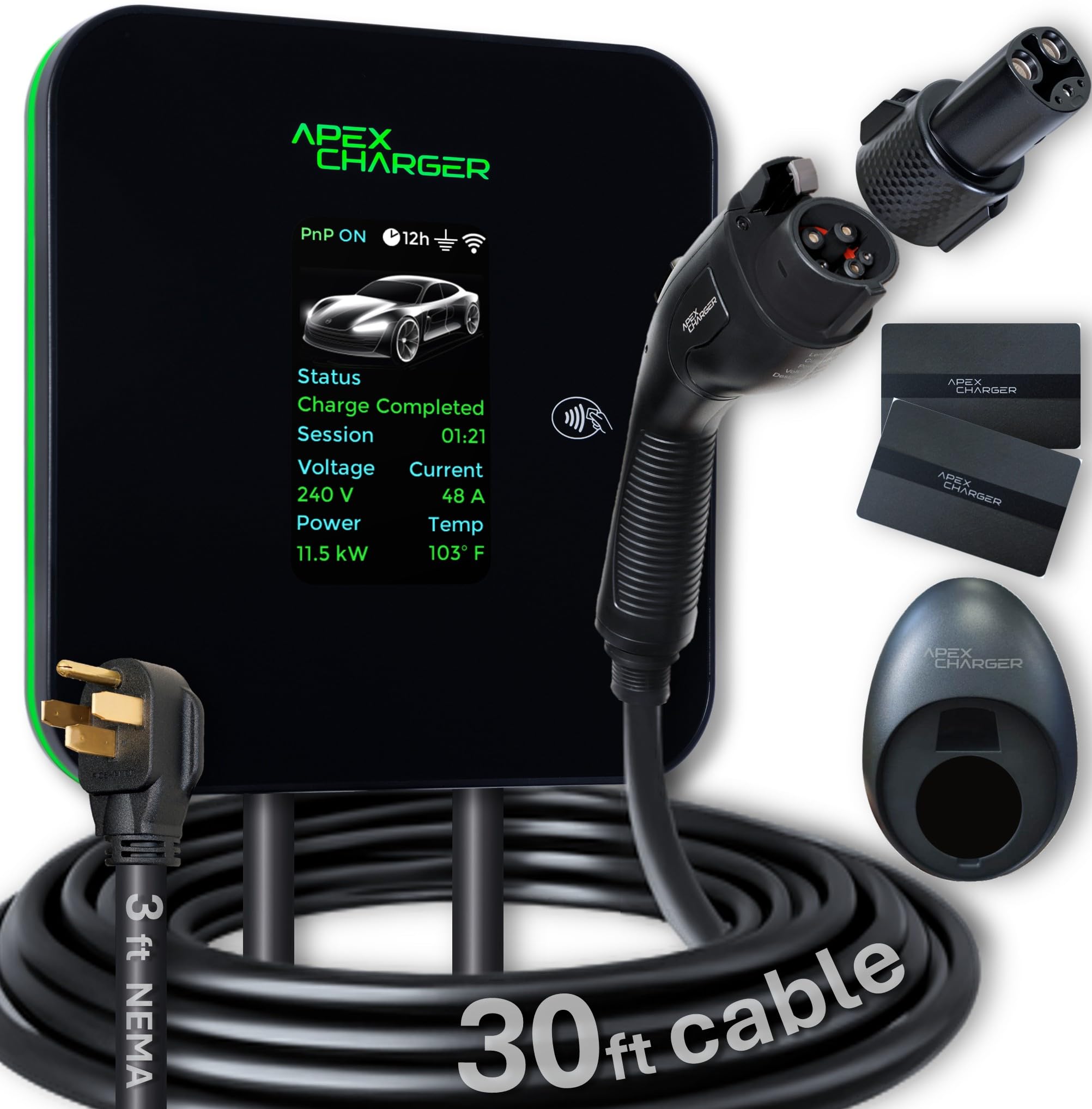
The ApexCharger MACH 2 differentiates itself with a built‑in NACS adapter that slides onto the J1772 connector, making it compatible with both Tesla and non‑Tesla EVs without carrying a separate dongle. The wall‑mounted unit features a 4.75‑inch LED display that shows charging status, amperage, and energy delivered, plus a breathing light indicator for at‑a‑glance status. The 30‑foot heavy‑duty cable is one of the longest in this category, giving maximum flexibility for larger garages.
Included accessories such as RFID cards, a cable holder, and anti‑theft mounting hardware demonstrate attention to real‑world usability. The app provides Bluetooth and WiFi connectivity for scheduling and amperage adjustment, and owner testimonials describe excellent customer support from ApexCharger when issues arise. The unit can be configured to deliver up to 48A when hardwired, though it ships pre‑configured for 40A with a NEMA 14‑50 plug.
Some users report the app interface feels slightly clunky compared to more polished competitors, but the hardware build quality and dual‑connector flexibility more than compensate. For households with multiple EVs from different brands, the MACH 2 is a practical, space‑saving solution.
What works
- Built‑in NACS adapter eliminates extra dongles
- Long 30‑foot cable for flexible parking
- Informative LED display with breathing light
What doesn’t
- App interface could be more intuitive
- Bulky design may not suit all garages
5. EVDANCE Level 2 EV Charger 40A
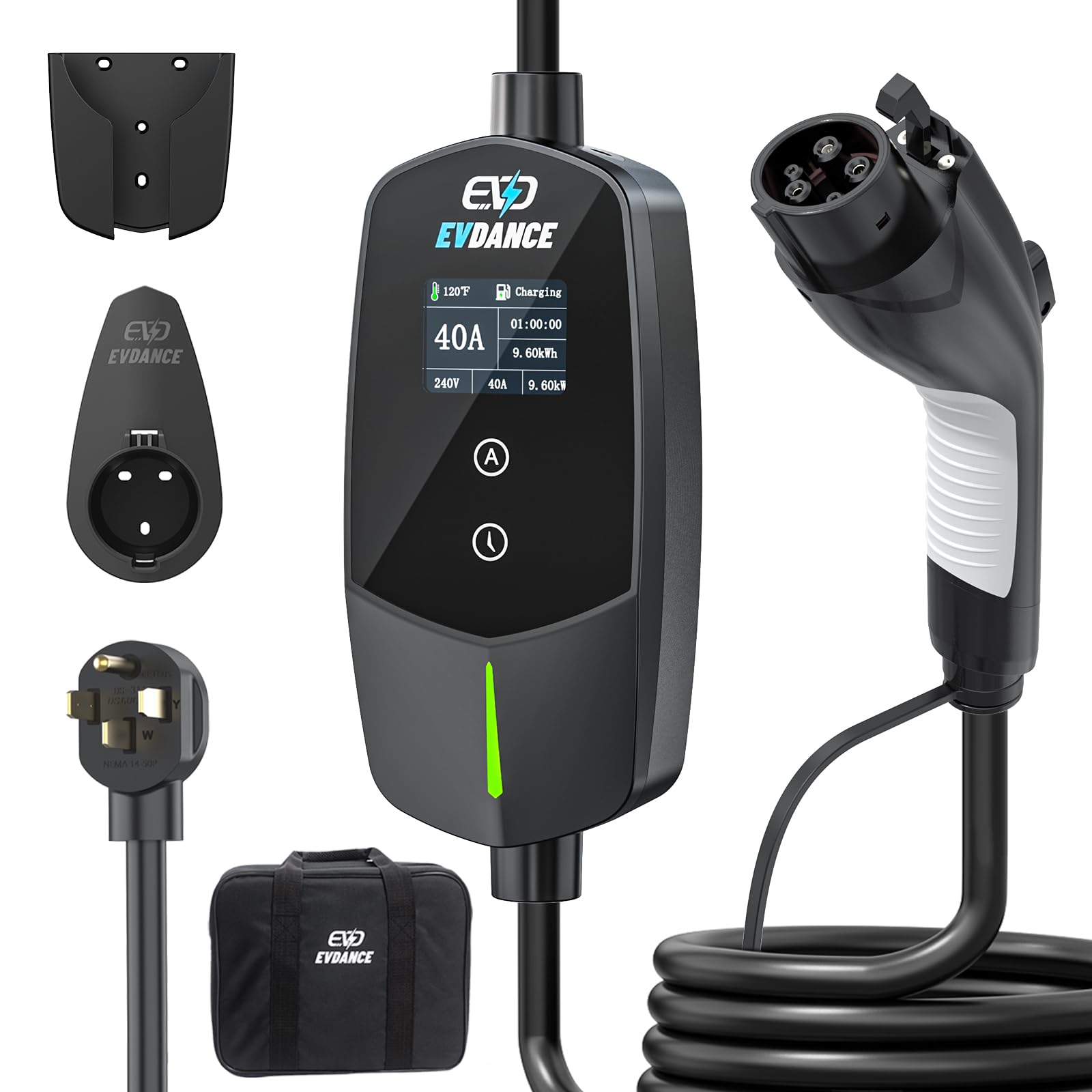
The EVDANCE 40A charger brings a large 2.4‑inch TFT display to the portable charger segment, showing real‑time current, voltage, power, and charging time in a clear, easy‑to‑read format. The adjustable current range from 10A to 40A gives precise control over charging speed, and the delay timer allows scheduling up to 12 hours in advance. With an IP66 rating and an operating range of -22°F to 122°F, it’s built to handle outdoor use in varied climates.
Customer feedback spanning nearly a year of use reports consistent performance in freezing rain and hot summers, with no display failures or connector issues. The unit includes a carry bag, cable holder, and control box holder, making it ready for travel. Many owners appreciate not needing an app for basic functions — all settings are controlled via physical buttons on the unit itself.
The 25‑foot cable provides ample reach for most home setups. While the charger lacks smart WiFi features, the onboard display and tactile controls offer a reliable, low‑fuss experience for those who prefer simplicity over connectivity.
What works
- Clear TFT display with real‑time charging data
- Physical buttons are reliable in all weather
- IP66 rating ensures all‑season durability
What doesn’t
- No WiFi or smart app integration
- Carry bag could be more padded
6. VEIPHLOX Level 2 EV Charger 40A

The VEIPHLOX UC101 is a wall‑mounted Level 2 charger that prioritizes a clean garage aesthetic with its integrated cable management system. The unit features an internal cord‑holding design and a side‑mounted connector socket, eliminating the need for a separate holster. It delivers 40A (9.6 kW) via a NEMA 14‑50 plug and is ETL and UL certified for safety assurance.
Owner reviews consistently praise the straightforward installation process and the unit’s low‑maintenance operation. The color‑coded LED system on the front panel indicates charging status at a glance — solid blue for ready, flashing green for charging — without needing an app. Build quality feels solid, with an IP65 rating that provides adequate protection for garage or covered outdoor use. Several verified purchasers reported using the charger with Ford Mustang Mach‑E and Chevrolet Bolt models without any compatibility issues.
The 25‑foot cable is thick and flexible, and the connector fits securely into the vehicle port. While the unit lacks smart features or a display, its simplicity and tidy design make it a compelling option for homeowners who want a permanent, no‑fuss installation at a moderate price.
What works
- Smart internal cable management design
- Simple status LED system, no app needed
- ETL and UL certified for safety
What doesn’t
- No WiFi or scheduling features
- Only suitable for indoor or covered outdoor use
7. Lectron NACS to CCS Adapter
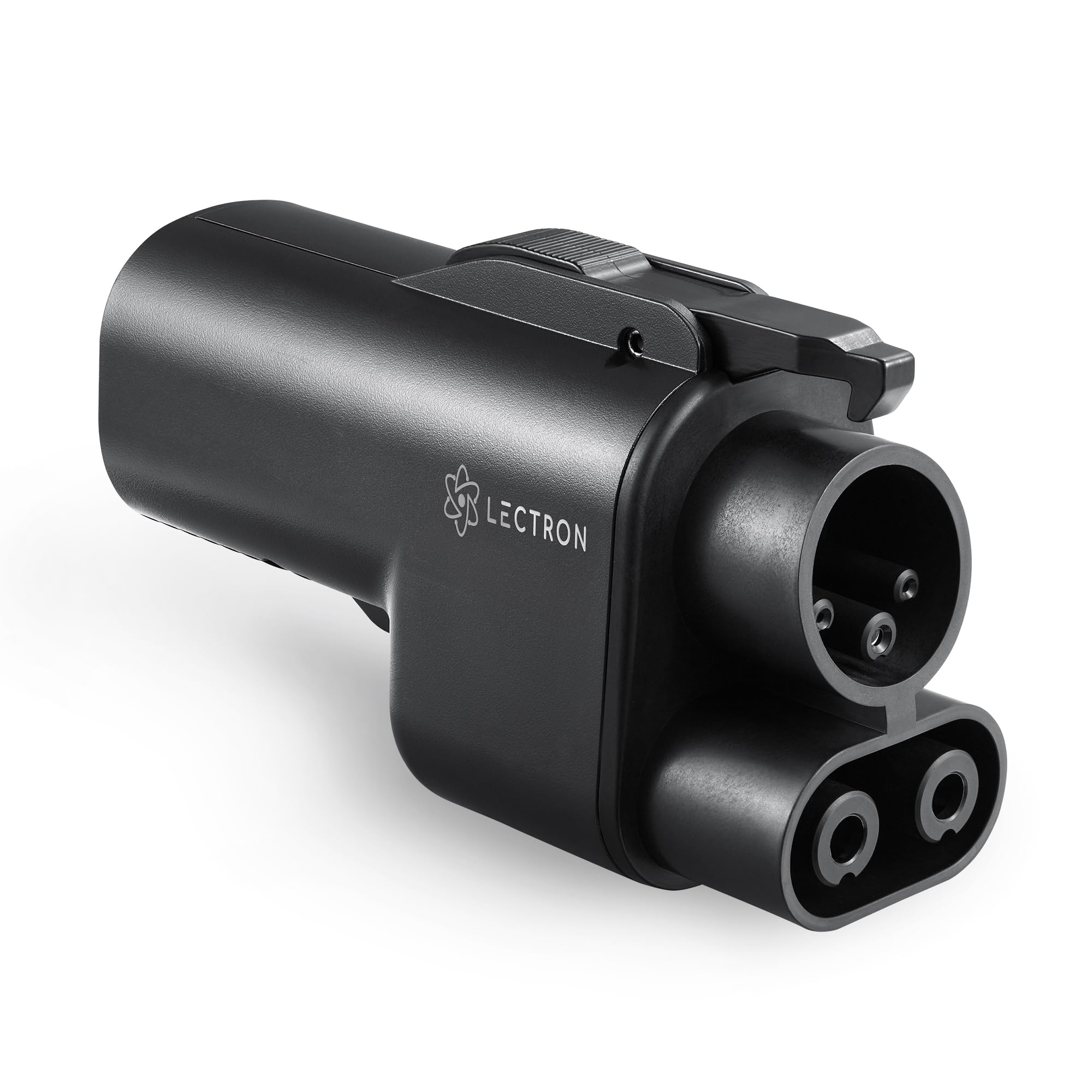
For CCS1 EV owners looking to tap into the Tesla Supercharger network, the Lectron Vortex Plug adapter is a purpose‑built bridge. It accepts a NACS (Tesla) connector on the input side and outputs a standard CCS1 plug, rated for 500 amps and 1,000 volts. This allows compatible non‑Tesla EVs — such as the Polestar 2, Ford Mustang Mach‑E, and Hyundai Ioniq 5 — to access V3 and V4 Superchargers at speeds up to 150 miles of range in 15 minutes, depending on the station and vehicle.
Build quality is a frequent highlight in owner feedback, with users describing the adapter as sturdy and confidence‑inspiring. Secure locking mechanisms on both sides prevent accidental disconnection during high‑current sessions, and the matte‑black finish resists scratches. Multiple verified purchasers have used the adapter on road trips across several states without any communication errors or overheating.
It’s important to note that your automaker must have granted Supercharger access for the adapter to function — compatibility is not universal. For drivers whose vehicle qualifies, this adapter dramatically expands fast‑charging options on long trips. The compact size makes it easy to store in the frunk or glovebox.
What works
- Unlocks thousands of Supercharger stations
- High current rating supports fast charging
- Solid build with secure locking connectors
What doesn’t
- Requires automaker‑granted Supercharger access
- Not compatible with Level 2 AC charging
8. SEGUMA Level 1/2 Tesla Charger

The SEGUMA charger is a travel‑focused solution purpose‑built for Tesla vehicles, featuring a NACS connector with a button that wirelessly opens the charge port door. It supports both Level 1 (120V, 12A) and Level 2 (240V, 16A) charging using a NEMA 6‑20 plug and included NEMA 5‑15 adapter. The 25‑foot cable is notably longer than the factory Tesla mobile connector, giving drivers extra reach in unfamiliar parking situations.
Owner feedback emphasizes the charger’s simplicity and reliability — many users keep it as a backup or road‑trip companion after using the factory charger as a primary home unit. The IP66 waterproof rating and TPE flame‑retardant jacket provide durability for outdoor travel use. Several reviewers noted that the charging speed is adequate for overnight top‑ups at destinations, though the 16A Level 2 output is slower than full‑sized 40A home stations.
Included accessories like a carrying bag and clear LED status indicators make it easy to pack and monitor. While the NEMA 6‑20 plug requires a less common outlet type, it’s a popular choice in newer garages. For Tesla owners wanting a longer cable and a compact travel kit at a moderate price, this SEGUMA delivers strong value.
What works
- 25‑foot cable is longer than OEM Tesla unit
- Wireless charge port opening button
- IP66 rated for outdoor travel conditions
What doesn’t
- Only 16A Level 2 output
- NEMA 6‑20 plug may require outlet adapter
9. bokman Portable Level 1/2 EV Charger
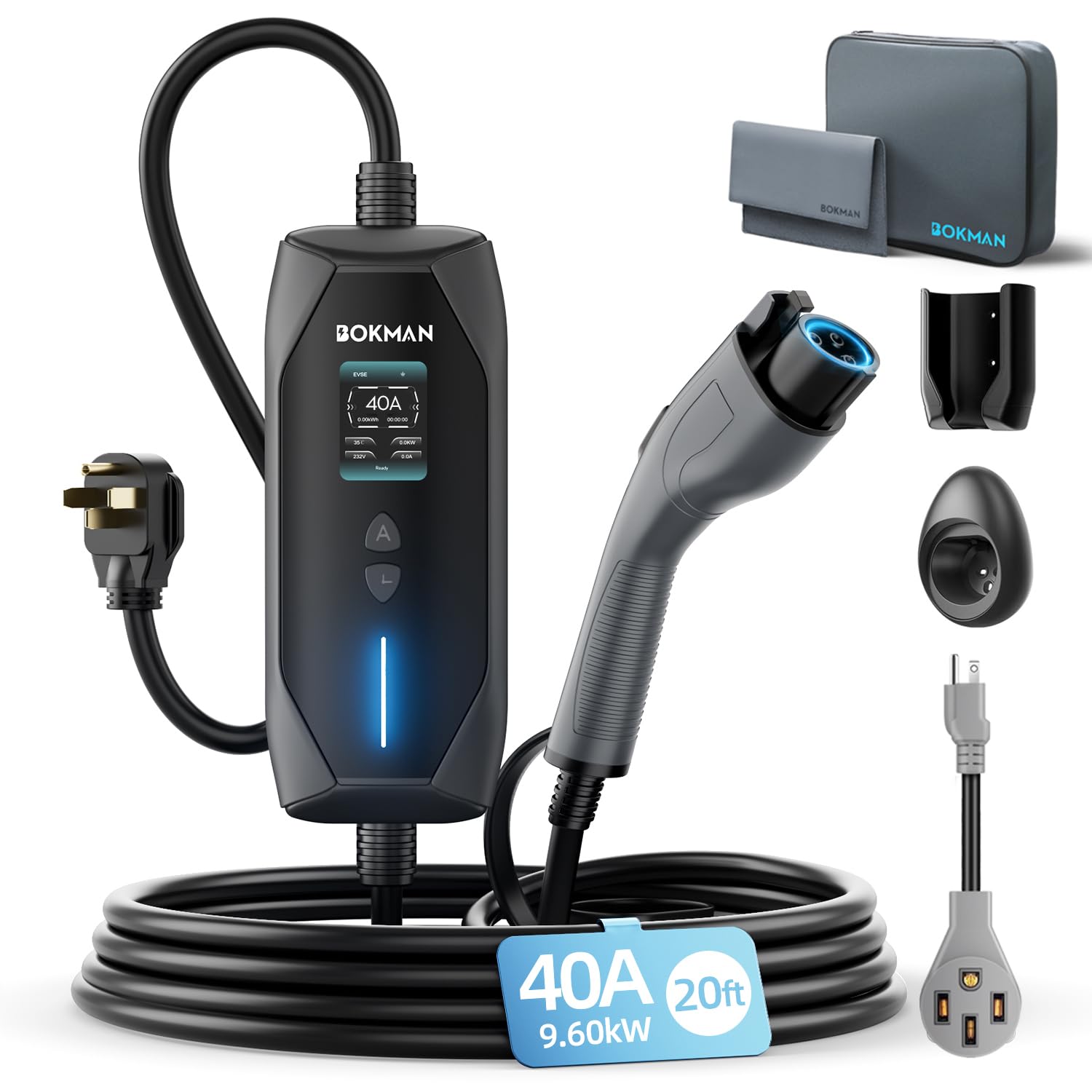
The bokman charger is an entry‑level portable unit that combines Level 1 and Level 2 charging in one compact kit. It includes a fixed NEMA 14‑50 plug for 240V charging up to 40A and a NEMA 5‑15 adapter for standard 120V household outlets. The standout feature is the physical mechanical timer that allows you to delay the start of charging by 1 to 12 hours — no app, no WiFi, just a straightforward button press to shift charging into off‑peak hours.
Owner reviews from those who use it with Nissan Ariya, Ford Mustang Mach‑E, and various plug‑in hybrids highlight the unit’s reliability and ease of use. The IP65 waterproof rating and robust housing withstand outdoor mounting, and the included carry bag, cable holder, and microfiber towel show attention to detail. Adjustable current settings (6‑40A) give precise control to match circuit capacity, and the clear display provides real‑time feedback on charge rate and energy delivered.
While the build quality is good for the price, the unit lacks smartphone connectivity and the timer is a simple countdown rather than a daily scheduler. For budget‑conscious buyers who want a functional, durable charger without premium smart features, the bokman offers excellent value and consistent performance.
What works
- Physical delay timer for off‑peak scheduling
- Dual‑level charging with included adapters
- Wide adjustable current range (6‑40A)
What doesn’t
- No WiFi or smart app integration
- Timer is only a 1‑12 hour delay, not a full scheduler
Hardware & Specs Guide
Amperage & Cable Length
Higher amperage chargers (40A‑48A) deliver faster charging times — expect 38‑46 miles of range per hour — but require a matching circuit breaker (50A for 40A, 60A for 48A). Cable length is equally important for garage layout flexibility: 20‑25 feet suits most single‑car garages, while 30‑foot cables accommodate larger driveways or when the outlet is far from the parking spot. Always measure the distance from your outlet to your vehicle’s charge port before purchasing a fixed‑cable unit.
NEMA Plug Types & Connectors
The NEMA 14‑50 plug is the most common Level 2 connector in residential settings, supporting up to 50A on a dedicated circuit. The NEMA 6‑20 is a less common 240V outlet rated for 20A, often found in newer homes. For the vehicle connector, J1772 is the universal standard for non‑Tesla EVs, while NACS is native to Tesla vehicles and increasingly adopted by other automakers. Adapters can bridge the gap, but a dedicated connector provides the most reliable daily connection.
FAQ
How do I know if I need a hardwired or plug‑in charger?
Can I use a NEMA 14‑50 charger with a NEMA 6‑20 outlet?
What is the difference between a Level 1 and Level 2 charger?
Final Thoughts: The Verdict
For most buyers, the best ev charger plug winner is the EMPORIA Level 2 EV Charger (NACS) because it combines native Tesla compatibility, full smart‑app control, flexible installation, and a robust 48A capacity — all backed by UL and Energy Star certifications. If you want maximum weather resistance and a strong warranty for outdoor use, grab the EVIQO EVIPOWER. And for a budget‑friendly portable option with a physical delay timer, nothing beats the bokman BKL24020.

Certification: BSc in Mechanical Engineering
Education: Mechanical engineer
Lives In: 539 W Commerce St, Dallas, TX 75208, USA
Md Amir is an auto mechanic student and writer with over half a decade of experience in the automotive field. He has worked with top automotive brands such as Lexus, Quantum, and also owns two automotive blogs autocarneed.com and taxiwiz.com.