Engine oil stabilizers aim to solve a simple problem: your oil loses its protective edge between changes. Heat, shear, and contamination gradually strip away the additive package, leaving metal surfaces vulnerable. A quality stabilizer restores those critical properties — boosting film strength, reducing friction, and extending the life of your engine without requiring a full synthetic upgrade.
I’m Amir — the founder and writer behind Four Wheel Ask. My work focuses on analyzing product specifications, studying owner-reported data, and comparing build quality across hundreds of automotive formulations to identify what actually works under real driving conditions.
Through analysis of owner feedback and technical data, the best engine oil stabilizer consistently reduces friction and protects engine components across diverse applications.
How To Choose The Best Engine Oil Stabilizer
Not all stabilizers are formulated the same. Matching the additive chemistry to your engine’s specific needs — whether that’s high-mileage protection, flat-tappet cam safety, or simply reducing valvetrain noise — determines whether you see real benefit or just thinner oil. Below are the critical factors to evaluate before you pour anything into your crankcase.
Additive Chemistry: ZDDP vs. Molybdenum vs. Proprietary Blends
Zinc dialkyldithiophosphate (ZDDP) remains the gold standard for anti-wear protection, particularly in flat-tappet engines where cam lobe and lifter contact is extreme. Molybdenum disulfide (Moly) excels at friction reduction and is common in German formulations. Proprietary blends like Lucas’ or Dura Lube’s use a mix of viscosity modifiers and boundary lubricants — these work well across a wide range of engine conditions but may lack the extreme-pressure performance of dedicated ZDDP additives. Know your engine’s valvetrain architecture before choosing.
Viscosity Grade Compatibility
Adding a stabilizer alters the final oil viscosity. A product like Lucas Oil Stabilizer raises the overall viscosity, which can benefit worn engines with loose clearances but may cause sluggish flow in modern tight-tolerance engines designed for 0W-20 or 5W-30. Check the stabilizer’s base viscosity rating — some specify 5W-30 or 10W-30 compatibility, while others are universal but recommend reducing the oil grade by one step to compensate. Thin oil in a cold climate plus a thick stabilizer can lead to startup starvation.
Engine Type: Gasoline, Diesel, and Two-Stroke Differences
Diesel engines produce higher cylinder pressures and soot loads, requiring additives with stronger detergency and higher TBN retention. Two-stroke engines need stabilizers that mix properly with fuel and burn cleanly, like ECHO Red Armor. Gasoline engines are more forgiving but still benefit from stabilizers that address specific issues: oil consumption, noise, or leaky seals. Some products are explicitly diesel-compatible, while others are gasoline-only — verify the label before purchasing.
Cold Start Protection
The majority of engine wear occurs during the first few seconds after startup, when oil has drained into the pan and metal surfaces are dry. Stabilizers that cling to components after shutdown — often called “cling film” or “boundary layer” additives — provide an extra margin of protection. Dura Lube and Liqui Moly formulations are known for this property, with owner reports noting quieter operation immediately after cold starts in sub-freezing conditions.
Quick Comparison
On smaller screens, swipe sideways to see the full table.
| Model | Category | Best For | Key Spec | Amazon |
|---|---|---|---|---|
| Lucas Oil 40001 | Oil Stabilizer | Friction & Wear Reduction | Raises oil pressure | Amazon |
| Liqui Moly 2009 | Anti-Friction | Engine Protection | Molybdenum additive | Amazon |
| REV-X Zinc ZDDP | ZDDP Additive | Flat Tappet Engines | 3000-3200 ppm ZDDP | Amazon |
| Superkote 2000 | Metal Treatment | Heavy Duty Protection | Mineral/Synthetic blend | Amazon |
| LIQUI MOLY Truck Series | Truck Formula | Truck & Diesel Engines | 15W-40 viscosity | Amazon |
| K-100 MG | Fuel Treatment | Water Elimination | 32 oz bottle | Amazon |
| ECHO Red Armor | 2-Stroke Oil | Power Equipment | 50:1 mix ratio | Amazon |
| Lucas Oil 10018 | Hydraulic Booster | Hydraulic Systems | Stop leak formula | Amazon |
| Ethanol Shield | Fuel Stabilizer | Fuel Storage | Phase separation inhibitor | Amazon |
| Star Tron Diesel | Diesel Treatment | Diesel Engines | Enzyme formula | Amazon |
| Dura Lube | Engine Treatment | All Engines | Universal fit | Amazon |
In-Depth Reviews
1. Lucas Oil 40001 Heavy Duty Oil Stabilizer

Lucas Oil 40001 has earned a reputation among enthusiasts and race teams for its ability to increase oil pressure and reduce engine noise in a single dose. The formulation uses a high-viscosity base that clings to bearing surfaces during shutdown, eliminating the dry-start condition that causes the majority of engine wear. Owner reports consistently note immediate oil pressure gauge improvements, particularly in engines with higher mileage where clearances have opened up over time.
The stabilizer is engineered to extend oil life by at least fifty percent, reducing the frequency of changes without sacrificing protection. It mixes with conventional, synthetic, and blended oils, making it a universal option for fleets or households with multiple vehicles. Many users report that a single quart replaces one quart of oil during each change, simplifying the addition process.
Where this product truly shines is in high-mileage engines and racing applications where oil shear is extreme. The added film strength prevents metal-to-metal contact during high-RPM operation, and the viscosity boost helps maintain pressure in worn pumps. Some owners of modern tight-tolerance engines note that the thicker blend can slightly reduce fuel economy, so it is best suited for engines that already show signs of age or consumption.
What works
- Noticeably raises oil pressure in high-mileage engines
- Eliminates dry-start wear with cling-film technology
- Universal compatibility with all oil types
What doesn’t
- High viscosity may reduce fuel economy in modern engines
- Not ideal for very cold climates without adjusting oil grade
2. Liqui Moly 2009 Anti-Friction Oil Treatment

Liqui Moly 2009 leverages a high-concentration molybdenum disulfide formulation developed in Germany for use in taxicab fleets — engines that routinely accumulate extreme mileage under harsh stop-and-go conditions. The MoS₂ particles form a durable lubricating film on metal surfaces that persists even when the oil film is squeezed out under high load. This provides a secondary layer of protection that reduces friction at the boundary level where most wear occurs.
Owner feedback highlights an immediate reduction in valvetrain noise, particularly in engines with hydraulic lifters that have become noisy over time. The treatment also improves acceleration smoothness and reduces vibration at idle. Users with long oil change intervals report that the additive helps preserve timing chains and cam components between services, acting as a safeguard against the gradual breakdown of the oil’s original additive package.
The product must be added to hot oil to ensure proper mixing, and it is compatible with both conventional and synthetic bases. Some owners note that the effect becomes more pronounced after about a hundred miles of driving, as the molybdenum fully disperses and bonds to wear surfaces. For high-mileage engines or those used in severe service conditions, this treatment offers a measurable reduction in internal friction without altering oil viscosity significantly.
What works
- Immediate noise reduction from valvetrain and lifters
- Persistent boundary-layer protection between changes
- Proven in high-mileage fleet applications
What doesn’t
- Requires hot oil for proper mixing
- Effect builds over initial driving miles
3. REV-X Zinc ZDDP Oil Additive

REV-X Zinc ZDDP was formulated specifically to address the reduction of zinc dialkyldithiophosphate in modern motor oils, a change driven by emissions regulations that has left older flat-tappet engines without adequate camshaft protection. Each two-fluid-ounce flask delivers a concentrated dose that raises the ZDDP concentration to 3000-3200 parts per million when mixed with six quarts of oil — the level recommended for flat-tappet cam break-in and long-term protection.
Owners of classic cars, muscle cars, and military vehicles with flat-tappet valvetrains report that this additive eliminates the metal-to-metal contact that causes rapid cam lobe wear. The product is also used during engine break-in, where the extreme pressure protection prevents scuffing on fresh camshafts and lifters. REV-X works equally well in synthetic and conventional oils, making it a straightforward addition to any oil change routine for engines that require elevated ZDDP levels.
The five-pack format provides multiple treatments in a single purchase, and the individual flasks eliminate guesswork — each one treats one oil change. Users note that the additive also reduces noise from valvetrain components and lowers overall engine operating temperature by reducing friction at the cam-to-lifter interface. Engines running this treatment show cleaner oil analysis reports with lower iron and copper wear metals.
What works
- Restores ZDDP to safe levels for flat-tappet engines
- Convenient single-use flasks eliminate measuring
- Reduces valvetrain noise and operating temperature
What doesn’t
- Not needed for modern roller-cam engines
- Premium cost per treatment compared to bulk additives
4. Superkote 2000 Engine Metal Treatment

Superkote 2000 uses a mineral and synthetic hybrid base designed to deposit a microscopic anti-friction layer onto engine bearing surfaces, reducing resistance and heat generation during operation. The formulation is distinct from simple viscosity modifiers in that it treats the metal itself rather than simply thickening the oil. Long-term users report that engine sound audibly changes after treatment, with a smoother, quieter idle that persists across multiple oil changes.
The product has a dedicated following in Latin American markets, where owners of high-mileage vehicles use it as a preventive measure against bearing wear and oil consumption. Multiple verified reviews note that the treatment does not repair existing damage but effectively prevents further degradation when applied consistently. The amber-colored liquid has a distinct viscosity that mixes readily with both conventional and synthetic oils without forming sludge or deposits.
Where Superkote 2000 stands out is its ability to reduce engine operating temperature by lowering internal friction. This is particularly beneficial in engines that run hot due to marginal cooling systems or heavy load conditions. The eight-ounce bottle treats a standard passenger car engine, and users recommend repeating the treatment every oil change for maximum cumulative protection.
What works
- Deposits durable anti-friction layer on bearing surfaces
- Reduces engine operating temperature noticeably
- Compatible with conventional and synthetic oils
What doesn’t
- Does not repair existing wear or damage
- Small bottle size may require multiple purchases for large engines
5. LIQUI MOLY Truck Series Oil Treatment

LIQUI MOLY Truck Series is engineered specifically for heavy-duty diesel and gasoline truck engines, with a 15W-40 viscosity grade that matches the requirements of commercial powertrains. The additive package focuses on reducing friction and oil consumption in engines that operate under sustained high load, where conventional passenger-car treatments may shear down too quickly. The molybdenum-based formula provides the same boundary-layer protection as the standard Liqui Moly treatment but with a viscosity profile suited to larger clearances.
Owner reports from truck fleets and heavy SUV owners note that the treatment quiets diesel valvetrain noise and reduces the characteristic clatter at idle. Several users with Cummins and Powerstroke engines report measurable reductions in oil consumption between changes, along with smoother cold-start operation. The formulation also claims outstanding emergency-running properties — meaning the engine can survive short periods of oil pressure loss without catastrophic failure.
The 500-milliliter bottle treats up to five liters of oil, making it suitable for most truck engines. Users recommend adding it during the oil change while the engine is warm to ensure proper dispersion. For those running mixed fleets of cars and trucks, this product offers a dedicated truck-specific option with the proven German engineering that Liqui Moly is known for.
What works
- Reduces diesel valvetrain noise and idle clatter
- 15W-40 viscosity matches heavy-duty engine requirements
- Emergency-running properties provide safety margin
What doesn’t
- Too thick for modern gasoline engines with tight tolerances
- Premium price point for a single-treatment bottle
6. K-100 MG All-in-One Fuel Treatment

K-100 MG operates differently from conventional oil stabilizers — it treats the fuel rather than the oil, using a chemical process that breaks water molecules into burnable particles. This makes it particularly effective in regions with ethanol-blended fuels, where phase separation introduces water into the fuel system. Users report that engines previously requiring winter storage draining start reliably after months of downtime when treated with K-100.
The formula also provides a two-point octane boost and cleans fuel injectors and combustion chambers. Owners of boats, snowmobiles, and generators report that the product eliminates hard-starting issues caused by water contamination in fuel tanks. A single ounce treats up to two gallons of fuel, and the thirty-two-ounce bottle provides extensive coverage for multiple vehicles or seasonal equipment.
Long-term users note that K-100 goes beyond simple fuel stabilization by actually conditioning the entire fuel delivery system. Rubber seals and gaskets remain pliable, and carburetor gumming is virtually eliminated. For owners of small engines, classic cars, or any vehicle subject to ethanol-related fuel issues, this treatment addresses the root cause of many starting and performance problems without requiring mechanical intervention.
What works
- Eliminates water in fuel by converting it to burnable particles
- Prevents carburetor gumming and seal deterioration
- Effective in ethanol-blended fuels for storage protection
What doesn’t
- Treats fuel, not oil — different category of protection
- Requires careful measuring for proper dosage
7. ECHO Red Armor 2-Stroke Oil

ECHO Red Armor is a premium two-stroke engine oil formulated with powerful detergents that remove performance-robbing carbon deposits from pistons, rings, and exhaust ports. Unlike standard two-stroke oils that simply lubricate, this formula actively cleans existing deposits upon first use, restoring lost compression and power in engines that have been run on lesser oils. The stabilizer package keeps mixed fuel fresh for up to two years in sealed containers.
Technicians and landscapers consistently rank Red Armor as the best two-stroke oil available, citing its ability to prevent piston scuffing and ring sticking even under sustained high-RPM operation. Users report immediate improvements in trimmer and chainsaw performance — engines that previously sputtered and bogged down run smoothly after switching to this formulation. The 50:1 mix ratio provides excellent lubrication without excessive smoke or fouled spark plugs.
The six-pack format is ideal for owners with multiple pieces of two-stroke equipment, and the six-point-four-ounce bottles treat exactly two-point-five gallons of fuel each. For professional landscapers or homeowners who value reliability in their outdoor equipment, Red Armor significantly reduces maintenance frequency and extends engine life. The fuel stabilizers included mean less carburetor cleaning and fewer starting issues after seasonal storage.
What works
- Removes existing carbon deposits from combustion chambers
- Prevents piston scuffing under high-load operation
- Fuel stabilizer keeps mixed gas fresh for two years
What doesn’t
- Only for two-stroke engines — not a crankcase additive
- Premium price compared to standard two-stroke oils
8. Lucas Oil 10018 Hydraulic Oil Booster & Stop Leak

Lucas Oil 10018 targets hydraulic systems rather than engine crankcases, making it the right choice for tractors, skid steers, and industrial equipment that rely on hydraulic fluid for power transmission. The formulation conditions old seals and O-rings to restore their flexibility, stopping leaks that would otherwise require disassembly and replacement. Owner reports document dramatic leak reduction within hours of treatment in equipment with worn hydraulic components.
The booster also removes varnish deposits that accumulate in hydraulic valves and pumps over time, restoring lost pressure and smooth operation. Users with older Bobcat skid steers and farm tractors report that the product eliminated leaks that multiple repair shops could not fix, saving thousands in labor and parts costs. The additive extends hydraulic fluid life by up to two times by reducing oxidation and thermal breakdown.
Compatibility with both synthetic and conventional hydraulic fluids makes this a universal maintenance tool for any equipment with hydraulic systems. The gallon container provides multiple treatments for larger systems, and the formula reduces operating temperature by lowering internal friction. For those who maintain older hydraulic equipment, this product frequently eliminates the need for expensive valve block replacements.
What works
- Conditions seals to stop hydraulic leaks quickly
- Removes varnish and restores system pressure
- Extends hydraulic fluid life significantly
What doesn’t
- Not intended for engine crankcase use
- Large gallon size may be excessive for small systems
9. Ethanol Shield Fuel Stabilizer

Ethanol Shield addresses a specific failure point that plagues modern fuels: phase separation caused by ethanol absorbing moisture from the air. This stabilizer uses a proprietary blend of antioxidants and corrosion inhibitors that prevent fuel degradation for extended storage periods. The formula also includes a phase separation inhibitor that keeps ethanol and gasoline properly mixed, preventing the water layer that leads to starting failures and carburetor corrosion.
Users with seasonal equipment — power washers, snow blowers, lawn mowers — report that treated fuel remains viable through entire off-seasons without requiring carburetor cleaning. The product also bonds two-stroke oil to the fuel mixture, ensuring proper lubrication in mixed-fuel applications. Combustion Cool Technology reduces combustion chamber temperatures, lowering the risk of detonation in high-compression engines.
The twenty-four-ounce two-pack provides ample coverage for multiple fuel tanks, and the formula protects rubber and plastic fuel system components from ethanol-related drying and cracking. For owners of classic cars, motorcycles, or any vehicle that sits for extended periods, Ethanol Shield eliminates the fuel-system headaches that ethanol fuel causes. Customer ratings consistently place it among the top fuel additives available today.
What works
- Prevents phase separation in ethanol-blended fuels
- Protects rubber and plastic fuel system components
- Keeps fuel fresh for extended seasonal storage
What doesn’t
- Treats fuel system, not engine oil
- Some packages reported with leaking caps
10. Star Tron Super Concentrated Diesel Formula
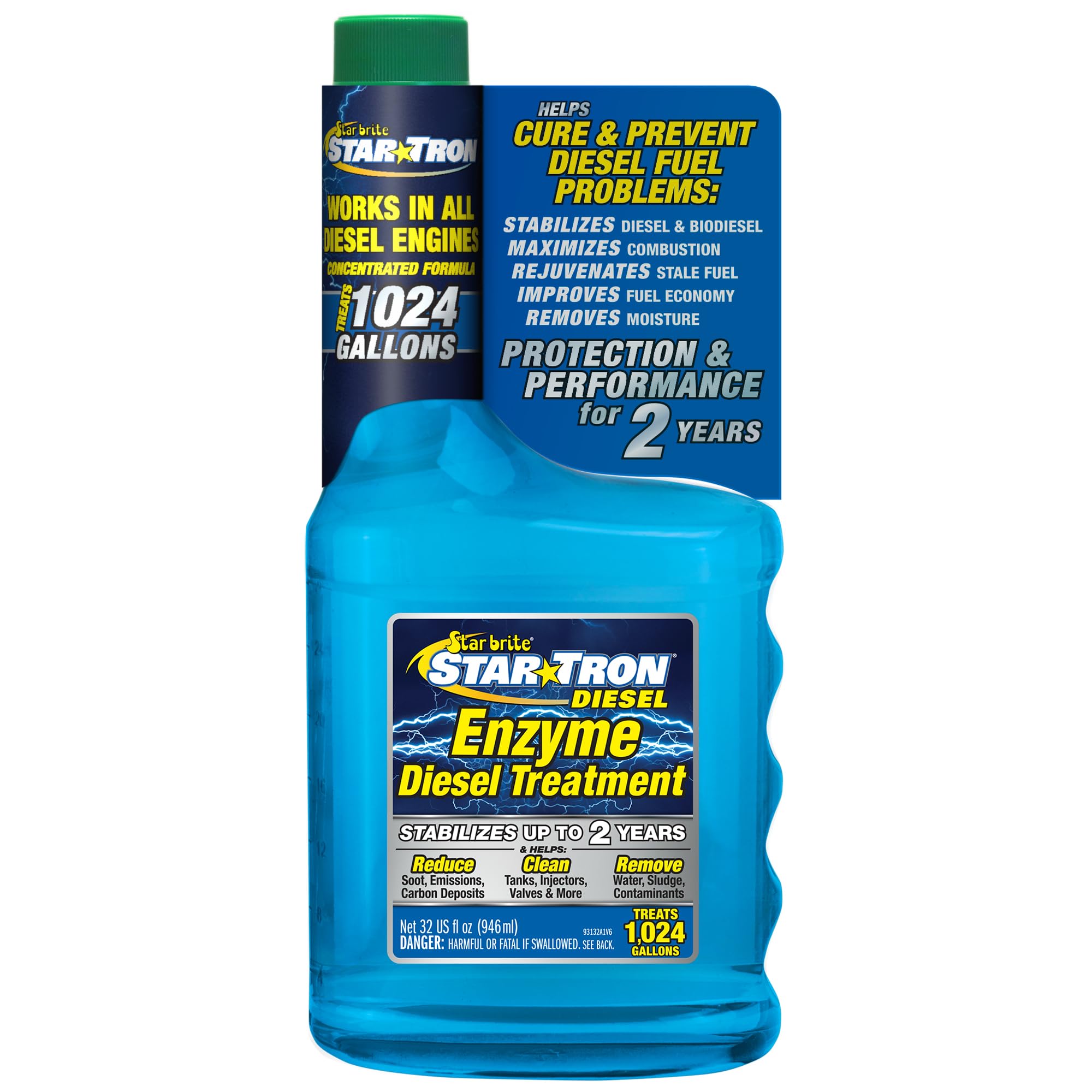
Star Tron uses an enzyme-based technology that differs fundamentally from chemical stabilizers. The enzymes actively digest the organic compounds that form sludge, gum, and varnish in diesel fuel, breaking them down into burnable components rather than simply dispersing them. This keeps injectors, pumps, and combustion chambers clean without the harsh solvents found in many competing products. The formula also disperses water into submicron droplets that burn off during normal engine operation.
Diesel boat owners and RV operators report that Star Tron eliminates the black smoke and rough idle associated with injector fouling, and many note measurable fuel economy improvement over several months of use. The concentration is remarkable — one ounce treats thirty-two gallons of diesel fuel, making the thirty-two-ounce bottle capable of treating over a thousand gallons. Users also report that fuel stored for up to two years remains usable without the varnish and gum formation that typically degrades diesel during long-term storage.
The formula is suitable for all diesel engines including those in boats, cars, RVs, generators, and heavy equipment. It also works with biodiesel blends, which are particularly prone to microbial growth and storage instability. For diesel owners who want to prevent fuel-system issues without frequent injector cleaning, Star Tron offers a maintenance-free approach that treats the root cause of most diesel performance problems.
What works
- Enzyme technology digests sludge and varnish naturally
- Extremely concentrated — treats up to 1,024 gallons per bottle
- Prevents injector fouling and reduces exhaust smoke
What doesn’t
- Diesel-specific — not for gasoline engines
- Enzyme action takes time; not an instant cleaner
11. Dura Lube Engine Treatment
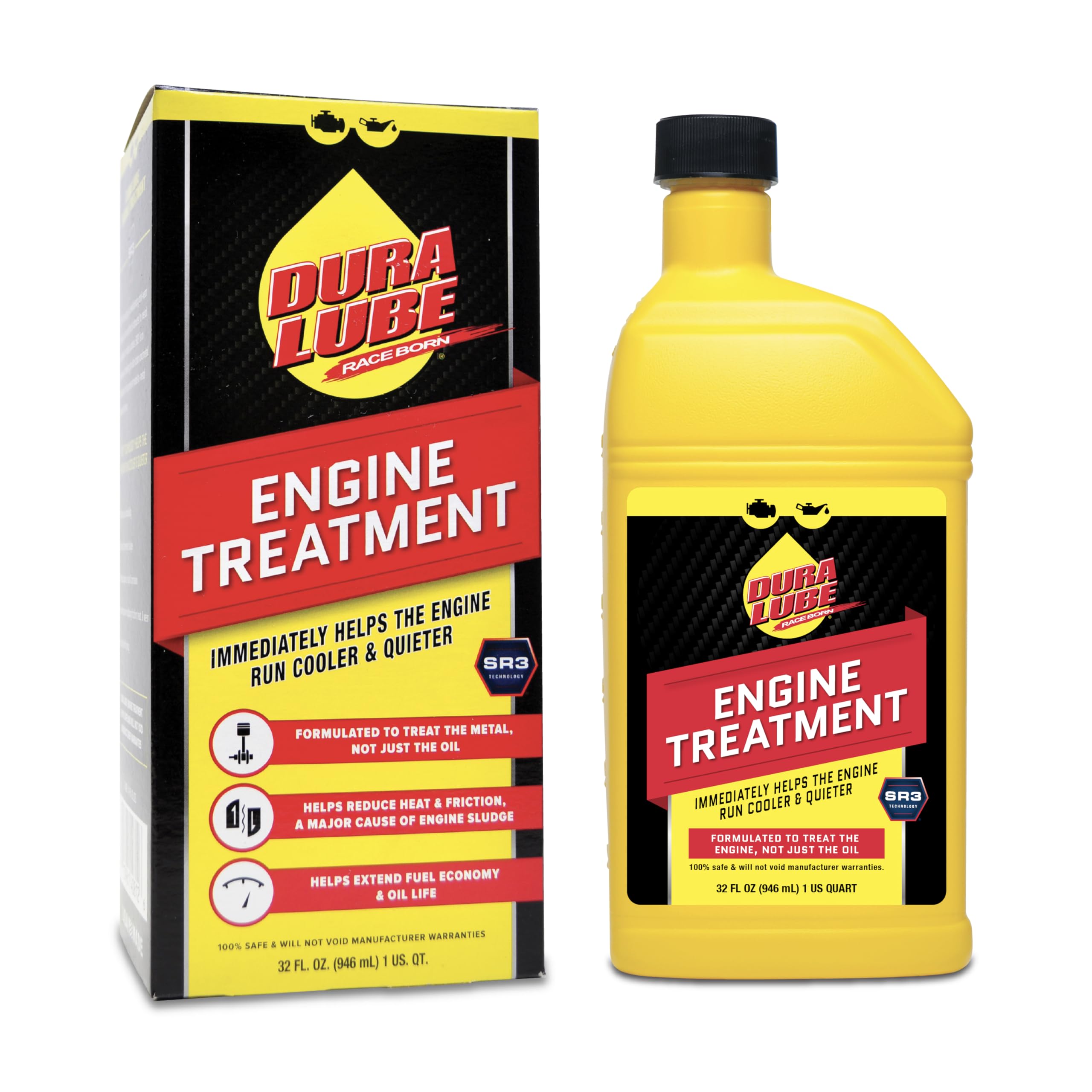
Dura Lube has maintained a loyal following for over two decades, with owners routinely reporting engine longevity exceeding three hundred thousand miles when used consistently. The formulation forms a protective barrier on internal engine components that minimizes friction during operation and provides critical lubrication during cold starts, when the majority of engine wear occurs. The flash point of 495 degrees Fahrenheit indicates excellent thermal stability under high-temperature operation.
The treatment reduces engine operating temperature by lowering internal friction, which helps prevent overheating in stressed engines. Owner feedback includes numerous reports of engines running noticeably quieter after treatment, with improved fuel economy due to reduced parasitic drag. Dura Lube is compatible with conventional, synthetic, and blended oils, and works in both gasoline and diesel engines without compatibility issues.
For budget-conscious owners who want proven protection without paying premium prices, Dura Lube represents one of the best value propositions in the engine treatment category. The thirty-two-ounce bottle treats a standard passenger car engine for multiple oil changes, and the universal compatibility means it can be used across a fleet of vehicles. While it lacks the high-ZDDP concentration needed for flat-tappet engines, it provides excellent general wear protection for modern engines with roller valvetrains.
What works
- Excellent cold-start protection reduces startup wear
- Universal compatibility with all oil types and engines
- Proven track record with decades of positive owner reports
What doesn’t
- Not enough ZDDP for flat-tappet cam protection
- Results vary more between engine types than premium additives
Hardware & Specs Guide
Viscosity Grade Compatibility
Oil stabilizers carry a base viscosity rating that affects the final oil blend. Lucas 40001 operates at a 5W-30 equivalent, while Liqui Moly Truck Series is a dedicated 15W-40. Adding a high-viscosity stabilizer to a modern 0W-20 oil can cause sluggish cold-flow and reduced fuel economy. Always match the stabilizer’s viscosity to your engine’s recommended grade — or drop one grade on the base oil to compensate if the stabilizer is significantly thicker.
ZDDP Concentration Levels
Flat-tappet engines require ZDDP levels between 1200 and 2000 ppm for normal operation and up to 3000 ppm for break-in. Modern oils typically contain 600-800 ppm due to catalytic converter compatibility. REV-X Zinc ZDDP delivers 3000-3200 ppm when dosed correctly, making it suitable for classic cars and performance engines. Roller-cam engines do not benefit from elevated ZDDP and may experience accelerated catalytic converter wear with excessive zinc.
Flash Point and Thermal Stability
A stabilizer’s flash point indicates its ability to withstand high operating temperatures without vaporizing or breaking down. Dura Lube’s flash point of 495 degrees Fahrenheit is typical for quality petroleum-based treatments. Lower flash points can lead to increased oil consumption and varnish formation in engines that run hot. Diesel engines operating under sustained load benefit from stabilizers with flash points above 450 degrees Fahrenheit.
Boundary Layer vs. Viscosity Modification
Stabilizers work through two primary mechanisms: viscosity modification (thickening the oil to reduce leakage past worn rings and bearings) and boundary layer deposition (forming a cling film on metal surfaces). Products like Liqui Moly 2009 and Superkote 2000 emphasize boundary layer protection, while Lucas 40001 primarily uses viscosity modification. Engines with loose clearances benefit more from viscosity modifiers, while tight-clearance engines need boundary-layer additives that do not alter flow characteristics.
FAQ
What does an engine oil stabilizer actually do?
Can I use an oil stabilizer with synthetic oil?
How often should I add stabilizer to my engine?
Will a stabilizer fix an engine that already has mechanical damage?
Can I mix different brands of stabilizer together?
Final Thoughts: The Verdict
For most buyers, the best engine oil stabilizer winner is the Lucas Oil 40001 because it delivers the most noticeable improvement in oil pressure and noise reduction across the widest range of engines. If you need dedicated ZDDP protection for a flat-tappet engine, grab the REV-X Zinc ZDDP. And for diesel trucks or heavy equipment, the LIQUI MOLY Truck Series offers the right viscosity profile and additive chemistry for sustained heavy-load protection.

Certification: BSc in Mechanical Engineering
Education: Mechanical engineer
Lives In: 539 W Commerce St, Dallas, TX 75208, USA
Md Amir is an auto mechanic student and writer with over half a decade of experience in the automotive field. He has worked with top automotive brands such as Lexus, Quantum, and also owns two automotive blogs autocarneed.com and taxiwiz.com.