Selecting the right engine oil is less about brand loyalty and more about matching the correct formulation, viscosity grade, and certification to your engine’s specific demands. A mismatch can accelerate wear, reduce fuel efficiency, or leave critical components unprotected during extreme operating conditions.
I’m Amir — the founder and writer behind Four Wheel Ask. Over the past decade, I’ve analyzed thousands of product specifications, studied industry certification standards, and aggregated real-world owner feedback to help drivers make informed lubrication decisions.
The modern oil aisle is crowded with synthetic blends, full synthetics, high-mileage formulas, and European-spec options. Understanding the differences between them is the first step toward a smarter purchase. That’s why this guide breaks down the best best engine oil for car choices across multiple categories and price tiers.
How To Choose The Best Engine Oil For Car
Engine oil is the lifeblood of your powertrain. Choosing incorrectly can lead to sludge buildup, premature wear, or even catastrophic failure. Here are the core factors to evaluate before buying.
Viscosity Grade — The SAE Rating Decoded
The Society of Automotive Engineers (SAE) rating like 5W-30 or 0W-20 tells you how the oil flows at cold and operating temperatures. The first number with a “W” indicates winter viscosity — lower means better cold-start protection. The second number is the hot viscosity rating. Always follow your owner’s manual recommendation first.
API and ILSAC Certifications
The American Petroleum Institute (API) “donut” and ILSAC starburst logos confirm the oil meets modern protective standards. API SP and ILSAC GF-6 are the current standards and include protections against low-speed pre-ignition (LSPI) and timing chain wear — critical for turbocharged direct-injection engines.
Full Synthetic vs. Conventional vs. High-Mileage
Full synthetic oils offer superior thermal stability, longer drain intervals, and better cold-flow characteristics. Conventional oils are cheaper but require more frequent changes. High-mileage formulations include seal conditioners to reduce leaks in engines with over 75,000 miles. Choose based on your driving conditions and vehicle age.
Quick Comparison
On smaller screens, swipe sideways to see the full table.
| Model | Category | Best For | Key Spec | Amazon |
|---|---|---|---|---|
| Valvoline Restore & Protect 0W-20 | Full Synthetic | Deposit Removal & Protection | 0W-20, 5 QT, API SP | Amazon |
| Royal Purple 04154 15W-40 | Synthetic Blend | Heavy-Duty & Diesel | 15W-40, 1 GA | Amazon |
| Mobil 1 Advanced 5W-20 | Full Synthetic | Daily Driver Protection | 5W-20, 6 QT, ILSAC GF-6 | Amazon |
| Motorcraft 5W-30 | Synthetic Blend | Ford & Domestic Engines | 5W-30, 5 QT | Amazon |
| Valvoline 4-Stroke Marine 10W-30 | Full Synthetic | Marine & Watercraft | 10W-30, 1 GA | Amazon |
| K&N Premium 5W-30 | Full Synthetic | High Mileage & All-Weather | 5W-30, 5 QT | Amazon |
| LIQUI MOLY Special Tec AA 5W-20 | Full Synthetic | Asian & American Engines | 5W-20, 5 L | Amazon |
| Motul 8100 ECO-lite 0W-20 | Full Synthetic | Modern Ford, GM, Chrysler | 0W-20, 5 L, dexos1 Gen 2 | Amazon |
| Castrol EDGE 5W-50 | Full Synthetic | High-Performance & Track Use | 5W-50, 6 QT, API SP | Amazon |
| Pennzoil Platinum Euro 0W-40 | Full Synthetic | European & Luxury Vehicles | 0W-40, 6 QT | Amazon |
| Royal Purple HPS 5W-30 | Full Synthetic | Maximum Wear Protection | 5W-30, 6 QT | Amazon |
In‑Depth Reviews
1. Valvoline Restore & Protect Full Synthetic 0W-20 Motor Oil 5 Quart

Valvoline’s Restore & Protect formulation is a genuine breakthrough in the motor oil category. It is the first oil on the market designed to actively remove existing engine deposits while simultaneously preventing new buildup. In standardized Sequence IIIH testing, the Active Clean Technology removed up to one hundred percent of piston deposits with continuous use — a claim few competitors can make.
The Liqui-Shield Technology layers protection that helps prevent future deposits from forming, creating a self-sustaining cleanliness cycle inside the engine. Additionally, this oil delivers seventy-nine percent stronger anti-wear protection compared to the GF-6 industry standard. That translates directly to reduced friction, better fuel economy, and longer component life across both new and high-mileage vehicles.
Being API SP and ILSAC GF-6A certified means it is fully compatible with modern turbocharged and direct-injection engines that require protection against low-speed pre-ignition. The 0W-20 viscosity is ideal for late-model gasoline engines where fuel economy and cold-start flow are priorities. It is American-made and backed by over 150 years of Valvoline engineering heritage.
What works
- Actively removes existing engine deposits with continuous use
- Strong anti-wear protection exceeding GF-6 standards
- API SP and ILSAC GF-6A certified for modern engines
What doesn’t
- 0W-20 viscosity not suitable for older engines requiring thicker oils
- Premium formulation commands a higher price point per quart
2. Royal Purple 04154 15W40 Oil, 1 Gallon

Royal Purple 15W-40 is engineered for applications where higher operating temperatures and heavier loads are the norm. The formulation prioritizes wear protection and corrosion resistance, making it a strong candidate for older gasoline engines, light-duty diesel engines, and off-road equipment that demand a thicker viscosity grade.
One standout feature is its enhanced compatibility with ethanol-blended fuels, which is increasingly relevant as fuel formulations change. The oil also provides superior corrosion protection compared to conventional blends, which is critical for engines that sit idle for extended periods or operate in humid environments. Protection of the catalytic emission system is another area where this oil distinguishes itself.
The one-gallon container is practical for those who prefer to buy in bulk or need exactly four quarts for an oil change. While the 15W-40 grade limits its use in modern passenger cars that require lighter viscosities, it remains a solid choice for trucks, SUVs, and classic cars that were designed around thicker oil.
What works
- Excellent wear and corrosion protection for demanding environments
- Compatible with ethanol-blended fuels
- Protects catalytic emission systems from contamination
What doesn’t
- 15W-40 viscosity is too thick for most modern passenger vehicles
- Not a full synthetic formulation
3. Mobil 1 Advanced Full Synthetic Motor Oil 5W-20, 6-Pack of 1 Quarts

Mobil 1 Advanced Full Synthetic is one of the most recognized and trusted names in the motor oil category, and this 5W-20 six-pack consistently delivers reliable protection for daily-driven vehicles. The formulation defends against the five major factors that degrade engine performance over time: heat, deposits, wear, sludge, and viscosity breakdown.
With ILSAC GF-6 certification, this oil includes protection against low-speed pre-ignition and timing chain wear — two failure modes that have become more common in modern downsized turbocharged engines. Mobil 1 also maintains excellent viscosity stability at extreme temperatures, handling heat up to 500 degrees Fahrenheit and cold starts down to minus 30 degrees.
The six-quart pack is convenient for vehicles that require a six-quart fill, and the cost per quart is competitive for a full synthetic. Mobil 1 recommends this oil for up to 10,000 miles between changes under normal driving conditions, which helps offset the upfront investment.
What works
- Excellent thermal stability across a wide temperature range
- ILSAC GF-6 certified for LSPI and timing chain wear protection
- Up to 10,000-mile drain interval capability
What doesn’t
- 5W-20 viscosity may not suit engines requiring 5W-30 or 0W-20
- Six-pack format may be more than needed for some vehicles
4. Motorcraft Oil Engine 5W-30 (XO5W305Q3SP)
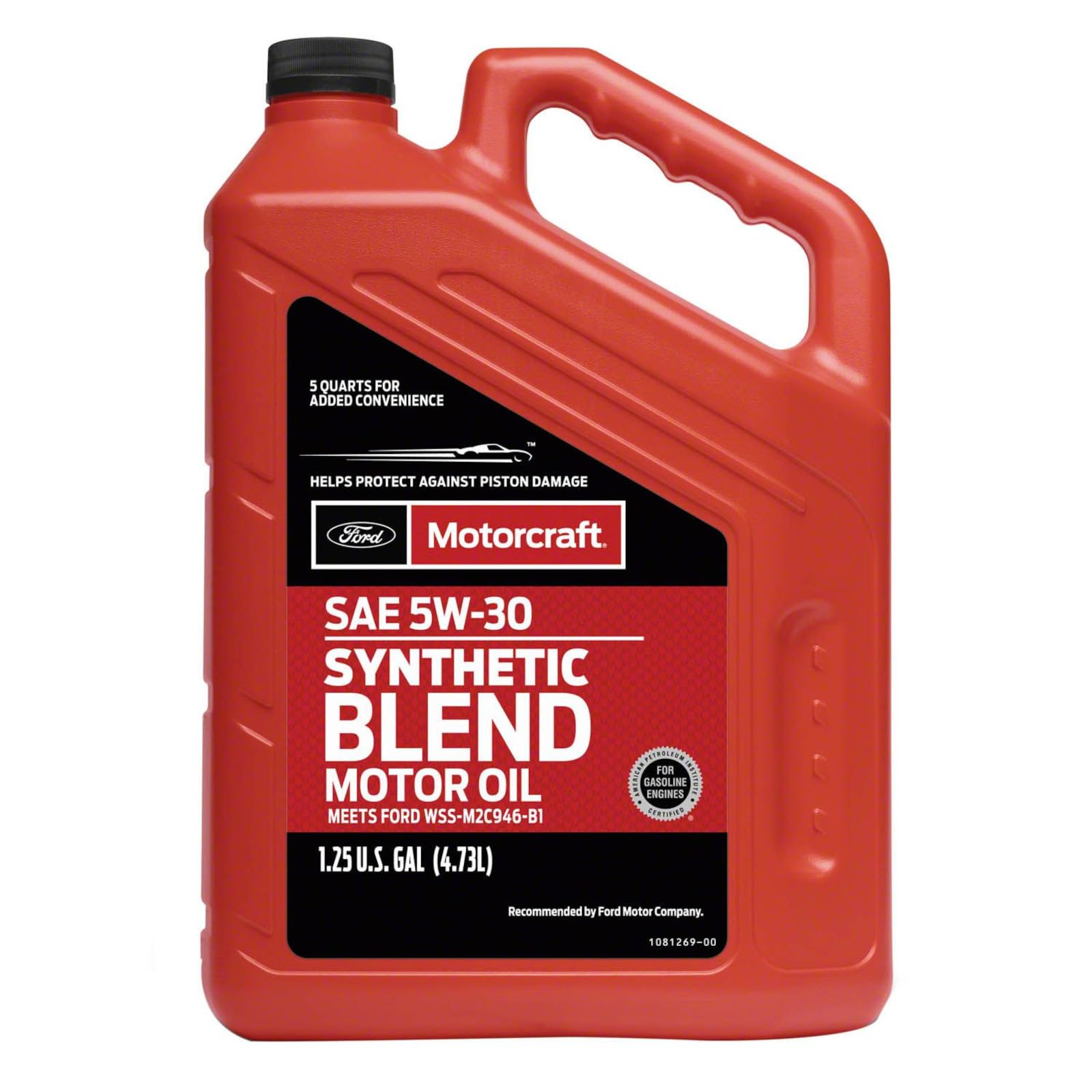
Motorcraft is the official original equipment parts brand for Ford and Lincoln vehicles, and this 5W-30 engine oil is designed to meet the exact specifications of those powertrains. For Ford owners who want to maintain factory-recommended lubrication without paying a premium for boutique brands, this is a compelling option.
The synthetic blend formulation strikes a balance between the protection of full synthetics and the affordability of conventional oils. It is suitable for a wide range of Ford, Lincoln, and Mercury vehicles, as well as many domestic SUVs and trucks that use 5W-30 viscosity. The five-quart jug is a convenient size for a standard oil change with minimal packaging waste.
While the product page descriptions are somewhat sparse on detailed additive technology, the Motorcraft brand carries the weight of Ford’s engineering validation. For owners of Ford-powered vehicles who value OEM specification compliance, this oil eliminates guesswork.
What works
- OEM specification for Ford and Lincoln engines
- Synthetic blend offers good protection at a moderate cost
- Universal fit for cars, SUVs, trucks, and vans
What doesn’t
- Not a full synthetic formulation
- Limited additive technology details provided
5. Valvoline 4-Stroke Marine Full Synthetic Engine Oil 1 Gallon
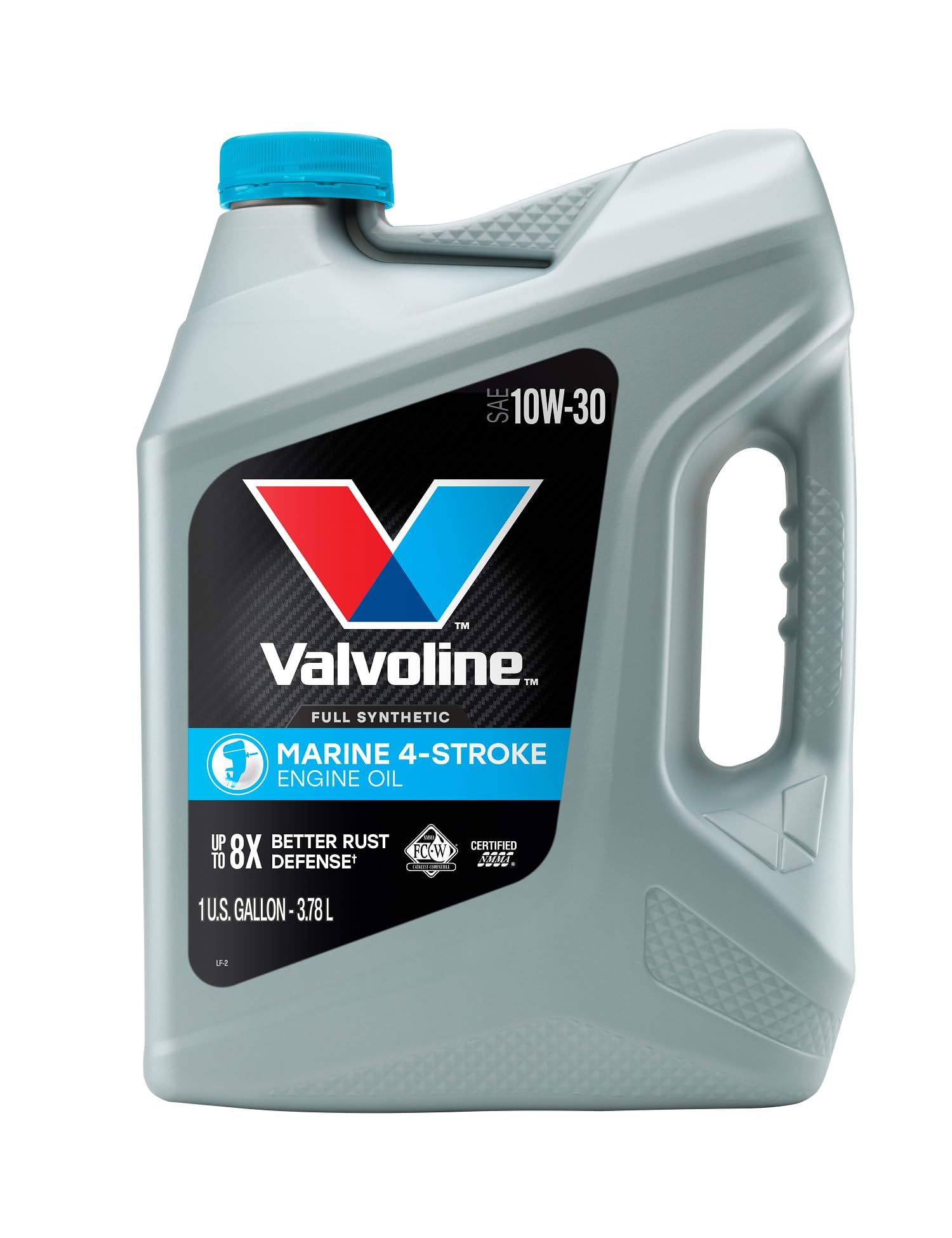
Marine engines operate under fundamentally different stresses than automotive powerplants. Constant high RPM operation, moisture exposure, and the absence of closed-loop cooling systems demand an oil formulation specifically engineered for those conditions. Valvoline’s 4-Stroke Marine Full Synthetic meets those demands with fifty percent stronger wear protection compared to standard marine oils.
The rust defense capability is particularly noteworthy — up to eight times better than conventional marine oils. This matters because marine engines continuously ingest moisture-laden air, and condensation inside the crankcase is inevitable. Without proper rust inhibition, internal corrosion can lead to premature bearing and ring failure during storage periods.
The 10W-30 viscosity is the standard recommendation for most four-stroke outboard and sterndrive engines. While this oil is not intended for automotive use, it is a must-read for boat owners who want to maximize engine life. The one-gallon size aligns well with typical marine engine oil capacities.
What works
- Fifty percent stronger wear protection for high-RPM marine use
- Eight times better rust defense against moisture ingress
- Full synthetic formula handles extreme heat better
What doesn’t
- Not suitable for automotive engines
- One-gallon size may require multiple bottles for larger engines
6. K&N Motor Oil 5W-30 Synthetic Engine Oil, Premium Protection, 5 Quarts

K&N built its reputation on high-performance air filters, and that engineering mindset carries into their full synthetic motor oil. The advanced Synthamax Technology uses a proprietary additive package designed to protect critical engine components from wear, deposit buildup, and viscosity breakdown across a wide range of operating temperatures.
The formulation is optimized for all-weather performance, maintaining flow characteristics in both cold winter starts and hot summer highway driving. K&N emphasizes the oil’s ability to minimize harmful contaminants and sludge buildup, which is especially relevant for drivers who follow extended oil change intervals or frequently drive in stop-and-go traffic.
The five-quart jug is a standard size that fits most passenger vehicles. K&N also includes a three-month warranty, reflecting confidence in the product. While it sits at a slightly higher price point than some mass-market synthetics, the additive technology and brand reputation justify the premium for drivers who prioritize engine longevity.
What works
- Synthamax additive technology for enhanced protection
- All-weather performance across temperature extremes
- Minimizes sludge and harmful contaminants effectively
What doesn’t
- Premium pricing compared to generic full synthetics
- Limited viscosity options available in this line
7. LIQUI MOLY Special Tec AA SAE 5W-20, 5 Liter, Full Synthetic

LIQUI MOLY is a German lubricant specialist with decades of experience formulating oils for European and Asian American engines. The Special Tec AA 5W-20 is engineered for optimum aging stability, which means it resists oxidation and viscosity breakdown longer than conventional synthetics. This translates directly to extended drain intervals and consistent protection over time.
Fuel economy improvement is another documented benefit. The low-friction formulation reduces internal drag on rotating assemblies, which can yield measurable efficiency gains in daily driving. The oil also maintains outstanding engine cleanliness, preventing carbon and varnish buildup on pistons and valve trains — a common issue in direct-injection engines.
Compatibility with turbochargers and catalytic converters makes this oil suitable for modern forced-induction powertrains. The five-liter container is ideal for vehicles that require a five-liter fill, common among Japanese and Korean automakers. It is miscible with all commercially available motor oils, so switching from another brand is seamless.
What works
- Superior oxidation stability for extended oil life
- Fuel economy improvement through reduced friction
- Safe for turbochargers and catalytic converters
What doesn’t
- Premium pricing reflects German import status
- Five-liter size may be inconvenient for non-standard fill volumes
8. Motul 8100 ECO-lite 0W-20 Full Synthetic Motor Oil, 5 Liter

Motul 8100 ECO-lite is a high-performance 100% synthetic 0W-20 motor oil engineered for modern Ford, GM, Chrysler, and Fiat applications. The low-friction technology reduces internal resistance, supporting faster lubrication at startup and maintaining stable protection across a broad temperature range. This makes it an excellent choice for late-model North American vehicles that specify 0W-20 viscosity.
The API SP certification ensures protection against low-speed pre-ignition, timing chain wear, and sludge formation — all critical failure modes in modern turbocharged direct-injection engines. Additionally, the dexos1 Gen 2 approval means this oil meets GM’s stringent performance requirements for Gen 2 engines, including enhanced deposit control and wear protection.
Beyond GM, this oil also meets Ford WSS-M2C947-A/B1, Chrysler MS-6395, and FIAT 9.55535-CR1 specifications. The five-liter jug format is practical for most passenger vehicles that require between five and six quarts per change. For owners of late-model domestic vehicles seeking an OEM-approved synthetic, Motul delivers a compelling package.
What works
- API SP and dexos1 Gen 2 certified for modern engines
- Low-friction technology improves cold-start flow
- Broad OEM approval list including Ford, GM, Chrysler, and FIAT
What doesn’t
- 0W-20 viscosity limited to engines that require it
- Premium pricing positions it above mass-market synthetics
9. Castrol EDGE 5W-50 Advanced Full Synthetic Motor Oil, 1 Quart, Pack of 6
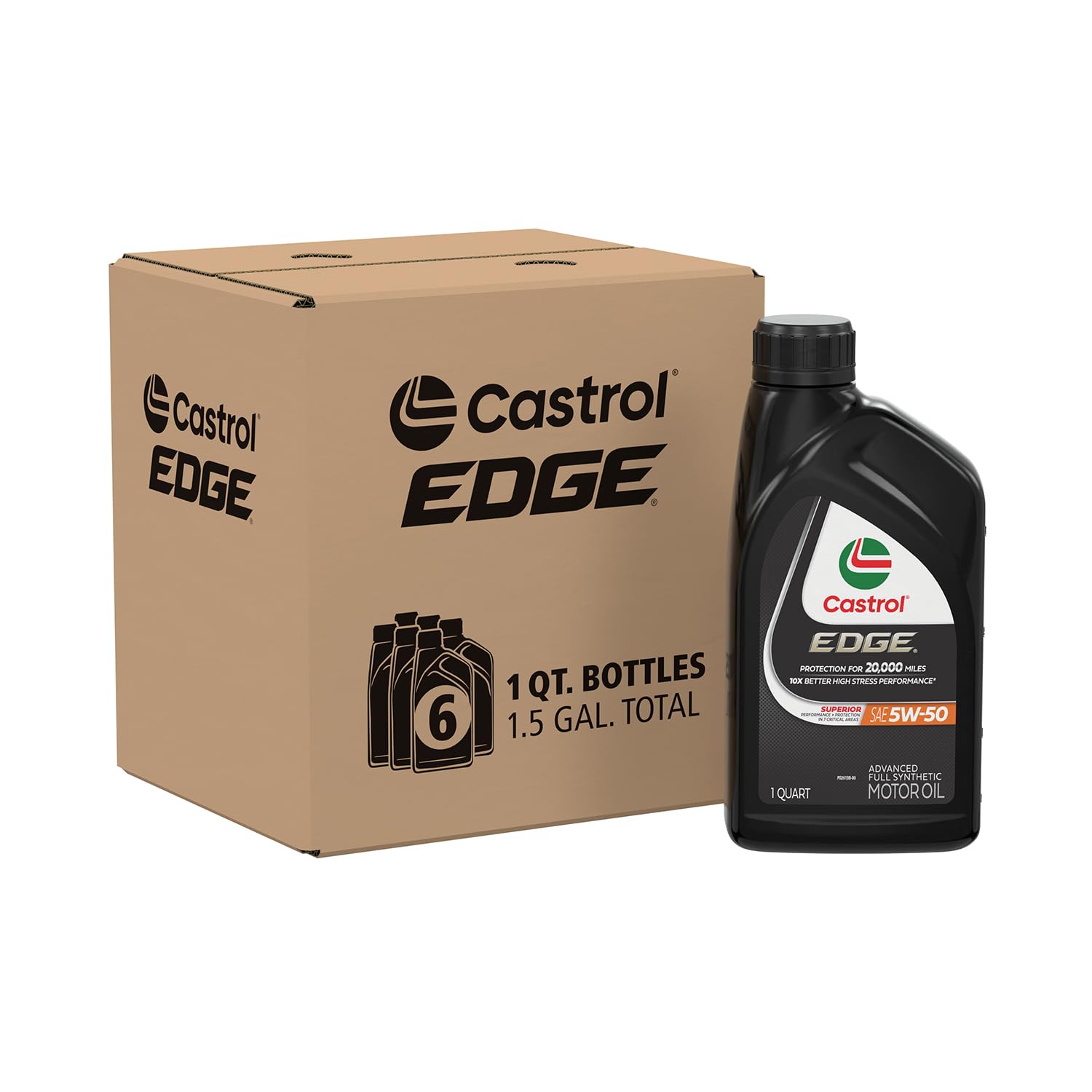
Castrol EDGE 5W-50 is engineered for the most demanding engine applications, including high-performance street cars, track-day vehicles, and modified powertrains that generate extreme heat and stress. Castrol claims this formulation is three times stronger than the leading full synthetic in terms of viscosity breakdown resistance, based on Kurt Orbahn testing.
The ten times better high-stress performance rating, measured under the Sequence IX test at high load and torque conditions, indicates this oil can maintain its protective film where conventional synthetics would shear down. The API SP certification confirms protection against low-speed pre-ignition, making it suitable for modern turbocharged performance engines as well.
Castrol recommends up to 20,000 miles between oil changes under normal driving conditions, though that interval should be adjusted based on driving style and conditions. The six-quart pack is ideal for performance vehicles that require a six-quart sump capacity. This is a niche product, but for those who need a thick, high-performance oil, it is one of the few options that genuinely delivers.
What works
- Viscosity breakdown resistance superior to standard synthetics
- Ten times better high-stress performance under load
- API SP certified for modern turbocharged engines
What doesn’t
- 5W-50 viscosity is too thick for most passenger vehicles
- Extended 20,000-mile interval requires careful monitoring
10. Pennzoil Platinum Euro SAE 0W-40 Full Synthetic Motor Oil, 1 Quart (Case of 6)

Pennzoil Platinum Euro 0W-40 is a full synthetic motor oil made from natural gas using a proprietary gas-to-liquids process. This base oil is inherently purer than crude-derived synthetics, with fewer impurities and a more consistent molecular structure. The result is an oil that provides better protection from friction and helps engines maintain power output over time.
The faster low-temperature oil flow characteristic is critical for European engines that often specify 0W-40 viscosity. At the same time, the formulation protects in extreme heat, making it suitable for high-performance turbocharged engines common in German luxury vehicles. Pennzoil claims this oil keeps pistons up to forty percent cleaner than the toughest industry standard requires.
The six-quart case is practical for vehicles with six-quart sump capacities, which is common among BMW, Mercedes-Benz, Audi, and Porsche models. For owners of European vehicles who want an oil that meets or exceeds ACEA and API requirements, Pennzoil Platinum Euro offers a strong value proposition compared to boutique European brands.
What works
- Natural gas base oil provides exceptional purity and consistency
- Excellent low-temperature flow and high-temperature protection
- Keeps pistons cleaner than industry standards require
What doesn’t
- 0W-40 viscosity limited to European and select applications
- Six-quart case may be more than needed for some engines
11. Royal Purple 31530 HPS Street Synthetic Motor Oil 5W30 Pack of 6 Quarts

Royal Purple HPS (High Performance Street) 5W-30 is formulated for drivers who demand maximum wear protection without switching to a race-only oil. The additive package is engineered to reduce friction, improve performance, and maintain engine cleanliness under the stresses of spirited driving and modified powertrains.
Where this oil differentiates itself is in its shear stability. Under high-RPM operation and elevated temperatures, many synthetic oils lose viscosity and fail to maintain a protective film. Royal Purple’s formulation is designed to resist shear, keeping the oil film intact where it matters most — between piston rings and cylinder walls, and in bearing journals.
The six-quart case suits vehicles with larger sump capacities or those that consume oil between changes. While the price per quart is higher than most mass-market synthetics, the enhanced protection characteristics justify the premium for drivers who track their cars or operate in demanding conditions. It is a specialized product for a specific audience.
What works
- Maximum wear protection for high-performance street driving
- Excellent shear stability under high-RPM conditions
- Advanced additive package reduces friction and improves efficiency
What doesn’t
- Premium pricing well above standard synthetics
- Overkill for casual daily driving applications
Hardware & Specs Guide
SAE Viscosity Grade
The SAE rating (e.g., 0W-20, 5W-30) determines how the oil flows at cold and hot temperatures. Lower winter ratings improve cold-start flow, while higher hot ratings maintain film strength at operating temperature. Always match the viscosity your owner’s manual specifies.
API Service Classification
The API “donut” symbol shows the oil meets current protection standards. API SP is the latest gasoline engine standard, providing protection against LSPI, timing chain wear, and sludge. Older API SN or SM oils lack these modern protections.
ILSAC GF-6 Certification
The International Lubricant Standardization and Approval Committee GF-6 standard focuses on fuel economy, deposit control, and protection for modern engines. GF-6A is for current engines, while GF-6B is for 0W-16 oils used in the newest designs.
Full Synthetic vs. Synthetic Blend
Full synthetic oils use chemically engineered base oils for superior thermal stability and longer drain intervals. Synthetic blends mix conventional and synthetic base oils for a balance of performance and cost. Conventional oils are refined from crude oil directly.
FAQ
What happens if I use the wrong viscosity oil in my car?
How often should I change my engine oil with full synthetic?
Can I switch from conventional to synthetic oil in an older engine?
What does API SP certification mean for my engine?
Is more expensive synthetic oil always better for my car?
Final Thoughts: The Verdict
For most buyers, the best engine oil for car winner is the Valvoline Restore & Protect 0W-20 because it actively cleans deposits while providing superior anti-wear protection in a widely compatible viscosity grade. If you want maximum thermal stability and extended drain intervals for a performance vehicle, grab the Castrol EDGE 5W-50. And for a budget-friendly daily driver synthetic that covers all the basics without compromise, nothing beats the Mobil 1 Advanced 5W-20 six-pack.

Certification: BSc in Mechanical Engineering
Education: Mechanical engineer
Lives In: 539 W Commerce St, Dallas, TX 75208, USA
Md Amir is an auto mechanic student and writer with over half a decade of experience in the automotive field. He has worked with top automotive brands such as Lexus, Quantum, and also owns two automotive blogs autocarneed.com and taxiwiz.com.