A cracked or collapsed engine intake hose chokes your air-fuel mixture, robs horsepower, and sends false readings to the mass airflow sensor. Whether you are replacing a factory rubber elbow that split at the rib or building a custom cold-air induction setup from scratch, the material and diameter of that hose determine whether your engine breathes freely or sputters under load.
I’m Amir — the founder and writer behind Four Wheel Ask. I have spent years analyzing aftermarket and OE-replacement intake hoses, from silicone vacuum tubing to reinforced ducting, cross-referencing heat ratings, burst pressures, and fitment data to separate genuine upgrades from parts-bin misfits.
This guide breaks down the best options by real-world application so you can confidently select the correct engine intake hose for your vehicle without wasting time on returns or guessing at dimensions.
How To Choose The Best Engine Intake Hose
Selecting the right intake hose is more than matching the original part number. The material, wall thickness, temperature tolerance, and diameter all determine how your engine responds when you hit the throttle. Here are the critical factors to weigh before buying.
Material: Silicone vs. Rubber vs. Reinforced Fabric
Silicone is the gold standard for custom and high-heat applications because it resists collapsing up to 392°F and maintains flexibility well below freezing. Standard rubber hoses degrade faster under hood heat and are prone to cracking at the ribbed elbows. Reinforced fabric ducts, typically silicone-coated fiberglass with a steel wire helix, handle extreme temperatures up to 575°F and resist kinking in tight routing, but they require gloves during handling due to fiberglass content.
Inside Diameter and Wall Thickness
A larger inner diameter reduces restriction and supports higher airflow, critical for turbocharged engines or high-revving naturally aspirated builds. The wall thickness matters for structural integrity — a 3mm wall prevents vacuum collapse on the inlet side, while a 1mm wall is suitable for low-pressure cold-air feeds. Always measure your throttle body or air box opening before ordering; a 3-inch duct cannot be stretched to fit a 4-inch port.
Temperature Range and Burst Pressure
Intake hoses near the exhaust manifold or turbocharger see radiant heat above 300°F. A silicone hose rated to -76°F to 392°F covers most engine bays, but if you are routing near the downpipe or within a forced-induction system, look for a steel-wire-reinforced duct rated to 575°F. Burst pressure matters for boost applications — a hose rated at 130 PSI at room temperature provides a safety margin above typical street boost levels of 10–30 PSI.
Quick Comparison
On smaller screens, swipe sideways to see the full table.
| Model | Category | Best For | Key Spec | Amazon |
|---|---|---|---|---|
| AC PERFORMANCE 4″ x 10 ft | Silicone Duct | High-heat custom intake | 572°F max temp | Amazon |
| Spectre Performance 9751 | Polypropylene Duct | Universal 4″ cold-air feeds | Memory-flex design | Amazon |
| NOWBALL 2.5″ Silicone Duct | Silicone/Fiberglass | Brake cooling & small intakes | 575°F max temp | Amazon |
| SOVARCATE 3″ Silicone Duct | Reinforced Silicone | Heavy-duty air induction | 4-layer 302°C resistance | Amazon |
| AotoKoop Red Vacuum Kit | Silicone Tubing | Turbo vacuum & small lines | 60 PSI working pressure | Amazon |
| Dtomi Infiniti G35 Intake Hose | OE-Replacement Rubber | Direct fit 3.5L V6 | OEM 16576-JK20A spec | Amazon |
| Shineyoo Silicone Vacuum Tubing | Multisize Silicone | Assorted engine vacuum lines | 3mm wall prevents collapse | Amazon |
In‑Depth Reviews
1. AC PERFORMANCE 4″ ID Silicone Duct (10 ft)
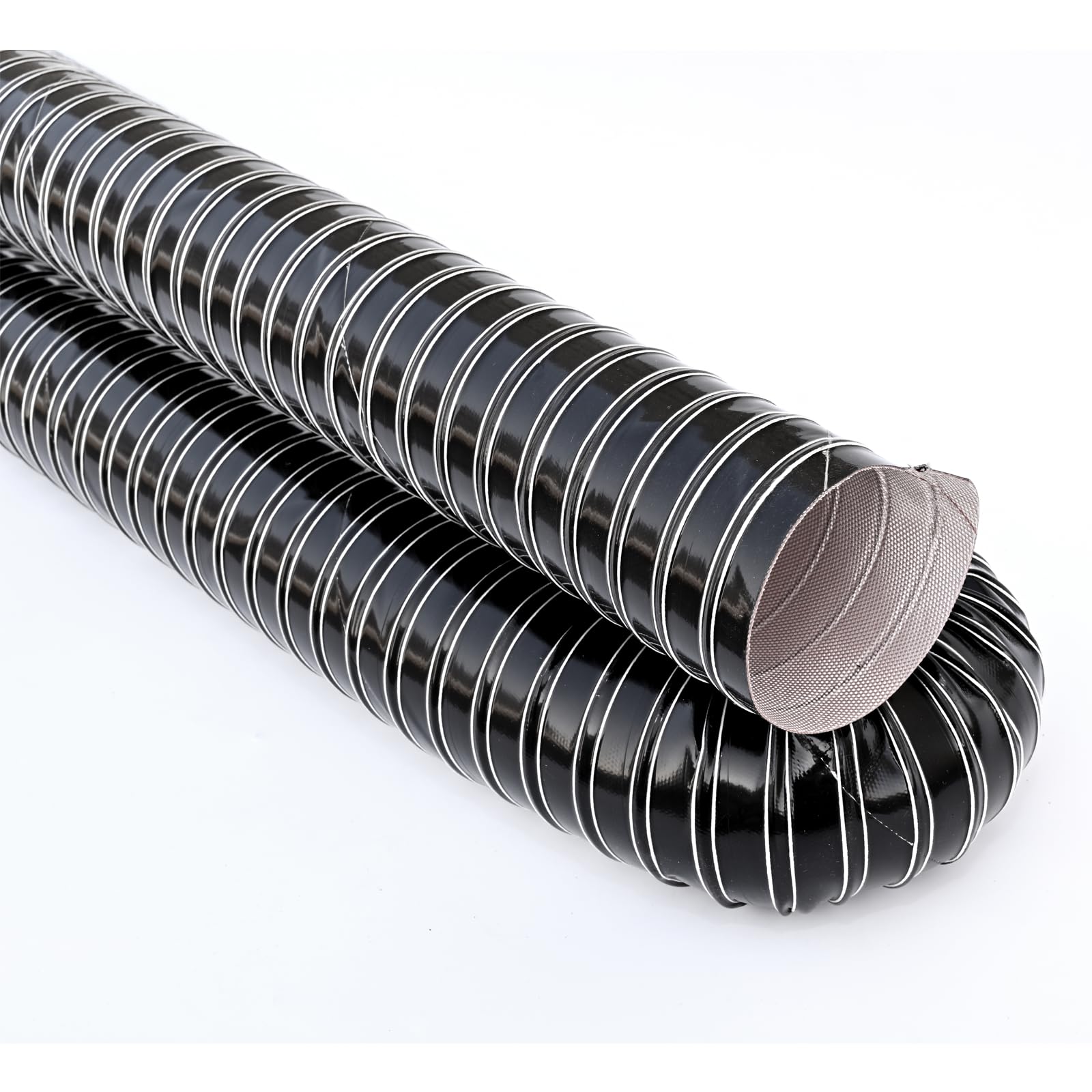
The AC PERFORMANCE 4-inch duct delivers the longest continuous length in this roundup at 10 feet, making it the clear winner for builders who need to route a full cold-air intake from the bumper to the throttle body without splicing. The silicone-coated fiberglass fabric uses a steel wire helix that prevents kinking even in sharp 180-degree bends, and the smooth interior wall keeps airflow resistance low. With a working temperature range from -94°F to 572°F, this hose survives radiant heat from a turbo manifold without delaminating.
In practice, the 1mm wall is thin enough to remain flexible for tight engine-bay routing but still holds its shape under engine vacuum. The Ultraviolet resistance ensures the black exterior does not turn chalky after a season of exposure. Buyers using this for brake cooling ducts on track cars report the inner fabric does not fray at cut ends when trimmed with a sharp blade. The included specification of 102mm inner diameter matches standard 4-inch couplers and air filter flanges with minimal tolerance variance.
The main tradeoff for this premium option is that the single-wall construction, while highly flexible, requires external support if used in a boosted application above 15 PSI. The fiberglass content also demands gloves during handling — the package does not include them, unlike some competitors. For naturally aspirated intakes, radiator shrouding, or brake ducting, this is the most thermally robust 10-foot length available at this price point.
What works
- Exceptional 572°F heat tolerance
- Steel wire prevents kinking in tight bends
- 10-foot continuous length reduces joints
What doesn’t
- 1mm wall thickness limits boosted use
- Gloves not included for fiberglass handling
2. Spectre Performance 9751 4″ Air Duct Hose

The Spectre 9751 stands apart from every silicone hose in this list because it is made from polypropylene with a patented memory-flex design. This means the hose holds whatever position you bend it into rather than springing back or collapsing. For a street-driven car where you need to route a 4-inch cold-air duct around a radiator fan shroud or battery tray, that retention characteristic saves you from fighting with the hose during installation. The black textured finish also blends into engine bays better than glossy silicone.
At 41 inches long, it is a dedicated length for connecting the air box to the front grille area, not a bulk roll. The two included rubber boots with threaded ends let you secure the duct using standard hose clamps without crushing the thin polypropylene wall. Unlike silicone, this material does not absorb oil vapors or become tacky over time, so it stays clean-looking. The weight is negligible at 0.01 ounces — among the lightest options here.
The limitation is thermal resistance. Polypropylene starts softening around 250°F, so this duct must stay away from exhaust manifolds, turbo heat shields, and radiator outlets. It is a cold-air feed duct only, not an intake pipe that connects directly to the throttle body. Also, the 41-inch fixed length means you cannot shorten it significantly without losing the memory-flex structure at the cut edge. If your routing requires less than 36 inches, look for a silicone alternative that trims cleanly.
What works
- Memory flex holds bent position permanently
- Very lightweight and easy to route
- Rubber boots with threads for secure clamping
What doesn’t
- Polypropylene cannot handle high heat near exhaust
- Fixed 41-inch length limits custom trimming
3. NOWBALL 2.5″ Silicone Air Duct Hose (3.3 ft)
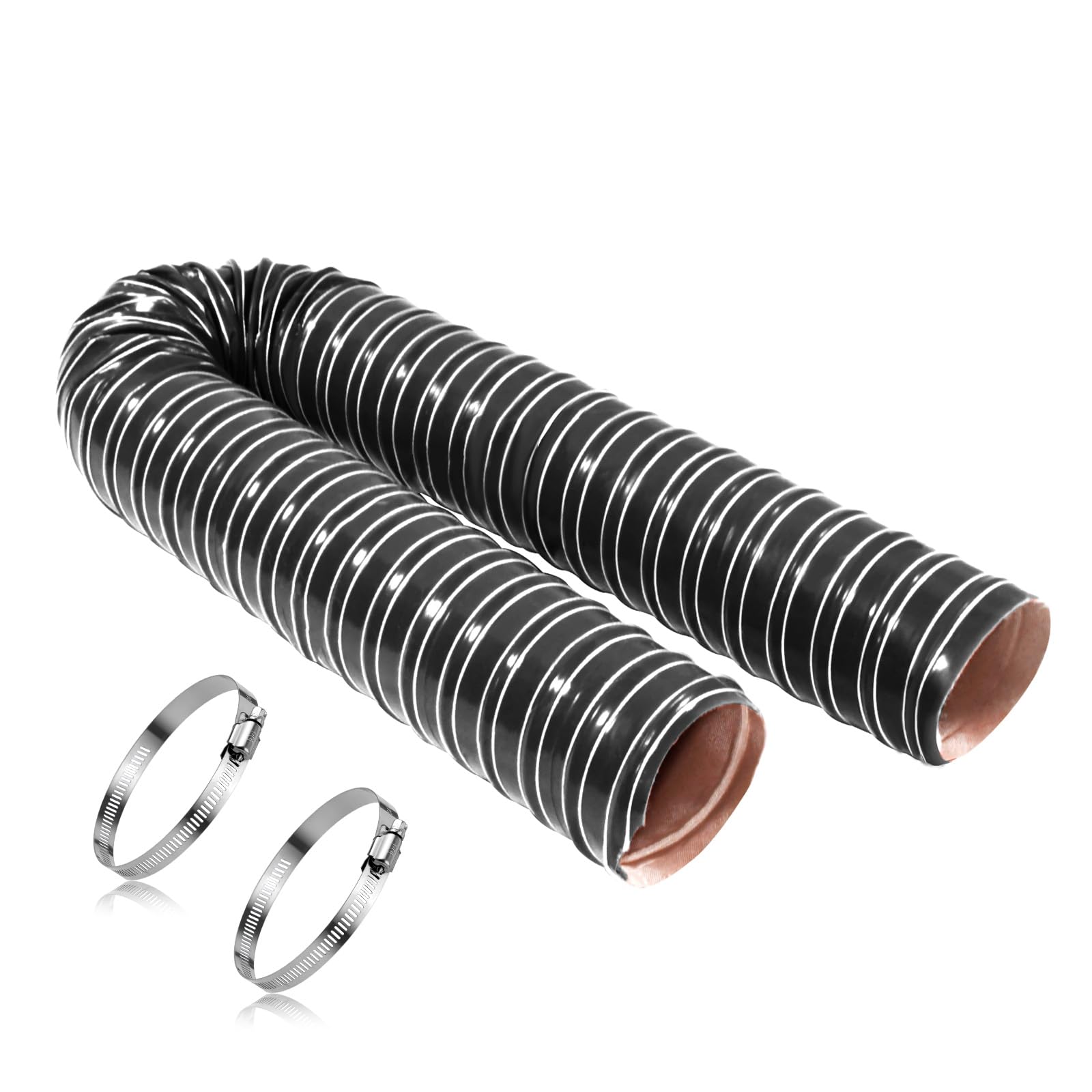
The NOWBALL 2.5-inch duct hits a specific sweet spot for brake cooling ducts, small displacement engine intakes, and diesel heater air feeds. Its 575°F maximum temperature rating is the highest among the rigid-diameter options in this review, thanks to the silicone-coated fiberglass and sprung steel wire internal support. The 3.3-foot length is sufficient for short-run applications like connecting a bumper intake scoop to a brake backing plate or turbo inlet pipe on a compact engine bay.
One differentiator is the included installation kit — gloves, a screwdriver, two air duct clips, and auxiliary cable ties. The gloves are necessary because the fiberglass inner layer irritates skin, and their inclusion saves you a trip to the hardware store. The 2.5-inch (63mm) inner diameter matches common cold-air piping used on Subaru WRX, Mazdaspeed, and aftermarket intercooler setups. The steel wire prevents collapse even when the hose is routed through a 90-degree bend with a tight radius.
For boosted applications exceeding 10 PSI, the 2.5-inch diameter may become a restriction on larger turbochargers that prefer 3-inch or 4-inch inlets. The 1-2mm manufacturing tolerance means you might need to stretch the hose slightly over a 2.5-inch coupler or use a heat gun to soften it during installation. The black color absorbs less radiant heat than lighter colors, which helps keep intake air temperatures lower when the hose runs near the radiator.
What works
- 575°F rating handles extreme engine-bay heat
- Full installation kit included with gloves
- Steel wire prevents kinking
What doesn’t
- 2.5-inch diameter may limit high-boost flow
- Tight tolerance requires careful fitting
4. SOVARCATE 3″ Silicone Air Duct Hose (3.3 ft)
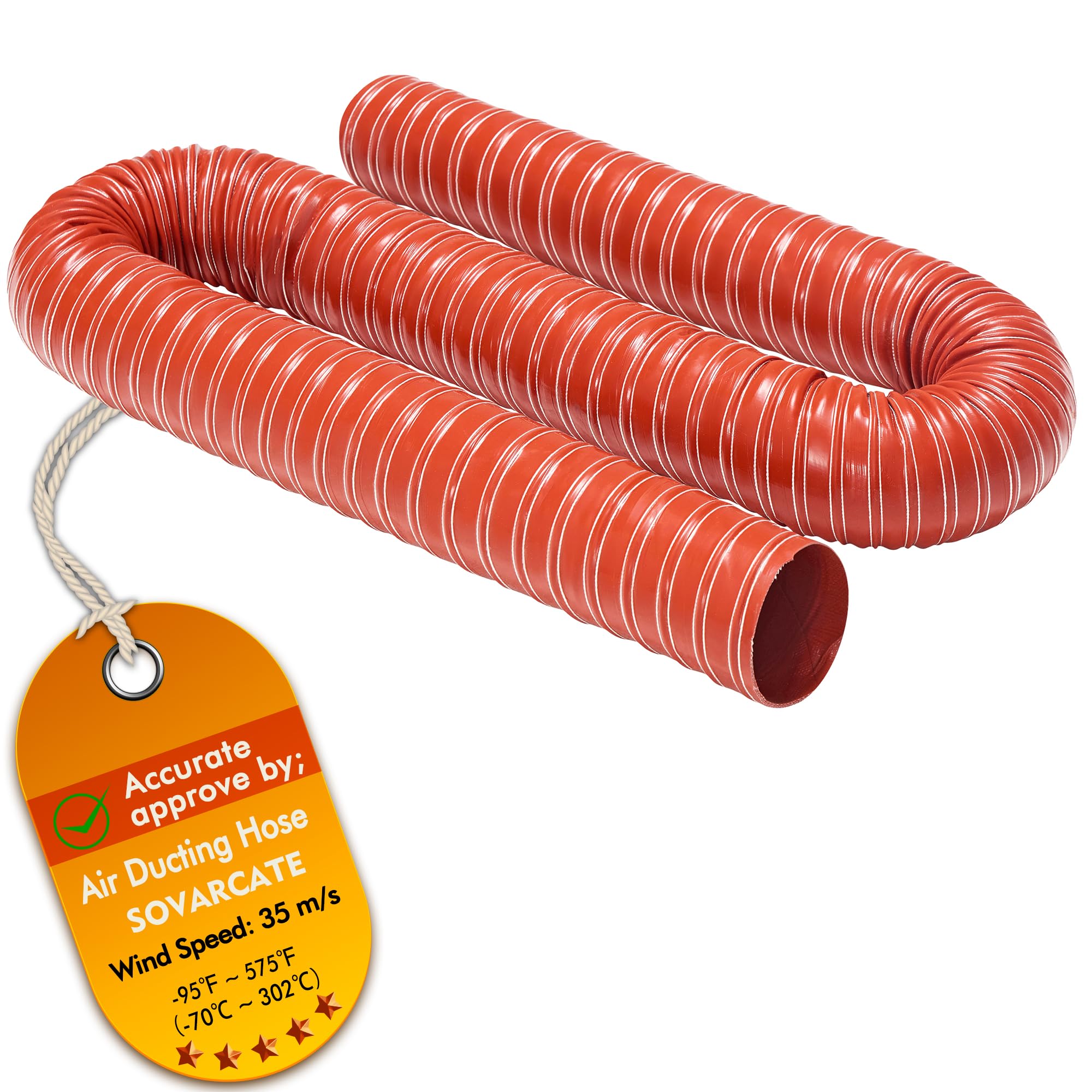
The SOVARCATE 3-inch duct uses a 4-layer adhesive coating system that extends to the inner wall, reducing airflow resistance compared to single-layer silicone ducts with rough interior surfaces. The flame-retardant silicone glass braze combined with an outer fireproof wire layer gives this hose a temperature range of -70°C to 302°C, suitable for direct exposure near exhaust components. The steel wire spiral reinforcement maintains structural integrity even when the hose sees repeated heat cycles and vibration.
At 3 inches in diameter, this duct fits a wide range of aftermarket cold-air intake systems and intercooler piping transitions. The 3mm nominal wall thickness is substantially thicker than the AC PERFORMANCE duct, providing better resistance to vacuum collapse on naturally aspirated engines with high-flow air filters. Industrial users report using this hose for particle dryer ventilation and laser engraver exhaust, confirming its versatility beyond strictly automotive applications.
The fiberglass content demands the same PPE caution as other reinforced ducts — the warning label clearly states gloves and a mask are required. The 3-inch diameter is a less common size than 2.5 or 4 inches, so verify your intake flange or throttle body inlet measures exactly 3 inches before ordering. The red color option adds a visual pop in visible engine bays, but the dye can fade faster than black if exposed to concentrated UV.
What works
- 4-layer coating reduces airflow drag
- 3mm thick wall resists vacuum collapse
- Flame-retardant for high-heat zones
What doesn’t
- Fiberglass requires safety gear to handle
- 3-inch diameter is less universal than 4-inch
5. AotoKoop Red Silicone Vacuum Tubing Kit (23 ft)

The AotoKoop kit is designed for the smaller vacuum and boost-reference lines branching off the main intake tract rather than the primary intake hose itself. It includes 10 feet each of 3mm and 4mm inner diameter tubing plus 3 feet of 8mm tubing, covering the range needed for MAP sensor lines, blow-off valve vacuum references, and PCV system hoses. The 60 PSI maximum working pressure at 374°F provides adequate margin for naturally aspirated engine vacuum lines operating around -14 PSI and light turbo applications under 20 PSI of boost.
The silicone material remains flexible down to -76°F, which matters for cold-start drivability when brittle rubber vacuum lines often crack. The 15-piece spring clamp kit and zip ties help secure connections without leaking, and the three plastic T-joiners allow branching for multiple vacuum sources. Red coloring makes leak detection easier than black rubber lines, as oil residue or coolant stains contrast clearly against the bright surface.
The 2.5mm wall thickness on the 3mm ID tubing is adequate for most vacuum applications but can kink if bent too sharply around tight corners. The 8mm (5/16-inch) section at only 3 feet may be too short for some throttle-body coolant bypass or large-diameter PCV routes. This kit is best treated as a vacuum-line refresh for a single engine bay rather than a full intake duct solution — it complements a larger silicone intake hose rather than replacing it.
What works
- Covers three common vacuum line diameters
- Red silicone makes leak spotting easy
- Includes clamps and T-joiners
What doesn’t
- 8mm section only 3 feet long
- Small tubing kinks in tight bends
6. Dtomi Left & Right Intake Hose for Infiniti G35 3.5L V6

The Dtomi intake hose set is a purpose-built replacement for Infiniti EX35 2008-2012 and G35 2007-2008 models equipped with the 3.5L V6. It replaces the factory part numbers 16576-JK20A and 16576-JK21B, which are known to crack at the molded elbow after 80,000 miles due to heat cycling. The two-piece design covers both the left and right intake runners, restoring the sealed path between the air filter box and the throttle body to prevent unmetered air from entering the engine.
The rubber construction matches the OEM material specification, meaning it bends to the same factory routing without requiring trimming or aftermarket clamps. The integrated rubber bellows absorb engine vibration without transmitting it to the intake plumbing. Owners report that the 16576-JK20B fitment is identical to the Nissan Genuine part, with reinforced ribs at the stress points where the original hoses typically split.
The limitation is zero flexibility in application — this fits only the VQ35HR engine in those specific Infiniti chassis. It is not usable as a universal intake hose for other vehicles or custom builds. The rubber material, while durable for street driving, will not withstand the sustained high heat of track use near 300°F as well as a silicone alternative would. If you own one of the listed models, this is the correct maintenance part.
What works
- Precise direct fit for G35/EX35 3.5L
- Reinforced ribs at common crack points
- Two-piece covers both intake runners
What doesn’t
- Fits only two specific Infiniti engines
- Rubber degrades faster than silicone under heat
7. Shineyoo Silicone Vacuum Tubing Kit (6 sizes, 6.6 ft each)

The Shineyoo tubing kit supplies 6.6 feet of each of six inner diameters ranging from 1/8 inch all the way up to 3/8 inch, making it the most comprehensive sizing assortment in this guide. The 3mm wall thickness is consistent across all sizes, preventing the collapsing issue common with thinner-wall silicone vacuum lines when routing near heat sources. This kit covers everything from small windshield washer lines and boost gauge feeds to medium-diameter crankcase vent hoses.
The included 128-piece vacuum connector assortment with 12 different sizes of barbed fittings, reducers, and T-connectors turns this into a complete engine-bay refresh kit. The 130 PSI burst pressure at room temperature means these lines handle boosted applications well beyond what a naturally aspirated vacuum system demands. The black color matches factory aesthetics so the replacement is nearly invisible in the engine bay.
The smallest 1/8-inch ID tubing has a 9mm outside diameter, which is larger than some OEM hard plastic lines and may require zip ties to secure in tight factory clips. For a comprehensive one-box solution to replace every rubber vacuum hose in an older vehicle, this is the most complete option.
What works
- Six sizes cover nearly every vacuum line
- 128-piece connector assortment included
- 3mm wall prevents collapse
What doesn’t
- Each size limited to 6.6 feet
- Smallest OD is larger than factory hard lines
Hardware & Specs Guide
Temperature Rating & Material
The thermal ceiling of each hose determines safe proximity to exhaust manifolds and turbo housings. Pure silicone hoses like the Shineyoo and AotoKoop kits handle up to 392°F, while steel-wire-reinforced ducts such as the AC PERFORMANCE and NOWBALL resist up to 575°F. Polypropylene ducts like the Spectre 9751 soften above 250°F and must stay in cold-air zones. Always mount silicone ducts at least 6 inches from any exhaust surface to avoid localized hot spots exceeding the rated temperature.
Wall Thickness & Collapse Resistance
A 3mm wall thickness, found on the SOVARCATE 3-inch duct and the Shineyoo kit, provides structural rigidity against engine vacuum during high-RPM operation. Thinner 1mm walls on the AC PERFORMANCE duct sacrifice collapse resistance for maximum flexibility in tight routing. For forced-induction engines where the intake sees both positive boost pressure and vacuum during deceleration, a minimum 2.5mm wall is recommended. The steel wire helix in reinforced ducts adds independent support regardless of wall thickness.
FAQ
Can I use silicone vacuum tubing for my main engine intake hose?
Why does the Spectre 9751 polypropylene duct cost more than some silicone ducts?
How do I measure the correct intake hose diameter for my car?
Is a steel-wire-reinforced duct necessary for a naturally aspirated engine?
Final Thoughts: The Verdict
For most buyers, the engine intake hose winner is the AC PERFORMANCE 4-inch Silicone Duct because its 10-foot continuous length, 572°F heat rating, and kink-proof steel wire make it the single most versatile option for both custom cold-air intakes and brake ducting. If you need a smaller diameter for brake cooling or a tight-fit turbo inlet, grab the NOWBALL 2.5-inch Duct for its included installation kit and class-leading 575°F tolerance. And for a complete vacuum line overhaul on an older vehicle, nothing beats the comprehensive sizing and connector assortment of the Shineyoo Silicone Tubing Kit.

Certification: BSc in Mechanical Engineering
Education: Mechanical engineer
Lives In: 539 W Commerce St, Dallas, TX 75208, USA
Md Amir is an auto mechanic student and writer with over half a decade of experience in the automotive field. He has worked with top automotive brands such as Lexus, Quantum, and also owns two automotive blogs autocarneed.com and taxiwiz.com.