The charging connector you choose determines whether your EV fills up overnight or leaves you frustrated with incompatible stalls. Too many owners grab the cheapest plug only to discover poor build quality, overheating wires, or a shape that simply won’t mate with their car’s port. Getting this accessory right saves countless hours of hassle.
I’m Amir — the founder and writer behind Four Wheel Ask. I spend my time analyzing owner reports, cross-referencing certification data, and comparing conductor gauges to separate the plugs that actually deliver reliable current from those that just look similar in photos.
Whether you drive a Tesla or a CCS1 vehicle, the right best electric vehicle plug keeps your battery topped up safely no matter which station you encounter.
How To Choose The Best Electric Vehicle Plug
Selecting the correct plug for your EV setup comes down to three variables: your car’s native port, the outlet you have available, and the charging speed you require. A mismatch at any of these points results in slow fill-ups or a component that simply won’t connect.
NEMA Configuration Matching
The NEMA standard governs the physical blade arrangement and voltage rating of your wall receptacle. Common residential types include 14-50 (50-amp, four-prong), 6-50 (50-amp, three-prong), and the dryer-oriented 10-30 and 14-30 configurations. Always inspect the shape of your existing outlet before ordering—ordering the wrong pattern is the single most frequent mistake in this category.
Vehicle Connector Compatibility
Tesla vehicles use the proprietary NACS port, while the rest of the North American market relies on the SAE J1772 standard for Level 1 and Level 2 AC charging. Modern adapters bridge these ecosystems, but you must verify whether your adapter supports AC-only charging or the higher-power DC fast-charging (CCS) protocol. A J1772-to-NACS adapter will not work at a CCS Supercharger stall without additional electronics.
Amperage and Thermal Management
Adapters and cords carry a maximum continuous current rating, typically 24A, 32A, 50A, or 80A. Using a plug rated below your charger’s output forces the car to throttle down, and undersized conductors can generate excessive heat. Look for pure copper wiring (avoid copper-clad aluminum) and thermal sensors that communicate with the vehicle’s charge controller to prevent dangerous temperature buildup.
Quick Comparison
On smaller screens, swipe sideways to see the full table.
| Model | Category | Best For | Key Spec | Amazon |
|---|---|---|---|---|
| Lectron J1772 to Tesla | Adapter | Versatile AC charging | 80A / IP67 rated | Amazon |
| Lectron NACS to CCS | Adapter | Supercharger access | 500A / 1,000V | Amazon |
| M1A2 6-50P to 14-50R | Adapter Cord | Welder outlet conversion | 6 AWG / 50A | Amazon |
| WenStorm NEMA 10-30 | Tesla Adapter | Dryer outlet charging | 24A / ETL listed | Amazon |
| LENZ NEMA 14-30 | Tesla Adapter | 14-30 dryer outlet | 24A / ETL listed | Amazon |
In‑Depth Reviews
1. Lectron J1772 to Tesla Adapter
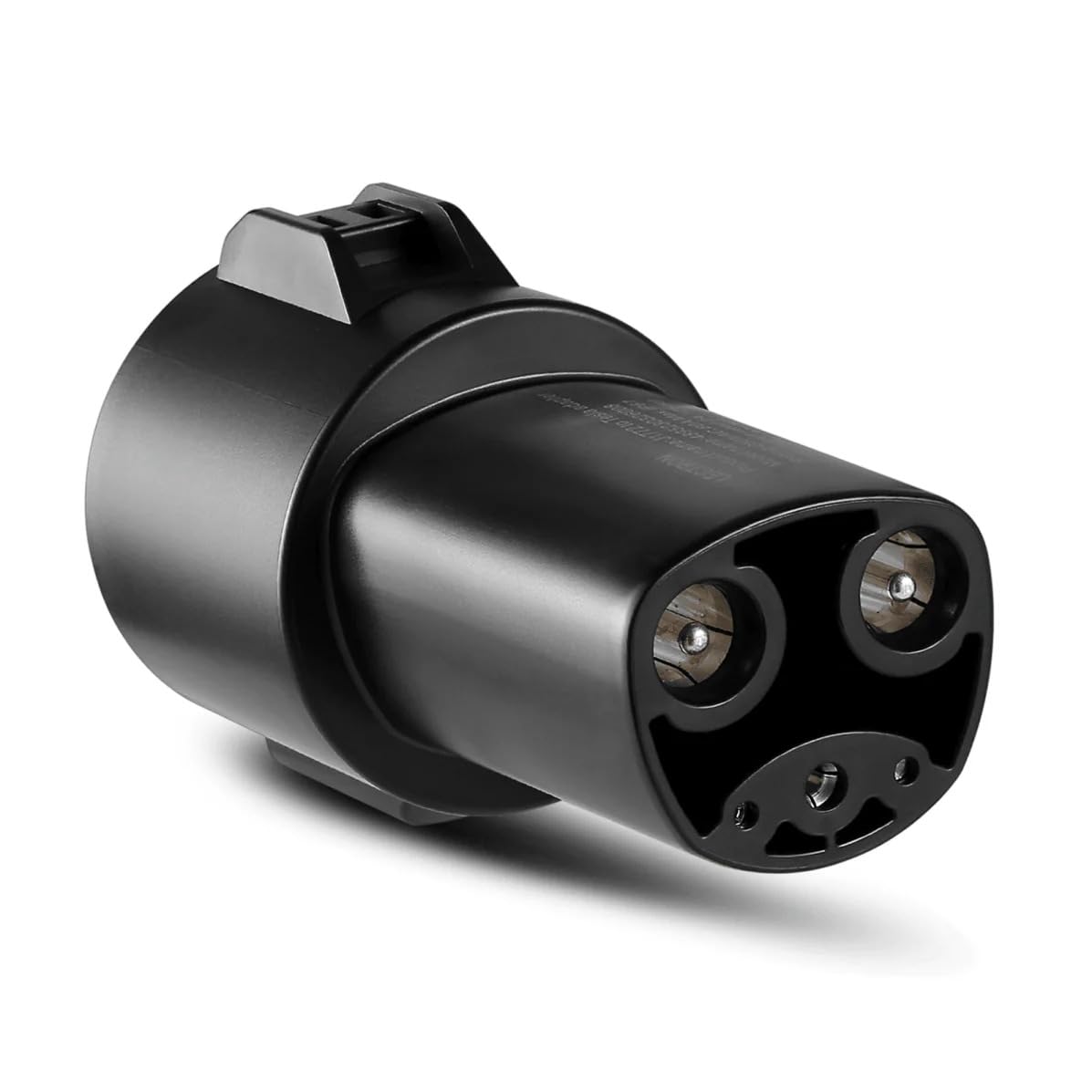
The Lectron J1772-to-NACS adapter solves the most common compatibility gap for Tesla owners: accessing the thousands of J1772 public and workplace chargers that outnumber Superchargers in many metro areas. Rated for a full 80A continuous current at 240V, it matches the capacity of virtually any Level 2 station on the market, so your car charges as fast as the station allows. Build quality centers on a compact plastic housing that shrugs off weather with an IP67 seal, making it safe for outdoor pedestals even during rain or snow.
Six months of owner reports confirm consistent handshake speeds—plug in, wait three seconds, and the LED on the charger turns green. No reports of intermittent disconnections or overheating, which is a strong sign that the internal contacts maintain proper tension. The adapter weighs little enough to live in the glove box permanently, yet the latch mechanism feels positive and does not rattle loose on rough roads.
On the CCS front, it is worth noting that this adapter covers only AC charging. To use a Tesla Supercharger with a non-Tesla EV, you would need the separate NACS-to-CCS unit covered later. The Lectron J1772 adapter also fits non-Tesla NACS-alliance EVs, making it a future-proof choice as automakers migrate to the unified port standard. Pair it with a ChargePoint or Grizzl-E unit and you have a completely flexible home-and-away setup.
What works
- Full 80A throughput with no thermal throttle reported
- IP67 weather rating for outdoor use in any season
- TUV and UL 2251 certified for peace of mind
- Compact enough to store in the glove box
What doesn’t
- No CCS DC fast-charging support—only AC Level 1/2
- Plastic housing may feel less premium than metal-bodied alternatives
- Occasionally sticks to ChargePoint cable boot after removal
2. Lectron NACS to CCS Adapter (Vortex Plug)
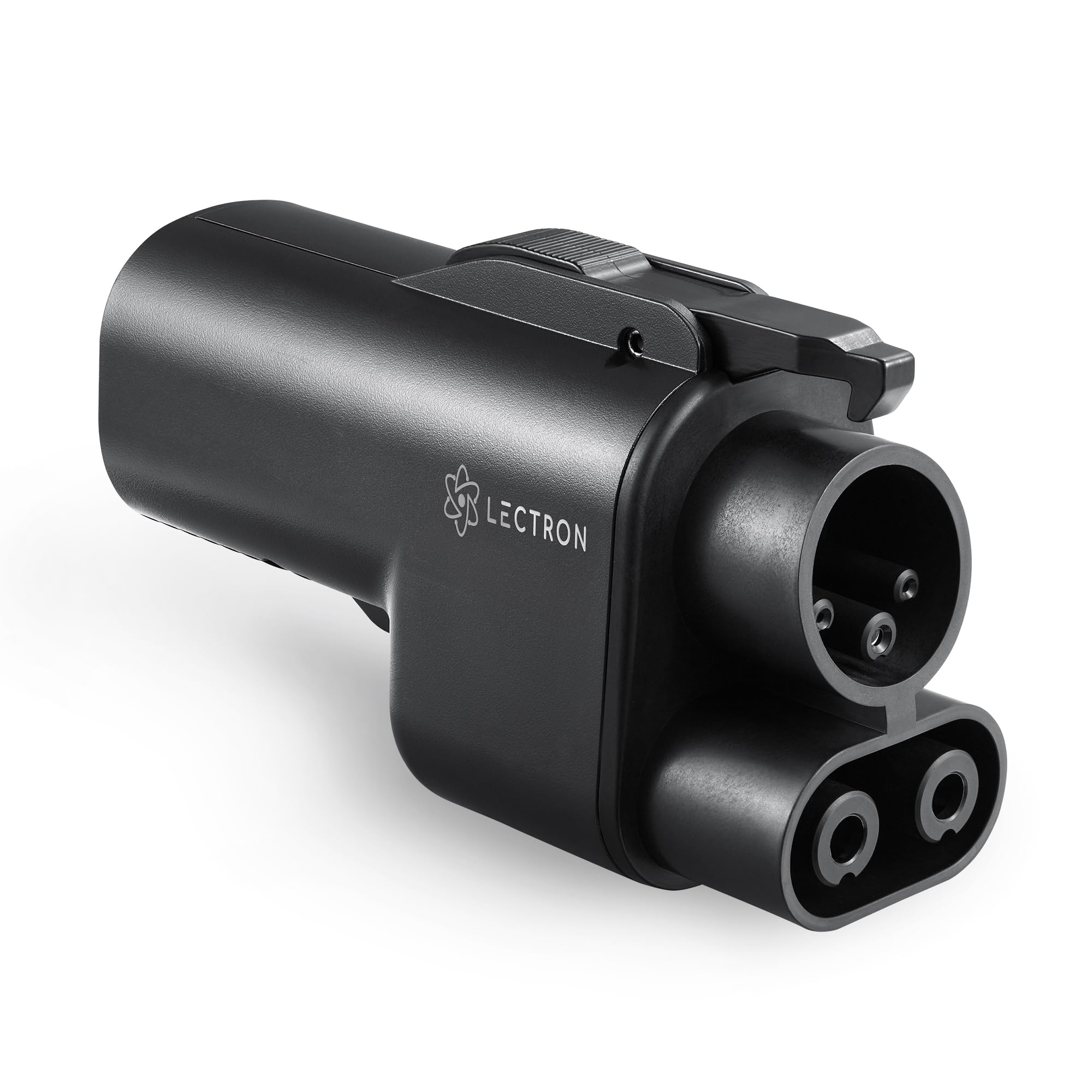
For owners of CCS1 EVs like the Chevrolet Blazer EV, Ford Mustang Mach-E, or Hyundai Ioniq 5, gaining access to Tesla’s V3 and V4 Supercharger network is transformative. The Lectron Vortex Plug handles this conversion by accepting the NACS connector on the input side and outputting CCS1 at the vehicle port. Its internal conductors are rated for 500A and 1,000V, which means the adapter itself will never be the bottleneck even at the most powerful 350 kW charging stalls.
Owner feedback from Blazer EV drivers describes seamless pairing: plug into the Supercharger handle, attach the adapter to the car, and charging starts within seconds. The locking mechanism on both sides clicks with authority, and the matte-black finish resists scratches from repeated handling. One owner noted that the Tesla cable length can be short if the vehicle’s charge port is rear-mounted, requiring you to park diagonally or take two spaces—a car geometry issue, not an adapter flaw.
The adapter’s size is the primary trade-off. It occupies roughly the space of a large wallet and does not include a storage pouch, so early owners must retain the bulky retail packaging for transport. Weight is moderate, but the body feels solid enough to survive being tossed into a trunk bin. Note that compatibility depends on your automaker having signed a Supercharger access agreement—check your manufacturer’s current list before purchasing.
What works
- Unlocks 25,000+ Tesla Supercharger stalls for CCS1 vehicles
- Massive 500A / 1,000V electrical rating for future-proofing
- Secure dual-side locking prevents accidental disconnection
- Fits many 2024-2025 CCS1 models with Supercharger access
What doesn’t
- No storage case included; requires bulky box for clean transport
- Compatibility limited to automakers with active access agreements
- Tesla supercharger cables may be short for front-port EVs
3. M1A2 NEMA 6-50P to 14-50R Adapter Cord
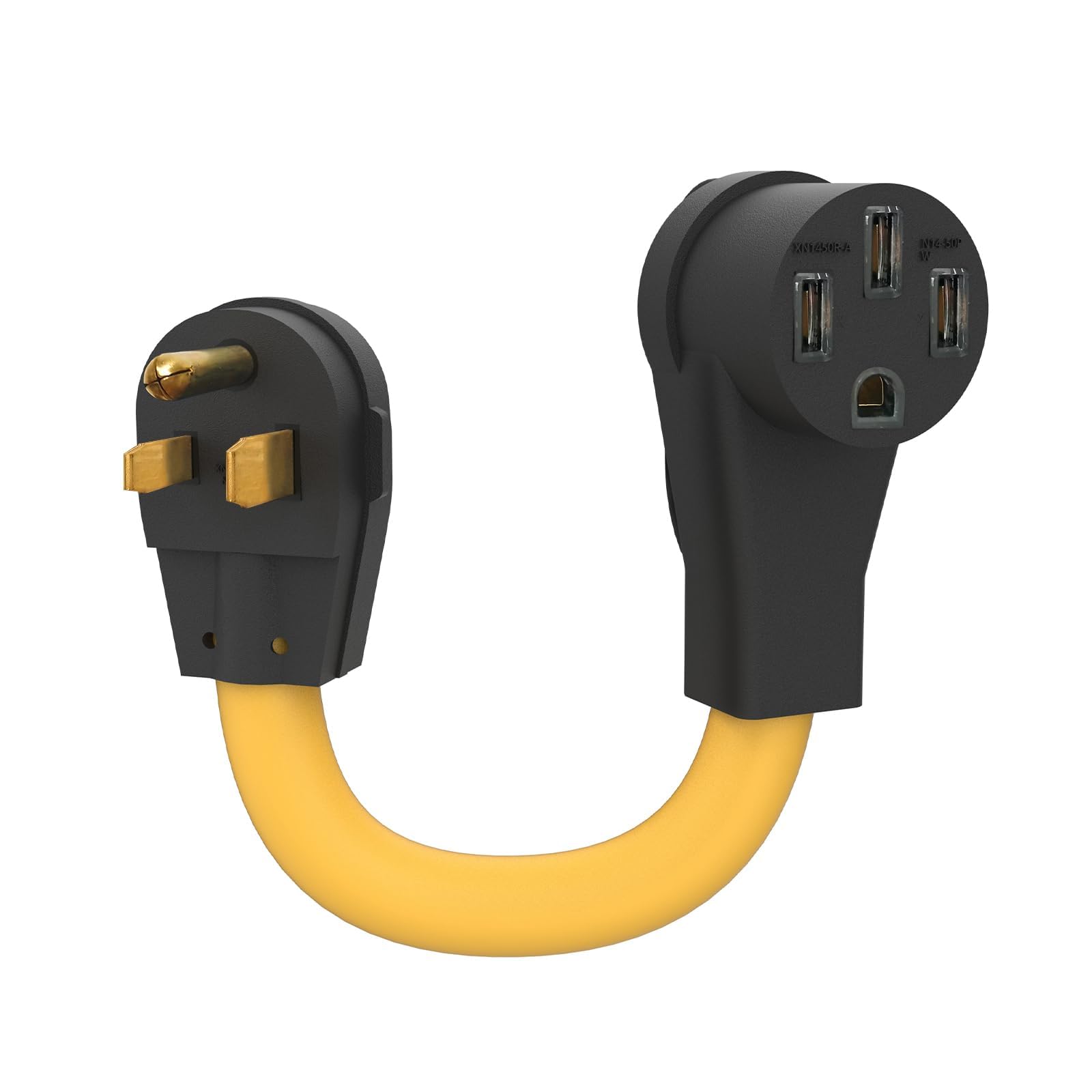
The most common home EV charging outlet is the NEMA 14-50 R (four-prong, 50-amp), but many workshops and garages are wired with a NEMA 6-50 P (three-prong, 50-amp) for welders or air compressors. The M1A2 adapter bridges that gap in a single foot of heavy 6/3 wire, letting you plug a standard EVSE with a 14-50 plug into a 6-50 receptacle. The yellow PVC jacket is highly visible and flame-resistant, a practical safety feature when the cord lies on a concrete floor.
Customer reports highlight the 6 AWG conductors as a meaningful upgrade over thinner 8 or 10 AWG cords that can overheat under sustained 40-amp loads. The ergonomic handle on the 6-50 male end reduces the finger strain of plugging into tight receptacles. ETL certification confirms that the internal solder joints and strain relief meet recognized safety standards, which is not guaranteed on unbranded cables at this price point.
Critical note: this is not a product for dryer outlets. The 6-50 plug has a flat neutral blade and ground pin that looks similar to a 10-30 but is electrically distinct. Owners who tried plugging it into a 30-amp dryer circuit risked overheating because the 50-amp cord set is not fused for 30-amp protection. Always confirm your wall outlet matches the 6-50 configuration (two slanted hot blades and a round ground) before purchasing.
What works
- Genuine 6 AWG copper reduces heat buildup at high current
- Converts common welder outlets for use with standard EVSEs
- ETL certified with flame-resistant jacket for safety
- Ergonomic grip handle eases plugging into flush receptacles
What doesn’t
- Not compatible with NEMA 10-30 or 14-30 dryer outlets
- One-foot length offers no routing flexibility
- 50-amp cord on a 30-amp circuit can be a safety mismatch if misused
4. WenStorm NEMA 10-30 Adapter for Tesla
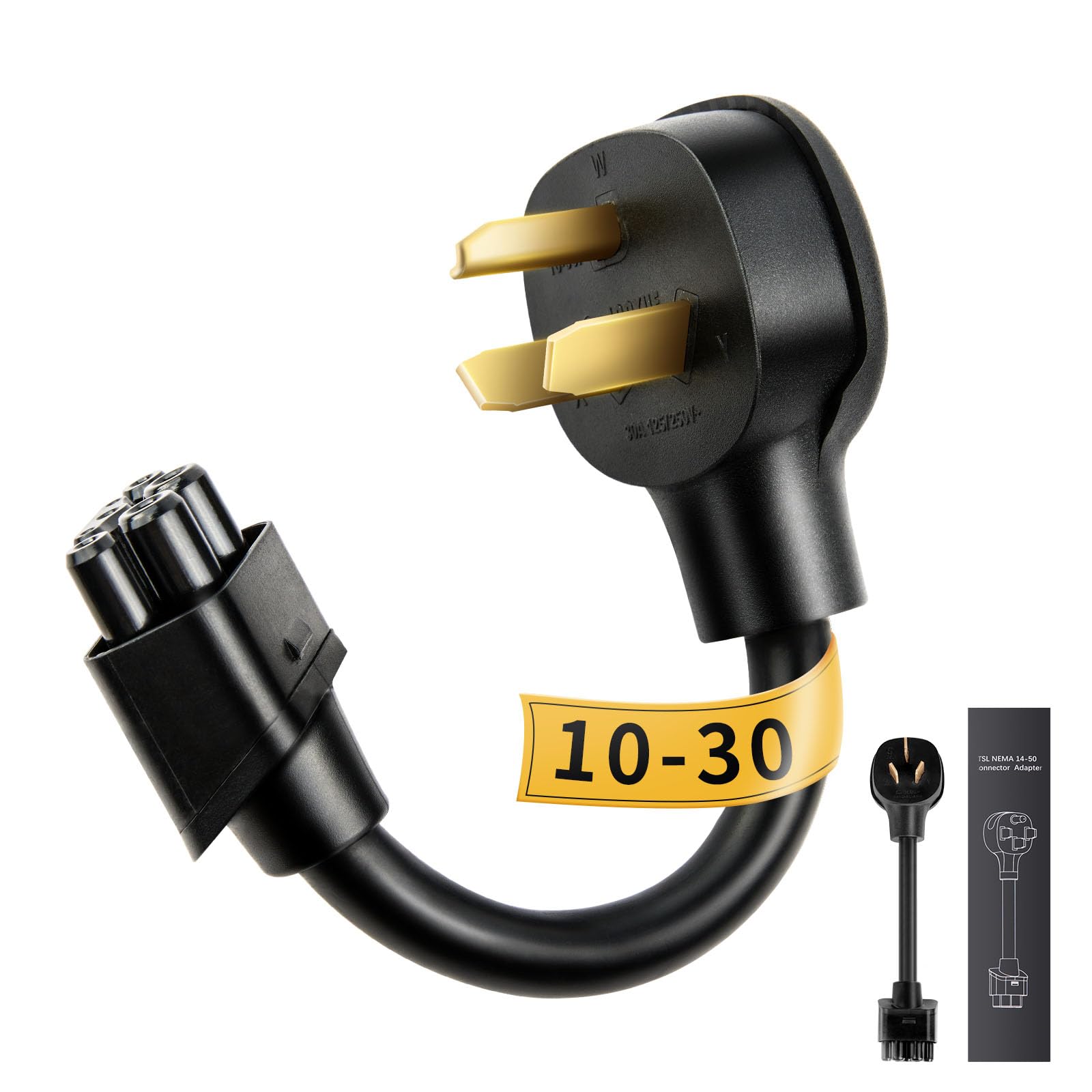
Many older homes built before the mid-1990s have NEMA 10-30 outlets in the laundry room—a three-prong, 30-amp configuration lacking a dedicated ground wire. The WenStorm adapter lets Tesla Gen 2 Mobile Connector owners tap into that existing dryer outlet for Level 2 charging without rewiring the house. The plug body features the characteristic L-shaped neutral blade on top and two slanted hot blades below, making visual identification straightforward before purchase.
Owner reports from campground and home use indicate steady 24A charging (5.7 kW) with no voltage drop or thermal events. The copper-alloy pins are nickel-plated for corrosion resistance, and the inclusion of an integrated thermal sensor allows the Tesla onboard computer to reduce current if the connection temperature rises. One RV owner specifically praised the adapter for enabling 24-amp charging at a 30-amp campsite hookup—enough to replenish a Model 3 overnight.
The WenStorm body is shorter than many competitors, which helps when the outlet is recessed behind a dryer. A few notes on limitation: the adapter is designed exclusively for Tesla’s Gen 2 Mobile Connector and will not function with third-party EVSEs or older Gen 1 Tesla units. Additionally, because the NEMA 10-30 lacks a separate ground path, some inspectors recommend restricting this adapter to temporary or monitored charging rather than permanent daily use.
What works
- Taps into existing 10-30 dryer outlets without electrician work
- Maintains 24A continuous output without heat issues
- ETL listed with nickel-plated pins for longevity
- Compact body fits tight spaces behind utility appliances
What doesn’t
- Works only with Tesla Gen 2 Mobile Connector (not Gen 1 or third-party)
- 10-30 outlet lacks dedicated ground; not ideal for permanent installs
- Verified 24A max—no headroom for high-power charging
5. LENZ NEMA 14-30 Adapter for Tesla

Newer dryer outlets use the four-prong NEMA 14-30 configuration, which includes a dedicated ground conductor and neutral. The LENZ adapter addresses that specific receptacle pattern for Tesla Gen 2 and Gen 3 Mobile Connector owners, delivering 24A at 240V for reliable Level 2 charging. Build quality centers on heavy-gauge copper conductors and reinforced strain relief at both ends, reducing the risk of internal wire breakage from repeated insertion cycles.
Owner reports are largely positive, with users praising the secure fit and consistent 5.8 kW charging rate. The integrated thermal sensor relays temperature data back to the Tesla onboard computer, which can automatically reduce amperage if the plug overheats—a safety layer that generic adapters lack. ETL listing to UL Standard 817 and CSA C22.2 No. 21 provides independent validation of the internal construction.
A single detailed review raised a concern about the plug heating up when pushed beyond 24A in cold weather, causing the Tesla to throttle back to 16A. LENZ clearly rates the adapter for 24A maximum, so this behavior occurs when the vehicle attempts to draw higher current after an over-the-air update or user configuration error. As long as you set the charge current to 24A in the Tesla app, the thermal margin is sufficient for daily use in most climates.
What works
- Matches modern 14-30 dryer outlets with ground wire included
- Thermal sensor communicates with Tesla computer for safety
- ETL certified to UL 817 and CSA standards
- Heavy copper conductors hold up to daily cycling
What doesn’t
- Not compatible with non-Tesla EVs or third-party chargers
- One report of throttling when current exceeds 24A in cold weather
- Incompatible with older 10-30 outlets (different blade shape)
Hardware & Specs Guide
Conductor Gauge and Material
Every charging plug is only as strong as the wire inside it. 6 AWG pure copper handles 50-amp loads with minimal voltage drop, while 8 or 10 AWG copper-clad aluminum can run hot under sustained 40-amp draws. Look for explicit listings of “6 AWG copper” or “heavy-gauge tinned copper” in the product description. Aluminum wiring is lighter and cheaper but requires larger diameters to match copper’s current capacity, making it less practical for portable adapters.
Thermal Management Features
Heat is the primary enemy of charging reliability. Premium adapters embed a thermistor (thermal sensor) that communicates with the vehicle’s charge controller. When the plug temperature exceeds a safe threshold—typically around 50°C—the vehicle automatically reduces current to prevent meltdown. This feature is standard on OEM Tesla adapters but varies widely among third-party units. Check for phrases like “integrated thermal sensor” or “temperature-aware charging” in the specifications.
Weather and Environmental Sealing
Outdoor charging requires protection from rain, snow, and road splash. The IP67 rating means the adapter is fully dust-tight and can survive immersion in one meter of water for 30 minutes. For garage-only use, such a high rating is unnecessary, but any adapter that lives in a vehicle and charges at public stations benefits from robust sealing. Pay attention to the connector boot as well—some adapters use rubber or silicone boots that maintain seal integrity over years of sun exposure.
Certification Marks
UL, ETL, CSA, and TUV marks indicate that the adapter underwent independent safety testing. UL 2251 specifically covers plugs, receptacles, and couplers for electric vehicles. A product bearing that mark has passed tests for dielectric voltage withstand, temperature rise, and strain relief endurance. Uncertified adapters can lack internal fusing or use solder joints that fail under thermal cycling, so these logos are not optional—they are the baseline for safe long-term use.
FAQ
Can I use a NEMA 14-50 adapter on a 30-amp outlet?
Is a J1772 to Tesla adapter safe for daily outdoor use?
Will a CCS adapter work with any electric vehicle?
Why does my adapter get warm during charging?
Final Thoughts: The Verdict
For most buyers, the best electric vehicle plug winner is the Lectron J1772 to Tesla Adapter because it provides the broadest compatibility across public Level 2 stations while carrying a full 80A rating and IP67 weather protection. If you need to tap into an existing dryer outlet, the WenStorm NEMA 10-30 is the most reliable budget-friendly option. And for CCS1 owners craving access to the Supercharger network, nothing beats the Lectron Vortex Plug.

Certification: BSc in Mechanical Engineering
Education: Mechanical engineer
Lives In: 539 W Commerce St, Dallas, TX 75208, USA
Md Amir is an auto mechanic student and writer with over half a decade of experience in the automotive field. He has worked with top automotive brands such as Lexus, Quantum, and also owns two automotive blogs autocarneed.com and taxiwiz.com.