Choosing a first real electric scooter for an 11-year-old means balancing enough thrill to keep them excited with speed and safety parameters that let parents sleep at night. At this age, kids are tall enough for adjustable handlebars, coordinated enough for thumb throttles, and responsible enough for speed modes—but the scooter itself needs to enforce those limits.
I’m Amir — the founder and writer behind Four Wheel Ask. My approach to recommending kids’ electric scooters relies on weeks of cross-referencing motor output data, battery cell chemistry, brake response reports, and long-term owner feedback across multiple price tiers.
After reviewing dozens of models, we’ve identified the safest and most reliable options for the best electric scooter for 11 year old riders today.
How To Choose The Best Electric Scooter For 11 Year Old
An 11-year-old sits right in the middle of the kids’ scooter market — old enough to handle real features but young enough that safety guardrails still matter. Here are the key factors that separate a smart buy from a regretful one.
Speed Modes and Progressive Throttles
A scooter with a single fixed speed is a liability. Look for three-speed selectors (typically 5–6 mph, 8–9 mph, and 10 mph) that let your child build confidence gradually. Push-start or kick-start technology prevents the motor from engaging until the scooter is already moving, eliminating those scary lurch-and-launch moments that cause tumbles.
Battery Chemistry and Real Range
Manufacturer range claims assume a lightweight rider on flat pavement at constant speed. For an 11-year-old, expect roughly 60–70 percent of the advertised range in mixed riding. Lithium-ion cells are standard at this price level, but charge time matters — anything over six hours means the scooter is down for a full school day before the next ride.
Brake Systems and Stopping Distance
Rear foot brakes alone are not enough for a rider pushing 90–110 pounds. Dual braking — a hand-operated electronic brake paired with a rear fender stomp brake — gives the best real-world stopping power. Test reviews consistently show that kids stop more confidently when they have a hand brake option rather than relying solely on foot pressure.
Build Quality and Adjustability
An 11-year-old can grow three inches in a year. Adjustable handlebars that raise in 2–3 inch increments extend the scooter’s usable life by multiple seasons. Aluminum frames keep weight under 16 pounds so kids can carry the scooter up stairs or load it into the car without help. Avoid plastic-heavy decks that flex under adult-weight riders.
Quick Comparison
On smaller screens, swipe sideways to see the full table.
| Model | Category | Best For | Key Spec | Amazon |
|---|---|---|---|---|
| FanttikRide C9 Pro | Electric Scooter | Best Overall Balance | 5/8/10 mph, 5 mi range, 14 lbs | Amazon |
| Caroma E35 | Electric Scooter | Performance & Range | 5/8/10 mph, 7 mi range, 13.6 lbs | Amazon |
| iScooter IK3 | Electric Scooter | Design & Visibility | 3/6/10 mph, 154 lb capacity | Amazon |
| Gyroor H30 Max | Electric Scooter | Built-In Bluetooth Fun | 6/8/10 mph, 13.2 lbs, BT speaker | Amazon |
| WEELMOTION S31 | Electric Scooter | Lightweight Premium Build | 10 mph, 5 mi range, 15.4 lbs | Amazon |
| ECOROAD EK6 | Electric Scooter | Beginner Confidence | 3/6/10 mph, 7 mi range, 4 hr charge | Amazon |
| Hiboy S2 Lite | Electric Scooter | Teen & Campus Commute | 9/13 mph, 10.6 mi range, 23.2 lbs | Amazon |
| Gotrax GKS Mini | Electric Scooter | Entry-Level Budget Pick | 7.5 mph, 3.75 mi range, 16.3 lbs | Amazon |
| MEGAWHEELS MAX001 | Electric Scooter | Long-Range Premium Option | 15.5 mph, 31 mi range, 265 lb cap | Amazon |
In‑Depth Reviews
1. FanttikRide C9 Pro Kids Electric Scooter
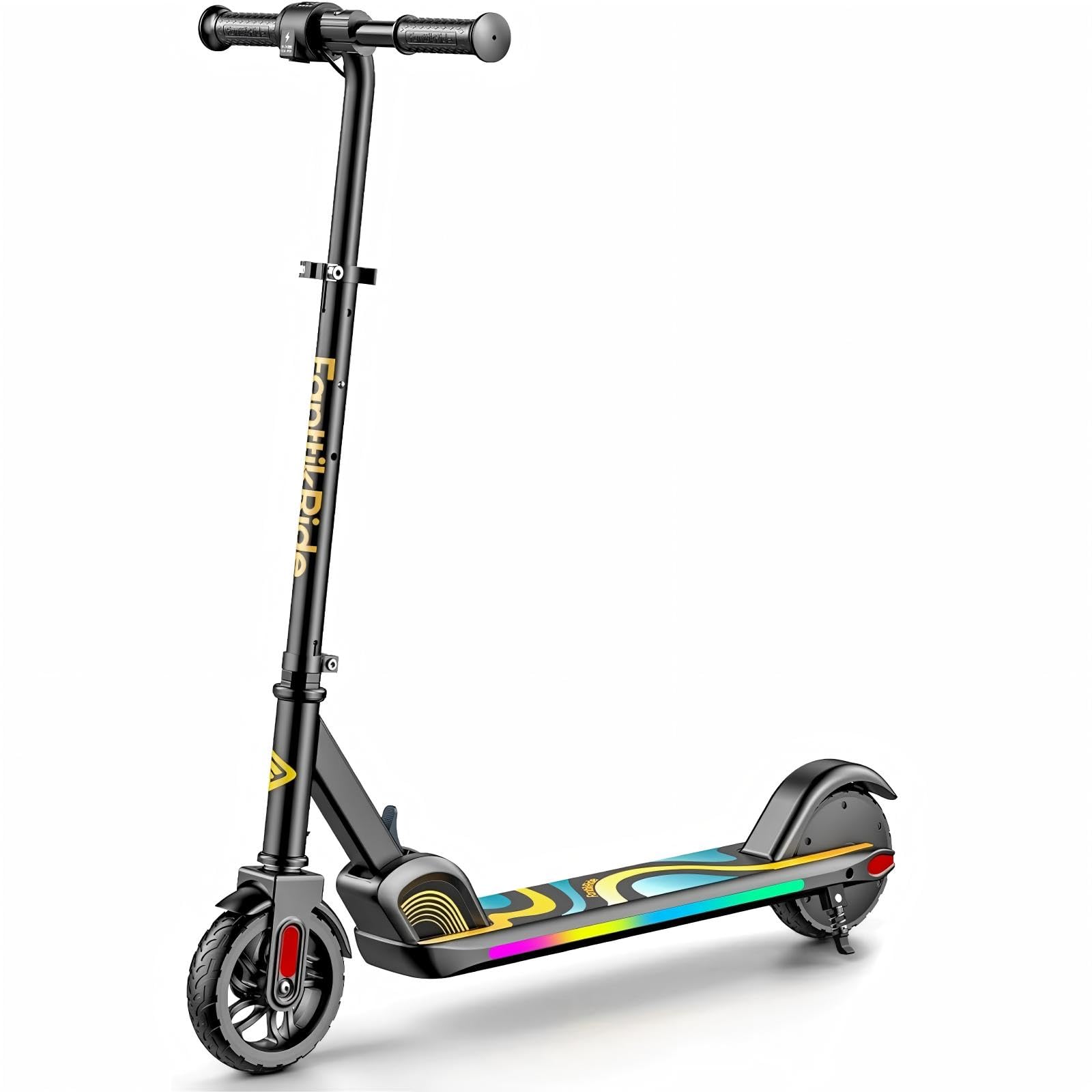
The FanttikRide C9 Pro hits the rare sweet spot where sufficient power meets genuine parental control. Its 150W motor delivers three distinct speed tiers — 5, 8, and 10 mph — so an 11-year-old can start slow and work upward without ever exceeding a comfortable ceiling. The 5-mile range is conservative but honest; owner reports consistently confirm at least 4 miles of mixed-surface riding before the battery indicator dips.
Build quality stands out at this price level. The aluminum frame keeps the scooter at 14 pounds, making it light enough for a child to carry through a doorway or lift into a trunk unassisted. The rear foot brake combined with an electronic EABS brake provides dual stopping confidence, and the six anti-skid rubber wheels deliver noticeably better traction than the hard plastic wheels found on cheaper alternatives.
The LED pedal lights with five flash patterns add genuine safety value beyond the cool factor — multiple reviewers noted that drivers noticed their kids earlier during dusk rides. The one-step folding mechanism works reliably in practice, and the adjustable handlebar with three height settings accommodates growth from roughly 3.9 to 5.2 feet. This is the scooter that balances every priority a parent of an 11-year-old should have.
What works
- Three speed modes give progressive learning curve without feeling restrictive
- Aluminum frame keeps weight manageable for young riders to carry
- Pedal lights with multiple patterns improve visibility in low light
What doesn’t
- 5-mile range is adequate but not generous for longer neighborhood loops
- Charge time of 5 hours means a full recharge requires planning
2. Caroma E35 Kids Electric Scooter
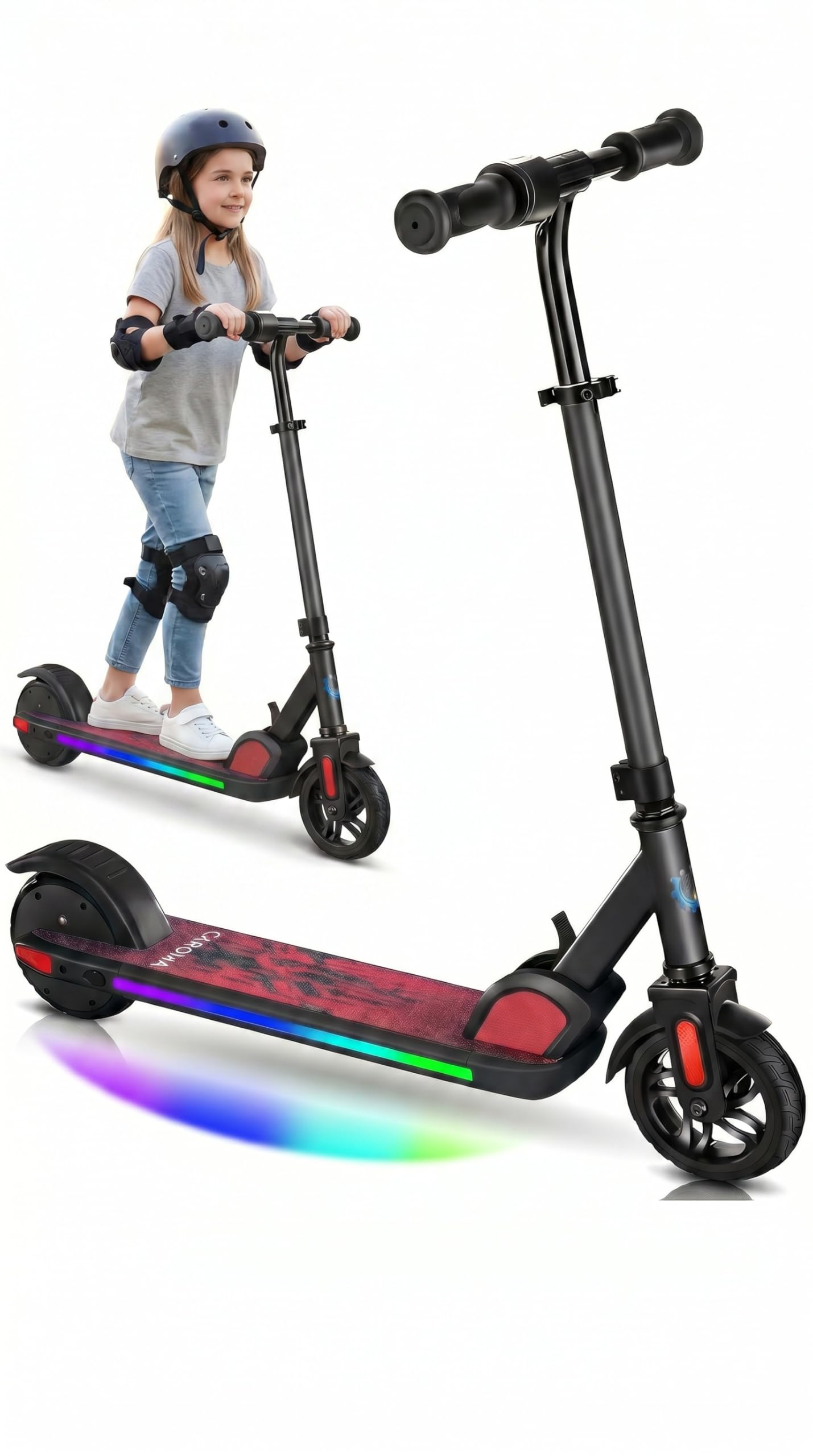
The Caroma E35 stands out for its honest 7-mile range — a meaningful step up from the 4–5 mile class without jumping into premium pricing territory. The 150W motor pushes the scooter to a 10 mph top speed, but the three-speed selector (5, 8, and 10 mph) gives parents control over the learning curve. UL-2272 certification adds a layer of electrical safety that should be non-negotiable for this age group.
Assembly is genuinely tool-light; a single screw attaches the handlebar, and the adjustable height mechanism uses a manual clamp that requires no tools to raise or lower. Owners consistently praise the rainbow LED lights near the deck for keeping kids visible during evening rides. The 13.6-pound weight makes it light enough for an 11-year-old to handle independently, and the one-step folding system collapses the scooter into a compact package for trunk storage.
Long-term reliability data from owner reports shows the scooter holds up well up to about 90 pounds of rider weight. Heavier riders — above 100 pounds — may notice reduced hill-climbing power and slightly shorter battery life. The rear foot brake is simple and effective for flat terrain, though riders on steeper gradients will wish for a front brake assist. For most suburban and neighborhood riding, this is a well-rounded performer.
What works
- 7-mile range leads the mid-tier class for real-world ride time
- Tool-free handlebar adjustment extends usable life across growth spurts
- UL-2272 certified for electrical safety peace of mind
What doesn’t
- Performance drops noticeably with riders over 100 pounds
- Single rear brake lacks stopping power on moderate hills
3. iScooter IK3 Serious Electric Scooter
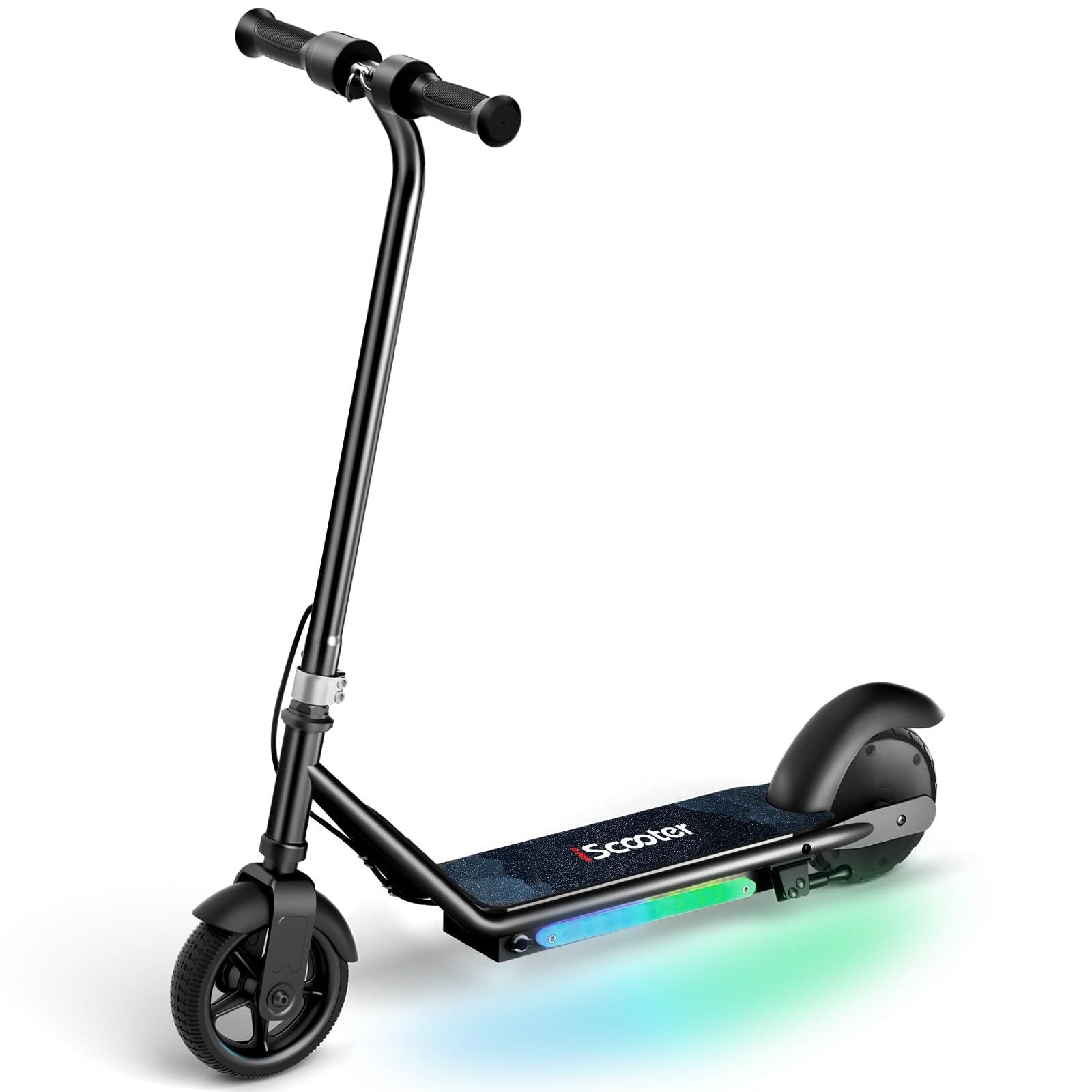
The iScooter IK3 introduces a genuinely useful innovation with its magnetic charging port — no more wrestling with tiny USB plugs or worrying about bent pins. The 150W motor offers three speed settings at 3, 6, and 10 mph, with the lowest setting being slow enough for a complete beginner to build confidence on flat pavement. The 154-pound weight capacity means this scooter can realistically last through the tween years and into early teens.
Colored ambient lights ring the deck and provide excellent side visibility that many scooters in this price range omit. The LED display shows speed and battery level clearly, even in direct sunlight. The dual braking system — electronic hand brake plus foot brake — gives riders a choice that adapts to their reaction style. Owner feedback consistently praises the customer support responsiveness when issues do arise.
Assembly takes about 10 minutes out of the box, and the 17.6-pound weight is slightly heavier than the mid-tier average but still manageable. The frame height has been calibrated for ages 6–12, and the 38.8-inch handlebar height at full extension fits most 11-year-olds comfortably. The push-start safety feature prevents the motor from engaging until the scooter reaches a walking pace, eliminating the sudden-jerk risk that spooks new riders.
What works
- Magnetic charging port is genuinely easier for kids to use independently
- 154-pound capacity gives several years of growth room
- Customer support rated highly for prompt replacement handling
What doesn’t
- Heavier than some competitors at 17.6 pounds
- Some units arrive with brake adjustments needed out of the box
4. Gyroor H30 Max Electric Scooter for Kids

The Gyroor H30 Max sets itself apart with a built-in Bluetooth speaker mounted on the bottom of the deck — a feature that turns every ride into a rolling playlist session. Beyond the audio gimmick, the scooter packs a 150W motor with three speed settings (6, 8, and 10 mph) and a 21.6V battery that provides consistent power delivery. The UL-2272 certification confirms the electrical system meets recognized safety standards.
The adjustable handlebar offers three height positions (34, 36, and 38 inches), which covers the growth range from roughly 8 to 14 years old. At 13.2 pounds, this is one of the lighter options in the premium tier, making it easy for kids to carry. The dual brake system combines an electronic brake with a rear foot brake, and owner reports indicate the stopping distance is notably shorter than single-brake competitors.
The flashy panel lights and Bluetooth functionality are the headline features, but the real value is in the build quality. Multiple owners report daily use over a full year with no mechanical or electrical failures. The 10-degree hill-climb rating is modest but realistic for suburban driveways and gentle slopes. The main compromise is the 5-hour charge time, which means the scooter needs overnight charging for next-day use.
What works
- Built-in Bluetooth speaker adds fun factor that kids genuinely love
- 13.2-pound weight is among the lightest for an adjustable scooter
- Dual brake system provides reliable stopping in varied conditions
What doesn’t
- 5-hour charge time limits same-day double sessions
- Bluetooth pairing occasionally requires resetting between rides
5. WEELMOTION S31 Electric Scooter for Kids

The WEELMOTION S31 delivers UL-2272 certified safety and a 150W motor in a 15.4-pound package that prioritizes portability. The 10 mph top speed is paired with push-start technology that requires the scooter to reach 1.8 mph before the motor engages — a feature that directly addresses the most common cause of beginner crashes. The front headlight and RGB pedal lights provide 360-degree visibility that sets a new standard at this price point.
One thoughtful detail is the default speed display in km/h, which can be switched to mph by pressing the power button three times. This minor UI quirk is mentioned in multiple owner reviews, and the fact that it can be changed means it becomes a non-issue after the initial setup. The dual braking system — front electronic plus rear fender — offers the most comprehensive stopping configuration in the mid-tier group.
The 5-mile range is adequate for neighborhood riding but falls short of the 7-mile competitors. However, the 175-pound weight capacity means this scooter can transition from an 11-year-old to a smaller adult rider without frame stress. The one-step folding mechanism is genuinely quick, and the aluminum frame resists the flex that plagues cheaper metal-alloy decks. For families who prioritize safety certifications and lighting above maximum range, this is a compelling choice.
What works
- Front headlight plus RGB pedal lights provide best-in-class visibility
- 175-pound capacity extends usable life well beyond the tween years
- UL-2272 certified with overheat and short-circuit protection
What doesn’t
- 5-mile range is sufficient but trails class leaders by 2 miles
- Default km/h display requires initial setup switch to mph
6. ECOROAD EK6 Kids Electric Scooter
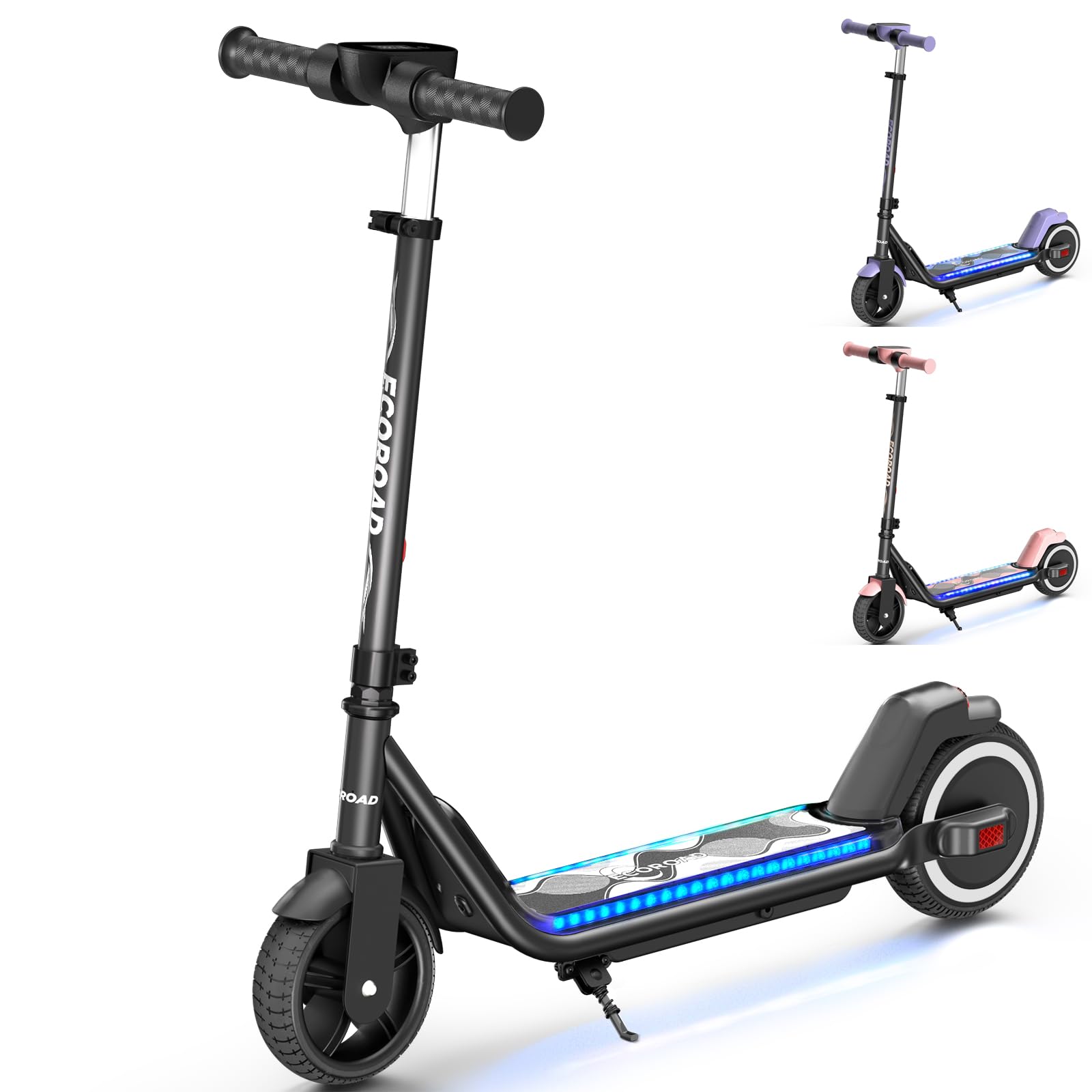
The ECOROAD EK6 differentiates itself with the fastest charge time in the budget tier — just 4 hours to full capacity, compared to the 5–6 hour average. The 150W motor provides three speeds (3, 6, and 10 mph) that cover the full beginner-to-confident progression. The 7-mile range claim is competitive for the price, and the aluminum frame construction avoids the cheap steel weight penalty.
The adjustable handlebar is a welcome inclusion at this price point, accommodating riders from 3.9 to 5.2 feet with a tool-less clamp mechanism. The dual brake system — finger-dial electronic brake plus rear fender foot brake — gives riders two stopping options. Owner reviews highlight the textured rubberized deck surface that provides good traction even with dusty shoes or on slightly damp pavement.
Build quality reports are generally positive, with the aluminum frame showing no bending or warping after months of use. The main reliability concern appears to be quality control at the unit level — a small number of owners received units that failed to power on, though customer support responsiveness varies. For families who want the fastest recharge time in the segment and are comfortable with a slightly higher QC variance, the EK6 offers strong value.
What works
- 4-hour charge time is fastest in the budget-friendly tier
- Textured rubberized deck provides reliable wet-weather traction
- Three speed settings give genuine beginner-to-intermediate progression
What doesn’t
- Quality control variance with some units arriving non-functional
- Customer support responsiveness is inconsistent based on owner reports
7. Hiboy Electric Scooter for Teens
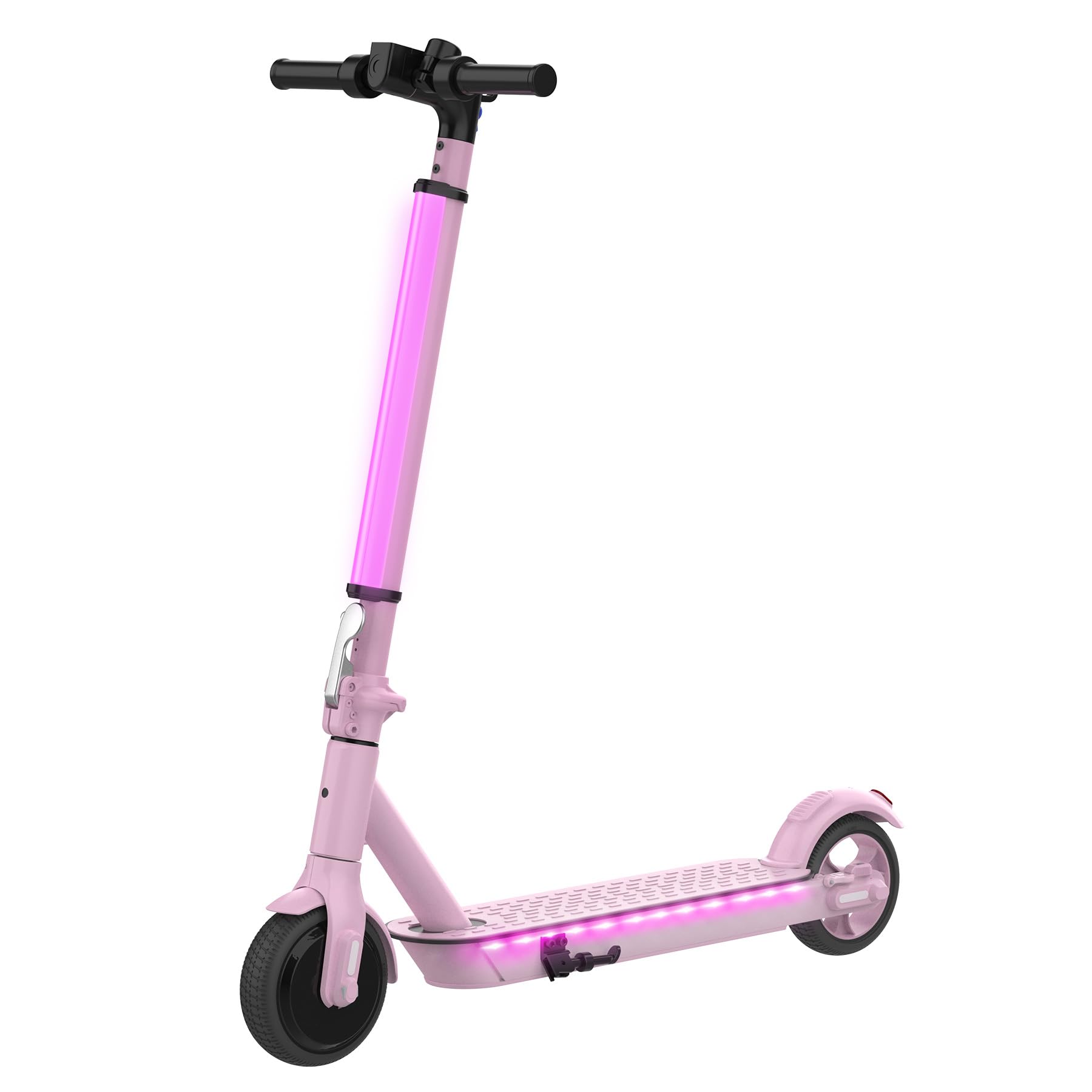
The Hiboy S2 Lite bridges the gap between kids’ scooters and adult commuters with a 250W motor that peaks at 350W, delivering a 13 mph top speed that suits confident 11-year-olds ready for more range. The 10.6-mile range is nearly double the mid-tier average, making this a viable option for kids who want to ride to a friend’s house several blocks away without range anxiety. UL-2272 certification with SGS testing adds third-party verification.
The two-speed selector (9 mph and 13 mph) is simpler than the three-mode systems on dedicated kids’ scooters, but the lower setting is appropriate for beginners while the higher mode satisfies experienced riders. The 23.2-pound weight is notably heavier than the sub-16-pound kids’ scooters, so an 11-year-old may need help carrying it up stairs. The dual braking system and 6.5-inch solid tires handle 15-percent grades with confidence.
The fixed handlebar at 40.6 inches is designed for riders 4.3 to 5.9 feet tall, which covers the 11-year-old range but lacks the adjustability found on dedicated kids’ models. The pink color option is a nice differentiator for families looking for non-black designs. Owner reviews consistently praise the build quality and reliability, with several reporting daily use over multiple years with only routine maintenance needed.
What works
- 10.6-mile range dominates the teen-scooter category for ride time
- 350W peak motor handles hills and heavier riders with ease
- Proven reliability record across long-term owner reports
What doesn’t
- 23.2-pound weight is heavy for an 11-year-old to carry independently
- Fixed handlebar lacks the grow-with-me adjustability of competitors
8. Gotrax GKS Mini Electric Scooter
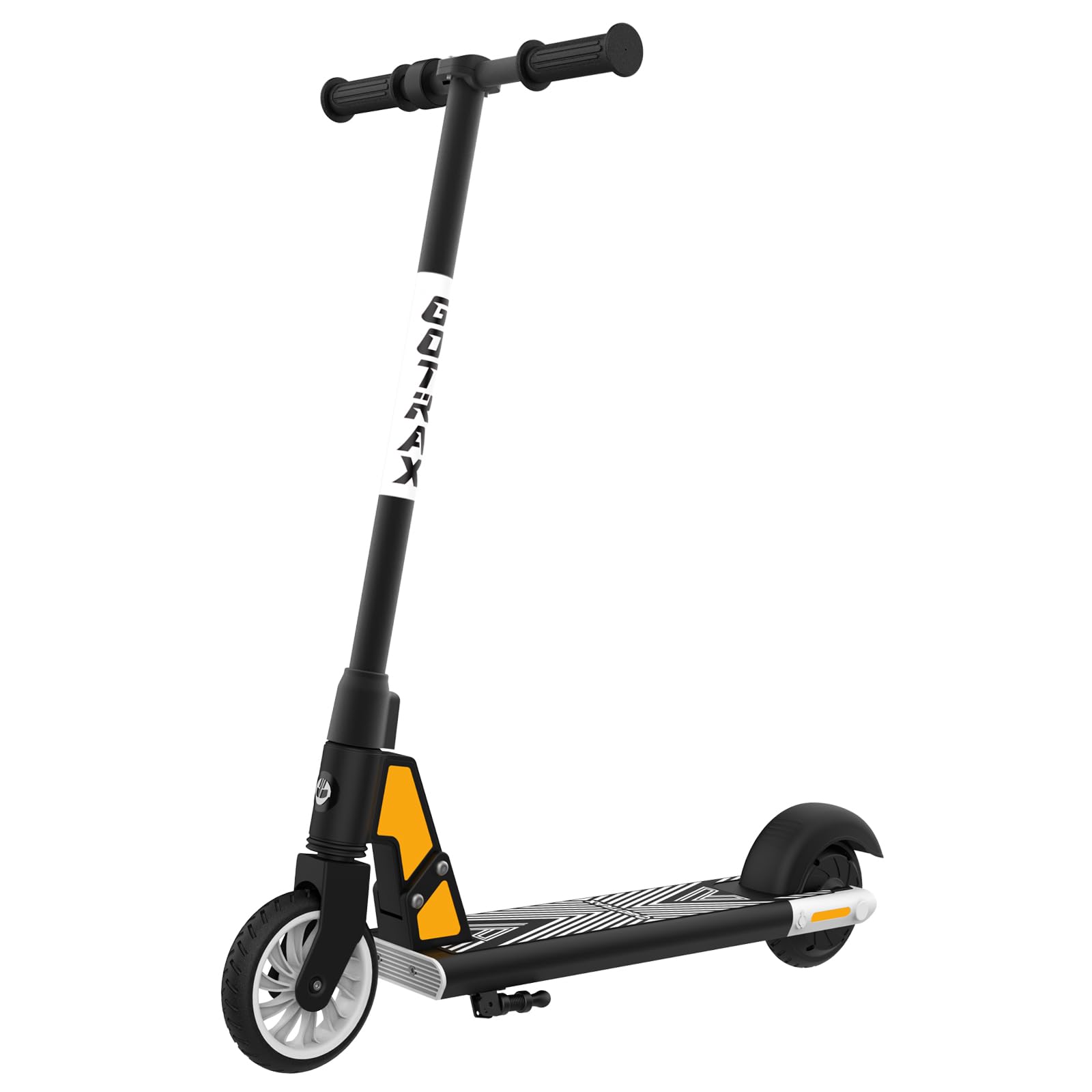
The Gotrax GKS Mini is the most accessible entry point for families who want UL-2272 certified safety without a large investment. The 150W motor delivers a fixed 7.5 mph top speed — slower than the adjustable-speed competitors but genuinely safe for a first-time rider who has never operated a throttle-based vehicle. The 3.75-mile range is the shortest in this lineup, but it matches the typical attention span and energy level of a single play session.
The dual-start system requires the rider to push off at 1.5 mph before the motor engages, which eliminates the scary lurch that can send a beginner flying. The electronic brake plus rear foot brake gives two stopping options, though the 16.3-pound weight is the heaviest in the budget tier and may feel substantial for a smaller 11-year-old to carry. Assembly takes 5–10 minutes with just a few screws.
Owner reviews are mixed on long-term reliability. While many families report happy kids riding for months without issues, a notable subset of units developed battery charging problems after a few uses. The 90-day warranty window is tight, especially for families in colder climates who may not test the scooter thoroughly before the warranty expires. For budget-constrained families who accept the reliability gamble, the GKS Mini works as a low-commitment starter.
What works
- UL-2272 certification at the lowest entry price point in the category
- Push-start safety feature prevents accidental throttle engagement
- Simple 5–10 minute assembly with basic tools
What doesn’t
- 3.75-mile range is the shortest and limits ride duration
- 90-day warranty is tight for seasonal-use families in cold climates
9. MEGAWHEELS Electric Scooter MAX001
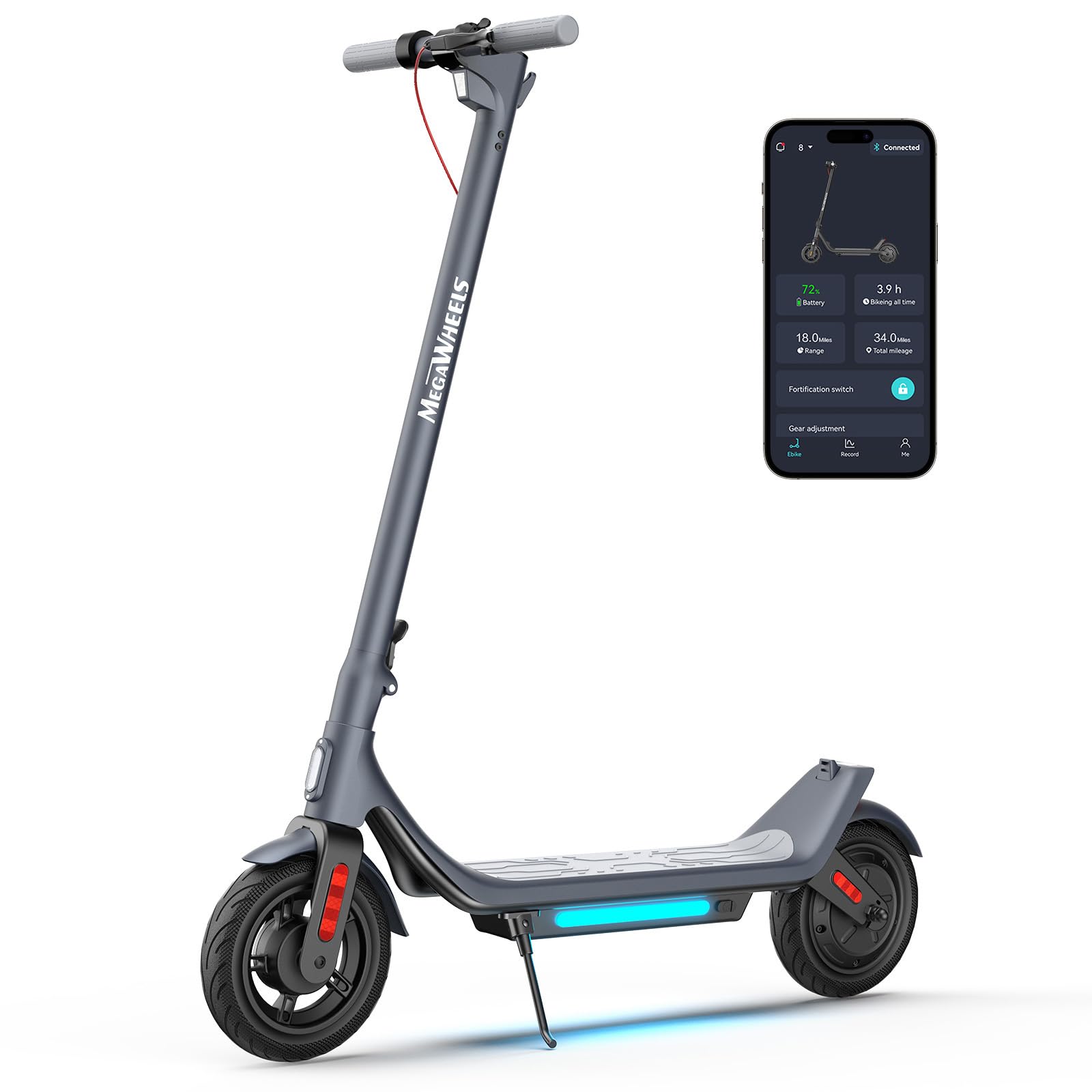
The MEGAWHEELS MAX001 is an adult-class scooter that fits into this list as the premium long-range option for an older or heavier 11-year-old who has outgrown kids’ models. The 500W motor and 10.4Ah battery deliver up to 31 miles of range — roughly six times the range of entry-level kids’ scooters. The 15.5 mph top speed is faster than anything on the kids’ market, so this is strictly for experienced young riders under direct supervision.
The 10-inch tubeless tires with suspension provide a genuinely comfortable ride over cracked pavement and uneven sidewalks that would rattle smaller-wheeled scooters. The smart app control allows parents to set speed limits, engage electronic locks, and monitor battery status remotely — a feature set that brings real parental oversight to a powerful machine. The front drum brake plus rear electronic brake delivers automotive-grade stopping confidence.
At 47 inches handlebar height, this scooter fits riders up to 6 feet tall, which means an 11-year-old will have plenty of growth room. The 265-pound weight capacity means a parent can occasionally ride it too. The foldable design and 24/7 technical support add to the premium ownership experience. For families who want a single scooter that can serve a child now and a teen later, the MAX001 eliminates the upgrade cycle entirely.
What works
- 31-mile range eliminates charging anxiety for multi-day use
- 10-inch tubeless tires with suspension absorb rough pavement
- Smart app control lets parents set speed limits remotely
What doesn’t
- 15.5 mph top speed is fast for an 11-year-old without experience
- Premium price point is a significant investment for a growing child
Hardware & Specs Guide
Motor Power and Speed Curves
A 150W brushed motor is the standard for kids’ scooters at this age range, providing enough torque for gentle hills without creating dangerous acceleration. The speed curve — how quickly the motor reaches max rpm — matters more than the top speed number. Look for motors with a soft-start profile that ramps up over 2–3 seconds rather than hitting full power instantly. The 250W and 500W motors found on teen and adult models are appropriate only for experienced riders who have mastered throttle modulation.
Battery Cells and Charge Cycles
Lithium-ion packs in the 21.6V to 25.2V range are standard for kids’ models. Cell quality varies significantly between brands — premium scooters use Samsung or LG cells that maintain capacity after 300+ charge cycles, while budget models may use generic cells that degrade after 100 cycles. A 36V battery (found on the MEGAWHEELS) provides longer range but adds weight and requires longer charge times. Always charge in a dry, room-temperature environment to maximize cell lifespan.
Brake Configurations Explained
Rear foot brakes alone require the rider to lift their back foot and press down on the rear fender — effective but slow to react. Electronic hand brakes engage the motor to create regenerative resistance, providing faster stopping without additional mechanical wear. The best configuration for this age group is a front electronic brake combined with a rear foot brake, giving the rider two independent stopping mechanisms. Drum brakes (found on the MEGAWHEELS) offer the longest service life but add weight.
Wheel Size and Deck Height
Wheel diameter directly affects ride comfort and stability. Six-inch wheels are standard on budget and mid-tier kids’ scooters, providing adequate stability on flat pavement but transmitting every crack and pebble to the rider. Eight-inch wheels (found on premium models) roll over obstacles more smoothly and reduce the risk of wheel-jam accidents. Ten-inch wheels with pneumatic tires offer the most comfortable ride but require periodic air pressure checks. Lower deck height — closer to 4 inches — makes it easier for kids to step on and off confidently.
FAQ
What is the safest speed for an 11-year-old on an electric scooter?
Does my 11-year-old need a helmet with an electric scooter?
How long does a typical kids electric scooter battery last before replacement?
Can an 11-year-old ride an electric scooter on sidewalks or bike lanes?
What maintenance does a kids electric scooter need regularly?
Final Thoughts: The Verdict
For most families, the best electric scooter for 11 year old winner is the FanttikRide C9 Pro because it delivers the ideal balance of adjustable speed, lightweight aluminum construction, and genuine safety features at a price that doesn’t overreach. If you want longer range for neighborhood cruising, grab the Caroma E35. And for a budget-conscious entry point that still carries UL certification, nothing beats the ECOROAD EK6.

Certification: BSc in Mechanical Engineering
Education: Mechanical engineer
Lives In: 539 W Commerce St, Dallas, TX 75208, USA
Md Amir is an auto mechanic student and writer with over half a decade of experience in the automotive field. He has worked with top automotive brands such as Lexus, Quantum, and also owns two automotive blogs autocarneed.com and taxiwiz.com.